Close-up of painting under conservation-grade LED lighting
LED lights for paintings have become the preferred lighting solution for galleries, museums, collectors, and designers who require precise, conservation-conscious illumination for artwork. Unlike traditional lighting sources, LED lighting offers stable brightness, low heat emission, and accurate color rendering, making it ideal for illuminating paintings without compromising their integrity.
Whether used in art galleries, exhibitions, or refined residential interiors, LED lights for paintings enhance visual clarity, reveal texture, and preserve the original intent of the artwork. Proper lighting for paintings is not simply about brightness, but about control, balance, and precision.
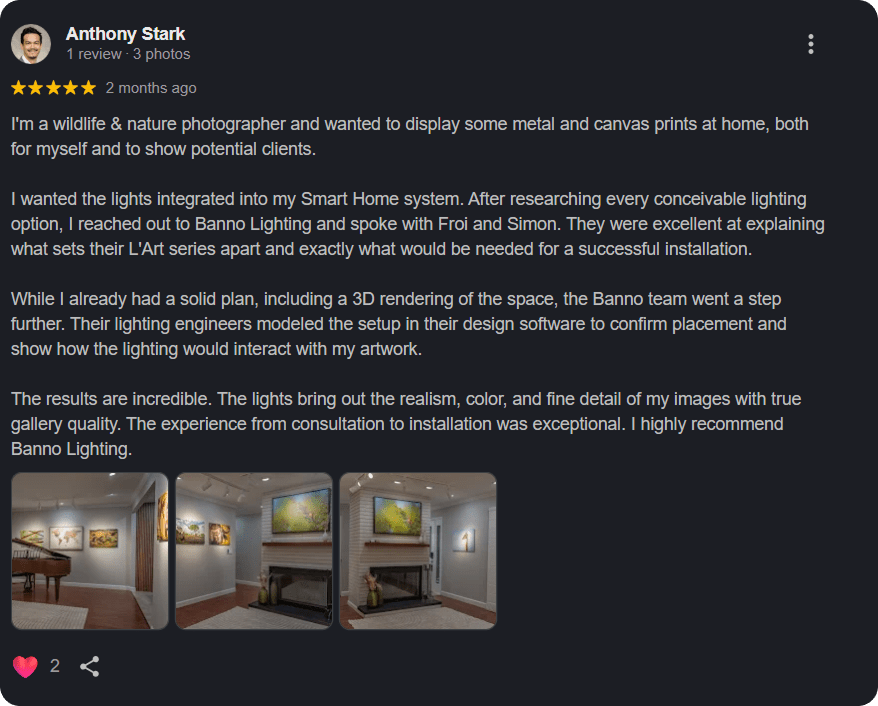
Gallery Owner Testimonial: Why Professionals Choose Our Display Lighting
Why LED Lights for Paintings Are the Professional Standard
Lighting plays a decisive role in how paintings are perceived. Incorrect lighting can distort colors, flatten depth, and reduce the emotional impact of artwork. LED lights for paintings provide controlled illumination that enhances visibility while maintaining conservation-safe conditions.
Key advantages include:
- Low heat output that protects delicate surfaces
- Stable color temperature over time
- High color rendering for accurate pigment display
- Minimal ultraviolet and infrared emission
- Long-term consistency in illumination
These qualities make LED lighting the industry standard for professional art display.
Are LED Lights Bad for Paintings or Safe for Artwork
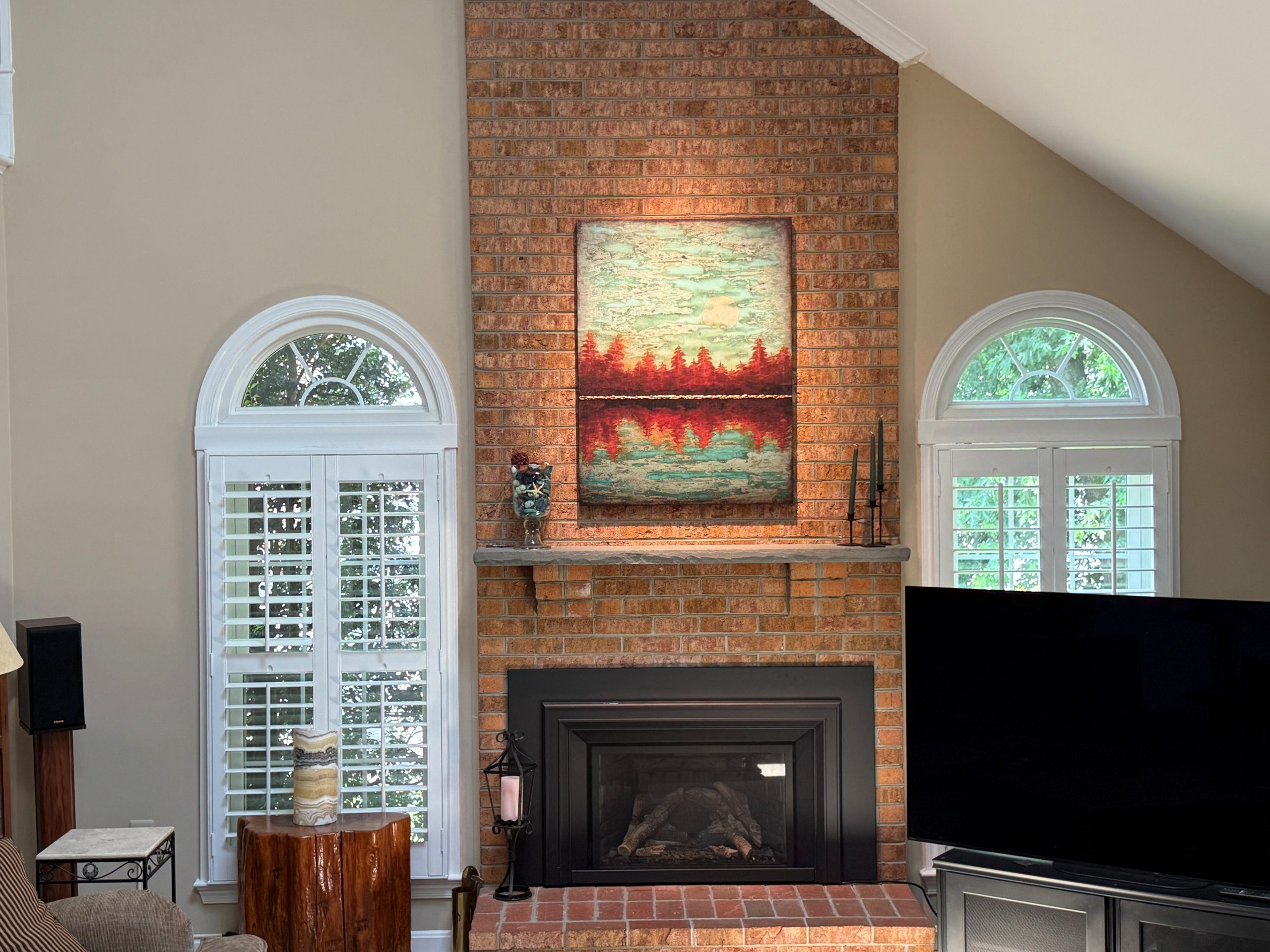
LED fixture positioned above painting
A common concern among collectors and galleries is whether LED lights damage paintings. High-quality LED lights for artwork are considered safe because they produce significantly less heat and ultraviolet radiation compared to halogen or incandescent lighting.
Conservation-safe LED lighting helps:
- Prevent pigment fading
- Reduce canvas deterioration
- Protect varnish and surface finishes
- Maintain long-term artwork stability
When properly installed, LED lights for paintings are one of the safest lighting options available for valuable artwork.

4.9-star rated by art collectors and gallery professionals
LED Spotlight for Paintings and Focused Illumination
LED spotlight for paintings is widely used in galleries and collector spaces due to its ability to direct precise light onto a specific artwork. Focused illumination ensures that the painting remains the visual focal point without excessive light spill onto surrounding walls.
Benefits of LED spotlights include:
- Controlled beam angles for different painting sizes
- Enhanced texture and brushstroke visibility
- Reduced glare and reflection
- Improved visual hierarchy within art displays
This makes spot lighting ideal for feature artworks and curated gallery walls.
LED Lights for Wall Art and Canvas Paintings

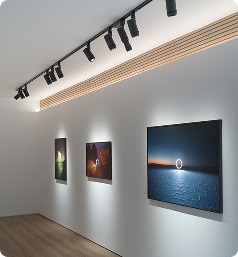
Balanced lighting setup in modern gallery
LED lights for wall art and canvas paintings require careful positioning to ensure even illumination across the entire surface. Uneven lighting can create hotspots or shadows that distort the visual balance of the artwork.
Effective lighting for paintings on walls should provide:
- Even light distribution from top to bottom
- Soft directional illumination
- Minimal glare on framed or glazed artworks
- Balanced brightness relative to ambient lighting
This approach enhances the depth and clarity of both modern and traditional paintings.
LED Lights Behind Painting and Ambient Accent Effects
LED lights behind painting installations are sometimes used for ambient accent lighting rather than direct illumination. This technique creates a halo effect that enhances spatial depth and visual interest while maintaining a subtle presentation.
Ambient backlighting can:
- Enhance perceived artwork prominence
- Create a gallery-style atmosphere
- Reduce harsh contrast between artwork and wall
- Add visual sophistication to interior spaces
However, primary artwork illumination should still come from directional LED art lights for paintings rather than solely from backlighting.
Best LED Lights for Art Gallery Paintings
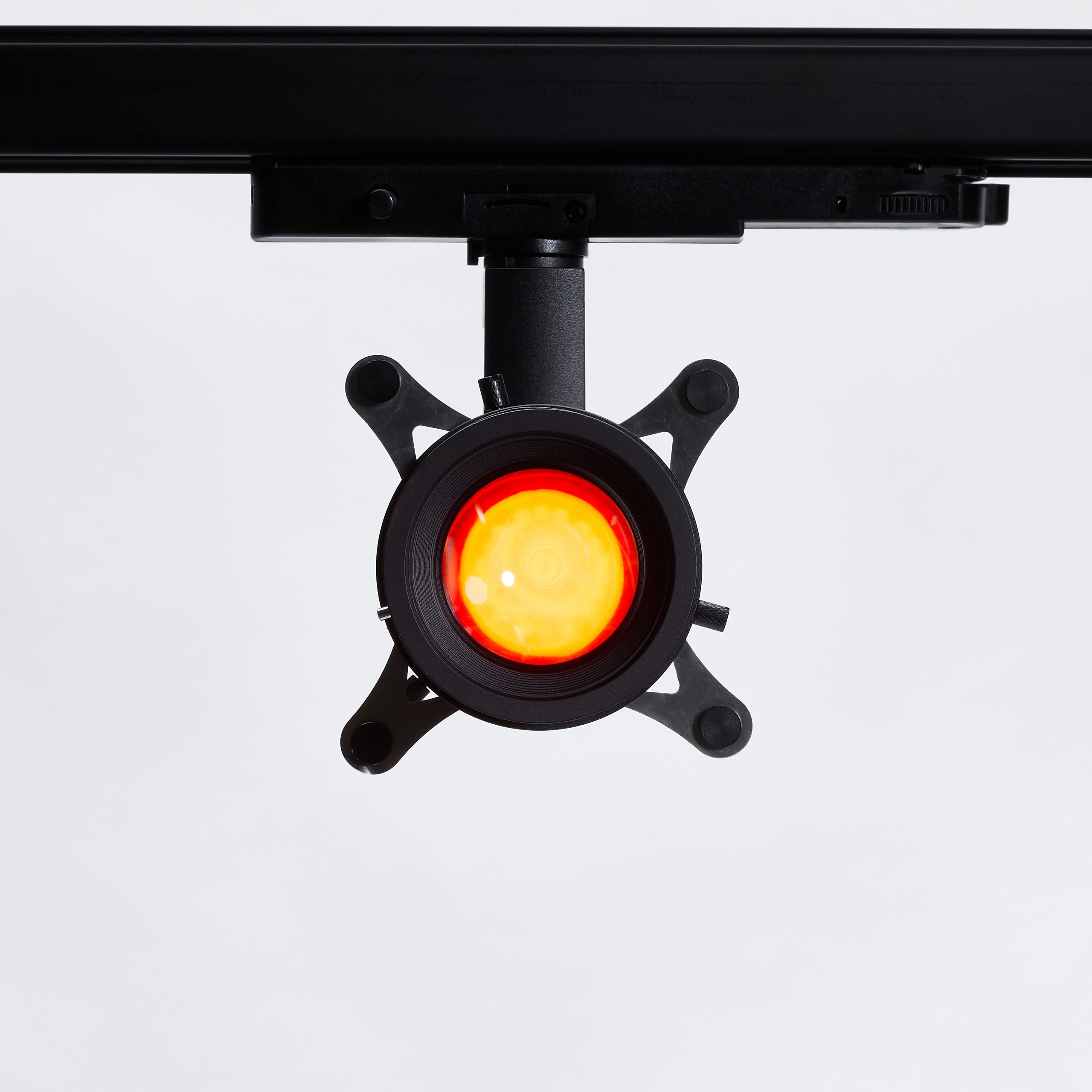
Museum-grade LED fixture with precision optics
In professional environments, the best LED lights for paintings are those designed specifically for artwork illumination rather than general decorative lighting. Gallery-grade LED lighting provides refined beam control, accurate color rendering, and stable output suitable for long-term exhibitions.
Professional art lighting solutions such as Zoom (precision art lighting), Deluxe (museum-grade lighting), and Multi (flexible gallery lighting) are particularly effective for illuminating paintings due to their controlled optics, consistent illumination, and discreet design. These systems allow galleries and collectors to highlight paintings with precision while maintaining a clean and refined visual environment.
LED Lights for Canvas Art and Surface Texture Enhancement
Canvas paintings contain layered textures, brushstrokes, and surface variations that benefit significantly from directional LED lighting. Properly angled LED lights for canvas art reveal depth and material richness that flat lighting cannot achieve.
Texture-enhancing lighting improves:
- Surface detail visibility
- Perception of depth and layering
- Color saturation and tonal gradients
- Overall visual engagement with the artwork
This is especially important for oil paintings, acrylic works, and mixed media pieces.
LED Strip Lights for Wall Art Displays

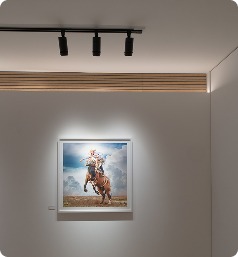
Integrated architectural lighting highlighting small painting
LED strip lights for wall art are sometimes used in display niches, shelves, or recessed installations where subtle illumination is required. While strip lighting can enhance ambient presentation, it should be carefully controlled to avoid uneven lighting across paintings.
When used correctly, strip lighting can support:
- Display case lighting for smaller artworks
- Accent illumination in gallery walls
- Subtle ambient enhancement
- Architectural integration in modern interiors
Direct artwork lighting should still remain the primary illumination method for paintings.
What Is the Best Lighting for Paintings and Artwork
The best lighting for paintings combines accurate color rendering, controlled brightness, and conservation-safe output. High-quality LED lights for paintings are designed to preserve the true colors and textures of artwork while preventing long-term damage.
Optimal lighting characteristics include:
- Neutral color temperature for accurate color perception
- High color rendering quality
- Low glare optics
- Stable and consistent brightness
- Minimal heat emission
These features ensure that paintings are displayed as intended by the artist.
LED Lights for Art Studios and Collector Spaces

Collector home gallery with precision art lights
Artists and collectors also rely on LED lights for art studio environments and private collections. Proper lighting in studios allows artists to evaluate color accuracy and detail, while collectors use LED lighting to present artwork professionally within residential spaces.
LED lights for paintings in studios and homes enhance:
- Visual clarity during artistic work
- Professional artwork presentation
- Curated interior aesthetics
- Long-term artwork preservation
This creates a seamless transition between studio creation and gallery-style display.
LED Lights for Paintings and True Color Representation
One of the most critical reasons professionals choose LED lights for paintings is their ability to preserve true color representation. Paintings rely heavily on subtle pigment variations, tonal depth, and layered color composition. Poor lighting can shift color perception, making warm tones appear dull or cool tones appear overly harsh.
High-quality LED lights for artwork provide stable and consistent illumination that allows viewers to experience paintings as the artist intended. This is particularly important in galleries and collector spaces where accurate visual presentation is a priority.
Consistent LED lighting helps:
- Maintain pigment accuracy
- Reveal tonal gradients clearly
- Prevent color distortion
- Enhance visual authenticity of artwork
Lighting for Paintings on Wall and Viewing Angles

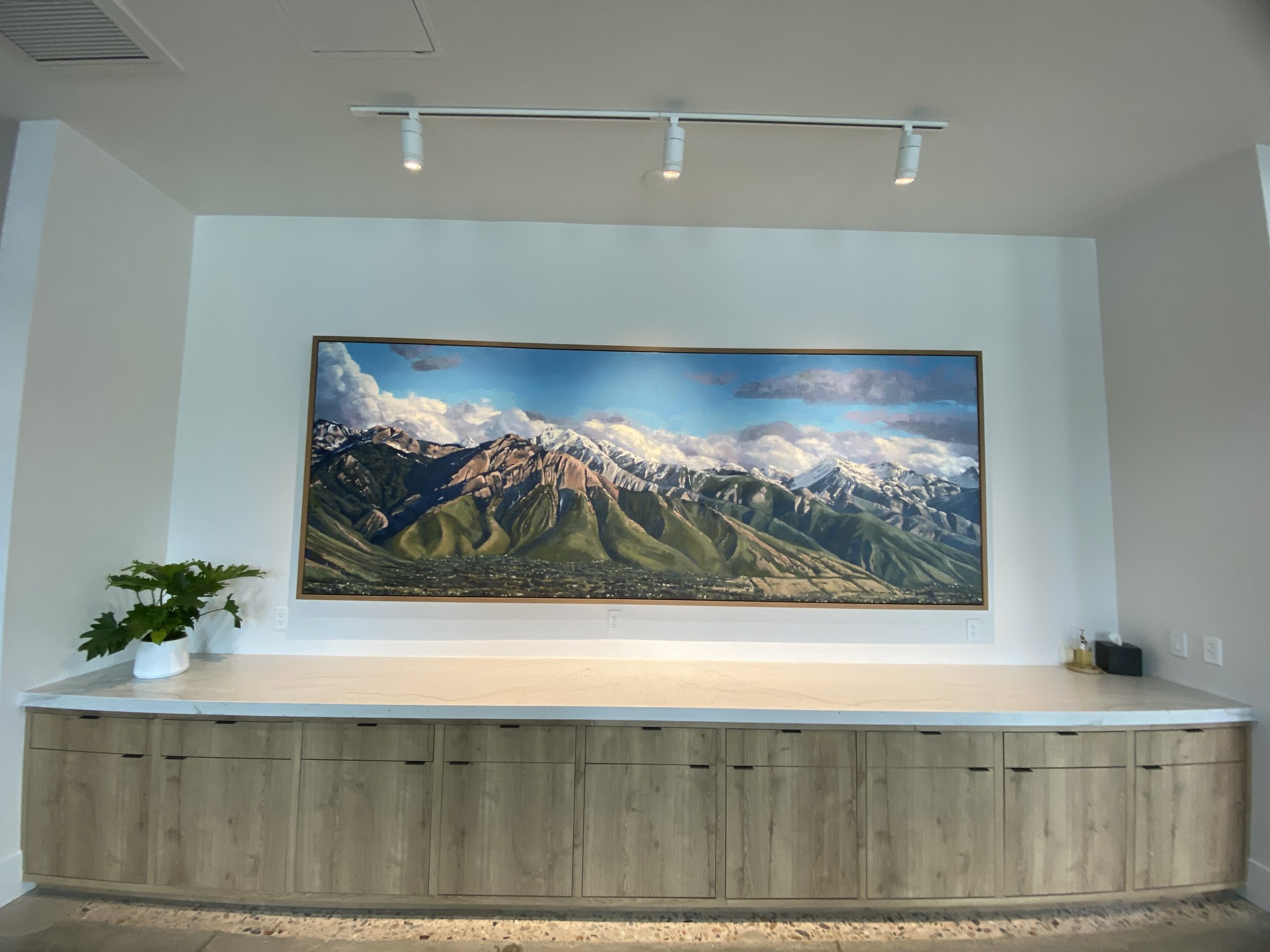
Beam spread evenly across large framed painting
Lighting for paintings on wall requires careful consideration of viewing angles and light positioning. Direct frontal lighting can flatten the artwork, while poorly angled lighting can create glare and reflections, especially on varnished or framed paintings.
A refined lighting approach typically involves:
- Angled overhead illumination
- Even light spread across the canvas
- Controlled beam direction
- Balanced brightness relative to ambient lighting
This ensures that paintings remain visually engaging without harsh shadows or reflective interference.
LED Lights for Artwork in Gallery and Museum Settings

Long-term display wall illuminated consistently
LED lights for paintings are widely used in galleries and museums due to their reliability and conservation-friendly characteristics. Institutional lighting standards prioritise both presentation and preservation, and LED lighting aligns with these requirements.
In professional environments, LED lighting for paintings supports:
- Long exhibition durations
- Consistent illumination across collections
- Reduced maintenance compared to traditional lighting
- Stable performance under continuous operation
This makes LED lighting an essential component of museum-grade painting display.
Can LED Lights Fade Artwork Over Time
A common question among collectors is whether LED lights for paintings can cause fading. Compared to older lighting technologies, LEDs significantly reduce the risk of fading because they emit very low levels of ultraviolet and infrared radiation.
However, exposure duration and intensity still matter. Even safe lighting should be controlled in terms of brightness and exposure time, especially for:
- Oil paintings
- Watercolors
- Historic artworks
- Textile-based mixed media
Properly calibrated LED lighting preserves artwork integrity while maintaining excellent visibility.
LED Lights for Canvas Art and Surface Detail Clarity

Close texture detail revealed through directional lighting
Canvas paintings contain layered textures that benefit greatly from directional LED lighting. Brushstrokes, impasto techniques, and surface variations become more visible when illuminated with controlled beam angles.
LED lights for canvas art enhance:
- Texture definition
- Surface depth perception
- Fine artistic details
- Material richness
This level of clarity is especially valuable for collectors and galleries showcasing original artworks where texture is a key artistic element.
LED Lights Around Painting and Ambient Layering
LED lights around painting installations are often used as a complementary lighting layer rather than the primary source of illumination. Ambient perimeter lighting can create a refined gallery-like atmosphere while subtly enhancing the presence of the artwork within a space.
Ambient layering benefits include:
- Enhanced spatial depth
- Soft visual framing of artwork
- Reduced contrast between wall and painting
- Elevated interior presentation
When combined with directional art lighting, this layered approach creates a sophisticated and balanced display environment.
LED Lights for Art Gallery and Exhibition Displays

Curated art display with adaptable beam control
LED lights for paintings are essential in art gallery and exhibition environments where visual precision and consistency are non-negotiable. Exhibition lighting must adapt to rotating collections, varied artwork sizes, and different artistic mediums.
LED lighting for paintings in exhibitions allows:
- Flexible fixture positioning
- Adjustable brightness for different artworks
- Uniform illumination across display walls
- Curatorial control over visual emphasis
This flexibility ensures that each painting receives appropriate lighting regardless of exhibition changes.
Best LED Lights for Photographing Artwork
Accurate lighting is also crucial when photographing paintings for catalogues, archives, and digital galleries. LED lights for paintings provide stable illumination that prevents color shifts and glare during documentation.
Proper lighting for photographing artwork should:
- Eliminate reflections on varnished surfaces
- Maintain even brightness across the canvas
- Use neutral lighting conditions
- Preserve accurate color reproduction in images
This ensures that photographed artwork closely matches its real-life appearance.
LED Lights for Art Studios and Artistic Evaluation
Canvas evaluation under controlled illumination
Artists rely heavily on proper lighting when evaluating their own paintings. LED lights for art studio environments allow artists to observe color balance, contrast, and detail under stable lighting conditions that simulate gallery presentation.
Studio lighting for paintings improves:
- Color mixing accuracy
- Detail assessment during creation
- Surface texture visibility
- Consistency between studio and exhibition lighting
This continuity helps artists present their work confidently in galleries and exhibitions.
LED Lights Behind Painting and Visual Depth
While direct lighting remains essential, LED lights behind painting installations can add visual depth and dimensional presence when used appropriately. Backlighting is particularly effective in modern interior settings where artwork functions as a central design feature.
Subtle backlighting enhances:
- Perceived artwork prominence
- Wall depth and layering
- Atmospheric sophistication
- Visual separation from the background surface
However, it should complement, not replace, directional art lighting.

LED Lights for Wall Pictures and Multi-Art Displays

Gallery wall with evenly lit multiple artworks
For gallery walls featuring multiple artworks, LED lights for paintings must be evenly distributed to avoid inconsistent brightness levels. Uneven lighting can disrupt visual harmony and unintentionally shift attention away from certain pieces.
Balanced lighting for multi-art displays ensures:
- Uniform visual weight across artworks
- Smooth transitions between pieces
- Reduced visual clutter
- Enhanced overall presentation quality
This is particularly important in curated home galleries and professional exhibition layouts.
Long-Term Reliability of LED Lights for Paintings
Longevity is a major advantage of LED lights for paintings. High-quality LED fixtures are designed for long operational lifespans, making them ideal for galleries, museums, and collectors who require dependable lighting performance over many years.
Long-term reliability benefits include:
- Consistent illumination without flicker
- Reduced replacement frequency
- Stable brightness output
- Lower maintenance requirements
This reliability supports both permanent displays and rotating art collections.
LED Lights for Paintings as a Curated Presentation Tool

Emotional depth enhanced by refined illumination
Ultimately, LED lights for paintings are more than a technical necessity. They function as a curatorial tool that shapes how artwork is experienced, interpreted, and appreciated. Proper lighting enhances emotional resonance, visual clarity, and artistic depth while protecting the integrity of the painting itself.
By combining precision illumination, conservation awareness, and refined lighting placement, LED lighting allows paintings to be displayed in a way that reflects professional gallery standards. Whether in museums, exhibitions, studios, or collector homes, carefully designed LED lights for paintings create a visually balanced and preservation-conscious environment where artwork can be experienced at its highest level of authenticity and impact.
FAQs
1. Are LED lights safe for paintings?
Yes, high-quality LED lights are safe due to low heat and low UV output.
2. Do LED lights damage artwork?
Proper LED art lighting does not damage paintings when correctly installed.
3. What are the best LED lights for paintings?
Precision art lights with high color accuracy and glare control.
4. Can LED lights fade paintings?
Low-quality lighting can cause fading, but conservation-grade LEDs minimise this risk.
5. What is the best lighting for paintings on walls?
Directional LED lighting with even illumination and controlled angles.
6. Are LED spotlights good for paintings?
Yes, they provide focused and precise artwork illumination.
7. Should LED lights be placed above or beside paintings?
Typically above at an angle for even and glare-free lighting.
8. What color temperature is best for artwork lighting?
Neutral color temperatures are commonly preferred.
9. Can LED strip lights be used for paintings?
Yes, but mainly for accent lighting rather than primary illumination.
10. Do galleries use LED lights for paintings?
Yes, LED lighting is the global standard in galleries and museums.
11. What is LED art lighting?
Specialised LED lighting designed specifically for artwork display.
12. Can LED lights enhance painting texture?
Yes, angled lighting reveals surface details and brushstrokes.
13. Are wireless LED lights for paintings effective?
They can be useful for smaller displays and temporary setups.
14. How bright should lighting for paintings be?
Bright enough for clarity but controlled to avoid overexposure.
15. Do LED lights change painting colors?
High-quality LEDs preserve accurate color representation.
16. What is gallery lighting for paintings?
Professional lighting designed to illuminate artwork precisely.
17. Can LED lights be used in home art displays?
Yes, they are ideal for gallery-style home interiors.
18. What type of LED light is best for canvas art?
Directional LED art lights with controlled beam angles.
19. Is overhead lighting enough for paintings?
No, directional lighting is usually required for proper illumination.
20. Why are LED lights preferred for artwork?
Because they provide stable, efficient, and conservation-safe illumination.
Proven Performance Across Residential and Architectural Installations