Modern art studio using directional track lighting to highlight canvases
Choosing the best track lighting for art studio environments is not simply about brightness. It is about color accuracy, beam control, flexibility, and how light interacts with both artwork in progress and finished pieces on display.
Artists, galleries, and serious collectors increasingly rely on track lighting systems because they provide adaptability without compromising precision. Whether in a painting studio, sculpture workshop, or hybrid studio gallery space, properly specified track lighting for artists ensures accurate color perception during creation and refined presentation during exhibition.
This guide explores how to select the best track lighting for art studio environments, and how those systems differ from general residential lighting.
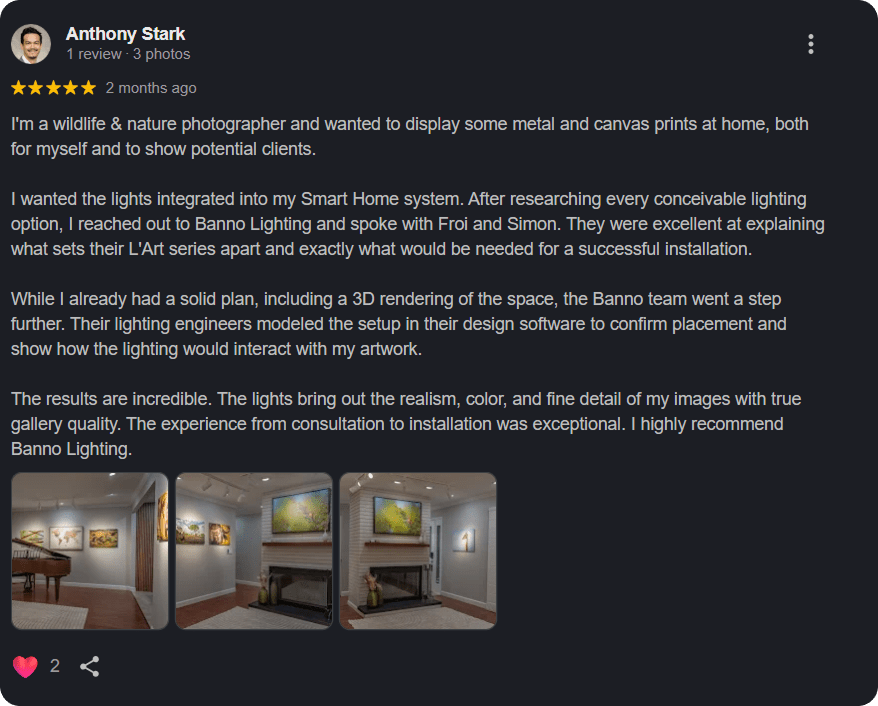
What a Gallery Owner Says About Our Precision Lighting Systems
Why Track Lighting Is Ideal for Art Studios
Track lighting for artists offers several advantages over fixed ceiling fixtures.
- Adjustable positioning
- Flexible beam direction
- Easy reconfiguration
- Clean ceiling integration
- Scalability as the studio evolves
In a working studio, artwork sizes change. Easels move. Walls are repainted. Track lights for art studio setups allow repositioning without rewiring.
For artists who also host private viewings, track lighting can transition seamlessly from production lighting to exhibition lighting.
What Is the Best Lighting for Art Studio Work

Balanced ambient lighting combined with directional track lights illuminating painting area
When asking what is the best lighting for art studio environments, the answer involves both ambient and directional layers.
Ambient Lighting
The best light for art studio production work includes balanced overhead illumination with high color rendering. This ensures accurate color mixing.
Directional Lighting
Track lighting provides adjustable beams to:
- Highlight works in progress
- Illuminate vertical canvases
- Add contrast for texture evaluation
The best track lighting for artist studio spaces combines these layers effectively.

4.9-star rated by art collectors and gallery professionals
Best LED Track Lighting for Art Studio
LED has become the standard for modern art studios.
Best LED track lighting for art studio environments should provide:
- High CRI above 95
- Stable color temperature
- Adjustable beam angles
- Dimming capability
- Minimal heat
Unlike halogen systems, LED track lighting reduces heat exposure and energy consumption while maintaining consistent output.
Color stability is particularly important for oil painting and fine detail work. What is the best lighting for oil painting often comes down to accurate color rendering and neutral white balance.
What Is the Best Light for Drawing and Painting
Artists frequently ask what is the best light for drawing and painting.
Key characteristics include:
- Neutral white tone around 3000K to 3500K
- High CRI for accurate pigment representation
- Even distribution across the work surface
- Controlled shadow placement
Track lighting allows artists to adjust beam direction to assess texture and depth, especially in oil painting where brushwork detail matters.
Track Lighting for Art Gallery and Studio Hybrid Spaces

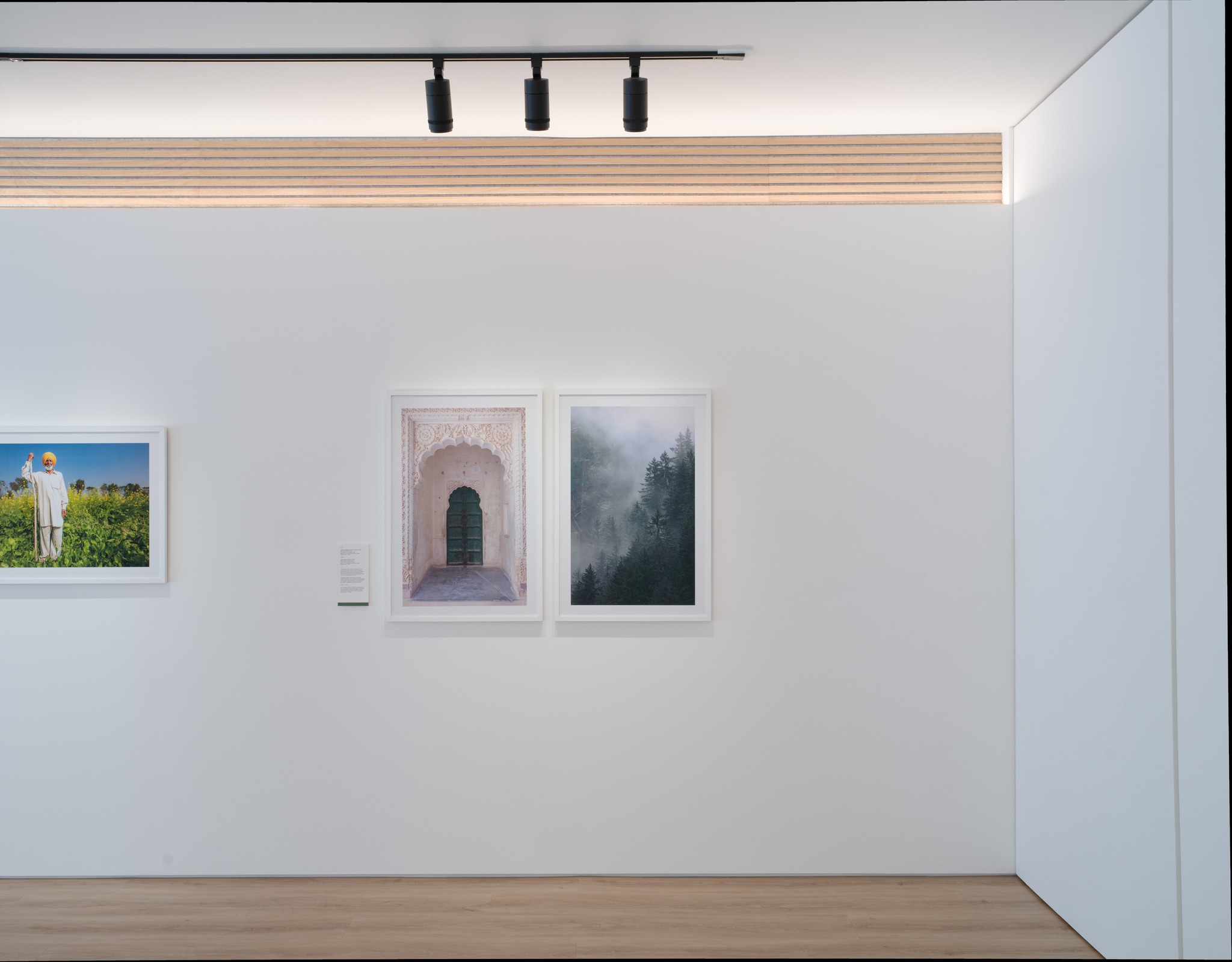
Artist studio transformed into gallery space using adjustable track lighting
Many modern studios double as gallery spaces. In these cases, the best track lighting for art gallery functionality must also serve studio needs.
Track lighting for art gallery installations requires:
- Precise beam control
- Subtle contrast over ambient light
- Consistent color temperature
- Clean fixture alignment
Flexible systems such as Multi provide adaptability for changing layouts. Precision fixtures like Zoom allow narrow beam control for smaller works. Museum focused solutions such as Deluxe prioritize visual comfort and long term stability when studios transition into exhibition environments.
Beam Angle Selection in Art Studios
Selecting beam angle is critical when specifying the best track lighting for art studio use.
For close working conditions:
- Wider beams may provide even coverage
For exhibition presentation:
- Narrower beams isolate artwork
Adjustable optics allow artists to evaluate both broad tonal balance and fine detail.
What lighting is best for art often depends on the stage of work. Creation and presentation require slightly different approaches.
What Is the Best Lighting for Artwork in Studio Settings
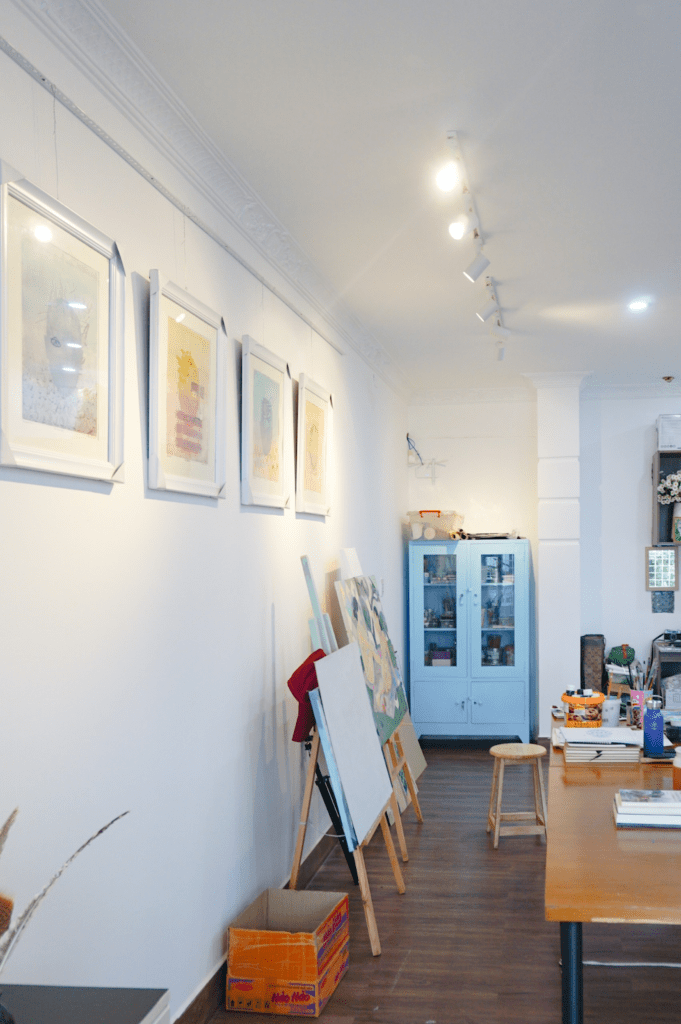
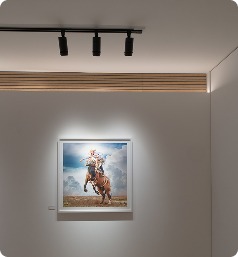
Professional track lighting angled toward framed painting displayed in studio
Finished pieces displayed within a studio require professional level illumination.
When considering what is the best lighting for artwork, the following apply:
- 30 degree aiming angle
- Controlled beam spread
- Slight contrast above ambient light
- High CRI LED
Track lighting systems make this easy to achieve without installing separate fixtures for display areas.
Track Lighting for Artists and Texture Evaluation
Texture plays a significant role in painting.
Directional track lighting for artists allows evaluation of:
- Impasto thickness
- Surface irregularities
- Gloss versus matte contrasts
- Layer transitions
By adjusting beam angle, artists can assess how their work will appear in a gallery setting.
This flexibility is one reason track lighting remains the best lighting for artists working with textured mediums.
Can You Paint Track Lighting

Close view of track light fixture integrated with ceiling
In studio environments, aesthetics may matter less than function. However, some artists ask, can you paint track lighting to match ceilings.
While possible, care must be taken not to compromise heat dissipation or optical performance. Professional fixtures are designed for thermal management and precision alignment.
Performance should always take priority over cosmetic adjustments.
Best Track Lighting for Art Gallery Spaces
When studios expand into gallery environments, the best track lighting for art gallery use must meet higher standards.
Considerations include:
- Visual comfort for visitors
- Glare control
- Uniform fixture alignment
- Controlled dimming
Best lighting for art gallery installations often uses track systems with interchangeable optics and integrated control systems.
Color Temperature and Studio Accuracy

Balanced color temperature lighting illuminating artwork evaluation area
Color temperature influences artistic decision making.
For painting studios:
- Neutral white lighting around 3000K to 3500K is common
- Consistency across all fixtures is essential
Mixing different temperatures distorts color perception.
The best light for art studio environments maintains stable temperature across both ambient and track layers.
What Is the Best Lighting for an Art Gallery
In gallery settings, lighting must prioritize presentation over production.
The best lighting for an art gallery includes:
- High CRI LED
- Adjustable track systems
- Consistent color temperature
- Subtle contrast ratios
Track lighting for art gallery installations remains the most adaptable solution.
Maintenance and Long Term Stability

Professional LED track lighting system installed in long term studio environment
The best track lighting for art studio environments should offer:
- Replaceable LED modules
- Stable output over time
- Reliable dimming
- Easy repositioning
Long term consistency ensures that artwork appears the same months after installation as it did initially.
Professional art lighting systems are engineered for durability and stability.
Ceiling Height and Track Placement Strategy
When specifying the best track lighting for art studio environments, ceiling height plays a decisive role.
In lower ceiling studios:
- Wider beam spreads may be appropriate
• Glare control becomes more important
• Fixtures must remain discreet
In higher ceiling studios:
- Narrower beam optics are often required
- Higher lumen output may be necessary
- Precise aiming becomes critical
Track placement should run parallel to primary working walls. This allows consistent aiming across canvases positioned along the perimeter. Random placement results in inconsistent illumination and uneven shadow patterns.
The best track lighting for artist studio layouts is always planned with wall usage in mind.
Evaluating Texture and Surface Finish

Oil painting surface illuminated to highlight brushstroke depth
One of the key benefits of track lighting for artists is the ability to evaluate texture.
Oil paintings, mixed media works, and impasto techniques rely on directional light to reveal:
- Brushstroke depth
- Layer transitions
- Surface irregularities
- Varnish sheen
By adjusting tilt and rotation, artists can simulate gallery conditions within their own studio. This ensures that when the work transitions to exhibition space, the presentation aligns with the artist’s intent.
The best light for art studio evaluation is flexible enough to replicate both soft ambient and focused accent lighting.
Layering Ambient and Track Lighting
Relying solely on track lights for art studio work is rarely sufficient.
A balanced system includes:
- Even ambient lighting across the workspace
- Adjustable track lighting for vertical surfaces
- Optional side lighting for texture assessment
Ambient light supports overall comfort and color mixing accuracy. Track lighting provides controlled directional emphasis.
When combined properly, these layers create a professional environment that supports both creation and display.
Shadow Control in Artist Studios

Track lights positioned to prevent shadows falling across painting surface
Improper lighting can create distracting shadows on canvases.
Track lighting for artists should be positioned to:
- Avoid casting the artist’s shadow onto the work
- Provide even coverage across large surfaces
- Allow quick adjustment when easels are moved
In multi easel studios, flexible systems such as Multi allow fixtures to be repositioned without altering the entire layout.
Shadow control is especially important for large format works where small inconsistencies become highly visible.
Best Lighting for Artists Working With Color Sensitive Media
Artists working with subtle color gradients require lighting that does not distort tone.
The best lighting for artists handling:
- Skin tones
- Atmospheric landscapes
- Abstract tonal transitions
- Portraiture
must maintain consistent spectral performance.
High CRI LED track lighting ensures that reds remain saturated, blues retain depth, and neutral tones do not shift.
What is the best lighting for art studio color accuracy ultimately depends on reliable LED modules and stable temperature across all fixtures.
Transitioning From Studio to Gallery

Track lighting system supporting both creation and gallery display
Many artists display work directly from their studio. In these hybrid environments, the best track lighting for art gallery presentation must also function as production lighting.
This requires:
- Dimming flexibility
- Adjustable beam width
- Clean visual alignment
- Minimal glare
Precision fixtures such as Zoom allow tight beam focus when highlighting finished works. Flexible systems like Multi support layout changes as artwork rotates. For permanent studio galleries or collector viewings, museum grade systems such as Deluxe provide stable output and refined glare control.
This adaptability ensures seamless transition from working environment to exhibition setting.
Track Lighting Alignment and Visual Discipline
Professional presentation demands alignment.
Track lighting for art gallery and studio use should follow consistent spacing and orientation. Uneven fixture placement undermines the professionalism of the space.
Even in production focused studios, visual order supports concentration and clarity.
Best lighting for art gallery settings emphasizes symmetry and controlled rhythm along display walls.
Evaluating Large Works in Studio Settings

Multiple track lights illuminating oversized painting evenly across surface
Large canvases present unique lighting challenges.
When using the best track lighting for art studio applications on oversized works:
- Multiple fixtures may be required
- Beam overlap must be calibrated
- Intensity levels must be balanced
Inconsistent output creates visible bands across the surface.
Adjustable LED track lighting for art studio installations makes it possible to fine tune distribution as scale changes.
What Is the Best Lighting for Artwork in Studio Photography
Artists documenting their work within the studio require lighting that supports accurate reproduction.
The best lighting for artwork photography within a studio setting includes:
- Even illumination across the surface
- Balanced directional lighting
- Controlled glare
- Consistent color temperature
Track lighting can assist, but often additional symmetrical light sources are introduced for documentation.
Nevertheless, a well designed track system simplifies setup and ensures predictable results.

Long Term Efficiency and Maintenance

Energy efficient track lighting supporting long studio working hours
The best track lighting for art studio use should offer:
- Long LED lifespan
- Minimal maintenance
- Stable dimming performance
- Replaceable optical components
Energy efficiency is a practical advantage, especially in studios operating for extended hours.
Consistent performance ensures that artists make decisions under stable lighting conditions day after day.
Emotional and Psychological Impact of Studio Lighting
Lighting influences more than color perception. It shapes mood and productivity.
Balanced, neutral lighting:
- Reduces eye strain
- Supports concentration
- Encourages accurate evaluation
Harsh or inconsistent lighting creates fatigue and distorts perception.
The best light for art studio environments supports both creative flow and professional discipline.
Final Reflection

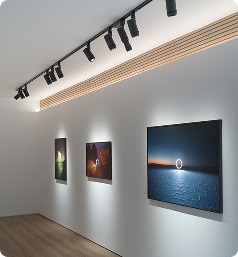
Track lighting highlighting finished paintings in modern creative space
The best track lighting for art studio environments is defined by precision, flexibility, and color integrity.
It must support:
- Accurate color evaluation
- Texture assessment
- Shadow control
- Exhibition quality presentation
- Adaptability as artwork evolves
Best LED track lighting for art studio spaces combines high CRI modules, adjustable beam optics, and stable output.
Flexible systems such as Multi enable repositioning as layouts change. Precision beam fixtures like Zoom provide controlled focus for detailed evaluation. Museum oriented solutions such as Deluxe offer refined stability for studio gallery hybrids.
Track lighting for artists is not a secondary consideration. It is an essential tool in both the creative process and professional presentation.
When specified correctly, it enhances not only how artwork is seen, but how it is made.
20 FAQs
1. What is the best track lighting for art studio
High CRI LED track systems with adjustable beam angles and stable color temperature.
2. What is the best light for art studio
Neutral white, high CRI lighting with both ambient and directional layers.
3. Is LED track lighting good for artists
Yes, it provides flexibility and color accuracy.
4. What color temperature is best for painting
Typically 3000K to 3500K for neutral evaluation.
5. Can track lighting be used in art galleries
Yes, it is widely used for its adaptability.
6. What is the best lighting for oil painting
High CRI LED with directional control for texture visibility.
7. Should track lighting be dimmable
Yes, for both production and exhibition flexibility.
8. What is the best light for drawing
Even, neutral lighting with high color accuracy.
9. Can you paint track lighting fixtures
It is possible but performance should not be compromised.
10. What is the best lighting for artwork display
Adjustable LED track lighting with proper beam control.
11. How many track lights are needed in a studio
Depends on ceiling height, artwork size, and layout.
12. Is track lighting better than recessed lighting
Track lighting offers greater flexibility.
13. What CRI is recommended for art studios
Above 95 for accurate color representation.
14. How do you light a painting in a studio
Position track fixtures at approximately 30 degrees.
15. What is the best lighting for an art gallery
High CRI LED track systems with controlled contrast.
16. Can track lighting reduce shadows
Yes, when properly positioned and layered.
17. Does LED lighting affect paint colors
High quality LED preserves accurate color perception.
18. What lighting is best for art evaluation
Directional, high CRI lighting with stable output.
19. Are track lights adjustable
Yes, most systems allow tilt and rotation.
20. Why is track lighting popular for artists
Because it offers flexibility, precision, and consistent color accuracy.
Client Feedback and Real Project Success Stories