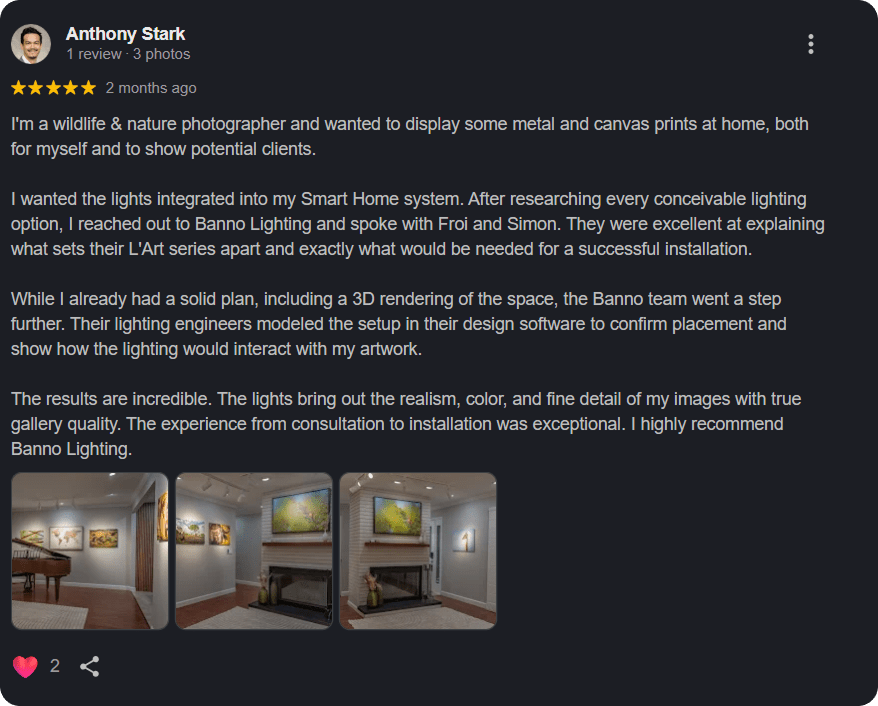
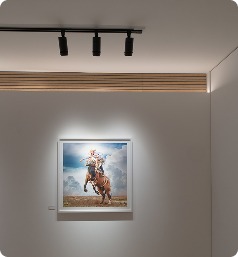
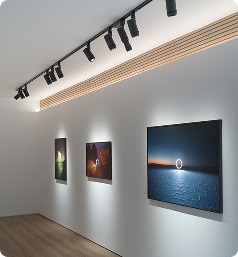
Precision adjustable art light mounted above artwork in modern interior space
An adjustable art light is not simply a fixture mounted above a painting. It is a precision instrument designed to reveal detail, protect materials, and shape how viewers emotionally experience artwork. In professional galleries, museums, and high end residences, lighting is not decorative. It is curatorial.
The difference between a poorly lit artwork and one illuminated with a properly specified adjustable art light is dramatic. Color accuracy shifts. Texture emerges. Depth increases. Shadows become intentional rather than accidental. Most importantly, the artwork’s true quality is revealed.
This guide explores how adjustable art lighting works, the types of fixtures available, and how collectors, designers, and institutions can approach art display lighting at a professional level.
Gallery Owner Testimonial: Why Professionals Choose Our Display Lighting
Why Adjustable Art Lighting Matters
Artwork is three dimensional. Even a flat canvas has brushstroke relief, varnish sheen, and micro texture. Sculpture introduces depth and shadow. Works on paper are sensitive to glare and heat. Without adjustability, lighting becomes a compromise.
An adjustable art light allows you to control:
- Beam spread
- Intensity
- Angle of incidence
- Glare control
- Shadow softness
- Focus precision
This control ensures the artwork is illuminated, not washed out.
What Is an Adjustable Art Light
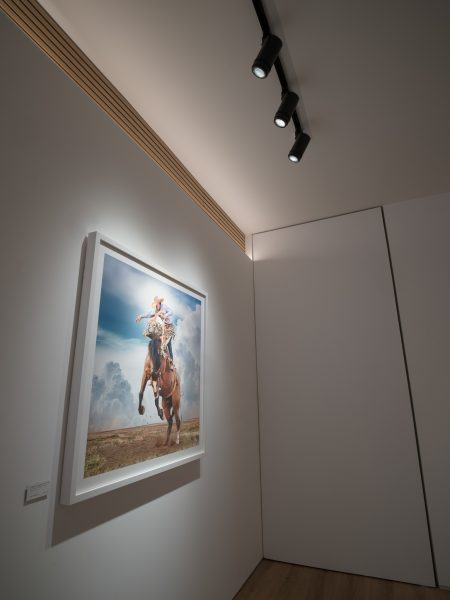
Adjustable head art light focusing beam accurately on framed canvas
An adjustable art light is a fixture designed specifically to illuminate artwork with directional, controllable light. It differs from general ambient lighting in three ways:
- Precision optics for controlled beam angles
- Adjustable heads or arms for directional accuracy
- High color rendering for accurate pigment representation
Unlike a standard adjustable light used for task lighting, an adjustable art light prioritizes color fidelity, beam shaping, and glare management.

4.9-star rated by art collectors and gallery professionals
Types of Adjustable Art Lights
Adjustable Picture Light
An adjustable picture light mounts directly above a frame and typically features a pivoting arm or tilting head. It is common in residential and hospitality settings.
Best used for:
• Framed paintings
• Portraits
• Hallway gallery walls
• Classical interiors
A high quality adjustable picture frame light must distribute light evenly across the canvas without creating a bright hotspot in the center.
Adjustable Art Spot Light
An adjustable art spot light is typically ceiling mounted or track mounted and uses interchangeable optics. This is the preferred solution in galleries and museums.
Advantages:
• Narrow beam control
• Flexible aiming
• Multiple works lit from one track system
• Easy repositioning for rotating exhibitions
A recessed adjustable art light is often used in architectural spaces where minimal visual intrusion is required.
Art Light Adjustable Sconce
An art wall light or adjustable sconce combines decorative form with directional control. While more common in residential settings, high end versions can provide museum level illumination when specified correctly.
These are useful when ceiling mounting is not possible.
Adjustable Painting Light vs Adjustable Artwork Light
The terminology overlaps, but professionals often differentiate slightly:
- Adjustable painting light typically refers to fixtures mounted above framed works
- Adjustable artwork light may include track lighting, recessed spots, or wall mounted options
In institutional contexts, art display lighting refers to the broader system, not just individual fixtures.
Beam Angle and Focus Control

Wide beam adjustable art lighting illuminating large scale artwork
The most critical technical feature of an adjustable art light is beam angle control.
Typical beam spreads include:
• Narrow 10 to 20 degrees for small works
• Medium 24 to 36 degrees for standard canvases
• Wide 40 degrees plus for large scale pieces
For collectors displaying works of varying sizes, fixtures that allow lens changes or adjustable optics are ideal.
An adjustable art display light should allow fine tuning without visible spill onto surrounding walls.
Recessed Adjustable Art Light in Contemporary Architecture
Modern galleries and luxury homes often prefer recessed adjustable art light solutions.
Benefits:
• Clean ceiling aesthetic
• Hidden hardware
• Adjustable tilt and rotation
• Architectural integration
However, recessed systems require careful planning. Ceiling depth, insulation, and aiming access must be considered at design stage.
What Is the Best Lighting for Artwork

Warm white art light illuminating framed canvas in gallery
When clients ask what is the best lighting for artwork, the answer depends on several variables:
- Medium, oil, acrylic, mixed media, photography
- Surface finish, matte, gloss, varnished
- Size and scale
- Wall color
- Ceiling height
That said, best practice standards include:
- High CRI above 95
- Consistent color temperature, typically 2700K to 3000K
- UV and IR free LED sources
- Controlled beam angle
- Adjustable aiming
An art LED system designed for professional environments dramatically outperforms generic LED fixtures.
How to Light Up Artwork Correctly
Step 1 Position
Install the adjustable art light at approximately a 30 degree angle from vertical. This minimizes glare while maintaining texture.
Step 2 Even Distribution
Ensure uniform light from edge to edge. If hotspots appear, adjust beam width or distance.
Step 3 Glare Management
Avoid direct reflections, especially on glazed or varnished surfaces.
Step 4 Balance
Artwork should be brighter than surrounding walls but not overpowering the space.
How to Add Light to a Painting Without Damage
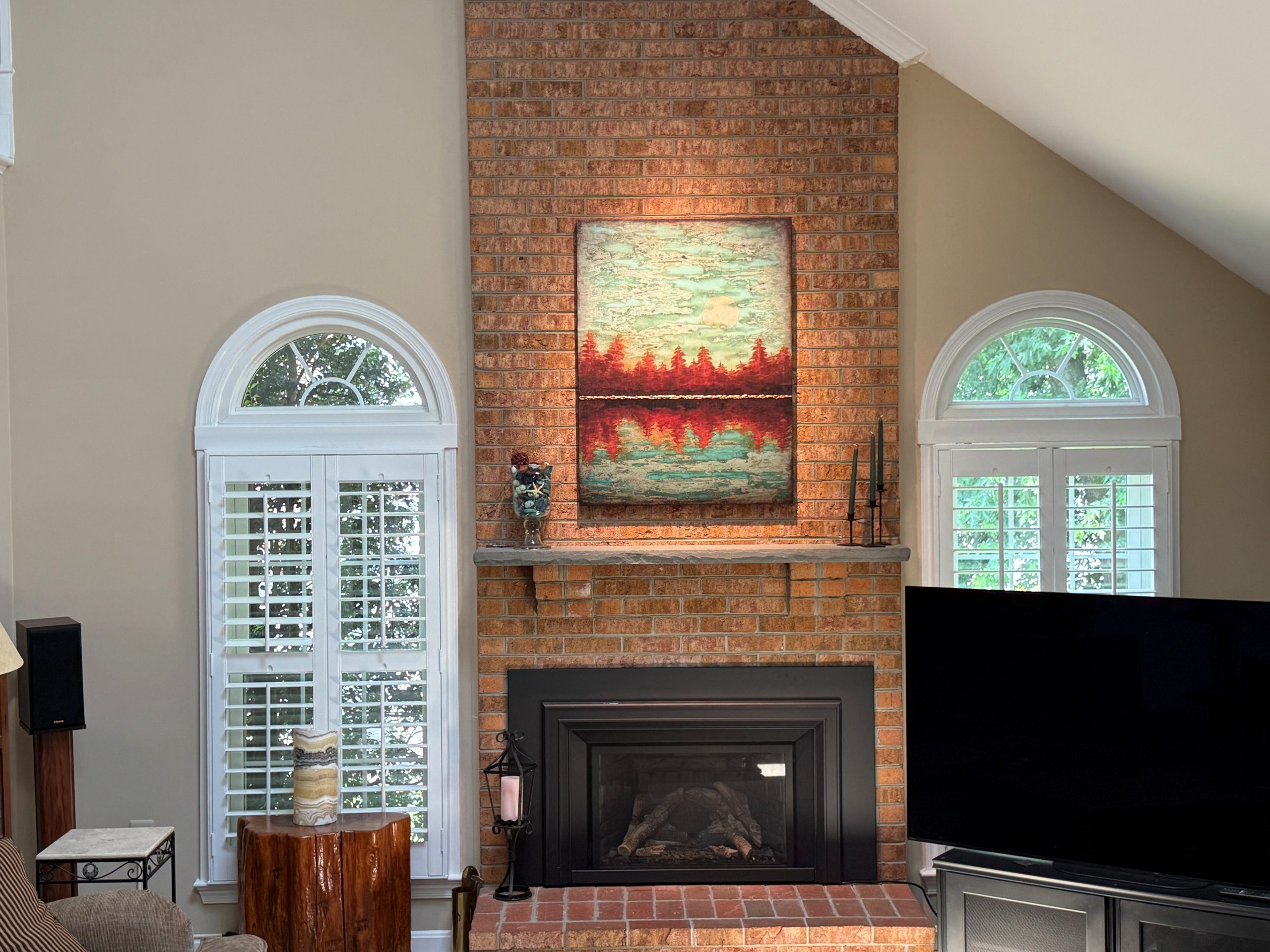
Low heat LED art light protecting delicate oil painting surface
To add light to a painting safely:
- Use low heat LED sources
- Avoid halogen or incandescent
- Keep light levels appropriate for medium
- Ensure adjustable intensity
For sensitive works on paper, lower lux levels are recommended. Adjustable art display lighting allows this control.
How to Put Light Behind a Painting
Backlighting can be used for:
- Floating acrylic panels
- Shadow gap installations
- Contemporary installations
However, this is not a substitute for front illumination. Backlighting enhances atmosphere, while adjustable art spot light systems reveal detail.
Adjustable Light for Art Studios

Artist studio with adjustable lighting illuminating painting workspace
In artist studios, lighting must support both creation and display.
Requirements:
• Balanced neutral white
• Even ambient wash
• Adjustable directional lighting for detail work
While ring lights are common in content creation, professional artist lighting relies on directional adjustable fixtures with high color rendering. Understanding how to adjust ring light angles is useful for photography, but it is not a substitute for true art display lighting.
Art Display Lighting in Galleries
Professional galleries rely heavily on adjustable display light systems.
These allow:
• Rapid reconfiguration for new exhibitions
• Precise spotlighting
• Layered lighting composition
• Dramatic emphasis where required
Flexible systems such as Multi style gallery fixtures enable curators to change focus without rewiring.
Precision fixtures like Zoom allow extremely tight beam control for small or high value works, while museum grade solutions such as Deluxe prioritize visual comfort and conservation standards.
These systems are not decorative. They are tools for curatorial storytelling.
Small Stage Lighting Setup vs Art Lighting

Gallery lighting prioritizing color accuracy over dramatic intensity
While a small stage lighting setup also uses spotlights and directional beams, art lighting differs in several ways:
- Lower intensity
- Higher color rendering priority
- Minimal glare
- Subtlety over drama
The goal is not theatrical impact but authentic presentation.
Adjustable Picture Spot Light for High End Homes
Collectors increasingly treat residential walls as gallery environments.
An adjustable picture wall light can transform:
- Staircases
- Private corridors
- Living room feature walls
- Dining areas
Consistency is key. Mixing random art lights results in uneven tone and visual clutter.
A cohesive adjustable art lighting system maintains uniform color temperature and beam control across the collection.
Artwork Quality and Lighting

Precision art lighting revealing detailed brushwork and color transitions
Lighting does not change the inherent artwork quality, but it dramatically affects perceived quality.
Poor lighting:
• Flattens texture
• Distorts color
• Introduces glare
• Reduces depth
Precision adjustable art lighting:
• Enhances brushwork visibility
• Reveals subtle color transitions
• Improves viewer engagement
• Elevates perceived value
For galleries and collectors, this directly impacts presentation and sales potential.
Advanced Considerations for Museums
Museums consider additional factors:
- Conservation lux limits
- Uniform wall washing vs accent contrast
- Visitor comfort
- Glare index control
- Long term consistency
Recessed adjustable art light systems are common in permanent exhibitions, while track based adjustable art spot light solutions are preferred for rotating shows.
Common Mistakes in Art Lighting
- Using standard downlights instead of adjustable art lights
- Ignoring beam angle
- Mixing color temperatures
- Mounting too close to artwork
- Creating harsh reflections
- Over lighting delicate works
Professional art lighting guide principles prevent these errors.
The Role of Art LED Technology

Adjustable LED art light providing precise beam and dimming
Modern art LED technology offers:
- Stable color consistency
- No UV emission
- Low heat
- Long lifespan
- Dimming capability
An adjustable art display lamp built with high performance LED modules is now the global standard in galleries and museums.
Advanced Optical Engineering in an Adjustable Art Light
At a professional level, an adjustable art light is defined less by its appearance and more by its optical system.
High performance fixtures incorporate:
- Precision lens assemblies
- Anti glare shielding
- Field angle vs beam angle calibration
- Edge softening control
- Cut off control to prevent spill
In galleries and museums, the quality of the lens determines whether a painting appears flat or dimensional. Cheap optics produce uneven fall off. Premium optical systems create smooth, museum grade distribution from center to edge.
For collectors displaying high value works, the difference is immediately visible.
Beam Sculpting and Edge Control

Controlled art lighting preventing spill onto surrounding gallery wall surfaces
One of the most overlooked advantages of an adjustable artwork light is the ability to sculpt light precisely within the frame boundary.
With inferior fixtures:
• Light bleeds onto adjacent walls
• Corners of frames are underlit
• The center becomes too bright
With a precision adjustable art spot light:
• Beam edges align cleanly with artwork edges
• Contrast between art and wall is intentional
• Framing becomes visually stronger
In professional art display lighting, beam discipline is everything.
The 30 Degree Rule Revisited
The traditional recommendation is to position lighting at 30 degrees from vertical. While this is a strong baseline, advanced installations consider additional variables:
- Ceiling height
- Viewer sight lines
- Surface gloss
- Frame depth
- Wall reflectance
A recessed adjustable art light with full tilt and rotation allows this angle to be fine tuned after installation. That flexibility is essential in museums where artwork rotates seasonally.
Layered Lighting Strategy for Collections

Gallery interior combining ambient lighting and focused artwork spotlights
In high end homes and galleries, a single adjustable picture light is rarely sufficient.
Instead, designers create layered lighting:
- Ambient wash lighting for spatial comfort
- Accent lighting using adjustable art display light fixtures
- Supplemental wall lighting for architectural balance
The adjustable art light becomes the focal layer. Ambient lighting should never compete with it.
Lighting Large Scale Artwork
Large canvases require different strategy than small framed works.
For oversized pieces:
- Use multiple adjustable art spot light fixtures
- Overlap beams carefully to avoid visible seams
- Maintain consistent color temperature across all heads
Beam overlapping must be calibrated precisely. If done poorly, stripes or hotspots appear. If done correctly, the artwork appears naturally illuminated as if by perfect daylight.
Adjustable Art Display Lamp in Hospitality and Luxury Retail

Boutique gallery corner featuring art display lamp enhancing brand atmosphere
Luxury hotels, private clubs, and flagship retail spaces increasingly use adjustable display light systems to elevate brand storytelling.
Benefits include:
- Highlighting commissioned artwork
- Emphasizing texture in material installations
- Creating subtle drama without theatrical excess
In these environments, lighting influences perception of brand quality. Art LED systems with high CRI reinforce luxury positioning.
Glare, Reflection, and Viewer Comfort
Even a perfectly aimed adjustable painting light can fail if glare control is ignored.
Glare occurs when:
- The light source is visible from viewing angle
- The reflection angle mirrors the viewer position
- The beam is too narrow for glossy surfaces
Professional adjustable art lighting integrates:
- Deep set LEDs
- Honeycomb louvers
- Anti glare baffles
- Matte internal finishes
Museums place heavy emphasis on visual comfort. Visitors should never be distracted by light sources.
Adjustable Picture Wall Light vs Track Systems
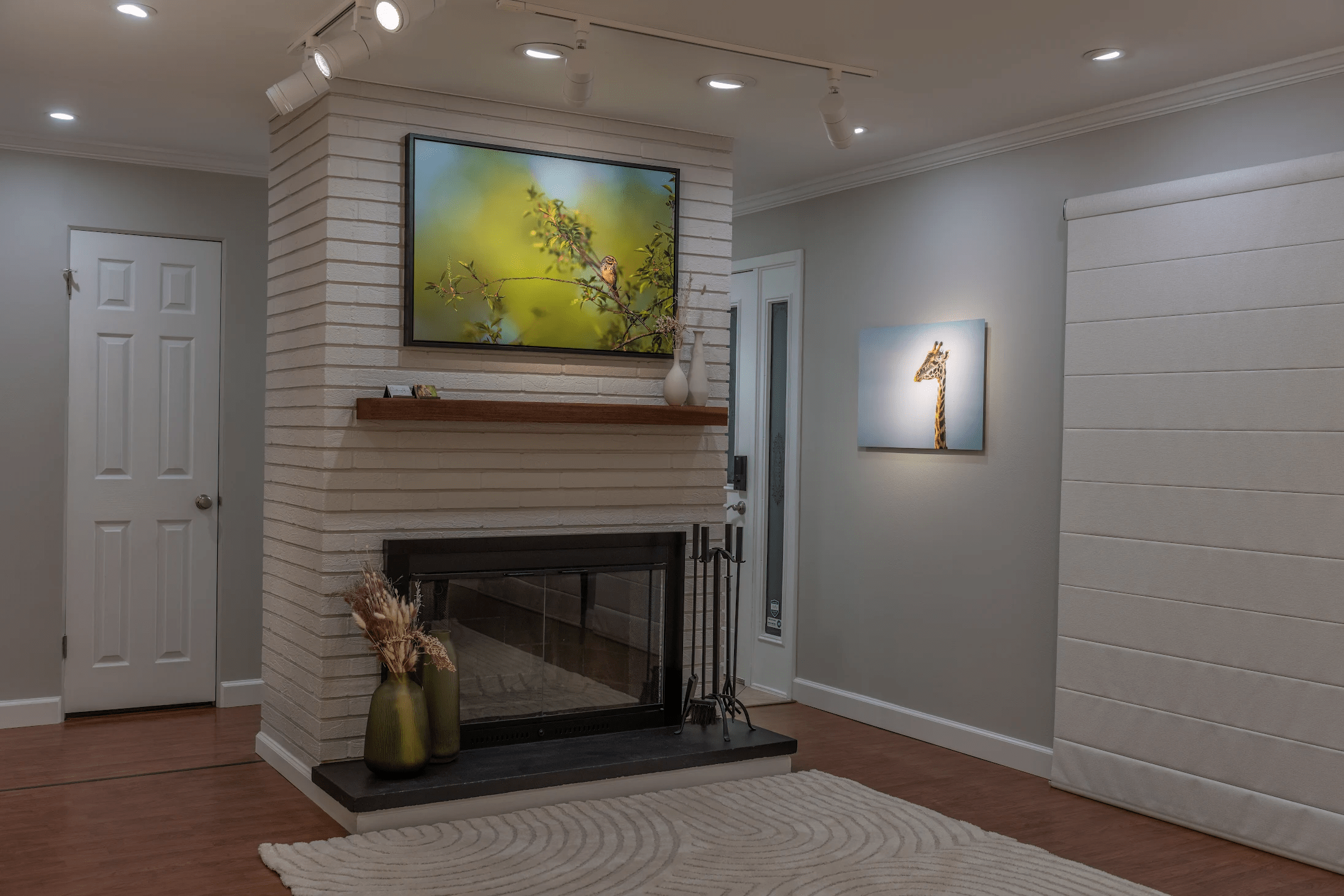
Residential painting illuminated by mounted picture light above frame
There is often debate between fixed picture lights and track mounted adjustable art spot light systems.
Picture wall lights:
• Cleaner aesthetic
• Suitable for permanent installations
• Limited flexibility
Track systems:
• Highly flexible
• Ideal for rotating exhibitions
• Adjustable positioning along rail
For collectors with evolving collections, track based adjustable art display lighting provides long term adaptability.
Dimming Strategy and Artwork Conservation
Dimming is not only aesthetic. It is conservation driven.
Delicate works on paper, textiles, and photographs require reduced lux levels. An adjustable art light with integrated dimming allows precise control.
Best practice includes:
- Separate dimming circuits for artwork
- Calibration during installation
- Monitoring over time
Museum grade systems like Deluxe are designed with conservation in mind, maintaining color stability even at lower output levels.
Adjustable Art Light in Mixed Media Installations

Contemporary mixed media artwork illuminated with adjustable directional lighting
Contemporary art often combines:
- Metal
- Resin
- Glass
- Fabric
- Reflective surfaces
Each material reacts differently to light.
An adjustable art display light must allow:
- Beam shaping
- Subtle repositioning
- Softening to reduce harsh reflections
This is where flexible gallery systems such as Multi type fixtures become valuable. Their adaptability supports curatorial experimentation.
Precision Lighting for Small Works
Small paintings and drawings require tighter beam control.
A wide beam adjustable picture frame light can overwhelm a small piece, reducing contrast.
Instead, narrow optics are preferred. Precision solutions like Zoom style fixtures are engineered specifically for:
- Small format works
- Works displayed in clusters
- Salon style hangs
Control is critical when artworks are closely spaced.
Ceiling Height and Adjustable Art Spot Light Placement

High ceiling gallery with adjustable spotlights aimed at wall artworks
Ceiling height dramatically affects lighting geometry.
Low ceilings:
• Require careful glare control
• May need wider beam angles
• Demand minimal fixture intrusion
High ceilings:
• Require higher output
• Benefit from narrow beam optics
• May need extended mounting arms
Recessed adjustable art light installations in tall galleries often incorporate extended tilt capability to maintain correct aiming angle.
Wall Color and Reflectance Considerations
Lighting does not operate in isolation. Wall color influences perceived brightness and artwork contrast.
Dark walls:
• Increase perceived artwork contrast
• Require slightly higher illumination levels
Light walls:
• Reflect more light
• May reduce perceived depth
An adjustable artwork light must be calibrated within the context of its environment, not in isolation.
Integration With Architectural Design
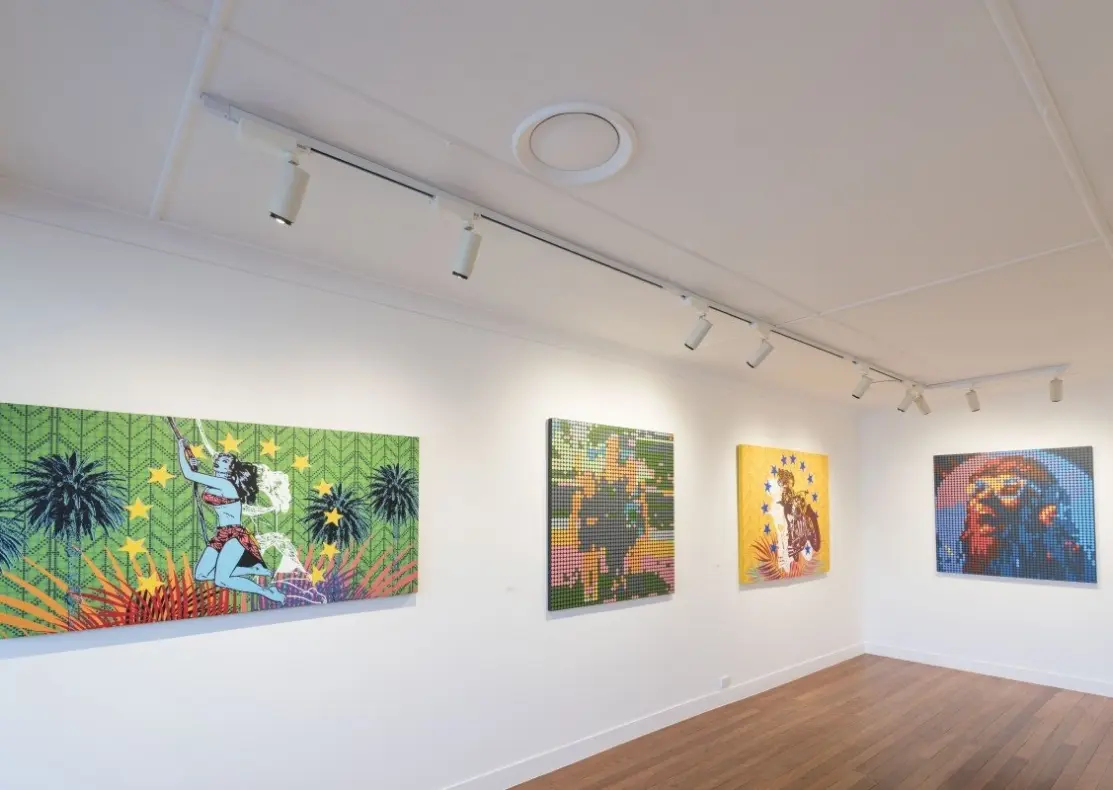
Gallery architecture designed with built in adjustable lighting system
The most successful art display lighting is integrated at architectural planning stage.
Considerations include:
- Ceiling cutout placement
- Track alignment with wall axes
- Electrical zoning
- Access for maintenance
When adjustable art lights are added as an afterthought, compromises are inevitable.
Designers and architects who treat art lighting as a primary design element achieve superior results.
How to Add Light to a Drawing Without Overexposure
Works on paper are particularly sensitive.
To add light to a drawing:
- Use lower lux levels
- Avoid excessive contrast
- Maintain stable color temperature
- Ensure beam does not spill beyond frame
An adjustable art light with fine dimming and beam precision is essential for these works.
Balancing Art Lighting in Residential Spaces

Contemporary home interior highlighting painting without overpowering space
High end homes increasingly mimic gallery environments.
However, residential spaces also require:
- Comfort
- Warmth
- Integration with furniture and décor
An adjustable art wall light can provide focus while maintaining ambiance.
The key is balance. Artwork should feel elevated but not isolated from the room.
Advanced Art Lighting Guide Principles
Professional art lighting guide standards emphasize:
- Uniformity ratio control
- Controlled contrast
- Visual hierarchy
- Reversibility of installation
- Long term serviceability
Adjustable art lights enable compliance with these principles, especially in institutional contexts.

Psychological Impact of Adjustable Art Lighting

Focused art lighting encouraging longer viewer engagement with artwork
Lighting shapes perception.
Well executed adjustable art lighting:
- Increases viewer dwell time
- Enhances emotional engagement
- Reinforces perceived value
- Supports curatorial narrative
Poor lighting reduces impact, even if the artwork itself is exceptional.
Collectors and galleries investing in precision adjustable art display lighting are investing in experience.
Adjustable Artist Lamp vs Display Lighting
An adjustable artist lamp is designed for creation, not exhibition.
Differences include:
Artist lamp:
• Task focused
• Wide, even distribution
• Close proximity use
Adjustable art display light:
• Accent focused
• Directional precision
• Designed for viewer perspective
Understanding this distinction prevents common specification errors.
The Future of Adjustable Art Lighting

Modern gallery using tunable white LED lighting for artwork
Emerging trends include:
- Tunable white technology
- Digital beam shaping
- Smart control systems
- Integrated conservation monitoring
While innovation continues, the core principle remains unchanged: precision control and respect for the artwork.
An adjustable art light is ultimately a tool of interpretation. It reveals. It protects. It frames the way we see.
For galleries, museums, designers, and collectors, mastering adjustable art display lighting is not optional. It is foundational to presenting artwork at its highest potential.
20 FAQs
1. What is an adjustable art light
An adjustable art light is a directional fixture designed to illuminate artwork with controlled beam angle and high color accuracy.
2. What is the best lighting for artwork
High CRI LED lighting with adjustable beam control and a 2700K to 3000K color temperature is generally best.
3. How do you light up artwork properly
Install lighting at a 30 degree angle, ensure even coverage, and avoid glare.
4. Are adjustable picture lights good for oil paintings
Yes, if they provide even distribution and proper color rendering.
5. Can recessed adjustable art lights be used in homes
Yes, especially in modern interiors where minimal visual hardware is preferred.
6. What beam angle is best for paintings
It depends on size, but 24 to 36 degrees works for many medium sized pieces.
7. Is LED safe for artwork
Yes, high quality LED is safe and produces minimal heat and no UV.
8. How do you avoid glare on framed art
Use a 30 degree angle and ensure proper beam spread and shielding.
9. What color temperature is ideal for art lighting
2700K to 3000K is most commonly preferred.
10. What is art display lighting
It refers to professional lighting systems designed specifically to illuminate artwork.
11. Can I use regular spotlights for art
Standard spotlights lack the optical precision and color accuracy required.
12. How bright should art lighting be
Bright enough to distinguish artwork from surroundings but within conservation limits.
13. What is an adjustable painting light
A fixture mounted above or near a painting with directional control.
14. Should artwork be backlit
Only in specific contemporary installations. Most art requires front directional lighting.
15. What is CRI in art lighting
CRI measures how accurately a light source reveals colors compared to natural light.
16. Can adjustable art lights be dimmed
Yes, dimming allows fine tuning based on medium and environment.
17. How far should lights be from artwork
Distance depends on beam angle and fixture type but typically allows for 30 degree aiming.
18. Is track lighting good for galleries
Yes, it provides flexibility and adjustability for rotating exhibitions.
19. What is an art wall light
A wall mounted fixture designed to illuminate artwork.
20. Why does lighting affect perceived artwork quality
Because lighting influences color accuracy, texture visibility, depth perception, and overall presentation.
Real Feedback from Art Collectors