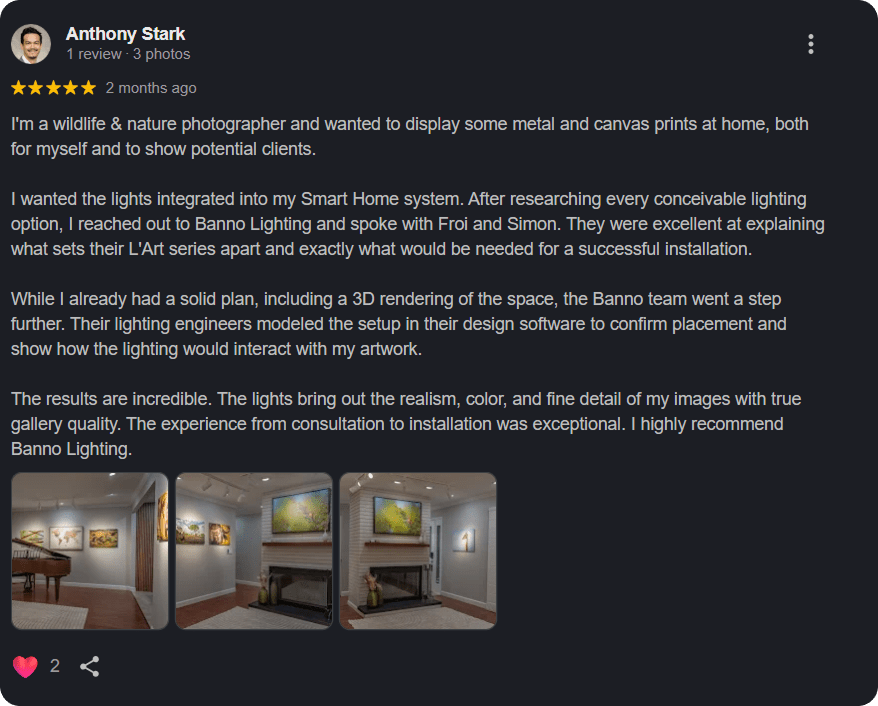
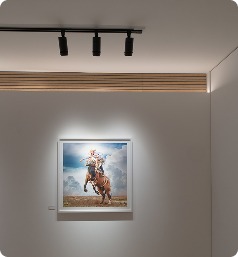
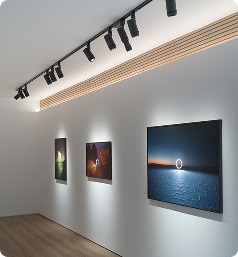
Contemporary gallery wall lit with museum-grade LED lighting
Art display lighting is one of the most critical yet overlooked elements in the presentation of artwork across galleries, museums, exhibitions, and high-end residential collections. Proper lighting to display art does far more than illuminate a piece. It enhances color accuracy, reveals texture, establishes visual hierarchy, and ultimately shapes how the artwork is perceived emotionally and intellectually.
Whether in a gallery, museum, exhibition, or private home, art display lighting must be intentional, precise, and conservation-aware. Unlike general lighting, specialised art lighting is designed to protect the integrity of artwork while presenting it under optimal visual conditions that align with curatorial and professional standards.
Trusted by Galleries: A Professional Perspective on Our Lighting
What Is Art Display Lighting and Why It Matters
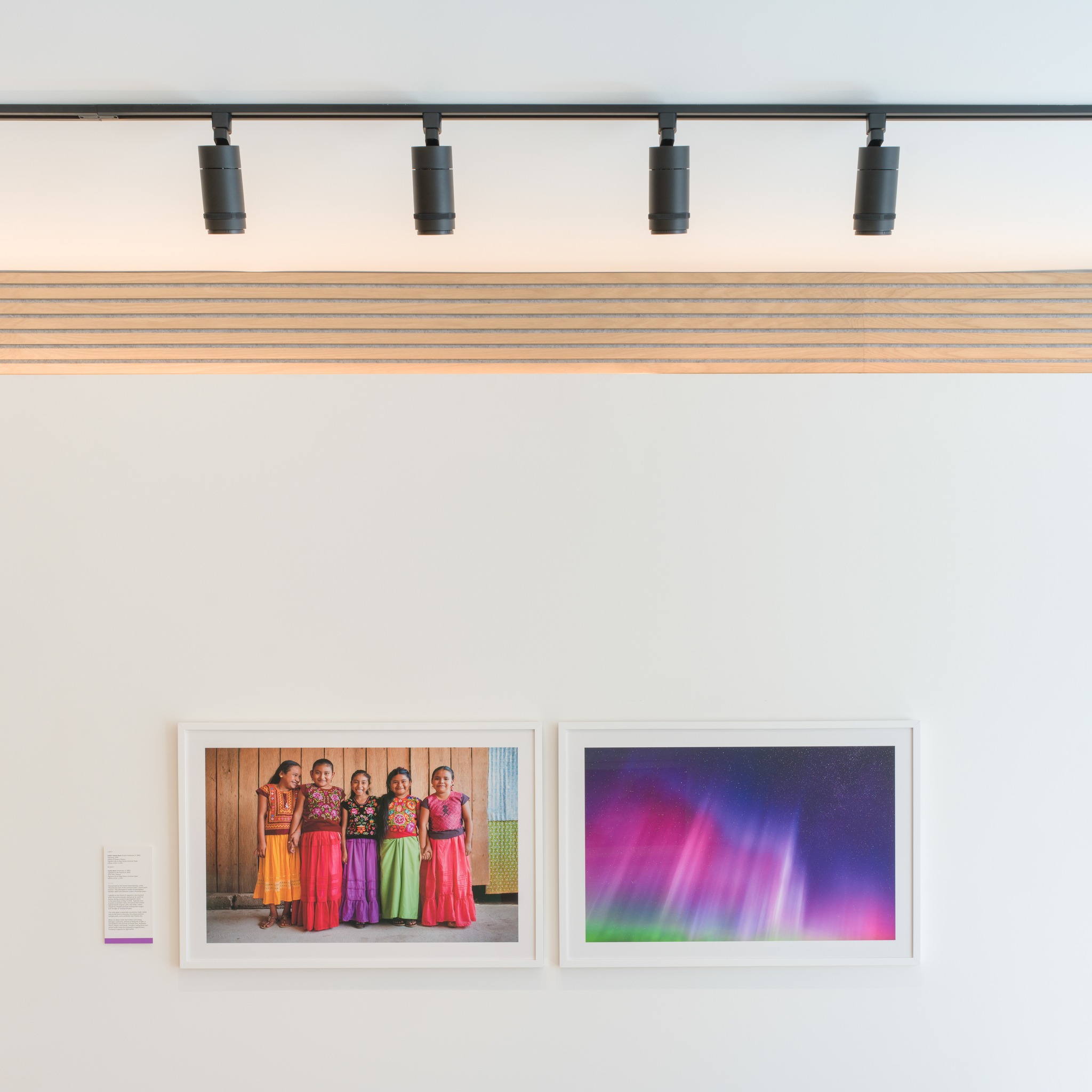
Exhibition space demonstrating accurate color rendering and clarity
Art display lighting refers to specialised lighting systems used to illuminate artwork in a controlled and refined manner. This includes paintings, sculptures, installations, glass art, and mixed media works displayed in galleries, exhibitions, or curated interior environments.
The primary goals of art display lighting include:
- Accurate color rendering
- Controlled illumination without glare
- Enhanced surface texture visibility
- Balanced brightness across artworks
- Long-term artwork preservation
Without proper lighting, even museum-quality artwork can appear flat, dull, or visually distorted.

4.9-star rated by art collectors and gallery professionals
How to Light Up Artwork Correctly
Understanding how to light up artwork requires both technical knowledge and aesthetic sensitivity. Lighting placement, beam angle, and color temperature all influence how a piece is visually experienced.
The 30-Degree Lighting Principle
A widely accepted standard in art gallery lighting design is the 30-degree lighting angle. This technique involves directing light at the artwork from an angle that reduces glare while maintaining even illumination across the surface.
Benefits include:
- Reduced reflections on framed artwork
- Enhanced texture and brushstroke visibility
- Balanced light distribution
- Improved viewer comfort
This method is commonly used in museums and professional exhibitions worldwide.
Art Lighting Design for Galleries and Exhibitions

Spotlighted feature artwork creating visual hierarchy
Art lighting design is a specialised discipline that integrates lighting technology with curatorial intent. In exhibitions, lighting is used not only for visibility but also for storytelling and spatial flow.
Effective art exhibition lighting design considers:
- Artwork size and medium
- Viewing distance
- Wall color and surface reflectivity
- Lux levels for conservation
- Exhibition layout and visitor movement
Lighting art exhibitions requires precision to ensure each piece receives appropriate illumination without visual competition from surrounding works.
Display Lighting for Art in Different Environments
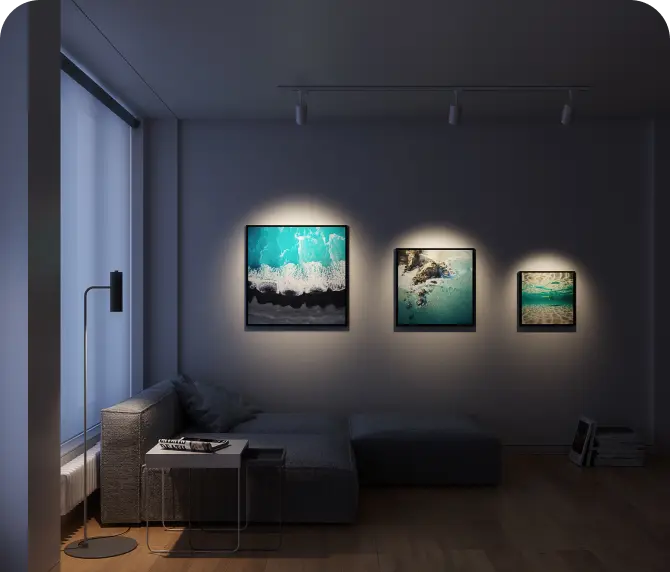
Modern living room with integrated art display lighting
Gallery and Museum Spaces
Art gallery lighting systems prioritise uniformity, conservation, and optical precision. Controlled beam lighting and track systems are commonly used to achieve museum-grade illumination.
Residential Art Displays
Art display lighting for homes focuses on both aesthetics and accuracy. Wall art display lighting and picture-focused fixtures allow homeowners to replicate gallery-style presentation within interior spaces.
Exhibition and Art Show Lighting
Art show lighting must be flexible and adaptable due to temporary installations and changing layouts. Exhibition lighting design often incorporates adjustable fixtures and modular lighting systems.
Wall Art Display Lighting and Vertical Illumination
Wall art display lighting is essential for paintings, photographs, and framed artworks. Improper overhead lighting can create shadows and glare that reduce visual clarity. Directional lighting fixtures positioned at controlled angles provide even illumination across the artwork surface.
Key considerations include:
- Beam spread matching artwork size
- Controlled fixture positioning
- Consistent brightness across gallery walls
- Minimal glare and reflection control
This ensures that the artwork remains the focal point rather than the lighting source.
Glass Art Display Lighting and Reflective Surfaces

Reflection-controlled spotlight on transparent artwork
Glass art display lighting requires specialised attention due to reflective surfaces. Direct lighting can cause glare, reflections, and visual distortion if not properly controlled.
Best practices include:
- Angled lighting placement
- Diffused beam optics
- Low-glare fixture design
- Balanced ambient and accent lighting
These techniques enhance visibility while preserving the visual clarity of delicate glass artworks.
Art Display LED Lights and Modern Illumination Technology
Art display LED lights have become the global standard due to their efficiency, stability, and conservation benefits. Unlike traditional lighting, LED systems produce minimal heat and UV radiation, making them ideal for sensitive artworks.
Advantages of LED art display lighting include:
- Long operational lifespan
- Stable color temperature
- Energy efficiency
- Low maintenance requirements
- Conservation-safe illumination
This makes LED lighting particularly suitable for galleries, museums, and collector environments.
Art Gallery Lighting Color Temperature and Visual Accuracy

Neutral white lighting preserving artwork colors
Color temperature plays a decisive role in how artwork appears under lighting. Incorrect lighting temperature can distort colors and alter the emotional tone of a piece.
Neutral color temperatures are typically preferred for art display lighting because they:
- Preserve true color representation
- Enhance tonal balance
- Maintain visual neutrality
- Support professional exhibition standards
Careful calibration of color temperature ensures that artwork is presented as the artist intended.
Professional Art Display Light Fixtures for Precision Illumination
Specialised art display light fixtures are designed with precision optics, adjustable beam angles, and glare control features that elevate artwork presentation. In professional environments, discreet and high-performance lighting is preferred to maintain visual focus on the artwork.
Precision lighting solutions such as Zoom (precision art lighting), Deluxe (museum-grade lighting), and Multi (flexible gallery lighting) are commonly used in galleries, exhibitions, and high-end residential collections. These fixtures provide refined beam control and exceptional color accuracy, allowing artworks to be illuminated evenly without harsh hotspots or visual distraction.
Exhibition Lighting Design and Curatorial Storytelling

Soft ambient illumination supporting exhibition flow
Lighting art exhibitions is not only technical but also conceptual. Exhibition lighting design helps guide viewer attention, create emotional atmosphere, and support curatorial narratives.
Strategic lighting techniques include:
- Accent lighting for focal artworks
- Soft ambient lighting for balance
- Directional lighting for visual flow
- Controlled contrast between exhibition zones
This enhances both engagement and interpretive experience for viewers.
Lighting to Display Art Without Glare or Damage
Glare and excessive light exposure are two of the biggest risks in art display lighting. High-quality lighting systems minimise these risks through controlled optics and conservation-focused illumination.
Proper lighting to display art should:
- Avoid direct reflections
- Maintain safe lux levels
- Produce minimal heat output
- Provide stable long-term illumination
This is especially important for original paintings, prints, and delicate mixed media works.
Art Display Lighting for High-End Collectors and Designers

Architectural lighting highlighting artwork
Collectors and interior designers increasingly prioritise museum-grade art display lighting to enhance private collections. In luxury interiors, art lighting is integrated into architectural design to create a curated and refined visual environment.
Professional art display lighting in residential settings enhances:
- Artwork prominence
- Interior sophistication
- Perceived artwork value
- Overall spatial elegance
The Long-Term Value of Proper Art Display Lighting
Investing in high-quality art display lighting provides long-term benefits in both presentation and preservation. Consistent lighting enhances viewer experience while protecting artwork from unnecessary exposure to damaging environmental factors.
Long-term advantages include:
- Improved artwork visibility over time
- Reduced maintenance and replacement costs
- Energy-efficient illumination
- Enhanced curatorial presentation standards
Art Display Lighting and Visual Perception of Artwork

Close-up brushwork revealed through precision lighting
Art display lighting directly influences how viewers perceive scale, color depth, contrast, and emotional tone. Even minor variations in lighting intensity or angle can dramatically change how a painting, sculpture, or installation is experienced. In professional gallery and museum environments, lighting is calibrated to ensure that the artwork remains visually authentic while enhancing legibility and engagement.
When art display lighting is carefully controlled, it reveals subtle details such as brushwork, surface texture, and tonal transitions that may otherwise remain unnoticed. This is particularly important for fine art pieces where material nuance and craftsmanship are integral to the artistic experience.
In contrast, poorly executed lighting can flatten compositions, distort color relationships, and reduce the perceived value of the artwork.
Establishing Visual Hierarchy Through Art Display Lighting
A critical function of art display lighting is the creation of visual hierarchy within a space. Not all artworks in a gallery, exhibition, or collection are meant to receive equal emphasis. Strategic lighting allows curators and designers to guide the viewer’s attention toward key pieces while maintaining balanced illumination across the entire display.
This is achieved through:
- Slightly higher illumination levels on focal artworks
- Subtle contrast between primary and secondary pieces
- Directional lighting to guide visual flow
- Controlled ambient lighting for spatial balance
By shaping visual hierarchy through lighting, exhibitions become more immersive and narratively coherent.
Lighting Principles for Different Artwork Sizes and Formats

Wide beam lighting covering large canvas evenly
Art display lighting must always be adapted to the scale and format of the artwork. A small framed piece requires a different lighting approach compared to a large canvas or sculptural installation.
Small and Detailed Artworks
Smaller artworks benefit from focused, narrow beam lighting that enhances detail without overpowering the surrounding space. Precision illumination ensures that fine lines, textures, and intricate elements remain clearly visible.
Large Paintings and Feature Pieces
Large-scale artworks require broader beam angles and evenly distributed lighting to prevent hotspots and uneven brightness. Multiple light sources may be used to ensure uniform illumination across the surface.
Sculptures and Three-Dimensional Art
Three-dimensional works benefit from directional lighting that creates controlled shadows, enhancing form, depth, and dimensionality. Balanced lighting from multiple angles prevents harsh shadowing that may obscure details.
The Role of Contrast and Shadow in Art Lighting Design
Contrast and shadow are essential elements in art lighting design. Rather than eliminating shadows entirely, professional art display lighting uses controlled shadowing to enhance depth and visual interest. Soft shadows can add dimension to textured artworks, while excessive shadowing can distract from the piece.
Balanced contrast improves:
- Perceived depth
- Visual drama
- Artwork legibility
- Spatial definition within exhibitions
Lighting designers often adjust fixture positioning and beam intensity to achieve the optimal balance between illumination and shadow.
Art Display Lighting for Mixed Media and Sensitive Materials

Paper artwork illuminated with conservation-grade fixtures
Mixed media artworks often combine various materials such as paper, fabric, metal, and acrylic, each reacting differently to light exposure. Art display lighting in these cases must be carefully calibrated to avoid damage while maintaining visual clarity.
Sensitive materials require:
- Low heat lighting sources
- Controlled lux levels
- Stable color temperature
- Minimal ultraviolet exposure
These conservation-focused lighting strategies are essential for preserving the longevity and integrity of valuable artworks.
Lighting to Display Art in Minimalist and Contemporary Spaces
In modern galleries and high-end residential interiors, minimalist design aesthetics require lighting systems that are discreet yet highly effective. Art display lighting in these spaces is often integrated into architectural features such as recessed ceilings, track systems, or concealed lighting channels.
This approach offers:
- Clean visual presentation
- Reduced fixture visibility
- Enhanced focus on artwork
- Seamless integration with interior design
Minimalist lighting ensures that attention remains on the artwork rather than the lighting infrastructure.
Adaptability and Flexibility in Art Display Lighting Systems
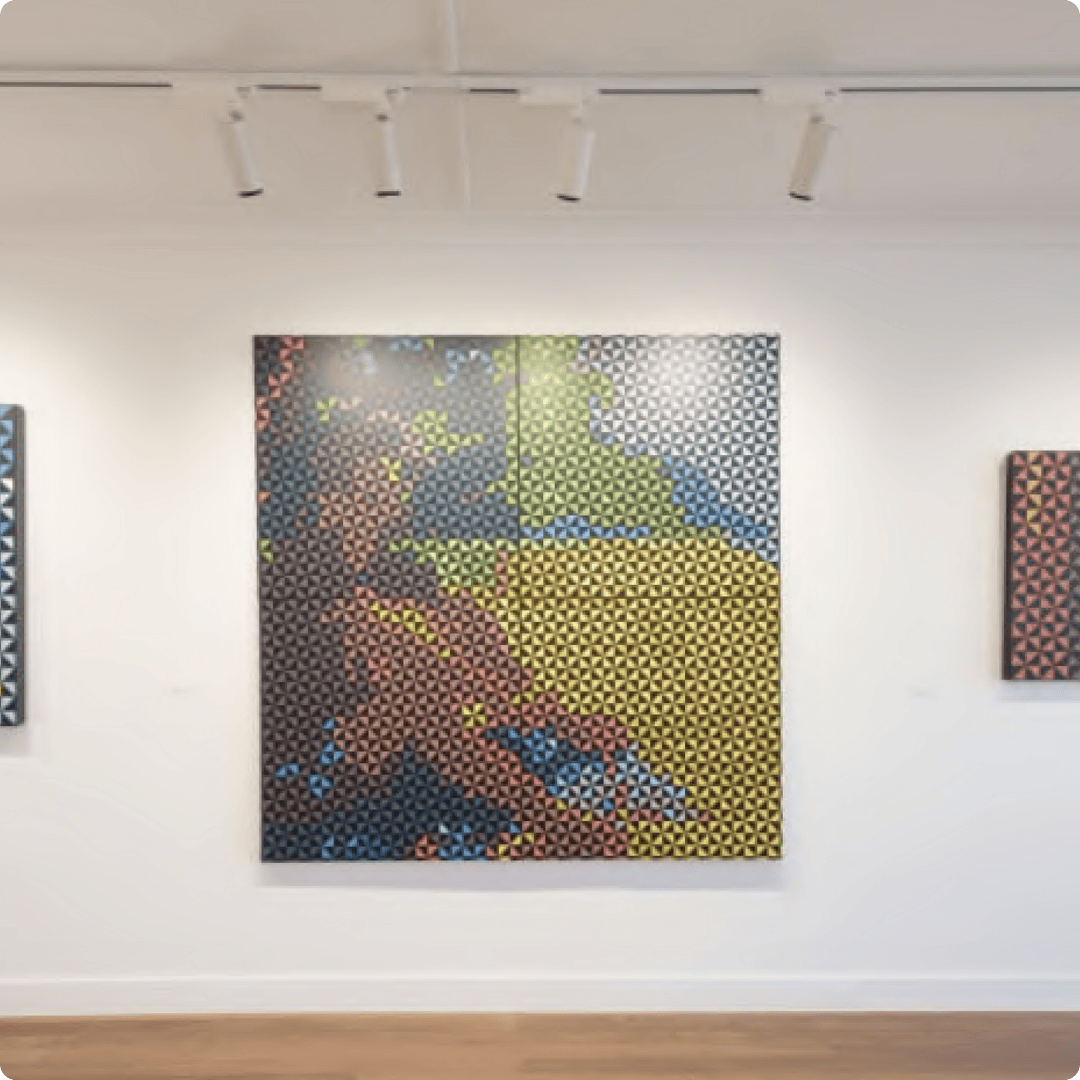
Adjustable track lighting for rotating exhibitions
Art collections and exhibitions are rarely static. Art display lighting must therefore be flexible enough to accommodate new artworks, changing layouts, and evolving curatorial concepts. Adjustable lighting systems allow for repositioning and recalibration without requiring major structural modifications.
Flexible art lighting solutions support:
- Rotating exhibitions
- Temporary displays
- Growing private collections
- Curated gallery reconfigurations
This adaptability is particularly valuable in professional galleries and collector environments where presentation standards must remain consistently high.
Energy Efficiency and Thermal Management in Art Lighting
Thermal output is a significant consideration in art display lighting, especially for long-term installations. Excessive heat from lighting fixtures can accelerate material degradation and affect the preservation of artwork.
Modern lighting systems are designed to provide:
- Low heat emission
- Stable illumination output
- Energy-efficient performance
- Reduced environmental impact
This ensures that artworks are protected while maintaining high-quality visual presentation over extended periods.
Psychological Impact of Art Display Lighting on Viewers

Balanced illumination encouraging immersive viewing
Lighting does not only affect artwork; it also influences the emotional response of viewers. Carefully designed art display lighting can create a contemplative atmosphere, enhance emotional resonance, and encourage deeper engagement with the artwork.
Soft, balanced lighting often creates a calm and immersive viewing experience, while slightly intensified accent lighting can introduce drama and emphasis. These psychological effects are widely used in museums and curated exhibitions to shape the overall visitor experience.
Maintenance and Long-Term Consistency in Art Display Lighting
Maintaining consistent art display lighting over time is essential for both presentation quality and artwork preservation. Even high-quality lighting systems require periodic evaluation to ensure optimal performance.
Routine maintenance may include:
- Cleaning lenses and fixtures
- Re-aiming lights after artwork repositioning
- Checking brightness consistency
- Monitoring color stability
Consistent maintenance ensures that lighting continues to meet professional gallery standards.

Integrating Art Display Lighting with Curatorial Strategy

Lighting design reinforcing exhibition theme
Curators and designers often use lighting as a strategic tool to reinforce exhibition themes and artistic narratives. Art display lighting can be adjusted to reflect the mood, historical context, or conceptual focus of an exhibition.
For example:
- Soft, diffused lighting may suit classical artworks
- Neutral lighting may enhance contemporary collections
- Directional lighting may emphasise conceptual installations
This integration of lighting and curatorial vision elevates the overall presentation and interpretive depth of the exhibition.
Art Display Lighting as a Signature Element of Professional Presentation

Refined illumination transforming curated exhibition space
Ultimately, art display lighting is not merely a technical requirement but a defining element of professional art presentation. Whether in galleries, museums, exhibitions, or private collections, lighting determines how artwork is seen, understood, and appreciated.
High-quality art display lighting enhances clarity, preserves artistic intent, and elevates the viewing experience to a museum-grade standard. By combining precision illumination, conservation awareness, and thoughtful design, art display lighting transforms static displays into visually compelling and professionally curated environments where artwork can be experienced in its fullest depth and authenticity.
FAQs
What is art display lighting?
Art display lighting is specialised lighting used to illuminate artwork with precision and visual balance.What is the best lighting for artwork display?
High CRI, low-glare, neutral color temperature lighting is ideal.How do galleries light artwork professionally?
Using angled accent lighting, controlled beam optics, and track lighting systems.Is LED lighting good for art display?
Yes, LED lighting provides stable illumination with minimal heat and UV exposure.What color temperature is best for art lighting?
Neutral white lighting is commonly preferred for accurate color representation.How do you avoid glare when lighting artwork?
By using angled lighting and anti-glare fixtures.Can art lighting damage paintings?
Poor lighting can cause damage, but conservation-grade lighting is safe.What is exhibition lighting design?
The strategic planning of lighting for art exhibitions and displays.How bright should art display lighting be?
Bright enough for clarity but controlled to avoid overexposure.What are art display LED lights?
LED fixtures specifically designed for illuminating artwork.Is track lighting good for art displays?
Yes, it provides flexibility and precise illumination control.Can art display lighting be used at home?
Yes, it is ideal for gallery walls and private collections.Why is lighting important in art galleries?
It enhances visibility, color accuracy, and viewer engagement.What beam angle is best for artwork lighting?
Narrow to medium beam angles depending on artwork size.Do museums use specialised art lighting?
Yes, museums use conservation-grade lighting systems.How do you light a gallery wall?
With evenly spaced directional accent lighting.What is art lighting design?
A specialised approach to lighting artwork professionally.Can lighting change how artwork looks?
Yes, lighting significantly affects color, depth, and texture perception.What are art gallery lighting guidelines?
Standards focusing on glare control, lux levels, and color accuracy.Is battery operated art display lighting effective?
It can be useful for small or temporary art displays.
What Our Clients Are Saying About Our Lighting Systems