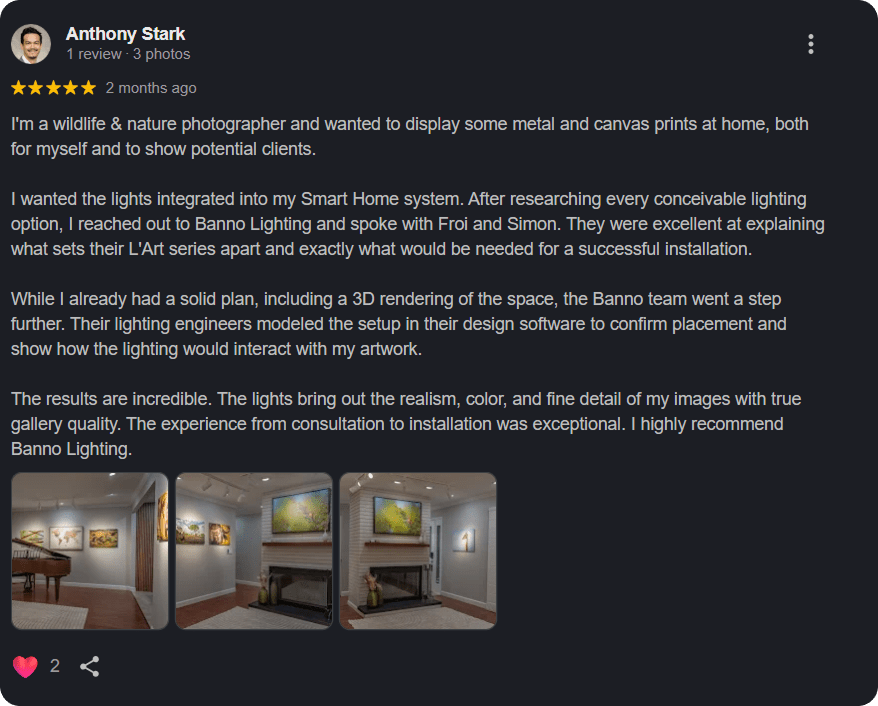
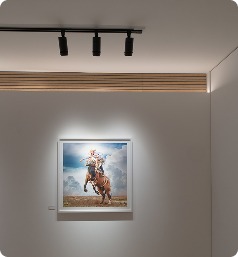
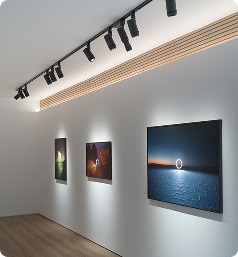
Museum-grade lighting enhancing texture depth across gallery wall
Art gallery light fixtures are not ordinary lighting products. They are specialised lighting systems designed to illuminate artwork with precision, accuracy, and visual consistency while protecting the integrity of paintings, sculptures, and curated collections.
In professional galleries, museums, and high-end residential interiors, lighting is considered a core part of the artwork experience. The right gallery lighting fixtures can enhance colour depth, highlight texture, guide viewer attention, and elevate the perceived value of an entire exhibition space.
This guide explores the different types of art gallery light fixtures, professional lighting design principles, and how museum-grade gallery lighting systems are used to illuminate artwork properly.
What Are Art Gallery Light Fixtures?

Adjustable art display light reducing glare and reflections
Art gallery light fixtures are professional lighting solutions specifically engineered to display artwork rather than simply illuminate a room. Unlike decorative lighting or standard ceiling lights, gallery lighting fixtures focus on directional control, colour accuracy, and glare reduction.
These fixtures are commonly used in:
- Art galleries
- Museums
- Exhibitions
- Private art collections
- Luxury residential gallery walls
- Auction houses and showrooms
Professional art gallery lighting is designed to highlight artwork as the focal point, not the surrounding environment.

4.9-Star Google Review for Our Art Lighting Solutions
Why Standard Lighting Is Not Suitable for Galleries
Many spaces mistakenly use generic ceiling lights or decorative fixtures to illuminate artwork. While this may provide general brightness, it fails to properly showcase artistic detail and can even cause long-term damage.
Standard lighting often:
- Produces glare on framed artwork
- Distorts colour accuracy
- Creates uneven illumination
- Generates excessive heat (in older lighting types)
- Lacks directional control
Art gallery lighting fixtures, by contrast, are engineered to provide focused, controlled illumination that enhances both visual presentation and artwork preservation.
Types of Art Gallery Light Fixtures

Architectural art lighting integrated into contemporary museum ceiling
1. Track Lighting Systems (Primary Choice for Galleries)
Track lighting is the most widely used lighting system in professional galleries. It allows multiple adjustable light fixtures to be mounted along a track, giving curators flexibility to reposition lights as exhibitions change.
Benefits of gallery track lighting systems:
- Adjustable spotlight positioning
- Scalable for multiple artworks
- Clean architectural integration
- Consistent illumination across walls
- Ideal for rotating exhibitions
This flexibility makes track lighting the industry standard for art gallery lighting design.
2. Adjustable Spotlights for Artwork
Directional spotlights are essential for highlighting individual paintings and focal artworks. These fixtures allow precise beam control, ensuring that light is focused on the artwork rather than spilling across the entire wall.
High-quality gallery spotlights typically feature:
- Narrow to adjustable beam angles
- High CRI output
- Anti-glare optics
- Dimmable functionality
This level of control is critical for galleries displaying high-value or detailed artworks.
3. Ceiling-Mounted Gallery Lighting Fixtures
In some gallery environments, recessed or ceiling-mounted fixtures are used to maintain a minimalist aesthetic while still providing professional illumination.
These fixtures are best suited for:
- Permanent exhibitions
- Contemporary gallery spaces
- Museum environments
- Architectural lighting integrations
When properly designed, ceiling-mounted gallery lighting can create a seamless and distraction-free viewing experience.
4. Museum-Grade Art Lighting Fixtures
Museum art lighting fixtures represent the highest standard of gallery illumination. These systems prioritise artwork preservation, visual accuracy, and long-term reliability.
Museum-grade lighting typically includes:
- Ultra-high CRI (95–97+)
- Precise beam shaping optics
- Flicker-free drivers
- Low UV and heat output
- Professional dimming control
These features ensure that artwork is displayed safely while maintaining curatorial lighting standards.
Art Gallery Lighting for Paintings and Artwork

Balanced gallery lighting enhancing depth and brushwork
Lighting paintings in a gallery requires a highly controlled approach. Improper lighting can flatten colours, create glare, or reduce visual depth.
Professional gallery lighting for paintings focuses on:
- Even illumination across the canvas
- Controlled beam angles (typically around 30 degrees)
- Reduced reflections on glass frames
- Accurate colour rendering
Whether displaying oil paintings, contemporary art, or photography, the goal of art gallery lighting fixtures is to enhance the artwork without overpowering it.
Gallery Lighting Design Principles (Professional Standards)

High CRI lighting comparison showing colour accuracy difference
Colour Rendering Index (CRI)
CRI measures how accurately a light source displays colour. For art gallery lighting, a CRI of 95 or higher is strongly recommended to ensure artwork appears true to life.
Low CRI lighting can distort colours and negatively impact the viewing experience, which is unacceptable in professional gallery environments.
Beam Angle and Light Direction
The beam angle determines how focused the light is on the artwork. Narrow beams are ideal for spotlighting individual pieces, while wider beams are used for larger artworks or wall displays.
A 30-degree lighting angle is commonly used in galleries to minimise glare and highlight texture effectively.
Colour Temperature for Gallery Lighting
Colour temperature plays a major role in how artwork is perceived.
Typical recommendations:
- 3000K: Warm and traditional gallery atmosphere
- 3500K: Balanced and natural presentation
- 4000K: Neutral and museum-style clarity
Choosing the correct colour temperature ensures visual consistency across exhibitions.
Lux Levels and Artwork Preservation
Professional galleries carefully manage light intensity (lux levels) to protect sensitive artworks. Excessive brightness, even from safe LED sources, can contribute to long-term fading if not properly controlled.
Dimmable gallery lighting systems allow curators and designers to adjust brightness according to artwork sensitivity and exhibition duration.
Art Gallery Lighting Systems for Professional Installations

Integrated lighting design supporting architectural gallery layout
In modern gallery environments, lighting is rarely treated as a simple fixture selection. Instead, it is approached as a complete lighting system designed around the artwork and space.
Precision spotlight systems are used to illuminate individual artworks with controlled beam focus, ensuring that each piece receives optimal lighting without visual imbalance.
Flexible multi-light systems are commonly used for larger gallery walls or exhibitions with multiple artworks, allowing consistent illumination across the entire display.
For museum-grade and high-end gallery installations, advanced lighting systems are integrated into the architectural design of the space, offering superior control over beam angle, colour temperature, and dimming performance.
This system-based approach ensures that lighting enhances the curatorial vision rather than acting as a secondary afterthought.
Gallery Lighting for Residential Art Collections

Private art collection illuminated with adjustable spotlights
The principles of art gallery lighting are increasingly being applied in luxury residential interiors. Homeowners with curated art collections often require professional gallery lighting fixtures to properly showcase their artwork.
Gallery lighting for home environments typically focuses on:
- Clean architectural integration
- Adjustable spotlighting for artwork
- Minimal glare and reflections
- Consistent lighting across gallery walls
This approach transforms residential spaces into private gallery environments while maintaining the aesthetic integrity of the interior design.
Common Mistakes When Choosing Gallery Light Fixtures
Using Decorative Lighting Instead of Directional Fixtures
Decorative chandeliers and ambient lighting may look visually appealing but rarely provide the focused illumination required for artwork display.
Ignoring CRI and Colour Accuracy
Choosing lighting based solely on brightness rather than colour accuracy can significantly distort artwork appearance.
Poor Fixture Placement
Incorrect positioning can create glare, hotspots, or uneven illumination that reduces the visual impact of the artwork.
Overlighting the Artwork
Excessively bright lighting can overwhelm artwork and contribute to long-term material degradation.
Professional art gallery lighting design avoids these mistakes through precise fixture selection and placement strategy.
Exhibition and Gallery Lighting Design for Curated Spaces

Balanced illumination across contemporary art showcase
Exhibition lighting requires flexibility, precision, and adaptability. Unlike static installations, exhibitions often change layouts, artwork types, and display configurations.
Gallery lighting systems used in exhibitions are designed to:
- Adjust quickly for new displays
- Maintain consistent lighting quality
- Support curatorial storytelling
- Highlight focal artworks strategically
This dynamic lighting approach ensures that each exhibition is visually engaging while maintaining professional lighting standards.
Gallery Track Lighting vs Fixed Fixtures

Professional track system supporting expanding art collection
Track lighting systems offer significantly more flexibility than fixed lighting fixtures. As artwork placements evolve, adjustable track-mounted fixtures allow lighting to be repositioned without major structural changes.
Advantages of gallery track lighting:
- Future-proof lighting layout
- Precise artwork targeting
- Scalable for expanding collections
- Professional aesthetic appearance
For galleries and serious collectors, track lighting remains the most practical and effective lighting solution.
The Role of Lighting in Artwork Perception and Value

Controlled lighting creating dramatic gallery focal point
Lighting does more than illuminate artwork — it shapes how viewers perceive colour, depth, and emotional impact. Poor lighting can make even high-value artwork appear flat and uninspiring, while professional gallery lighting can dramatically enhance visual presence.
In commercial galleries and museums, lighting is carefully curated to guide viewer attention and emphasise key artworks. This strategic use of light increases engagement and strengthens the overall exhibition experience.
Advanced Museum Lighting for Home: Creating a True Gallery Experience
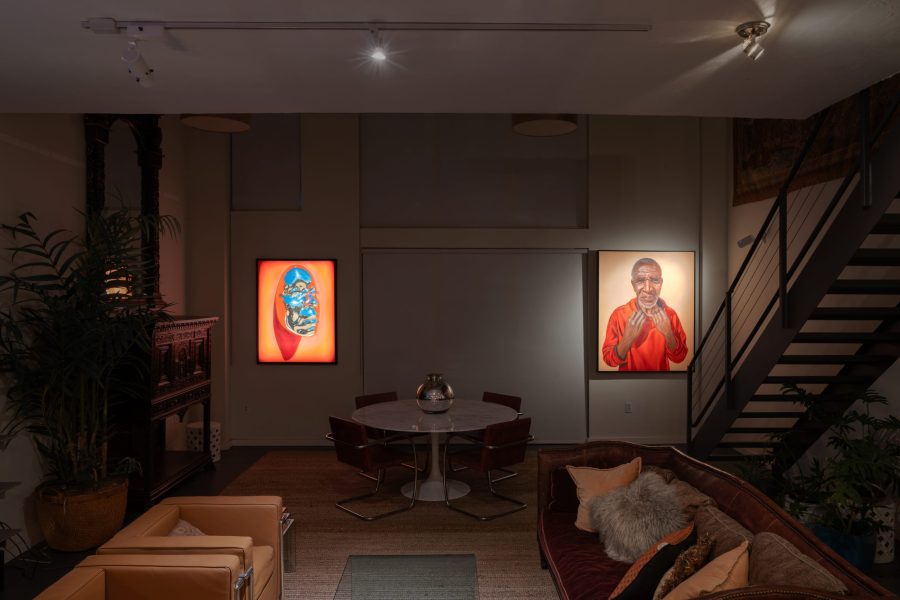
Precision beam control enhancing private collection presentation
When people search for museum lighting for home, they are not just looking for lights. They are looking for a way to elevate their artwork to a museum-grade presentation standard. The difference between normal home lighting and museum-grade art lighting is precision, control, and color accuracy.
In museums, lighting is never accidental. Every beam angle, color temperature, and intensity level is carefully designed to protect and enhance the artwork. This same philosophy can now be applied to private homes, luxury residences, and personal art collections.
Home art gallery lighting is becoming increasingly popular among collectors, architects, and interior designers because traditional ceiling lights and ambient lighting simply do not showcase artwork correctly. Paintings require directional lighting, sculptures require controlled highlights, and glass cabinets require miniature precision lighting systems.
Why Standard Home Lighting Fails Artwork
Most homes rely on:
- Downlights
- Ceiling lights
- Floor lamps
- Natural light
While these are suitable for general living spaces, they are not designed for artwork illumination.
Standard lighting creates:
- Glare on paintings
- Uneven brightness
- Color distortion
- Shadowing on textured artworks
- Heat exposure to valuable pieces
Museum lighting systems are engineered differently. They use high CRI (Color Rendering Index) lighting to reveal the true pigment tones of artwork while minimizing UV and heat damage.
For collectors investing in expensive artworks, improper lighting can significantly reduce visual impact and long-term preservation.
Home Art Gallery Lighting vs Museum Lighting

Museum-grade fixture integrated into architectural ceiling design
Home art gallery lighting focuses on presentation and aesthetic harmony within residential interiors. Museum lighting focuses on preservation, precision, and visual storytelling. The best approach for high-end homes is a hybrid model that combines museum-grade lighting technology with residential interior design principles.
Museum lighting fixtures are typically:
- Adjustable track lighting systems
- Narrow beam spotlights for paintings
- Wall-mounted art lights
- Cabinet lighting for collectibles
- Ceiling-mounted art lights with precise aiming
This layered lighting approach allows homeowners to control how each artwork is perceived, similar to a professional exhibition space.
Best Lighting Types for Artwork at Home
Adjustable track lighting illuminating art collection
Track Lighting for Art Collections
Track lighting is the most flexible solution for home gallery lighting. It allows adjustable positioning, beam control, and future artwork changes without rewiring the ceiling.
Track lighting is especially effective for:
- Gallery walls
- Large paintings
- Rotating collections
- Hallways with artwork displays
Picture Lights for Paintings
Picture lights are mounted above artwork and provide focused illumination. They are commonly used in both museums and luxury homes to highlight key artworks.
Ceiling Mounted Art Lights
Ceiling-mounted art lights are ideal for minimalist interiors where visible fixtures must remain discreet while still delivering museum-grade performance.
Cabinet and Display Lighting
For collectors with sculptures, watches, or museum-style display cabinets, micro lighting systems provide focused illumination without overheating enclosed spaces.
Museum Lighting Color Temperature for Home

Neutral gallery illumination preserving modern artwork tones
One of the most overlooked aspects of art lighting for home is color temperature. Museums typically use lighting between 2700K and 3500K depending on the artwork type.
Warm white lighting (2700K–3000K) enhances classical paintings and traditional art. Neutral white (3000K–3500K) works best for contemporary and modern artworks.
Incorrect color temperature can make:
- Reds appear dull
- Blues look washed out
- Whites turn yellow
- Skin tones in portraits look unnatural
Museum-grade lighting ensures true color accuracy and visual depth.
Lighting Design for Home Art Galleries and Private Collections
Professional lighting design for artwork involves more than installing fixtures. It includes:
- Beam angle planning
- Lux level control
- Artwork spacing analysis
- Reflection management
- Ceiling height considerations
Collectors with large art collections often request a lighting plan similar to museum exhibition layouts. This ensures every artwork receives balanced illumination without overpowering adjacent pieces.
Lighting designers also consider wall color, frame material, and artwork size when developing a home gallery lighting strategy.

Museum-Style Lighting for Different Home Spaces

Dedicated art room featuring adjustable museum lighting
Living Room Art Lighting
Large statement paintings in living rooms require layered lighting using track lights and accent spotlights.
Hallway Gallery Walls
Narrow beam gallery track lighting creates a professional exhibition feel in corridors and transitional spaces.
Private Art Rooms
Dedicated art rooms benefit from museum lighting systems with adjustable intensity and directional control.
Luxury Interiors and Collector Homes
High-end residences often integrate concealed track lighting systems to maintain architectural aesthetics while achieving museum-grade presentation.
The Psychological Impact of Proper Art Lighting
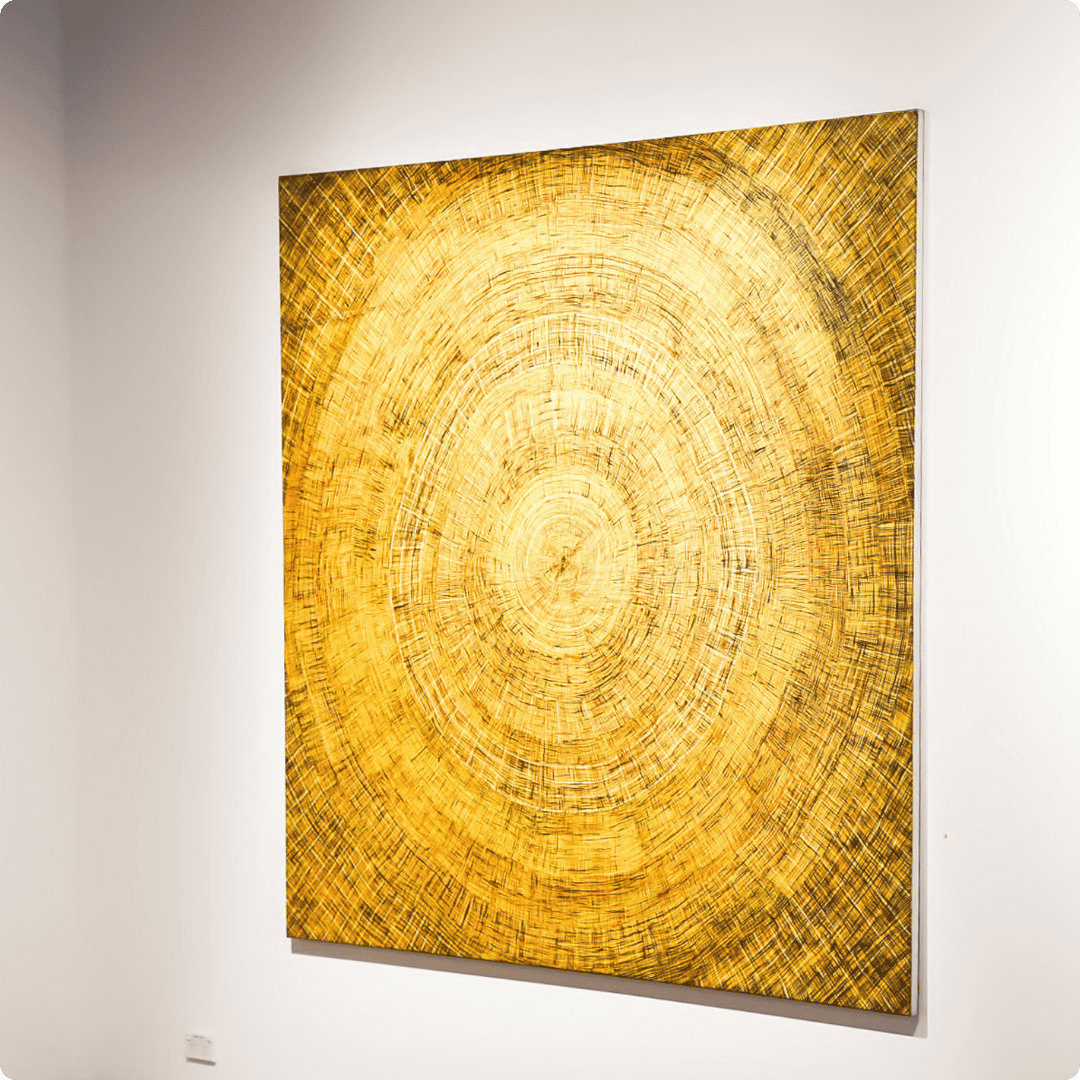
Focused lighting increasing artwork perceived market value
Lighting does not just illuminate artwork. It shapes emotional perception. Museums use controlled lighting to guide viewer attention, enhance depth, and create a premium viewing experience.
In a home setting, proper art lighting:
- Increases perceived artwork value
- Enhances interior luxury feel
- Creates focal points in rooms
- Improves visual storytelling of collections
This is why collectors, galleries, and designers invest in professional art lighting instead of relying on decorative lamps or ceiling lights.
FAQ – Museum Lighting for Home
What is museum lighting for home?
Museum lighting for home refers to professional-grade art lighting systems designed to illuminate artwork with high color accuracy, controlled beam angles, and minimal UV and heat exposure.
What is the best lighting for artwork at home?
The best lighting for artwork is high CRI LED track lighting or museum-grade picture lights with adjustable beam angles and accurate color temperature.
Can I use normal LED lights for paintings?
Standard LED lights can work, but they often lack proper beam control and color accuracy required for high-value artwork.
What color temperature is best for art lighting?
Most experts recommend 2700K to 3000K for warm artwork and 3000K to 3500K for contemporary and modern art pieces.
Is track lighting good for art galleries at home?
Yes, track lighting is considered the best solution for home art galleries due to its flexibility and directional precision.
How do museums light paintings without damaging them?
Museums use low-heat, high CRI LED lighting with UV protection and controlled lux levels to preserve artwork.
Do collectors use museum lighting in their homes?
High-end collectors frequently install museum-grade lighting systems to properly showcase and protect valuable art collections.
How bright should lighting be for paintings?
Lighting levels typically range between 150–300 lux depending on artwork sensitivity and material.
What type of lighting is used in museums?
Museums commonly use adjustable track lighting, spotlights, and conservation-safe LED fixtures.
Can lighting increase the value of artwork presentation?
Yes. Proper lighting enhances depth, color accuracy, and perceived value of artworks significantly.
Is natural light good for artwork?
Direct natural light is not recommended because UV exposure can damage paintings and delicate materials.
What is the difference between gallery lighting and normal home lighting?
Gallery lighting is directional, high CRI, and precision-focused, while normal home lighting is ambient and non-specialized.
Should art lighting be ceiling mounted or wall mounted?
Ceiling-mounted adjustable lights are usually preferred for flexibility and museum-style presentation.
How do I create a home art gallery lighting setup?
Use track lighting, proper beam angles, layered lighting design, and high CRI fixtures for accurate artwork illumination.
What lighting do interior designers recommend for artwork?
Interior designers often recommend museum-grade LED art lights with adjustable focus and warm-neutral color temperatures.
Is museum lighting expensive for homes?
It varies, but high-quality art lighting is a premium investment that significantly improves artwork presentation and longevity.
Can lighting damage artwork over time?
Yes, poor lighting with high heat or UV exposure can fade pigments and damage materials.
What is high CRI lighting for art?
High CRI lighting (90+ CRI) ensures accurate color rendering so artwork appears true to its original tones.
Do I need a lighting plan for my art collection?
For large collections or valuable artwork, a professional lighting plan is highly recommended.
What is museum-grade lighting?
Museum-grade lighting refers to precision lighting systems designed for conservation, accuracy, and premium presentation of artwork.
Frequently Asked Questions (FAQ)
What are the best art gallery light fixtures?
The best art gallery light fixtures are high-CRI directional lighting systems such as adjustable track lights and precision spotlights designed specifically for artwork illumination.
What type of lighting is used in art galleries?
Most professional galleries use track lighting systems with adjustable LED spotlights that provide precise beam control, colour accuracy, and glare reduction.
What colour temperature is best for art gallery lighting?
A colour temperature between 3000K and 4000K is typically ideal, as it provides balanced illumination while maintaining accurate colour representation.
Do gallery lights damage artwork?
High-quality LED gallery lighting does not damage artwork when properly positioned and dimmed to appropriate lux levels. Professional systems are designed to minimise UV and heat exposure.
Why do museums use specialised lighting fixtures?
Museums use specialised lighting fixtures to ensure accurate colour rendering, controlled light intensity, and long-term preservation of sensitive artworks.
Is track lighting better for gallery walls?
Yes, gallery track lighting systems are considered the best option for gallery walls because they allow flexible positioning and precise illumination of multiple artworks.
How should artwork be lit in a gallery?
Artwork is typically lit using directional lighting at a controlled angle (often around 30 degrees) to reduce glare and enhance texture and depth.
What CRI is recommended for gallery lighting?
A CRI of 95 or higher is recommended for gallery lighting to ensure accurate colour rendering and professional artwork presentation.
Can gallery lighting be used in homes?
Yes, professional gallery lighting fixtures are increasingly used in luxury homes and private art collections to create a curated gallery-style environment.
What is the difference between gallery lighting and regular lighting?
Gallery lighting is specifically designed for artwork display, offering precise beam control, high colour accuracy, and glare reduction, whereas regular lighting is intended for general room illumination rather than focused art presentation.
What Our Clients Say About Our Gallery Lighting