How Professional Lighting Shapes Experience, Perception, and Sales

Art gallery lighting is not a technical afterthought. It is one of the most powerful tools a gallery has to shape how people feel, how long they stay, and how confidently they buy.
A gallery is not just a place where art hangs on walls. It is an experience. Visitors walk in with expectations, emotions, and curiosity. Lighting is the invisible hand that guides that experience. When it is done well, people slow down, feel immersed, and engage deeply. When it is done poorly, they rush, feel disconnected, and quietly lose confidence.
These guidelines are written for galleries that take their role seriously. They are not generic lighting tips. They are principles used by professional galleries, museums, and collectors who understand that lighting is part of the artwork’s presentation, not separate from it.
At Banno Lighting, we guide galleries through lighting plans, product selection, and long term systems using our Zoom, Multi, and Deluxe ranges. This guide explains how to think about art gallery lighting properly and why generic solutions almost always fall short.
1. Understand that a gallery is an experience, not just a display
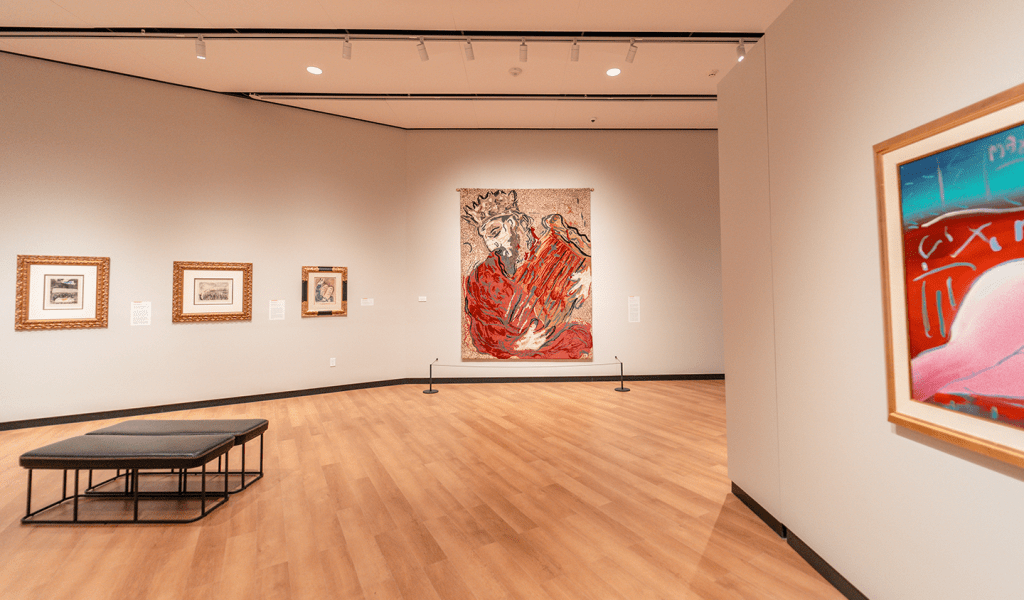
People do not visit galleries only to look at art. They visit to feel something.
Lighting influences:
• Emotional response
• Sense of calm or tension
• Focus and attention
• Movement through the space
• Memory and impression
A well lit gallery feels intentional and immersive. Visitors instinctively slow down. They lean in. They spend time. They feel that the space respects the art and respects them.
Poor lighting creates the opposite effect. Even if the art is strong, visitors feel unsettled. They skim. They disengage. They leave sooner than expected.
From an experience perspective, lighting should:
• Reduce visual noise
• Create clarity and calm
• Allow the artwork to breathe
• Guide attention without force
This experiential layer is where lighting begins to affect sales.
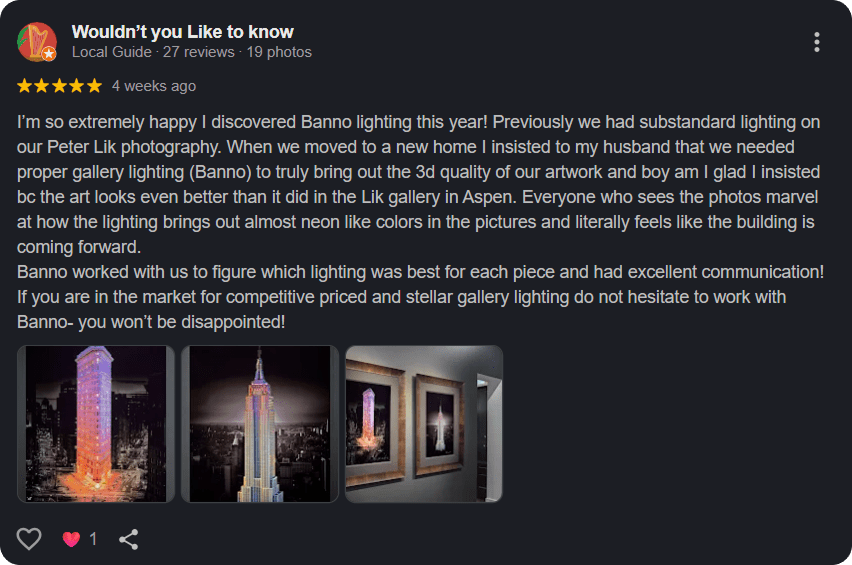
4.9-star rated by art collectors and gallery professionals
2. Lighting directly impacts buying behaviour

Art sales are emotional decisions supported by confidence.
Collectors do not just buy what they like. They buy what they feel certain about. Lighting plays a critical role in that certainty.
Professional lighting:
• Shows true colour and surface detail
• Reduces doubt about how art will look elsewhere
• Creates a sense of value and care
• Signals professionalism and authority
When lighting is inconsistent, flat, or glary, buyers hesitate. They wonder if the artwork will look different at home. They question colour accuracy. They lose confidence without consciously realising why.
Galleries that invest in professional lighting consistently report:
• Longer dwell time per artwork
• Fewer objections during sales conversations
• Faster decisions
• Stronger pricing confidence
Lighting does not sell art on its own, but poor lighting can absolutely stop art from selling.
3. Start with a lighting plan, not fixtures

One of the most important guidelines is simple and often ignored.
Do not start with products.
Start with a lighting plan.
A professional art gallery lighting plan is developed in conjunction with the gallery floor plan. It considers how the space works, not just how it looks.
A proper plan addresses:
• Wall lengths and heights
• Ceiling height and structure
• Track positioning and spacing
• Viewing distances
• Circulation paths
• Likely artwork sizes
• Future exhibition changes
Without a plan, galleries end up reacting. Lights are added, moved, and adjusted endlessly. The result is inconsistency and frustration.
At Banno Lighting, every successful gallery project begins with a lighting plan that supports both current and future exhibitions.
4. Use light to create hierarchy and rhythm

Not all artworks should be lit the same way.
One of the most common mistakes in galleries is uniform lighting. While consistency matters, uniformity flattens the experience.
Professional lighting design uses light to:
• Highlight key works
• Support curatorial narratives
• Create pauses and moments of focus
• Establish rhythm across walls
This does not mean theatrical lighting or heavy contrast. It means subtle, intentional variation that guides the viewer naturally.
Hierarchy helps visitors know where to look and how to move through the space. It turns a room of artworks into a coherent experience.
5. Control glare and viewer comfort

Glare is one of the fastest ways to break immersion.
Glare occurs when:
• Beams are too wide or uncontrolled
• Fixtures are poorly positioned
• Generic optics are used
• Glass or varnished works are not considered
Glare causes discomfort. Visitors step back, tilt their heads, or avoid certain works entirely. This quietly reduces engagement.
Professional gallery lighting prioritises:
• Controlled beam angles
• Precise optics
• Proper aiming relative to viewing height
• Comfort from multiple sightlines
If visitors are fighting reflections, the lighting has failed regardless of brightness or colour quality.
6. Choose lighting systems designed for art, not retail

Track lighting is common in galleries, but not all track lighting is appropriate for art.
Generic track lights are designed for:
• Retail environments
• General architectural lighting
• Broad coverage
• Cost efficiency
Art galleries require something different. They need precision, control, and flexibility.
This is why product selection matters.
7. Zoom lighting for flexibility and changing exhibitions
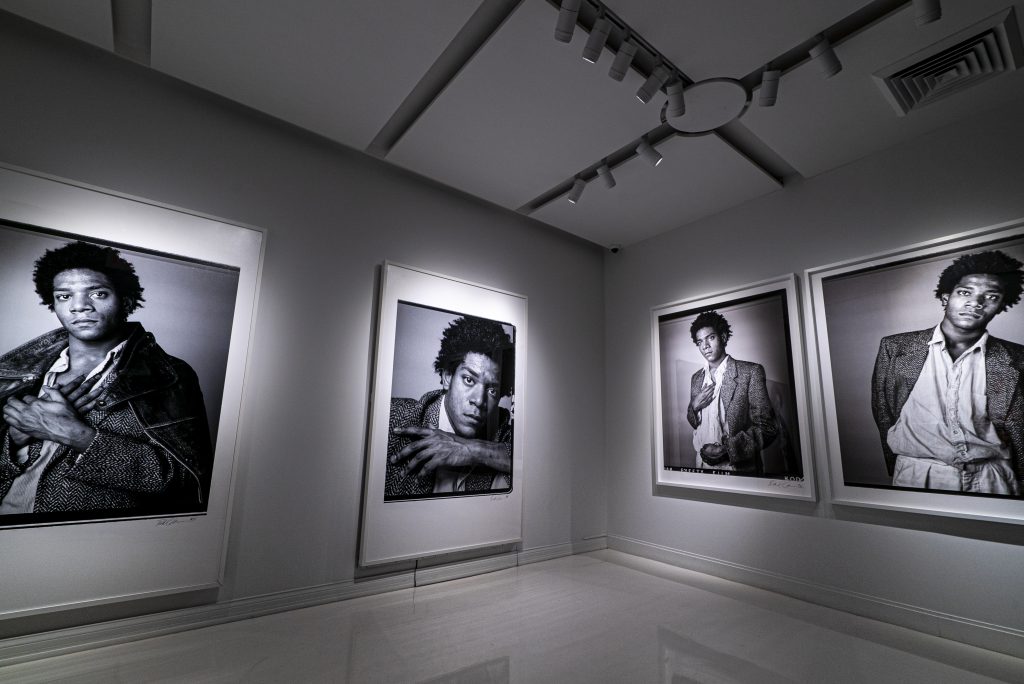
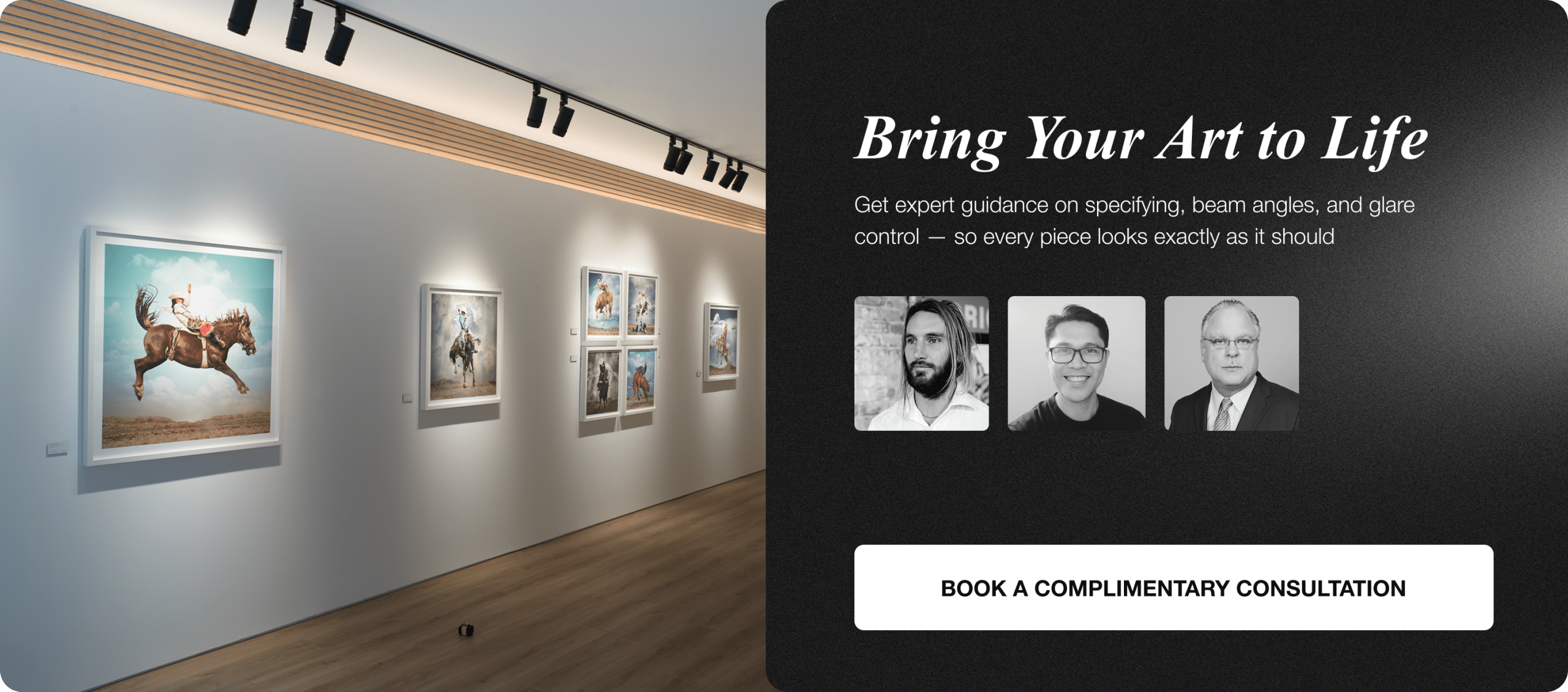
Zoom lighting is ideal for galleries that change exhibitions frequently or display varied artwork sizes.
Key benefits of Zoom systems:
• Adjustable beam angles to suit different works
• Reduced need to swap fixtures
• Precise framing of artworks
• Faster rehanging and reconfiguration
Zoom lighting allows one fixture to adapt to many situations. This flexibility is critical for commercial galleries, group shows, and evolving programs.
It supports both experiential quality and operational efficiency.
8. Multi lighting for layered and complex displays
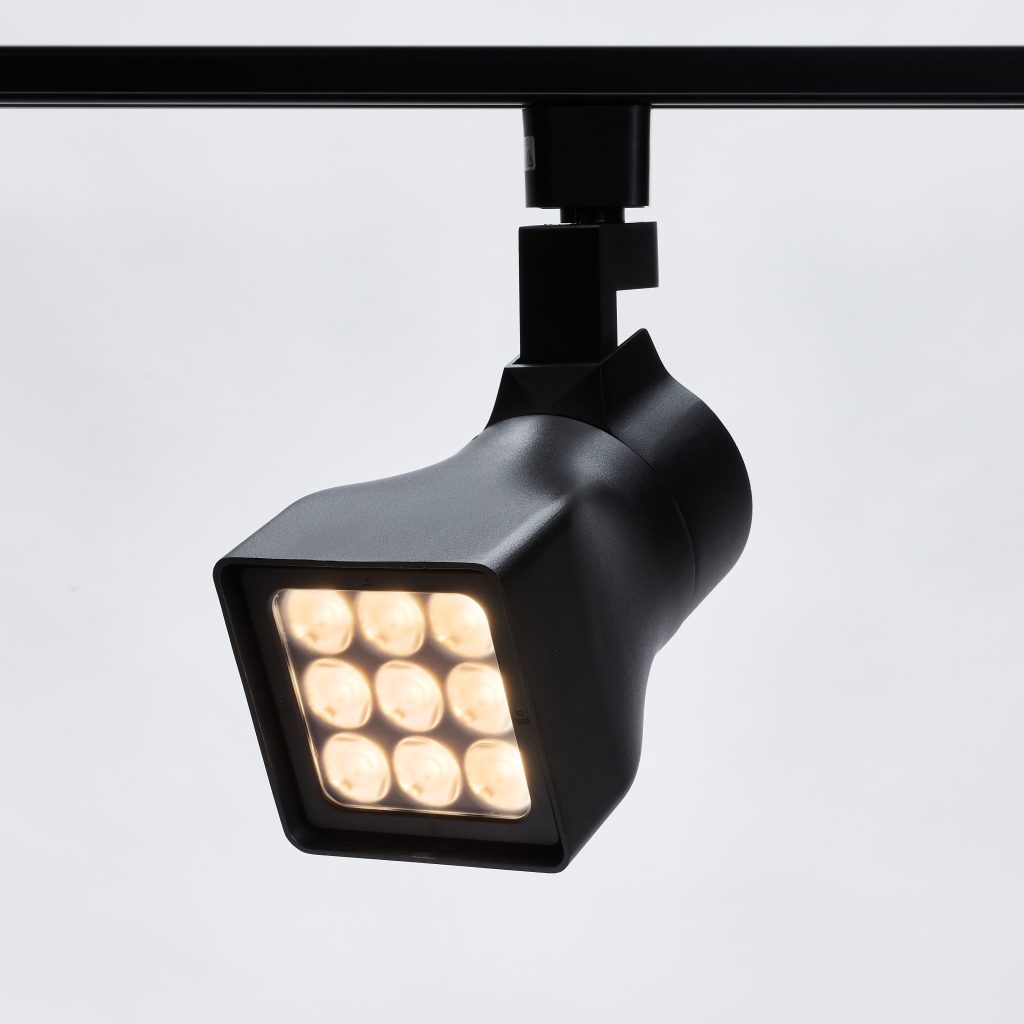
Multi lighting systems are used where exhibitions are more complex.
They are particularly effective when:
• Multiple mediums are shown together
• Contrast control is important
• Different artworks require different treatments
• Galleries want consistency without rigidity
Multi systems allow galleries to maintain a cohesive lighting language while responding to individual artworks.
This is often the choice for galleries that curate ambitious, layered exhibitions and want full control over presentation.
9. Deluxe lighting for premium and flagship spaces

Deluxe lighting systems are used where presentation quality must be unquestionable.
They are chosen for:
• High value artwork
• Museum level environments
• Flagship galleries
• Private collections
Deluxe lighting focuses on:
• Exceptional beam quality
• Superior colour accuracy
• Minimal visual intrusion
• Long term consistency
In these spaces, lighting should disappear visually while elevating the artwork completely.
10. Maintain colour accuracy and consistency

Colour accuracy is non negotiable in art galleries.
Lighting must:
• Render colours truthfully
• Remain consistent across fixtures
• Avoid colour shifts over time
Inconsistent colour temperature or poor colour rendering damages trust. Collectors notice when artworks look different under different lights.
Professional gallery lighting systems are designed to maintain stability across exhibitions and years, not just on installation day.
11. Balance atmosphere with clarity
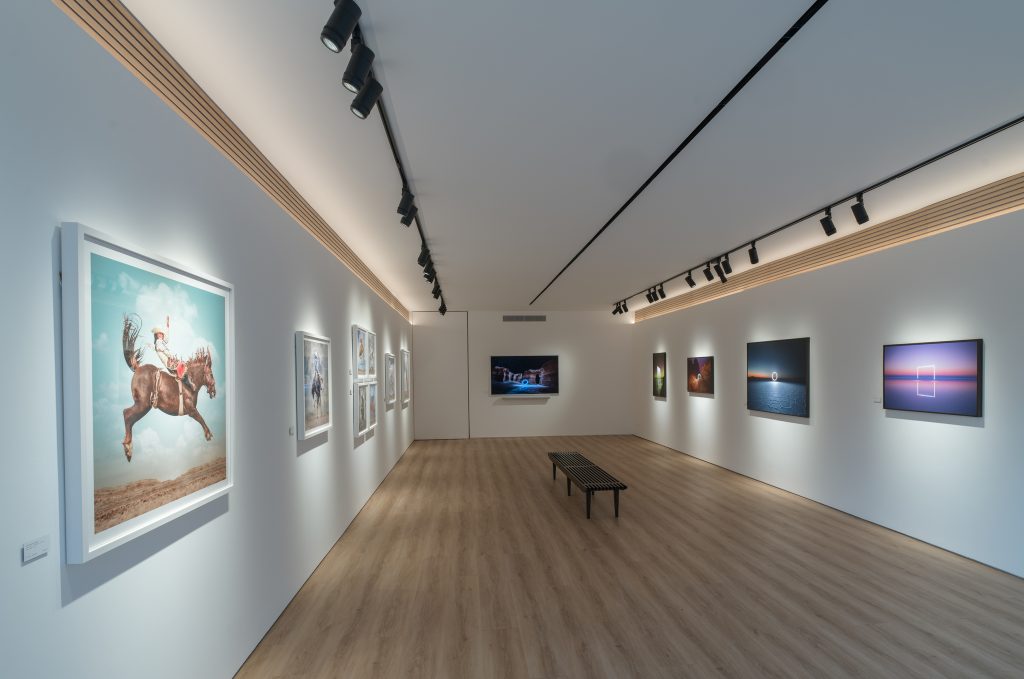
A gallery should feel calm, intentional, and focused.
Lighting that is too dramatic can feel theatrical and distracting. Lighting that is too flat feels lifeless.
The goal is balance:
• Enough contrast to create depth
• Enough uniformity to maintain calm
• Enough warmth to feel inviting
• Enough precision to respect the art
This balance is achieved through planning, product choice, and proper aiming, not through guesswork.
12. Think long term, not exhibition by exhibition

Lighting should be a system, not a series of fixes.
Professional gallery lighting is designed to:
• Adapt to new exhibitions
• Support future growth
• Reduce long term costs
• Maintain consistent quality
Galleries that invest properly once avoid years of compromise and incremental spending.
13. Why galleries need a guide, not just a supplier

Lighting is complex. Galleries should not be expected to navigate it alone.
A specialist lighting partner provides:
• Guidance rather than sales pressure
• Lighting plans tailored to the space
• Product recommendations based on use, not margin
• Ongoing support as exhibitions change
At Banno Lighting, our role is to guide galleries through these decisions so lighting becomes a strength, not a constant concern.
14. Lighting as part of your gallery’s reputation
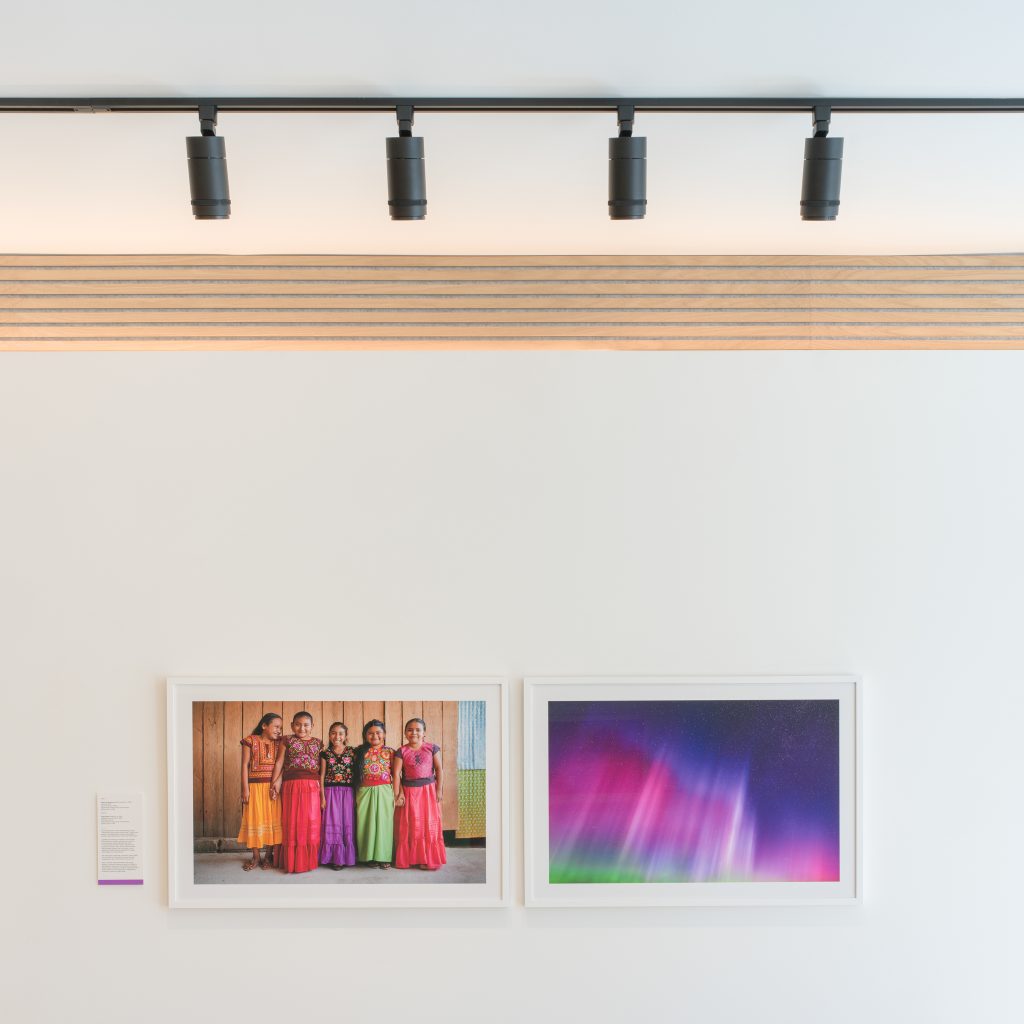
Artists notice lighting.
Collectors notice lighting.
Institutions notice lighting.
Lighting signals whether a gallery understands presentation at a professional level.
Well designed lighting:
• Elevates perceived credibility
• Strengthens artist relationships
• Builds collector confidence
• Aligns the physical space with curatorial intent
Poor lighting quietly undermines reputation over time.
15. Final guideline: respect the artwork and the audience

The most important guideline is simple.
Lighting should respect the artwork and the people viewing it.
When lighting is designed with care, intention, and expertise, it disappears. The art takes centre stage. Visitors feel present. Buyers feel confident. The gallery feels complete.
That is the goal of professional art gallery lighting.
Why galleries choose Banno Lighting
Galleries work with Banno Lighting because we understand that lighting is part of the art experience.
We provide:
• Expert guidance
• Detailed lighting plans
• Specialist gallery lighting systems
• Zoom, Multi, and Deluxe solutions
• Long term support
If you want lighting that enhances experience, supports sales, and protects reputation, professional art gallery lighting is not optional. It is essential.
Hear from art collectors and clients who trust us