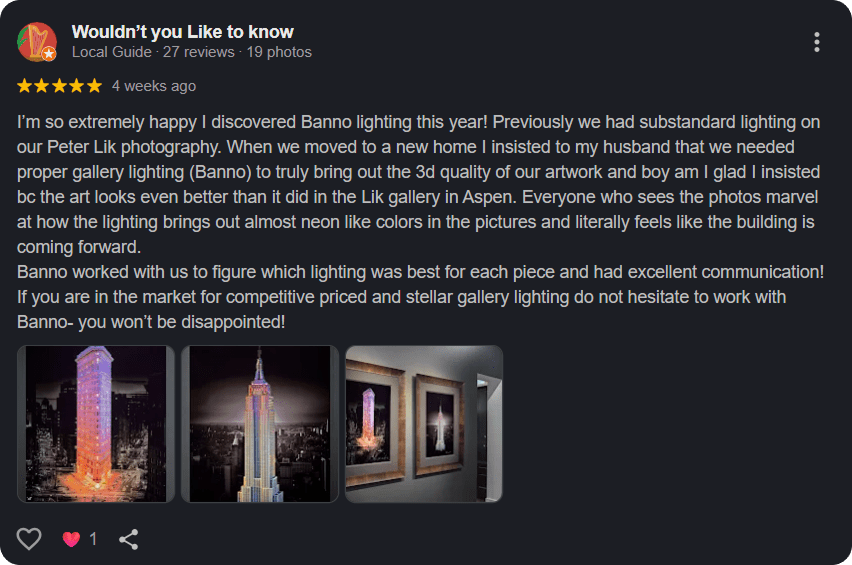
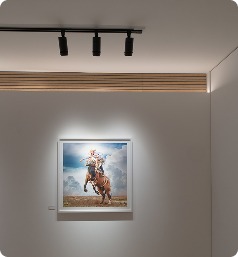
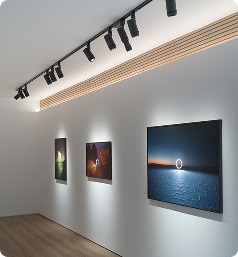
Evenly lit painting display in modern interior space
Art lighting is one of the most overlooked elements in interior design, yet it has one of the biggest visual impacts on how artwork is perceived. Whether you are lighting a single painting, a gallery wall, or a full collection, the right art lighting transforms flat walls into curated visual experiences. Poor lighting can make expensive artwork look dull, distorted, or lifeless, while professional artwork lighting reveals texture, color accuracy, and depth exactly as the artist intended.
At its core, art lighting is not just about brightness. It is about control, placement, beam quality, and color accuracy. When done correctly, art lighting enhances the artwork without glare, hotspots, or color shifting, which is why galleries, museums, and high-end collectors invest heavily in proper art lighting systems rather than relying on standard room lights.
What Art Lighting Actually Means

Directional lighting highlighting painting as focal point
Art lighting refers to dedicated lighting designed specifically to illuminate artwork such as paintings, photographs, sculptures, and framed pieces. Unlike general lighting, which spreads light broadly across a room, art lighting is focused, intentional, and directional. It highlights the artwork as a focal point while maintaining visual balance in the surrounding space.
This can include art lighting fixtures, track lighting systems, recessed lighting, and wall-mounted art lights. Each option serves a different purpose depending on ceiling height, wall layout, and the size of the artwork.
For large collections or statement pieces, art lighting for large paintings requires wider beam control and careful positioning to ensure the entire surface is evenly illuminated.

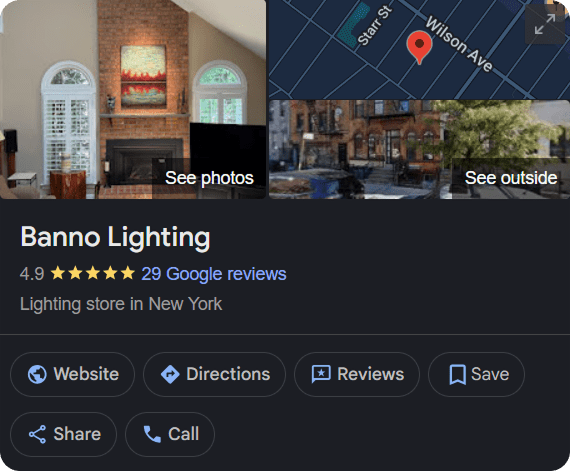
Highly Rated by Clients Across Residential and Commercial Projects
Art Lighting at Home vs Gallery Lighting
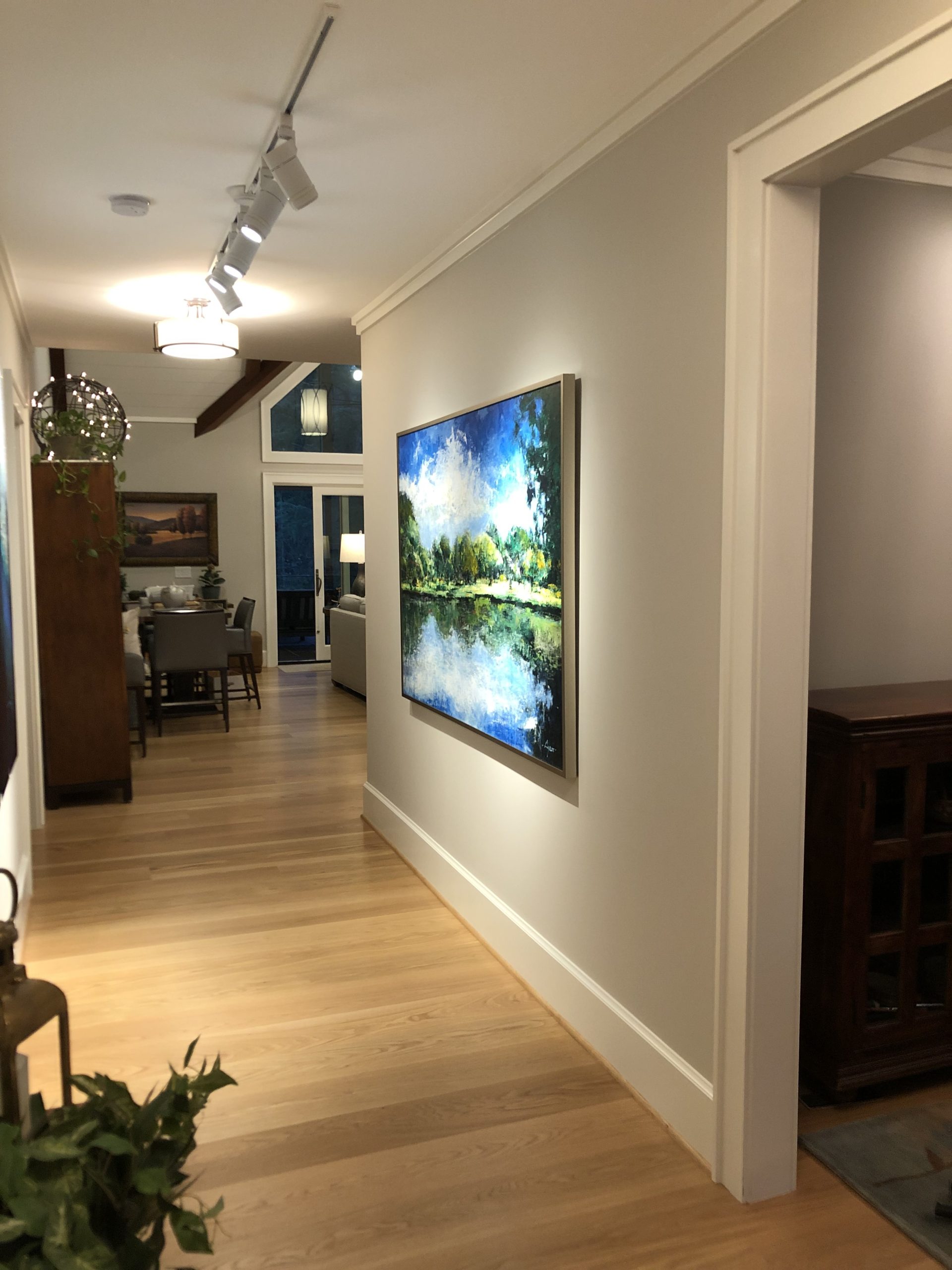
Residential gallery wall with integrated ceiling lighting
Art lighting at home follows the same principles used in professional galleries, but with a more lifestyle-focused approach. In a home environment, art lighting options must balance aesthetics, performance, and practicality. The lighting should feel integrated into the space rather than overly commercial, while still delivering museum-level illumination quality.
Wall art lighting ideas for living rooms, hallways, and staircases often involve track lighting or picture lights mounted above the artwork. In contrast, art gallery lighting fixtures are typically ceiling-mounted or track-based, allowing flexibility when artwork changes or rotates.
Artwork lighting at home should prioritize:
- Even light distribution
- Minimal glare
- Accurate color rendering
- Long-term reliability
Types of Art Lighting Fixtures and Systems

Ceiling mounted track lighting system for artwork
There are several primary art lighting systems used in both residential and commercial settings. Art lighting fixtures mounted above artwork provide a classic and elegant solution for framed pieces. These fixtures direct light downward, creating a soft wash across the artwork.
Track lighting systems are one of the most flexible art lighting solutions. Art track lighting systems allow adjustable positioning and beam direction, making them ideal for gallery walls, exhibitions, and evolving collections. This is why professional art exhibition lighting design frequently uses track systems for precision control.
Recessed art lighting is a minimalist architectural option. Recessed fixtures are installed in the ceiling and aimed toward the artwork, offering clean aesthetics with high-performance illumination.
Art Lighting Placement and Distance from Wall

Properly angled art light creating smooth wash
Proper art lighting placement is critical for achieving professional results. One of the most common mistakes is placing lights too close to the wall, which creates harsh hotspots at the top of the artwork and shadows below.
The correct art lighting distance from wall ensures the beam spreads evenly across the artwork surface. The lighting angle should be controlled to avoid reflections, especially when lighting framed artwork behind glass. Art lighting placement should always prioritize an even wash rather than a direct spotlight effect.
Art lighting from ceiling and art lighting from below can both be used depending on the artistic intent, but overhead directional lighting is generally preferred for paintings and framed works because it mimics gallery standards.
Art Lighting for Paintings and Color Accuracy

High color accuracy lighting revealing paint texture
Art lighting for paintings requires high color accuracy to preserve the integrity of the artwork. Low-quality lighting can distort colors, making warm tones appear dull and cool tones appear overly harsh. This is particularly important for collectors and galleries displaying original works.
Professional art lighting techniques focus on consistent color temperature and high-quality LED systems that maintain stable output over time. Unlike traditional bulbs, modern art lighting LED systems often use integrated chips for longevity and consistent performance.
This approach aligns with museum-grade lighting practices, where stability and conservation are just as important as visual presentation.
Wireless vs Wired Art Lighting Options

Wireless artwork light mounted above framed piece
Modern installations now include art lighting wireless solutions, cordless artwork lighting, and rechargeable fixtures. While wireless art lighting can be convenient for temporary setups or rental spaces, wired and hardwired art lighting systems are generally preferred for permanent collections due to reliability and consistent output.
Wireless art lighting with remote control is often used for residential applications where drilling or rewiring is not ideal. However, high-end art lighting specialists typically recommend professional wired systems for gallery-quality results and long-term performance.
Art Accent Lighting and Display Lighting

Accent lighting emphasizing single framed artwork
Art accent lighting is designed to create visual emphasis and depth around artwork. This technique is commonly used in luxury homes, galleries, and exhibitions to elevate the presentation of key pieces. Art display lighting can be layered with ambient lighting to create a balanced environment that feels intentional and refined.
Art booth lighting and art fair lighting also rely heavily on controlled accent lighting to attract attention and enhance the perceived value of displayed works. The same principles apply to residential art collections.
Art Lighting Ideas for Modern Interiors

Track lighting integrated into architectural ceiling design
Modern art lighting ideas focus on minimalism, precision, and integration with architecture. Popular approaches include ceiling-mounted spotlights, recessed art lighting, and sleek track lighting systems that blend seamlessly into contemporary spaces.
Wall art lighting combined with architectural lighting design can transform hallways, staircases, and open-plan living areas into gallery-style environments. Artistic lighting design is increasingly being used by interior designers to create curated visual experiences within residential spaces.
Art Lighting Techniques Used by Professionals

Adjustable fixture aimed with precise beam control
Professional art lighting techniques emphasize beam control, angle precision, and lighting balance. Lighting specialists carefully consider fixture type, mounting height, and artwork size before installation. Art lighting setup is never random. It is calculated to enhance visibility while minimizing glare and shadow distortion.
Art lighting specialists and designers also use lighting diagrams and simulations during planning stages to ensure optimal results, especially in galleries, museums, and high-value collections.
Why High-Quality Art Lighting Matters Long-Term

Even illumination protecting artwork from heat exposure
Investing in high-quality art lighting solutions improves both aesthetics and preservation. Poor lighting can cause gradual fading, glare damage, and visual fatigue over time. Proper artwork lighting systems provide stable illumination that protects and enhances the artwork simultaneously.
Fine art lighting fixtures and museum art lighting fixtures are engineered for longevity, accuracy, and controlled output. This is why serious collectors and galleries prioritize professional art lighting installation rather than relying on generic ceiling lights or decorative lamps.
Final Thoughts on Art Lighting

Balanced illumination enhancing residential gallery space
Art lighting is not just a decorative feature. It is a strategic design decision that affects how artwork is perceived, protected, and experienced. From art lighting for home collections to professional gallery installations, the right lighting system enhances artistic value and transforms interior spaces into curated environments.
By selecting the correct art lighting fixtures, optimizing art lighting placement, and using high-quality lighting systems designed specifically for artwork, you ensure that every piece in your collection is presented with clarity, depth, and true color accuracy.
Advanced Art Lighting Systems and Long-Term Performance

Consistent ceiling fixtures illuminating entire gallery wall
When evaluating art lighting at a professional level, it is important to think beyond a single fixture and instead consider complete art lighting systems. A true art lighting system is designed to work holistically across multiple artworks, wall layouts, and viewing angles rather than functioning as a single decorative light source. This is why galleries, museums, and high-end residential projects rely on integrated art lighting solutions instead of generic ceiling lights or standard decorative fixtures.
Art lighting systems typically include adjustable art lighting fixtures, track lighting fixtures for art, or recessed art lighting fixtures that allow precise beam control. These systems ensure consistent illumination across a collection, which is especially important when displaying multiple pieces in one environment. Inconsistent lighting can make one artwork appear vibrant while another looks dull, even if both pieces are equally valuable.
l’art Zoom – Flexible Art Lighting for Precise Artwork Illumination

Adjustable beam spotlight precisely illuminating framed artwork
The l’art Zoom is designed for art lighting applications where precision and adaptability are essential. In an art lighting setup, not every painting, photograph, or framed piece is the same size, and a fixed beam often creates uneven illumination or unwanted spill. The Zoom solves this by allowing controlled beam adjustment, so the light can be tailored to the exact dimensions of the artwork. This ensures a smooth, even wash across the surface rather than a harsh hotspot at the top of the frame.
With integrated LED chips built for longevity, the output remains stable in color and intensity over time, which is critical for accurate art presentation. This makes the l’art Zoom ideal for collectors, galleries, and designers who want professional art lighting that enhances detail, texture, and depth while maintaining a clean, refined visual result.
l’art Multi – Even Wash Lighting for Gallery Walls and Art Collections

Wide beam fixture evenly lighting multiple artworks
The l’art Multi is purpose-built for art lighting environments where consistency across multiple artworks is required. In gallery walls, hallways, and curated home collections, uneven lighting can make one piece look dominant while others appear dull. The Multi optic delivers a balanced, wide beam that washes light evenly across several artworks, creating a cohesive and gallery-like presentation.
This type of art lighting is especially effective for photography, prints, and large framed pieces where uniform illumination improves perceived quality and visual harmony. Using integrated LED technology instead of traditional bulbs, the l’art Multi offers long lifespan, low heat emission, and high color accuracy. The result is professional-grade art lighting that protects artwork while elevating the overall atmosphere of the space.
l’art Deluxe Projector – Museum Style Art Lighting for High Ceilings and Large Works
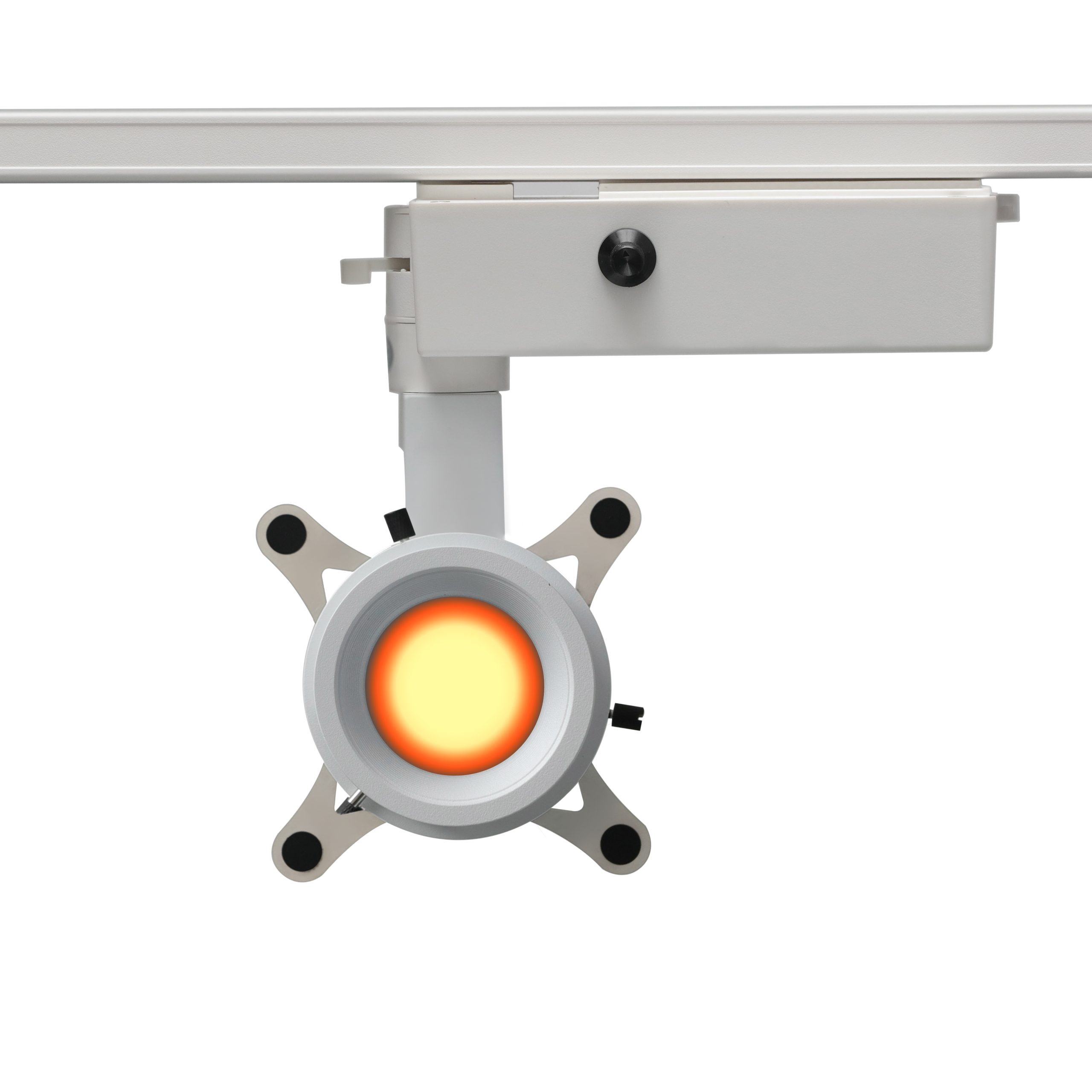
Premium l’art Deluxe Projector with focused beam optic
The l’art Deluxe Projector is engineered for advanced art lighting installations, particularly in spaces with high ceilings, large feature walls, and museum-scale artworks. Standard picture lights often lack the power and optical control needed for these environments, leading to weak illumination and poor artwork visibility. The Deluxe Projector delivers a focused, controlled beam over longer distances, ensuring the artwork remains the focal point even in expansive interiors.
In professional art lighting design, beam control and distance performance are critical. The Deluxe Projector provides a refined, glare-minimized wash that enhances color accuracy, surface texture, and depth without overexposing the piece. With built-in LED chips for longevity and stable output, it aligns with museum lighting principles, making it ideal for galleries, collectors, and luxury residential projects seeking true museum-grade art lighting results.
Art Lighting Fixtures and Their Role in Artwork Presentation

Even light wash across framed artwork surface
The choice of art lighting fixtures directly influences how artwork is perceived. Low-quality fixtures often produce uneven light distribution, visible hotspots, and color distortion that reduce the visual impact of the artwork. In contrast, high-quality fine art lighting fixtures are engineered with optical precision to deliver a smooth and controlled wash of light across the artwork surface.
Gallery lighting fixtures and museum art lighting fixtures are specifically designed to highlight texture, depth, and color accuracy without causing glare. These fixtures often use integrated LED technology for longevity and stable performance rather than replaceable bulbs that degrade over time. This approach aligns with professional art lighting design standards where consistency and conservation are critical.
Modern art lighting fixtures also come in various mounting styles including ceiling-mounted, wall-mounted, and track-mounted options, allowing flexibility depending on the architectural layout and artwork positioning.
Art Lighting Placement and Distance from Wall
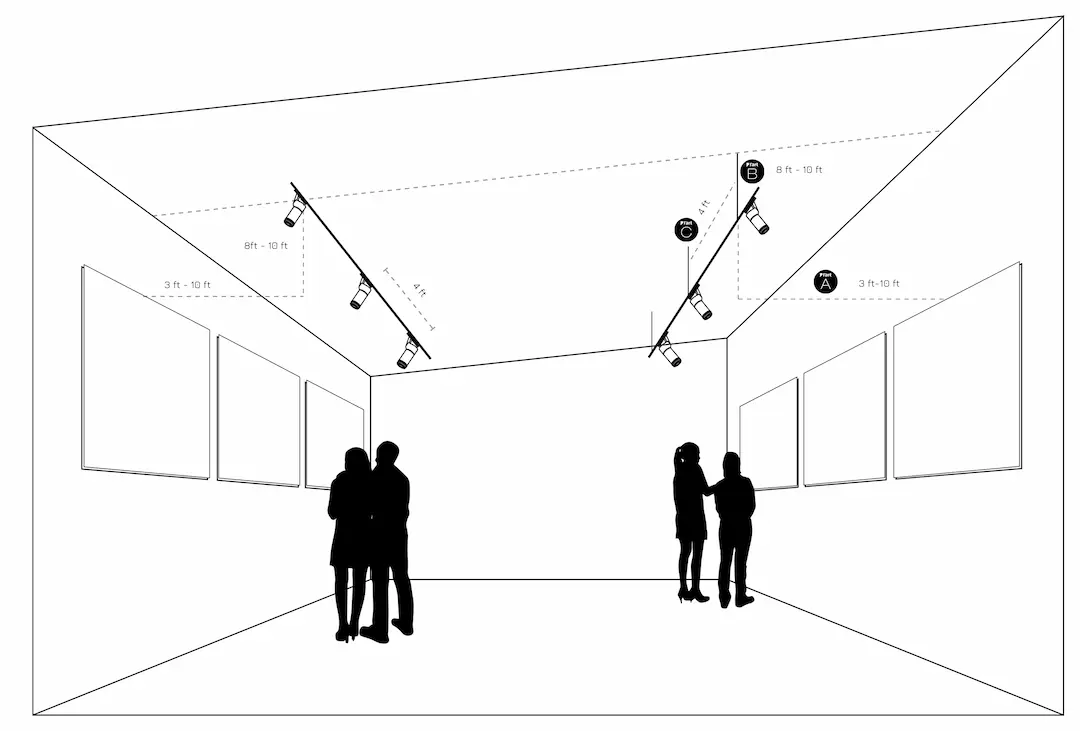
Correct wall distance creating balanced illumination
One of the most technical aspects of art lighting design is correct art lighting placement. Even premium artwork lighting fixtures will perform poorly if they are incorrectly positioned. Art lighting distance from wall plays a significant role in achieving even illumination. If the light source is too close to the artwork, the top portion becomes overexposed while the bottom remains underlit. If placed too far, the beam spreads excessively and reduces focus.
Professional art lighting techniques typically involve positioning the light at a calculated angle so the beam spreads evenly across the artwork surface. This method is widely used in art galleries and museums where visual accuracy and glare control are essential. Proper art lighting placement ensures the artwork remains the focal point while maintaining a clean and refined visual presentation.
Art Lighting for Paintings and Large Artwork

Recessed fixtures highlighting hallway gallery wall
Art lighting for paintings requires a different approach compared to general decorative lighting. Paintings contain complex pigments, textures, and layered surfaces that respond differently to light intensity and direction. Art lighting for large paintings, in particular, demands wider beam optics and higher precision placement to ensure full coverage without uneven brightness.
Artwork lighting designed specifically for paintings helps preserve the integrity of colors while enhancing visual depth. This is why art display lighting and art accent lighting are commonly used in galleries to create emphasis without overpowering the artwork. The goal is to enhance, not dominate.
Art Lighting Options for Residential and Gallery Spaces
Recessed fixtures highlighting hallway gallery wall
There are multiple art lighting options available depending on the environment and installation requirements. Art lighting at home often prioritizes aesthetics and integration with interior design, while gallery and museum lighting focuses on precision and adaptability.
Track lighting systems are one of the most versatile art lighting options because they allow repositioning as artwork changes. Recessed art lighting fixtures provide a minimalist architectural solution, while wall-mounted art lighting fixtures offer a classic and elegant approach for framed pieces.
For high-end interiors, art lighting wall installations are often combined with ambient lighting to create layered illumination that enhances both the artwork and the surrounding space.
Art Lighting Techniques Used by Professionals

Professional setup aligning beam with artwork center
Professional art lighting techniques are based on control, consistency, and visual balance. Lighting specialists carefully analyze artwork size, wall height, and viewing distance before finalizing the lighting setup. Art lighting techniques also consider glare reduction, beam angle, and color temperature stability.
Art lighting design is not random placement of lights above artwork. It is a calculated process that ensures the artwork is evenly illuminated while minimizing reflections and shadows. This is especially important in glass-framed artworks where improper lighting can cause distracting glare.
Lighting specialists often use art lighting diagrams and reference tools during the planning phase to simulate how light interacts with the artwork before installation.
Art Lighting Design and Architectural Integration

Ceiling mounted art lighting integrated into architecture
Art lighting design plays a major role in high-end residential and commercial interiors. Rather than treating artwork lighting as an afterthought, architects and designers integrate art lighting solutions into the overall lighting plan of the space. This approach creates a cohesive environment where artwork is naturally highlighted without appearing artificially spotlighted.
Art lighting ceiling installations and art lighting from ceiling are common in modern architectural lighting design. These solutions provide clean aesthetics while delivering precise illumination for wall-mounted artwork. In contrast, art lighting wall sconce fixtures are often used in classic or decorative interiors to complement traditional art displays.

Artwork Lighting Fixtures and Long-Term Value

Premium fixture designed for longevity and performance
Investing in premium artwork lighting fixtures adds long-term value to both the artwork and the interior space. High-quality lighting enhances perceived artwork value, improves viewing experience, and protects delicate materials from excessive heat and unstable light output.
Museum-grade and gallery-grade art lighting solutions are specifically engineered for longevity, often featuring built-in LED chips for consistent performance over many years. This reduces maintenance while ensuring stable illumination quality, which is essential for collectors and galleries displaying valuable pieces.
Final Expansion on Art Lighting Authority

Balanced gallery environment with controlled ceiling lights
Art lighting is not just about visibility. It is about presentation, preservation, and spatial storytelling. Whether using art lighting systems, recessed art lighting fixtures, track lighting fixtures for art, or wall-mounted artwork lighting fixtures, the objective remains the same: elevate the artwork while maintaining visual harmony within the space.
By implementing professional art lighting placement, selecting high-quality art lighting fixtures, and using proven art lighting techniques, collectors and designers can achieve gallery-level results in both residential and commercial environments. Proper art lighting transforms ordinary wall displays into curated visual experiences, reinforcing the artistic intention and enhancing the overall atmosphere of the space.
FAQ: Art Lighting
What is art lighting?
Art lighting refers to specialized lighting designed to illuminate artwork such as paintings, photographs, and sculptures with accurate color, minimal glare, and even light distribution. Unlike general lighting, art lighting fixtures are engineered to enhance visual clarity and protect the artwork over time.
What is the best lighting for artwork?
The best lighting for artwork is high-quality LED art lighting with controlled beam angles, high color accuracy, and low glare. Museum-grade and gallery lighting systems are ideal because they provide consistent illumination without distorting colors or damaging delicate materials.
How do you properly light artwork on a wall?
Proper artwork lighting involves positioning the light source above or in front of the artwork at a controlled angle so the beam spreads evenly across the surface. Correct art lighting placement prevents hotspots, glare, and uneven brightness from top to bottom.
How far should art lighting be from the wall?
Art lighting distance from wall depends on fixture optics and artwork size, but generally the light should be positioned far enough to create an even wash across the piece without creating harsh top shadows or light spill onto the surrounding wall.
Are LED art lights safe for paintings?
Yes, high-quality LED art lighting is generally safe for paintings because it produces less heat and minimal UV compared to traditional halogen lights. This makes LED art lighting a preferred choice for galleries, museums, and collectors.
What color temperature is best for art lighting?
Most professional art lighting uses warm to neutral white color temperatures to maintain accurate color representation. Museum lighting color temperature is carefully selected to enhance artwork tones without making colors appear too warm or too cool.
What are art lighting fixtures?
Art lighting fixtures are purpose-built lights designed specifically to illuminate artwork. These include picture lights, track lighting fixtures for art, recessed art lighting fixtures, and museum-grade gallery lighting systems.
Is track lighting good for artwork?
Yes, track lighting for artwork is one of the most flexible and professional solutions. Art track lighting systems allow adjustable positioning, making them ideal for gallery walls, large collections, and rotating artwork displays.
What is museum-grade art lighting?
Museum-grade art lighting refers to lighting systems designed with conservation and visual accuracy in mind. These systems use controlled optics, stable LED technology, and precise beam angles to protect and enhance valuable artwork.
What is the difference between art lighting and regular lighting?
Regular lighting is designed to illuminate a room broadly, while art lighting is focused, directional, and optimized for artwork presentation. Artwork lighting highlights texture, color, and detail without glare or distortion.
How do you light large paintings properly?
Art lighting for large paintings requires wider beam spread and precise placement to ensure the entire artwork is evenly illuminated. Professional art lighting systems often use adjustable fixtures or track lighting to achieve balanced coverage.
Should artwork be lit from above or below?
Artwork is typically lit from above or slightly in front to create a natural and even illumination. Lighting artwork from below can create dramatic effects but is less commonly used in gallery or museum lighting standards.
What are the best art lighting options for homes?
The most effective art lighting options for homes include wall-mounted art lighting fixtures, recessed art lighting, and track lighting systems. These provide a clean aesthetic while delivering professional-quality illumination.
Do art lights need to be wired or can they be wireless?
Art lighting can be wired, hardwired, or wireless. Wireless art lighting is convenient for temporary setups, while wired art lighting systems are preferred for permanent installations due to reliability and consistent performance.
Can poor lighting damage artwork?
Yes, poor lighting can cause fading, discoloration, and long-term damage, especially if the light produces heat or UV exposure. Proper art lighting solutions are designed to minimize these risks while maintaining visual clarity.
What is art accent lighting?
Art accent lighting is a focused lighting technique used to highlight artwork as a focal point within a space. It enhances depth, texture, and visual importance without overpowering the surrounding environment.
What type of lighting do art galleries use?
Art galleries typically use track lighting systems, museum art lighting fixtures, and high-CRI LED lighting to ensure accurate color rendering and adjustable beam control for different artworks.
How bright should art lighting be?
Art lighting should be bright enough to reveal detail and color without causing glare or overexposure. Professional artwork lighting systems balance brightness with beam control to create a refined visual effect.
Is recessed lighting good for artwork?
Recessed art lighting can be excellent when properly positioned and aimed. It offers a minimalist appearance while delivering controlled illumination suitable for gallery-style and modern interiors.
Why is professional art lighting important?
Professional art lighting enhances the visual impact of artwork, preserves color accuracy, reduces glare, and increases the perceived value of the piece. Proper lighting transforms artwork from decoration into a curated focal point.
See Why Clients Trust Our Lighting Systems for Every Project