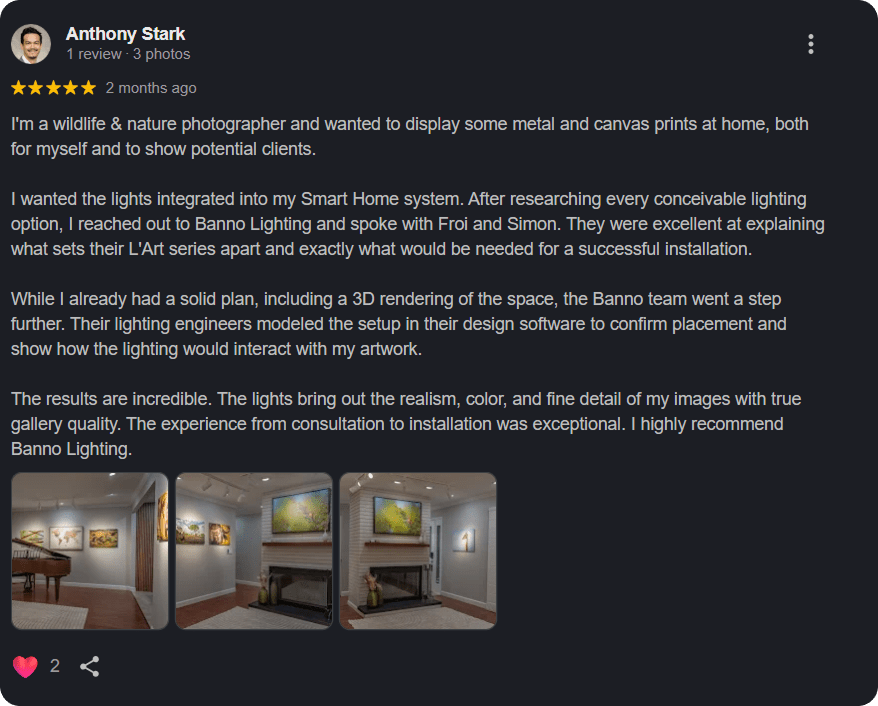
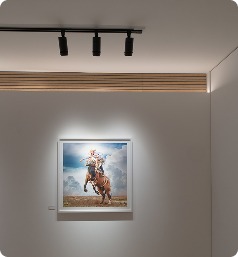
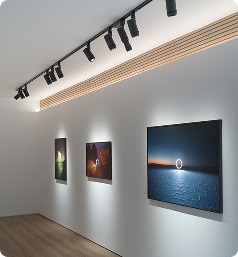
Sophisticated track lighting enhancing the perceived value of displayed artwork.
Professional art gallery lighting systems are the foundation of how artwork is experienced, understood, and valued. In a gallery, lighting is not a background utility. It is part of the exhibition. It influences how color is perceived, how texture reads, how depth is revealed, and how premium the space feels overall. When lighting is done well, visitors naturally slow down, engage longer, take better photos, and connect emotionally with the work. When lighting is done poorly, pieces can look flat, washed out, or distorted, and the entire gallery can feel cheap even if the art is extraordinary.
The reason galleries need system level thinking is simple: exhibitions change. Artwork sizes vary. Walls get re hung. New shows rotate in. A single “nice looking light” does not solve this. A system does. Modern art gallery track lighting systems provide a flexible electrical backbone so lighting can be repositioned and re tuned without rewiring the ceiling every time the curator changes the layout. And most galleries now choose led track lighting for art gallery environments because it delivers strong performance with low heat, minimal UV, great color control, and long life.
This guide is written as a publish ready, system focused article. It explains what art gallery lighting systems are, how track based systems work, how to design lighting around art, what to look for in fixtures and optics, and how to build a professional setup using three core fixture platforms: Deluxe, Zoom, and Multi. It finishes with a full FAQ section.
What Are Art Gallery Lighting Systems
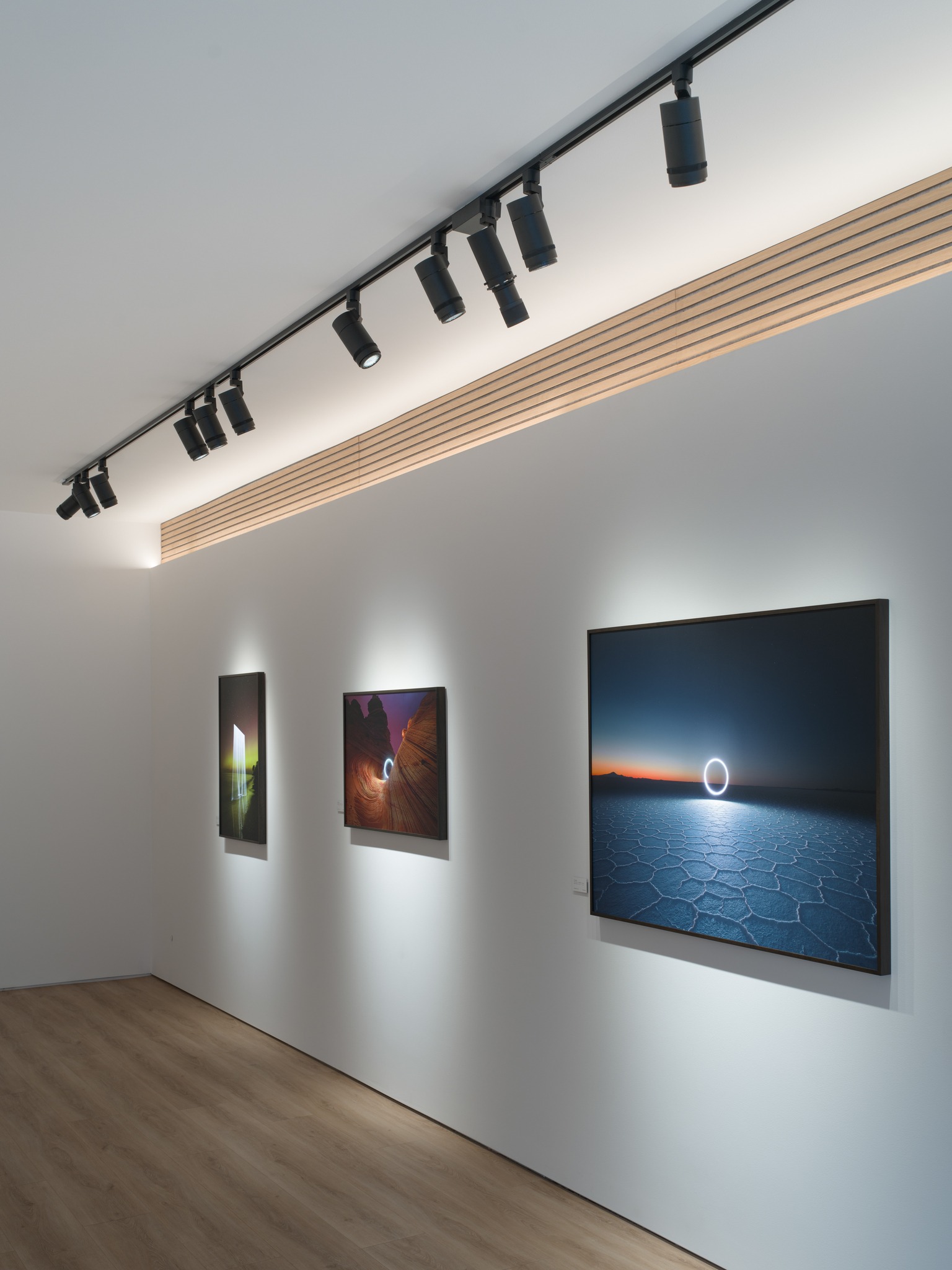
Sleek architectural lighting system designed for professional artwork presentation.
Art gallery lighting systems are integrated lighting solutions designed specifically to present artwork accurately and beautifully while supporting curatorial flexibility and conservation needs. Instead of treating lighting as random fixtures on a ceiling, a system approach treats lighting as a platform made up of four connected parts.
First is the infrastructure. This is the mounting and power method, most commonly track.
Second is the fixture family. These are the adjustable heads that create the light.
Third is the optical toolkit. These are the beam angles and accessories that shape the light to suit different artwork types.
Fourth is control. This includes dimming, zoning, and scenes that allow the gallery to fine tune light levels for exhibitions, events, and sensitive works.
The difference between a system and a basic installation is that a system is designed to evolve. A basic installation looks good on day one and becomes frustrating six months later when the exhibition changes. A system continues to work as the gallery changes.

4.9-star rated by art collectors and gallery professionals
Why Art Gallery Track Lighting Systems Are the Standard

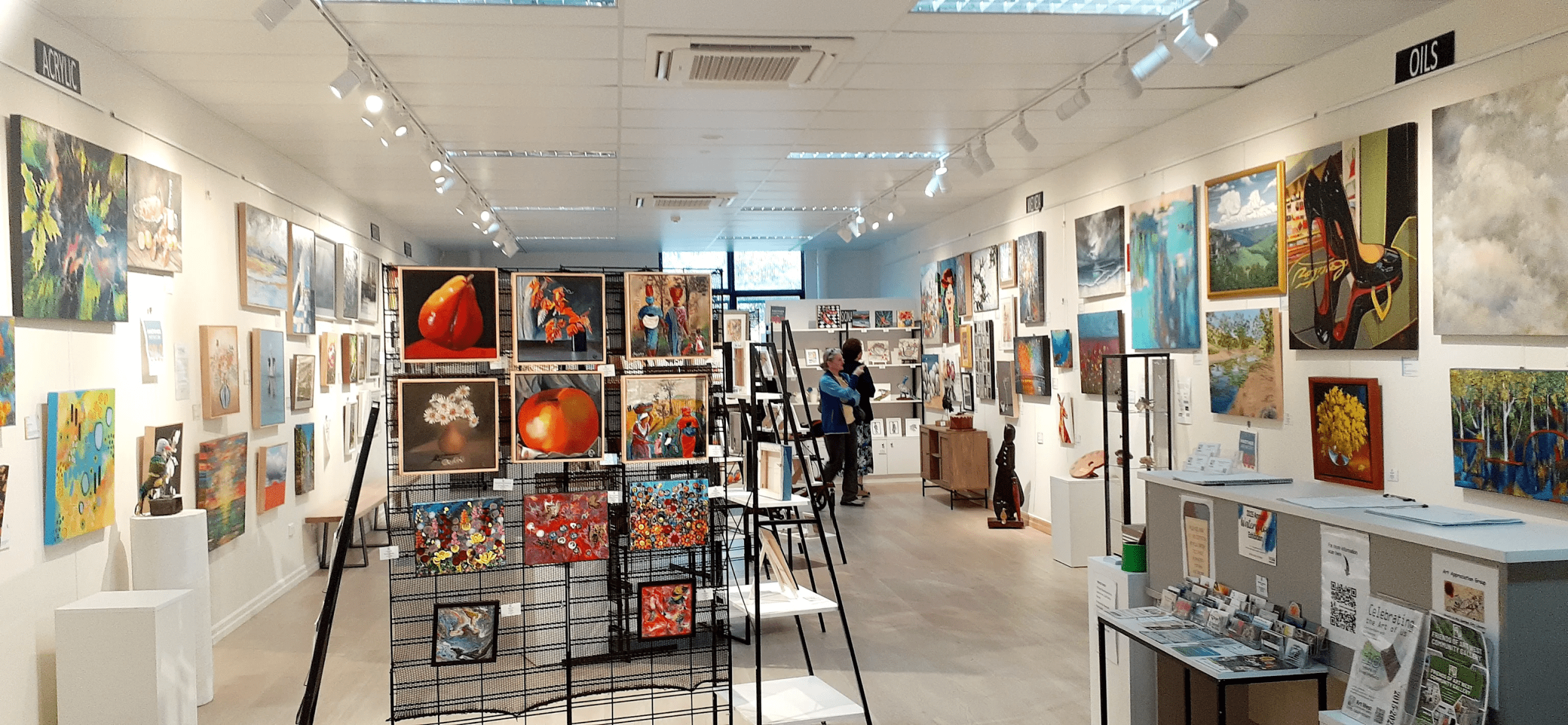
Ceiling-mounted track rails allowing fixtures to slide and rotate easily.
Most professional galleries choose art gallery track lighting systems because track creates a flexible backbone. Track is an electrified rail installed on the ceiling that supplies power along its length. Fixtures can be attached anywhere on the rail, slid to new positions, rotated, and swapped out without rewiring.
That flexibility matters every time the curator changes the show. One exhibition might be large canvases with wide spacing. The next might be smaller works in a dense salon hang. A track system allows the lighting to match the exhibition rather than forcing the exhibition to match the lighting.
Track also supports cleaner architecture. Instead of a scattered grid of fixed downlights, track lines can be planned intentionally, aligned with walls and circulation paths. This makes the ceiling feel considered rather than cluttered.
Track is also future proof. The track can remain for years while fixture heads are upgraded as technology improves. That protects investment and reduces future disruption.
Why Led Track Lighting for Art Gallery Environments Has Taken Over
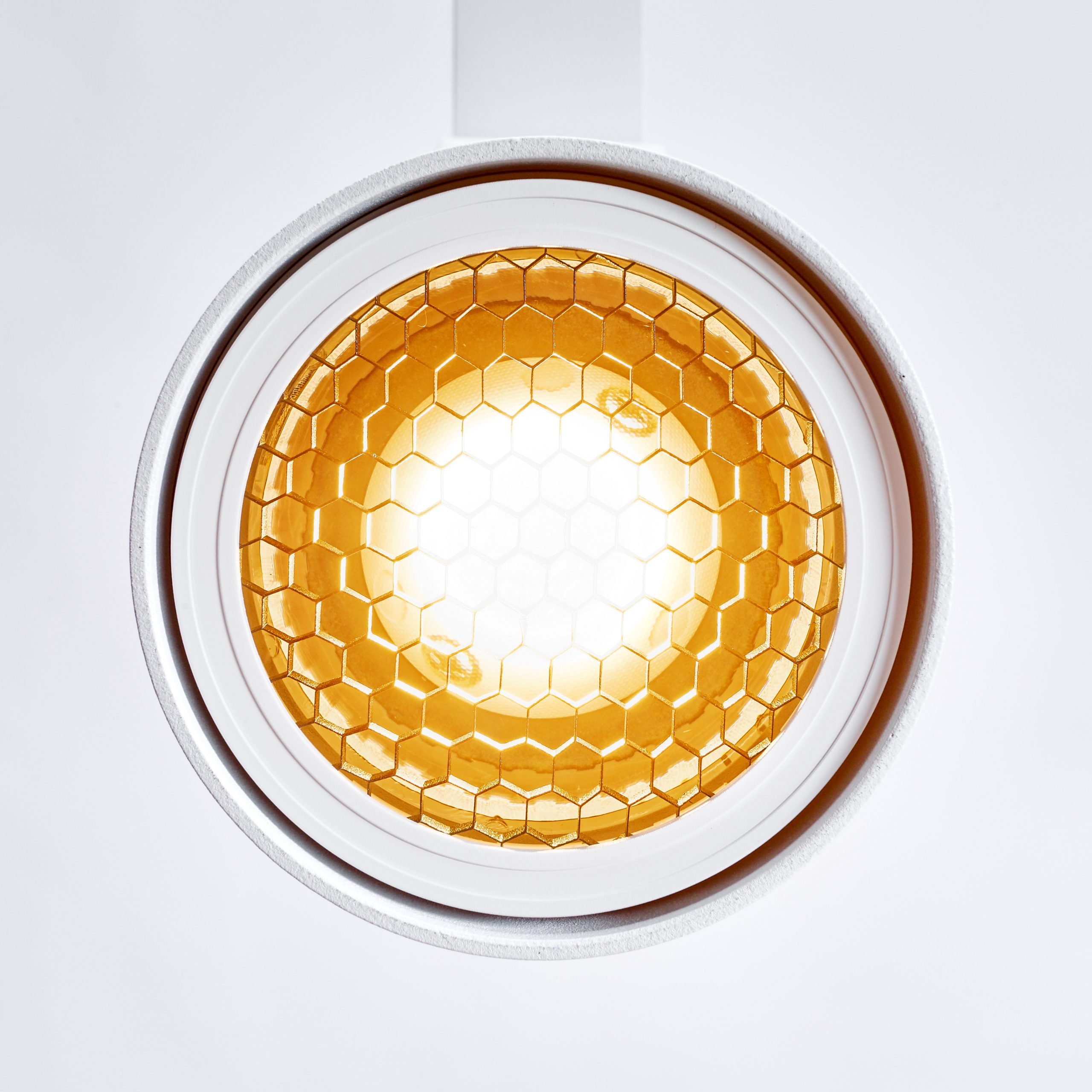
Modern LED track heads providing superior color accuracy and beam control.
Led track lighting for art gallery spaces has become the modern standard for a few practical reasons.
LEDs produce very low heat compared to halogen and metal halide sources. Lower heat reduces stress on artwork and improves comfort in the space.
LEDs have minimal UV output. While conservation is still about total exposure over time, reduced UV is a major benefit for long term display.
LEDs are energy efficient and long lasting. Fewer lamp changes and lower power consumption reduce operational costs and disruption.
Modern LED optics are extremely advanced. You can achieve tight, clean beams, controlled spill, and glare reduction features that older sources struggled to deliver consistently.
In other words, LEDs do not just save energy. They allow better art presentation when paired with good optical design.
The Real Goal of Art Gallery Lighting Systems

Lighting designed to enhance artwork perception without distracting the viewer.
Many people think gallery lighting is about making art bright. The real goal is controlled presentation. That includes four outcomes.
Accuracy. The art should appear true to the artist’s intent, especially color.
Hierarchy. The lighting should subtly guide attention, helping key works feel important.
Comfort. Visitors should not experience glare, harsh reflections, or visual fatigue.
Adaptability. The system should allow the gallery to reconfigure without renovation.
A good system is almost invisible. Visitors notice the art, not the lights.
Art Gallery Lighting Design Starts With the Viewer Experience
Strategic illumination creating a comfortable atmosphere for deep engagement with art.
Good design begins with a simple question: what should the visitor feel and notice first. Art gallery lighting systems are not just technical infrastructure. They are part of storytelling. The direction, contrast, and mood of light can make a space feel calm and museum like, or dramatic and high energy.
Designers typically plan lighting in layers.
Ambient layer. A soft base that supports comfort and orientation.
Accent layer. Focused beams that highlight individual works.
Wall illumination layer. Even light that helps walls feel clean and allows art to sit in context.
Feature layer. Hero moments where stronger emphasis is used for signature pieces.
Track based systems are ideal because each layer can be tuned by repositioning fixtures and adjusting optics.
Beam Angle and Why Optics Matter More Than People Think

Adjustable lenses demonstrating sharp focus versus soft diffused illumination patterns.
Beam angle is one of the most important decisions in any gallery system. Beam angle defines how wide or narrow the light spreads on the artwork plane.
Narrow beams create drama and separation. They are best for small works, sculptures, and moments where you want a strong focal point.
Medium beams are the workhorse for most framed pieces. They provide focus without creating harsh hot spots.
Wide beams and wall wash distributions are used for large canvases, groups, and even background illumination.
The problem is that real galleries are unpredictable. Artwork sizes vary. Hanging heights vary. Viewing distance varies. That is why flexibility in optics is so valuable.
This is where your three product platforms make sense as a system.
Zoom gives adjustable beam control. It allows staff to tighten or widen the beam on site, making it ideal for rotating exhibitions.
Multi supports multiple distributions through interchangeable optics. It provides versatility across zones without mixing random fixture types.
Deluxe provides premium optical precision and strong projection capability, especially useful when throw distances are longer or ceilings are higher.
Instead of guessing and hoping, a system that includes Zoom and Multi lets you respond to the actual art in the room.
High Ceilings and Projection Distance

High-performance LED projectors maintaining beam intensity from tall gallery ceilings.
Many galleries are not small white boxes. Some are loft spaces, converted warehouses, heritage buildings, or modern architecture with tall ceilings. High ceilings create a specific lighting challenge: you need enough intensity and optical control to deliver clean light onto the artwork without washing the entire room.
This is where Deluxe is a strong choice. It is very good for high ceilings and projecting light because it maintains beam definition and output over distance. When installed higher, it can still deliver refined results on the wall and artwork plane.
Zoom and Multi are also great for ceilings, particularly in spaces with mixed ceiling heights. Zoom’s adjustable beam helps you tune the spread based on mounting height, and Multi’s optical options help you standardize results across multiple rooms.
A practical strategy is to use Deluxe in tall zones and hero walls, then use Zoom and Multi for flexible coverage across rotating exhibition areas.
Color Rendering and Why It Protects Reputation

High-CRI light revealing true pigments to maintain artist and gallery integrity.
Color accuracy is non negotiable in professional art gallery lighting systems. If the light source distorts color, visitors are not seeing the work truthfully. Collectors notice. Artists notice. Curators notice. Even casual visitors feel that something is off.
High color fidelity lighting reveals subtle tones, preserves natural neutrals, and makes saturated colors look rich rather than dull. It also affects how premium the gallery feels. Consistent, accurate color performance across the space gives the environment a quiet luxury.
Within your system, Deluxe should be positioned as the premium option where the highest level of color and optical refinement is required. Zoom and Multi provide consistent performance while adding flexibility of beam control and distribution.
Consistency matters as much as peak performance. A gallery with one perfect wall and three inconsistent walls does not feel premium. System level consistency is what creates authority.
Glare Control and Why Comfort Sells Art

Shielding accessories ensuring the light source remains hidden from the viewer's eye.
Glare is one of the fastest ways to ruin a gallery experience. Glare happens when visitors can see the bright light source directly or when reflections bounce off glass frames into the viewer’s eyes. Even if visitors cannot articulate it, glare makes people step back, shift angles, and disengage faster.
Professional systems solve glare through optics and accessories that hide the source, plus correct aiming angles that avoid direct reflections. Track helps because fixtures can be repositioned until reflections disappear.
Zoom can help by tightening beam spread to reduce spill onto glass. Deluxe can help with refined beam cut off and controlled projection. Multi can support different distributions depending on the artwork type and wall condition.
Glare control is not optional. It is part of the visitor comfort layer that makes the entire space feel high end.
Lighting Different Artwork Types

Precision beams highlighting the unique textures and contours of physical artifacts.
A system must work across multiple mediums.
Paintings often benefit from controlled directional lighting that reveals texture without creating harsh shadows.
Photography is sensitive to reflections and requires excellent glare control and careful aiming.
Sculpture needs modeling. One light often creates a flat look. Multiple angles create dimensionality.
Works on paper and textiles are often sensitive to exposure and may require lower intensity and careful control.
The advantage of a flexible system is that you do not need a different lighting product for every medium. You need one system with the right optical toolkit. Zoom and Multi support that adaptability, while Deluxe ensures premium presentation in demanding zones.
Cabinets and Mini Track Lights

Compact mini track lights providing precise illumination for small, detailed pieces.
Many galleries use cabinets and vitrines for small works, collectibles, or fragile objects. Standard track heads can be too large or visually intrusive for cabinet interiors. This is where mini track lights become a valuable layer.
Mini track lights can go inside cabinets as well, providing compact, precise illumination for small objects while keeping the display clean. They are ideal for jewelry, small sculptures, documents, and collectible objects where detail is important. They also help create a premium feel because the cabinet becomes a controlled lighting environment rather than a dark box.
When cabinet lighting is handled well, it adds depth and variety to the exhibition and increases perceived value of small works.
Planning Track Layout
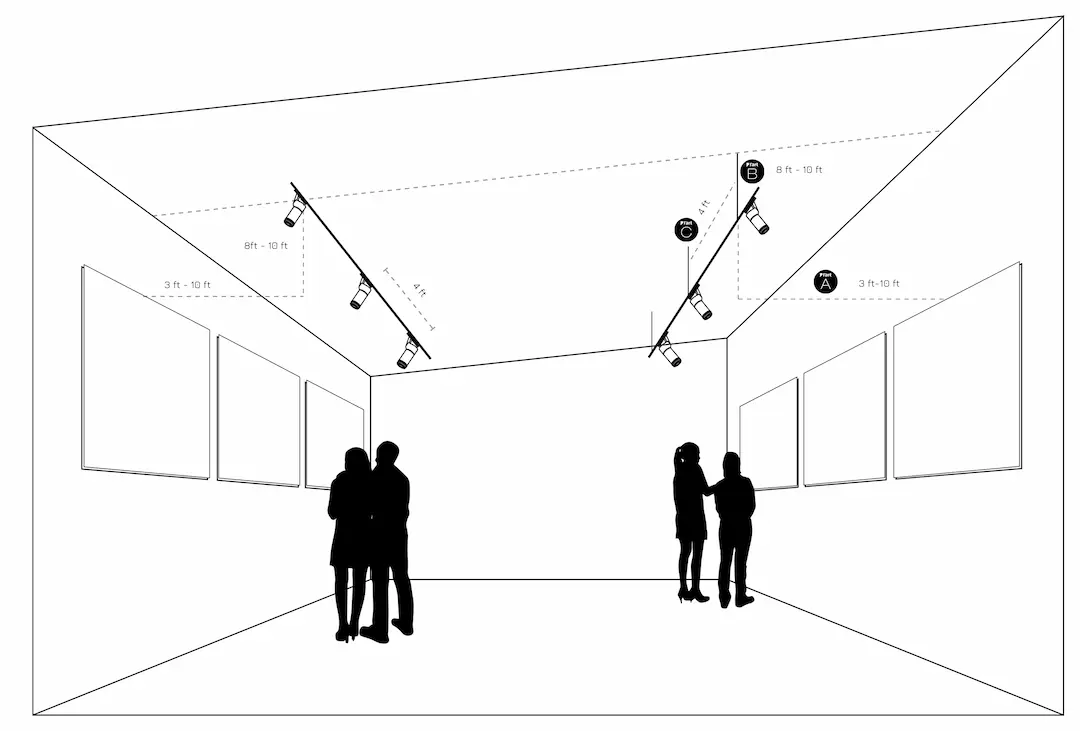
Strategic track positioning ensuring optimal light angles for all display surfaces.
Track layout determines how easy the system is to operate over the long term. A good layout gives curators and installers freedom. A bad layout forces awkward aiming angles, creates dead zones, and increases glare risk.
Track is commonly installed in straight runs parallel to walls or in grids that cover multiple zones. The best choice depends on the space, but the principles are consistent.
You want track placement that allows fixtures to aim at artwork from effective angles.
You want enough track length and capacity to add fixtures for dense exhibitions.
You want alignment with architecture so the ceiling reads clean and intentional.
Once the backbone is correct, the rest becomes easier. Fixtures can move. Optics can change. The system can evolve.
Controls, Dimming, and Scenes

Dimmable track fixtures creating custom lighting scenes for different events.
Control transforms lighting from static to professional. Dimming allows the gallery to tune brightness for different exhibitions, events, and times of day. Zoning allows different rooms or wall sections to be controlled independently. Scenes allow quick shifts in ambiance for openings, private viewings, or photography.
Control also supports conservation. For sensitive works, lighting can be set to lower levels. Outside open hours, levels can be reduced to limit exposure.
A system without control often ends up stuck at one brightness level, which is rarely ideal.
The System Approach Using Deluxe, Zoom, and Multi

Integrated system featuring Deluxe, Zoom, and Multi fixtures for total control.
Rather than selling fixtures individually, position them as roles within art gallery lighting systems.
Deluxe is the premium projector. Use it for high ceilings, long throw, and hero walls where optical refinement matters most.
Zoom is the flexibility tool. Use it where artwork scale changes frequently and staff need to adjust beam width quickly.
Multi is the versatile standard. Use it across general walls and zones where interchangeable optics provide consistent results.
This platform approach keeps the gallery consistent, simplifies staff training, and makes upgrades easier. It also creates a clear story for why the system is worth investing in.

Maintenance and Longevity

Modular fixture design allowing for easy component access and long-term maintenance.
LED track systems are low maintenance, but galleries still benefit from basic upkeep. Optics should be cleaned occasionally. Fixtures should be checked for alignment after re hangs. Controls should be tested to ensure scenes remain consistent.
The long-term advantage is that track infrastructure lasts for years while fixture heads can be upgraded as needed. This protects investment and reduces renovation cycles.
Conclusion
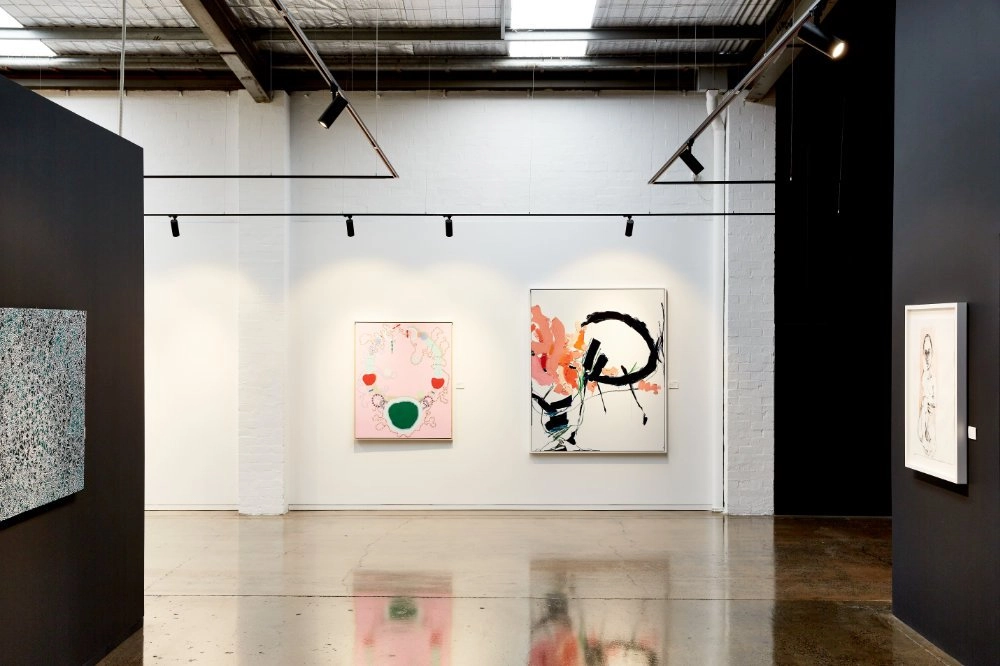
A perfectly balanced exhibition space showcasing the power of professional lighting.
Professional art gallery lighting systems create a platform for presenting artwork with accuracy, comfort, and flexibility. Art gallery track lighting systems give curators the ability to adapt exhibitions without rewiring, while led track lighting for art gallery environments delivers low heat, long life, and excellent optical control.
A system built around Deluxe, Zoom, and Multi covers the real needs of galleries. Deluxe handles high ceilings and strong projection. Zoom provides adjustable beam control for changing exhibitions. Multi delivers versatile optics for consistent coverage across walls and zones. Add mini track lights for cabinets, and the gallery gains a complete, future ready lighting toolkit.
Art Gallery Lighting Systems FAQs
What are art gallery lighting systems
Art gallery lighting systems are integrated setups that combine track infrastructure, adjustable fixtures, optics, and lighting controls to present artwork accurately and flexibly. They are designed to evolve as exhibitions change.
Why are art gallery track lighting systems so popular
Art gallery track lighting systems are popular because fixtures can be moved, re aimed, and replaced without rewiring. This makes them ideal for rotating exhibitions and changing wall layouts.
Why choose led track lighting for art gallery spaces
Led track lighting for art gallery spaces is efficient, low heat, and long lasting. It offers strong optical control and minimal UV compared to older lighting sources, making it better for art presentation and conservation.
What beam angle is best for art gallery lighting systems
It depends on the artwork. Narrow beams are best for small works and sculptures, medium beams suit most framed pieces, and wider beams are used for large canvases and wall washing. Zoom style fixtures help because beam width can be adjusted on site.
What is the difference between Deluxe, Zoom, and Multi
Deluxe is best for high ceilings and projecting light with premium optical refinement. Zoom is best when you need adjustable beam control as exhibitions change. Multi is best for versatile coverage using interchangeable optics across many walls and zones.
Can mini track lights be used inside cabinets
Yes. Mini track lights can go inside cabinets as well, providing compact and precise illumination for small objects. They are ideal for display cases where standard track heads are too large.
How do you reduce glare in art gallery lighting systems
Use fixtures with glare control optics and aim them to avoid direct reflections into the viewer’s line of sight. Track systems help because you can reposition fixtures until reflections and glare are minimized.
Do art gallery lighting systems need dimming
Yes. Dimming allows you to tune the presentation for different exhibitions and supports conservation needs for sensitive works. Zoning and scenes also improve day to day operation and events.
How long do led track lights last in a gallery
Professional LED track fixtures typically last many years with stable performance. Longevity depends on operating hours and heat management, but maintenance is generally low compared to traditional lamp systems.
What makes a gallery lighting system future proof
A future proof system uses track as the long term backbone and allows fixture heads and optics to be upgraded over time. This avoids ceiling renovations when technology improves.
If you want, I can also produce the SEO publish pack for this page: meta title, meta description, internal link anchors, and a short product comparison block that pushes Deluxe vs Zoom vs Multi without sounding salesy.
Trusted by art collectors, galleries, and curators worldwide