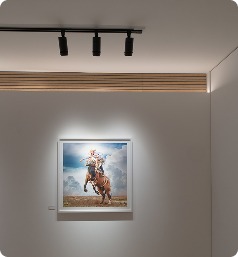
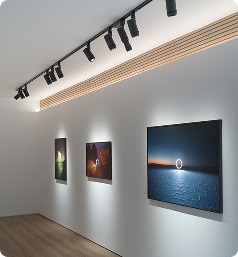
Professional ceiling lights illuminating artwork in modern gallery interior
Ceiling lights for artwork are one of the most refined and effective methods of illuminating paintings, wall art, and curated displays in galleries, museums, collector homes, and high-end interiors. When properly specified, overhead lighting for artwork creates balanced illumination, accurate color perception, and a clean architectural presentation that enhances the viewing experience without visual distraction.
Unlike decorative lighting, ceiling lighting for artwork is designed with precision, beam control, and conservation awareness in mind. The goal is not simply to light a space, but to reveal the artwork with clarity, depth, and visual authenticity.
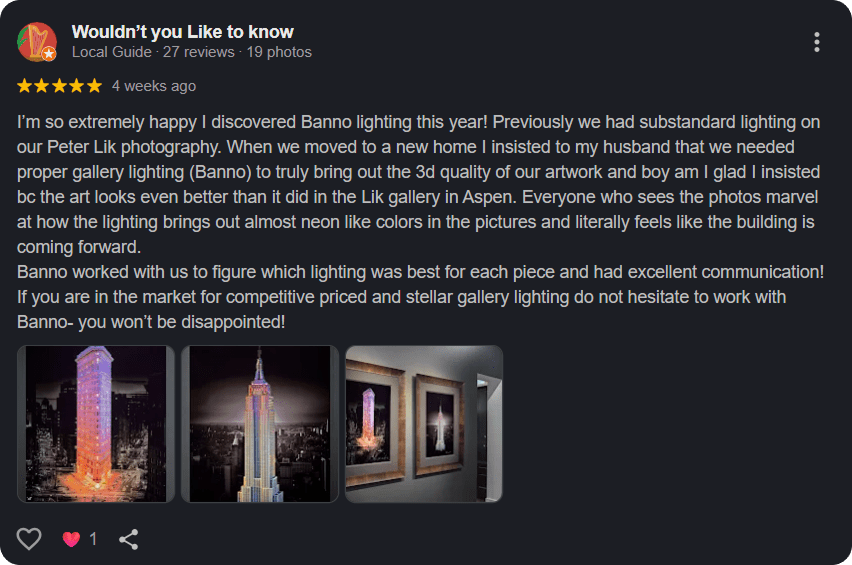
Gallery Lighting Testimonial: Professional Review of Our Display Fixtures
Why Ceiling Lights for Artwork Are Preferred in Professional Art Spaces
Ceiling-mounted lighting is widely used in galleries and museums because it provides consistent illumination from an optimal viewing angle. Overhead lights for artwork allow light to fall naturally across the surface of paintings and framed pieces, enhancing detail while reducing harsh shadows.
Professional ceiling lighting for artwork offers:
- Even illumination across artwork surfaces
- Minimal visual intrusion in curated spaces
- Controlled beam direction
- Compatibility with gallery and museum layouts
This makes ceiling lights ideal for both institutional exhibitions and refined residential art collections.
Ceiling Spotlights for Artwork and Precision Illumination
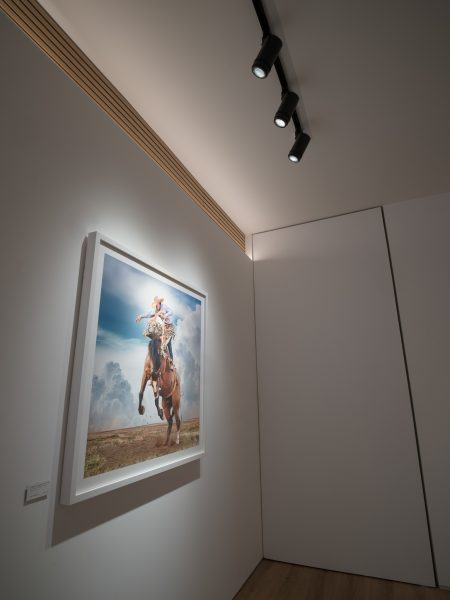
Focused beam light defining artwork texture and detail
Ceiling spotlights for artwork are specifically designed to highlight individual pieces with focused beams of light. Unlike general ceiling lights, spotlights allow precise aiming, ensuring that each artwork receives dedicated illumination.
Key advantages of ceiling spotlights for paintings include:
- Targeted lighting for individual artworks
- Enhanced texture visibility
- Improved visual hierarchy on gallery walls
- Reduced light spill onto surrounding surfaces
This focused approach is commonly used in galleries where multiple artworks are displayed on a single wall.

4.9-star rated by art collectors and gallery professionals
Overhead Lights for Artwork and Visual Clarity
Overhead lights for artwork play a critical role in maintaining visual clarity, particularly for detailed paintings and fine art pieces. Properly positioned ceiling lighting ensures that viewers can observe subtle brushwork, tonal transitions, and material textures without distortion.
Well-designed overhead lighting for artwork improves:
- Detail recognition
- Color accuracy
- Surface definition
- Overall viewing comfort
This is especially important for oil paintings, acrylic works, and mixed media artworks.
Recessed Ceiling Lighting for Artwork and Minimalist Design

Recessed ceiling fixtures blending into modern gallery interior
Recessed ceiling lighting for artwork is a preferred solution in modern galleries and collector homes that prioritise clean architectural aesthetics. By integrating lighting into the ceiling, recessed fixtures provide precise illumination without visible hardware dominating the visual environment.
Recessed lighting for artwork is ideal for:
- Minimalist gallery interiors
- High-end residential art walls
- Museum exhibition spaces
- Architectural lighting integration
This approach allows artwork to remain the central focal point while maintaining a refined spatial atmosphere.
Ceiling Lights for Paintings and Surface Texture Enhancement
Paintings contain layers of pigment, brushwork, and texture that can appear flat under poor lighting conditions. Ceiling lights for paintings, when angled correctly, enhance these details by introducing subtle shadow depth and controlled highlights.
Effective ceiling lighting reveals:
- Brushstroke texture
- Layered paint depth
- Surface material nuances
- Fine artistic details
This enhances the authenticity of the viewing experience and aligns with professional art presentation standards.
Ceiling Mounted Accent Lights for Artwork Displays

Focused overhead beam creating visual focal point
Ceiling mounted accent lights for artwork are used to create visual emphasis within curated spaces. Accent lighting directs attention to specific artworks while maintaining balanced ambient illumination across the room.
Accent ceiling lighting is particularly effective for:
- Feature artworks in collector homes
- Gallery focal points
- Museum highlight pieces
- Rotating exhibition displays
This layered lighting strategy helps guide viewer attention naturally across a curated art environment.
Ceiling Lighting for Wall Art and Framed Pictures
Ceiling lights for wall art and framed pictures must be carefully positioned to avoid glare and reflections, especially when artworks are protected by glass. Direct downward lighting can cause reflective hotspots that interfere with visibility.
Professional ceiling lighting for framed artwork involves:
- Angled beam positioning
- Anti-glare optics
- Controlled brightness levels
- Even light distribution across the frame
This ensures that artwork remains clearly visible from multiple viewing angles.
Ceiling Lights for Art Galleries and Exhibition Spaces

Exhibition space with evenly spaced overhead spotlights
Ceiling lights for art gallery environments must deliver consistency, flexibility, and precision. Exhibition spaces often feature changing artwork layouts, requiring adaptable overhead lighting systems.
Ceiling lighting in galleries supports:
- Rotating exhibitions
- Multi-art wall displays
- Curatorial lighting control
- Professional visual presentation
Ceiling track lighting for art is also frequently used in galleries to allow adjustable positioning without structural changes to the ceiling.
Ceiling Lights for Artwork in Collector Homes
Private collectors increasingly adopt ceiling lights for artwork to replicate museum-quality presentation within residential interiors. Overhead lighting creates a refined display environment that elevates both the artwork and the interior design.
In collector homes, ceiling lighting enhances:
- Gallery walls in living spaces
- Hallway art displays
- Dedicated art rooms
- Curated luxury interiors
This approach transforms residential spaces into gallery-inspired environments.
Professional Art Lighting Integration: Zoom, Deluxe, and Multi

Museum-grade fixtures delivering controlled beam accuracy
Precision ceiling lighting for artwork often incorporates specialised art lighting systems designed specifically for fine art illumination. Fixtures such as Zoom (precision art lighting), Deluxe (museum-grade lighting), and Multi (flexible gallery lighting) integrate seamlessly with ceiling-mounted and overhead lighting strategies.
These lighting solutions provide:
- Controlled beam accuracy for artwork
- Consistent color rendering
- Discreet ceiling integration
- Flexible illumination for diverse artworks
When used within ceiling lighting systems, they support a professional and refined art presentation without appearing overly commercial or intrusive.
Ceiling Spotlights for Paintings and Beam Angle Control
Beam angle selection is essential when using ceiling spotlights for paintings. Narrow beam angles are suitable for small artworks, while wider beams are better for large paintings or multi-piece displays.
Proper beam control ensures:
- Even illumination across artwork surfaces
- Reduced shadow distortion
- Balanced brightness levels
- Enhanced visual cohesion in gallery walls
This level of precision distinguishes professional art lighting from general overhead lighting.
Ceiling Lighting for Artwork and Long-Term Conservation

Low heat overhead lights preserving canvas integrity
Ceiling lighting for artwork must also consider conservation factors, particularly for valuable or sensitive pieces. Excessive heat, UV radiation, and inconsistent lighting can contribute to long-term artwork degradation.
High-quality ceiling LED lighting supports conservation by:
- Emitting low heat levels
- Reducing UV exposure
- Providing stable illumination output
- Maintaining consistent color temperature
This makes ceiling-mounted LED lighting suitable for museums, galleries, and serious collectors.
Ceiling Lights for Artwork as a Long-Term Display Solution
Ultimately, ceiling lights for artwork represent a sophisticated and practical lighting solution for professional art environments. Their ability to provide precise overhead illumination, architectural integration, and conservation-conscious performance makes them ideal for galleries, museums, designers, and collectors who prioritise high-quality art presentation.
By combining ceiling spotlights, recessed lighting, and controlled accent illumination, ceiling lighting systems allow artwork to be displayed with clarity, depth, and visual balance. When thoughtfully designed, ceiling lights for artwork enhance not only the artwork itself but the entire spatial experience, creating a refined environment where art can be viewed exactly as intended.
Ceiling Lights for Artwork and Viewing Angle Optimization

Balanced lighting ensuring clarity from multiple angles
One of the most overlooked aspects of ceiling lights for artwork is viewing angle optimization. The way light interacts with artwork changes dramatically depending on the angle of illumination relative to the viewer’s eye level. Poorly placed overhead lights for artwork can cause glare, uneven brightness, or shadowing that distorts the visual experience.
Professionally designed ceiling lighting for artwork typically positions fixtures at calculated angles to ensure:
- Minimal glare on varnished or framed surfaces
- Even illumination across the artwork plane
- Comfortable viewing from multiple positions
- Consistent visual clarity in both daylight and evening conditions
This is particularly important in galleries and collector homes where artwork is observed from different distances and angles.
Overhead Lighting for Artwork and Spatial Harmony
Overhead lighting for artwork should not exist in isolation from the overall lighting scheme of a space. Instead, ceiling lights must work in harmony with ambient and architectural lighting to create a cohesive visual environment.
When ceiling lights for artwork are properly integrated, they help:
- Balance light levels across walls and floors
- Prevent harsh contrast between artworks and surroundings
- Support architectural aesthetics
- Enhance the perceived scale of the artwork display
This harmonious lighting approach is widely used in museums and high-end interior design projects.
Ceiling Spotlights for Artwork in Multi-Piece Displays

Balanced ceiling lighting across grouped framed artworks
In spaces where multiple artworks are displayed together, such as gallery walls or exhibition rooms, ceiling spotlights for artwork allow individual pieces to be illuminated independently. This prevents one artwork from overpowering others due to uneven lighting distribution.
Ceiling spotlights improve multi-piece displays by:
- Creating consistent illumination spacing
- Maintaining visual balance across collections
- Allowing selective emphasis on key artworks
- Supporting curatorial layout flexibility
This method is especially effective in professional art gallery lighting design.
Ceiling Lights for Artwork and Color Temperature Precision
Color temperature plays a critical role in how artwork is perceived. Ceiling lights for artwork should provide stable and neutral color temperatures that preserve the integrity of pigments and materials.
Well-calibrated ceiling lighting ensures:
- Accurate color representation
- Natural tonal balance
- Reduced color distortion
- Consistent visual experience across different artworks
Inconsistent color temperature can cause artwork to appear overly warm, cool, or muted, which negatively impacts its presentation.
Ceiling Lighting for Artwork and Shadow Management

Soft shadow control enhancing textured canvas surface
Shadow control is a key component of professional ceiling lighting for artwork. Improper overhead lighting can create distracting shadows along frames, canvas edges, or textured surfaces.
Strategic ceiling lighting placement helps:
- Minimise harsh shadow lines
- Enhance dimensional visibility
- Improve surface clarity
- Maintain a clean visual presentation
For textured paintings and sculptural wall art, subtle shadowing can actually enhance depth when carefully managed.
Ceiling Lights for Artwork in Museum-Grade Environments
Museums rely heavily on ceiling lights for artwork due to their precision, stability, and architectural discretion. Ceiling-mounted systems allow curators to illuminate artworks without introducing visible lighting fixtures that disrupt the exhibition aesthetic.
In museum environments, ceiling lighting supports:
- Long-term exhibition stability
- Conservation-conscious illumination
- Flexible lighting adjustments for rotating displays
- Uniform lighting across large gallery spaces
This makes ceiling lighting an essential component of institutional art display systems.
Ceiling Mounted Lighting and Artwork Preservation

Stable illumination preserving paper and canvas materials
Artwork preservation is a major consideration when specifying ceiling lights for artwork. Excessive heat or inconsistent lighting can accelerate material degradation, especially in sensitive works on paper, canvas, or textiles.
High-quality ceiling-mounted lighting helps preserve artwork by:
- Reducing direct heat exposure
- Maintaining stable illumination levels
- Supporting controlled light intensity
- Minimising environmental stress on materials
This is particularly important for museums, collectors, and archival collections.
Ceiling Lighting for Artwork and Architectural Integration
Ceiling lighting for artwork offers a significant advantage in architectural integration. Unlike wall-mounted fixtures or floor lamps, ceiling lights maintain a clean and unobtrusive design language that aligns with contemporary gallery and interior aesthetics.
Architectural integration benefits include:
- Minimal visual clutter
- Seamless ceiling design
- Enhanced spatial sophistication
- Discreet yet powerful illumination
This refined approach ensures that lighting enhances the artwork without becoming a focal point itself.
Ceiling Lights for Artwork in Contemporary Interior Design
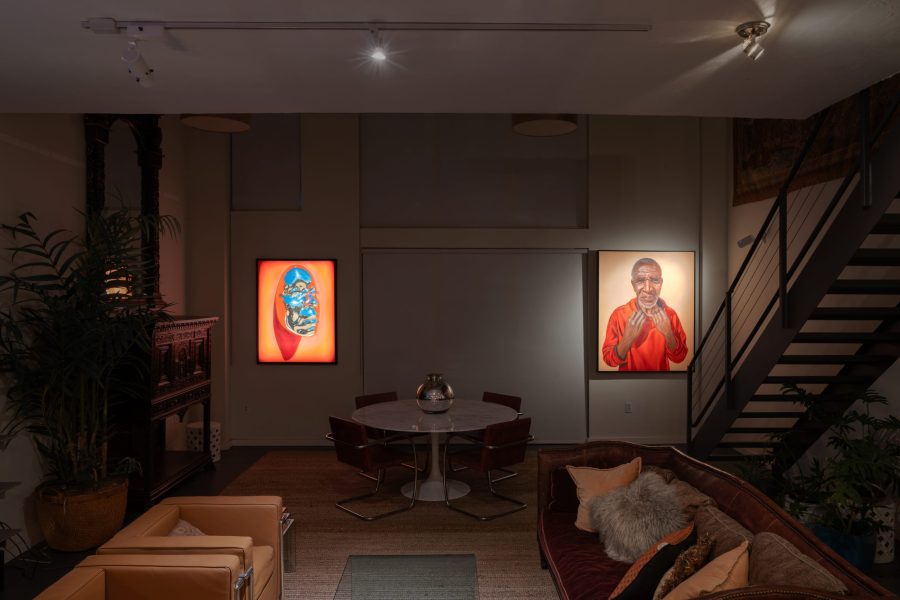
Contemporary living room with gallery-style ceiling lighting
Modern interior designers increasingly use ceiling lights for artwork to create gallery-style living environments. Overhead art lighting transforms residential spaces into curated settings that highlight collections while maintaining elegance and visual restraint.
In contemporary interiors, ceiling lighting is commonly used for:
- Feature artwork walls in living rooms
- Hallway gallery installations
- Luxury residential art collections
- Open-plan art display spaces
This approach elevates both the artwork and the interior environment simultaneously.
Ceiling Lights for Artwork and Visual Hierarchy Control
Visual hierarchy is essential in art presentation, particularly in curated collections. Ceiling lights for artwork allow designers and curators to subtly guide viewer attention by adjusting brightness levels and beam focus.
This lighting strategy helps:
- Highlight primary artworks
- Support secondary pieces with softer illumination
- Create a structured viewing flow
- Enhance exhibition storytelling
Controlled hierarchy ensures that each artwork is presented intentionally rather than competing for attention.

Long-Term Performance of Ceiling Lights for Artwork

Energy-efficient overhead fixtures supporting permanent displays
Ceiling lights for artwork are designed for long-term reliability in professional and residential environments. High-quality ceiling lighting systems maintain stable performance over years of operation, making them suitable for permanent art displays.
Long-term performance advantages include:
- Consistent brightness output
- Low maintenance requirements
- Energy-efficient operation
- Durable lighting stability for ongoing exhibitions
This reliability is especially valuable for galleries and collectors who require dependable illumination for valuable artworks.
Ceiling Lighting for Artwork as a Professional Standard

Refined art display supported by precision ceiling illumination
Ceiling lights for artwork have become a professional standard across galleries, museums, and high-end residential collections due to their precision, discretion, and visual effectiveness. By delivering controlled overhead illumination, ceiling lighting enhances artwork clarity, preserves material integrity, and supports refined spatial design.
When properly specified and positioned, ceiling lighting for artwork allows paintings, photographs, and wall art to be experienced with accurate color, visible texture, and balanced illumination. The result is a sophisticated display environment where artwork remains the visual focal point, supported by lighting that is both technically precise and architecturally seamless.
FAQs
1. What are ceiling lights for artwork?
Ceiling lights for artwork are overhead lighting fixtures designed to illuminate paintings, wall art, and displays with controlled, even, and precise light.
2. Are ceiling lights good for illuminating artwork?
Yes, ceiling lights are one of the most effective ways to illuminate artwork because they provide consistent and balanced overhead illumination.
3. What type of ceiling light is best for artwork?
Directional spotlights, recessed lights, and ceiling-mounted accent lights are typically best for artwork.
4. Should ceiling lights be placed directly above artwork?
They should be positioned slightly in front of the artwork at an angle to reduce glare and improve visibility.
5. What is the best angle for ceiling lights for artwork?
A common professional guideline is around 30 degrees to minimise glare and enhance texture visibility.
6. Are recessed ceiling lights suitable for artwork?
Yes, recessed ceiling lighting offers a clean and discreet solution for illuminating artwork in galleries and homes.
7. Can ceiling spotlights damage artwork?
High-quality LED ceiling spotlights are safe for artwork when properly specified and not excessively bright.
8. What color temperature is best for ceiling lights for artwork?
Neutral color temperatures that preserve true color appearance are generally preferred for art lighting.
9. Do ceiling lights cause glare on framed artwork?
They can if placed incorrectly, especially on glass-covered pieces, but proper angling and optics reduce glare.
10. Are ceiling lights better than wall-mounted picture lights?
Ceiling lights provide more flexibility and even illumination, especially for larger artworks and gallery walls.
11. Can ceiling track lighting be used for artwork?
Yes, ceiling track lighting is widely used in galleries because it allows adjustable and precise positioning.
12. How bright should ceiling lights be for artwork?
They should be bright enough to reveal detail but controlled to avoid harsh hotspots or excessive exposure.
13. Are LED ceiling lights safe for paintings?
Yes, LED ceiling lights emit low heat and minimal UV, making them safe for paintings and delicate artwork.
14. Can ceiling lighting highlight multiple artworks on one wall?
Yes, evenly spaced ceiling spotlights can create balanced illumination across multi-art displays.
15. Is overhead lighting for artwork suitable for home galleries?
Absolutely, overhead lighting is commonly used in collector homes to create a gallery-style display.
16. Do ceiling lights enhance artwork texture?
Yes, properly angled ceiling lighting can reveal brushstrokes, surface detail, and depth.
17. Can ceiling lights be used in museums for artwork?
Yes, museums frequently use ceiling-mounted and recessed lighting for precise and conservation-friendly illumination.
18. What beam angle is best for ceiling spotlights for artwork?
Narrow beams work well for small pieces, while wider beams are better for large artworks.
19. Should ceiling lights be dimmable for artwork displays?
Yes, dimmable lighting allows precise control over brightness and viewing conditions.
20. Do ceiling lights work for both paintings and photographs?
Yes, ceiling lights can effectively illuminate paintings, photographs, and framed wall art when properly positioned.
What Our Clients Say About Our Gallery Lighting