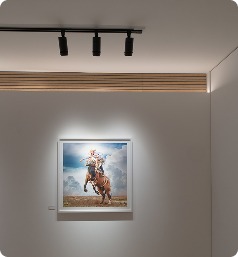
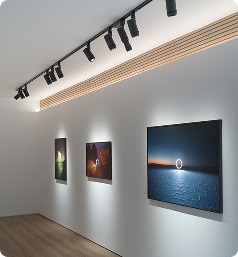
Professional exhibition display enhanced by controlled beam spotlights
Exhibit lighting is a specialised form of lighting design used to illuminate displays, artwork, museum pieces, and exhibition panels with precision, clarity, and visual control. Unlike general lighting, exhibit lighting is engineered to highlight objects, enhance visibility, and preserve delicate materials while maintaining a professional presentation standard.
In museums, galleries, trade shows, and curated exhibitions, lighting is not just functional — it is a core part of how the exhibit is experienced. Proper exhibit lighting can guide viewer attention, enhance detail, and significantly elevate the perceived value of displayed objects and artwork.
This guide explores professional exhibit lighting systems, wall-mounted lighting solutions, museum standards, and how adjustable zoom lighting is used in modern exhibition environments.
What Is Exhibit Lighting?

Precision LED beam targeting exhibition showcase object
Exhibit lighting refers to directional lighting specifically designed to illuminate displays, artworks, artifacts, and exhibition panels. It is commonly used in:
- Museums
- Art exhibitions
- Trade show booths
- Exhibition stands
- Display walls
- Showcases and display cabinets
- Cultural and institutional exhibits
Unlike standard ceiling lighting, exhibit lighting focuses on controlled beam direction, glare reduction, and precise illumination of the subject rather than the surrounding space.

4.9-star rated by art collectors and gallery professionals
Why Exhibit Lighting Requires a Different Approach Than General Lighting

Directional exhibit lighting improving object visibility and depth
Standard ceiling lights or ambient lighting often fail in exhibition environments because they lack directional focus and visual control. Exhibits require lighting that enhances detail without creating glare, shadows, or uneven illumination.
Poor exhibit lighting can result in:
- Washed out displays
- Reflections on protective glass
- Loss of visual depth
- Distracted viewer focus
- Inconsistent lighting across panels
Professional exhibit lighting systems solve these issues through adjustable positioning, beam control, and targeted illumination.
Types of Exhibit Lighting Used in Museums and Exhibitions
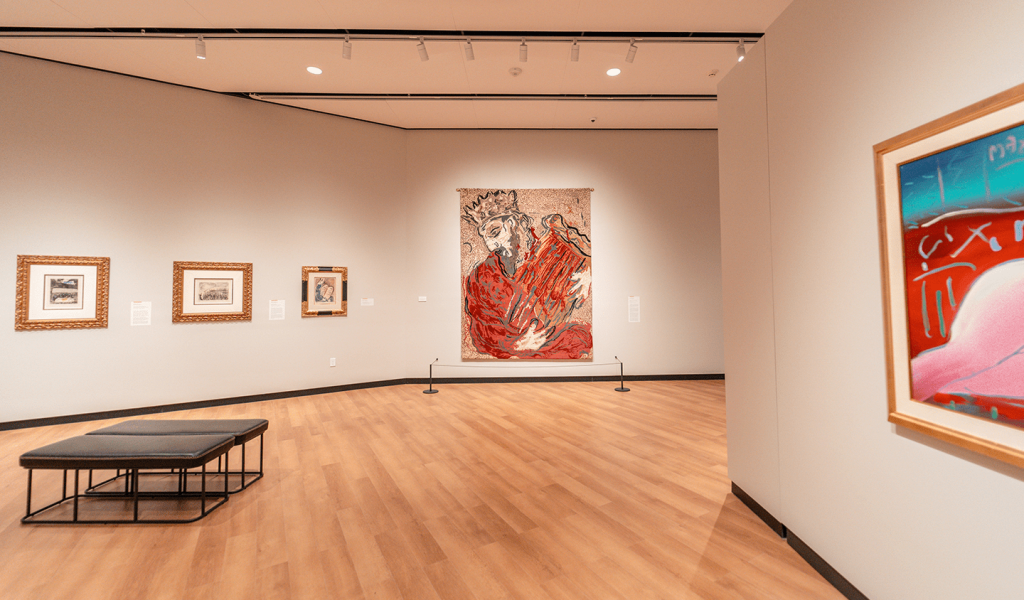
Exhibition environment featuring layered directional lighting design
1. Wall-Mounted Exhibit Lighting (Outward Arm Fixtures)
One of the most common lighting solutions in exhibitions is wall-mounted lighting with an extended arm that directs light back toward the display surface. This configuration is ideal when ceiling mounting is not practical or when exhibits are installed on vertical panels.
Key advantages:
- Direct illumination onto exhibit panels
- Clean and professional presentation
- Flexible positioning for different display heights
- Reduced ceiling dependency
- Precise focus on featured objects or artwork
Modern wall-mounted exhibit lights often include adjustable arms combined with zoom beam optics, allowing curators and designers to fine-tune the lighting angle and beam spread depending on the exhibit requirements.
2. Track Lighting for Exhibits
Track lighting is widely used in museums and exhibition spaces where flexibility is essential. Adjustable spotlights mounted on ceiling tracks allow lighting to be repositioned as exhibits change.
Benefits of exhibit track lighting:
- Scalable for large exhibitions
- Adjustable spotlight targeting
- Professional museum-grade appearance
- Suitable for rotating displays
However, track lighting is not always ideal for wall-mounted exhibits or panel-based displays where directional outward lighting is required.
3. Exhibit Case and Display Cabinet Lighting
Display cases and museum showcases require highly controlled lighting systems that minimise glare and protect sensitive materials. These lighting systems are designed to highlight artifacts without causing excessive light exposure.
Typical features include:
- Low heat output
- High CRI LED illumination
- Glare-free optics
- Focused beam control
Museum Exhibit Lighting Requirements and Standards
Museum exhibit lighting must balance visual clarity with preservation standards. Unlike retail or decorative lighting, museum lighting is designed to protect sensitive materials such as paintings, textiles, historical artifacts, and documents.
Key museum lighting considerations:
- Controlled lux levels
- Low UV emission
- Minimal heat output
- High colour rendering (CRI 95+)
- Adjustable beam precision
Professional exhibit lighting systems are engineered specifically to meet these preservation requirements while maintaining visual excellence.
The Importance of Beam Control in Exhibit Lighting

Controlled beam reducing light spill across display wall
Beam control is one of the most critical factors in exhibition lighting design. A fixed wide beam may flood an entire wall, while a narrow beam can precisely highlight a specific object or artwork.
Advanced exhibit lighting fixtures with zoom functionality allow:
- Adjustable beam angles
- Focused illumination on key exhibits
- Reduced light spill
- Enhanced visual hierarchy within exhibitions
This is particularly useful for exhibitions featuring multiple objects where each piece requires tailored illumination.
Wall-Mounted Adjustable Arm Lighting for Exhibits

Clean wall-mounted lighting supporting cultural exhibition design
In many exhibition environments, ceiling installation is either impractical or aesthetically undesirable. This is where wall-mounted adjustable arm lighting becomes a highly effective solution.
These fixtures extend outward from the wall and direct light back toward the exhibit surface, providing:
- Targeted lighting for exhibit panels
- Consistent illumination across displays
- Clean architectural integration
- Professional exhibition-grade appearance
When combined with a zoom lens system, adjustable arm lights allow curators and designers to fine-tune the beam angle based on exhibit size, distance, and object sensitivity. This level of control is especially valuable in museum exhibits, cultural displays, and high-end exhibition design projects.
Exhibition Lighting Design Principles
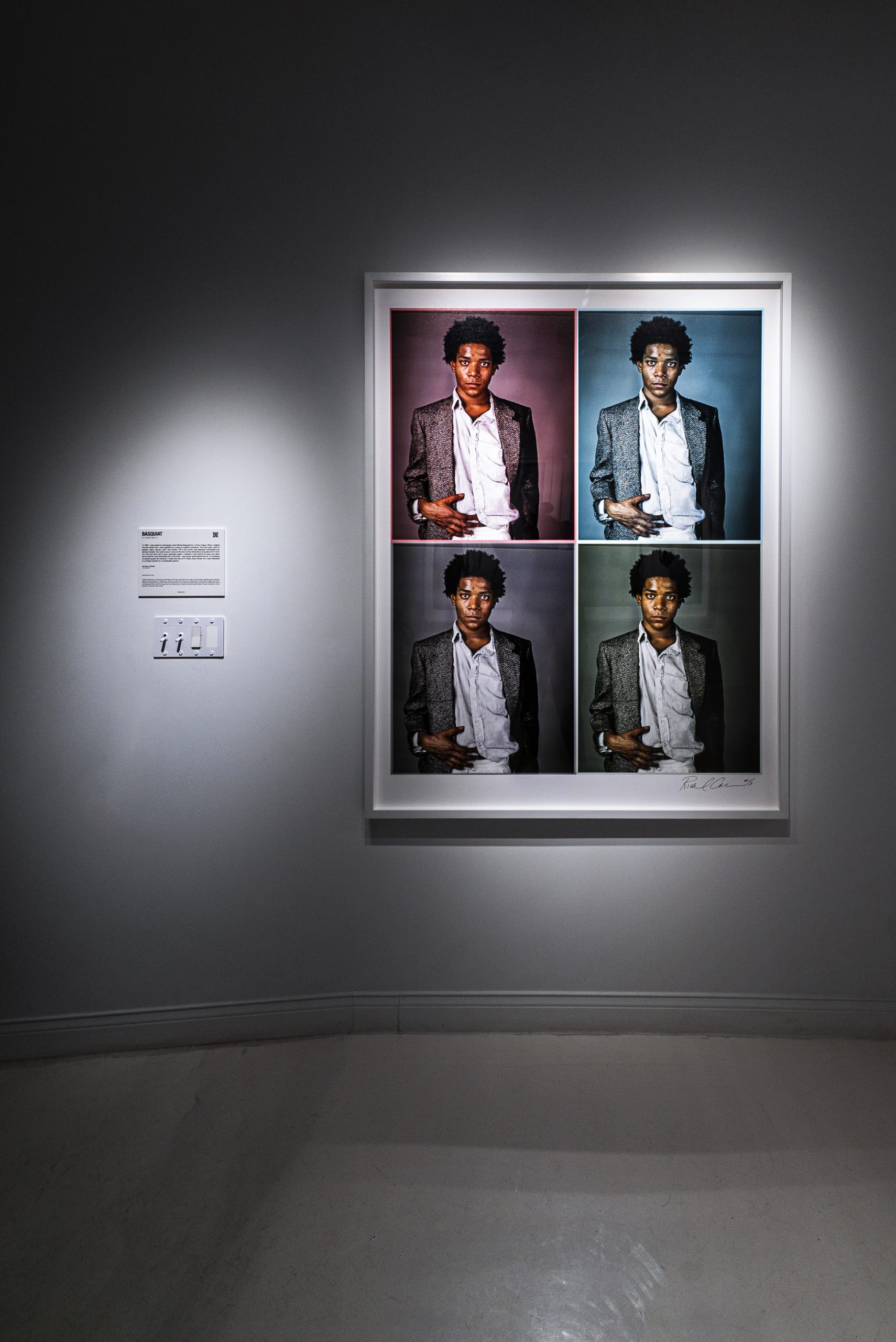
Angled spotlight reducing glare on framed exhibit
1. Lighting Angle and Positioning
Exhibit lighting is typically positioned at a controlled angle to reduce glare and highlight depth. Direct front-facing lighting should be avoided as it can flatten textures and create reflections.
2. Colour Rendering Accuracy (CRI)
High CRI lighting ensures that colours appear true to life. This is essential for artwork, artifacts, and detailed exhibits where colour fidelity is critical.
3. Glare Reduction
Professional exhibit lighting uses anti-glare optics and controlled beam angles to ensure viewers can see displays clearly without visual discomfort.
4. Lighting Consistency Across Exhibits
Uneven lighting can disrupt the visual flow of an exhibition. Professional lighting systems ensure balanced illumination across all display elements.
Exhibit Lighting vs Gallery Lighting: Key Differences

Gallery track lighting illuminating framed artwork walls
While exhibit lighting and gallery lighting share similarities, exhibit lighting often requires more specialised directional solutions.
Gallery Lighting:
- Typically ceiling track based
- Focused on wall-mounted artwork
- Flexible for rotating exhibitions
Exhibit Lighting:
- Often wall-mounted or panel-focused
- Designed for displays, objects, and installations
- Requires precise beam targeting
- Frequently used in museums and trade shows
Understanding this distinction is essential when selecting the correct lighting system for a project.
Custom Exhibit Lighting Solutions with Adjustable Zoom Optics
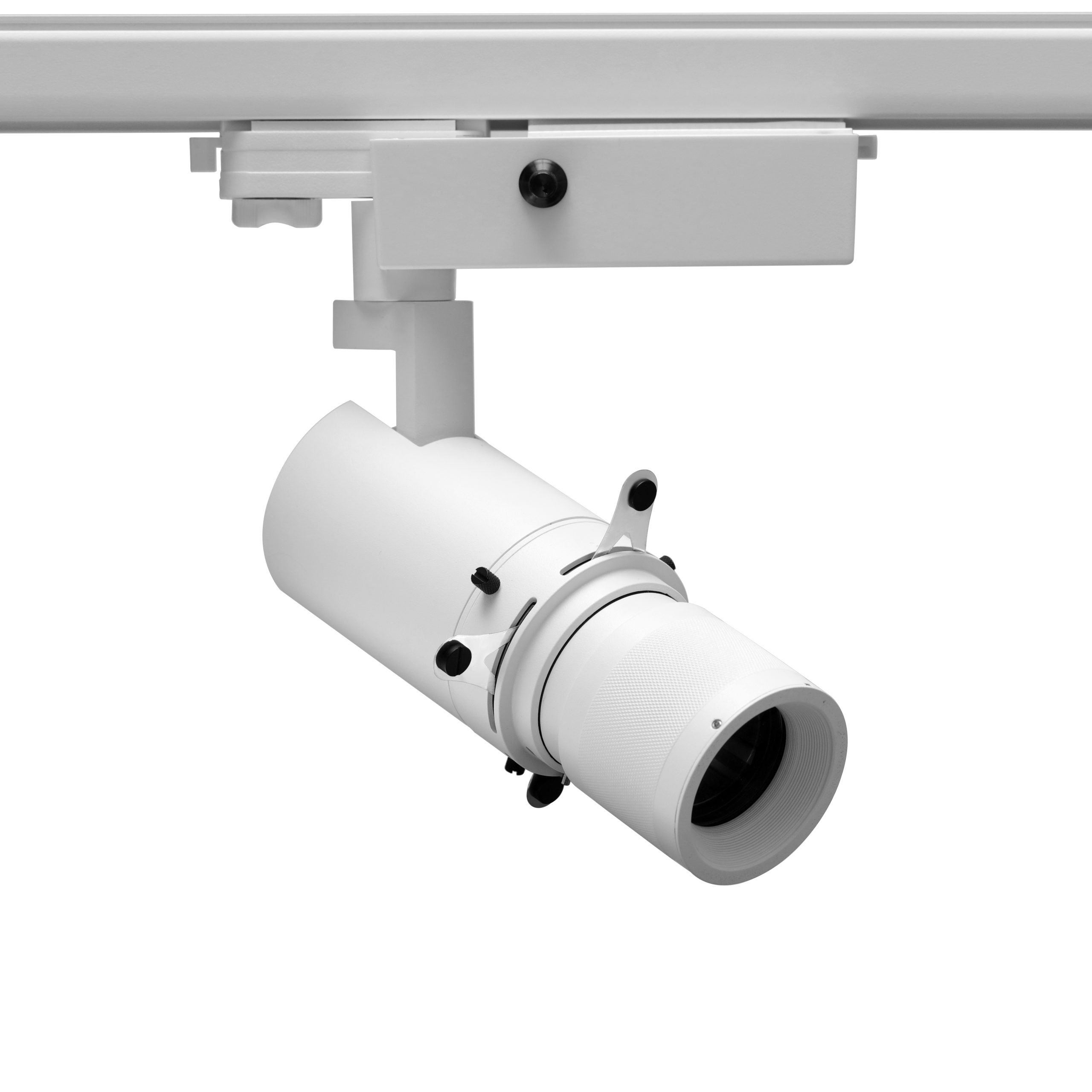
Custom lighting system engineered for museum installation
Modern exhibition environments increasingly demand lighting systems that are adaptable, precise, and installation-flexible. Adjustable zoom lighting fixtures provide a professional solution by allowing beam angle modification based on the exhibit layout.
This is particularly valuable for:
- Museum displays
- Exhibition panels
- Cultural exhibits
- Traveling exhibitions
- Institutional display environments
Wall-mounted lighting fixtures with outward-extending arms and adjustable zoom optics offer a specialised solution where ceiling tracks are not suitable. These systems allow lighting designers to maintain precise control over illumination while ensuring a clean and professional exhibit presentation.
In cases where exhibitions require tailored lighting solutions, custom or prototype lighting systems can be developed to meet specific spatial and display requirements.
Exhibit Lighting for Trade Shows and Exhibition Stands

Exhibition stand lighting creating focused visual impact
Trade show and exhibition stand lighting requires portable yet professional illumination. Unlike permanent museum installations, exhibition stand lighting must be adaptable, lightweight, and visually impactful.
Professional exhibit lighting systems used in trade shows focus on:
- Highlighting key products or displays
- Creating focal points within booths
- Maintaining consistent lighting quality across displays
- Supporting modular exhibit structures
Directional lighting remains essential to ensure exhibits stand out in competitive exhibition environments.
Common Mistakes in Exhibit Lighting Design
- Using ambient lighting instead of directional exhibit lighting
- Overlighting sensitive displays
- Ignoring beam angle and positioning
- Choosing low CRI decorative lighting
- Failing to control glare on display surfaces
- Relying solely on ceiling lighting when wall-mounted solutions are more suitable
Avoiding these mistakes ensures exhibits are presented professionally and effectively.
Ultra-Deep Guide to Gallery Lights for Paintings in Professional, Museum, and Luxury Residential Settings

High CRI spotlight revealing authentic artwork colours
When scaling an article around the keyword gallery lights for paintings, it is critical to move beyond basic lighting advice and instead align the content with how real galleries, museums, and serious collectors actually illuminate art. This is especially important for high-intent readers who are searching for gallery lights for artwork, gallery light for painting, and gallery lighting for art, because these users are often closer to purchase than informational readers.
In professional environments, lighting is not simply about visibility. It is about preservation, perception, hierarchy, and emotional impact. The difference between a poorly lit painting and a professionally lit painting can dramatically change how the artwork is perceived in terms of depth, value, and visual importance.
This is why gallery lighting for paintings is treated as a specialized discipline within architectural lighting design.
The True Role of Gallery Lights for Paintings in Art Presentation

Balanced beam control improving visual hierarchy
Gallery lights for paintings are designed to do three primary things:
- Reveal true color accuracy
- Eliminate glare and reflections
- Create visual focus on the artwork rather than the room
Unlike general ceiling lighting or decorative fixtures, gallery lighting is engineered for precision. The beam angle, lens clarity, and color rendering index all play a critical role in how a painting appears to the human eye.
In museum lighting for paintings, even a slight change in beam spread or color temperature can alter how pigments, shadows, and textures are perceived.
Why Gallery Lighting for Art Outperforms Standard Picture Lights
Many people assume that picture lights mounted above frames are sufficient. However, professional galleries rarely rely on basic picture lights because they lack optical precision and adjustability.
Key limitations of standard picture lights:
- Uneven light distribution
- Limited beam control
- Visible glare on glass frames
- Poor color rendering
- Decorative rather than professional performance
In contrast, gallery track lighting systems and ceiling-mounted art lights allow full control over direction, beam angle, and intensity, making them the preferred solution for gallery lighting fixtures.
Lighting Hierarchy in Professional Art Galleries

Architectural lighting enhancing spatial depth perception
Professional galleries never use a single lighting layer. Instead, they implement a hierarchy of lighting:
1. Accent Lighting (Primary Artwork Lighting)
This is the most important layer. It uses focused gallery lights for artwork to highlight paintings and sculptures.
2. Ambient Lighting (Background Illumination)
Provides general visibility without overpowering the artwork.
3. Architectural Lighting
Enhances walls, ceilings, and spatial depth while supporting the gallery aesthetic.
This layered lighting strategy ensures that paintings remain the focal point of the environment.
Gallery Lights for Large Paintings vs Small Artworks

Adjustable optics adapting to varied painting dimensions
Not all paintings should be lit the same way. The size, medium, and framing style all affect lighting strategy.
Large Paintings
Require:
- Wider beam angles
- Multiple adjustable lights
- Even illumination across the surface
Small Paintings
Require:
- Narrow beam gallery lights
- High precision optics
- Minimal spill light to avoid wall wash
Adjustable systems such as zoom-based gallery lighting fixtures are particularly effective because they adapt to different artwork sizes without replacing fixtures.
The Science of Color Rendering in Art Lighting
One of the most critical aspects of gallery lights for paintings is CRI (Color Rendering Index). This metric determines how accurately a light source reveals the true colors of an artwork.
Low CRI lighting can:
- Distort paint tones
- Flatten depth perception
- Reduce visual richness
Museum-grade lighting typically uses CRI 95+ LEDs because they replicate natural color fidelity while maintaining low heat emission.
For collectors and galleries, this is non-negotiable.
Ideal Color Temperature for Gallery Lighting for Paintings

Neutral illumination supporting contemporary art clarity
Color temperature directly affects how artwork appears.
- 2700K: Warm, ideal for classical and oil paintings
- 3000K: Balanced, ideal for most galleries and home collections
- 4000K+: Too clinical for fine art environments
Most professional gallery lighting design uses 2700K–3000K to preserve warmth while maintaining clarity.
Ceiling vs Track Gallery Lights for Paintings
Ceiling Mounted Art Lights
Best for:
- Minimalist interiors
- Permanent art installations
- Clean architectural aesthetics
Track Lighting for Art Gallery
Best for:
- Flexible gallery layouts
- Rotating exhibitions
- Multi-artwork walls
Track lighting remains the industry standard for galleries because it allows repositioning as artwork collections evolve.
Gallery Lights for Paintings with Textured and Oil Surfaces

Angled spotlight enhancing canvas texture detail
Oil paintings and textured artworks benefit significantly from directional lighting. Controlled angles reveal brushwork, layering, and depth that flat lighting cannot achieve.
Directional gallery lights for art:
- Enhance texture visibility
- Increase dimensional perception
- Improve viewing experience for collectors
This is why museums rarely use flat flood lighting on fine art pieces.
How High-End Collectors Light Paintings in Private Homes
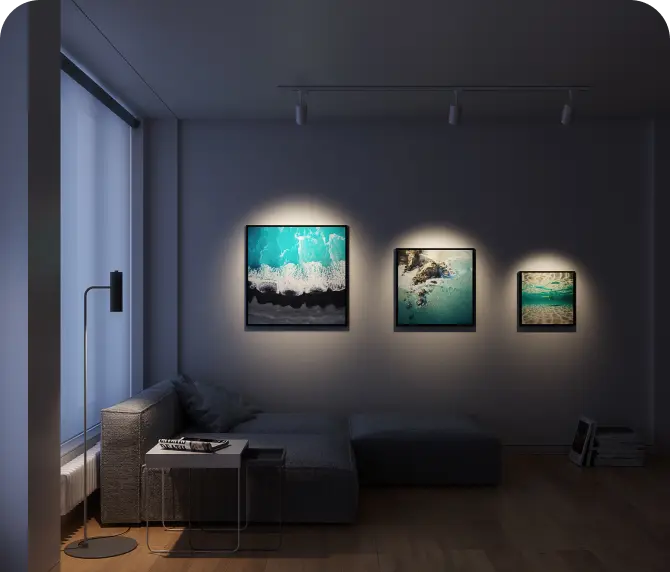
Luxury residence featuring museum-style art lighting
Luxury residential art collections are increasingly designed to mimic museum lighting standards. Home gallery lighting is now a growing niche, especially among collectors displaying high-value works.
Key features of collector-grade gallery lighting:
- Discreet fixture design
- Adjustable beam control
- Consistent lighting across rooms
- Museum-quality color rendering
Precision systems such as Zoom (for focused artwork), Multi (for flexible installations), and Deluxe (for premium gallery projects) are commonly specified in these environments due to their adaptability and optical performance.
Gallery Wall Lighting vs Single Artwork Lighting

Symmetrical beam layout maintaining visual balance
Lighting a gallery wall with multiple paintings requires balance and symmetry. Uneven lighting can make one artwork dominate while others appear secondary.
Best practices:
- Equal spacing of gallery lights
- Consistent beam angles
- Matching brightness levels
- Controlled overlap of light beams
This ensures visual harmony across the entire gallery wall.
Avoiding Common Mistakes in Gallery Lighting for Paintings
Overlighting the Artwork
Too much light reduces contrast and visual drama.
Incorrect Light Angles
Direct front lighting causes reflections and glare.
Using Decorative Lights Instead of Art Lights
Decorative fixtures rarely provide the precision needed for artwork illumination.
Ignoring Beam Control
Wide beams can spill onto walls and dilute focus on the painting.
Professional gallery lighting design avoids these mistakes through calculated placement and optical precision.
The Role of Gallery Lighting in Increasing Perceived Artwork Value

Professional lighting reinforcing exhibition prestige
Lighting has a psychological impact on perceived value. Properly lit paintings appear more vibrant, detailed, and important.
In luxury galleries:
- Lighting directs viewer attention
- Enhances emotional engagement
- Elevates presentation quality
- Reinforces exclusivity and prestige
This is why gallery lighting systems are considered an investment rather than a cost in high-end art environments.
Gallery Lighting for Different Types of Art Displays
Framed Paintings
Require anti-glare angled lighting.
Canvas Art
Benefits from even beam spread and texture-enhancing direction.
Photography and Prints
Require extremely high color accuracy and balanced illumination.
Sculptural Wall Art
Needs layered lighting rather than single-point illumination.
Each category requires slightly different gallery lighting techniques.
Integration of Gallery Lights into Modern Interior Architecture

Seamless track system blending with contemporary interior design
Modern interiors increasingly incorporate art lighting into the architectural design phase rather than adding it later. This results in cleaner aesthetics and superior performance.
Architectural integration methods include:
- Recessed gallery lighting
- Ceiling-mounted art spotlights
- Linear track lighting systems
- Hidden lighting channels
This approach is commonly seen in contemporary art galleries and luxury residential projects.
Long-Term Benefits of Professional Gallery Lighting Systems

Energy-efficient gallery lighting supporting sustainable exhibition spaces
Investing in professional gallery lights for paintings provides long-term advantages:
- Future flexibility for new artworks
- Consistent lighting across collections
- Reduced need for fixture replacements
- Enhanced artwork preservation
- Improved client and visitor experience
For galleries, museums, and collectors, these benefits compound over time.
Extended Expert FAQ – Gallery Lights for Paintings (Advanced)
What are the best gallery lights for paintings?
Precision LED art lights with adjustable beam angles and CRI 95+ are considered the best.
Do professional galleries use LED lighting for paintings?
Yes, high-CRI LED lighting is the global standard in galleries and museums.
How far should gallery lights be from paintings?
Typically 1 to 1.5 times the height of the artwork for optimal beam coverage.
Can track lighting damage artwork?
No, if using low-heat LED gallery lighting systems.
What beam angle is best for gallery lights for paintings?
20°–40° depending on artwork size and viewing distance.
Should gallery lights be dimmable?
Yes, dimming allows fine-tuning for different artworks and environments.
How do museums prevent glare on paintings?
By using angled lighting and anti-glare optical lenses.
Is recessed lighting good for gallery walls?
Yes, when properly positioned and beam-controlled.
What lighting do art museums use?
Museum-grade track lighting, ceiling spotlights, and precision art lighting systems.
Can gallery lighting be used in small homes?
Yes, especially for home gallery walls and private collections.
How many lights per painting in a gallery?
Usually one to two precision lights depending on size.
Does lighting affect art conservation?
Yes, low UV and low heat lighting preserves artwork longevity.
What is museum-grade lighting?
Lighting designed for preservation, color accuracy, and precision control.
Are warm lights better for paintings?
Yes, 2700K–3000K is generally ideal for most artworks.
Can I use ceiling spotlights for artwork?
Yes, ceiling-mounted art lights are widely used in galleries.
Why is CRI important for art lighting?
It ensures accurate color representation of the artwork.
What lighting is best for oil paintings?
Directional high-CRI gallery lighting with controlled beam angles.
Do galleries use natural light for paintings?
Limited natural light is used due to UV damage risks.
What is the most professional way to light a gallery wall?
Using adjustable track lighting systems with consistent beam spacing.
Can gallery lights be wireless?
Professional installations are usually wired for reliability and performance.
Are battery art lights good for galleries?
They are suitable for temporary displays but not ideal for permanent gallery lighting.
What lux level is recommended for paintings?
Typically 150–300 lux depending on artwork sensitivity.
Do expensive paintings require special lighting?
Yes, high-value artworks require museum-grade lighting design.
What is accent lighting in art galleries?
Focused lighting used to highlight specific artworks.
Can lighting improve artwork visibility?
Yes, dramatically, especially with precision optical control.
How do collectors light paintings at home?
Using ceiling-mounted or track-based gallery lighting systems.
Is track lighting outdated for galleries?
No, it remains the most flexible and professional solution.
What lighting is best for gallery exhibitions?
Adjustable track lighting with high CRI LEDs.
Can one light illuminate a large painting?
Yes, if it has adjustable beam spread and proper placement.
Why is professional gallery lighting important?
It enhances visual impact, preserves artwork, and elevates the entire art viewing experience.
Frequently Asked Questions (FAQ)
What is exhibit lighting?
Exhibit lighting is specialised directional lighting used to illuminate displays, artwork, and exhibition panels with precision while maintaining visual clarity and preservation standards.
What lighting is best for museum exhibits?
Museum exhibits typically use high-CRI LED lighting with controlled beam angles, low UV output, and adjustable intensity to protect sensitive materials while ensuring accurate visual presentation.
Why are wall-mounted arm lights used in exhibits?
Wall-mounted arm lights are used when ceiling mounting is not practical and when precise directional lighting is needed for vertical display panels and exhibits.
What is the role of zoom lighting in exhibitions?
Zoom lighting allows adjustable beam angles, enabling curators and designers to focus light precisely on exhibits without excess light spill or glare.
Is track lighting suitable for exhibits?
Track lighting is suitable for many exhibition environments, especially when ceiling installation is possible. However, wall-mounted directional lighting may be preferred for panel-based displays.
What colour temperature is best for exhibit lighting?
A colour temperature between 3000K and 4000K is commonly used in exhibits to provide natural, balanced illumination without distorting colours.
Does exhibit lighting damage artifacts?
Professional exhibit lighting systems are designed with low heat and minimal UV output, making them safe for long-term artifact and artwork display when used correctly.
What are museum-grade exhibit lighting systems?
Museum-grade lighting systems are precision lighting solutions designed to meet conservation standards while delivering accurate colour rendering, glare control, and controlled light intensity.
Can exhibit lighting be customised for specific displays?
Yes, many professional exhibit lighting systems can be customised or adapted based on exhibit layout, mounting constraints, and display requirements.
What is the difference between exhibit lighting and display lighting?
Exhibit lighting is a specialised form of display lighting focused on museums, exhibitions, and curated displays, offering higher precision, preservation standards, and professional-grade illumination.