Precision lighting shaping professional artwork presentation environments
Gallery art light is one of the most critical elements in the professional presentation of artwork. In museums, galleries, and high-end residential collections, lighting is not simply functional. It is a curatorial tool that shapes perception, enhances detail, and preserves the integrity of the artwork over time. When properly designed, gallery art light systems create visual clarity, balanced illumination, and a refined viewing experience that allows artwork to be experienced exactly as intended.
Unlike general interior lighting, gallery art lighting requires precision optics, controlled intensity, and accurate color rendering. Every beam angle, fixture placement, and lighting layer must be intentionally designed to support both aesthetic presentation and long-term conservation.
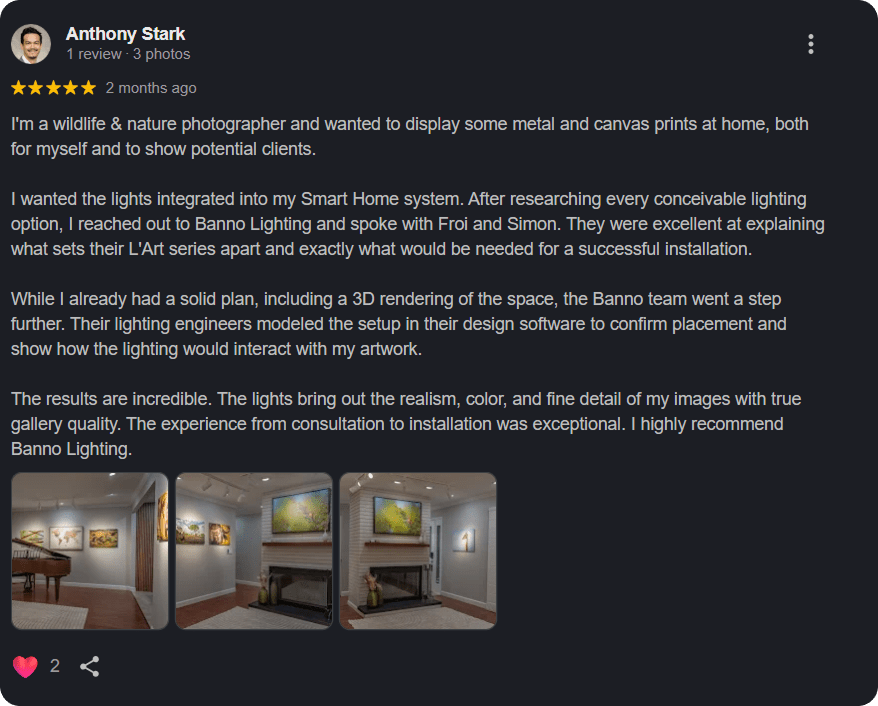
Gallery Lighting Testimonial: Professional Review of Our Display Fixtures
Gallery Artwork Lighting and Curatorial Intent
Gallery artwork lighting must align with curatorial intent. Each artwork carries its own visual language, and lighting should support rather than overpower that narrative. Paintings, sculptures, photographs, and mixed media pieces all respond differently to light, making tailored illumination essential.
Curatorial-focused lighting enhances:
- Artistic detail and texture
- Visual storytelling within exhibitions
- Emotional engagement with artwork
- Consistency across rotating displays
This is why professional galleries treat lighting design as a core component of exhibition planning rather than an afterthought.
Art Gallery Lighting Fixtures and Precision Illumination

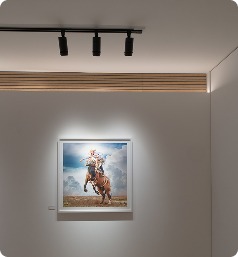
High color rendering spotlight enhancing artwork detail
Art gallery lighting fixtures are engineered specifically for artwork display rather than general room illumination. These fixtures offer controlled beam angles, high color rendering, and adjustable positioning to ensure optimal artwork visibility.
Key fixture characteristics include:
- Directional beam control
- Minimal glare output
- Stable color temperature
- Adjustable aiming capability
Such precision allows curators and designers to highlight individual works without introducing excessive ambient brightness that dilutes visual focus.

4.9-star rated by art collectors and gallery professionals
Gallery Light Above Art and Optimal Positioning
The placement of gallery light above art is fundamental to achieving even illumination. Lights positioned slightly forward and angled downward create smooth coverage across the artwork surface while reducing reflections.
Proper positioning supports:
- Uniform brightness distribution
- Reduced shadow interference
- Clear viewing from multiple angles
- Professional presentation standards
Incorrect placement, such as direct frontal lighting, often causes glare and visual distortion, particularly on glass-covered artworks.
Art Gallery Lighting Design and Spatial Balance

Balanced brightness preserving artwork focal dominance
Art gallery lighting design involves balancing accent lighting, ambient lighting, and architectural illumination. A well-designed system ensures that artwork remains the focal point while the surrounding space maintains visual harmony.
A balanced lighting design typically includes:
- Accent lighting for individual artworks
- Soft ambient lighting for spatial comfort
- Supplementary directional lighting for feature pieces
This layered approach creates depth and sophistication within gallery environments.
Art Gallery Lighting Systems and Flexibility for Exhibitions
Art gallery lighting systems must be flexible enough to accommodate changing exhibitions, new acquisitions, and evolving display layouts. Modular lighting systems allow fixtures to be repositioned and adjusted without structural modifications.
Flexible systems enable:
- Rotating exhibition support
- Adaptation to different artwork sizes
- Future-proof lighting layouts
- Efficient curatorial reconfiguration
This adaptability is essential for dynamic galleries and collector spaces.
Art Gallery Lighting Color Temperature and Artwork Accuracy

High CRI illumination enhancing color depth
Color temperature plays a decisive role in how artwork is perceived. Incorrect lighting temperature can distort pigments, flatten depth, and alter the emotional tone of a piece.
Ideal lighting characteristics for gallery art light include:
- Neutral and stable color temperature
- High color rendering performance
- Consistent tonal accuracy
- Balanced visual warmth
Accurate color representation ensures that artwork appears true to the artist’s original intent.
Spotlight for Art Gallery and Visual Hierarchy
Spotlight for art gallery applications helps establish visual hierarchy within exhibitions. By selectively illuminating key artworks, lighting designers can guide viewer attention naturally through the space.
Strategic spotlighting allows:
- Primary artworks to stand out
- Secondary works to remain visually balanced
- Structured exhibition flow
- Enhanced viewer engagement
This technique is widely used in museum-grade lighting design.
Art Gallery Track Lighting Systems and Directional Control

Adjustable track heads enabling precise beam aiming
Art gallery track lighting systems are among the most widely used gallery art light solutions due to their flexibility and directional precision. Adjustable track heads allow lighting designers to fine-tune illumination for each individual artwork.
Track lighting advantages include:
- Adjustable beam direction
- Scalable lighting layouts
- Clean ceiling integration
- Support for evolving collections
This makes track systems ideal for both institutional galleries and luxury residential art spaces.
Gallery Picture Lighting and Surface Uniformity
Gallery picture lighting must provide smooth and even illumination across the artwork surface. Uneven lighting can create hotspots, dark edges, and visual imbalance that negatively affect the viewing experience.
Uniform lighting enhances:
- Clarity across the entire artwork
- Balanced brightness levels
- Professional display aesthetics
- Comfortable long-duration viewing
This is especially important for large paintings and framed photographic works.
Art Gallery LED Lighting and Conservation Performance
Low heat LED protecting sensitive art materials
Art gallery LED lighting has become the industry standard due to its conservation-friendly performance. LED technology produces low heat and minimal ultraviolet radiation, making it suitable for long-term artwork display.
Conservation benefits include:
- Reduced heat exposure
- Lower risk of pigment degradation
- Stable light output over time
- Energy-efficient operation
These characteristics align with museum preservation guidelines and collector best practices.
Gallery Art Lighting for Home Collections
Gallery art lighting is increasingly used in high-end homes to replicate museum-style presentation. Collectors and interior designers integrate gallery art light systems to elevate private art displays and curated gallery walls.
Residential applications benefit from:
- Museum-style artwork emphasis
- Refined interior ambience
- Flexible lighting for evolving collections
- Enhanced architectural elegance
This approach transforms living spaces into sophisticated art environments.
Gallery Lighting for Artwork and Multi-Piece Displays

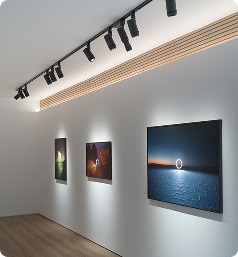
Individual fixtures illuminating cohesive gallery walls
Gallery lighting for artwork becomes more complex when multiple pieces are displayed on a single wall. Each artwork must receive individual illumination while maintaining overall visual balance.
Effective multi-art lighting strategies include:
- Individual adjustable fixtures per artwork
- Consistent beam angles
- Balanced spacing between lights
- Layered lighting integration
This ensures that no single piece is overpowered or visually neglected.
Precision Art Lighting in Professional Gallery Environments
In professional gallery environments, specialised fixtures such as Zoom (precision art lighting), Deluxe (museum-grade lighting), and Multi (flexible gallery lighting) are used to deliver refined illumination with controlled beam spread and accurate color rendering. These lighting solutions support curatorial flexibility while maintaining a discreet visual presence that allows artwork to remain the dominant focal point.
Rather than acting as decorative lighting, these systems function as precision tools for artwork presentation and long-term display excellence.
Small Art Gallery Light and Intimate Exhibition Spaces

Focused beams preventing spatial overwhelm
Small art gallery light design requires careful control of brightness and beam precision to avoid overwhelming compact spaces. In smaller galleries, lighting must feel refined and intentional rather than overly dramatic.
Key considerations include:
- Lower intensity lighting levels
- Focused directional beams
- Balanced ambient illumination
- Reduced glare and shadow distortion
This creates an intimate and immersive viewing atmosphere.
Long-Term Value of Gallery Art Light Systems
Investing in a professional gallery art light system offers long-term value through performance reliability, conservation safety, and aesthetic refinement. High-quality lighting ensures that artwork is consistently presented at its highest visual standard over years of display.
Long-term advantages include:
- Energy-efficient operation
- Minimal maintenance requirements
- Future-ready adaptability
- Consistent illumination quality
- Timeless presentation aesthetics
Ultimately, gallery art light represents the intersection of technical precision, curatorial strategy, and architectural integration. By delivering controlled illumination, accurate color rendering, and conservation-safe performance, professional gallery lighting systems allow paintings, sculptures, and wall art to be experienced with clarity, depth, and authenticity in museums, galleries, and high-end residential collections.
Gallery Art Light and Beam Precision for Fine Art Presentation

Precision optics shaping artwork perception
Beam precision is one of the defining characteristics of a high-quality gallery art light system. Unlike general interior lighting, gallery lighting must be intentionally controlled to ensure that illumination enhances the artwork rather than the surrounding architecture. Precise beam control allows lighting designers to shape how light interacts with texture, color, and composition.
Precision lighting is essential for:
- Highlighting individual artworks without spill
- Maintaining consistent brightness across displays
- Preventing visual distraction from surrounding walls
- Enhancing curatorial focus within exhibitions
In professional galleries, even minor inconsistencies in beam spread can alter the perception of an artwork’s depth and tonal balance.
Gallery Artwork Lighting and Medium-Specific Illumination
Different artistic mediums require tailored gallery artwork lighting approaches. A sculpture, oil painting, and photographic print all reflect and absorb light differently, making one-size-fits-all lighting ineffective in professional environments.
Medium-specific lighting considerations include:
- Soft directional light for paintings
- Multi-angle lighting for sculptures
- Even surface illumination for photographs
- Controlled intensity for delicate works on paper
This level of customization ensures that each artwork is illuminated in a way that supports its material characteristics and artistic intent.
Gallery Light Over Art and Viewing Comfort

Comfortable illumination reducing viewer eye strain
The positioning of gallery light over art directly affects viewer comfort and engagement. Poorly angled lights can create glare, harsh reflections, or visual fatigue, particularly in exhibition environments where viewers spend extended time observing artwork.
Optimised overhead lighting improves:
- Visual clarity from multiple viewing angles
- Reduced eye strain
- Clear visibility of fine artistic details
- Balanced light distribution across the artwork
This is especially important in museums and high-end galleries where the viewer experience is a core priority.
Art Gallery Lighting Guidelines and Professional Standards
Art gallery lighting guidelines are established to protect artwork while maintaining high presentation quality. These guidelines often specify appropriate light levels, beam angles, and fixture positioning to ensure both conservation and visual accuracy.
Professional lighting standards typically emphasise:
- Controlled illumination intensity
- Low heat and UV exposure
- Stable color rendering performance
- Consistent lighting across exhibition spaces
Following these principles helps maintain long-term artwork preservation while delivering museum-grade presentation.
Gallery Art Lighting and Texture Enhancement

Balanced contrast preserving artistic authenticity
Texture is a critical visual element in many artworks, particularly in oil paintings, mixed media, and contemporary installations. Gallery art lighting that is carefully angled can enhance texture visibility without exaggerating shadows or creating uneven highlights.
Texture-enhancing lighting techniques include:
- Slightly angled directional beams
- Soft layered illumination
- Balanced light overlap
- Controlled contrast levels
This approach reveals the artist’s brushwork and material depth while preserving visual authenticity.
Art Gallery Lighting Fixtures and Minimal Visual Intrusion
In professional display environments, art gallery lighting fixtures are designed to remain visually discreet. The goal is to ensure that the lighting supports the artwork without becoming a focal point itself.
Minimal intrusion is achieved through:
- Slim fixture profiles
- Neutral or matte finishes
- Recessed or track-mounted systems
- Precision optics with controlled glare
This allows the artwork to dominate the visual composition of the space.
Gallery Art Lighting and Exhibition Flow

Strategic illumination guiding visitor movement
Lighting plays a subtle but powerful role in guiding visitor movement through an exhibition. Strategic gallery art lighting can create a natural visual path that leads viewers from one artwork to another without the need for signage or structural direction.
Lighting-supported exhibition flow helps:
- Highlight key focal pieces
- Create visual rhythm across walls
- Encourage longer engagement with artwork
- Enhance storytelling within curated displays
This technique is widely used in museum and institutional gallery design.
Art Gallery Adjustable Light and Dynamic Displays
An art gallery adjustable light system allows curators and designers to respond to changing exhibition layouts. Adjustable fixtures can be repositioned, re-aimed, and dimmed to suit new artworks without requiring structural changes to the space.
Dynamic lighting adaptability supports:
- Rotating exhibitions
- Seasonal installations
- Temporary collections
- Future display flexibility
This makes adjustable lighting systems a long-term strategic investment for galleries and collectors.
Gallery Art Light and Glare Control for Framed Artwork

Angled lighting reducing glass reflections
Framed artwork, particularly pieces protected by glass, is highly sensitive to glare. A well-designed gallery art light setup reduces glare through controlled angles and specialised optics rather than simply lowering brightness.
Effective glare control involves:
- Angling lights away from direct reflection paths
- Using anti-glare lenses
- Positioning fixtures slightly forward of the artwork
- Maintaining moderate illumination intensity
These strategies ensure that viewers can see artwork clearly without reflective interference.
Art Gallery Lighting Temperature and Emotional Perception
Lighting temperature influences the emotional tone of an artwork. Warmer lighting can create a sense of intimacy and richness, while cooler lighting can emphasise clarity and modern aesthetics.
Careful temperature selection enhances:
- Mood consistency within exhibitions
- Accurate color perception
- Visual harmony across collections
- Emotional engagement with artwork
Professional gallery art lighting systems are calibrated to maintain stable and consistent color temperature across all displayed pieces.
Gallery Picture Lighting and Frame Integration

Seamless integration enhancing frame aesthetics
Gallery picture lighting must integrate seamlessly with artwork frames without overpowering their aesthetic. The fixture should complement the frame style while delivering even illumination across the artwork surface.
Proper integration ensures:
- Balanced visual proportions
- Smooth light coverage
- Elegant presentation aesthetics
- Enhanced artwork prominence
This is particularly important in collector spaces and curated residential galleries.
Art Gallery LED Lighting and Sustainability Considerations
Sustainability is becoming an increasingly important factor in gallery design. Art gallery LED lighting provides energy-efficient performance while maintaining high illumination quality, making it suitable for institutions operating long hours.
Sustainability benefits include:
- Lower energy consumption
- Reduced heat generation
- Long operational lifespan
- Environmentally responsible lighting performance
These advantages align with modern conservation and sustainability standards in museums and galleries.

Gallery Lighting for Artwork and Long-Term Consistency

Stable brightness maintaining exhibition standards
Consistency is essential in professional gallery lighting. Fluctuating brightness, uneven beam spread, or inconsistent color rendering can disrupt the visual experience and diminish the perceived quality of the exhibition.
Consistent lighting systems provide:
- Reliable illumination over time
- Stable visual presentation
- Uniform brightness across displays
- Reduced maintenance disruptions
This ensures that artwork remains visually impactful throughout the duration of an exhibition.
Gallery Art Light as a Core Element of Curated Environments

Integrated illumination enhancing architectural elegance
Ultimately, gallery art light is not merely a technical feature but a core element of curated environments. It shapes perception, preserves artistic integrity, and elevates the viewer experience through controlled illumination and thoughtful design.
When executed correctly, gallery art lighting:
- Enhances artistic detail and depth
- Supports conservation and preservation
- Integrates seamlessly with architecture
- Creates a refined and immersive viewing atmosphere
By combining precision optics, accurate color rendering, flexible positioning, and conservation-safe performance, professional gallery art light systems enable paintings, sculptures, and wall-mounted artworks to be presented with clarity, balance, and visual sophistication across museums, galleries, and high-end collector spaces.
20 FAQs
1. What is gallery art light?
Gallery art light refers to specialised lighting designed specifically to illuminate artwork in galleries, museums, and curated spaces.
2. Why is gallery lighting important for artwork?
It enhances visibility, preserves color accuracy, and improves the overall viewing experience.
3. What type of lighting is best for art galleries?
Directional LED lighting with high color rendering and adjustable beam control is considered ideal.
4. What color temperature is best for gallery art lighting?
Neutral white lighting is typically preferred for accurate artwork representation.
5. Are LED lights safe for artwork in galleries?
Yes, high-quality LED lights produce low heat and minimal UV radiation, making them conservation-safe.
6. How bright should gallery art lighting be?
Brightness should be controlled and balanced to avoid glare while maintaining clarity.
7. What is the role of spotlighting in art galleries?
Spotlighting helps establish visual hierarchy and directs attention to key artworks.
8. Can gallery art lighting be used at home?
Yes, many collectors use gallery-style lighting in residential art displays.
9. How do galleries reduce glare on paintings?
They use angled lighting, anti-glare optics, and controlled light intensity.
10. What is track lighting in art galleries?
Track lighting is a flexible system with adjustable fixtures used to illuminate artwork precisely.
11. Does lighting affect how artwork colors appear?
Yes, incorrect lighting can distort colors and reduce visual depth.
12. How far should lights be from artwork in a gallery?
They should be positioned to provide even illumination without creating hotspots or reflections.
13. What is gallery picture lighting?
It is directional lighting specifically designed to illuminate framed artwork.
14. Can gallery lighting damage artwork over time?
Poor lighting can, but museum-grade LED lighting significantly reduces this risk.
15. What makes professional gallery lighting different from regular lighting?
It focuses on precision, conservation safety, and accurate color rendering.
16. Is natural light good for art galleries?
Controlled natural light can be beneficial, but it must be carefully managed to prevent damage.
17. How do galleries light large art walls?
They use evenly spaced directional fixtures and layered lighting systems.
18. What is layered lighting in galleries?
A combination of accent, ambient, and supplementary lighting for balanced illumination.
19. Are battery-operated art gallery lights effective?
They can be useful for smaller displays and temporary exhibitions.
20. What is the main goal of gallery art lighting?
To present artwork with clarity, authenticity, and visual sophistication while preserving its integrity.
Why Designers and Collectors Trust Our Gallery Lights