Introduction: What is a Gallery Lamp?

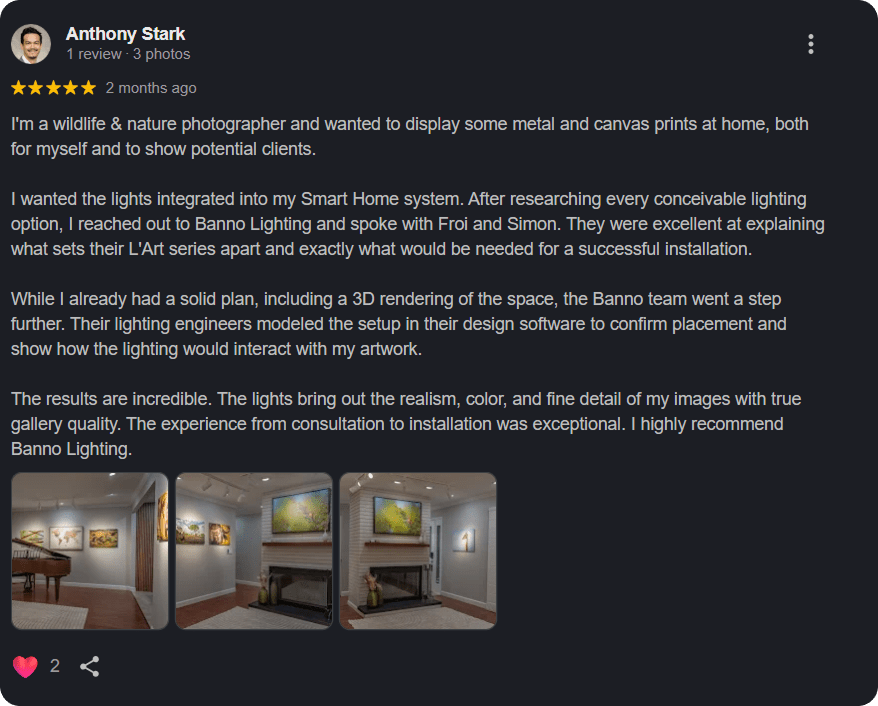
Elegant gallery lamp mounted above framed artwork
A gallery lamp is a specialized lighting fixture designed to illuminate artwork, paintings, photographs, and wall displays with focused, elegant lighting. Often mounted above artwork or integrated into gallery lighting systems, gallery lamps are widely used in museums, art galleries, luxury homes, and professional art studios.
Unlike general ceiling lighting, a gallery lamp provides directional illumination that enhances artwork visibility, color accuracy, and visual depth without overwhelming the surrounding space.
Gallery lamps are commonly referred to as:
- Picture lights
- Art lamps
- Wall-mounted gallery lights
- Artwork lighting fixtures
These fixtures are engineered specifically to highlight art rather than simply brighten a room.
Why Gallery Lamps Are Essential for Artwork Lighting

Dedicated art lighting improving color and texture visibility
Artwork requires dedicated lighting because ambient room lighting rarely provides the correct angle, intensity, or color accuracy needed for proper display.
Key benefits of gallery lamps:
- Focused lighting on artwork
- Reduced glare and shadow distortion
- Enhanced color accuracy
- Professional gallery-style presentation
- Elegant and minimal aesthetic
Whether used in residential interiors or professional galleries, gallery lamps create a refined lighting experience that draws attention directly to the artwork.

4.9-star rated by art collectors and gallery professionals
Types of Gallery Lamps (Complete Breakdown)

Wireless gallery lamp highlighting residential art display
Wall-Mounted Gallery Lamps
Wall-mounted gallery lamps are installed directly above artwork and are one of the most popular lighting solutions for paintings and framed art.
Best for:
- Paintings
- Photography
- Framed wall art
- Gallery walls
These lamps provide even top-down illumination and are commonly seen in museums and luxury homes.
Battery Operated Gallery Lamps
Battery-operated gallery lamps and wireless gallery lights are ideal for spaces where wiring is difficult or undesirable.
Advantages:
- No electrical wiring required
- Easy installation
- Flexible repositioning
- Ideal for renters and temporary displays
Wireless gallery lamps are especially popular for residential art displays and rotating artwork collections.
Hardwired Gallery Light Fixtures
Hardwired gallery lamps are permanently installed lighting fixtures connected directly to the electrical system. These provide a cleaner and more professional installation compared to plug-in models.
Best for:
- Permanent art installations
- High-end residential interiors
- Galleries and exhibition spaces
Hardwired gallery lamps offer consistent power and long-term reliability.
Ceiling Gallery Lamps and Picture Lights
Ceiling-mounted gallery lamps are used when wall mounting is not possible. These fixtures direct light downward toward artwork from the ceiling.
Best for:
- Large paintings
- Gallery exhibitions
- Museum lighting layouts
- Contemporary interiors
Gallery Light for Painting: Why Dedicated Lighting Matters

High CRI lamp revealing true painting colors
Paintings require specialized lighting because color accuracy and surface texture are critical to how the artwork is perceived.
The best gallery lamp for paintings should provide:
- Even light distribution
- High CRI (90–97+)
- Low glare optics
- Warm-neutral color temperature (3000K–3500K)
Poor lighting can flatten colors, create reflections on varnished surfaces, and reduce the visual impact of the artwork.
Gallery Lights for Art vs Standard Home Lighting
Standard Home Lighting
- Wide, unfocused illumination
- Inconsistent angles
- Poor color rendering for artwork
Gallery Lamps for Art
- Focused directional lighting
- Accurate color representation
- Controlled brightness levels
- Professional display quality
This is why serious collectors and designers always use dedicated gallery lighting instead of relying on ceiling lights alone.
Best Color Temperature for Gallery Lamps

Warm 3000K gallery lamp enriching traditional artwork
Color temperature plays a major role in how artwork appears under lighting.
Recommended color temperatures for gallery lamps:
- 2700K: Warm traditional artwork and classic interiors
- 3000K: Most common gallery lighting standard
- 3500K: Neutral professional art display
- 4000K: Contemporary galleries and modern art spaces
Most galleries in the United States prefer 3000K because it enhances warmth while maintaining accurate color tones.
Gallery Lamp Placement: How High Should a Gallery Light Be Mounted?
Correct placement is critical for achieving even artwork illumination.
General placement guidelines:
- Mount gallery lamps 6 to 12 inches above the artwork frame
- Ensure the light beam covers the full width of the artwork
- Avoid placing lights too close to prevent glare hotspots
Proper positioning creates smooth, even lighting across the artwork surface.
Gallery Lighting at Home (Residential Art Lighting Guide)

Living room gallery lamp highlighting feature painting
Gallery lighting is no longer limited to museums. High-end homeowners now use gallery lamps to showcase personal art collections and statement pieces.
Common residential applications:
- Living room feature artwork
- Hallway gallery walls
- Staircase art displays
- Home offices and studios
Battery-operated gallery lamps are particularly popular in homes because they offer flexibility without electrical renovation.
Gallery Lamp Design Styles and Finishes
Gallery lamps are available in a variety of finishes to match interior design aesthetics.
Popular finishes:
- Antique brass gallery lamps
- Matte black gallery lights
- Bronze gallery lighting fixtures
- Gold gallery lamps for luxury interiors
- White minimalist gallery lamps
The finish should complement both the artwork frame and the interior décor for a cohesive visual presentation.

Gallery Picture Lights vs Spotlights vs Track Lighting

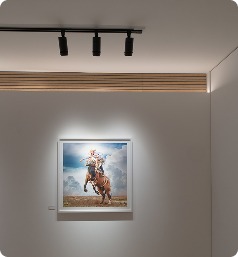
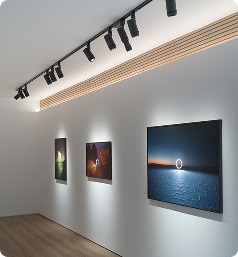
Track lighting system illuminating multiple gallery pieces
Gallery Picture Lights
- Elegant and minimal
- Mounted above artwork
- Ideal for permanent displays
Spotlights
- Directional and adjustable
- Dramatic highlighting effect
- Flexible lighting layouts
Track Lighting
- Highly adjustable
- Professional gallery systems
- Best for multiple artworks
Each lighting type serves different purposes, but gallery lamps are the most refined solution for single artwork illumination.
Wireless Gallery Lights vs Plug-In Gallery Lamps

Cordless gallery lamp installed with seamless finish
Wireless gallery lights:
- Clean installation
- No visible cords
- Battery or rechargeable options
Plug-in gallery lamps:
- Continuous power supply
- Higher brightness capacity
- Ideal for permanent artwork displays
Choosing between the two depends on installation flexibility and brightness requirements.
FAQ: Gallery Lamp & Gallery Lighting
1. What is a gallery lamp used for?
A gallery lamp is used to illuminate artwork, paintings, and wall displays with focused, professional lighting.
2. What is the best gallery light for paintings?
The best gallery light for paintings is a high-CRI LED picture light with even beam distribution and low glare optics.
3. Are battery operated gallery lights good for artwork?
Yes, battery-operated gallery lights are ideal for temporary displays and residential art lighting where wiring is not practical.
4. How high should a gallery lamp be above artwork?
Gallery lamps should typically be mounted 6 to 12 inches above the artwork frame for optimal light coverage.
5. What color temperature is best for gallery lighting?
3000K to 3500K is considered ideal for gallery lighting because it balances warmth and color accuracy.
6. Do galleries use picture lights or spotlights?
Professional galleries often use a combination of picture lights, spotlights, and track lighting depending on the exhibition design.
7. Can gallery lamps damage artwork?
High-quality LED gallery lamps with low heat and UV output are safe for artwork and widely used in museums.
8. Are wireless gallery lights bright enough for art?
Premium wireless gallery lights can provide sufficient brightness for most residential and small gallery applications.
9. What is the difference between a gallery lamp and a picture light?
A gallery lamp and picture light are often the same type of fixture designed specifically to illuminate artwork.
10. Can you use gallery lighting at home?
Yes, gallery lighting is commonly used in homes to highlight artwork and create a luxury interior aesthetic.
11. Are gallery lamps dimmable?
Many modern gallery lamps are dimmable, allowing brightness adjustment based on artwork and ambient lighting.
12. What finish is best for a gallery lamp?
Popular finishes include brass, bronze, matte black, and gold, depending on interior style and artwork framing.
13. Do gallery lights create glare on framed art?
Properly designed gallery lamps with anti-glare optics minimize reflections on glass and glossy artwork surfaces.
14. Are hardwired gallery lamps better than battery lights?
Hardwired gallery lamps provide more consistent brightness and are preferred for permanent installations.
15. Can gallery lamps be installed without wiring?
Yes, wireless and battery-operated gallery lamps can be installed without electrical wiring.
16. What size gallery lamp do I need?
The lamp width should ideally be 50–75% of the artwork width for even illumination.
17. Are gallery lamps energy efficient?
LED gallery lamps are highly energy efficient and have long lifespans compared to traditional lighting.
18. Can gallery lamps be used for photography artwork?
Yes, gallery lamps are excellent for illuminating photography prints and framed images.
19. Do gallery lamps work for large artwork?
Yes, larger gallery lamps or multiple fixtures can be used to evenly illuminate large paintings and art pieces.
20. Why are gallery lamps popular in luxury homes?
Gallery lamps provide elegant, focused artwork lighting that enhances interior design and highlights valuable art collections.
Client Experiences with Our Professional Lighting Solutions