How Professional Lighting Reveals Paintings, Protects Value, and Drives Sales?

Gallery lights for paintings are not about making walls bright. They are about revealing colour, texture, and intent without distortion.
Paintings are among the most sensitive and demanding artworks to light. Subtle tonal shifts, brushwork, surface texture, varnish, and framing all respond differently to light. When lighting is wrong, paintings lose depth and credibility. When lighting is right, they feel alive, confident, and valuable.
This guide explains how gallery lighting for paintings should be approached, why generic picture lights and fittings fail, and how professional systems built around track lighting, Zoom, Multi, and Deluxe solutions create consistent, museum level results.
Paintings demand a different lighting approach
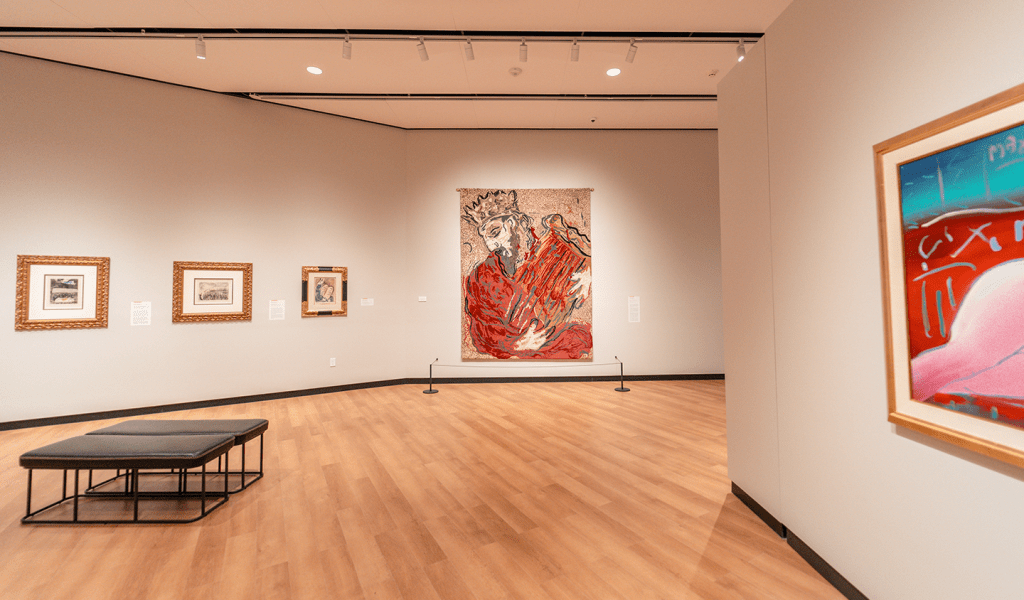
Paintings are not flat objects, even when they appear to be.
Light interacts with:
• Pigment density
• Brushstroke texture
• Canvas weave
• Varnish and glazing
• Frame depth and finish
Poor lighting flattens this complexity. It hides texture, distorts colour, and introduces glare that disrupts viewing.
Professional gallery lights for paintings are designed to respect these characteristics rather than overpower them.

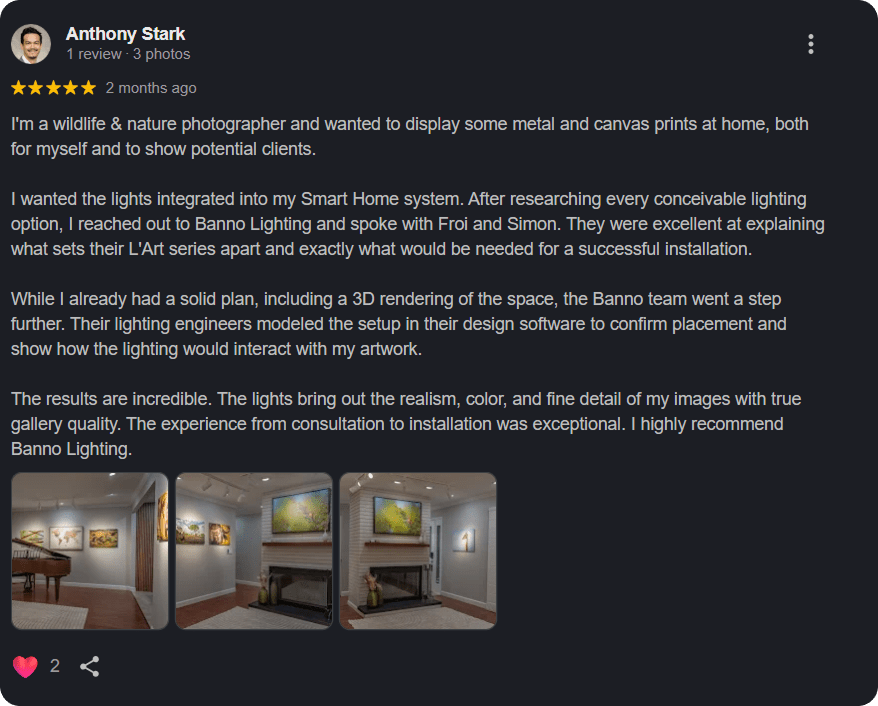
4.9-star rated by art collectors and gallery professionals
The painting viewing experience
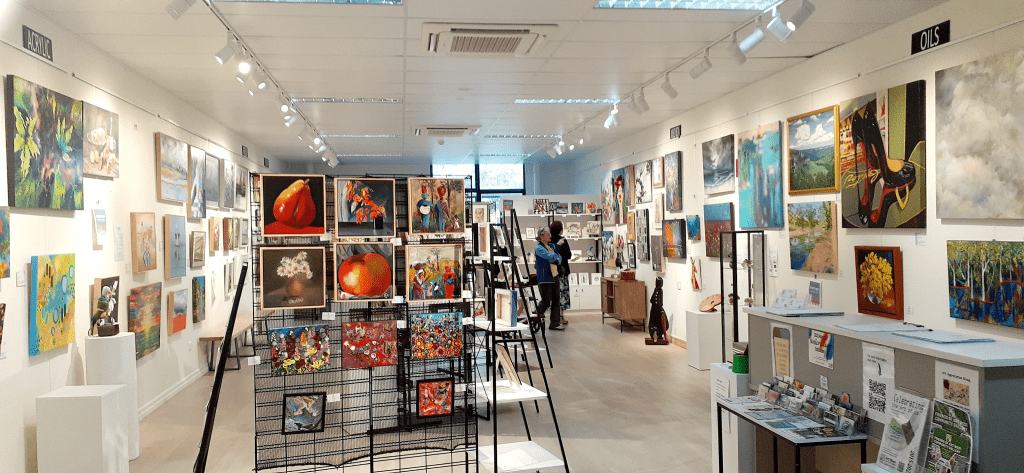
People engage with paintings emotionally and physically.
They step closer.
They step back.
They move side to side.
Lighting must support this movement without causing glare, reflection, or visual fatigue.
Good lighting allows viewers to:
• Read surface detail comfortably
• See colour consistently from different angles
• Focus on the artwork rather than the light
This comfort directly affects how long people engage with a painting and how confident they feel about it.
How lighting affects painting sales?

Paintings are often the highest value works in a gallery.
Buyers need confidence that:
• Colours are accurate
• Texture is honest
• The painting will translate into another space
Lighting plays a central role in creating that confidence.
Professional gallery lights for paintings:
• Reveal true colour and tonal range
• Enhance depth and surface texture
• Avoid glare on varnish or glass
• Signal professionalism and care
Poor lighting introduces doubt. Buyers may not articulate it, but hesitation grows and decisions slow.
Why generic lights fail paintings?

Many galleries attempt to light paintings with:
• Standard architectural downlights
• Retail track lights
• Domestic picture lights
These solutions are not designed for paintings.
They often suffer from:
• Wide, uncontrolled beams
• Harsh hotspots
• Glare on varnished surfaces
• Inconsistent colour
• Poor framing of artworks
The result is paintings that feel flat, washed out, or visually uncomfortable to view.
Gallery lighting for paintings must start with a plan

Professional painting lighting always begins with a lighting plan.
A proper plan considers:
• Wall heights and lengths
• Painting sizes and formats
• Viewing distances
• Track placement relative to walls
• Future exhibition changes
Without a plan, galleries rely on trial and error. Lights are adjusted constantly and still never feel resolved.
A lighting plan ensures paintings are consistently and confidently presented.
Track lighting as the foundation for painting galleries

Track lighting is the dominant infrastructure for lighting paintings in galleries.
It allows:
• Precise aiming for individual paintings
• Easy repositioning as exhibitions change
• Clean ceilings and minimal visual clutter
• Long term flexibility
However, not all track lighting is suitable for paintings.
Gallery track lighting versus generic track lighting

Generic track lights are designed for broad applications. Gallery track lights for paintings are designed for precision.
Gallery grade track lighting prioritises:
• Controlled beam edges
• High colour accuracy
• Minimal glare
• Visual restraint
This difference is immediately visible in how paintings read on the wall.
Beam control is critical for paintings
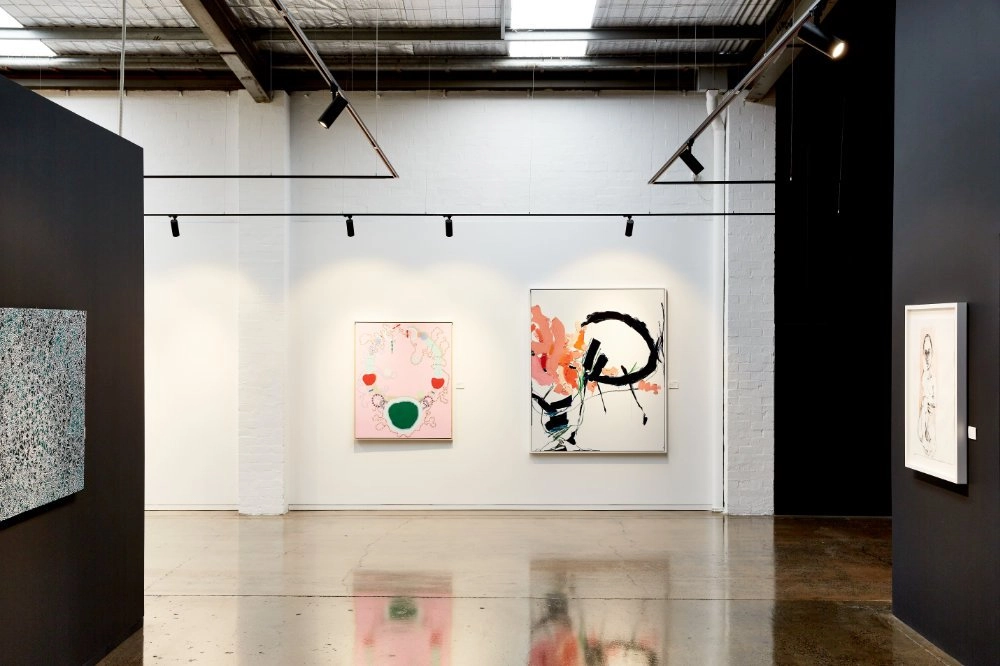
Paintings demand precise beam control.
Controlled beams:
• Frame paintings cleanly
• Prevent spill onto adjacent works
• Enhance contrast and depth
• Reduce reflections and glare
Wide beams wash out paintings and reduce impact. Precision beams give paintings presence and clarity.
Zoom lighting for paintings of varying sizes

Zoom lighting systems are ideal for galleries showing paintings of different sizes.
Zoom allows:
• Adjustable beam angles from a single fixture
• Tight framing for small works
• Wider coverage for large paintings
• Fast adaptation during rehanging
This flexibility is invaluable in galleries where wall layouts and painting sizes change regularly.
Zoom lighting reduces the need for multiple fixture types while maintaining professional results.
Multi lighting for curated painting exhibitions

Multi lighting systems are used when painting exhibitions require nuance.
They are particularly effective when:
• Paintings vary significantly in style or medium
• Certain works need emphasis
• Curatorial hierarchy matters
• Master works are present
Multi systems allow galleries to apply different lighting treatments while maintaining cohesion across the space.
Lighting becomes part of the curatorial language rather than a one size fits all solution.
Deluxe lighting for high value paintings

Deluxe lighting systems are chosen for galleries showing high value paintings.
They are used where:
• Presentation quality must be unquestionable
• Colour fidelity is critical
• Visual intrusion must be minimal
Deluxe lighting focuses on:
• Exceptional beam quality
• Superior colour stability
• Long term consistency
In these environments, lighting should almost disappear while allowing the painting to command full attention.
Colour temperature for painting galleries

Most professional galleries light paintings at 3000K.
3000K:
• Feels warm yet neutral
• Preserves colour accuracy
• Supports a wide range of painting styles
• Builds buyer confidence
Some galleries use 2700K selectively on master paintings where warmth enhances emotional presence. This must be done carefully, often with Multi control, to avoid yellowing whites or distorting cooler tones.
Cooler temperatures are rarely used for paintings as they flatten tonal nuance.
Glare control on varnished and glazed paintings

Glare is one of the biggest challenges when lighting paintings.
Professional gallery lights address glare through:
• Precision optics
• Proper beam angles
• Correct track placement
• Thoughtful aiming
When glare is controlled, viewers can approach paintings comfortably and engage fully with the surface.
Consistency across painting displays

Consistency is critical in painting galleries.
Lighting should:
• Match in colour and intensity across fixtures
• Feel balanced wall to wall
• Remain stable over time
Inconsistent lighting undermines trust and professionalism. Collectors notice when paintings look different under different lights.
Professional systems are designed to maintain consistency.
Long term thinking for painting lighting

Gallery lights for paintings should be designed once, properly.
A professional system allows:
• Years of exhibitions without replacement
• Easy rehanging
• Reduced maintenance
• Long term cost efficiency
Short term fixes always lead to long term compromise.
Why galleries need specialist guidance for painting lighting?

Lighting paintings is nuanced.
Without specialist guidance, galleries often:
• Overlight works
• Create glare
• Distort colour
• Lose consistency
A specialist lighting partner provides:
• Painting specific lighting plans
• System level thinking
• Product selection based on artwork needs
• Ongoing support
At Banno Lighting, our role is to guide galleries so painting lighting becomes a strength rather than a constant challenge.

Gallery lighting as a signal of credibility

Paintings demand respect.
Artists notice how their work is lit.
Collectors notice accuracy and care.
Institutions notice consistency.
Professional gallery lights for paintings signal:
• Curatorial seriousness
• Respect for artwork
• Authority and trust
Poor lighting quietly undermines reputation.
Final perspective on gallery lights for paintings

Gallery lights for paintings are not decorative accessories. They are part of the artwork’s presentation.
When lighting is done properly:
• Paintings feel present
• Texture and colour are revealed
• Visitors engage longer
• Buyers feel confident
• The gallery’s reputation strengthens
This is the role of professional lighting for paintings.
Why galleries choose Banno Lighting?
Galleries work with Banno Lighting because we understand paintings and lighting at a gallery level.
We provide:
• Expert guidance
• Professional lighting plans
• Track based gallery lighting systems
• Zoom, Multi, and Deluxe solutions
• Long term support
If you want gallery lights for paintings that respect the artwork, support sales, and adapt over time, professional systems and guidance are essential.
What art collectors and gallery clients say about us