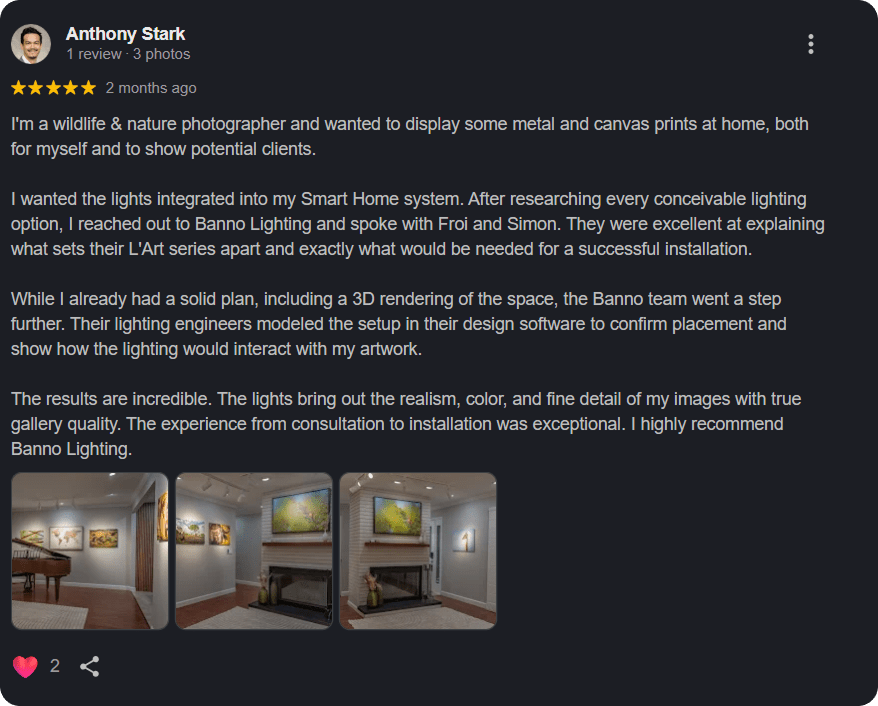
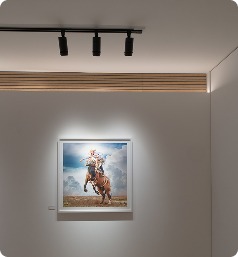
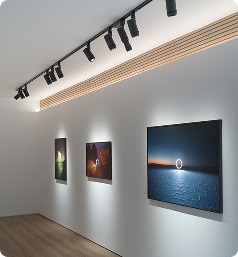
Contemporary art studio ceiling lights highlighting paintings with adjustable suspension fixtures
Hanging studio lights are more than suspended fixtures from a ceiling plane. In professional environments, they are structural components of how art is experienced, documented, and curated. Whether in a contemporary gallery, a museum installation, or a private collector’s studio, the way studio lighting is hung determines beam accuracy, shadow control, glare management, and ultimately how artwork is perceived.
For galleries and institutions, hanging studio lights from ceiling systems allows flexibility, precision, and architectural integration. For photographers and art studios, hanging photography lights creates consistent, controlled illumination without floor clutter. For high end homes with dedicated art rooms, ceiling mounted systems ensure that lighting is intentional rather than improvised.
This guide explores how hanging studio lights should be specified, positioned, and engineered for professional art environments.
Trusted by Galleries: A Professional Perspective on Our Lighting
Why Hanging Studio Lights Matter in Art Spaces
Lighting mounted directly to ceilings or suspended on tracks allows accurate beam geometry. Unlike portable lamps, hanging lights for studio environments:
- Maintain consistent angle
- Reduce visual clutter
- Improve safety
- Enable precise alignment with artwork
- Support reconfiguration for rotating displays
In museum and gallery settings, hanging studio lights in studio environments provide long term adaptability without compromising architectural aesthetics.
Hanging Studio Lights From Ceiling: Structural Considerations

Ceiling suspension rods holding adjustable art lighting fixtures for exhibition spaces
When specifying hanging studio lights from ceiling systems, structural planning is essential.
Load and Support
Every ceiling light studio installation must account for:
- Fixture weight
- Track system weight
- Cable management
- Future expansion
In heritage buildings and high ceiling galleries, reinforced mounting points are often required.
Access and Adjustability
Professional installations allow:
- Easy repositioning
- Tilt and rotation adjustment
- Lens changes without dismounting
How to hang studio lights from ceiling is not simply about attachment. It is about designing for long term flexibility.

4.9-star rated by art collectors and gallery professionals
Hanging Photography Lights in Art Documentation
In art studios and conservation labs, hanging photography lights are frequently used for documenting artwork.
Proper hanging light photography setups ensure:
- Even illumination
- Controlled shadow
- Accurate color reproduction
- No floor based trip hazards
A ceiling mounted lighting studio box configuration can create soft, diffused light for photographing paintings without glare.
Harsh light photography is avoided in documentation contexts because it distorts surface texture and color accuracy.
Hanging Lights for Studio Environments

Adjustable ceiling fixtures providing balanced lighting for painting and exhibition zones
In professional studios, hanging lights for studio work serve two primary functions:
- Creative production lighting
- Exhibition presentation lighting
These are distinct requirements.
Production lighting prioritizes even illumination for painting or sculpting. Exhibition lighting prioritizes controlled directional beams.
A well designed hanging studio lights system can serve both purposes with adjustable optics and dimming.
Ceiling Light Studio Design Principles
A ceiling light studio environment should integrate:
- Track systems or recessed adjustable fixtures
- Zoned dimming
- Consistent color temperature
- High CRI LED modules
Hanging studio lights must align with wall axes and display surfaces. Random placement leads to uneven coverage and visual inconsistency.
Professional ceiling design considers artwork scale before finalizing light positions.
Hanging Photo Lights vs Hanging Picture Lights

Permanent hanging picture light evenly illuminating framed painting on gallery wall
There is a critical distinction between hanging photo lights used for documentation and hanging picture lights used for display.
Hanging photo lights:
• Designed for temporary setups
• Often diffused
• Positioned for camera perspective
Hanging picture lights:
• Designed for continuous exhibition
• Controlled beam angle
• Mounted permanently
Understanding how to hang a picture light correctly ensures even distribution across the artwork without hotspots.
How to Hang a Picture Light Professionally
When installing hanging picture lights:
- Position fixture centered above artwork
- Maintain approximately 30 degree beam angle
- Ensure full width coverage
- Avoid visible glare
The hanging light size must correspond to artwork width. Too short results in dark edges. Too long causes spill beyond the frame.
Professional adjustable fixtures provide more precision than fixed decorative picture lights.
Hanging Light Size and Scale

Small artwork illuminated by compact hanging studio light with narrow beam
Scale determines perception.
For small works:
• Narrow beam optics
• Compact fixtures
• Controlled brightness
For large canvases:
• Wider beam spread
• Multiple hanging studio lights
• Overlapping beams for uniformity
Hanging light size should always be proportionate to artwork and ceiling height.
Hanging Lights in Studio With Track Systems
Track based hanging studio lights offer superior flexibility.
Advantages include:
- Adjustable positioning along track
- Interchangeable optics
- Easy reconfiguration
- Clean cable management
In gallery contexts, this system supports rotating exhibitions without rewiring.
Flexible systems such as Multi type gallery lighting exemplify this adaptability, allowing curators to reposition fixtures precisely as artwork changes.
Precision Beam Control in Hanging Studio Lights

Museum grade lighting fixture creating smooth beam edge across canvas
Precision optics differentiate professional art lighting from general ceiling fixtures.
Advanced hanging studio lights incorporate:
- Narrow beam lenses
- Adjustable focus
- Anti glare baffles
- Edge softening filters
For small format works, precision systems like Zoom style fixtures allow tight beam control, isolating individual pieces even within dense salon hangs.
For conservation focused environments, museum grade systems such as Deluxe prioritize uniformity, glare control, and color stability over long operating periods.
How to Hang Studio Lights From Ceiling in High Ceiling Galleries
High ceiling environments require special attention.
Considerations include:
- Extended suspension rods
- Higher lumen output
- Narrower beam angles
- Precise aiming from greater distance
Hanging studio lights from ceiling in these environments must compensate for increased throw distance without introducing glare.
In large exhibition halls, combining recessed adjustable fixtures with suspended tracks can create layered lighting architecture.
Hanging Photography Lights and Shadow Control

Ceiling mounted lights positioned to reveal painting surface texture
In hanging light photography setups, shadow management is critical.
To reduce harsh shadows:
- Use diffusers
- Increase light distance
- Adjust beam spread
- Employ fill lighting
For documenting textured artworks, slight angled lighting can reveal brushwork while maintaining color accuracy.
Avoiding Harsh Light Photography in Galleries
Harsh light photography not only distorts documentation but also affects live viewing.
Excessively narrow beams or unshielded sources create:
- Hard edge shadows
- Viewer discomfort
- Overexposed highlights
Professional hanging studio lights are engineered to soften beam edges without losing precision.
Hanging Lights for Makeup Studio vs Art Studio
While hanging lights for makeup studio environments prioritize even facial illumination, art studio lighting requires:
- Color neutrality
- Adjustable direction
- Controlled intensity
The distinction reinforces why professional art display lighting must be purpose built.
Integrating Hanging Studio Lights With Architectural Aesthetics

Minimalist track lighting blending with modern gallery interior architecture
In high end homes and galleries, hanging studio lights must integrate seamlessly with architecture.
Design strategies include:
- Minimalist black or white track systems
- Recessed ceiling integration
- Discreet suspension cables
- Hidden wiring
The lighting should support the art, not compete with it visually.
How to Hang Something Light From the Ceiling in Art Context
When suspending lightweight fixtures:
- Ensure secure anchor points
- Use appropriate mounting hardware
- Consider ceiling material
In metal buildings, specialized anchors are required when determining how to hang lights in metal building environments.
Professional installation is always recommended in institutional settings.
Hanging Photo Lights in Curated Displays

Directional hanging lights forming focused pools across exhibition floor
Beyond documentation, hanging photo lights can be used creatively in contemporary installations.
For example:
- Suspended directional beams in dark galleries
- Focused pools of light in immersive environments
- Multi directional layered lighting
In these cases, hanging studio lights become part of the exhibition narrative.
Long Term Flexibility and Future Proofing
The greatest advantage of hanging studio lights is adaptability.
Collections evolve. Exhibitions rotate. Layouts shift.
A properly designed ceiling light studio system ensures:
- Adjustable positioning
- Modular expansion
- Maintenance accessibility
- Consistent color performance
This future proofing protects long term investment in both architecture and artwork.
Advanced Suspension Methods for Hanging Studio Lights

Recessed lighting apertures integrated into modern museum ceiling architecture
In high performance art environments, hanging studio lights are not simply attached to a ceiling surface. They are integrated into a suspension strategy designed for precision, stability, and visual discretion.
There are three primary suspension methods used in professional contexts:
1. Surface Mounted Track Systems
These are mounted directly onto finished ceilings and provide lateral flexibility. Fixtures can slide along the track and be repositioned without structural modification.
This is the most common solution in commercial galleries because it balances flexibility with ease of installation.
2. Suspended Track Systems
In larger galleries or industrial conversions, tracks may be suspended below the structural ceiling using rods or cables. This allows:
- Alignment with artwork height
- Compensation for very tall ceilings
- Clean horizontal lighting planes
Suspended hanging studio lights from ceiling systems are especially effective in warehouse style art spaces.
3. Recessed Adjustable Systems
Recessed ceiling light studio systems integrate adjustable fixtures into the ceiling cavity. Only the aperture is visible.
This solution is preferred in museums and high end residential environments where minimal visual intrusion is desired. However, it requires careful pre planning during architectural design.
Visual Hierarchy and Hanging Studio Lights
Lighting defines hierarchy.
When hanging studio lights are placed intentionally, they establish visual rhythm across a gallery wall. Works of greater importance may receive slightly higher contrast. Secondary works may be lit more subtly.
This is not about making one piece dramatically brighter than another. It is about guiding the eye gently through the space.
Professional curators often adjust hanging lights in studio environments during installation week, refining beam angle by degrees rather than inches.
Managing Spill Light and Wall Wash

Gallery wall wash lighting softly illuminating background behind artwork
Uncontrolled spill light is one of the most common mistakes in non professional installations.
When hanging photography lights or art spot fixtures lack optical precision, light spreads beyond frame boundaries. This reduces contrast and flattens presentation.
Professional hanging studio lights address this through:
- Controlled field angles
- Internal shielding
- Beam edge refinement
In some gallery contexts, a subtle wall wash is desirable behind artwork. In these cases, lighting layers are separated:
- One system for background wash
- One system for artwork accent
Combining both functions into a single uncontrolled fixture compromises quality.
Electrical Zoning and Control Systems
In serious art environments, hanging studio lights are never placed on a single universal switch.
Instead, installations are zoned by:
- Wall
- Exhibition section
- Artwork type
- Conservation requirement
Dimming curves are carefully calibrated. High quality art LED systems maintain color consistency even at lower output levels, which is essential when reducing lux for sensitive works.
Advanced systems may include:
- Digital control panels
- Scene presets for exhibition openings
- Remote adjustments for curatorial flexibility
This level of control separates professional hanging studio lights from basic ceiling fixtures.
Hanging Studio Lights and Conservation Standards

Conservation focused gallery lighting maintaining stable color performance
Museums follow strict conservation guidelines regarding light exposure.
Hanging studio lights must allow:
- Accurate lux measurement
- Adjustable output
- Stable spectral performance
- No UV or IR emission
Even small fluctuations in color temperature can affect the perceived tone of aged pigments. Therefore, museum grade systems like Deluxe are engineered for long term spectral stability.
Collectors with significant works on paper or textiles should adopt similar principles in private galleries.
Lighting Depth and Texture
Flat lighting eliminates depth. Strategic hanging studio lights create dimension.
For oil paintings with visible brushwork:
- Slightly angled beams enhance relief
- Controlled highlights reveal texture
- Balanced shadows add richness
For photography prints:
- Even illumination prevents glare
- Softer edges maintain tonal integrity
Hanging light photography in documentation settings often mimics exhibition lighting to ensure accurate representation in catalogs and archives.
Integration With Sculpture and Three Dimensional Art
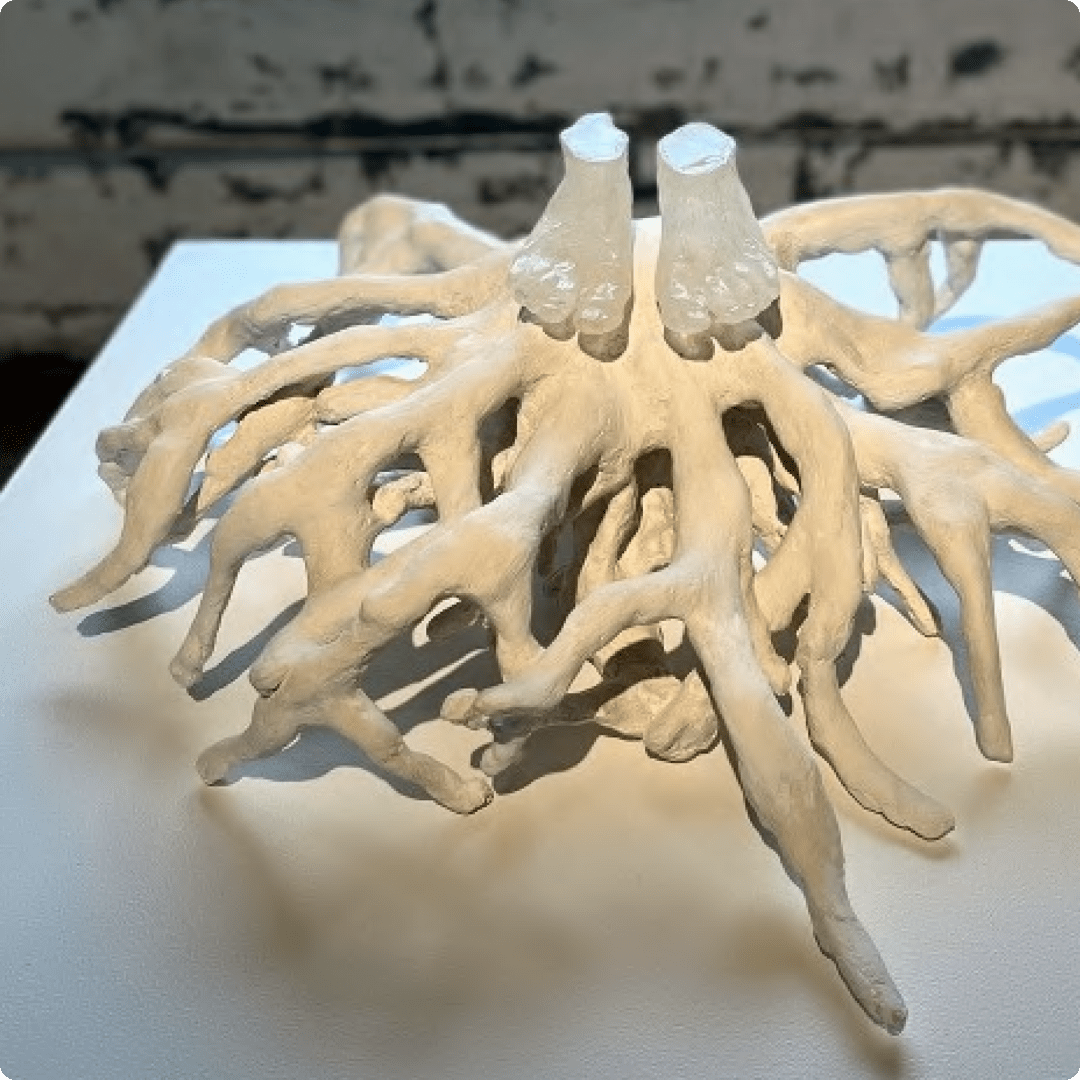
Gallery sculpture highlighted by layered hanging lighting beams
While paintings dominate many galleries, sculpture demands different treatment.
Hanging studio lights for sculpture should:
- Provide multi directional illumination
- Avoid hard shadow lines
- Maintain viewer comfort from all angles
In some installations, multiple hanging lights for studio spaces are positioned around a sculpture to create balanced modeling.
This is where flexible systems such as Multi type fixtures are particularly valuable. Their repositioning capability supports complex three dimensional arrangements.
Acoustic and Environmental Considerations
In performance oriented art spaces or hybrid music and gallery venues, hanging lights for music studio environments may coexist with display lighting.
However, vibration and acoustic performance must be considered. Poorly mounted hanging studio lights can resonate or shift over time.
Professional installation ensures:
- Secure fastening
- Vibration isolation
- Proper cable management
Even subtle movement can alter beam alignment, affecting presentation quality.
Hanging Studio Lights in Metal and Industrial Buildings

Hanging lights installed beneath metal roof structure in art studio
When determining how to hang lights in metal building environments, structural anchoring becomes critical.
Metal ceilings often require:
- Specialized clamps
- Reinforced mounting plates
- Suspended truss integration
Because many contemporary galleries occupy converted industrial spaces, hanging studio lights must be adapted to non traditional ceiling materials without compromising safety or precision.
Balancing Natural Light With Hanging Studio Lights
Some galleries feature skylights or large windows. While natural light can be beautiful, it introduces variability.
Hanging studio lights in these spaces serve as stabilizers:
- Maintaining consistent color temperature
- Compensating for changing daylight
- Preventing shadow inconsistency
Ideally, artificial art lighting remains dominant, with natural light carefully filtered.
Long Term Maintenance and Alignment

Cleaning lenses of hanging studio lights for optimal performance
Over time, even precisely aimed fixtures can drift slightly due to vibration, cleaning, or repositioning.
Professional galleries schedule periodic lighting checks to:
- Re align beams
- Clean lenses
- Verify output levels
- Adjust dimming curves
Hanging studio lights are dynamic systems. Ongoing calibration ensures sustained presentation quality.
The Psychological Experience of Suspended Light
Suspended lighting planes create a subtle architectural rhythm.
When hanging studio lights are aligned consistently across a gallery, visitors subconsciously perceive order and professionalism.
Irregular spacing or inconsistent beam alignment disrupts this rhythm.
In high end homes with dedicated art corridors, ceiling mounted systems elevate the space from decorative to curated.

Hanging Studio Lights as Curatorial Tools

Gallery lighting shaping emotional experience of artwork viewing
Ultimately, hanging studio lights are tools of interpretation.
They determine:
- Where the eye rests
- How color is perceived
- Whether texture feels tactile
- Whether artwork appears flat or dimensional
Precision systems such as Zoom style fixtures provide tight beam control for intimate works. Flexible gallery solutions like Multi support evolving exhibition layouts. Museum oriented systems like Deluxe prioritize visual comfort and conservation stability.
None of these exist for aesthetic branding alone. They exist because light shapes perception.
Future Developments in Hanging Studio Lights

Modular optics system allowing beam adjustment in gallery lighting
As technology evolves, hanging studio lights are incorporating:
- Tunable white capabilities
- Wireless control systems
- Modular optic swaps
- Integrated conservation monitoring
However, regardless of technological advancement, the fundamental principles remain unchanged:
- Precision
- Stability
- Adjustability
- Respect for artwork
In galleries, museums, and serious private collections, hanging studio lights are not decorative afterthoughts. They are structural components of how art is experienced.
When engineered and installed correctly, they transform a room into a considered viewing environment. When improvised, they diminish even the finest works.
For professionals committed to excellence in art presentation, mastering the design and specification of hanging studio lights is foundational to curatorial integrity.
20 FAQs
1. What are hanging studio lights
Hanging studio lights are ceiling mounted or suspended lighting fixtures designed for controlled illumination in studios, galleries, and art spaces.
2. How do you hang studio lights from ceiling
Use reinforced mounting points or track systems, ensuring proper load support and adjustability.
3. Are hanging photography lights good for artwork
Yes, when designed with high CRI and controlled beam spread.
4. What is the best ceiling light studio setup
A track based system with adjustable fixtures and dimming control.
5. How high should hanging studio lights be
Height depends on ceiling height and beam angle, typically allowing a 30 degree aiming angle.
6. What size hanging light should I use for artwork
Fixture size should correspond to artwork width and ceiling height.
7. Can hanging picture lights be ceiling mounted
Yes, but beam alignment and glare control must be precise.
8. What is the difference between photo lights and art display lights
Photo lights are often temporary and diffused. Art display lights are permanent and directional.
9. How do you avoid harsh light photography
Use diffusers, adjust beam angle, and avoid overly narrow optics.
10. Are hanging studio lights suitable for museums
Yes, especially adjustable track or recessed systems.
11. What color temperature is best for studio art lighting
2700K to 3000K for display, neutral white for production work.
12. Can hanging studio lights be dimmed
Yes, professional systems include dimming for conservation and ambiance control.
13. What is the advantage of track based hanging studio lights
They allow repositioning without rewiring.
14. How do you center a hanging picture light
Align it with the artwork midpoint and ensure even distribution.
15. Can hanging lights damage artwork
Improper lighting can. High quality LED with controlled intensity is safe.
16. What beam angle is best for hanging art lights
Depends on artwork size, typically 24 to 36 degrees for medium pieces.
17. Are recessed fixtures better than suspended lights
Both are effective depending on architectural preference and flexibility needs.
18. How do museums hang studio lights
Typically using track systems or recessed adjustable fixtures integrated into ceiling grids.
19. Can hanging studio lights work in metal buildings
Yes, with appropriate mounting anchors and structural support.
20. Why are hanging studio lights important in galleries
They provide precision, flexibility, and controlled illumination that enhances artwork presentation.
Highly Rated by Clients Across Residential and Commercial Projects