Professional art lighting system in residential interior
LED art lights have become the global standard for illuminating artwork in homes, galleries, museums, and luxury interiors. Unlike traditional lighting, modern LED art lighting provides precise beam control, high colour accuracy, low heat output, and long-term artwork safety — making it ideal for paintings, sculptures, and curated art collections.
Whether you are a collector, designer, or gallery owner, choosing the right LED lights for artwork is not just about brightness. It is about preservation, presentation, and perceived value.
This guide explains everything you need to know about LED art lights, including safety, gallery standards, wireless options, and how professional lighting systems like Zoom, Multi, and Deluxe solutions are used in real art environments.
What Are LED Art Lights?
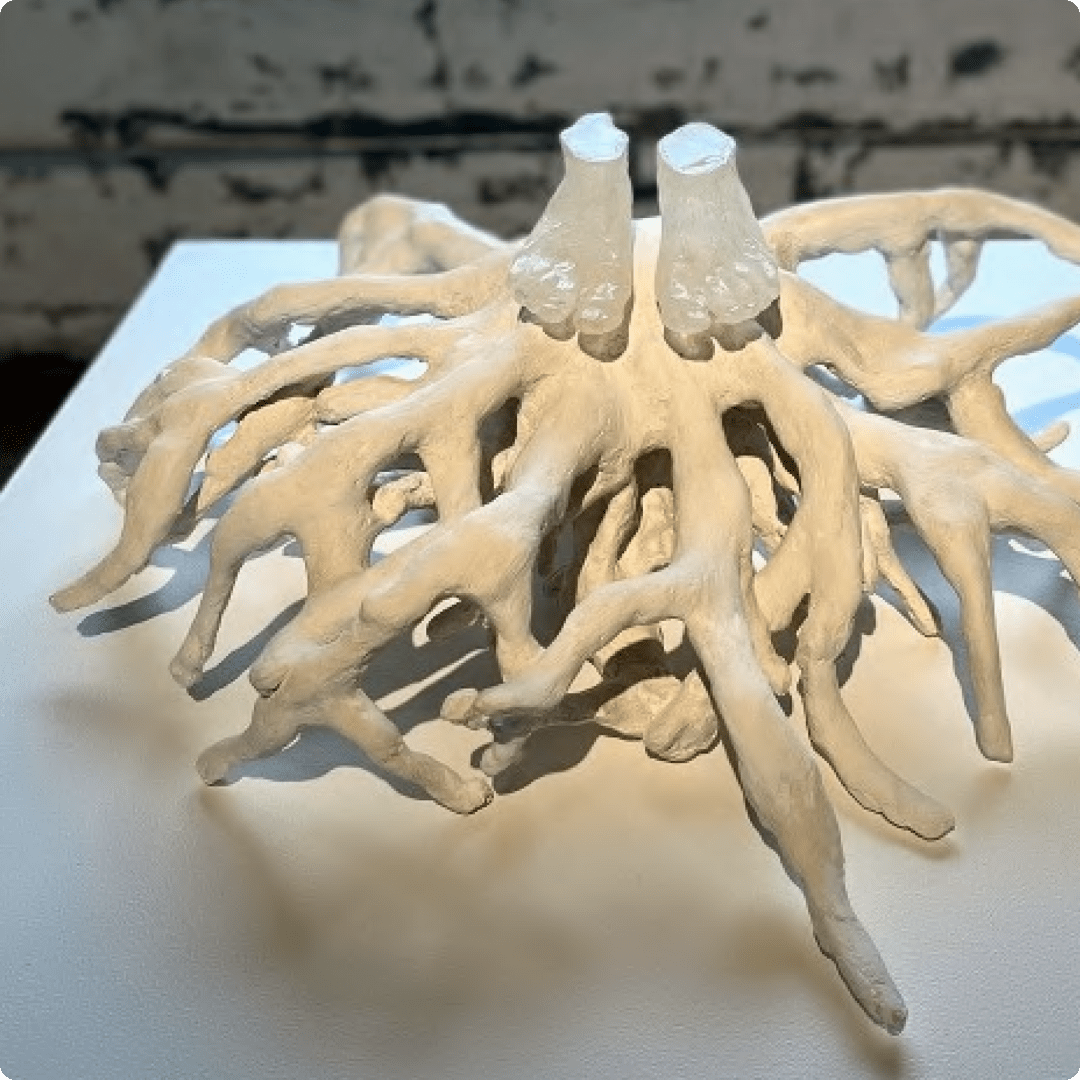
Directional LED fixture focusing controlled beam on sculpture
LED art lights are specialised lighting fixtures designed specifically to illuminate artwork without causing damage, glare, or colour distortion. Unlike decorative lighting or standard ceiling lights, LED artwork lights are engineered to highlight texture, colour, and detail while maintaining safe illumination levels.
Common applications include:
- Paintings and canvas artwork
- Wall art and framed pieces
- Sculptures and installations
- Art galleries and exhibitions
- Private art collections
- Museums and luxury interiors
High-quality LED art lights use advanced optics and high CRI (Colour Rendering Index) to ensure artwork is displayed as the artist intended.

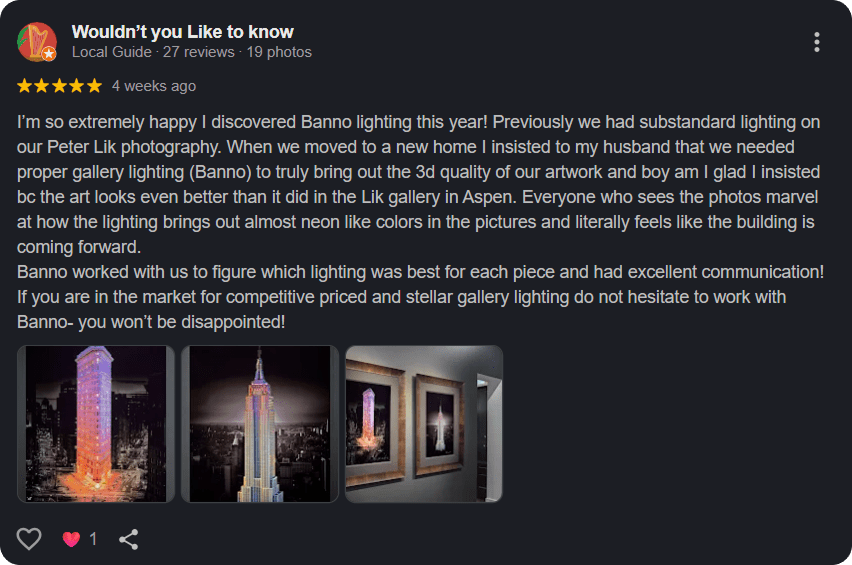
4.9-Star Google Review for Our Art Lighting Solutions
Why LED Lights Are Best for Artwork

Energy efficient LED gallery light with consistent brightness
1. Low Heat Output (Artwork Protection)
Traditional halogen lights generate significant heat, which can damage delicate artwork over time. LED lights for artwork produce minimal heat, reducing the risk of warping, fading, or material degradation.
2. High Colour Accuracy (CRI 90–97+)
Professional LED art lighting uses high CRI technology to accurately render colours, ensuring that paintings, photographs, and mixed media pieces appear true to life.
This is especially important for:
- Fine art collectors
- Galleries
- Museums
- Designers curating visual spaces
3. Energy Efficiency and Longevity
LED art lights can last up to 50,000 hours, making them far more reliable than traditional bulbs while maintaining consistent illumination.
Do LED Lights Damage Artwork?

Museum-grade LED fixture safely illuminating framed artwork
This is one of the most searched and most important questions in art lighting.
High-quality LED art lights do NOT damage artwork when used correctly. In fact, they are considered the safest lighting option for paintings and delicate materials.
Why LED Lighting Is Safe for Art:
- Minimal UV radiation
- Low infrared heat emission
- Stable light output
- Controlled brightness levels
However, low-quality LED lights or overly bright installations can still cause gradual fading if improperly positioned or used at excessive intensity. This is why professional art lighting design focuses on beam control and lux levels, not just brightness.
Can LED Lights Fade Paintings Over Time?

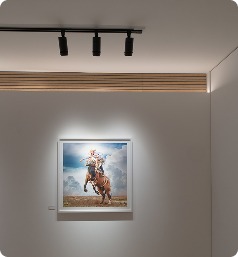
Properly angled spotlight avoiding glare on glass frame
All light exposure can contribute to gradual fading, including natural daylight. The key factor is not whether LED lights fade artwork, but how they are used.
Best practices to prevent fading:
- Use museum-grade LED art lights with low UV output
- Avoid excessive brightness
- Position lights at correct angles (typically 30°)
- Use dimmable lighting systems
- Avoid direct prolonged exposure on sensitive works
Professional galleries use controlled LED art gallery lighting specifically because it offers the safest long-term illumination.
Best LED Lights for Artwork and Paintings

Adjustable beam spotlight for large statement painting
The best LED art lights share several key characteristics:
- High CRI (95+ recommended)
- Adjustable beam angles
- Anti-glare optics
- Dimmable control
- Flicker-free drivers
- Warm to neutral colour temperature (3000K–4000K)
LED picture lights, LED spotlights for art, and dedicated LED art display lights are commonly used depending on the artwork size and environment.
LED Art Display Lights for Galleries and Exhibitions

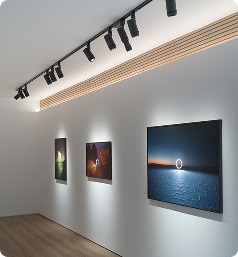
Track-mounted LED lights across contemporary exhibition wall
LED art display lights are widely used in galleries and exhibitions because they provide flexibility, precision, and consistent illumination across multiple artworks.
In professional settings, LED lights for art galleries are designed to:
- Evenly illuminate collections
- Reduce glare on glass frames
- Highlight texture and depth
- Maintain visual consistency across exhibition walls
Track-mounted LED art lighting systems are particularly popular in galleries because they allow adjustable positioning as exhibitions rotate.
LED Lights for Wall Art and Home Collections
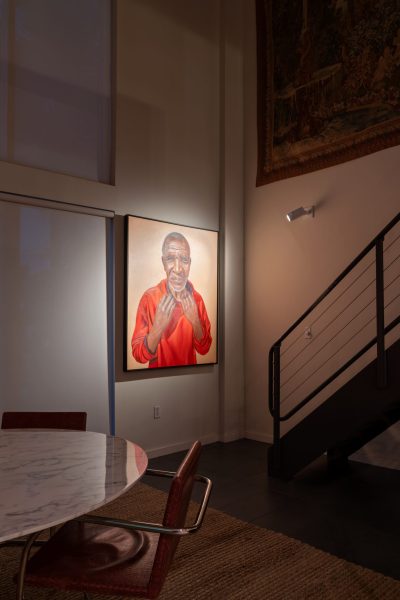
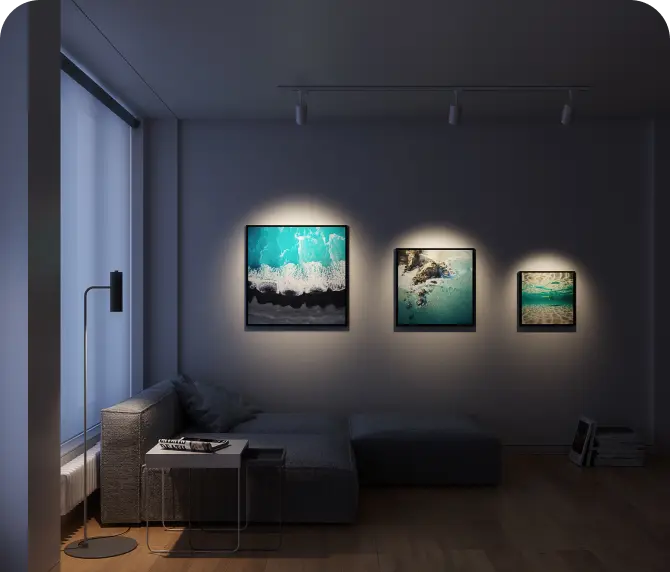
Wall-mounted art spotlight highlighting private collection
For residential settings, LED lights for wall art must balance aesthetics and functionality. Many collectors prefer discreet lighting that enhances artwork without overpowering the space.
Popular residential options include:
- LED picture lights (wired or wireless)
- Cordless LED art lights
- Battery powered LED art lights
- LED spot lights for artwork
- Wireless LED art lights with remote control
These solutions are ideal for luxury homes, apartments, and private collections where installation flexibility is important.
Wireless and Battery Powered LED Art Lights

Minimalist wireless picture light in apartment gallery
Wireless LED art lights and battery powered LED art lights have grown in popularity due to their ease of installation and clean aesthetic.
Benefits include:
- No complex wiring required
- Flexible placement
- Minimal wall damage
- Remote dimming control
- Rechargeable convenience
However, for galleries and high-value artwork, wired professional lighting systems are generally preferred for consistent output and long-term reliability.
Professional LED Art Lighting Systems (Zoom, Multi & Deluxe)

Deluxe, Multi and Zoom lighting fixtures
In professional art environments, specialised LED art lighting systems are used rather than generic decorative fixtures. These systems are engineered for precise artwork illumination, colour accuracy, and glare reduction.
Zoom – Precision Artwork Spotlighting
Zoom lighting systems are designed for controlled beam adjustment, making them ideal for highlighting individual artworks, paintings, and focal pieces. This level of precision allows curators and collectors to fine-tune how light interacts with texture, colour, and composition.
Multi – Flexible Lighting for Multiple Artworks
Multi lighting systems are commonly used in galleries and large art walls where multiple artworks require balanced illumination. These systems provide flexibility in beam spread and positioning while maintaining consistent lighting quality across the display.
Deluxe – Museum-Grade Art Lighting Installations
Deluxe lighting systems are typically used in high-end galleries, museums, and luxury architectural spaces. They combine advanced optics, high CRI output, and professional installation design to achieve museum-grade artwork presentation and preservation.
These types of professional LED art lighting systems prioritise artwork integrity and visual experience over generic lighting output.
LED Picture Lights vs LED Spotlights for Art
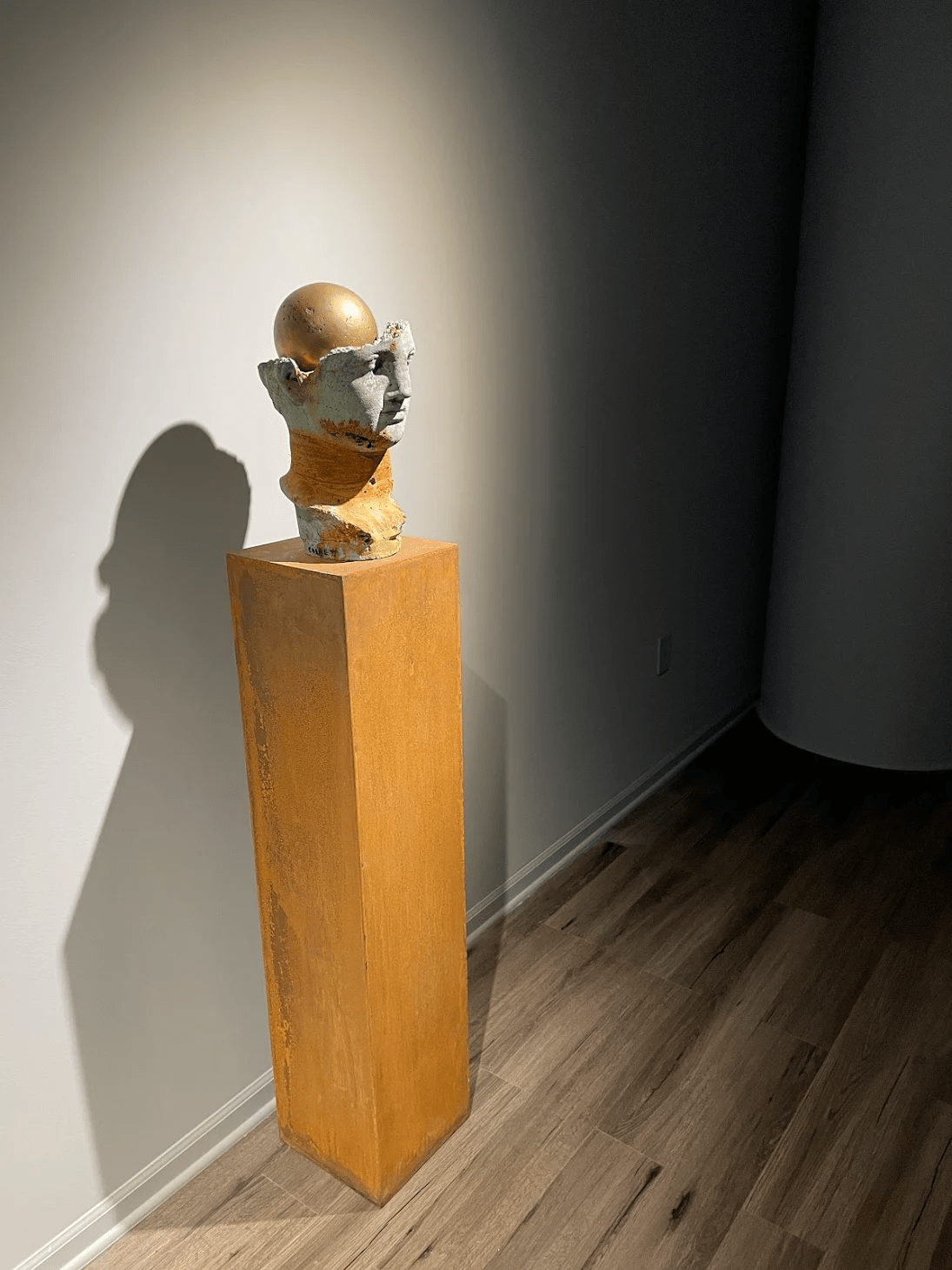
Gallery track spotlight enhancing sculptural artwork
LED Picture Lights
Best for:
- Framed paintings
- Wall-mounted artwork
- Residential collections
Advantages:
- Elegant and discreet
- Focused downward illumination
- Available in wireless and hardwired options
LED Spotlights for Art
Best for:
- Galleries and exhibitions
- Large artworks
- Sculptural pieces
- Adjustable lighting designs
Spotlights provide greater control over beam angle and intensity, making them the preferred choice in professional art gallery lighting.
LED Art Lighting for Art Studios and Creative Spaces
LED lights for art studios must provide accurate colour rendering to support painting, restoration, and creative work. Poor lighting can distort colour perception and affect artistic outcomes.
Recommended features for studio lighting:
- Neutral colour temperature (3500K–4000K)
- High CRI for colour accuracy
- Even light distribution
- Low glare illumination
This ensures artists and designers can work under consistent and reliable lighting conditions.
Colour Temperature and Artwork Illumination

Neutral 3500K spotlight balancing colour accuracy naturally
Colour temperature significantly affects how artwork appears.
General recommendations:
- 3000K: Warm gallery feel (classical artwork)
- 3500K: Balanced natural presentation
- 4000K: Neutral museum-style clarity
Choosing the correct colour temperature is essential for maintaining artistic authenticity and visual depth.
Common Mistakes When Using LED Lights for Artwork
- Using harsh overhead ceiling lights
- Choosing low CRI decorative LEDs
- Placing lights too close to artwork
- Ignoring glare and reflections
- Using overly bright lighting without dimming control
- Treating art lighting as decorative instead of specialised
Avoiding these mistakes dramatically improves artwork presentation and preservation.
Frequently Asked Questions (FAQ)
What are the best LED art lights for paintings?
The best LED art lights for paintings are high CRI (95+), low heat, and adjustable beam fixtures designed specifically for artwork illumination. Professional LED art display lights and picture lights are ideal for accurate colour rendering and safe long-term use.
Do LED lights damage artwork?
No, high-quality LED lights do not damage artwork when used correctly. They produce minimal UV radiation and low heat, making them significantly safer than halogen or incandescent lighting for paintings and fine art.
Can LED lights fade artwork over time?
LED lights can contribute to gradual fading if excessively bright or poorly positioned. However, museum-grade LED art lighting with controlled intensity and proper placement greatly reduces this risk.
What is the best lighting for artwork?
The best lighting for artwork is high CRI LED lighting with adjustable beam angles, glare control, and dimmable output. Professional art lighting systems used in galleries and museums provide the highest quality illumination.
Are wireless LED art lights good for artwork?
Wireless and battery powered LED art lights are suitable for residential use and temporary displays. For galleries and high-value artwork, wired professional systems are generally preferred for consistency and precision.
What colour temperature is best for LED art lighting?
A colour temperature between 3000K and 4000K is typically ideal for artwork, as it provides natural colour accuracy while enhancing visual depth and presentation.
Are LED picture lights better than regular lights for art?
Yes, LED picture lights are specifically designed to illuminate artwork without glare, heat damage, or colour distortion, making them far superior to standard decorative lighting.
Professional Placement and Positioning of LED Art Lights
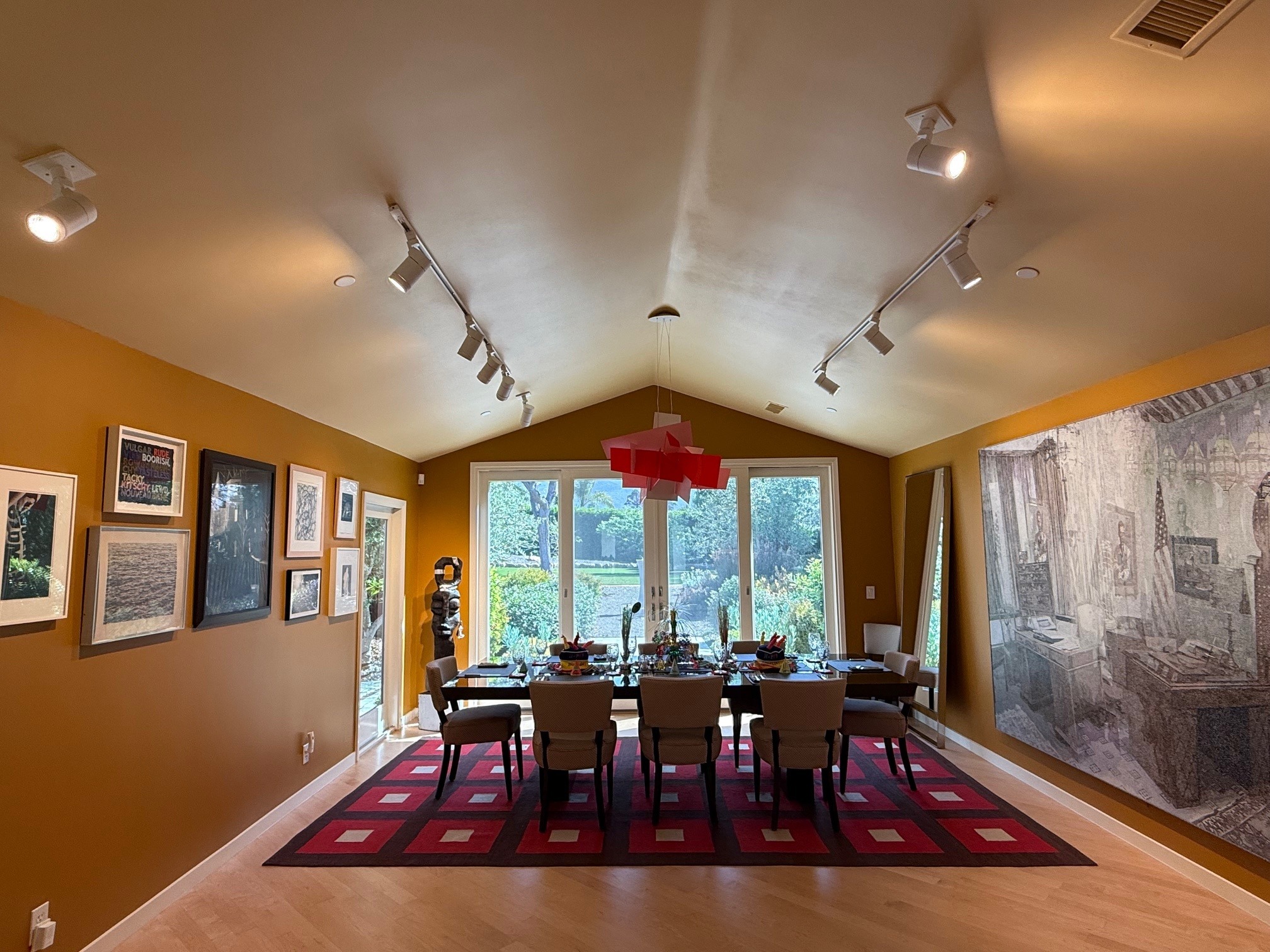
Correct beam spacing across gallery exhibition wall
One of the most overlooked aspects of LED art lighting is placement. Even the highest quality LED art lights will fail to enhance artwork if they are positioned incorrectly. Professional art lighting is not just about the fixture itself, but how the light interacts with the artwork, wall surface, and viewing angle.
In gallery and museum environments, LED lights for artwork are typically positioned at a 30-degree angle. This angle minimises glare, reduces reflections on glass frames, and highlights texture and depth without creating harsh hotspots.
Incorrect placement, such as lighting directly from above or placing lights too close to the artwork, can flatten colours and distort visual perception. This is why professional LED art lighting design focuses on beam control, spacing, and adjustable positioning rather than generic overhead illumination.
For collectors and designers, this distinction is critical. Properly positioned LED art lights can dramatically increase the perceived value and visual impact of artwork within a space.
LED Track Lighting vs Decorative LED Art Lights
Directional track lighting highlighting multiple framed artworks
Not all LED art lights are created for the same purpose. Decorative LED lighting, such as strips or ambient wall lights, may create aesthetic effects but are not suitable for serious artwork illumination.
Professional environments such as galleries, museums, and luxury interiors rely heavily on directional LED track lighting systems for art display. These systems allow precise control over:
- Beam angle
- Light intensity
- Artwork focus
- Future repositioning as collections change
Unlike fixed decorative lights, professional LED art lighting systems provide flexibility and consistency across multiple artworks. This is especially important for rotating exhibitions, curated collections, and high-end interior design projects.
Directional LED spotlights for art remain the preferred solution because they illuminate the artwork itself rather than washing the entire wall with uncontrolled light.
Colour Rendering and Why CRI Matters for LED Art Lights

High CRI lighting revealing authentic painting tones
Colour Rendering Index (CRI) is one of the most important specifications when choosing LED art lights. CRI measures how accurately a light source reveals colours compared to natural daylight.
Low-quality LED lights often have poor CRI ratings, which can make artwork appear dull, flat, or colour-shifted. This is unacceptable in professional art environments where colour accuracy is essential.
For artwork illumination, a CRI of 95 or higher is recommended. Museum-grade LED art lights often reach CRI 97+, ensuring that the original tones, brushwork, and artistic intent are preserved visually.
This level of colour fidelity is particularly important for:
- Oil paintings
- Fine art photography
- Contemporary artworks
- Museum collections
- High-value private art pieces
Lighting with high CRI does not just illuminate artwork — it reveals it as intended.
Managing Glare and Reflections in Art Lighting

Glass-covered artwork illuminated without distracting glare
Glare is one of the most common issues when using LED lights for artwork, especially with framed pieces or artworks behind glass. Even high-quality LED art lights can produce unwanted reflections if the beam angle and placement are not properly calibrated.
Professional LED art lighting solutions use:
- Anti-glare optics
- Controlled beam spreads
- Adjustable heads
- Soft diffusion lenses
These features ensure that viewers experience the artwork clearly without visual distractions. In contrast, generic decorative lighting often causes hotspots and reflections that reduce the viewing experience.
For galleries and collectors, glare control is a defining factor between amateur lighting and professional artwork illumination.
LED Art Lighting for Galleries, Museums, and Luxury Interiors

Contemporary gallery wall with balanced spotlight distribution
LED art gallery lighting requires a completely different approach compared to residential decorative lighting. Galleries must balance consistency, artwork preservation, and visual storytelling through light.
Professional LED lights in art galleries are designed to:
- Maintain uniform lighting across walls
- Highlight key artworks as focal points
- Support curatorial layouts
- Protect sensitive materials from excessive light exposure
In luxury residential interiors, LED art lights are often integrated into architectural lighting design to create a private gallery aesthetic. This allows homeowners to showcase artwork with the same visual quality seen in professional exhibitions.
The growing demand for LED art lighting in high-end homes reflects a broader shift toward curated interiors where artwork is treated as a central design element rather than decoration.
Professional LED Art Lighting Systems for Serious Artwork Display

Precision adjustable spotlight for collector-grade painting
While many consumer-grade LED art lights exist, professional environments typically rely on advanced lighting systems engineered specifically for artwork illumination. These systems prioritise beam precision, colour accuracy, and long-term reliability over convenience-focused features.
Precision spotlight systems such as Zoom-style lighting are designed to deliver focused illumination on individual artworks, allowing collectors and galleries to fine-tune beam angles and light intensity for optimal presentation.
Flexible multi-light systems are used in larger art walls and galleries where multiple artworks require balanced illumination without uneven brightness or visual inconsistency.
For museum-grade installations and high-end projects, fully integrated lighting systems offer the highest level of control, ensuring artwork is displayed under ideal lighting conditions while maintaining preservation standards.
This professional approach moves beyond basic lighting fixtures and into specialised art lighting design, which is essential for serious collectors and curated spaces.
Are LED Strip Lights Suitable for Artwork?
LED strip lights are often used for decorative purposes, such as backlighting or ambient wall effects. However, they are not typically recommended as the primary light source for valuable artwork.
While LED strip lighting can enhance atmosphere, it lacks the directional precision required for proper artwork illumination. Without controlled beam angles and high CRI output, strip lights may create uneven lighting and reduce visual clarity.
For professional art display lighting, directional LED spotlights or dedicated art lighting systems provide significantly better results in terms of colour accuracy, glare control, and artwork preservation.
Light Intensity and Safe Lux Levels for Artwork

Dimmable LED spotlight adjusted for sensitive artwork
Another key consideration when using LED art lights is light intensity, often measured in lux. Excessive brightness, even from safe LED sources, can contribute to gradual artwork degradation over time.
Museums and conservation professionals typically recommend controlled lux levels depending on the artwork type. Sensitive works such as watercolours and textiles require lower illumination levels compared to oil paintings and sculptures.
Dimmable LED art lighting systems are highly beneficial because they allow users to adjust brightness based on:
- Artwork sensitivity
- Viewing environment
- Exhibition duration
- Natural light exposure
This level of control ensures both visual excellence and long-term artwork protection.

The Future of LED Art Lighting
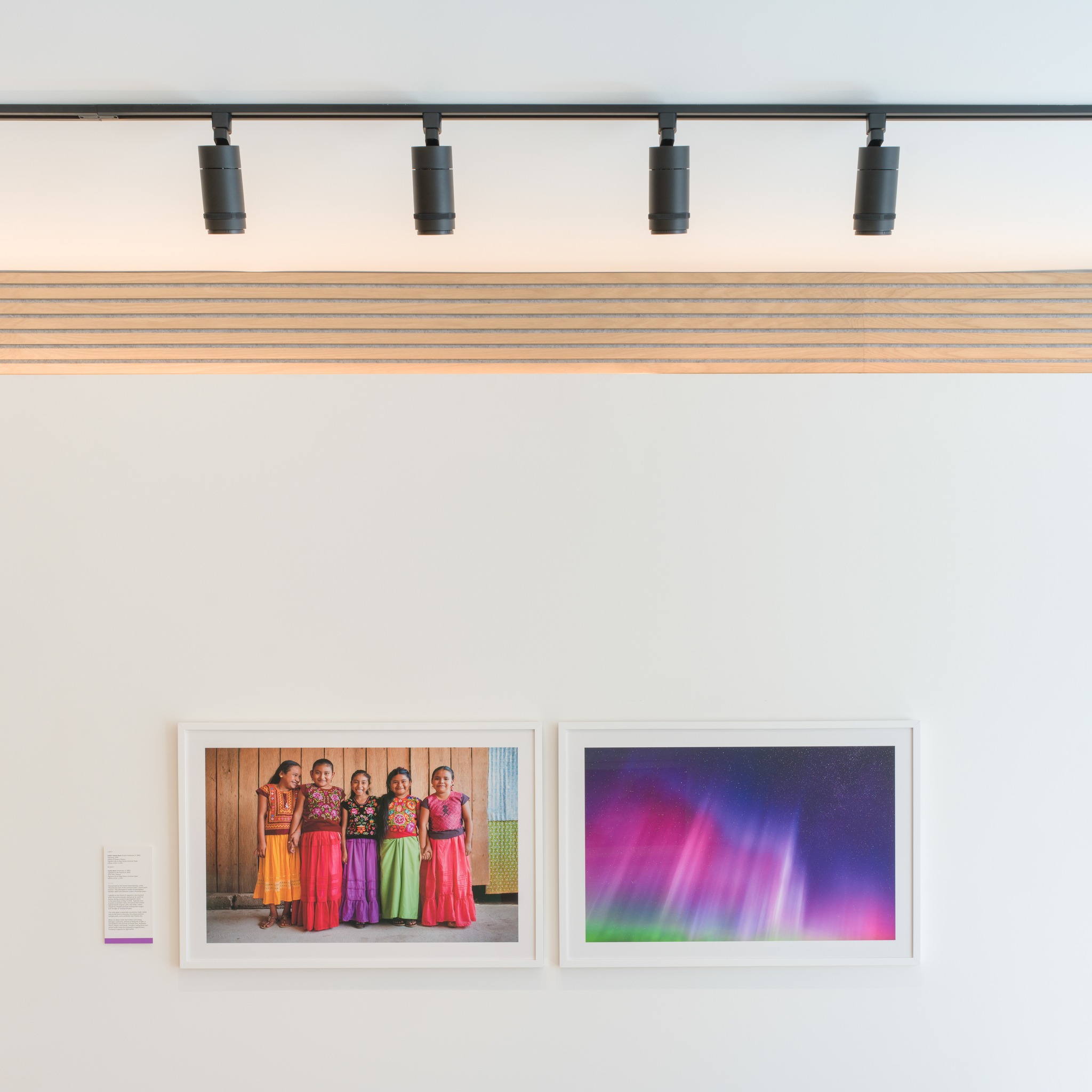
Smart controlled LED system in modern gallery
As technology advances, LED art lights are becoming increasingly sophisticated, with improvements in optical precision, colour stability, and smart dimming integration. Modern professional lighting systems are designed to adapt to evolving gallery layouts, rotating exhibitions, and curated residential spaces.
Rather than treating art lighting as a secondary design feature, architects and designers now integrate specialised LED art lighting into the core lighting plan of luxury interiors and exhibition environments.
This shift highlights a broader industry recognition: lighting is not just functional — it is an essential part of how artwork is experienced.
Frequently Asked Questions (Extended FAQ)
What are LED art lights used for?
LED art lights are used to illuminate paintings, sculptures, and artwork displays in homes, galleries, museums, and exhibitions while preserving colour accuracy and minimising heat and UV exposure.
Are LED lights safe for paintings long term?
Yes, high-quality LED art lights are considered safe for long-term artwork illumination because they emit minimal heat and low UV radiation compared to traditional lighting sources.
Do LED lights damage artwork over time?
When properly positioned and dimmed to appropriate levels, professional LED art lights do not damage artwork. Poor-quality or excessively bright lighting, however, can contribute to gradual fading over long exposure periods.
What CRI is best for LED art lighting?
A CRI of 95 or higher is ideal for LED art lighting. Museum-grade lighting often reaches CRI 97+, ensuring accurate colour rendering and faithful visual representation of artwork.
Are LED lights better than halogen for artwork?
Yes, LED lights are significantly better than halogen lighting for artwork because they produce less heat, lower UV output, and offer superior colour accuracy and energy efficiency.
Can LED lights fade artwork?
All light exposure can contribute to fading over time, but controlled LED art lighting with proper lux levels and positioning greatly reduces this risk compared to traditional lighting sources.
What is the best colour temperature for LED art lights?
A colour temperature between 3000K and 4000K is generally recommended for artwork, as it provides balanced, natural illumination without overly warm or overly cool colour distortion.
Are decorative LED lights suitable for art display?
Decorative LED lights may enhance ambiance but are not ideal for primary artwork illumination. Directional, high-CRI LED art lighting systems provide far superior results for serious art display.
How far should LED art lights be from artwork?
LED art lights are typically positioned at a distance and angle that avoids glare and hotspots, commonly around a 30-degree angle from the artwork for optimal illumination and visual clarity.
Why do galleries use specialised LED art lighting systems?
Galleries use specialised LED art lighting systems because they offer precise beam control, consistent colour rendering, glare reduction, and safe illumination standards required for professional art presentation and preservation.
Final Thoughts: Choosing the Right LED Art Lights

Museum-grade LED spotlight revealing artwork depth beautifully
LED art lights are not simply decorative fixtures — they are specialised tools for preserving and presenting artwork at its highest visual potential. From private collectors and designers to galleries and museums, professional LED art lighting has become the industry standard for safe, accurate, and refined artwork illumination.
By selecting high-quality LED artwork lights with proper beam control, colour accuracy, and professional design considerations, artwork can be displayed in a way that enhances both its aesthetic impact and long-term preservation.
What Our Clients Say About Our Gallery Lighting