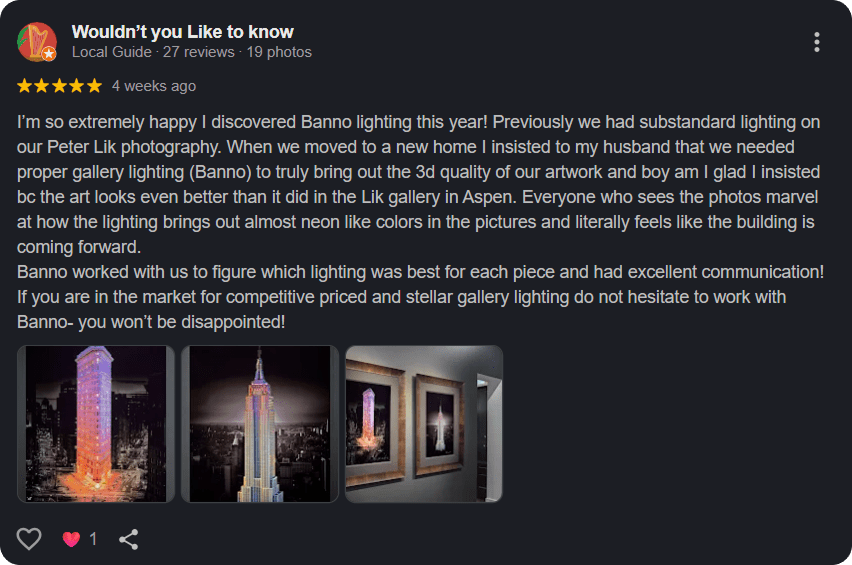
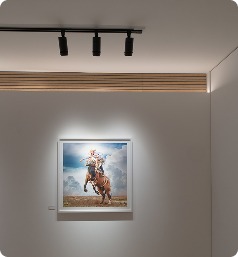
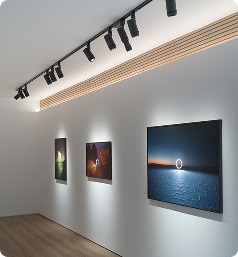
Museum-grade LED gallery lighting illuminating curated exhibition artworks
LED gallery lighting has become the global standard for museums, galleries, exhibitions, and high-end art collections due to its precision, efficiency, and ability to deliver museum-grade illumination without compromising artwork integrity. Unlike traditional lighting systems, LED gallery lighting provides exceptional color accuracy, controlled beam angles, and low heat output, making it ideal for illuminating paintings, sculptures, and curated displays.
For galleries, collectors, designers, and museums, lighting is not simply functional. It is a curatorial instrument that directly influences how artwork is perceived, interpreted, and valued. Proper LED art gallery lighting enhances texture, reveals true color tones, and creates a refined viewing experience that aligns with professional exhibition standards.
What a Gallery Owner Says About Our Precision Lighting Systems
What Is LED Gallery Lighting and Why It Is the Industry Standard

Precision LED fixtures installed across contemporary exhibition space
LED gallery lighting refers to specialised lighting systems designed specifically to illuminate artwork, exhibitions, and display environments using high-performance LED technology. These systems are engineered to provide consistent illumination while protecting sensitive artworks from heat and ultraviolet exposure.
Museums and galleries prioritise LED lighting because it offers:
- High color rendering accuracy (CRI)
- Low UV and infrared emission
- Energy efficiency for long operating hours
- Long lifespan and reduced maintenance
- Precision beam control for artwork illumination
This combination makes LED gallery lighting the preferred solution for both institutional and private art environments.

4.9-star rated by art collectors and gallery professionals
LED Art Gallery Lighting and Color Accuracy

High CRI LED spotlight revealing accurate painting tones
Color accuracy is one of the most critical aspects of gallery lighting design. Poor lighting can distort pigments, flatten textures, and alter the artist’s intended visual expression. High-quality LED art gallery lighting uses advanced optics and high CRI technology to ensure accurate color representation.
High CRI and Artwork Integrity
Lighting with a CRI of 95 or higher is typically recommended for galleries and museums. This ensures that:
- Paintings retain true color tones
- Fine details remain visible
- Subtle gradients and textures are preserved
- Artwork appears natural under illumination
This level of precision is essential for professional exhibition environments and serious collectors.
Gallery Lighting Design Using LED Systems

Balanced color depth maintained across gallery wall
Effective gallery lighting design involves more than installing fixtures. It requires a strategic balance of ambient, accent, and display lighting to create visual harmony throughout the space.
Layered LED Lighting Approach
Professional gallery lighting design often includes:
- Ambient LED lighting for overall illumination
- Accent LED spotlights for artwork focus
- Display lighting for cabinets and installations
This layered system ensures that artwork remains the focal point while the surrounding space maintains a refined atmosphere.
LED Track Lighting for Art Gallery Spaces
LED track lighting for art gallery environments provides flexibility and adaptability, especially for rotating exhibitions and changing display layouts. Track-mounted LED fixtures allow precise repositioning and beam adjustment, ensuring consistent illumination across different artworks.
Advantages of LED track lighting include:
- Adjustable fixture placement
- Scalable lighting layouts
- Precision spotlighting
- Clean architectural integration
This makes track systems a cornerstone of modern LED gallery lighting strategies.
LED Exhibition Lighting for Museums and Exhibitions

Flexible lighting layout supporting temporary exhibition format
LED exhibition lighting is specifically designed for temporary and permanent exhibitions where lighting must adapt to different display formats and object types. Museums rely on LED exhibition lighting systems to achieve conservation-safe illumination while maintaining visual clarity.
LED Exhibition Display Lighting Systems
These systems are engineered to illuminate:
- Historical artifacts
- Fine art collections
- Interactive installations
- Curated exhibitions
They provide consistent light output without damaging sensitive materials, making them ideal for long-term institutional use.
LED Display Lighting for Cabinets and Showcase Installations

Glass cabinet interior illuminated with micro LED spotlights
Display cabinets require specialised LED display cabinet lighting to ensure objects are evenly illuminated without glare or shadow distortion. This is particularly important for jewelry, small sculptures, and rare collectibles.
Best practices for LED display lighting include:
- Integrated cabinet lighting strips
- Micro spotlights for focal objects
- Diffused LED display shelf lighting
- Low heat output for preservation safety
Proper display lighting enhances visibility while maintaining the integrity of delicate objects.
Professional LED Gallery Light Fixtures for Art Spaces
In high-end gallery environments, lighting fixtures must deliver both technical precision and visual discretion. Specialist LED gallery light systems are designed to provide narrow beam angles, anti-glare optics, and museum-grade color rendering.
Professional-grade solutions such as Zoom (precision art lighting), Deluxe (museum-grade lighting), and Multi (flexible gallery lighting) are commonly used in galleries and collector spaces due to their ability to adapt to different artwork sizes, wall layouts, and exhibition requirements. These fixtures allow curators and designers to fine-tune illumination with exceptional control while maintaining a sophisticated, unobtrusive aesthetic.
LED Display Lighting Design for Modern Galleries
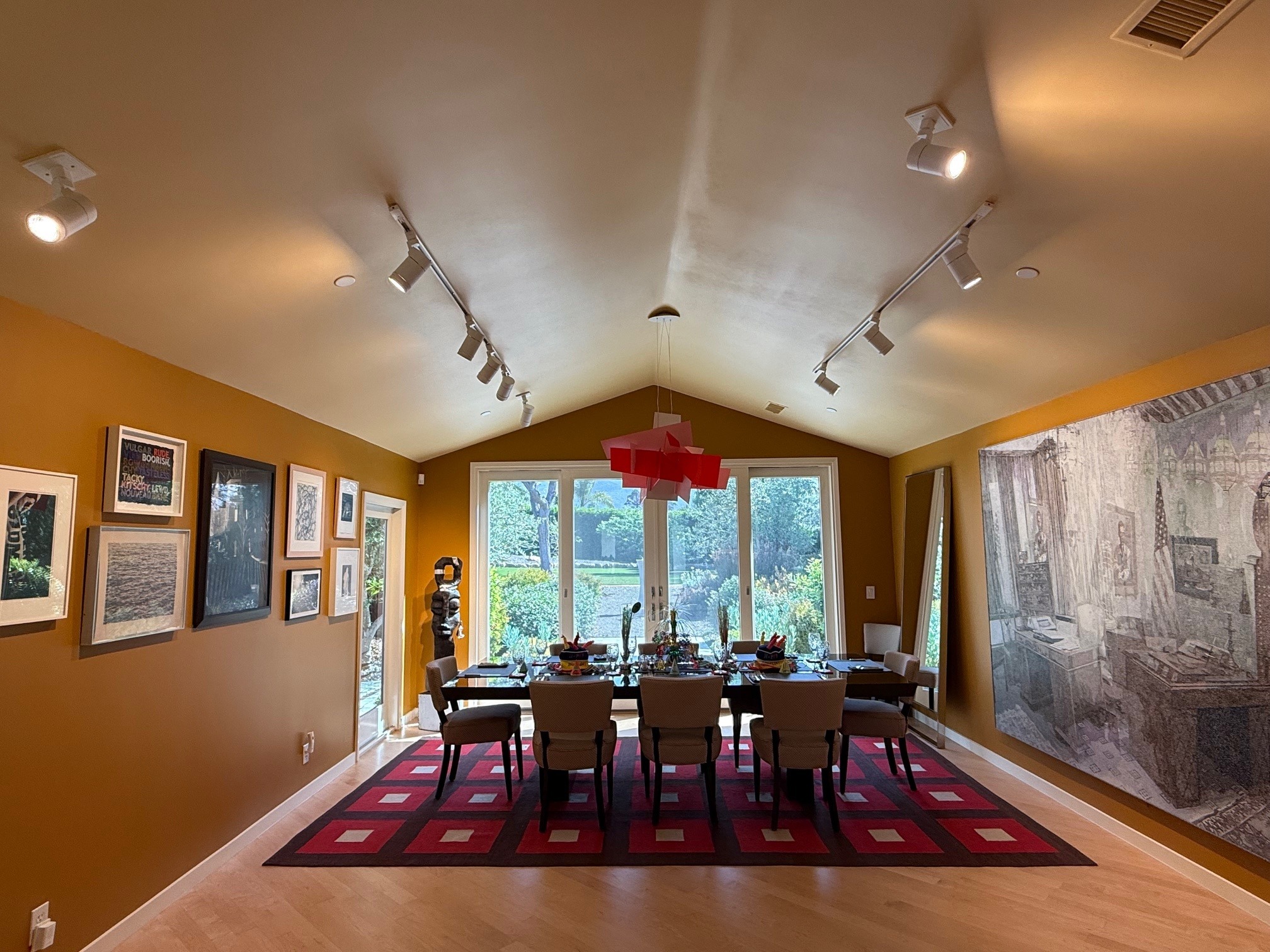
Carefully spaced fixtures maintaining visual balance across wall
LED display lighting design has evolved significantly with advancements in optical engineering. Modern LED systems offer beam shaping, dimming precision, and glare reduction technologies that allow lighting designers to customise illumination based on artwork type and spatial layout.
Key design considerations include:
- Beam angle selection
- Fixture spacing
- Light intensity control
- Object material sensitivity
This ensures each artwork is illuminated appropriately without visual imbalance.
Exhibition Lighting and Visual Storytelling
Lighting plays a fundamental role in exhibition storytelling. LED exhibition lighting can be used to guide viewer attention, highlight key artworks, and create emotional engagement throughout the gallery journey.
Strategic lighting techniques include:
- Focal spotlighting on signature pieces
- Soft ambient lighting for contemplative zones
- Directional lighting to guide movement flow
These methods enhance both aesthetic impact and visitor experience.
Energy Efficiency and Sustainability in LED Gallery Lighting

Sustainable lighting reducing long term operational costs
One of the major advantages of LED gallery lighting is its energy efficiency. Galleries and museums often operate lighting systems for extended hours, making energy consumption a critical consideration.
LED systems offer:
- Lower energy usage compared to traditional lighting
- Reduced maintenance costs
- Long operational lifespan
- Sustainable lighting performance
This aligns with the growing emphasis on environmentally responsible museum and gallery operations.
LED Gallery Lighting for Private Collectors and Luxury Homes
Private collectors increasingly adopt LED gallery lighting to replicate museum-quality presentation within residential environments. LED lighting allows homeowners to highlight valuable artworks with professional precision while maintaining a refined interior aesthetic.
In luxury homes, LED gallery lighting is commonly used for:
- Feature art walls
- Display cabinets
- Sculpture lighting
- Curated interior collections
This approach elevates both the artwork and the architectural sophistication of the space.
Glare Control and Visual Comfort in LED Art Lighting

Anti glare lens reducing reflections on framed painting
Glare reduction is essential in LED gallery lighting design. Excessive glare can distract viewers and diminish the clarity of artwork, particularly when illuminating framed paintings or glass-covered displays.
High-quality LED fixtures incorporate:
- Anti-glare lenses
- Deep recessed optics
- Precision beam control
- Adjustable shielding accessories
These features ensure a comfortable and immersive viewing experience.
The Future of LED Gallery Lighting Technology
As lighting technology continues to evolve, LED gallery lighting systems are becoming increasingly advanced, offering smart dimming, tunable white lighting, and enhanced optical precision. These innovations allow galleries and museums to adapt lighting conditions based on exhibition needs, conservation requirements, and curatorial vision.
Ultimately, LED gallery lighting represents the intersection of technology, design, and curatorial excellence. When professionally implemented, it enhances artistic presentation, protects valuable works, and creates a sophisticated visual environment that aligns with the highest standards of gallery and museum lighting design.
Advanced Optical Control in LED Gallery Lighting Systems

Focus adjustable spotlight targeting individual artworks
One of the defining advantages of LED gallery lighting is the level of optical control it offers compared to traditional lighting technologies. In professional gallery and museum environments, lighting must be highly precise, adjustable, and consistent across different artworks and exhibition formats. Advanced LED optics allow curators and lighting designers to fine-tune illumination with exceptional accuracy.
Modern LED gallery lighting fixtures often include interchangeable lenses, beam shaping accessories, and adjustable focus mechanisms. These features make it possible to adapt lighting conditions for various artwork sizes, textures, and mediums without replacing the entire lighting system. This level of adaptability is essential for galleries that frequently rotate exhibitions or display diverse collections.
Optical precision also ensures that light is directed only where it is needed. This prevents light spill onto walls, floors, or adjacent artworks, maintaining a clean and professional visual presentation.
Beam Angle Strategy for LED Art Gallery Lighting

Medium beam coverage ensuring cohesive wall illumination
Beam angle plays a crucial role in determining how artwork is perceived. Narrow beam angles create focused illumination and strong visual emphasis, while wider beams provide softer, more even coverage across larger surfaces.
Narrow Beam Lighting for Featured Artworks
Narrow beam LED gallery lighting is commonly used for:
- Masterpieces and signature artworks
- Sculptures and installations
- High-value collector pieces
This approach creates a dramatic focal point and draws the viewer’s attention directly to the artwork.
Medium Beam Lighting for Gallery Walls
Medium beam angles are ideal for evenly lighting multiple artworks displayed along a gallery wall. This prevents uneven brightness and ensures visual cohesion across the exhibition space.
Wide Beam Lighting for Large Exhibitions
Wide beam LED lighting is suitable for large installations, immersive exhibitions, and expansive gallery halls where broader illumination is required without excessive spotlighting.
Tunable White and Adaptive LED Gallery Lighting
A growing trend in LED gallery lighting is the use of tunable white technology. This allows lighting designers to adjust color temperature depending on the artwork type, exhibition theme, or curatorial vision.
For example:
- Warmer tones can enhance classical paintings and historical works.
- Neutral tones maintain accurate color balance for contemporary art.
- Cooler tones may be used for modern installations or digital exhibitions.
This adaptability allows galleries and museums to create a tailored visual atmosphere while preserving color accuracy and artistic intent.
Conservation-Focused LED Lighting for Museums

Minimal heat emission preserving fragile artwork materials
Museums must adhere to strict conservation standards when illuminating sensitive artworks, textiles, and historical artifacts. LED gallery lighting is particularly valuable in conservation-focused environments due to its low ultraviolet and infrared emissions.
Key conservation benefits include:
- Minimal heat generation
- Reduced risk of material degradation
- Stable light output over long periods
- Controlled lux levels for delicate objects
This makes LED lighting especially suitable for illuminating oil paintings, manuscripts, photographs, and antique textiles that require careful preservation.
LED Display Cabinet Lighting in Gallery Installations
Display cabinets are frequently used in galleries to showcase smaller artworks, rare artifacts, and collectible objects. LED display cabinet lighting must be both subtle and precise to ensure the object remains the visual focal point.
Professional LED cabinet lighting design typically includes:
- Integrated micro spotlights for accent focus
- Linear LED strips for even illumination
- Hidden fixture placement for visual minimalism
- Low glare optics for clear viewing through glass
Proper cabinet lighting enhances object visibility while maintaining a refined and museum-quality presentation.
Lighting Uniformity and Visual Balance in Gallery Spaces

Smooth light transitions reducing visitor visual fatigue
Uniformity is a critical factor in professional LED gallery lighting design. Uneven lighting can distract viewers and create visual imbalance within an exhibition space. Lighting designers carefully plan fixture spacing, beam overlap, and intensity levels to achieve consistent illumination across all artworks.
Balanced LED gallery lighting ensures:
- Equal visual importance across displayed pieces
- Smooth transitions between exhibition zones
- Reduced visual fatigue for visitors
- Enhanced spatial harmony
This level of uniformity is especially important in large galleries and museums where multiple artworks are displayed along continuous walls.
LED Gallery Lighting and Architectural Integration
Modern galleries and high-end exhibition spaces increasingly integrate LED lighting directly into architectural elements. Recessed tracks, ceiling-integrated spotlights, and concealed lighting systems create a seamless and sophisticated environment where the focus remains entirely on the artwork.
Architectural integration offers several advantages:
- Clean and minimalist aesthetics
- Reduced visual clutter
- Greater design cohesion
- Enhanced spatial elegance
This approach is widely used in contemporary museums and luxury private galleries where design refinement is a priority.
Smart Controls and Dimming in LED Art Lighting

Digital dimming system adjusting gallery lighting zones
Advanced LED gallery lighting systems often incorporate smart control technology, allowing curators and lighting designers to adjust brightness, beam focus, and lighting zones remotely. Dimming capabilities are particularly important for sensitive artworks that require controlled illumination levels.
Smart lighting controls enable:
- Scene-based exhibition lighting
- Day-to-night brightness adjustments
- Energy optimisation
- Custom lighting presets for different exhibitions
These features provide flexibility while maintaining strict lighting standards required in professional art environments.
LED Exhibition Lighting for Rotating Displays
Exhibitions are dynamic by nature, and lighting must adapt accordingly. LED exhibition lighting systems are designed to support rotating displays without requiring extensive rewiring or fixture replacement. Adjustable LED spotlights and modular track systems allow curators to reposition lighting quickly and efficiently.
This flexibility is essential for:
- Temporary exhibitions
- Art fairs
- Museum rotations
- Curated installations
By using adaptable LED lighting systems, institutions can maintain consistent visual quality across changing exhibitions.
Heat Management and Artwork Protection

Heat reduced illumination preserving photographic prints
One of the major risks of traditional lighting systems was excessive heat emission, which could damage sensitive artworks over time. LED gallery lighting significantly reduces this risk due to its low thermal output.
Lower heat levels help protect:
- Paint pigments
- Canvas materials
- Photographic prints
- Textiles and historical documents
This protective characteristic makes LED lighting the preferred solution for conservation-grade gallery and museum environments.
Enhancing Viewer Experience Through Professional LED Lighting
Lighting directly influences how visitors engage with artwork. Well-designed LED gallery lighting enhances clarity, depth perception, and emotional resonance, creating a more immersive viewing experience.
Effective lighting design can:
- Guide visual attention to key artworks
- Create mood and atmosphere
- Improve artwork legibility
- Encourage longer visitor engagement
This psychological impact is a key reason why professional galleries invest heavily in specialised LED lighting systems.

Long-Term Performance and Reliability of LED Gallery Lighting

Durable LED fixture maintaining stable color output
High-quality LED gallery lighting fixtures are engineered for long-term reliability and consistent performance. Unlike traditional lighting sources that degrade quickly, professional LED systems maintain stable color output and beam precision over extended periods.
Long-term advantages include:
- Reduced maintenance requirement
- Lower operational costs
- Consistent illumination quality
- Greater system durability
For galleries, museums, and collectors managing valuable art collections, long-term lighting reliability is not just a convenience but a necessity.
The Strategic Role of LED Gallery Lighting in Curatorial Excellence

Sophisticated gallery environment shaped by precision lighting
Ultimately, LED gallery lighting is not merely a technical installation. It is a strategic element of curatorial excellence. Lighting shapes how artwork is perceived, contextualised, and appreciated within a space. When executed with precision and expertise, LED lighting enhances artistic integrity, protects valuable works, and elevates the overall sophistication of the gallery environment.
As galleries, museums, and collectors continue to prioritise preservation, visual clarity, and architectural refinement, LED gallery lighting will remain the cornerstone of professional art illumination, setting the global standard for how art is presented in both institutional and private settings.
FAQs
- What is LED gallery lighting?
LED gallery lighting is specialised lighting designed to illuminate artwork and exhibitions with high precision and color accuracy. - Why do galleries use LED lighting?
Because it offers low heat output, high CRI, and energy efficiency. - Is LED lighting safe for artwork?
Yes, high-quality LED lighting produces minimal UV and heat, making it safe for art. - What CRI is best for LED gallery lighting?
CRI 95 or higher is recommended for accurate color representation. - What is LED exhibition lighting?
LED exhibition lighting is lighting designed specifically for museum and exhibition displays. - Can LED lights damage paintings?
Professional LED lighting with proper specifications is safe for paintings. - What color temperature is best for galleries?
Typically 3000K to 4000K for balanced and natural illumination. - Is LED track lighting good for art galleries?
Yes, it provides flexibility and precise beam control. - How do you light a gallery wall with LED lighting?
Using focused LED spotlights positioned at controlled angles. - What is LED display cabinet lighting?
Lighting designed to illuminate objects inside display cabinets evenly. - How long do LED gallery lights last?
High-quality LED fixtures can last tens of thousands of hours. - Is LED lighting energy efficient for galleries?
Yes, it significantly reduces energy consumption and maintenance costs. - Can LED lighting improve artwork visibility?
Yes, high CRI lighting enhances detail, texture, and color accuracy. - What is exhibition LED lighting used for?
It is used to illuminate exhibitions, artifacts, and curated displays. - Are LED gallery lights dimmable?
Yes, most professional systems offer precise dimming control. - What beam angle is best for gallery lighting?
Narrow to medium beam angles depending on artwork size. - Do museums use LED lighting?
Yes, LED lighting is the global standard in modern museums. - Is LED lighting suitable for display shelves?
Yes, especially for collectibles and small art objects. - What makes professional LED gallery lighting different?
Higher optical precision, color accuracy, and glare control. - Can LED gallery lighting be customised for exhibitions?
Yes, modern systems allow flexible adjustment for different displays.
See Why Clients Trust Our Lighting Systems for Every Project