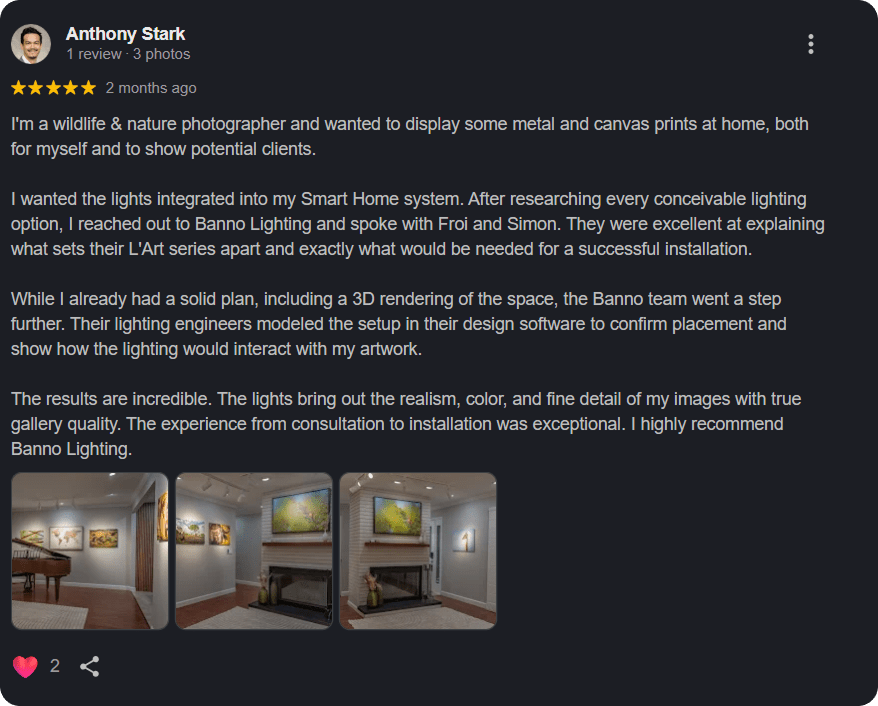
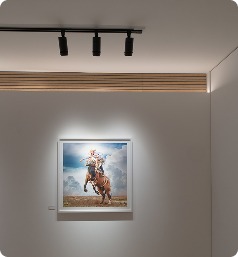
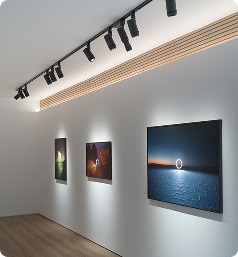
Precision LED fixtures illuminating contemporary gallery artwork display
LED lights art has transformed the way artwork is illuminated in galleries, museums, and high-end residential collections. Unlike traditional lighting sources, LED technology offers precise control, color stability, and conservation-friendly illumination that enhances visual clarity while protecting the integrity of artworks.
In professional art environments, LED lights art is not simply about brightness. It is about controlled beam direction, accurate color rendering, and refined presentation that allows paintings, sculptures, and mixed media works to be experienced exactly as intended by the artist.
From museum exhibitions to curated gallery walls, LED lighting has become the preferred standard for serious art display due to its efficiency, flexibility, and long-term preservation benefits.
Gallery Owner Testimonial: Why Professionals Choose Our Display Lighting
LED Lights Artwork and Precision Illumination
LED lights artwork systems are designed to deliver focused and balanced illumination across the surface of the artwork. Precision lighting ensures that viewers experience the full depth, texture, and color accuracy of a piece without distractions from uneven brightness or harsh glare.
Key benefits of precision LED art lighting include:
Consistent illumination across artwork surfaces
Enhanced texture visibility
Reduced shadow distortion
Controlled visual focus
This level of control is especially important in galleries and museums where lighting directly influences perception and artistic impact.
LED Light Art and Color Rendering Accuracy

High-CRI lighting preserving authentic pigment tones
One of the most critical aspects of LED lights art is high color rendering performance. Poor lighting can distort pigments and alter how artwork appears, which compromises artistic authenticity.
High-quality LED art lighting improves:
True color representation
Subtle tonal transitions
Material clarity
Visual richness of paintings and artworks
For oil paintings, contemporary art, and fine photography, accurate color rendering is essential to maintain artistic integrity.

4.9-star rated by art collectors and gallery professionals
LED Lighting Behind Artwork for Depth and Visual Impact
LED lighting behind artwork is increasingly used in modern galleries and luxury interiors to create depth and spatial dimension. This technique enhances visual presence without overwhelming the artwork itself.
Backlighting strategies support:
Soft visual separation from the wall
Enhanced three-dimensional perception
Elegant presentation aesthetics
Balanced ambient glow
When executed professionally, LED backlighting elevates artwork presentation while maintaining a refined and sophisticated atmosphere.
LED Lights for Art Gallery Environments

Adjustable track lights installed in modern gallery
LED lights art solutions are particularly effective in gallery settings where flexibility and adaptability are essential. Exhibitions change, artwork rotates, and lighting systems must evolve accordingly.
LED lights for art gallery applications provide:
Adjustable beam angles
Dimmable illumination control
Energy-efficient long-term operation
Curatorial lighting flexibility
This adaptability makes LED lighting ideal for both permanent and rotating exhibitions.
Do LED Lights Damage Artwork
A common concern among collectors and curators is whether LED lights damage artwork. Compared to traditional halogen or incandescent sources, LED lights produce significantly less heat and ultraviolet radiation, making them far safer for long-term art display.
Conservation advantages of LED lights art include:
Low UV emission
Minimal heat output
Reduced material degradation
Safer illumination for sensitive artworks
When properly specified, LED lighting is considered one of the most conservation-safe lighting solutions available for museums and galleries.
LED Spot Lights for Art and Visual Hierarchy

Focused beam creating structured exhibition rhythm
LED spot lights for art play a crucial role in establishing visual hierarchy within exhibitions. Strategic spotlighting allows key artworks to stand out while maintaining balance across the display space.
This approach enables:
Guided viewer attention
Focal emphasis on signature pieces
Structured exhibition flow
Enhanced storytelling through lighting
Professional galleries rely heavily on this layered lighting strategy.
LED Lights for Art Display in Collector Spaces
Private collectors and luxury interiors increasingly adopt LED lights art systems to replicate museum-grade presentation within residential environments. Proper lighting dramatically improves how artwork is experienced in home settings.
LED lights for art display enhance:
Artwork prominence within interiors
Visual clarity in different ambient conditions
Architectural integration
Refined display aesthetics
This is especially valuable for large paintings, gallery walls, and curated art collections.
LED Lighting for Photographing Artwork

Even lighting reducing glare on painting
Accurate documentation of artwork requires carefully controlled lighting conditions. LED lighting for photographing artwork provides stable illumination without flicker or color shifts.
Professional benefits include:
Consistent color temperature
Even lighting distribution
Reduced glare on varnished surfaces
Accurate digital reproduction of artworks
This makes LED lights art an essential tool for galleries, museums, and artists who photograph their collections.
LED Art Light Installation and Exhibition Design
LED light art installation is widely used in exhibitions where lighting itself becomes part of the artistic experience. Beyond functional illumination, lighting can shape atmosphere and spatial engagement.
Installation-focused LED lighting supports:
Immersive exhibition environments
Dynamic lighting compositions
Architectural lighting integration
Contemporary curatorial concepts
This approach is common in modern art exhibitions and experiential galleries.
Best LED Lights for Artwork and Professional Standards

Flicker-free art lighting with stable output
Selecting the best LED lights for artwork involves more than choosing a bright fixture. Professional art lighting requires precision optics, stable color temperature, and controlled beam spread.
Key specifications for high-quality LED lights art include:
High color rendering index
Adjustable beam control
Flicker-free operation
Consistent lumen output
These characteristics ensure museum-grade presentation and long-term reliability.
LED Lights Behind Paintings and Glare Reduction
LED lights behind paintings can significantly reduce glare compared to frontal lighting setups. Glare is a major issue when illuminating varnished or glass-covered artworks.
Proper LED lighting placement helps:
Minimise reflective interference
Improve viewing comfort
Maintain artwork clarity
Create balanced illumination angles
This is particularly important in galleries with controlled viewing environments.
LED Lights for Artist Studios and Creative Workspaces

Consistent illumination aiding detailed painting work
LED lights art systems are equally important in artist studios where accurate lighting conditions influence creative outcomes. Artists rely on consistent lighting to evaluate color, contrast, and composition.
Studio lighting benefits include:
True color evaluation during painting
Reduced eye strain
Stable illumination throughout the day
Enhanced creative precision
LED lighting has become the preferred standard in professional studios worldwide.
Integration of Zoom, Deluxe, and Multi in LED Art Lighting Systems
In refined art lighting environments, precision fixtures such as Zoom, Deluxe, and Multi are often incorporated into LED lights art systems to achieve controlled illumination and museum-grade consistency. These lighting solutions support directional accuracy, flexible positioning, and conservation-conscious lighting suitable for galleries, museums, and high-end art displays while maintaining a discreet architectural presence.

LED Lights Art and Long-Term Energy Efficiency
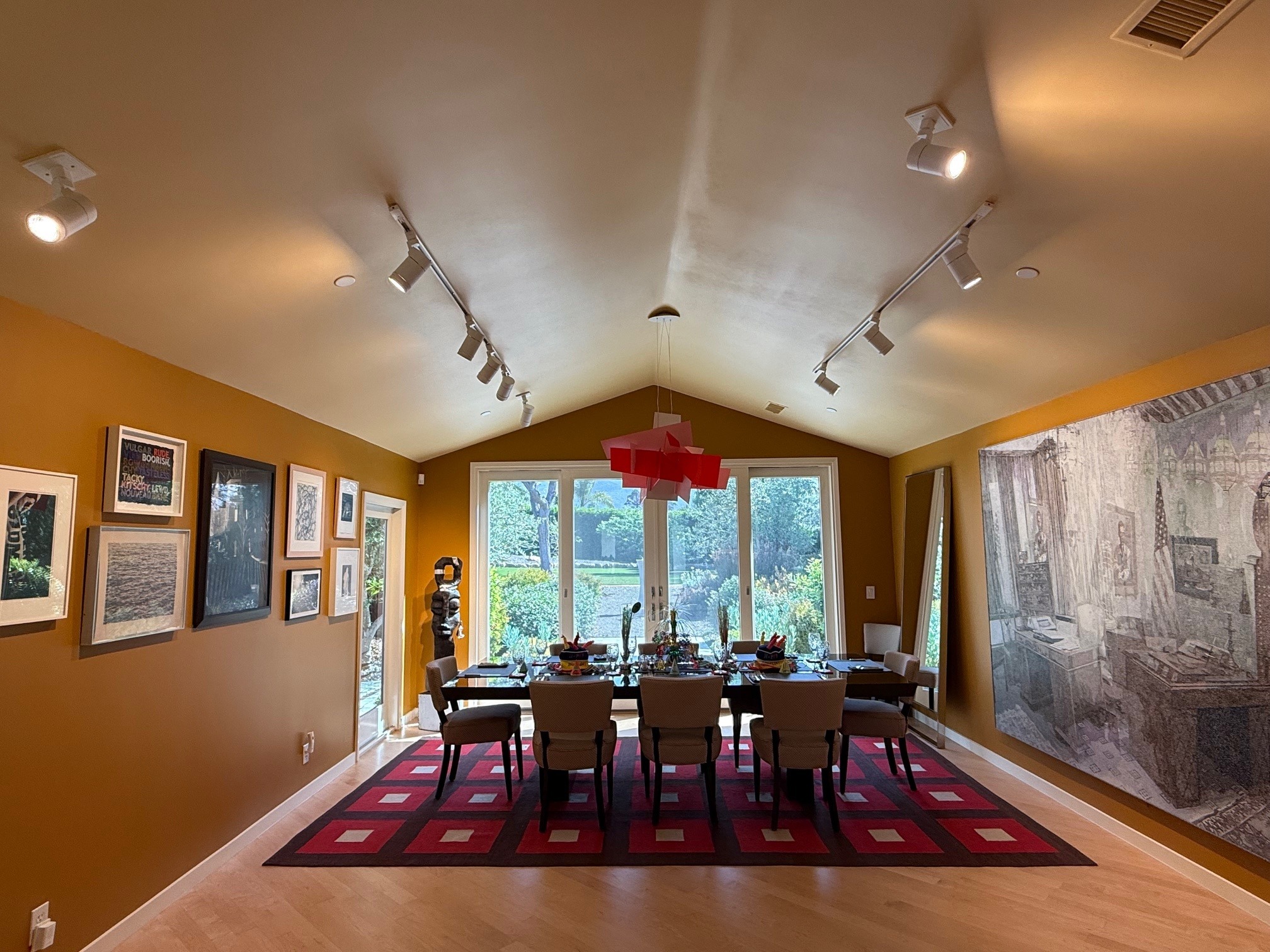
Energy-efficient LED system illuminating exhibition space
Energy efficiency is another defining advantage of LED lights art systems. Galleries and museums operate lighting for extended hours, making efficiency a critical operational consideration.
Energy-efficient LED lighting provides:
Lower electricity consumption
Reduced maintenance costs
Long operational lifespan
Sustainable exhibition lighting
This makes LED lighting both economically and environmentally advantageous.
Can LED Lights Fade Artwork Over Time
While all light exposure contributes to gradual material aging, high-quality LED lights art systems significantly reduce fading risk compared to older lighting technologies. The absence of excessive UV and infrared radiation makes LEDs far more suitable for long-term artwork illumination.
Best practices to prevent fading include:
Controlled lux levels
Limited exposure duration
Use of conservation-grade LEDs
Proper lighting distance from artwork
When implemented correctly, LED lights are considered safe for long-term art preservation.
LED Lights Art as the Modern Standard for Art Illumination
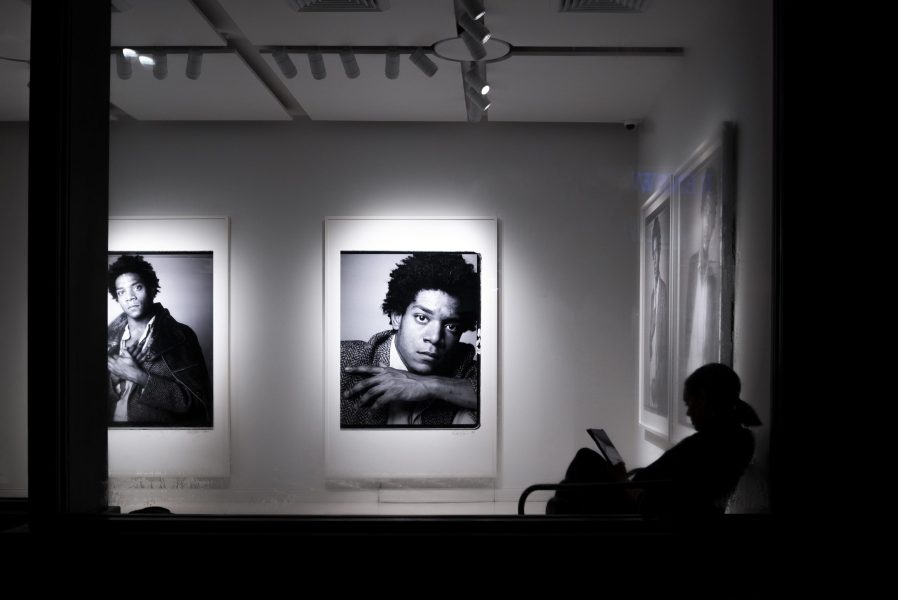
Contemporary gallery illuminated with precision LED system
LED lights art has established itself as the modern benchmark for illuminating artwork across galleries, museums, exhibitions, and collector spaces. Its combination of precision beam control, conservation-safe illumination, architectural flexibility, and energy efficiency makes it uniquely suited to professional art environments.
By enhancing color accuracy, minimising glare, reducing heat output, and supporting refined visual presentation, LED lighting allows artworks to be experienced with clarity, depth, and authenticity. As art institutions and collectors continue to prioritise preservation and presentation quality, LED lights art systems will remain a foundational element in professional art lighting design.
FAQs
1. Are LED lights good for illuminating artwork?
Yes, LED lights are ideal for artwork because they produce low heat, minimal UV radiation, and accurate color rendering.
2. Do LED lights damage artwork over time?
High-quality LEDs are significantly safer than traditional lighting and are widely used in museums for conservation-safe illumination.
3. Can LED lights fade paintings?
LED lights have a much lower risk of fading artwork compared to halogen or fluorescent lighting, especially when lux levels are controlled.
4. What is the best LED lighting for art galleries?
Directional, high CRI LED track lights and precision art lights are considered the best for gallery environments.
5. How many lumens should LED lights for art be?
This depends on artwork sensitivity, but professional displays often use controlled, moderate lumen output rather than excessive brightness.
6. Is backlighting artwork with LED lights effective?
Yes, LED backlighting can create depth and a refined visual presence when used correctly.
7. What color temperature is best for LED art lighting?
Typically 2700K to 3500K is preferred for warm, natural artwork presentation.
8. Are LED spotlights suitable for paintings?
Yes, LED spotlights provide focused illumination and help establish visual hierarchy.
9. Can LED lights be used in museums?
Yes, LED lighting is the global standard in museums due to conservation and efficiency benefits.
10. Do LED lights affect artwork colors?
High CRI LEDs preserve true color appearance and minimise distortion.
11. Should LED lights be placed directly above artwork?
Slightly angled placement is recommended to reduce glare and reflections.
12. Are battery LED art lights suitable for galleries?
They can be used in temporary exhibitions but hardwired systems are preferred for professional installations.
13. What beam angle is best for LED art lighting?
Narrow to medium beam angles are ideal for precise artwork illumination.
14. Are LED lights good for photographing artwork?
Yes, they provide stable and flicker-free lighting for accurate photography.
15. Can LED strip lights be used for art display?
Yes, especially for backlighting and indirect illumination applications.
16. How far should LED lights be from artwork?
Typically positioned to achieve even coverage while avoiding hotspots and glare.
17. Are LED lights energy efficient for galleries?
Yes, they significantly reduce energy consumption compared to traditional lighting systems.
18. Do LED lights create glare on framed artwork?
Poor positioning can cause glare, but proper angling and optics minimise this issue.
19. Are small LED lights suitable for artwork?
Yes, small precision LED fixtures are often used for focused art illumination.
20. Why are LED lights the preferred choice for art lighting today?
Because they combine conservation safety, color accuracy, energy efficiency, and precise control for professional art display.
What Our Clients Are Saying About Our Lighting Systems