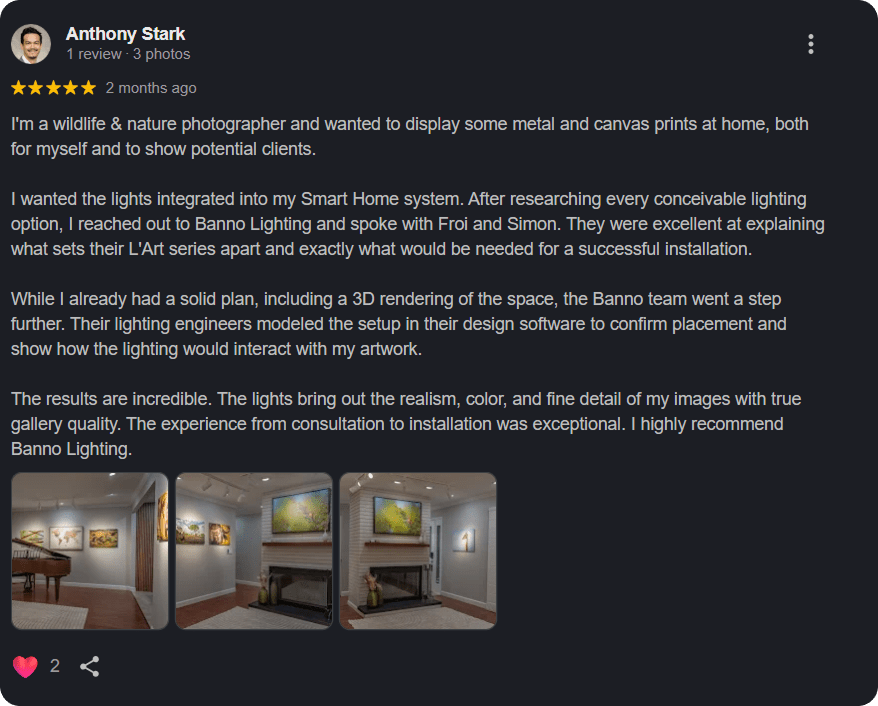
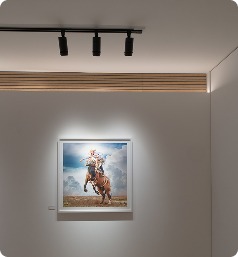
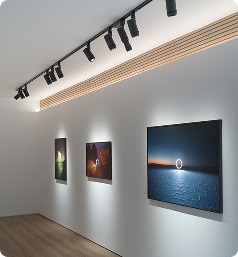
Museum style LED lighting in contemporary gallery
LED lights for art have become the gold standard in modern artwork illumination, offering precision, stability, and conservation-safe performance across galleries, museums, artist studios, and luxury residential interiors. Unlike traditional lighting sources, LED technology provides controlled illumination that enhances color accuracy, texture visibility, and visual depth without exposing artwork to excessive heat or harmful radiation.
For collectors, curators, designers, and artists, choosing the right LED lights for art is not simply about brightness. It involves a careful balance of beam precision, color rendering, placement, and long-term preservation. When properly implemented, LED lighting transforms how artwork is experienced, ensuring clarity, authenticity, and professional presentation.
What a Gallery Owner Says About Our Precision Lighting Systems
Why LED Lights for Art Are the Preferred Standard
LED lights for art are widely used in professional environments because they deliver stable and consistent illumination that supports both visual excellence and artwork preservation. Museums and galleries increasingly rely on LED systems due to their low UV output and thermal efficiency.
Key advantages of LED lights for art include:
- Minimal heat emission for artwork safety
- Long lifespan and reliability
- Energy-efficient operation
- Stable color performance over time
These characteristics make LED lighting suitable for paintings, sculptures, photographs, and mixed media artworks.
LED Lights for Artwork and Color Rendering Accuracy

Fine detail visibility under high CRI illumination
One of the most critical aspects of illuminating artwork is color rendering accuracy. Poor lighting can distort pigments, flatten tonal gradients, and alter the visual intent of the piece. High-quality LED lights for artwork are engineered to maintain accurate color representation and reveal fine artistic details.
High color rendering LED lighting enhances:
- Pigment authenticity
- Subtle tonal transitions
- Texture visibility
- Material richness
This is especially important in fine art collections where even minor color distortion can affect perceived value and artistic integrity.

4.9-star rated by art collectors and gallery professionals
Are LED Lights Safe for Artwork and Paintings
A common concern among collectors is whether LED lights are safe for artwork. Compared to traditional halogen or incandescent lighting, LED lights are significantly safer due to reduced infrared and ultraviolet emissions.
LED lights are considered safe for artwork because they:
- Produce minimal UV radiation
- Generate low heat levels
- Reduce long-term material stress
- Maintain stable illumination conditions
This makes them ideal for delicate artworks such as oil paintings, watercolors, and archival pieces.
Can LED Lights Fade Artwork Over Time

Dimensional lighting enhancing artwControlled brightness preventing pigment fading riskork depth perception
High-quality LED lights for art are designed to minimise fading risks when used correctly. While all light exposure can affect sensitive materials over long periods, conservation-grade LED lighting dramatically reduces the risk compared to older lighting technologies.
To prevent fading:
- Use controlled brightness levels
- Avoid excessive exposure duration
- Select museum-grade LED fixtures
- Maintain appropriate lighting distances
Professional art spaces carefully calibrate illumination to balance visibility and preservation.
LED Track Lighting for Art Gallery and Exhibition Spaces
LED track lighting for art gallery environments is one of the most flexible and effective lighting solutions available. Track systems allow fixtures to be repositioned easily as exhibitions change or collections expand.
Benefits of LED track lighting for art include:
- Adjustable beam direction
- Scalable lighting layouts
- Precision spotlighting for individual artworks
- Clean and professional ceiling integration
This flexibility makes LED track lighting essential for galleries, museums, and evolving exhibition environments.
LED Lighting for Art Studio and Creative Workspaces

High CRI task light improving color evaluation
Artists require reliable lighting conditions to evaluate colors and textures accurately while creating artwork. LED lighting for art studio environments provides consistent and balanced illumination that supports creative precision.
Effective studio LED lighting improves:
- Visual clarity during painting and drawing
- Color consistency in artwork development
- Reduced eye strain during long sessions
- Accurate assessment of tones and contrasts
Neutral and high-CRI LED lighting is particularly valuable in artist studios.
LED Lights for Paintings and Wall Art Displays

Glare free LED picture light above canvas
LED lights for paintings must be carefully positioned to avoid glare, hotspots, and uneven brightness. Directional LED spotlights and picture lights are commonly used to illuminate framed artworks and wall-mounted pieces.
Proper lighting for paintings involves:
- Angled beam positioning
- Even light distribution across the artwork
- Glare reduction techniques
- Consistent illumination intensity
This approach ensures a refined and gallery-quality display.
LED Lighting Behind Artwork and Backlit Effects
LED lighting behind artwork is increasingly used in contemporary and luxury interiors to create depth and visual emphasis. Backlighting enhances the silhouette of artwork while adding a subtle ambient glow.
Backlit LED art lighting is ideal for:
- Modern wall art installations
- Glass and acrylic artworks
- Digital and mixed media pieces
- Architectural art displays
This technique creates a dramatic yet elegant visual presence.
Best LED Lights for Art Gallery and Museum Use
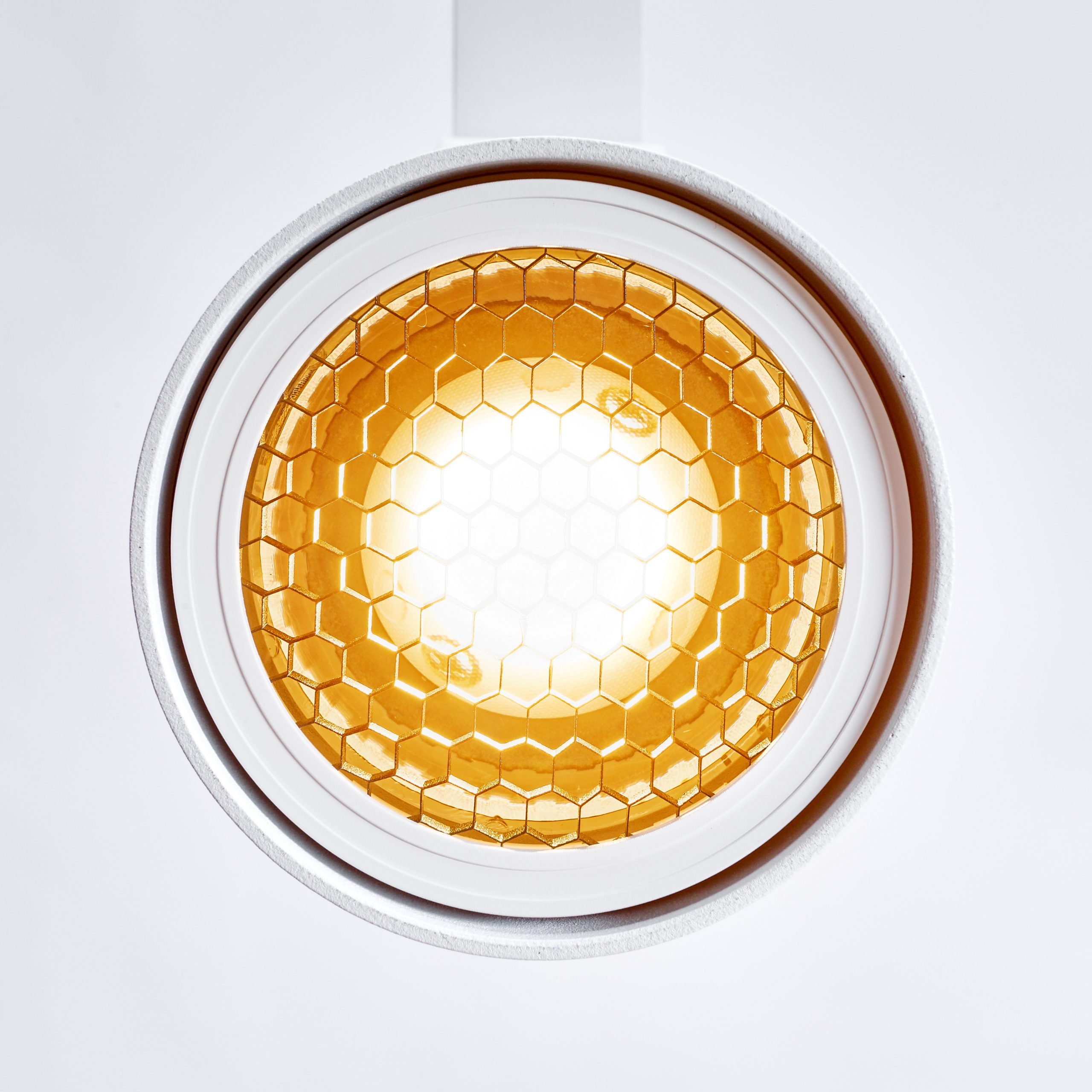
Professional LED fixture with anti glare optics
The best LED lights for art gallery settings are those that offer precision optics, high color rendering, and adjustable beam control. Museums often use specialised LED fixtures that are designed specifically for artwork illumination.
Professional gallery lighting systems prioritise:
- Consistent light output
- Accurate color temperature
- Glare control optics
- Long-term conservation safety
These features ensure artworks are presented at museum-grade standards.
Recessed LED Lighting for Artwork and Architectural Integration
Recessed LED lighting for artwork offers a discreet and architecturally refined solution for illuminating art without visible fixtures. This type of lighting integrates seamlessly into ceilings while maintaining focused illumination.
Advantages of recessed LED art lighting include:
- Minimal visual clutter
- Clean architectural aesthetics
- Precise directional lighting
- Professional gallery-style presentation
This is especially popular in luxury homes and high-end galleries.
LED Spotlights for Artwork and Focal Illumination

Focused LED spotlight creating strong visual hierarchy
LED spotlights for artwork are used to highlight specific pieces and create visual hierarchy within a display space. Spotlights allow curators and designers to guide viewer attention naturally toward key artworks.
Strategic spotlighting enhances:
- Focal point emphasis
- Exhibition storytelling
- Visual depth and contrast
- Structured display composition
This technique is widely used in curated gallery environments.
Wireless and Battery Powered LED Lights for Artwork
Wireless LED lights for artwork provide flexible installation options, particularly in spaces where wiring is limited. Battery powered LED lights are often used in temporary exhibitions and residential art displays.
These lighting systems offer:
- Easy installation
- Flexible positioning
- Portable lighting solutions
- Non-invasive mounting options
They are especially useful for rented spaces and rotating art collections.
Professional Precision Fixtures for LED Art Lighting

Discreet ceiling spotlight maintaining artwork prominence
In high-end art environments, precision fixtures such as Zoom, Deluxe, and Multi are used to deliver refined LED lighting performance. These systems are designed for controlled beam angles, accurate illumination, and adaptable gallery layouts without overwhelming the artwork.
Such precision lighting supports:
- Museum-grade illumination standards
- Flexible display configurations
- Consistent artwork visibility
- Sophisticated curatorial presentation
When used correctly, they enhance the artwork rather than competing with it visually.
How to Light Artwork with LED Lights Correctly
Understanding how to light artwork properly with LED lighting is essential for achieving professional results. Incorrect placement can cause shadows, glare, or uneven illumination.
Best practices include:
- Positioning lights at approximately 30 degrees
- Avoiding direct frontal lighting
- Using high-CRI LED fixtures
- Maintaining consistent spacing between lights and artwork
This ensures balanced illumination that enhances visual clarity and depth.

LED Lights for Art Display in Luxury Residential Spaces

Residential gallery style LED art installation
In private collections and luxury interiors, LED lights for art help transform living spaces into gallery-like environments. Carefully designed art lighting elevates both the artwork and the overall interior atmosphere.
Residential LED art lighting enhances:
- Interior sophistication
- Artwork prominence
- Spatial ambiance
- Collector-level presentation quality
This approach is increasingly popular among art collectors and designers.
Long-Term Value of LED Lights for Art

Durable lighting preserving artwork over years
Investing in high-quality LED lights for art provides long-term benefits in both presentation and preservation. Professional lighting systems ensure artworks remain visually striking while maintaining conservation-safe conditions over time.
Long-term benefits include:
- Reduced maintenance requirements
- Energy-efficient operation
- Consistent lighting performance
- Enhanced artwork longevity
Ultimately, LED lights for art represent the most refined and reliable solution for illuminating artwork across galleries, museums, studios, and collector spaces. By combining precision illumination, conservation-safe technology, and adaptable design, LED lighting allows artworks to be experienced with clarity, depth, and authenticity while preserving their visual integrity for years to come.
20 FAQs
1. Are LED lights good for art?
Yes, LED lights are ideal for art because they provide stable, low-heat illumination.
2. Do LED lights damage paintings?
High-quality LED lights produce minimal UV and heat, making them safe for paintings.
3. What are the best LED lights for artwork?
High-CRI directional LED spotlights and track lights are best for artwork.
4. Can LED lights fade artwork?
Fading risk is low with museum-grade LEDs when used at controlled brightness levels.
5. Are LED lights safe for galleries?
Yes, galleries and museums widely use LED lighting for conservation and accuracy.
6. What color temperature is best for art lighting?
Typically 3000K to 3500K provides natural and accurate color rendering.
7. Should artwork be lit with spotlights or ambient light?
A combination of focused spotlights and soft ambient lighting works best.
8. How far should LED lights be from artwork?
Distance depends on beam angle, but controlled spacing prevents glare and hotspots.
9. Are wireless LED lights suitable for artwork?
Yes, wireless LED lights are useful for flexible and temporary art displays.
10. What is high CRI lighting for art?
High CRI lighting accurately reproduces the true colors of artwork.
11. Can LED strip lights be used for art?
Yes, but they are best for backlighting rather than primary artwork illumination.
12. Is recessed LED lighting good for artwork?
Yes, recessed LED lighting offers clean and precise architectural illumination.
13. Why do museums use LED lighting for art?
Because it protects artwork while maintaining accurate visual presentation.
14. Are LED picture lights effective for wall art?
Yes, LED picture lights provide focused and elegant illumination for wall-mounted art.
15. What lumen level is ideal for art lighting?
Most artworks are illuminated between 150 and 300 lux depending on sensitivity.
16. Can LED lighting improve art presentation?
Yes, proper LED lighting enhances depth, texture, and visual clarity.
17. What type of LED lighting is best for art galleries?
Track lighting and precision spotlights are commonly used in galleries.
18. Is backlighting artwork with LEDs a good idea?
Yes, backlighting can create depth and a modern visual effect.
19. How do you reduce glare with LED art lighting?
Use angled fixtures and anti-glare optics to minimise reflections.
20. What is the most professional lighting for art displays?
Precision LED track lighting and museum-grade art fixtures provide the highest professional standard.
What Our Clients Are Saying About Our Lighting Systems