Introduction: What is LED Museum Lighting?

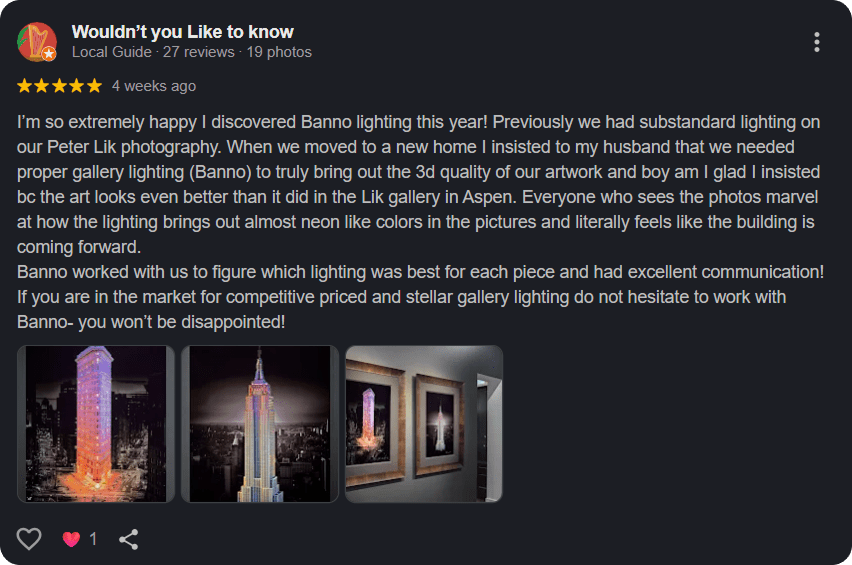
Controlled beam highlighting artifact inside modern gallery
LED museum lighting refers to specialized lighting systems designed to illuminate museum exhibits, artwork, artifacts, and gallery displays with precision, color accuracy, and conservation safety. Unlike standard commercial lighting, museum lighting must balance visibility, preservation, and aesthetic presentation.
Modern museums, galleries, and exhibition spaces rely heavily on LED museum lighting because it offers controlled illumination, low heat output, high color rendering, and long-term stability. These features are essential when lighting sensitive artwork, historical objects, and curated exhibitions.
From large museum installations to private galleries and high-end art collections, LED museum display lighting has become the global standard for professional art and exhibit illumination.
Why LED Museum Lighting is the Industry Standard

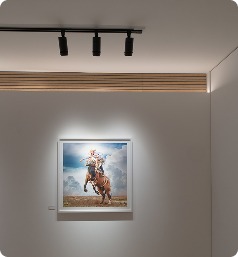
High CRI lighting enhancing accurate exhibit colors
Traditional lighting technologies such as halogen and incandescent fixtures are no longer suitable for museums due to their heat output and UV emissions. LED museum lighting has replaced these systems because it provides safer and more efficient illumination for exhibits.
Key reasons museums use LED lighting:
- Low heat emission for artifact preservation
- Minimal UV and infrared radiation
- High CRI for accurate color rendering
- Long lifespan and energy efficiency
- Precise beam control for exhibits
These advantages make LED lighting the preferred solution for museum lighting design worldwide.

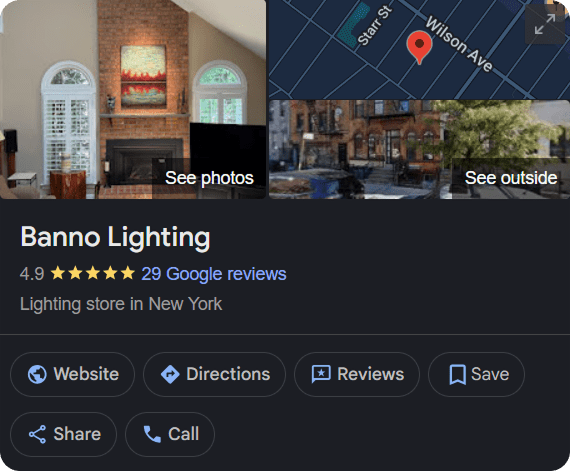
4.9-Star Google Review for Our Art Lighting Solutions
LED Museum Display Lighting: Core Principles for Exhibits and Artifacts

Even illumination across enclosed glass exhibit case
Museum display lighting must be carefully engineered to highlight exhibits while protecting delicate materials. LED museum display lighting systems are designed to provide controlled illumination without damaging artwork or artifacts.
Core display lighting principles:
- Focused directional lighting for key exhibits
- Even illumination across display cases
- Low brightness for sensitive artifacts
- Glare reduction for glass enclosures
This approach ensures both visual clarity and long-term preservation.
Museum Lighting Design: Professional Planning Framework
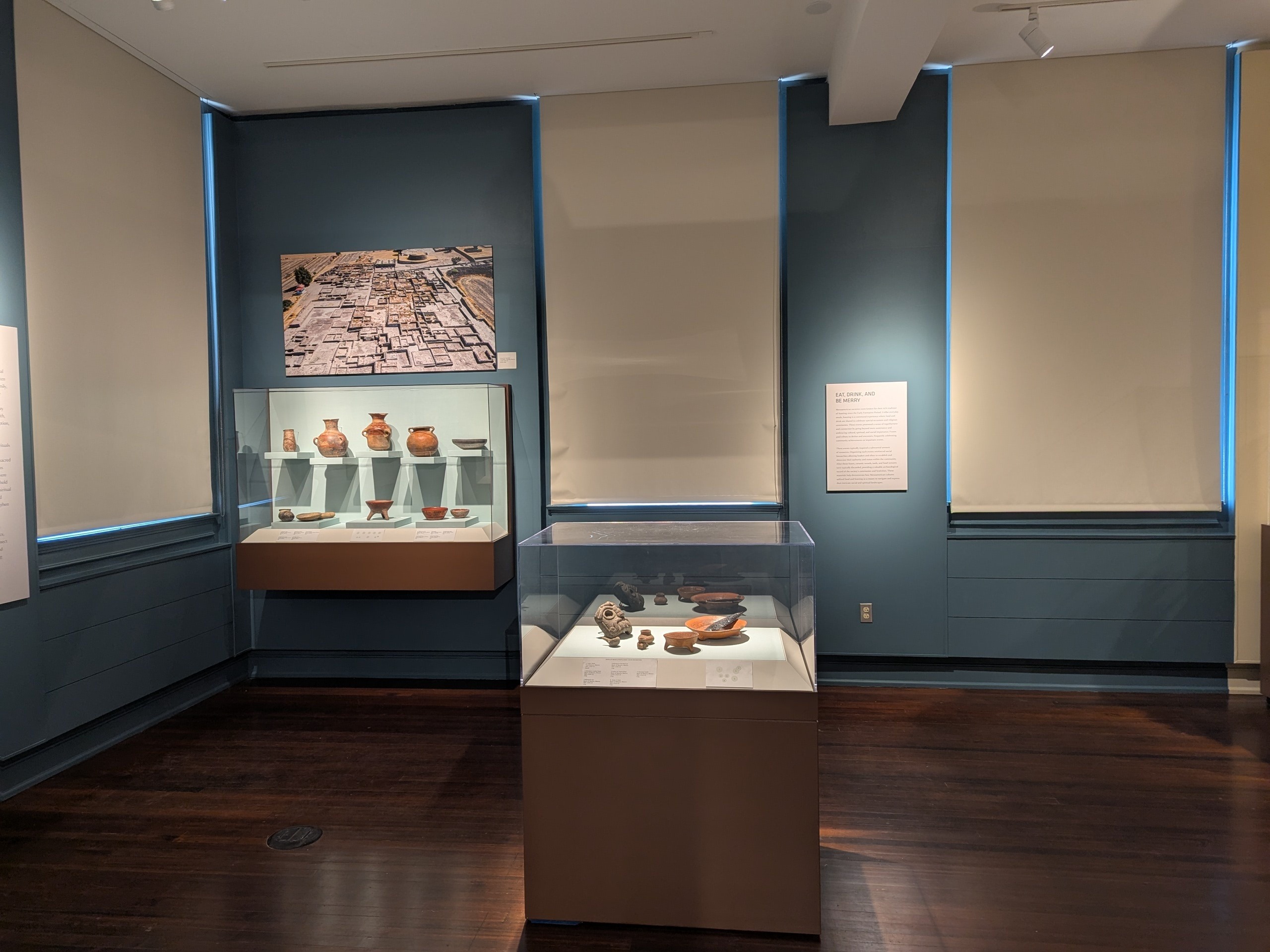
Architectural integration of LED fixtures in museum
Museum lighting design is a strategic process that integrates architectural lighting, display lighting, and conservation standards. Lighting designers, curators, and architects collaborate to create a balanced and immersive exhibition environment.
Key stages of museum lighting design:
- Identify exhibit sensitivity and materials
- Define lighting zones and focal points
- Select appropriate LED fixtures
- Calibrate beam angles and brightness
- Ensure conservation-safe lighting levels
Proper design ensures exhibits remain visually engaging while meeting preservation guidelines.
Lighting for Museum Exhibits: Different Exhibit Types and Lighting Needs

Directional beams shaping sculpture depth and shadows
Artwork and Paintings
Paintings require high CRI LED lighting with controlled beam angles to enhance color accuracy and surface detail without creating glare.
Historical Artifacts
Artifacts made from textiles, paper, or organic materials require low-intensity LED lighting to prevent deterioration over time.
Sculptures and Installations
Three-dimensional exhibits benefit from directional LED spotlights that enhance depth and texture.
Interactive Displays
Modern museum exhibits often use dynamic LED lighting systems to create immersive visitor experiences.
LED Art Gallery Lighting vs LED Museum Lighting
Although closely related, LED art gallery lighting and museum lighting serve slightly different purposes.
LED Art Gallery Lighting
- Focus on visual impact and presentation
- Adjustable lighting for rotating artwork
- Higher brightness levels for public viewing
LED Museum Lighting
- Strong emphasis on conservation and preservation
- Controlled illumination levels
- Strict lighting guidelines for sensitive exhibits
Both systems rely on high-quality LED lighting technology with precise optical control.
Museum Lighting Guidelines and Conservation Standards
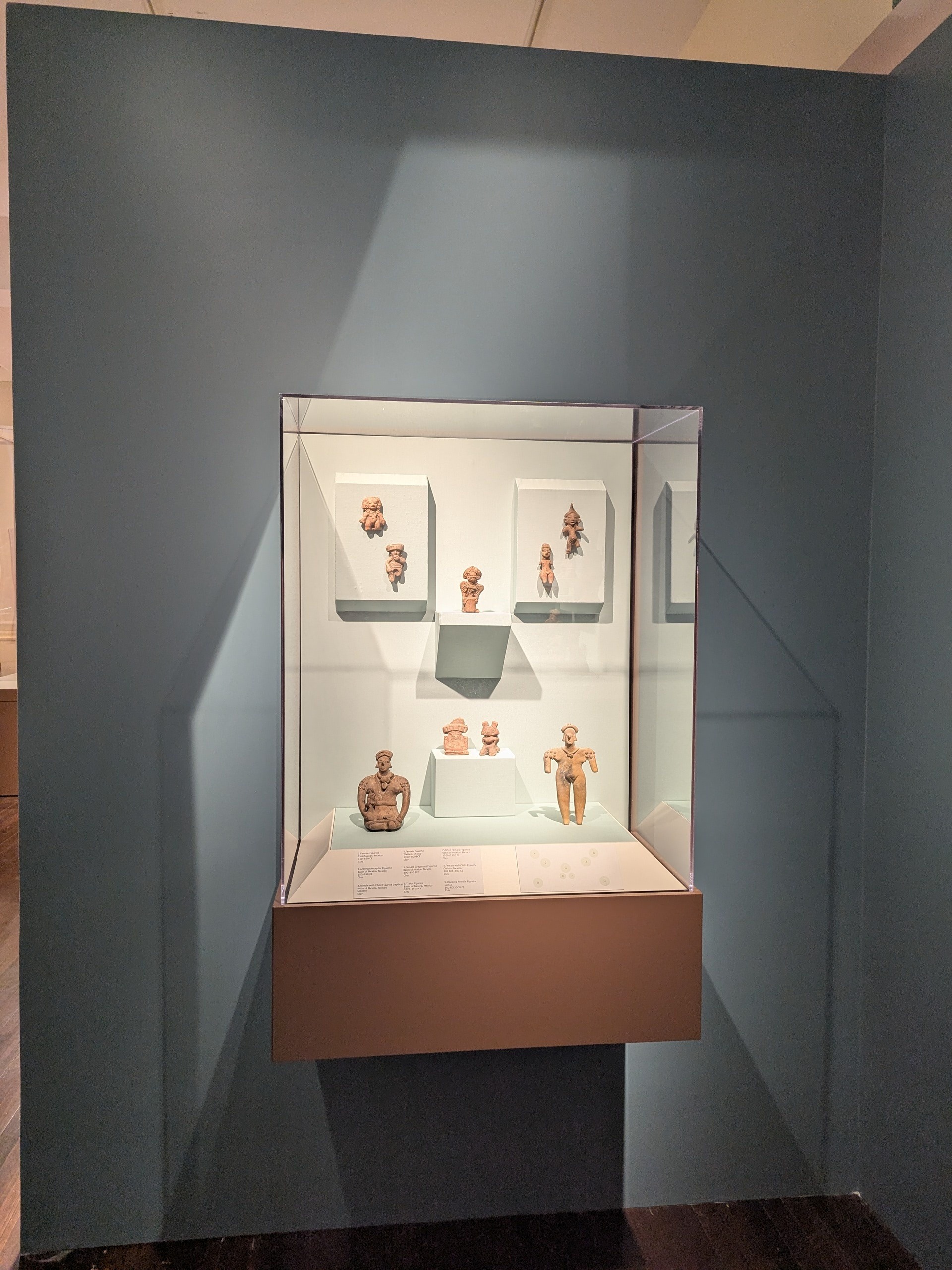
Stable color temperature maintaining exhibit consistency
Museums follow strict lighting guidelines to protect exhibits from light-related damage. LED museum lighting must comply with conservation standards, especially for light-sensitive materials.
Important museum lighting guidelines:
- Use low UV LED fixtures
- Limit light exposure for sensitive artifacts
- Maintain stable color temperature
- Control brightness levels using dimmable systems
These guidelines ensure long-term preservation of valuable collections.
LED Exhibition Lighting in Museums and Cultural Spaces
LED exhibition lighting plays a major role in temporary exhibitions, traveling exhibits, and curated installations. Unlike permanent museum lighting, exhibition lighting must be flexible and adaptable.
Key characteristics of LED exhibition lighting:
- Adjustable track lighting systems
- Modular spotlight configurations
- Dimmable brightness control
- Flexible beam direction
This allows curators to reconfigure lighting layouts for new exhibitions without major infrastructure changes.
LED Track Lighting for Art Galleries and Museums

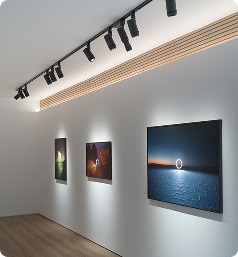
Track-mounted spotlight aligned along gallery ceiling
LED track lighting is one of the most widely used lighting systems in museums and galleries due to its flexibility and precision.
Advantages of LED track lighting:
- Adjustable fixture positioning
- Scalable lighting layout
- Ideal for rotating exhibitions
- Clean and professional aesthetic
Track lighting allows museums to spotlight individual exhibits while maintaining consistent ambient lighting.
Color Temperature in LED Museum Lighting
Color temperature significantly affects how exhibits and artwork appear under lighting. Selecting the correct Kelvin rating is essential for museum display lighting.
Recommended color temperatures:
- 2700K to 3000K: Warm lighting for classical artwork
- 3000K to 3500K: Standard museum and gallery lighting
- 4000K: Contemporary exhibitions and modern displays
Consistency in color temperature across exhibits ensures visual harmony within the museum space.
Glare Control and Visual Comfort in Museum Lighting

Diffused LED lighting improving visitor comfort
Glare reduction is a critical component of museum lighting design. Poor glare control can cause reflections on glass display cases and framed artwork, reducing visibility and visitor comfort.
Effective glare control strategies:
- Anti-glare LED optics
- Proper fixture placement angles
- Diffused lighting for display cases
- Controlled brightness levels
Professional LED museum lighting systems are engineered to minimize glare while maintaining clear exhibit visibility.
DALI Lighting Control in Museum Lighting Systems
DALI (Digital Addressable Lighting Interface) lighting control is commonly used in museums to manage complex lighting systems with precision.
Benefits of DALI lighting control:
- Individual fixture dimming
- Programmable lighting scenes
- Energy efficiency optimization
- Centralized lighting management
This technology allows museums to adjust lighting based on exhibit requirements and conservation needs.
Energy Efficiency and Sustainability in LED Museum Lighting

Sustainable lighting reducing operational costs
Sustainability is a growing priority in modern museum lighting design. LED museum lighting significantly reduces energy consumption compared to traditional lighting systems.
Sustainability benefits:
- Reduced electricity usage
- Lower maintenance costs
- Long-lasting LED modules
- Environmentally friendly lighting solutions
This makes LED lighting ideal for large museums and exhibition halls operating for extended hours.
LED Gallery Lighting Integration Within Museum Spaces
Many museums incorporate gallery-style lighting within their exhibition layouts. LED gallery lighting enhances artwork presentation while maintaining museum conservation standards.
Common integration strategies:
- Spotlighting key artwork
- Wall washing for gallery displays
- Accent lighting for sculptures
- Ambient lighting for navigation
This layered lighting approach creates a professional and immersive visitor experience.
Museum Display Case Lighting Using LED Technology

Even illumination preventing heat buildup in display
Display case lighting is one of the most sensitive aspects of museum lighting. LED display case lights must provide illumination without increasing heat or damaging artifacts.
Best practices for display case lighting:
- Low-lumen LED strips or mini spotlights
- Even light distribution
- Low heat emission fixtures
- UV-safe LED modules
Proper display lighting preserves artifacts while enhancing visibility for visitors.
Lighting Legal Requirements and Safety Considerations
Museum lighting systems must comply with safety and electrical standards, especially in public exhibition environments.
Key compliance considerations:
- Fire-safe lighting fixtures
- Secure electrical installations
- Emergency lighting integration
- Load management for large lighting systems
LED lighting systems are widely used because they meet modern safety and efficiency standards.
Future Trends in LED Museum Lighting Technology

Ultra-high CRI spotlight for precision rendering
Museum lighting technology continues to evolve with advancements in LED engineering and smart lighting systems.
Emerging trends include:
- Smart adaptive LED lighting
- Wireless museum lighting systems
- Ultra-high CRI museum fixtures
- Precision optical lens technology
- Dynamic exhibition lighting environments
These innovations allow museums and galleries to create more immersive and flexible exhibition spaces.
Advanced LED Museum Lighting Strategy for Exhibits, Galleries, and Cultural Institutions
LED museum lighting is not only about illuminating exhibits. It is a highly specialized discipline that combines conservation science, architectural lighting design, and visual storytelling. Museums, galleries, and exhibition designers rely on precision LED lighting systems to ensure that every artifact, artwork, and display is presented with clarity while remaining protected from long-term light damage.
A well-designed LED museum lighting system enhances visitor engagement, improves exhibit readability, and elevates the overall institutional presentation.
Layered LED Museum Lighting: The Professional Approach

Accent beam creating visual hierarchy in exhibition
Professional museums do not rely on a single lighting source. Instead, they use a layered lighting methodology that balances visibility, preservation, and aesthetics.
Ambient Museum Lighting
Ambient lighting provides overall illumination throughout exhibition halls, corridors, and visitor pathways. It ensures safe navigation without overpowering display lighting.
LED Museum Display Lighting (Primary Focus)
This is the core lighting directed at exhibits, artwork, and display cases. It highlights key pieces while maintaining conservation-safe brightness levels.
Accent Lighting for Exhibits
Accent lighting is used to emphasize focal artifacts, sculptures, or featured installations. This creates visual hierarchy and enhances storytelling within exhibitions.
Layered lighting ensures exhibits remain the visual focal point while maintaining a comfortable viewing environment.
LED Museum Lighting for Different Museum Departments
Fine Art Galleries
Fine art sections require high-CRI LED gallery lighting to accurately render colors, textures, and brushstrokes. Adjustable track lighting and spotlights are commonly used.
Historical and Archaeological Exhibits
These exhibits often contain fragile materials such as paper, textiles, and organic artifacts. Low-lux LED museum display lighting is essential to prevent degradation.
Science and Interactive Museums
Interactive exhibits use flexible LED exhibition lighting systems that combine functionality with immersive visual effects.
Sculpture and Installation Spaces
Directional LED spotlights and layered lighting techniques are used to enhance depth, shadows, and three-dimensional perception.
LED Museum Lighting and Lux Levels for Exhibit Protection

Dimmable spotlight maintaining conservation standards
Museums follow strict illumination limits, measured in lux, to protect sensitive exhibits from light exposure.
Typical museum lighting lux guidelines:
- Extremely sensitive artifacts (paper, textiles): 50 lux or lower
- Moderately sensitive exhibits: 50 to 150 lux
- Durable objects (metal, stone): 150 to 300 lux
LED lighting allows precise dimming and control to maintain safe lux levels while ensuring clear visibility.
LED Lighting for Museum Display Cases and Glass Enclosures
Display cases require specialized LED museum display lighting to prevent glare, reflections, and heat buildup.
Best practices for display case lighting:
- Use low-profile LED strip lighting
- Integrate concealed mini spotlights
- Maintain even illumination across the case
- Avoid direct reflections on glass surfaces
Proper display lighting ensures artifacts remain visible without compromising preservation.
LED Museum Lighting and Visitor Flow Design

Illuminated pathway guiding museum navigation
Lighting plays a major role in guiding visitor movement throughout exhibition spaces. Strategic LED lighting placement can subtly direct attention and improve navigation.
Visitor flow lighting strategies:
- Brighter lighting on key exhibits
- Softer lighting in transition areas
- Highlighted pathways for orientation
- Balanced illumination for informational displays
This approach enhances the overall visitor experience while maintaining a structured exhibition layout.
LED Museum Lighting Maintenance and Long-Term Reliability

Long-life LED module installed in gallery
Museums operate for extended hours and require lighting systems with long-term reliability. LED museum lighting significantly reduces maintenance compared to traditional lighting systems.
Maintenance advantages:
- Long LED lifespan (tens of thousands of hours)
- Minimal bulb replacements
- Stable brightness performance
- Lower operational downtime
This reliability is essential for large institutions and permanent exhibitions.
Smart LED Museum Lighting and Automation Systems
Modern museums increasingly integrate smart lighting control systems to enhance efficiency and adaptability. Automated LED lighting systems allow curators to adjust illumination based on exhibition changes and conservation requirements.
Common smart lighting features:
- Programmable dimming schedules
- Scene-based lighting control
- Sensor-based illumination adjustments
- Centralized lighting management systems
These technologies improve operational efficiency and support conservation standards.
LED Museum Lighting for Temporary and Traveling Exhibitions

Adjustable track lighting in temporary gallery
Temporary exhibitions require flexible lighting systems that can be installed, adjusted, and reconfigured quickly.
Key requirements for temporary exhibition lighting:
- Adjustable LED track lighting
- Portable exhibition spotlights
- Modular lighting layouts
- Easy repositioning for changing displays
LED exhibition lighting systems are ideal for traveling exhibits due to their lightweight design and energy efficiency.
LED Museum Lighting vs Traditional Museum Lighting Systems
Traditional museum lighting systems relied heavily on halogen and incandescent fixtures, which generated excessive heat and consumed large amounts of energy. LED museum lighting offers a superior alternative.
Comparison highlights:
- Lower heat emission for artifact safety
- Greater energy efficiency
- Improved color rendering accuracy
- Longer lifespan and reduced maintenance
- Enhanced dimming and control capabilities
This transition to LED lighting has significantly improved both preservation and presentation standards in modern museums.
LED Museum Lighting for Large Exhibition Halls and Open Spaces

Track-mounted spotlights covering wide exhibition area
Large exhibition halls require scalable LED lighting systems capable of providing consistent illumination across wide areas without compromising exhibit focus.
Key lighting solutions:
- High-output LED track lighting systems
- Ceiling-mounted adjustable spotlights
- Wall wash lighting for large displays
- Zoned lighting control systems
Scalable LED lighting ensures visual consistency across expansive exhibition environments.

Future Innovations in LED Museum Lighting Design

Precision optical lens improving beam control
Advancements in LED technology continue to shape the future of museum and gallery lighting. Institutions are increasingly adopting innovative lighting solutions to enhance exhibit presentation and sustainability.
Emerging innovations include:
- Tunable white LED lighting for adaptive exhibitions
- Ultra-high CRI museum lighting fixtures
- Wireless and modular LED lighting systems
- Interactive lighting environments
- Precision optical lens engineering
These developments allow museums to create more immersive and conservation-safe exhibition experiences.
FAQ: LED Museum Lighting, Museum Display Lighting, and Gallery Lighting
1. What is LED museum lighting?
LED museum lighting is a specialized lighting system designed to illuminate exhibits and artwork while protecting them from heat and UV damage.
2. Why do museums use LED lighting?
Museums use LED lighting because it produces low heat, high color accuracy, and minimal UV emissions, making it safe for sensitive exhibits.
3. What is LED museum display lighting?
LED museum display lighting refers to controlled illumination used in display cases, galleries, and exhibit installations.
4. What lux level is recommended for museum lighting?
Sensitive artifacts typically require lighting levels below 50 lux, while durable objects can be displayed under higher illumination.
5. Is LED lighting safe for historical artifacts?
Yes, high-quality LED lighting is considered safe due to its low UV and infrared output.
6. What color temperature is best for museum lighting?
3000K to 3500K is commonly used for galleries and museum exhibits to maintain accurate color representation.
7. Do museums use track lighting?
Yes, LED track lighting is widely used in museums due to its flexibility and adjustable directional control.
8. What is the difference between museum lighting and gallery lighting?
Museum lighting prioritizes conservation, while gallery lighting focuses more on visual presentation and flexibility.
9. Can LED lighting damage artwork?
Properly specified LED lighting does not damage artwork and is safer than traditional lighting technologies.
10. What is DALI lighting control in museums?
DALI is a digital lighting control system that allows precise dimming and management of individual lighting fixtures.
11. How do museums reduce glare on exhibits?
Museums use anti-glare optics, controlled beam angles, and diffused lighting techniques.
12. Are LED lights energy efficient for museums?
Yes, LED lighting significantly reduces energy consumption and operational costs.
13. What lighting is used in museum display cases?
Low-lumen LED strips and mini spotlights are commonly used for display case lighting.
14. How long do LED museum lights last?
Most LED museum lighting systems last tens of thousands of hours with minimal maintenance.
15. Can museum lighting be dimmable?
Yes, dimmable LED systems are essential for conservation and adaptive exhibit lighting.
16. What is LED exhibition lighting?
LED exhibition lighting is flexible lighting used for temporary exhibitions and rotating displays.
17. Do museums use smart lighting systems?
Many modern museums use automated and programmable LED lighting systems.
18. What CRI is recommended for museum lighting?
A CRI of 90 to 97+ is recommended for accurate color rendering.
19. How does lighting affect museum visitor experience?
Proper lighting enhances visibility, engagement, and overall exhibit appreciation.
20. What are the main types of museum lighting?
Ambient lighting, display lighting, accent lighting, and track lighting systems.
21. Is LED gallery lighting suitable for museums?
Yes, LED gallery lighting is commonly integrated within museum exhibition spaces.
22. Can LED lighting be customized for exhibitions?
Yes, modern LED systems allow customization of brightness, beam angle, and color temperature.
23. Why is low heat lighting important in museums?
Low heat prevents damage to sensitive materials such as paper, textiles, and paintings.
24. What is layered museum lighting?
Layered lighting combines ambient, display, and accent lighting for balanced illumination.
25. Are LED lights used in large exhibition halls?
Yes, scalable LED lighting systems are ideal for large museum and exhibition environments.
Conclusion: Why LED Museum Lighting Defines Modern Exhibition and Gallery Spaces

Balanced exhibit lighting elevating visitor experience
LED museum lighting has revolutionized how museums, galleries, and exhibition spaces illuminate artwork and cultural exhibits. Its ability to provide precise illumination, high color accuracy, low heat emission, and energy efficiency makes it the ideal lighting solution for modern museum environments.
By integrating LED museum display lighting, exhibition lighting systems, and gallery lighting design, institutions can achieve professional, conservation-safe illumination that enhances visitor experience while protecting valuable collections. Whether used in permanent museum installations or rotating exhibitions, LED museum lighting remains the gold standard for exhibit presentation, preservation, and visual excellence.
Real Feedback from Art Collectors