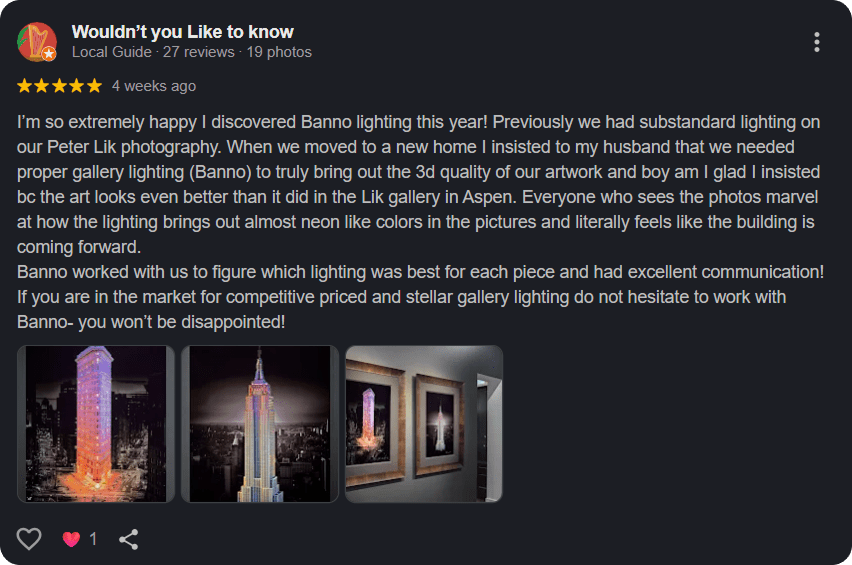
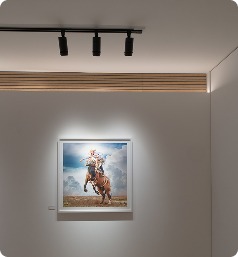
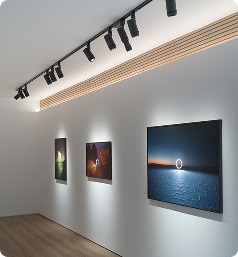
Evenly lit gallery wall creating cohesive professional presentation
Lighting for gallery wall displays is one of the most important yet overlooked elements in professional art presentation. Whether in galleries, collector homes, museums, or refined interiors, a well-lit gallery wall transforms a simple arrangement of artwork into a cohesive visual experience. Proper lighting for gallery wall installations enhances clarity, depth, and visual hierarchy while ensuring that each artwork is presented with precision and balance.
Unlike general room lighting, gallery wall lighting must be intentional, directional, and refined. The goal is not just to illuminate the wall, but to reveal each piece of art with accurate color, controlled brightness, and minimal glare.
Gallery Lighting Testimonial: Professional Review of Our Display Fixtures
Why Lighting for Gallery Wall Displays Matters
A gallery wall often contains multiple artworks, photographs, or framed pieces arranged together. Without proper lighting, some artworks may appear dim while others become overly dominant due to uneven illumination.
Professional lighting for gallery wall setups ensures:
- Consistent brightness across all artworks
- Balanced visual presentation
- Enhanced artwork visibility
- Improved depth and texture perception
This approach is widely used in art galleries and high-end residential interiors to create curated and visually cohesive displays.
Best Lighting for Gallery Wall in Professional Art Spaces

Adjustable spotlights providing accurate color rendering for artwork
The best lighting for gallery wall environments combines precision, flexibility, and subtlety. Rather than using harsh overhead lighting, professionals rely on directional and adjustable lighting systems that highlight each artwork evenly.
Effective gallery wall lighting should:
- Provide controlled and even illumination
- Maintain accurate color rendering
- Minimise glare on framed pieces
- Create visual harmony across the wall
This ensures that no single artwork appears overly bright or visually disconnected from the rest of the display.

4.9-star rated by art collectors and gallery professionals
Track Lighting for Gallery Wall Flexibility
Track lighting for gallery wall installations is one of the most widely used solutions in galleries and exhibitions. Track systems allow lights to be repositioned easily, making them ideal for evolving art collections and changing wall arrangements.
Track lighting offers:
- Adjustable beam direction
- Scalable lighting layouts
- Precise spotlighting for individual artworks
- Long-term flexibility for rotating displays
This makes track lighting particularly suitable for collectors and curators who regularly update their gallery walls.
Lighting Above Gallery Wall and Beam Positioning
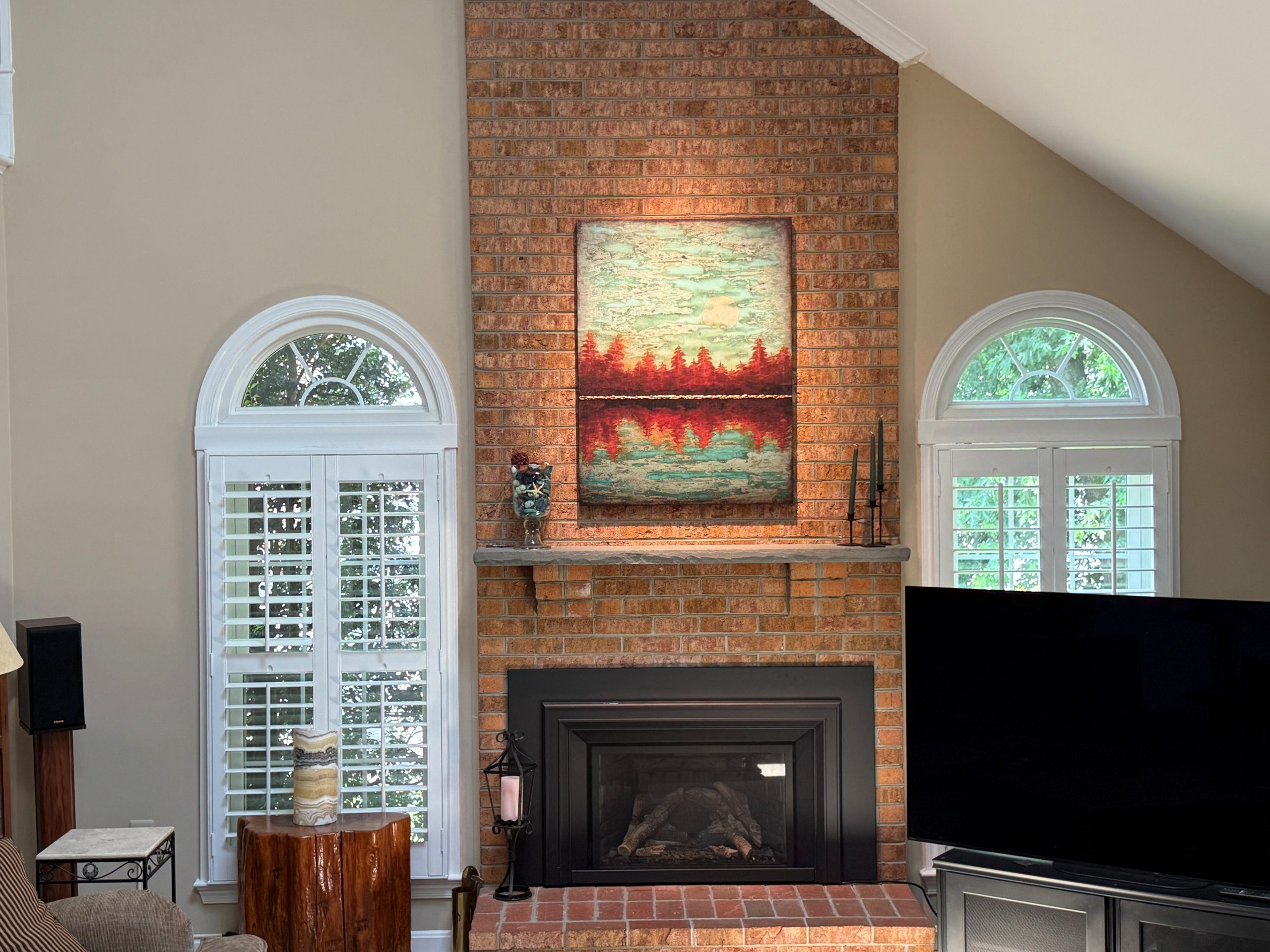
Angled ceiling lights minimizing reflection on framed artwork
Lighting above gallery wall arrangements must be carefully positioned to avoid glare and uneven shadows. Lights should typically be placed slightly in front of the artwork rather than directly overhead to achieve even surface illumination.
Proper lighting placement improves:
- Visibility of artwork details
- Reduction of reflective glare
- Even brightness distribution
- Comfortable viewing angles
This method aligns with professional art lighting standards used in museums and exhibition spaces.
Picture Lights for Gallery Wall Displays
Picture lights for gallery wall installations provide a refined and focused lighting solution for individual artworks within a larger display. These lights are often mounted above frames and deliver direct illumination onto each piece.
Picture lighting enhances:
- Framed artwork clarity
- Individual artwork emphasis
- Controlled and elegant presentation
- Balanced lighting across multiple pieces
This approach is commonly used in collector homes and curated interior spaces.
Lighting for Pictures on Wall and Visual Consistency

Consistent color temperature maintaining visual harmony
Lighting for pictures on wall arrangements requires consistency in brightness and color temperature to maintain visual harmony. Inconsistent lighting can make certain artworks appear more dominant while others recede into the background.
Consistent gallery wall lighting ensures:
- Uniform illumination across frames
- Smooth visual transitions between artworks
- Professional display aesthetics
- Enhanced overall cohesion
This is especially important for gallery walls containing mixed artwork sizes and mediums.
Wall Lights for Gallery Wall and Ambient Balance
Wall lights for gallery wall installations can complement directional lighting by adding soft ambient illumination. While accent lighting highlights individual artworks, ambient wall lighting enhances the surrounding environment.
Ambient lighting contributes to:
- Reduced contrast between artworks and walls
- Improved spatial balance
- Enhanced viewing comfort
- A refined gallery-style atmosphere
Layered lighting is often used in professional art environments to create depth and sophistication.
Lighting for Paintings on Wall and Texture Enhancement

Highlighted canvas texture enhancing pigment depth
Paintings benefit significantly from properly angled lighting. Lighting for paintings on wall displays should reveal brushstrokes, textures, and pigment depth without creating harsh shadows or hotspots.
Directional lighting enhances:
- Surface texture visibility
- Color richness
- Artistic detail clarity
- Dimensional perception
This is particularly important for oil paintings and textured contemporary artworks.
Professional Gallery Wall Lighting with Zoom, Deluxe, and Multi
In refined gallery wall lighting systems, specialised art lighting fixtures such as Zoom (precision art lighting), Deluxe (museum-grade lighting), and Multi (flexible gallery lighting) provide targeted illumination while maintaining a discreet and professional aesthetic. These fixtures are designed to deliver controlled beam precision, consistent color rendering, and adaptable lighting for multi-art displays.
Their integration into gallery wall lighting setups supports museum-level presentation while preserving the visual balance of the overall display.
LED Lights for Pictures on Wall and Modern Art Displays

Energy-efficient LED spotlight illuminating framed photography
LED lighting is widely used for gallery wall displays due to its stability, energy efficiency, and conservation-friendly performance. LED lights for pictures on wall installations provide consistent illumination without excessive heat or UV exposure.
Benefits of LED gallery wall lighting include:
- Long-term reliability
- Low heat emission
- Stable brightness levels
- Safe illumination for delicate artworks
This makes LED lighting ideal for both galleries and collector homes.
Lighting Over Gallery Wall and Visual Hierarchy
Lighting over gallery wall arrangements can be used strategically to create visual hierarchy. By subtly adjusting brightness and beam focus, certain artworks can be emphasised while maintaining overall balance across the wall.
This approach helps:
- Guide viewer attention naturally
- Highlight focal artworks
- Support curated storytelling
- Enhance exhibition structure
Professional galleries frequently use this technique to improve viewer engagement.
How to Light a Gallery Wall for Museums and Collector Homes

Neutral color temperature ensuring authentic artwork tones
To light a gallery wall effectively, a layered lighting strategy is recommended. This includes directional accent lighting, balanced ambient lighting, and carefully positioned overhead illumination.
A professional gallery wall lighting setup typically involves:
- Directional spotlights for individual artworks
- Even spacing between lighting fixtures
- Neutral and consistent color temperature
- Controlled brightness levels
This ensures artwork is presented clearly and cohesively in both institutional and residential settings.
Long-Term Value of Proper Lighting for Gallery Wall Displays
Investing in high-quality lighting for gallery wall installations provides long-term aesthetic and functional value. Proper lighting enhances artwork visibility, protects visual integrity, and creates a refined viewing environment that elevates both the artwork and the interior space.
Whether used in galleries, museums, or collector homes, well-designed gallery wall lighting transforms static wall displays into curated visual experiences defined by clarity, balance, and professional presentation.
Lighting for Gallery Wall and Artwork Spacing Considerations

Balanced lighting across tightly grouped gallery wall arrangement
When designing lighting for gallery wall displays, artwork spacing plays a crucial role in how illumination is distributed across the wall. Closely grouped artworks require carefully balanced lighting to avoid overlapping hotspots or shadow gaps between frames.
Proper spacing combined with strategic lighting ensures:
- Even illumination across clustered artworks
- Reduced visual clutter from uneven brightness
- Clear separation between individual pieces
- A cohesive and gallery-grade presentation
In professional art galleries, lighting plans are often created alongside the wall layout to ensure optimal alignment between fixture placement and artwork positioning.
Lighting Over Gallery Wall and Ceiling Height Influence
Ceiling height directly affects how lighting over gallery wall installations should be designed. Higher ceilings require tighter beam angles and more focused lighting to ensure artwork remains properly illuminated from a greater distance.
In high-ceiling spaces:
- Directional spotlights maintain focus
- Narrow beam spreads prevent light spill
- Strategic fixture spacing improves uniformity
In lower ceiling environments, softer and wider beam lighting often creates a more balanced and comfortable viewing experience. Understanding ceiling height allows lighting for gallery wall displays to be tailored to the architecture of the space.
Photo Gallery Wall Lighting and Material Reflection

Controlled spotlight preventing shine across artwork
Photo gallery wall lighting must account for reflective surfaces such as glass frames, glossy prints, and acrylic covers. Improper lighting angles can cause reflections that obscure the artwork and reduce viewing clarity.
To minimise reflection in photo gallery wall lighting:
- Lights should be angled rather than placed directly overhead
- Glare-reducing optics should be used
- Brightness levels should remain controlled
- Light should be diffused but still directional
This is especially important in collector homes and exhibition environments where framed photography is prominently displayed.
Spotlight for Photo Wall and Precision Highlighting
A spotlight for photo wall installations allows specific images or artworks to be highlighted within a larger gallery wall. This creates a focal hierarchy without overwhelming the entire display.
Precision spotlighting helps:
- Draw attention to key artworks
- Enhance storytelling within the display
- Maintain visual balance across the wall
- Elevate the perceived value of focal pieces
This technique is frequently used in curated art walls and museum exhibition layouts.
Lighting for Pictures on Wall and Frame Depth Visibility

Dimensional lighting enhancing artwork depth perception
Lighting for pictures on wall arrangements should enhance frame depth as well as the artwork itself. Shadows created by subtle directional lighting can reveal frame craftsmanship and add dimensional richness to the display.
Well-executed gallery wall lighting enhances:
- Frame texture and detail
- Artwork depth perception
- Visual layering within the wall display
- Overall aesthetic refinement
This approach transforms a simple wall arrangement into a professionally lit art presentation.
Track Light for Photo Wall and Adaptable Displays
Track light for photo wall installations provides long-term adaptability, particularly for collectors or designers who frequently update their gallery wall arrangements. Adjustable track heads allow repositioning without reinstalling new fixtures.
Adaptable lighting benefits include:
- Easy adjustment for new artworks
- Scalable lighting layouts
- Consistent illumination across evolving displays
- Future-proof lighting flexibility
This is why track lighting is commonly used in both galleries and curated residential interiors.
Lighting Above Gallery Wall and Shadow Softening
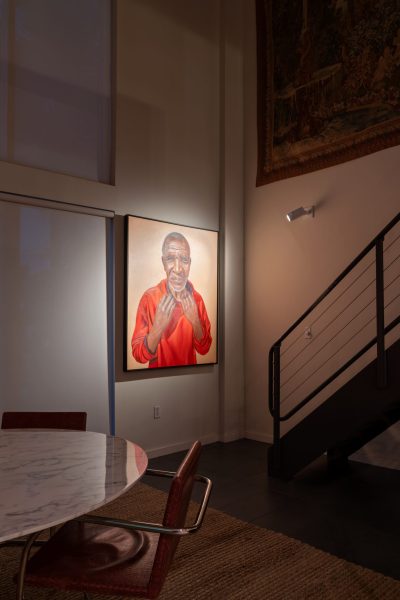
Controlled illumination avoiding harsh contrast lines
Lighting above gallery wall displays should soften shadows rather than eliminate them entirely. A slight shadow can enhance depth and realism, while harsh shadows can distort the artwork’s appearance.
Soft shadow management improves:
- Artwork visibility
- Surface texture perception
- Visual comfort
- Professional presentation quality
The goal is controlled, gentle illumination rather than flat or overly harsh lighting.
Wall Lights for Gallery Wall and Layered Illumination
Layered illumination is a hallmark of professional gallery lighting. Wall lights for gallery wall installations are often used in combination with overhead or track lighting to create depth and spatial balance.
A layered gallery wall lighting system may include:
- Accent lighting for individual artworks
- Ambient wall lighting for overall atmosphere
- Supplementary directional lighting for focal pieces
This multi-layered approach produces a refined and immersive viewing environment.
Lighting for Paintings on Wall and Color Integrity

Balanced beam maintaining authentic artwork tones
Maintaining color integrity is essential when lighting for paintings on wall displays. Poor lighting can alter how colors appear, making artwork look warmer, cooler, or less vibrant than intended.
High-quality gallery wall lighting preserves:
- True pigment tones
- Subtle color gradients
- Artistic detail and nuance
- Authentic visual representation
This is especially important for collectors and galleries presenting original artworks.
Wireless Lighting for Pictures on Wall and Discreet Installations
Wireless lighting for pictures on wall setups offers a discreet solution for spaces where wiring is limited or architectural modifications are not preferred. These lighting solutions are often used in temporary exhibitions or residential gallery walls.
Wireless gallery wall lighting provides:
- Flexible installation options
- Minimal structural disruption
- Clean and unobtrusive appearance
- Suitable lighting for smaller artworks
While not always used in large galleries, wireless lighting can be effective in curated home displays.

Lighting for Gallery Wall in Luxury Residential Interiors

Refined art lighting enhancing upscale residential gallery wall
In luxury interiors, lighting for gallery wall displays is treated as a design feature rather than just a functional necessity. Carefully designed lighting enhances both the artwork and the interior architecture.
In high-end residential settings, gallery wall lighting contributes to:
- Sophisticated visual ambiance
- Museum-style artwork presentation
- Enhanced interior focal points
- Refined and curated living environments
This approach is increasingly popular among collectors and design-conscious homeowners.
Lighting for Gallery Wall and Long-Term Display Consistency
Consistency over time is essential for gallery wall lighting, particularly in spaces where artwork remains on display for extended periods. Stable and well-designed lighting systems ensure that artwork maintains its visual clarity day and night.
Long-term consistency benefits include:
- Reliable illumination performance
- Reduced need for frequent adjustments
- Stable brightness levels
- Professional display standards over time
This reliability is a defining characteristic of well-planned art lighting systems.
Lighting for Gallery Wall as a Curated Presentation Strategy

Balanced beams creating cohesive visual narrative flow
Ultimately, lighting for gallery wall installations is not just a technical decision but a curatorial strategy. Proper lighting transforms a collection of artworks into a cohesive visual narrative, guiding viewer attention and enhancing emotional engagement.
When thoughtfully designed, gallery wall lighting:
- Elevates the visual impact of artwork
- Creates structured visual flow
- Enhances depth and dimensional perception
- Supports a professional gallery-style presentation
By combining directional lighting, balanced brightness, and precise positioning, lighting for gallery wall displays allows artwork, photographs, and framed pieces to be experienced with clarity, elegance, and visual harmony in galleries, museums, and sophisticated residential environments.
FAQs
1. What is the best lighting for a gallery wall?
Directional spotlights, track lighting, and picture lights are typically the best options.
2. How do you light a gallery wall properly?
Use evenly spaced directional lighting positioned slightly in front of the artwork.
3. Is track lighting good for gallery walls?
Yes, track lighting provides flexibility and precise illumination for multiple artworks.
4. Should lights be placed above a gallery wall?
Yes, lighting above the gallery wall helps create even and controlled illumination.
5. Are picture lights good for gallery walls?
Yes, they are excellent for highlighting individual artworks within a gallery wall.
6. What type of lighting is best for pictures on a wall?
Directional LED art lighting with accurate color rendering works best.
7. Can LED lights be used for gallery wall lighting?
Yes, LED lights are widely used due to their stability and conservation safety.
8. How bright should gallery wall lighting be?
Bright enough to reveal detail but not so strong that it creates glare or hotspots.
9. Does gallery wall lighting affect artwork colors?
Yes, proper lighting preserves true color appearance and tonal accuracy.
10. Can lighting highlight multiple artworks evenly?
Yes, evenly spaced lighting ensures balanced illumination across the wall.
11. What color temperature is best for gallery wall lighting?
Neutral color temperatures are preferred for accurate artwork presentation.
12. Should gallery wall lighting be adjustable?
Yes, adjustable lighting allows flexibility for changing artwork layouts.
13. Is overhead lighting enough for a gallery wall?
It can be, but directional accent lighting often improves results.
14. Can wall lights be used for gallery wall displays?
Yes, wall lights can complement accent lighting and enhance ambiance.
15. How do museums light gallery walls?
Museums use precision directional lighting with controlled brightness and angles.
16. Do gallery walls need individual lights for each artwork?
Not always, but focused lighting improves clarity and balance.
17. Can wireless lights be used for gallery walls?
Yes, especially for smaller or temporary gallery wall installations.
18. Does lighting enhance artwork texture on a gallery wall?
Yes, angled lighting reveals depth and surface detail.
19. Is dimmable lighting recommended for gallery walls?
Yes, dimmable systems allow precise control over viewing conditions.
20. Why is lighting important for gallery wall displays?
Because it enhances visibility, preserves visual integrity, and creates a professional art presentation.
Why Designers and Collectors Trust Our Gallery Lights