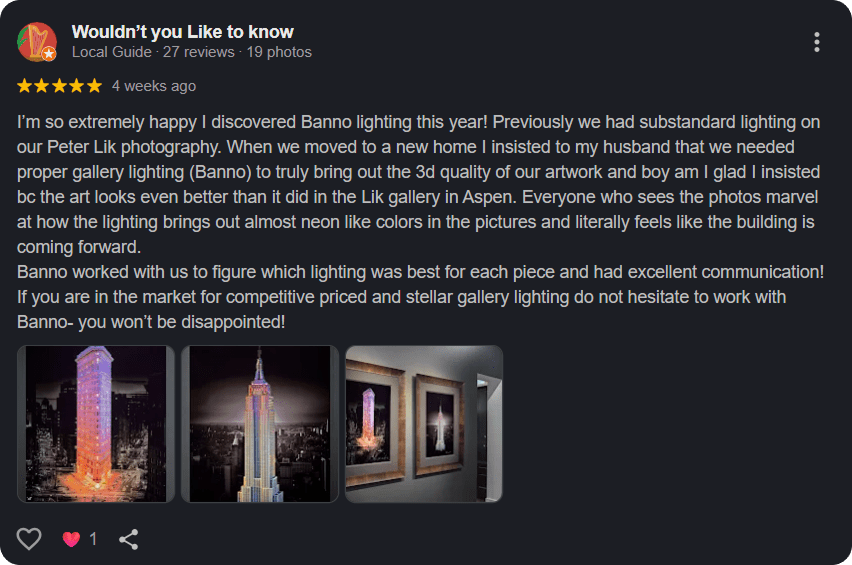
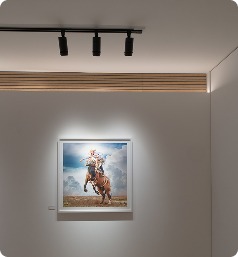
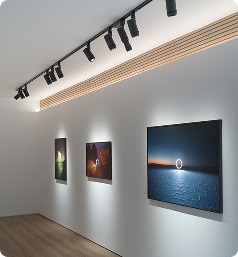
How to Light Wall Art Properly Without Glare, Colour Distortion, or Compromise
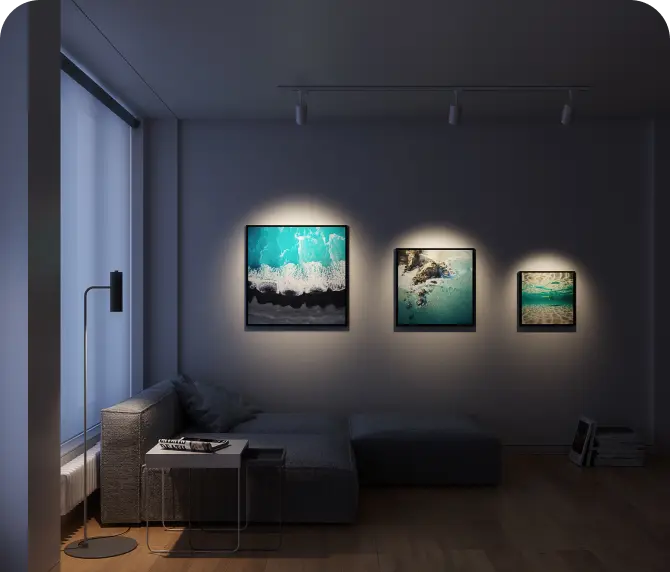
Even beam distribution maintaining balanced distortion free presentation
Lighting for pictures on the wall is one of the most misunderstood parts of interior and gallery lighting.
Most pictures are well chosen, carefully framed, and thoughtfully placed. Yet they are often ruined by poor lighting. Colours appear dull. Glass reflects light aggressively. Shadows fall unevenly. The artwork feels disconnected from the space rather than integrated into it.
This happens because lighting for wall art is often treated as decoration rather than precision work.
Whether in a home, gallery, museum, or commercial space, lighting for pictures on the wall follows the same core principles: accuracy, control, consistency, and restraint.
This complete art gallery lighting guide explains how to light pictures on the wall properly, why common solutions fail, and how professional LED systems using track lighting, Zoom, Multi, and Deluxe solutions deliver clean, gallery-level results.
Why lighting pictures on the wall is more complex than it seems
Pictures on the wall are rarely flat surfaces visually, which is an important consideration when learning how to light photographs on walls and other framed artwork.
Light interacts with:
• Pigment and print density
• Paper, canvas, or photographic texture
• Glass or acrylic glazing
• Frame depth and finish
• Wall colour and reflectivity
A light that looks fine in the ceiling often performs poorly once it hits framed artwork, which is why art lighting techniques for framed artwork require more precision than general ceiling lighting.
Poor lighting:
• Creates glare on glass
• Distorts colours
• Causes uneven illumination
• Pulls attention away from the artwork
Good lighting disappears completely and lets the picture take focus.
How people actually view wall art

Consistent lighting supporting natural movement through room
People do not view pictures from one fixed position.
They:
• Walk past them
• Step closer to inspect detail
• Step back to take in composition
• View them from different angles
Lighting must remain comfortable and consistent throughout this movement.
Proper lighting for pictures on the wall:
• Feels calm and natural
• Allows long viewing without eye fatigue
• Maintains colour accuracy from multiple angles
• Avoids reflections and hotspots
If lighting causes discomfort, people disengage even if the artwork itself is strong.
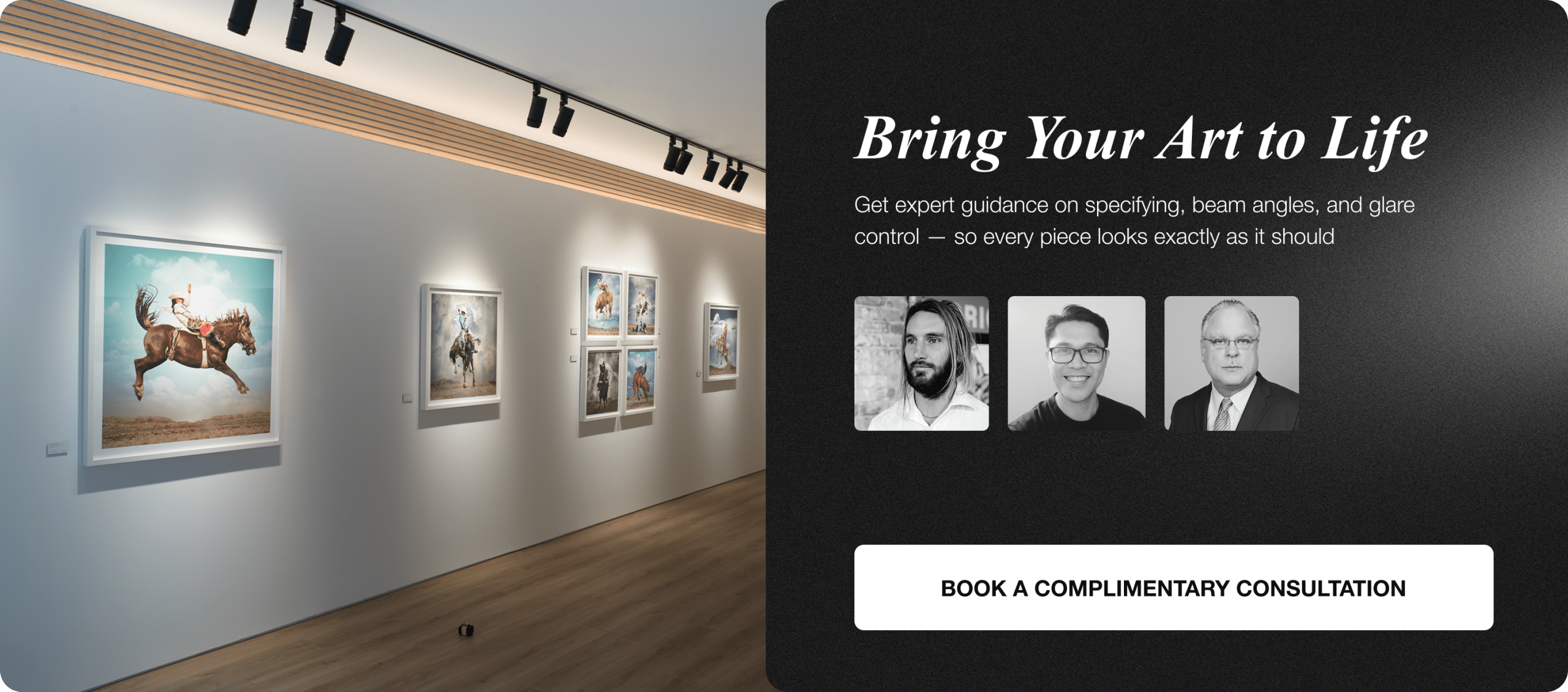
4.9-star rated by art collectors and gallery professionals
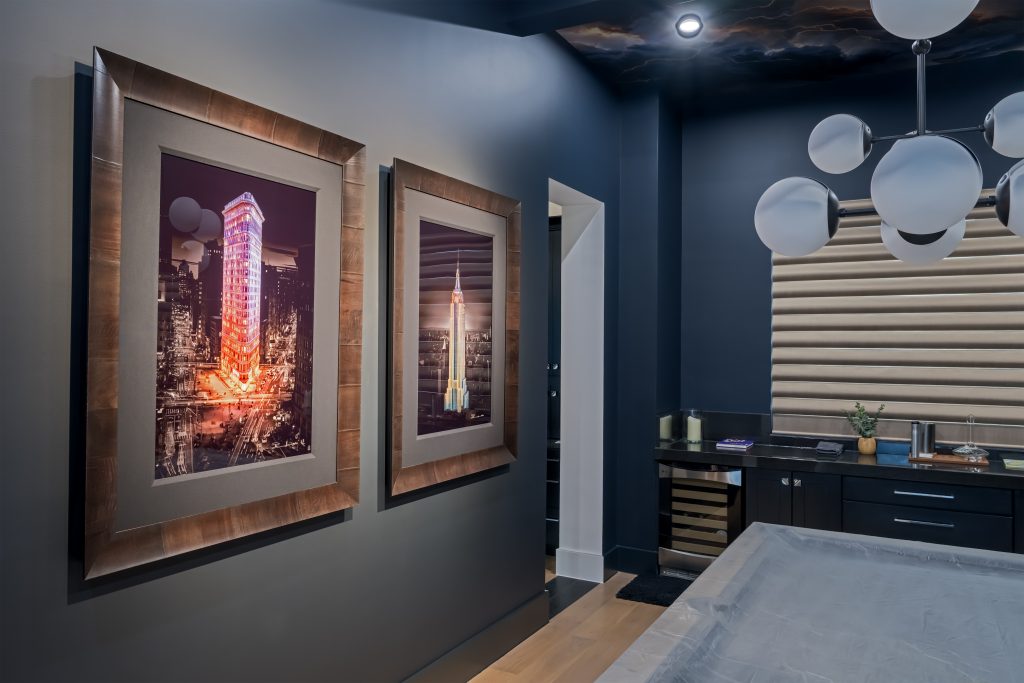
Why lighting affects the perceived value of wall art

Proper illumination elevating framed piece within interior
Lighting directly influences how valuable art feels.
When lighting is correct:
• Colours appear rich and intentional
• Texture feels present
• The artwork feels integrated into the space
When lighting is poor:
• Art feels flat or cheap
• Colours feel inaccurate
• The piece loses presence
This matters in galleries, but it matters just as much in homes. Proper lighting elevates artwork emotionally and visually.
Why common solutions fail when lighting pictures on the wall
Most wall art is lit using:
• Decorative picture lights
• Ceiling downlights
• General ambient lighting
These solutions are convenient, but they are rarely correct.
Common failures include:
• Light hitting the glass instead of the artwork
• Strong glare and reflections
• Uneven illumination
• Colour distortion
• Fixed output with no control
Lighting pictures properly requires directional control and adjustment, not fixed decorative fittings.
Lighting for pictures on the wall should start with a plan
Measured track placement aligned with artwork dimensions
Professional art lighting always starts with a plan, even in residential settings, especially when considering how art lighting transforms a collection.
A proper lighting plan considers:
• Wall height and width
• Picture size and framing depth
• Viewing distance
• Ceiling height
• Track or fixture placement
• Future changes to the artwork
Without a plan, lighting becomes trial and error. Fixtures are adjusted repeatedly and still never feel right.
A plan ensures consistency and predictability.
Track lighting as the most flexible solution for wall art

Minimal ceiling clutter maintaining architectural clarity
Track lighting is the most versatile solution for lighting pictures on the wall.
It allows:
• Precise aiming at individual artworks
• Easy repositioning when pictures change
• Clean ceilings without visual clutter
• Long-term flexibility
This is why track lighting is used in galleries, museums, and increasingly in high-end homes.
Track lighting vs downlights for wall pictures
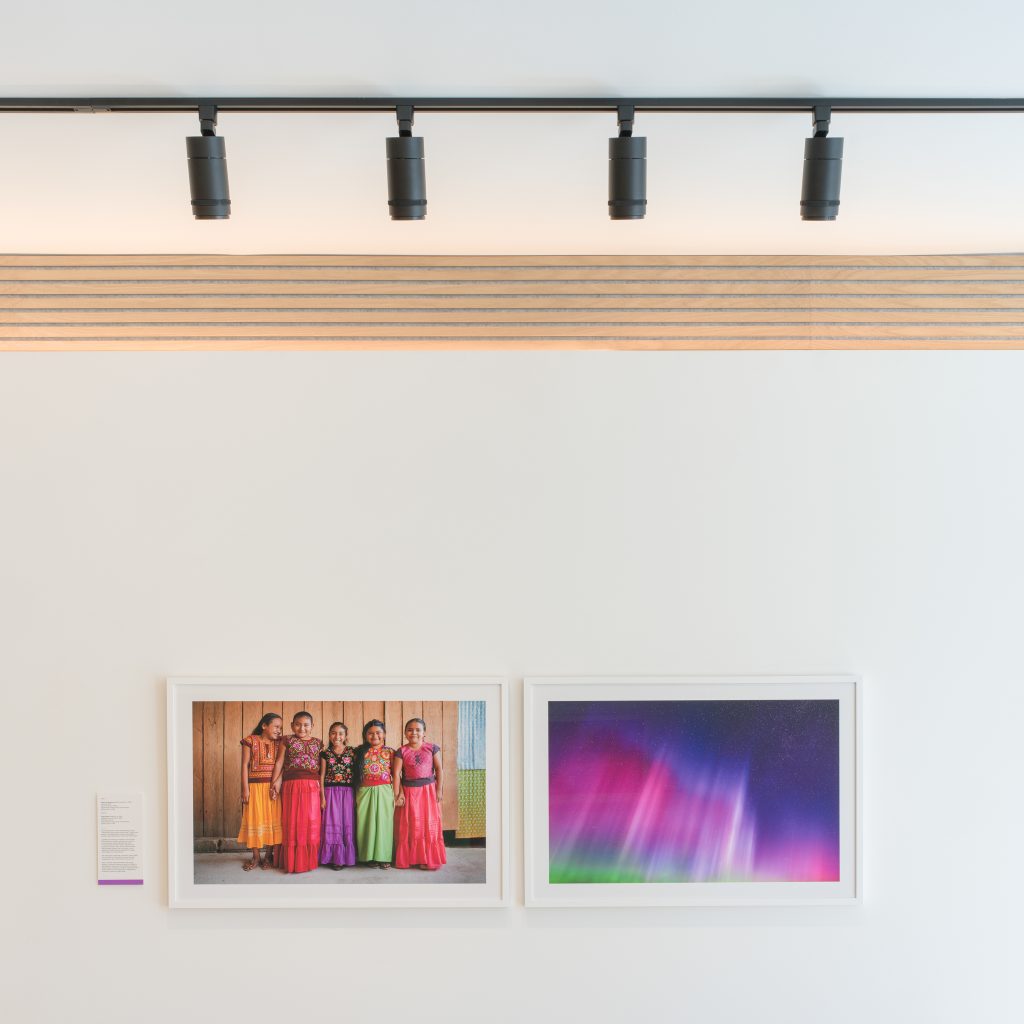
Track fixture angled correctly toward artwork surface
Downlights are designed for general illumination, not artwork.
They:
• Create steep angles that cause glare
• Wash walls unevenly
• Cannot be adjusted precisely
• Fail when artwork changes position
Track lighting allows the light to be aimed correctly at the artwork rather than straight down at the wall.
Beam control is critical when lighting pictures on the wall

Focused illumination strengthening depth and contrast
Pictures require controlled beams.
Controlled beams:
• Frame the artwork cleanly
• Prevent spill onto adjacent walls
• Preserve contrast and depth
• Reduce reflections
Wide beams flatten artwork and reduce impact. Tight, well-controlled beams give pictures presence and clarity.
This is why professional lighting prioritises optics over brightness.
Why dimming is essential for wall art lighting

Smooth dimming balancing multiple framed pictures
Dimming is not about atmosphere. It is about control.
Pictures vary in:
• Size
• Medium
• Surface reflectivity
• Frame finish
Fixed-output lighting forces compromise. Some pictures become overlit while others feel dull.
Professional lighting for wall art at home must allow smooth, precise dimming so each piece can be balanced properly.
Good dimming allows:
• Reducing glare on glass
• Balancing multiple artworks on one wall
• Adjusting emphasis without changing angles
• Creating visual harmony
Dimming must be flicker-free and stable at low levels. Poor dimming immediately undermines quality.
Why CRI 97+ matters when lighting pictures

High CRI lighting preserving subtle tonal shifts
CRI measures how accurately colours are rendered, which is essential for proper lighting for paintings and prints.
Pictures rely on accurate colour reproduction whether they are:
• Paintings
• Prints
• Photographs
• Mixed media works
Standard lighting often sits around CRI 80–90. That is insufficient for art.
Only CRI 97+ lighting can:
• Render colours faithfully
• Preserve tonal nuance
• Keep whites neutral
• Avoid colour distortion
Lower CRI lighting makes artwork look dull and untrustworthy.
LED lighting as the modern standard for wall art

Stable colour output across extended use
LED lighting is now the preferred choice for lighting pictures on the wall.
Professional LED lighting offers:
• Low heat output
• No UV or IR radiation
• Excellent colour stability
• Long life
• Precise optical control
However, only art-grade LED lighting delivers these benefits properly. Generic LEDs often fail on colour accuracy and dimming quality.
Zoom lighting for pictures of different sizes

Flexible zoom mechanism simplifying display updates
Zoom lighting systems are ideal when wall art varies in size.
Zoom allows:
• Adjustable beam angles from a single fixture
• Tight framing for small pictures
• Wider coverage for large artworks
• Easy adaptation when artwork changes
This makes Zoom systems ideal for both galleries and homes with evolving collections.
Multi lighting for curated wall displays
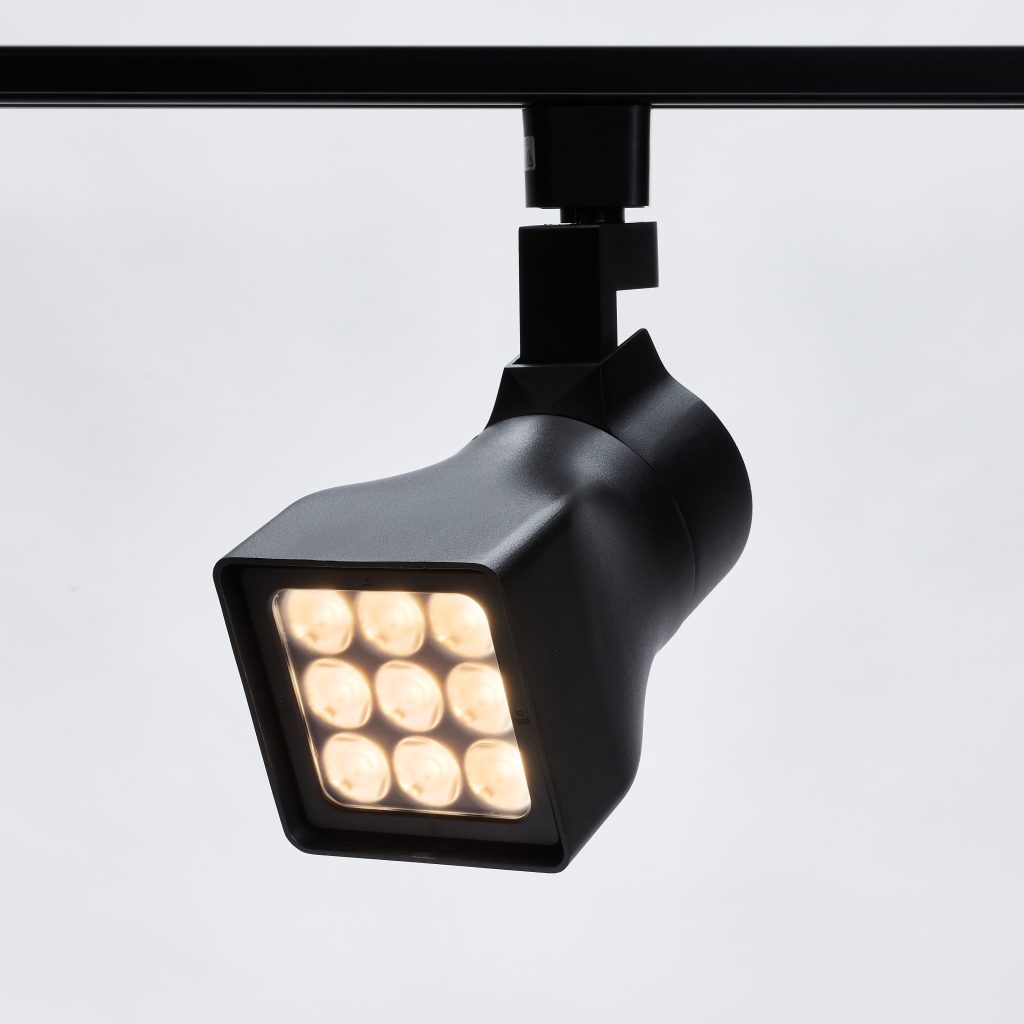
Selective emphasis drawing attention to focal piece
Multi lighting systems are used when different artworks require different treatment.
They are effective when:
• One piece should stand out
• Works vary in importance
• Different surfaces reflect light differently
Multi systems allow subtle hierarchy without disrupting visual harmony.
Deluxe lighting for premium wall art

Ultra stable dimming ensuring flawless presentation
Deluxe lighting systems are chosen for high-value art and refined interiors.
They are used where:
• Visual restraint is critical
• Colour accuracy must be perfect
• Dimming stability is essential
• Fixtures should disappear
Deluxe systems combine exceptional optics, CRI 97+ LEDs, and ultra-stable dimming.
Colour temperature for lighting pictures on the wall

Balanced temperature complementing varied artistic styles
Most professionals use 3000K lighting for wall art.
3000K:
• Feels warm yet neutral
• Preserves colour accuracy
• Works across most art styles
Some master works are lit at 2700K selectively when warmth enhances emotional presence. This must be done carefully to avoid yellowing whites.
Cooler temperatures are rarely suitable for artwork.
Managing glare on glass-covered pictures

Glare is the most common complaint when lighting wall art.
Professional lighting avoids glare through:
• Correct beam angles
• Precision optics
• Proper track placement
• Controlled dimming
When glare is eliminated, viewers can approach artwork comfortably and engage fully.
Consistency across walls and rooms

Cohesive colour tone connecting multiple spaces
Lighting should feel cohesive.
Professional systems ensure:
• Consistent colour across fixtures
• Balanced illumination wall to wall
• Stable performance over time
Inconsistent lighting makes artwork feel accidental rather than curated.
Long-term thinking in wall art lighting

Energy efficient LED reducing maintenance demands
Lighting for pictures on the wall should be designed once, properly.
A professional system allows:
• Easy changes as artwork evolves
• Minimal maintenance
• Long-term visual consistency
• Increased enjoyment of the artwork
Short-term lighting decisions often lead to long-term dissatisfaction.
Complete Guide to Lighting for Pictures on Wall
Lighting for pictures on wall is not simply about making artwork visible. It is about presenting each piece with clarity, balance, and precision so that it can be experienced exactly as intended. Many interiors feature carefully selected artwork, yet the lighting is often overlooked. As a result, colours appear muted, reflections interfere with visibility, and the artwork feels disconnected from the space.
When lighting is done correctly, it disappears completely. The focus remains on the artwork, while the lighting quietly enhances depth, colour, and detail. This complete guide explains how professional lighting for pictures on wall works, why common approaches fail, and how to achieve clean, gallery-level results in both residential and commercial environments.
Why Lighting for Pictures on Wall Requires Precision

Controlled lighting improving clarity across canvas print and framed photo
Pictures on the wall are not flat visual elements. They interact with light in complex ways depending on their material and finish. Light behaves differently across:
• Canvas and painted surfaces
• Photographic prints
• Glass or acrylic coverings
• Frame depth and edge detail
• Wall colour and surrounding light.
Because of this, lighting for pictures on wall must be controlled and adaptable. A general ceiling light may illuminate the room, but it rarely provides the precision required for artwork. Without proper control, lighting introduces glare, uneven brightness, and colour distortion.
The Difference Between Decorative and Functional Lighting
A common mistake is treating art lighting as decorative. Decorative lighting:
• Prioritises appearance over performance
• Produces diffuse, uncontrolled light
• Often creates reflections and hotspots.
Functional lighting for pictures on wall:
• Uses directional beams
• Focuses light precisely on the artwork
• Maintains consistent illumination
• Preserves colour accuracy.
Professional lighting systems are designed to perform consistently, not just look visually appealing.
Beam Control and Why It Matters

Controlled beam evenly covering picture without visible light spill
Beam control is central to effective lighting for pictures on wall. If the beam is too wide:
• Light spills onto surrounding walls
• Contrast is reduced
• The artwork loses presence.
If the beam is too narrow:
• Hotspots appear
• Edges are underlit
• Visual balance is disrupted.
The ideal solution is a controlled beam that matches the size of the picture. This ensures even illumination without unnecessary spill. Precision optics are far more important than brightness alone.
Correct Light Positioning
Positioning is one of the most important factors in lighting pictures properly. Lights should typically be installed at an angle of around 30 degrees relative to the artwork. This angle:
• Reduces glare on glass
• Enhances surface texture
• Provides even illumination
• Prevents direct reflections.
Lighting placed directly above or directly in front of the artwork often causes visual discomfort and reduces clarity.
Eliminating Glare in Framed Pictures

Reflection-free picture achieved through precise angled spotlight positioning
Glare is the most common issue when lighting for pictures on wall. It occurs when light reflects directly off the surface of glass or glossy finishes and into the viewer’s eye. To minimise glare:
• Use directional lighting instead of overhead downlights
• Avoid placing fixtures directly in front of the artwork
• Adjust beam angles carefully
• Use high-quality lenses designed for art lighting.
When glare is eliminated, viewers can move freely around the space without losing visibility of the artwork.
The Role of CRI in Artwork Lighting
CRI, or Colour Rendering Index, determines how accurately colours appear under artificial lighting. For artwork, this is critical. Lighting with CRI 97+:
• Preserves true colours
• Maintains tonal variation
• Prevents dullness
• Keeps whites neutral.
Lower CRI lighting can distort colours and reduce the visual impact of the artwork. Professional lighting for pictures on wall always prioritises high CRI performance.
Choosing the Right Colour Temperature

Soft warm lighting enhancing traditional framed artwork presentation
Colour temperature influences both the appearance of the artwork and the atmosphere of the space.
Most professionals use:
• 3000K for balanced, natural lighting
• 2700K for warmer, more traditional interiors.
Cooler temperatures are generally avoided, as they can make artwork appear harsh or unnatural. Consistency is essential. Mixing different colour temperatures across a wall creates visual imbalance.
Why Track Lighting Is the Preferred Solution
Track lighting is one of the most effective methods for lighting for pictures on wall.
It provides:
• Adjustable positioning
• Precise aiming
• Flexibility as artwork changes
• Clean ceiling integration.
Unlike fixed lighting, track systems can adapt to different picture sizes and layouts.
This makes them suitable for both residential and professional settings. Track lighting also supports advanced fixtures such as Zoom, Multi, and Deluxe systems, which offer different levels of control.
Balancing Multiple Pictures on One Wall

Balanced lighting guiding eye smoothly across picture arrangement
When multiple pictures are displayed together, lighting must remain consistent across all pieces.
Uneven lighting creates:
• Visual imbalance
• Competing focal points
• Disruption in flow.
Proper lighting for pictures on wall ensures:
• Even illumination across all frames
• Consistent brightness levels
• Smooth transitions between pieces.
In some cases, slight variation in brightness can be used intentionally to create hierarchy, but this must be subtle and controlled.
The Importance of Dimming
Dimming is essential for fine-tuning lighting. Different pictures respond differently to light depending on their size, surface, and framing. Dimming allows:
• Adjusting brightness without moving fixtures
• Reducing glare on reflective surfaces
• Balancing multiple artworks
• Adapting lighting to different times of day.
High-quality dimming must be smooth and flicker-free. Poor dimming can undermine the entire lighting setup.
Lighting Different Types of Artwork

Mixed artwork display using adjustable lighting for consistent balance
Not all pictures require the same lighting approach.
For smaller pictures:
• Use narrower beams
• Focus light tightly
• Avoid spill
For larger pieces:
• Use wider beams
• Ensure full coverage
• Maintain even brightness
For mixed displays:
• Use adjustable fixtures
• Balance light across different sizes
• Maintain consistency
Flexibility is key when dealing with varied artwork.
Integrating Lighting into the Space
Lighting for pictures on wall should feel integrated into the overall interior.
This means:
• Aligning fixtures with artwork placement
• Avoiding visual clutter on ceilings
• Matching finishes to the design
• Planning lighting early
When lighting is integrated properly, it enhances the space without drawing attention to itself.
Common Mistakes to Avoid
Many lighting issues come from a few common mistakes:
• Using general ceiling lighting instead of directional lighting
• Placing lights too close to the artwork
• Ignoring beam angle
• Mixing different colour temperatures
• Using low-quality LEDs
Avoiding these mistakes significantly improves results.
Long-Term Benefits of Proper Lighting
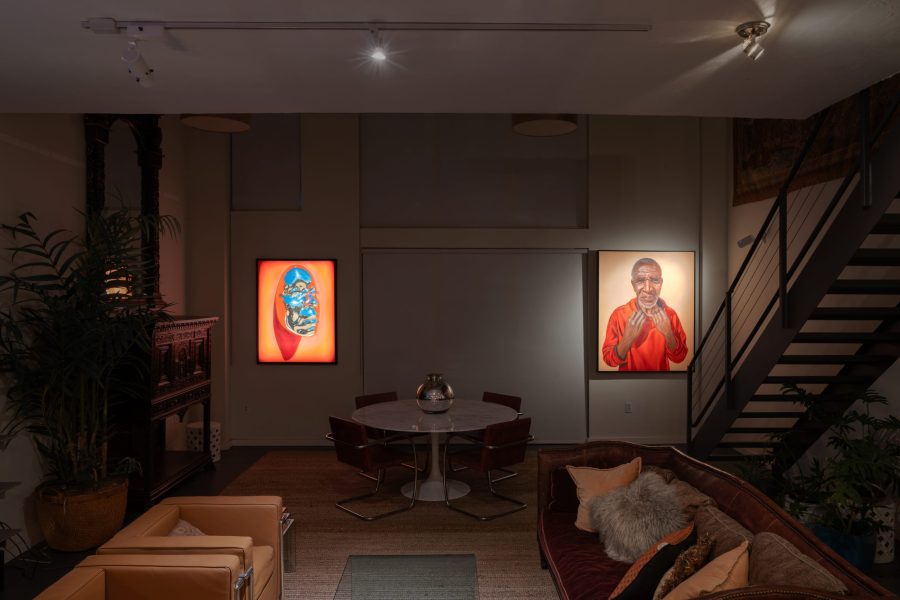
Stable illumination supporting evolving home art collections
Investing in proper lighting for pictures on wall offers long-term advantages.
It:
• Enhances the appearance of artwork
• Maintains colour accuracy
• Reduces the need for adjustments
• Supports evolving collections
• Improves overall interior quality
Lighting should be considered a permanent part of the artwork display, not a temporary solution.
Viewing Distance and Angle Considerations
Lighting for pictures on wall should always account for how the artwork is actually viewed within a space. Viewing distance and angle directly influence how light behaves across the surface of a picture.
In smaller rooms, viewers are often closer to the artwork. This means:
• Glare becomes more noticeable
• Beam edges must be softer
• Light intensity should be slightly reduced
In larger spaces, where artwork is viewed from a distance:
• Slightly stronger output may be required
• Wider beams help maintain visibility
• Consistency across multiple pieces becomes more important
The goal is to ensure that lighting remains comfortable and effective regardless of where the viewer is positioned.
Spacing and Alignment of Light Fixtures

Evenly spaced fixtures creating seamless lighting across wall artwork
Correct spacing is essential for achieving balanced lighting for pictures on wall.
Poor spacing can result in:
• Uneven brightness across the artwork
• Visible gaps between light beams
• Overlapping hotspots
Professional lighting follows simple but precise principles:
• Fixtures should align with the centre of each picture where possible
• Spacing should be based on artwork width, not wall width
• Light beams should slightly overlap for seamless coverage
This creates a continuous, even presentation across the wall without visible inconsistencies.
Layering Light Without Overpowering the Artwork
While directional lighting is the primary focus, ambient light still plays a supporting role.
Lighting for pictures on wall works best when:
• Ambient lighting is soft and unobtrusive
• Accent lighting remains dominant on the artwork
• The overall room brightness does not compete with the pictures
Too much ambient light can flatten the artwork and reduce contrast. Too little can make the space feel disconnected.
The balance between ambient and accent lighting ensures that artwork stands out while still feeling integrated into the room.
Adapting Lighting as Artwork Changes

Flexible fixtures adapting to different picture sizes and arrangements
One of the most overlooked aspects of lighting for pictures on wall is flexibility over time.
Artwork collections often evolve. Pictures are replaced, rearranged, or expanded. Lighting must be able to adapt without requiring a complete redesign.
This is why adjustable systems such as track lighting are so valuable.
They allow:
• Repositioning fixtures without rewiring
• Adjusting beam angles for new artwork sizes
• Maintaining consistent lighting quality over time
A flexible lighting system ensures that the space continues to function as intended, even as the artwork changes.
Final Perspective
Lighting for pictures on wall is a balance between technical precision and visual restraint.
When done correctly:
• The artwork becomes the focal point
• Colours appear natural and accurate
• Reflections are eliminated
• The space feels curated and intentional
The lighting itself should not be noticed. It should simply allow the artwork to be seen at its best.
This is the difference between displaying pictures and truly presenting them.
Frequently Asked Questions
Lighting for pictures on the wall
What is the best lighting for pictures on the wall?
The best lighting for pictures on the wall is directional LED lighting with CRI 97+ colour accuracy, smooth dimming, and controlled beam optics, often delivered through track lighting systems.
Is track lighting good for wall art?
Yes. Track lighting is one of the best solutions because it allows precise aiming, flexibility as artwork changes, and clean architectural integration.
Should wall art lighting be dimmable?
Yes. Dimming is essential to reduce glare, balance multiple artworks, and fine-tune presentation without moving fixtures.
What CRI should lighting for wall art have?
Lighting for wall art should be CRI 97+ to ensure accurate colour rendering and preserve tonal nuance.
Is LED lighting safe for pictures and paintings?
Yes. Professional-grade LED lighting produces minimal heat and no UV radiation, making it safe for artwork when specified correctly.
What colour temperature is best for lighting pictures?
Most professionals use 3000K. 2700K may be used selectively for warmer presentation.
How do you avoid glare on framed pictures?
Glare is avoided through controlled beam optics, correct aiming angles, appropriate fixture placement, and careful dimming.
Final thoughts on lighting for pictures on the wall

Curated interior strengthened through balanced lighting
Lighting for pictures on the wall should feel invisible.
When done properly:
• Artwork feels intentional
• Colours are accurate
• Texture is revealed
• Viewers engage longer
• The space feels curated
This is the difference between simply hanging pictures and truly displaying art.
Why choose Banno Lighting
Banno Lighting specialises in professional lighting for wall art, galleries, and refined interiors.
We provide:
• Expert guidance
• Professional lighting plans
• LED track lighting for wall art
• Zoom, Multi, and Deluxe solutions
• CRI 97+ colour accuracy
• Smooth, stable dimming
• Long-term support
If you want lighting for pictures on the wall that respects the artwork and elevates the space, professional systems and guidance are essential.
What art collectors and gallery clients say about us