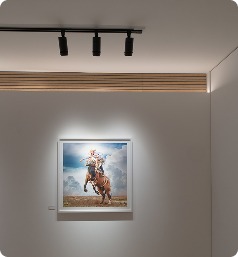
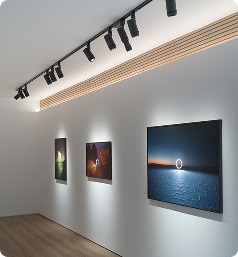
Contemporary art display enhanced by precision wall lighting
Lights for gallery wall installations are one of the most influential elements in how artwork is perceived within a space. Whether in luxury homes, private collections, or curated gallery environments, the right lighting transforms a simple wall arrangement into a refined visual presentation that highlights depth, color, and artistic intent.
Unlike general room lighting, lights for gallery wall displays must be precise, controlled, and visually balanced. Proper illumination ensures that each artwork receives adequate attention without overpowering the composition of the overall wall.
A professionally lit gallery wall enhances:
Artwork clarity and visibility
- Color accuracy and tonal depth
- Visual hierarchy across multiple pieces
- Architectural elegance within the space
Trusted by Galleries: A Professional Perspective on Our Lighting
Best Lighting for Gallery Wall Displays
Choosing the best lighting for gallery wall installations requires a specialist approach rather than relying on standard ceiling fixtures. Art-focused lighting is designed to illuminate artwork evenly while maintaining a refined and distraction-free environment.
The best lighting solutions typically include:
- Picture lights for gallery wall displays
- Track lighting for gallery wall arrangements
- Directional wall lights for artwork
- Adjustable art lighting fixtures
Each of these options serves a distinct role depending on wall size, artwork scale, and interior design context.
Picture Lights for Gallery Wall Elegance and Precision

Framed artwork enhanced by centered overhead picture light
Picture lights for gallery wall installations are one of the most refined and timeless lighting solutions. Mounted directly above artwork, they provide focused illumination that enhances visual detail while maintaining a sophisticated aesthetic.
Key benefits of picture lighting include:
- Targeted illumination for individual artworks
- Reduced glare on framed pieces
- Elegant and museum-style presentation
- Consistent lighting across the artwork surface
This approach is especially effective for collectors and interior designers aiming for a gallery-grade atmosphere in residential spaces.

4.9-star rated by art collectors and gallery professionals
Track Lighting for Gallery Wall Flexibility
Track lighting for gallery wall displays offers unmatched flexibility, particularly when dealing with multiple artworks or evolving collections. Adjustable track heads allow precise control over beam direction, intensity, and spacing.
Track lighting is ideal for:
- Large gallery walls with multiple artworks
- Rotating art collections
- Mixed media displays
- Modern and minimalist interiors
Because fixtures can be repositioned easily, track lighting supports long-term adaptability without structural changes.
Lights Over Gallery Wall and Visual Balance
Installing lights over gallery wall compositions helps create a unified lighting layer that ties the entire display together. Instead of lighting each piece separately, overhead art lighting establishes cohesion and visual rhythm.
Overhead gallery lighting supports:
- Balanced illumination across multiple frames
- Reduced shadow inconsistencies
- Clean architectural integration
- Professional gallery-style presentation
This technique is commonly used in museums and high-end interiors where visual harmony is essential.
Art Light for Gallery Wall and Color Accuracy

High CRI lighting revealing true pigment tones
An art light for gallery wall setups must prioritise high color rendering to ensure artworks appear true to the artist’s original vision. Poor lighting can distort pigments, flatten textures, and diminish the emotional impact of artwork.
High-quality art lighting improves:
- Color fidelity
- Surface detail visibility
- Depth perception
- Material authenticity
This is particularly important for oil paintings, fine art photography, and contemporary artworks.
Wall Lights for Gallery Wall Architectural Integration
Wall lights for gallery wall installations provide a seamless lighting solution that integrates directly into the interior architecture. Unlike portable lamps or decorative lighting, dedicated wall-mounted fixtures create a permanent and professional display environment.
Architectural wall lighting advantages include:
- Minimal visual clutter
- Discreet fixture placement
- Enhanced interior sophistication
- Consistent lighting alignment with artwork height
This makes wall-mounted art lighting a preferred choice for luxury homes and curated spaces.
Lighting for Pictures on a Wall and Uniform Illumination

Evenly spaced lights maintaining consistent artwork brightness
Lighting for pictures on a wall should always prioritise uniform illumination rather than uneven spotlighting. Inconsistent lighting can cause certain artworks to appear overly dominant while others fade into the background.
Uniform gallery wall lighting ensures:
- Equal attention across all artworks
- Smooth brightness transitions
- Visual harmony in grouped displays
- Comfortable viewing experience
This approach is essential when designing symmetrical gallery walls or salon-style art arrangements.
How to Light a Gallery Wall Professionally
Understanding how to light a gallery wall professionally involves more than simply installing lights above the artwork. Strategic positioning, beam angle, and spacing all play critical roles in achieving a museum-level finish.
Professional lighting principles include:
- Positioning lights at a 30-degree angle
- Avoiding direct glare on glass frames
- Maintaining consistent spacing between fixtures
- Aligning light beams with artwork centre points
These techniques create a polished and visually balanced display.
LED Picture Lights for Wall Art and Modern Performance

Energy-efficient LED fixture illuminating framed photograph
LED picture lights for wall art have become the preferred solution for gallery wall illumination due to their stability, efficiency, and conservation-friendly output.
LED art lighting offers:
- Low heat emission
- Energy-efficient operation
- Long lifespan
- Stable brightness and color consistency
For sensitive artworks and long-term displays, LED lighting provides both performance and preservation benefits.
Gallery Lighting and Visual Hierarchy in Multi-Art Displays
Gallery lighting plays a crucial role in establishing visual hierarchy within a gallery wall. Strategic lighting can subtly guide viewer attention toward key pieces while maintaining balance across the entire display.
Visual hierarchy lighting techniques include:
- Slightly brighter illumination for focal artworks
- Soft lighting for supporting pieces
- Layered lighting for depth and dimension
- Controlled beam focus for compositional clarity
This layered approach is widely used in professional exhibition design.
Lighting Ideas for Gallery Wall in Residential Spaces

Wireless lighting solution in minimalist interior setting
In residential interiors, lighting ideas for gallery wall installations should balance aesthetics and functionality. Unlike museums, home environments require lighting that complements both artwork and everyday living.
Effective residential gallery lighting ideas include:
- Slimline picture lights above frames
- Ceiling-mounted directional spotlights
- Discreet track lighting systems
- Wireless art lighting for flexibility
These solutions create a curated gallery atmosphere without overwhelming the living space.
Product-Level Precision in Gallery Wall Lighting
High-end gallery wall lighting often incorporates precision art lighting systems designed specifically for artwork illumination. Fixtures such as Zoom (precision art lighting), Deluxe (museum-grade lighting), and Multi (flexible gallery lighting) exemplify how specialised lighting can elevate artwork presentation without appearing overly commercial or intrusive.
These types of fixtures are engineered to provide:
- Controlled beam precision
- Museum-grade illumination consistency
- Adjustable lighting angles
- Refined visual integration with interiors
Their role is not decorative but curatorial, supporting the artwork as the primary focal point.
Lights for Gallery Wall and Long-Term Artwork Preservation

LED art lights ensuring safe long-term display
Lighting quality directly affects artwork longevity. Excessive heat, UV exposure, and unstable lighting can gradually damage delicate materials over time.
Conservation-friendly lighting supports:
- Artwork preservation
- Reduced environmental stress on pigments
- Stable long-term display conditions
- Safe illumination for sensitive artworks
This makes specialised art lighting essential for collectors and galleries managing valuable pieces.
Final Perspective on Lights for Gallery Wall Design
Lights for gallery wall installations are not merely decorative additions. They are a critical component of how artwork is experienced, interpreted, and valued within a space. From picture lights and track lighting to architectural wall fixtures, each lighting choice contributes to the overall visual narrative of the gallery wall.
When executed with precision, gallery wall lighting enhances color accuracy, visual balance, and artistic presence while maintaining a sophisticated and museum-quality atmosphere. Whether in private homes, curated galleries, or collector spaces, professionally designed lighting ensures that every artwork is illuminated with clarity, intention, and refined elegance.
Lights for Gallery Wall and Layered Lighting Design
A refined gallery wall rarely relies on a single lighting source. Instead, layered lighting design is used to create depth, balance, and visual sophistication. Lights for gallery wall installations should work in harmony with ambient and accent lighting to ensure the artwork remains the focal point without overpowering the surrounding space.
Layered lighting typically includes:
- Primary accent lighting directed at artwork
- Soft ambient lighting for spatial balance
- Supplementary directional lighting for key pieces
This multi-layered approach is widely used in museums, galleries, and high-end residential interiors to achieve a curated and intentional atmosphere.
Lights for Above Gallery Wall and Beam Control

Adjustable art light preventing harsh brightness hotspots
Lights for above gallery wall installations must be selected with careful attention to beam control. Unlike decorative lighting, art-focused fixtures are engineered to deliver precise illumination that enhances artwork without creating harsh hotspots or uneven brightness.
Controlled beam lighting provides:
- Focused illumination on artwork surfaces
- Reduced light spill onto surrounding walls
- Greater visual clarity for fine details
- Balanced brightness across grouped frames
Beam precision is especially important for gallery walls featuring artworks of varying sizes and mediums.
Picture Lights for Wall Art and Proportion Guidelines
Proportion plays a critical role when selecting picture lights for wall art. Oversized lights can overwhelm small artworks, while undersized fixtures may fail to provide adequate illumination.
General proportion guidelines include:
- Picture light width should match 50–80% of the artwork width
- Fixture placement centred above the frame
- Consistent spacing across multi-art displays
- Aligned mounting height for visual symmetry
Maintaining proportional consistency enhances the overall elegance and professionalism of a gallery wall display.
Wireless Lights for Gallery Wall Flexibility

Flexible wireless fixture supporting evolving art layout
Wireless lights for gallery wall installations are increasingly popular in modern interiors, particularly where hardwiring is not feasible. These lighting solutions provide flexibility while maintaining a clean and sophisticated aesthetic.
Wireless lighting benefits include:
- Easy installation without electrical modifications
- Adjustable positioning for evolving art layouts
- Minimal visual disruption to interior design
- Adaptability for rented or temporary spaces
This makes them particularly useful for collectors who frequently rotate artworks.
Track Lighting and Gallery Wall Scalability
Track lighting systems are highly scalable, making them an excellent long-term solution for large gallery walls or expanding art collections. Unlike fixed lighting fixtures, track lighting allows for repositioning and additional light heads as new artworks are introduced.
Scalability advantages include:
- Flexible reconfiguration for new displays
- Consistent illumination across expanding collections
- Adjustable beam direction and intensity
- Future-ready lighting infrastructure
For collectors and designers planning evolving gallery walls, scalability is a major strategic advantage.
Lighting for Gallery Wall and Glare Prevention Techniques

Angled lighting reducing reflection on glass frames
Glare is one of the most common issues when illuminating framed artwork, particularly pieces protected by glass or glossy finishes. Proper lights for gallery wall setups incorporate glare prevention through strategic positioning and optical design.
Effective glare reduction techniques include:
- Angled lighting placement rather than direct frontal lighting
- Anti-glare lenses or diffused optics
- Offset fixture positioning
- Controlled brightness levels
These measures ensure comfortable viewing while preserving artwork visibility and detail.
Lights for Pictures on Wall and Color Temperature Selection
Color temperature is a defining factor in how artwork appears under artificial lighting. Lights for pictures on wall displays should ideally use a neutral color temperature that enhances color accuracy without adding warmth or cool distortion.
Recommended color temperature ranges:
- 3000K for warm residential gallery walls
- 3500K for balanced art display environments
- 4000K for modern and contemporary artwork settings
Consistent color temperature across all fixtures ensures visual harmony throughout the gallery wall.
Gallery Picture Light Placement for Uniform Illumination

Evenly spaced picture lights above framed series
Proper gallery picture light placement ensures even illumination across each artwork while maintaining cohesion within the overall wall composition. Inconsistent placement can create distracting visual imbalances.
Best placement practices include:
- Mounting lights centrally above each artwork
- Maintaining equal spacing between fixtures
- Aligning fixture heights across the display
- Ensuring consistent beam direction
These subtle adjustments significantly enhance the perceived professionalism of the gallery wall.
Lights Over Picture Wall and Visual Depth Enhancement
Lights over picture wall arrangements help introduce visual depth and dimensionality. Instead of flat illumination, carefully angled lighting creates gentle shadow gradients that enhance texture and surface detail.
Depth-enhancing lighting supports:
- Improved perception of brushstrokes and textures
- Greater visual engagement with artwork
- Enhanced realism in paintings and mixed media
- Sophisticated gallery-style presentation
This technique is especially effective for textured paintings and sculptural wall art.
Battery Lights for Pictures on Wall and Minimalist Interiors
Battery lights for pictures on wall installations are particularly suitable for minimalist and contemporary interiors where visible wiring is undesirable. These lighting solutions maintain a clean aesthetic while still delivering focused illumination.
Minimalist lighting advantages include:
- Discreet fixture profiles
- Wireless installation flexibility
- Clean wall presentation
- Reduced architectural disruption
For modern gallery walls, simplicity in lighting design often enhances overall visual impact.
Light Fixture for Gallery Wall and Architectural Harmony

Slim architectural fixture blending with ceiling design
A well-chosen light fixture for gallery wall displays should complement the architecture of the space rather than compete with the artwork. Lighting design should feel integrated, subtle, and intentional.
Architectural harmony is achieved through:
- Slim and minimal fixture designs
- Neutral finishes that match interior tones
- Discreet mounting methods
- Consistent lighting alignment with ceiling or wall geometry
This ensures the artwork remains the dominant visual feature within the room.
Lights for Gallery Wall in Luxury Residential Spaces
In luxury homes, lights for gallery wall installations are often treated with the same level of precision as museum lighting. Homeowners and interior designers increasingly adopt gallery-grade lighting techniques to elevate art collections.
Luxury gallery wall lighting focuses on:
- Precision beam angles
- High color rendering quality
- Refined fixture aesthetics
- Balanced lighting layers
This approach transforms residential gallery walls into curated art experiences rather than simple decorative arrangements.

Focus Lights for Photo Wall and Artistic Emphasis

Accent lighting drawing attention to statement piece
Focus lights for photo wall compositions help emphasise key artworks within a larger arrangement. Instead of lighting every piece equally, strategic focus lighting introduces subtle visual hierarchy.
Focused lighting can highlight:
- Statement artworks
- Central pieces in symmetrical layouts
- High-value or signature works
- Textured or detailed artworks
This method is commonly used in curated exhibitions and collector displays.
Lights for Gallery Wall and Long-Term Adaptability
Art collections evolve over time, and lighting systems should accommodate these changes without requiring constant redesign. Flexible lights for gallery wall setups allow repositioning, dimming, and beam adjustment as artwork arrangements shift.
Adaptable lighting systems support:
- Rotating exhibitions at home
- Seasonal artwork updates
- Expanding gallery wall layouts
- Changing interior design themes
Long-term adaptability ensures the lighting system remains relevant as the collection grows.
The Psychological Impact of Gallery Wall Lighting

Soft illumination encouraging immersive artwork viewing
Lighting has a strong psychological influence on how art is experienced. Soft, balanced lights for gallery wall displays create a calm and immersive viewing environment, while harsh lighting can feel clinical and distracting.
Well-designed gallery lighting enhances:
- Emotional engagement with artwork
- Visual comfort for viewers
- Sense of refinement and sophistication
- Overall spatial ambience
This is why professional galleries invest heavily in lighting design as part of the viewing experience.
Final Extension: Lights for Gallery Wall as a Curatorial Tool
Ultimately, lights for gallery wall installations function as a curatorial tool rather than a purely decorative feature. Proper lighting shapes how artwork is perceived, guides viewer attention, and enhances the narrative flow of the display.
From precision picture lights and adjustable track systems to architectural wall fixtures and layered lighting strategies, every lighting decision contributes to the final presentation quality. When executed with specialist intent, gallery wall lighting elevates artwork from simple decoration to a professionally curated visual statement, ensuring each piece is experienced with clarity, depth, and artistic authenticity.
20 FAQs
1. What are the best lights for a gallery wall?
The best lights for a gallery wall are picture lights, track lighting, and adjustable art lighting fixtures designed for precise artwork illumination.
2. How high should picture lights be above artwork?
Picture lights are typically installed 15–30 cm above the top of the frame for optimal light distribution.
3. Is track lighting good for gallery walls?
Yes, track lighting is excellent for gallery walls because it offers flexibility and adjustable beam control.
4. What type of lighting is best for pictures on a wall?
Directional LED art lighting with high color rendering is ideal for illuminating pictures on a wall.
5. Do LED lights damage artwork?
High-quality LED lights produce low heat and minimal UV, making them safe for most artworks.
6. How do you light a gallery wall without glare?
Use angled lighting at around 30 degrees and avoid direct frontal illumination on glass-covered artwork.
7. Are picture lights better than ceiling lights for art?
Yes, picture lights provide more focused and artwork-specific illumination than general ceiling lighting.
8. Can you use battery lights for gallery wall art?
Battery-operated art lights can work well for smaller displays where wiring is not practical.
9. What color temperature is best for gallery wall lighting?
A neutral white color temperature around 3000K–4000K is typically ideal for artwork.
10. Should all artworks on a gallery wall have individual lights?
Not necessarily. Larger gallery walls can use overhead or track lighting for uniform illumination.
11. How wide should a picture light be compared to the artwork?
A picture light should generally be about two-thirds to the full width of the artwork.
12. What lighting angle is best for artwork?
A 30-degree lighting angle is considered the professional standard for illuminating artwork.
13. Are wall-mounted lights suitable for gallery walls?
Yes, wall-mounted art lights offer a clean and architectural lighting solution.
14. Can gallery wall lighting improve interior design?
Absolutely. Proper lighting enhances both artwork and overall room sophistication.
15. Do gallery walls need special lighting?
Yes, specialised art lighting ensures accurate color, detail visibility, and professional presentation.
16. What is the difference between art lighting and regular lighting?
Art lighting focuses on precision, color accuracy, and glare control, unlike general ambient lighting.
17. How many lights are needed for a gallery wall?
This depends on wall size, artwork spacing, and desired brightness consistency.
18. Can LED picture lights be dimmed?
Many modern LED picture lights are dimmable, allowing controlled illumination levels.
19. Is overhead lighting enough for a gallery wall?
Overhead lighting alone is often insufficient and should be supplemented with directional art lighting.
20. Why is professional lighting important for gallery walls?
Professional lighting enhances visual clarity, preserves artwork, and creates a refined gallery-style presentation.
See Why Clients Trust Our Lighting Systems for Every Project