How Professional Museum Lighting Protects Paintings, Preserves Integrity, and Builds Trust

Balanced lighting revealing detail without increasing exposure
Museum lighting for paintings is not about display. It is about stewardship.
Museums are entrusted with cultural memory. Paintings are often irreplaceable, historically significant, and materially sensitive. Lighting decisions affect not only how paintings are perceived today, but how they survive for future generations.
This is why museum lighting operates under a different standard than commercial or residential lighting. It must balance visual clarity, conservation, accuracy, and restraint simultaneously.
This art gallery guide explains how museum lighting for paintings should be designed, why generic gallery or architectural lighting is insufficient, and how professional systems using track lighting, Zoom, Multi, and Deluxe solutions meet the demanding requirements of museum environments.
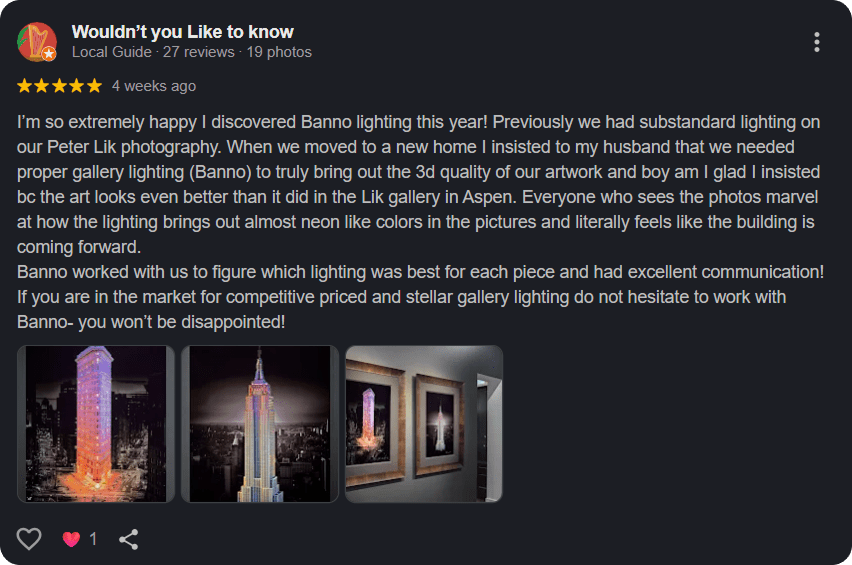
Gallery Owner Testimonial: Why Professionals Choose Our Display Lighting
Why museums require a higher lighting standard

Long term preservation guiding museum lighting decisions
Paintings in museums are fundamentally different from paintings in retail or private spaces.
They are often:
• Historically significant
• Highly sensitive to light exposure
• Viewed repeatedly over long periods
• Examined closely by scholars, conservators, and the public
Museum lighting must therefore satisfy two goals at once:
- Reveal the artwork truthfully
- Protect the artwork long-term
Any lighting system that compromises either is unacceptable in a museum context.
4.9 stars from art collectors and galleries
How light interacts with paintings in museums

Canvas texture revealed without accelerating material aging
Paintings respond to light in complex and cumulative ways.
Light affects:
• Pigment stability
• Varnish oxidation
• Canvas and substrate aging
• Surface texture perception
• Colour balance and contrast
Excessive light levels or poorly controlled spectra can accelerate deterioration. Poor colour rendering distorts interpretation. Glare disrupts scholarly and public engagement.
Museum lighting must therefore be precise, controlled, and measurable, not decorative.
Museum experience begins at the wall

Calm exhibition space supported by even illumination
Museums are places of contemplation and learning.
Visitors do not rush. They observe closely. They compare works. They return to the same painting from different angles and distances.
Museum lighting for paintings must:
• Allow extended viewing without fatigue
• Maintain visual calm
• Avoid glare and reflections
• Preserve consistent colour perception
When lighting is done well, visitors forget about it entirely. The painting becomes the focus. When lighting is poorly executed, discomfort and distraction appear immediately.
Trust, authority, and museum lighting

Accurate colour rendering strengthening curatorial credibility
Museums operate on trust.
Visitors trust that:
• What they see is accurate
• The artwork is being respected
• The institution understands conservation
Lighting plays a silent but powerful role in reinforcing that trust.
Professional museum lighting:
• Signals curatorial seriousness
• Reinforces institutional credibility
• Demonstrates conservation awareness
• Supports accurate interpretation
Poor lighting quietly undermines authority, even if visitors cannot articulate why.
Why generic lighting fails in museums
Many lighting products marketed as “gallery lighting” are unsuitable for museums.
Common failures include:
• Excessive light output with limited control
• Inconsistent colour rendering
• Visible glare
• Poor dimming performance
• Lack of long-term stability
Architectural and retail lighting prioritise brightness and coverage. Museums prioritise control, accuracy, and preservation.
This is why museum lighting systems must be specified at a higher standard than commercial gallery lighting.
Museum lighting for paintings must start with a lighting plan

Detailed lighting layout aligned with conservation guidelines
Lighting in museums is never improvised.
A professional museum lighting plan considers:
• Conservation light level limits
• Wall heights and viewing distances
• Track placement relative to walls
• Typical painting sizes and formats
• Exhibition rotation schedules
• Future curatorial changes
Without a plan, even high-quality fixtures cannot perform correctly. Museums require predictability and repeatability, not trial and error.
Track lighting as the backbone of museum painting lighting

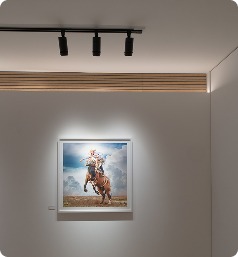
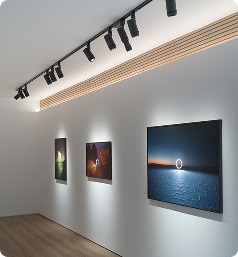
Minimal track infrastructure enabling precise artwork aiming
Track lighting is the preferred infrastructure in museums worldwide.
It allows:
• Precise aiming at individual paintings
• Easy repositioning between exhibitions
• Clean ceilings with minimal visual intrusion
• Long-term adaptability without rewiring
However, museum-grade track lighting is very different from standard track lighting.
Museum track lighting vs generic track lighting

Precision optic fixture compared with commercial alternative
Generic track lighting is designed for flexibility across many environments.
Museum track lighting for paintings prioritises:
• Precision optics
• Extremely low glare
• CRI 97+ colour accuracy
• Stable long-term performance
• Visual restraint
This distinction is critical. Museum lighting must disappear visually while performing flawlessly.
Beam control as a conservation and viewing tool

Defined edges preventing spill onto adjacent works
Beam control is central to museum lighting.
Controlled beams:
• Limit light exposure to the artwork only
• Prevent spill onto adjacent works
• Preserve contrast and legibility
• Reduce cumulative light damage
Wide, uncontrolled beams increase exposure unnecessarily and degrade presentation quality. Museums therefore prioritise tight, well-defined beams over brightness.
The critical role of dimming in museum lighting

Flicker free dimming meeting strict conservation limits
Dimming is essential in museums. Not optional.
Paintings vary in:
• Sensitivity to light
• Age and condition
• Pigment composition
• Exhibition duration
Professional museum lighting for paintings must support smooth, precise dimming so light levels can be set to conservation standards rather than fixed output.
Effective dimming allows museums to:
• Meet strict lux limits
• Reduce exposure for sensitive works
• Balance multiple paintings on one wall
• Adjust emphasis without increasing risk
• Recalibrate lighting as exhibitions rotate
Dimming must be:
• Flicker-free
• Stable at low levels
• Free from colour shift
Any dimming instability is unacceptable in a museum environment.
Why CRI 97+ is non-negotiable in museums

High CRI LED revealing authentic pigment relationships
CRI measures how accurately colours are rendered under a light source.
Museums require CRI 97+ for paintings because:
• Art historical interpretation depends on colour accuracy
• Pigment relationships are often subtle
• Whites, greys, and earth tones must remain neutral
• Scholars and conservators expect fidelity
Lower CRI lighting:
• Alters perceived colour balance
• Flattens tonal relationships
• Undermines academic and curatorial confidence
Professional museum lighting for paintings must use CRI 97+ LEDs to ensure faithful representation.
Zoom lighting in museum environments

Precise framing achieved without fixture replacement
Zoom lighting systems are valuable in museums where exhibitions change regularly.
Zoom allows:
• Adjustable beam angles from a single fixture
• Precise framing for varied painting sizes
• Reduced need for fixture replacement
• Controlled exposure through beam shaping
In museums, Zoom lighting improves efficiency while maintaining strict lighting standards.
It allows curators and technicians to adapt without compromising conservation goals.
Multi lighting for layered museum exhibitions
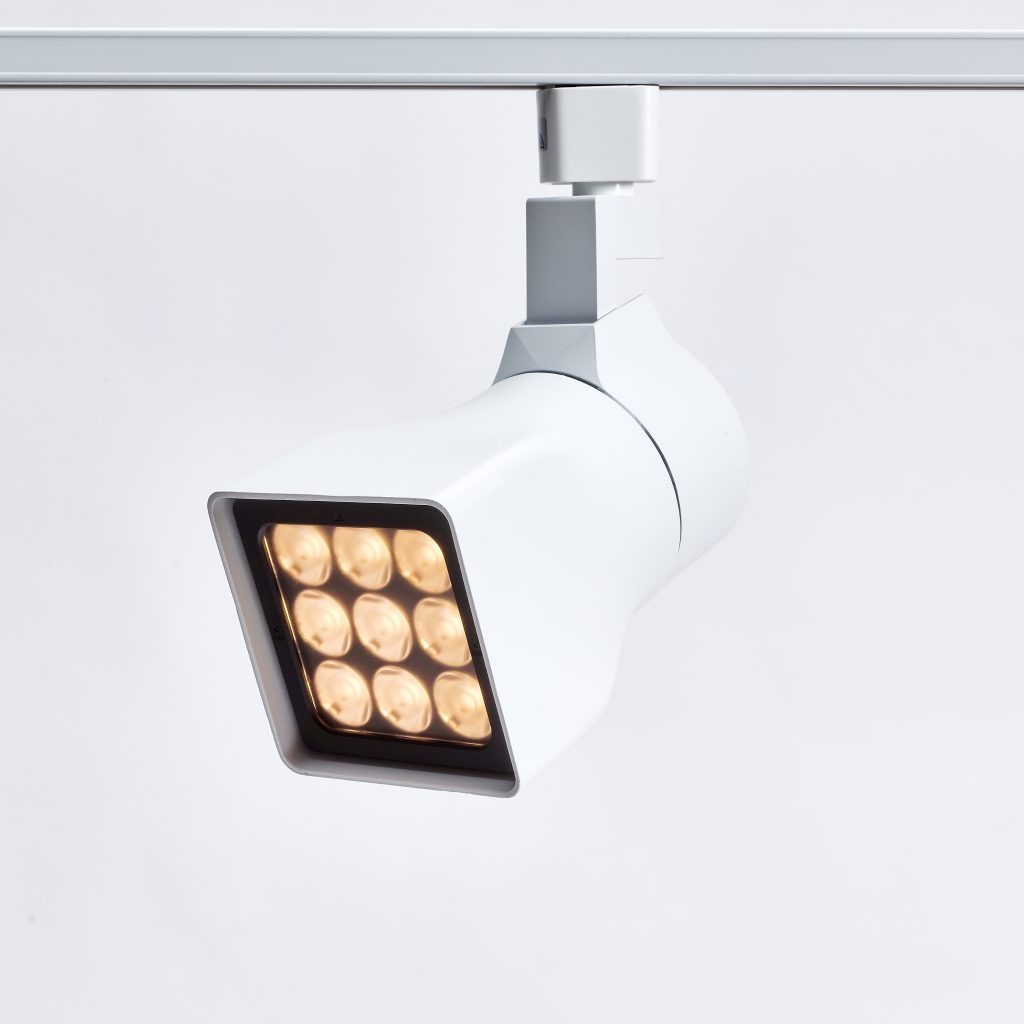
Varied beam treatments respecting curatorial priorities
Multi lighting systems are used in museums where exhibitions require nuanced differentiation.
They are particularly effective when:
• Paintings vary in importance or sensitivity
• Master works require emphasis
• Conservation limits differ between works
• Curatorial hierarchy must be respected
Multi systems allow museums to apply different lighting treatments while maintaining overall coherence and restraint.
Deluxe lighting for flagship museum collections
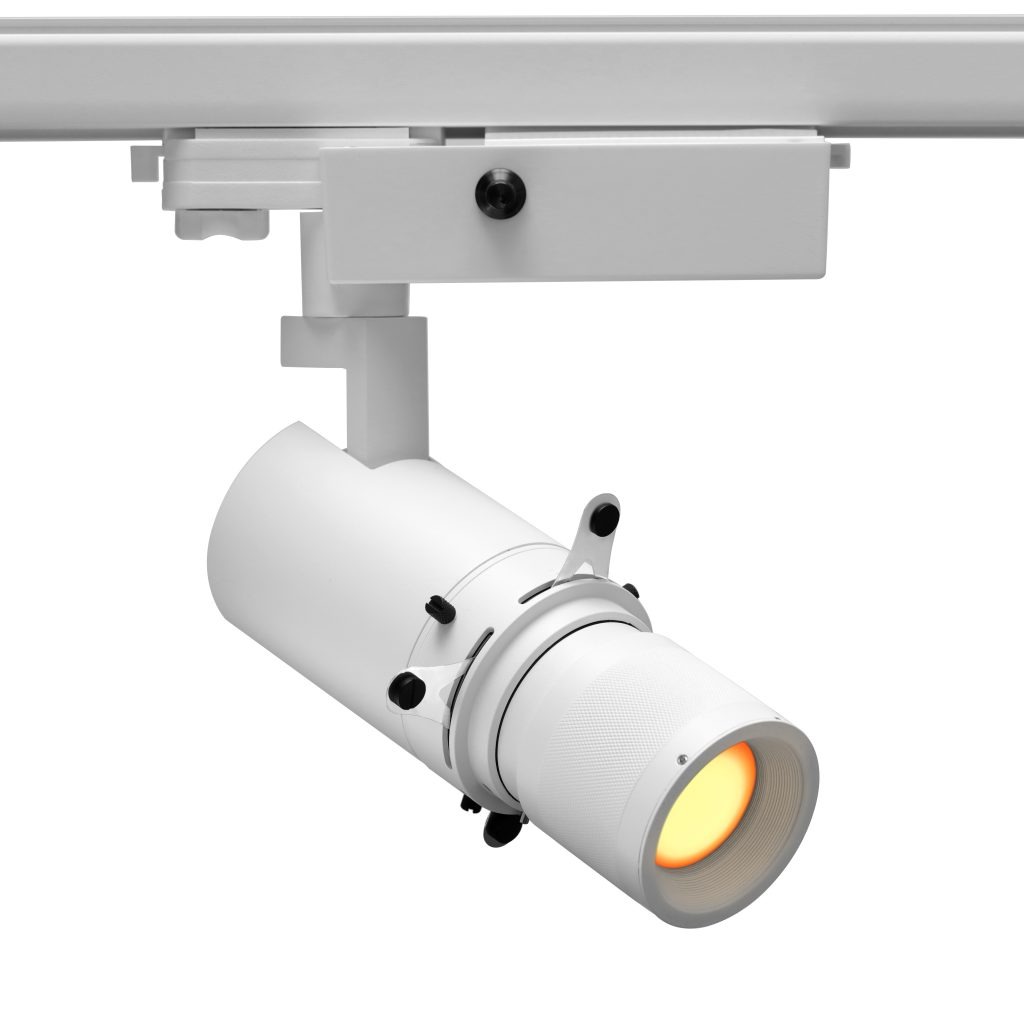
Museum grade spotlight delivering exceptional beam precision
Deluxe lighting systems represent the highest level of museum lighting performance.
They are used for:
• Permanent collections
• Master paintings
• National and international loan works
• Flagship exhibition spaces
Deluxe systems focus on:
• Exceptional beam quality
• CRI 97+ colour accuracy
• Ultra-stable dimming
• Long-term reliability
In these spaces, lighting must disappear completely while meeting the highest conservation and presentation standards.
Colour temperature in museum lighting for paintings

Neutral 3000K light preserving historical colour balance
Most museums use 3000K lighting for paintings.
3000K:
• Balances warmth and neutrality
• Preserves colour accuracy
• Feels calm and appropriate for long viewing
• Aligns with conservation standards
Some museums use 2700K selectively for specific historical works where warmth supports interpretation. This is done cautiously and always within conservation guidelines.
Cooler temperatures are rarely used in painting galleries due to their clinical appearance and reduced tonal nuance.
Glare control in museum painting lighting

Controlled beam angle improving close examination
Glare is unacceptable in museums.
Visitors often view paintings closely and from multiple angles. Glare disrupts interpretation and causes discomfort.
Professional museum lighting addresses glare through:
• Precision optics
• Careful aiming
• Appropriate track placement
• Controlled beam angles
When glare is eliminated, engagement increases and interpretation improves.
Consistency across time and exhibitions

Stable colour output maintained across multiple galleries
Museums think in decades, not seasons.
Lighting systems must:
• Perform consistently over many years
• Maintain colour accuracy
• Support repeated exhibition changes
• Avoid technological obsolescence
Consistency builds trust with artists, lenders, and the public.
Long-term responsibility in museum lighting

Durable LED system supporting decades of preservation
Museum lighting is a long-term decision.
A properly designed system allows:
• Decades of use
• Minimal intervention
• Reduced risk to artworks
• Predictable conservation outcomes
Short-term lighting decisions create long-term problems. Museums cannot afford compromise.
Precision Beam Control in Museum Lighting for Paintings
Precision beam control is fundamental in museum lighting for paintings. Unlike general illumination, museum lighting must direct light only where it is needed, avoiding unnecessary exposure to surrounding areas. This level of control protects artworks while maintaining clarity.
Narrow beam angles are often used to isolate individual paintings, reducing light spill and limiting cumulative exposure. Wider beams may be required for larger works, but must still be carefully shaped to ensure even coverage without exceeding conservation limits.
Professional museum lighting systems use advanced optics to create clean beam edges. This ensures that light is contained within the boundaries of the painting, preventing adjacent works from being unintentionally illuminated.
By controlling beam spread precisely, museums reduce overall light exposure while preserving visual integrity.
Fixture Positioning and Conservation Alignment

Strategic light alignment ensuring even illumination across the painting surface
In museum environments, fixture positioning is not just a visual decision. It is a conservation decision.
The placement of each fixture determines:
• Light intensity on the artwork
• Reflection angles on varnished surfaces
• Distribution of light across the painting
• Viewer comfort and accessibility
Fixtures must be positioned at calculated distances from the wall and aligned with the centre of the artwork. Incorrect placement can lead to uneven illumination or increased glare, both of which compromise the viewing experience.
Careful positioning ensures that paintings are illuminated evenly while maintaining strict control over exposure levels. This balance is essential in preserving sensitive materials over time.
Lighting Large Paintings Within Conservation Limits
Large paintings present a unique challenge in museum lighting. Achieving even illumination across a large surface area often requires multiple fixtures, but each additional light source increases total exposure.
To address this, museums use coordinated lighting strategies:
• Overlapping beams are carefully balanced to avoid hotspots
• Light levels are matched precisely across fixtures
• Beam edges are aligned to create seamless coverage
The objective is to create uniform illumination without exceeding recommended lux levels. When done correctly, the painting appears evenly lit while still meeting conservation standards.
This approach allows museums to display large-scale works without compromising their long-term preservation.
Establishing Curatorial Hierarchy Without Increasing Exposure

Controlled contrast guiding visitor attention through the museum gallery space
Museums often present works of varying importance within a single exhibition. Lighting can reinforce this hierarchy, but must do so without increasing overall light exposure.
Rather than significantly increasing brightness, subtle adjustments are used:
• Slight variations in beam focus
• Controlled contrast between works
• Careful positioning to enhance prominence
These techniques guide visitor attention without introducing additional risk to sensitive paintings.
The result is a gallery that feels intentional and structured, while remaining within conservation limits.
Eliminating Light Spill to Protect Adjacent Works
Light spill is a critical issue in museum lighting. When light extends beyond the intended target, it exposes nearby artworks unnecessarily and reduces visual clarity.
Controlled lighting systems prevent spill by:
• Using precision optics
• Selecting appropriate beam angles
• Positioning fixtures accurately
By containing light strictly within the painting’s surface, museums minimise exposure across the gallery.
This not only protects adjacent works but also improves contrast and visual separation between paintings.
Prioritising Vertical Illuminance Over Ambient Light
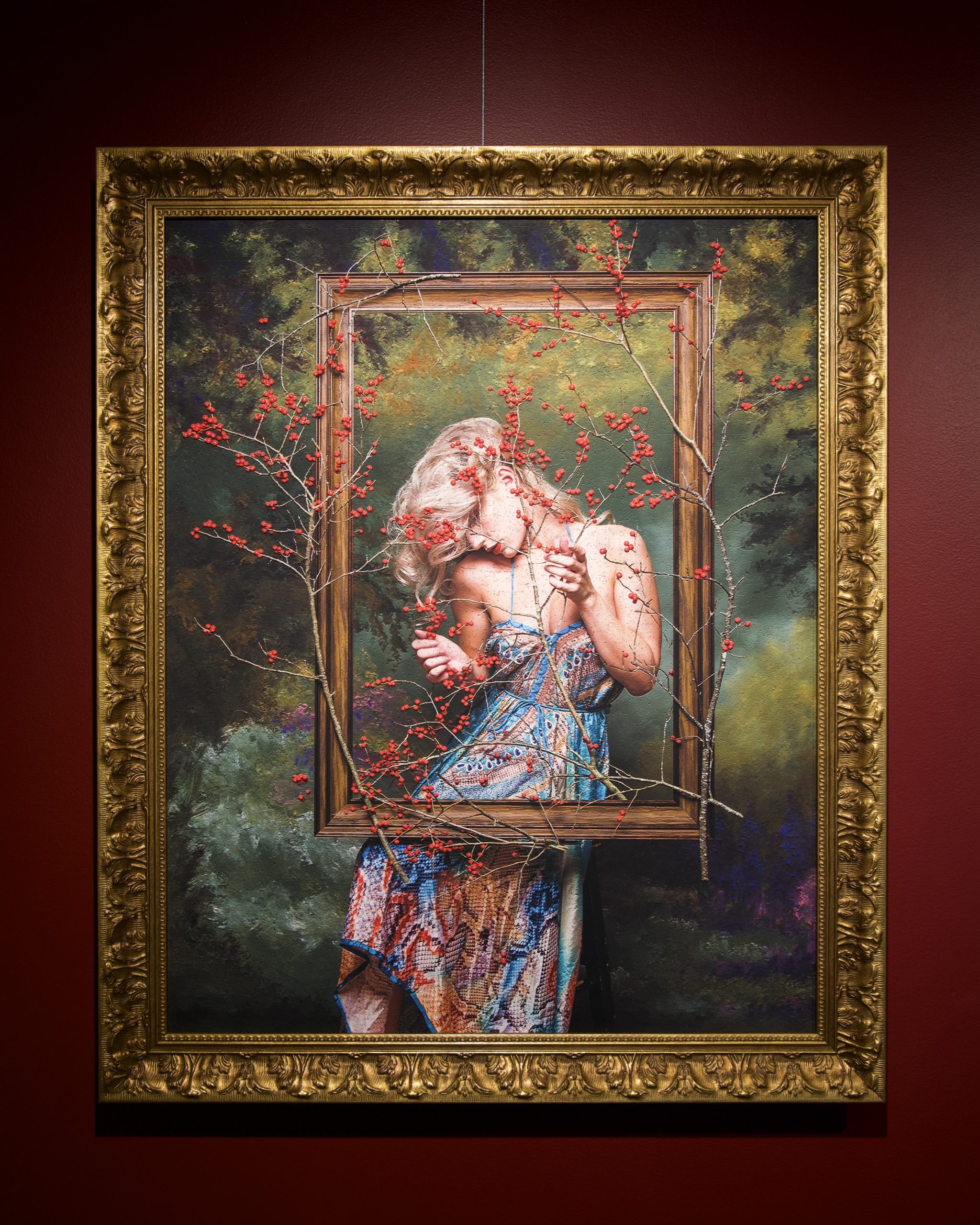
Focused vertical illuminance revealing detail while keeping the room calm
Museum lighting focuses on vertical surfaces, not general room illumination.
Paintings are displayed on walls, so light must be directed vertically to reveal detail without increasing overall brightness in the space. Excess ambient light contributes little to visibility but adds to cumulative exposure.
By prioritising vertical illuminance:
• Light is used more efficiently
• Paintings receive the attention they require
• Surrounding areas remain calm and unobtrusive
This approach supports both conservation and visual clarity, reinforcing the museum environment.
Managing Reflections on Varnished and Glazed Paintings
Many museum paintings are varnished or protected with glazing, making them highly reflective. Uncontrolled lighting creates glare that interferes with viewing and interpretation.
Managing reflections requires:
• Precise aiming angles
• Controlled beam intensity
• High-quality optical systems
Even small adjustments in fixture angle can significantly reduce glare. The goal is to allow close viewing without visual obstruction.
When reflections are controlled effectively, visitors can engage with the painting’s detail and surface without distraction.
Lighting and Frame Sensitivity in Museums
Frames play an important role in how paintings are presented and perceived. In museums, frames are often historically significant and must be considered as part of the lighting design.
Different frame types introduce specific challenges:
• Gilded frames can reflect light
• Deep frames can create shadows
• Ornate detailing can catch highlights
Lighting must be adjusted to respect both the painting and its frame. The aim is to maintain balance, ensuring the frame supports the artwork without becoming visually dominant.
This sensitivity contributes to a cohesive and historically accurate presentation.
Maintaining Consistency Across Galleries and Time

Uniform color temperature across multiple galleries for a stable experience
Consistency is essential in museum lighting.
Visitors may move between galleries or return months later. Paintings must appear stable and consistent regardless of their location or the time of viewing.
To achieve this, lighting systems must:
• Maintain uniform colour temperature
• Deliver consistent output across fixtures
• Resist performance drift over time
Consistency reinforces trust. It ensures that what visitors see remains reliable and that curatorial standards are upheld across exhibitions.
Adapting Lighting for Rotating Exhibitions
Museums regularly rotate exhibitions to manage exposure and present new works. Lighting systems must support this without compromising conservation standards.
Track-based systems allow:
• Fixtures to be repositioned efficiently
• Beam angles to be adjusted for different painting sizes
• Light levels to be recalibrated quickly
This flexibility ensures that each new exhibition can be lit correctly while maintaining strict control over exposure.
Adaptability is essential in balancing preservation with the need to display artworks.
Maintaining Curatorial Control Through Lighting Discipline
As exhibitions evolve, maintaining curatorial control through lighting becomes increasingly important. Without a disciplined approach, even well-designed systems can drift into inconsistency over time.
Each new exhibition introduces different painting sizes, palettes, and spatial relationships. Without a clear lighting standard, adjustments made during rehanging can gradually compromise overall balance.
Professional museums maintain control by:
• Reapplying consistent aiming principles
• Keeping beam angles appropriate to artwork size
• Ensuring light levels remain balanced across walls
• Regularly reviewing lighting from the visitor’s perspective
This consistency allows exhibitions to change without sacrificing presentation quality.
Lighting discipline also reinforces institutional identity. Visitors associate the space with clarity, calmness, and trustworthiness. Paintings are always presented in a way that feels considered and intentional.
Over time, this reliability becomes part of the museum’s reputation.
Reducing Visual Fatigue in Museum Environments
Minimized harsh contrasts protecting visitors from eye strain and fatigue
Museum visitors often spend extended periods observing artworks. Lighting must support this level of engagement.
Poor lighting can lead to:
• Eye strain
• Reduced attention span
• Discomfort during close viewing
Comfortable lighting:
• Feels soft and balanced
• Minimises harsh contrasts
• Supports prolonged observation
Reducing visual fatigue is essential in environments designed for study, reflection, and repeated viewing.
Integrating Lighting with Museum Architecture
Lighting must integrate seamlessly with the architectural design of the museum.
This includes:
• Clean ceiling integration
• Minimal visual clutter
• Alignment with display walls and circulation paths
When lighting is well integrated, it becomes nearly invisible. The focus remains entirely on the artwork.
Poor integration disrupts the visual experience and detracts from the gallery environment.
Supporting Natural Visitor Movement
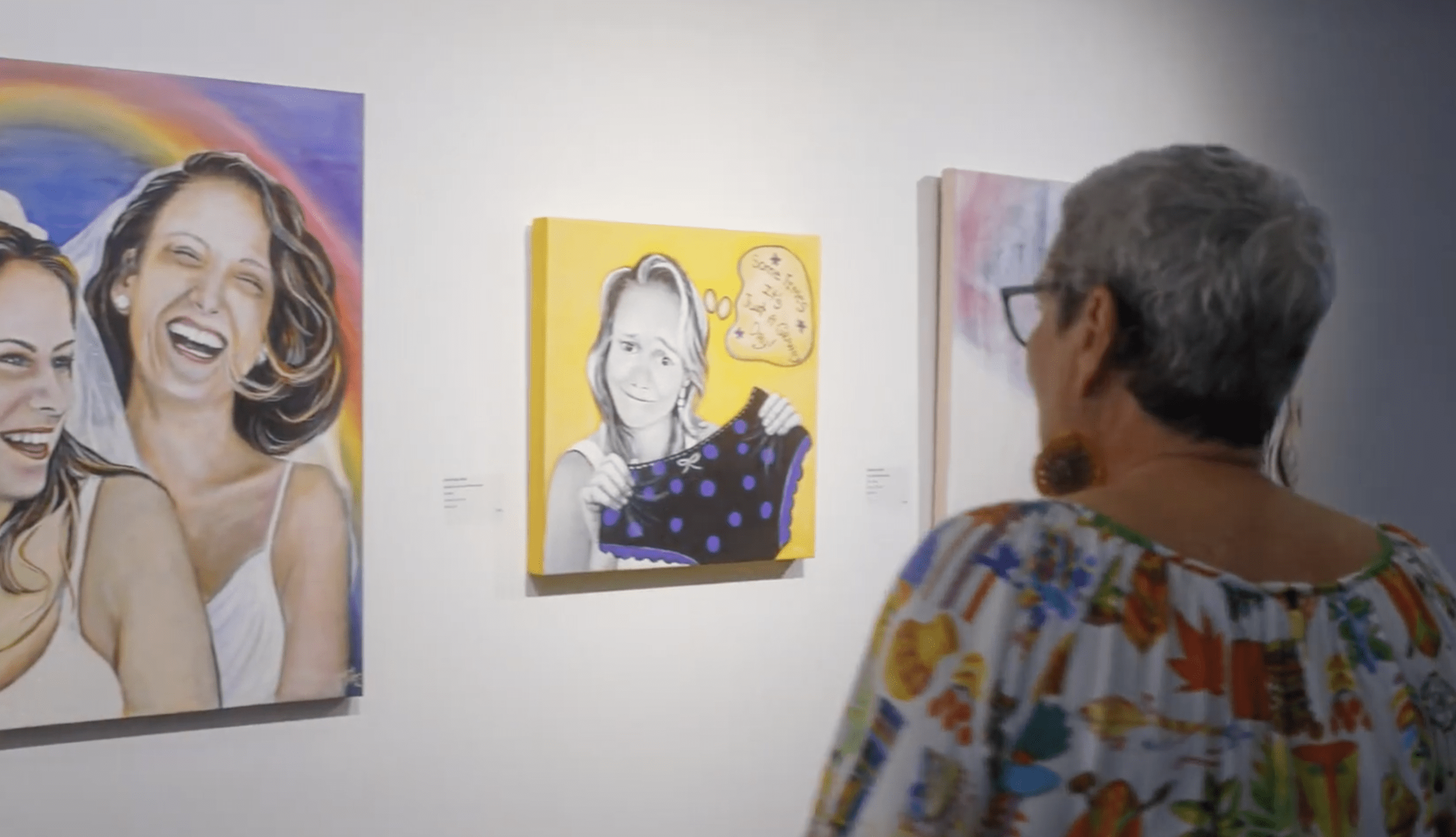
Intentional light distribution preventing areas from feeling neglected or dark
Museum visitors move through spaces in a deliberate and exploratory way. Lighting plays a key role in guiding this movement.
Balanced lighting:
• Creates a natural visual rhythm
• Encourages progression from one painting to another
• Prevents areas from feeling neglected
By supporting movement, lighting enhances the overall experience without directing attention too aggressively.
Avoiding Overlighting in Museum Spaces
Excessive lighting is a common mistake in non-museum environments. In museums, it is both visually and conservationally problematic.
Overlighting can:
• Accelerate material degradation
• Flatten tonal variation
• Increase glare
• Reduce emotional impact
Museum lighting focuses on balance rather than intensity. The goal is to reveal detail while preserving subtlety and protecting the artwork.
Enhancing Texture While Preserving Materials
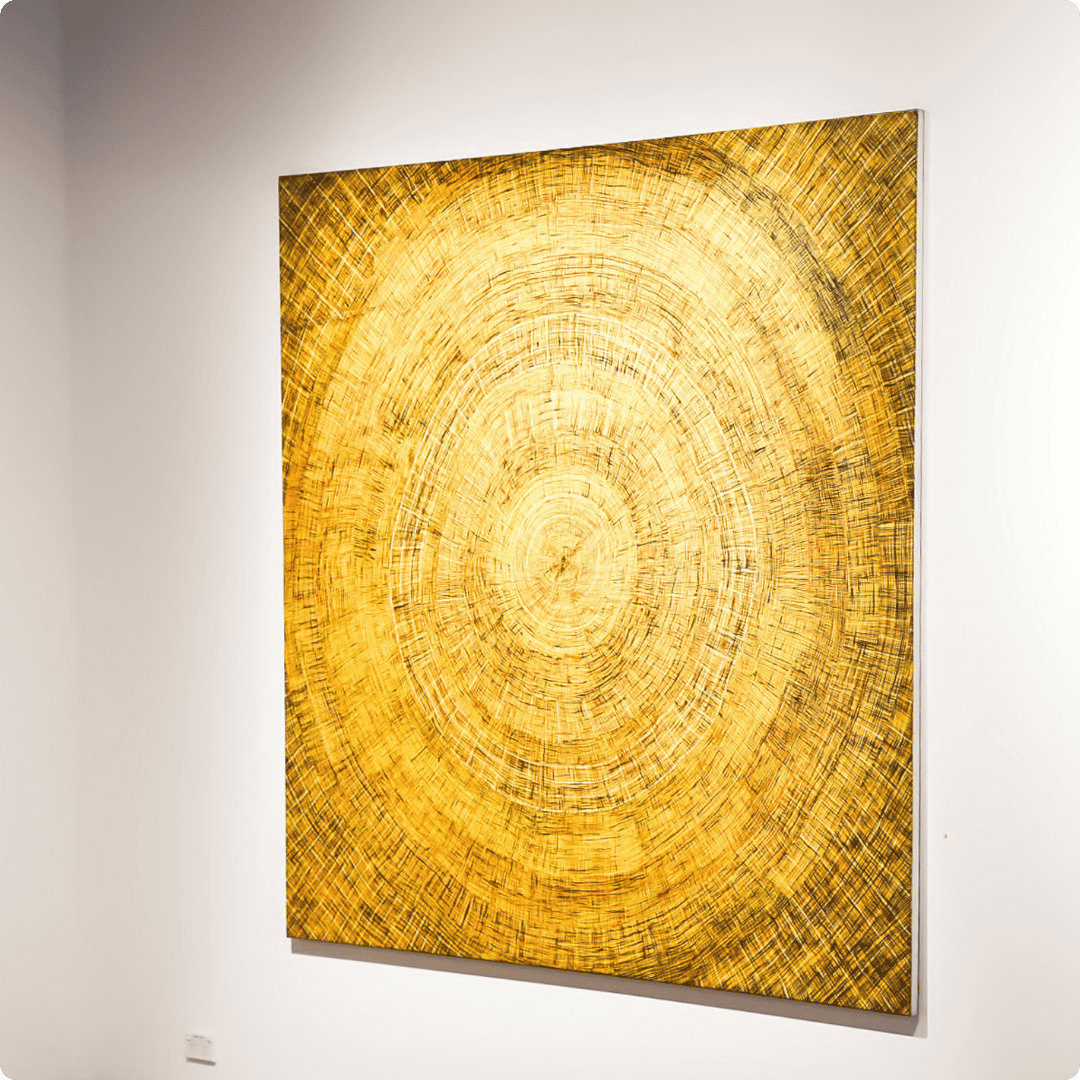
Directional lighting revealing brushstroke detail without increasing total exposure risk.
Paintings often contain physical texture that contributes to their visual impact. Lighting can enhance this, but must do so carefully.
Directional lighting can:
• Reveal brushstroke detail
• Emphasise layered pigments
• Add depth to the surface
However, excessive intensity or poor angles can introduce glare or increase exposure risk.
Balanced lighting reveals texture without compromising conservation.
Long-Term Reliability in Museum Lighting Systems
Museum lighting systems must perform reliably over extended periods.
They must:
• Maintain colour stability
• Provide consistent dimming performance
• Resist degradation over time
Frequent maintenance or inconsistent performance can disrupt exhibitions and introduce risk.
Professional systems are designed for longevity, ensuring stable operation across years or decades.
Fine-Tuning Lighting During Installation
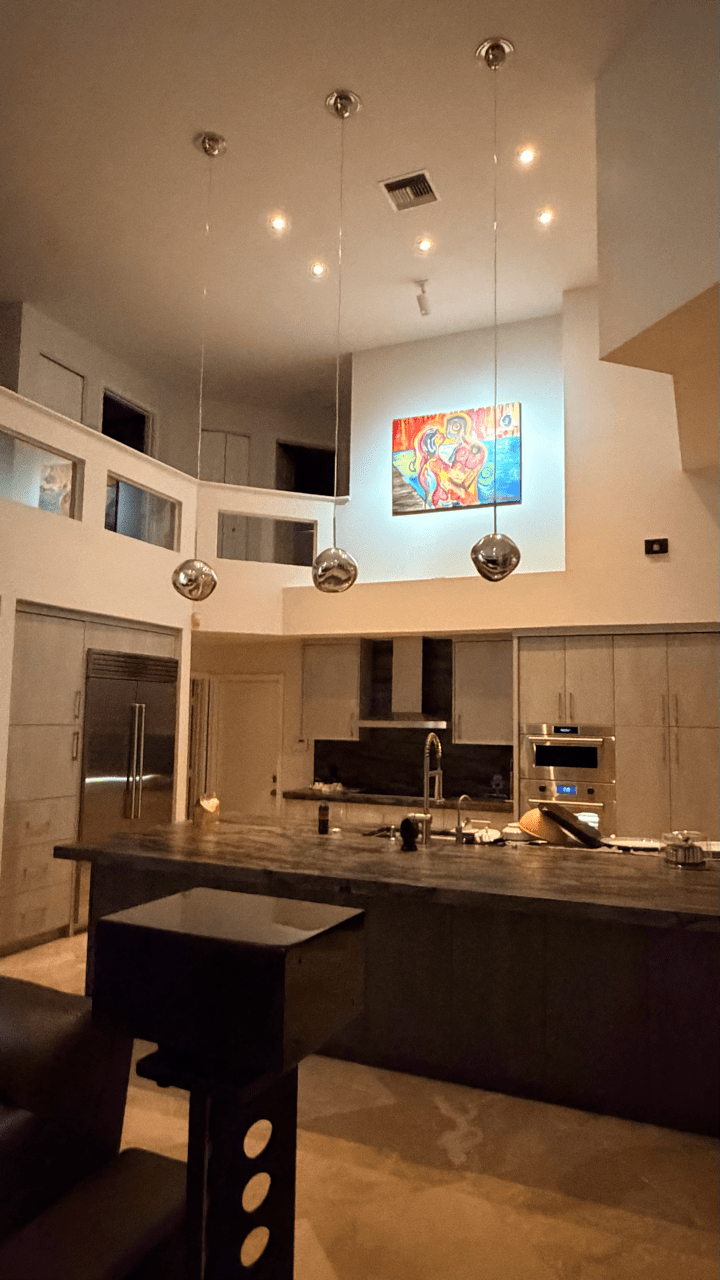
Refined beam edges providing precise framing for newly installed paintings
Even with a detailed lighting plan, final adjustments are essential.
Each painting must be evaluated in its installed position. This includes:
• Adjusting beam angles to eliminate minor glare
• Balancing brightness across adjacent works
• Refining beam edges for precise framing
• Checking consistency from multiple viewing positions
These refinements ensure that the lighting performs as intended in real-world conditions.
Viewing Paintings in Context
Paintings are not experienced in isolation. Their lighting must be considered in relation to the surrounding environment.
This includes:
• Other artworks
• Wall colour and material
• Overall exhibition lighting levels
A painting that appears balanced alone may feel too bright or too dim within a full gallery.
Considering context ensures cohesion and consistency across the exhibition.
Achieving a Fully Resolved Museum Presentation
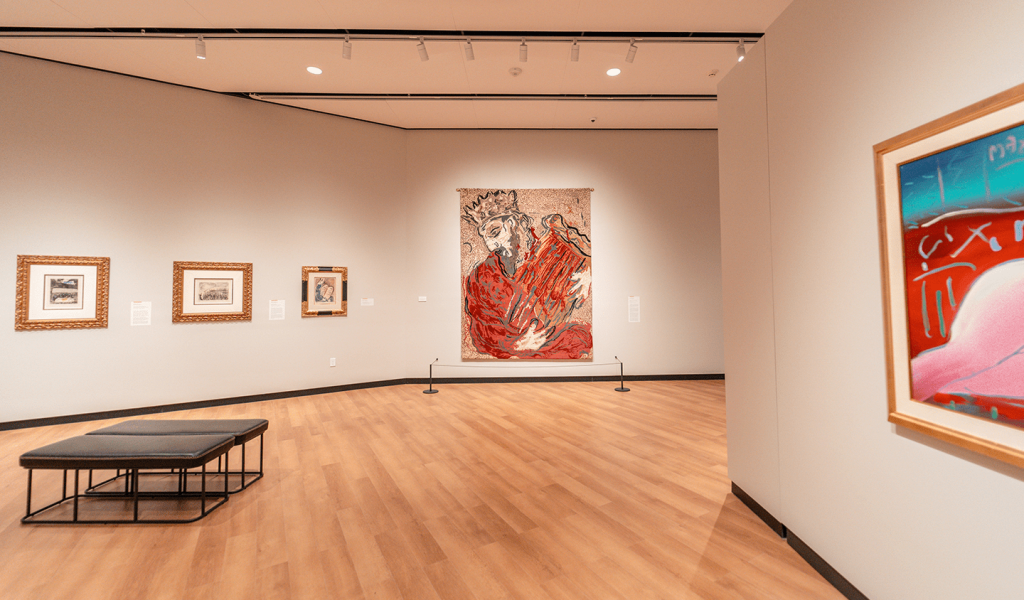
Precision alignment of all elements creating a confident museum experience
The difference between adequate lighting and professional museum lighting lies in refinement.
When all elements are aligned:
• Beam control
• Light levels
• Colour accuracy
• Fixture positioning
The result feels effortless.
Visitors may not consciously notice the lighting, but they will experience its effects. Paintings appear stable, colours feel trustworthy, and the environment supports careful observation.
This level of resolution defines professional museum lighting for paintings. It ensures that artworks are presented with clarity while being protected for future generations.
Frequently Asked Questions
Museum lighting for paintings
What is the best lighting for paintings in museums?
The best museum lighting for paintings uses track-based systems with CRI 97+ colour accuracy, smooth, stable dimming, and precision beam control to balance conservation and presentation.
Why is CRI 97+ required in museums?
CRI 97+ ensures faithful colour rendering. Museums require accurate interpretation of pigments and tonal relationships, which lower CRI lighting cannot provide.
Why must museum lighting be dimmable?
Dimming allows museums to meet strict conservation light limits, protect sensitive works, and fine-tune presentation without increasing exposure.
Is LED lighting suitable for museum paintings?
Yes. Professional-grade LED lighting is now the standard in museums due to low heat output, long-term stability, CRI 97+ capability, and excellent dimming performance.
Why is track lighting preferred in museums?
Track lighting allows precise aiming, adaptability, and clean integration while supporting exhibition changes without rewiring.
What colour temperature do museums use for paintings?
Most museums use 3000K. 2700K may be used selectively for historical works when appropriate and within conservation limits.
How do museums avoid glare on paintings?
Glare is avoided through controlled optics, precise aiming, correct track placement, and careful dimming.
Final perspective on museum lighting for paintings

Accurate colour rendering strengthening public trust
Museum lighting for paintings is about responsibility.
When lighting is done properly:
• Paintings are protected
• Colour is rendered truthfully
• Visitors engage deeply
• Curatorial authority is reinforced
• Cultural heritage is preserved
This is the purpose of professional museum lighting.
Why museums choose Banno Lighting
Museums work with Banno Lighting because we understand lighting at a conservation and institutional level.
We provide:
• Expert guidance
• Museum-grade lighting plans
• Track-based painting lighting systems
• Zoom, Multi, and Deluxe solutions
• CRI 97+ colour accuracy
• Ultra-stable dimming
• Long-term support
If you want museum lighting for paintings that protects artwork, respects history, and delivers clarity without compromise, professional systems and guidance are essential.
You’re working with dedicated art lighting experts