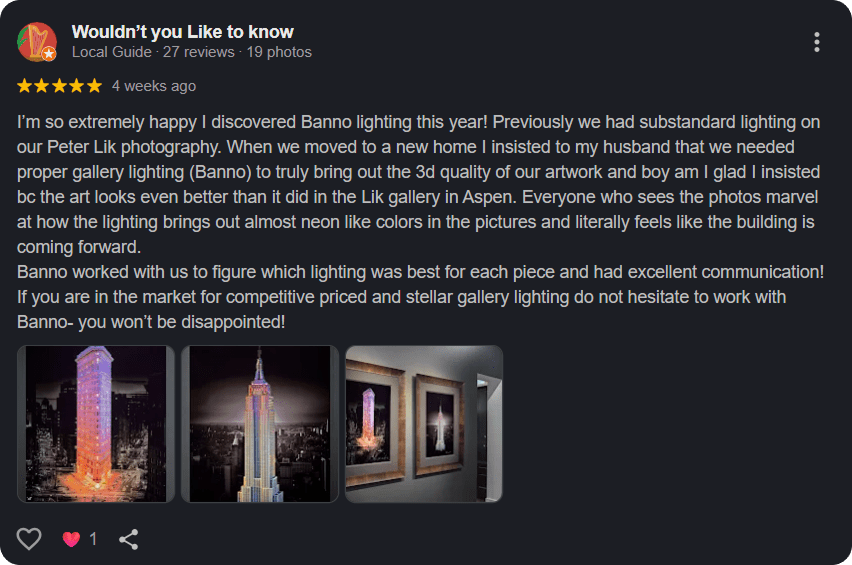
Directional art spotlight creating controlled beam on contemporary canvas display
A spot light for artwork is not simply a beam aimed at a painting. In professional art environments, it is a precision instrument designed to reveal detail, protect materials, and shape perception.
Whether installed in a museum, contemporary gallery, or refined private residence, the right spotlight for artwork enhances texture, preserves color accuracy, and creates subtle visual hierarchy. The wrong one introduces glare, hotspots, and distortion.
This guide explores how to select, position, and integrate a spot light for artwork in serious art spaces.
Client Testimonial: Real Feedback from a Gallery Owner
What Is a Spot Light for Artwork
A spot light for artwork is a directional fixture engineered to illuminate a specific piece with controlled beam spread and high color accuracy.
Unlike general ceiling downlights, art spotlights offer:
- Adjustable beam angles
- High color rendering index
- Precise aiming capability
- Glare control
- Dimming compatibility
A properly specified spotlight for artwork should disappear visually while elevating the art itself.
Spotlight for Art Gallery Applications

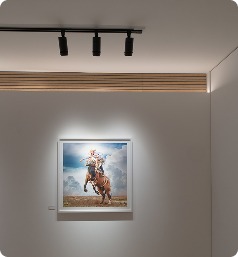
Professional art gallery lighting system focusing beams across multiple paintings
In professional settings, a spotlight for art gallery use must accommodate rotating exhibitions, varied artwork sizes, and conservation standards.
Track mounted art spotlights led systems are common because they allow:
- Repositioning without rewiring
- Adjustable focus
- Lens changes
- Controlled overlap for larger works
Ceiling spotlight for artwork installations must align with artwork centers, not arbitrary ceiling spacing.
Precision tools such as Zoom style fixtures are often used for smaller works requiring tight beam control. Flexible systems like Multi allow curators to adapt layouts quickly. Museum grade solutions such as Deluxe prioritize visual comfort and stability in permanent collections.
Each serves a distinct role within gallery environments.

4.9-star rated by art collectors and gallery professionals
Ceiling Spotlight for Artwork: Geometry and Placement
A ceiling art spotlight must follow correct geometry.
The recommended angle is approximately 30 degrees from vertical. This positioning:
- Minimizes glare
- Reveals surface texture
- Prevents viewer reflection
Beam width must correspond to artwork size. For medium paintings, 24 to 36 degree beams are common. Smaller works may require narrow beams. Large paintings may require multiple fixtures.
Ceiling spotlight for artwork systems offer greater flexibility than wall mounted solutions.
Adjustable Spotlight for Artwork

Museum style adjustable spotlight directing focused light onto wall artwork
An adjustable spotlight for artwork allows:
- Tilt adjustment
- Rotational alignment
- Beam refinement
- Intensity control
This flexibility is essential when lighting diverse collections.
An adjustable art spot light ensures edge to edge coverage without spill onto adjacent walls. Without adjustability, presentation quality suffers.
LED Spotlight for Artwork

High CRI LED spotlight illuminating painting with natural color fidelity
Modern led spotlight for artwork solutions provide significant advantages over older halogen systems.
Benefits include:
- Minimal heat
- No UV emission
- Energy efficiency
- Stable color temperature
- Long lifespan
Art spotlights led fixtures must maintain consistent output over time. Color shift compromises the integrity of presentation.
Small Spotlight for Artwork and Mini Spotlight for Artwork
Small spotlight for artwork fixtures are ideal for:
- Intimate works
- Dense salon style hangs
- Niche installations
Mini spotlight for artwork systems allow focused illumination without overwhelming surrounding pieces.
These are especially useful when artworks are displayed closely together and individual isolation is required.
Spotlight for Large Painting and Large Artwork

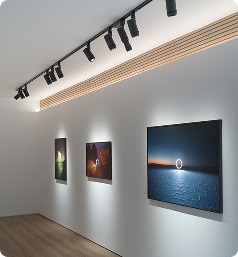
Multiple gallery spotlights evenly illuminating large contemporary canvas painting
Spotlight for large painting installations require different strategy.
Large canvases demand:
- Wider beam spreads
- Higher output
- Overlapping beams for uniformity
Spotlight large artwork setups must avoid visible beam seams. Even distribution ensures balanced presentation.
In some cases, multiple adjustable spotlight for artwork fixtures are positioned carefully to create seamless coverage.
Floor Spotlight for Artwork
While ceiling mounting is preferred in galleries, floor spotlight for artwork solutions may be used in:
- Temporary exhibitions
- Sculptural displays
- Installations without ceiling access
Floor mounted spotlights require careful glare management. The viewer’s sight line must not intersect directly with the light source.
Wireless Spotlight for Artwork and Battery Options

Wireless spotlight illuminating artwork inside gallery building environment
Wireless spotlight for artwork systems are often used in:
- Historic buildings
- Rental spaces
- Short term exhibitions
Battery operated spotlight for artwork or cordless spotlight options provide flexibility where wiring is limited.
However, color accuracy and output stability must still meet professional standards. Rechargeable units should be selected carefully to avoid inconsistent brightness.
Lighting for Framed Artwork
Lighting for framed artwork introduces additional considerations due to glazing and reflective surfaces.
Spotlight for wall painting installations behind glass must:
- Avoid direct reflection
- Maintain correct beam angle
- Control brightness
Lighting for artwork on wall systems must prevent glare at typical viewing distances.
Pin Spot Lighting for Art

Narrow beam spotlight isolating small art object on wall
Pin spot lighting for art refers to very narrow beam illumination, often used to isolate small objects or highlight specific details.
Applications include:
- Small sculptures
- Jewelry displays
- Detail highlighting in mixed media works
Pin spot lighting should be used sparingly. Overuse creates visual fragmentation.
How to Light Artwork Correctly
When considering how to light artwork, follow these principles:
- Position the spotlight at approximately 30 degrees.
- Match beam width to artwork size.
- Ensure high color rendering.
- Avoid mixing color temperatures.
- Maintain subtle contrast above ambient light levels.
These guidelines apply whether using ceiling spotlight for artwork or wall mounted systems.
Lighting for Artwork Photography

Professional lighting technique for photographing framed artwork without reflections
Lighting for artwork photography differs slightly from exhibition lighting.
For documentation:
- Even illumination is critical
- Harsh shadows must be avoided
- Glare control is essential
- Color accuracy must be precise
Lighting for photographing artwork often uses multiple directional sources balanced carefully to eliminate reflection while maintaining texture visibility.
Best Spotlight for Artwork
The best spotlight for artwork is defined by performance, not style.
Key characteristics include:
- Adjustable beam angles
- High CRI
- Stable LED output
- Dimming capability
- Glare control
Fixtures designed specifically for art outperform general architectural spotlights.
Lighting for Artwork at Home
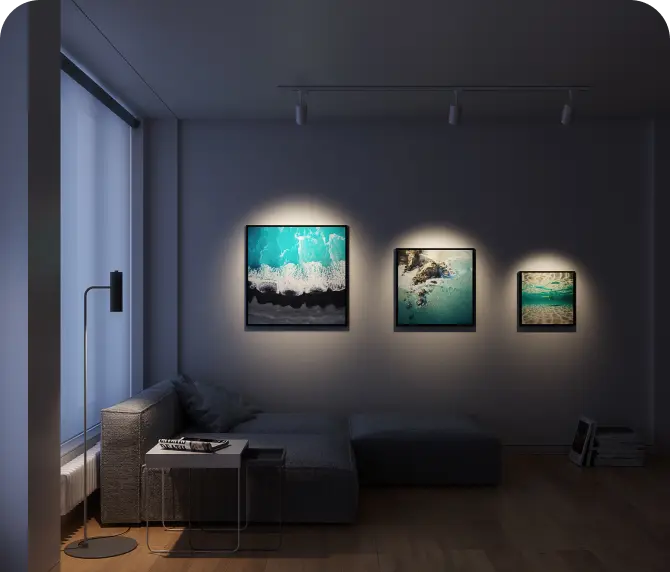
Residential track lighting illuminating framed artwork in modern living room
Lighting for artwork at home should follow professional standards.
Common mistakes include:
- Using generic downlights
- Installing fixtures too close
- Ignoring beam spread
- Mixing color temperatures
Spot light for wall art installations in residential settings benefit from track based adjustable systems.
Precision placement transforms a decorative wall into a curated display.
Spotlight Artwork Display Frame Integration
Some contemporary installations incorporate spotlight artwork display frame systems where lighting is integrated into frame design.
While visually discreet, performance must still ensure:
- Even coverage
- Minimal glare
- Stable output
Frame integrated systems work best for fixed installations.
What Is the Best Lighting for Artwork

Museum quality art lighting demonstrating balanced illumination across painting
When asking what is the best lighting for artwork, the answer depends on medium and context.
In most professional settings:
- High CRI LED
- Adjustable beam control
- Approximately 3000K color temperature
- 30 degree angle positioning
provide optimal results.
A properly selected spot light for artwork enhances depth, preserves color fidelity, and elevates presentation quality.
Optical Discipline in a Spot Light for Artwork
The true performance of a spot light for artwork lies in optical discipline. Not all spotlights are engineered for art. Many architectural spotlights are designed for general illumination and lack the beam refinement required for gallery quality presentation.
A professional spotlight for artwork should provide:
- Clean beam edges without harsh rings
- Even light distribution from center to perimeter
- Controlled spill beyond the artwork boundary
- Minimal visible light source from viewing angle
When optics are poorly designed, the result is a bright central hotspot surrounded by darker edges. This flattens the image and reduces perceived value. A properly engineered led spotlight for artwork maintains balanced illumination across the entire surface.
Beam Spread and Throw Distance

Adjustable art spotlight showing beam width variations at different ceiling heights
Selecting the correct beam angle is critical when specifying a spot light for artwork.
Beam spread must be chosen based on:
- Artwork width
- Ceiling height
- Distance between fixture and artwork
- Desired contrast level
For example:
- A small spotlight for artwork with a 15 to 20 degree beam works well for intimate pieces.
- A medium painting spotlight often benefits from a 24 to 36 degree beam.
- Large canvases may require multiple adjustable spotlight for artwork fixtures to avoid visible overlap lines.
Throw distance affects beam intensity. As ceiling height increases, narrower beams are typically required to maintain focus and contrast.
Contrast Ratio in Gallery Environments
Contrast ratio refers to the brightness difference between artwork and surrounding walls.
When using a spot light for wall art in a gallery, the artwork should generally be slightly brighter than ambient conditions, but not dramatically so.
Excessive contrast:
- Creates glare
- Causes visual fatigue
- Feels theatrical rather than curatorial
Insufficient contrast:
- Reduces visual hierarchy
- Makes artwork feel flat
- Blurs separation from the wall
The ideal balance enhances the artwork subtly without drawing attention to the fixture.
Lighting for Large Artwork Installations

Gallery ceiling fixtures aligned to evenly illuminate expansive wall artwork
Lighting for large artwork requires careful coordination between multiple fixtures.
When using a spotlight for large painting installations:
- Beam overlap must be precise
- Output levels must match across fixtures
- Color temperature must remain identical
Inconsistent brightness between two artwork spot lights creates visible banding across the canvas.
Flexible systems such as Multi style gallery fixtures allow curators to reposition and refine beams as exhibitions change. For highly controlled focal illumination, precision tools like Zoom style fixtures provide narrower, concentrated beams.
In museum environments where long term stability and glare control are critical, solutions such as Deluxe prioritize consistent output and visual comfort.
Lighting for Artwork on Wall in Residential Settings
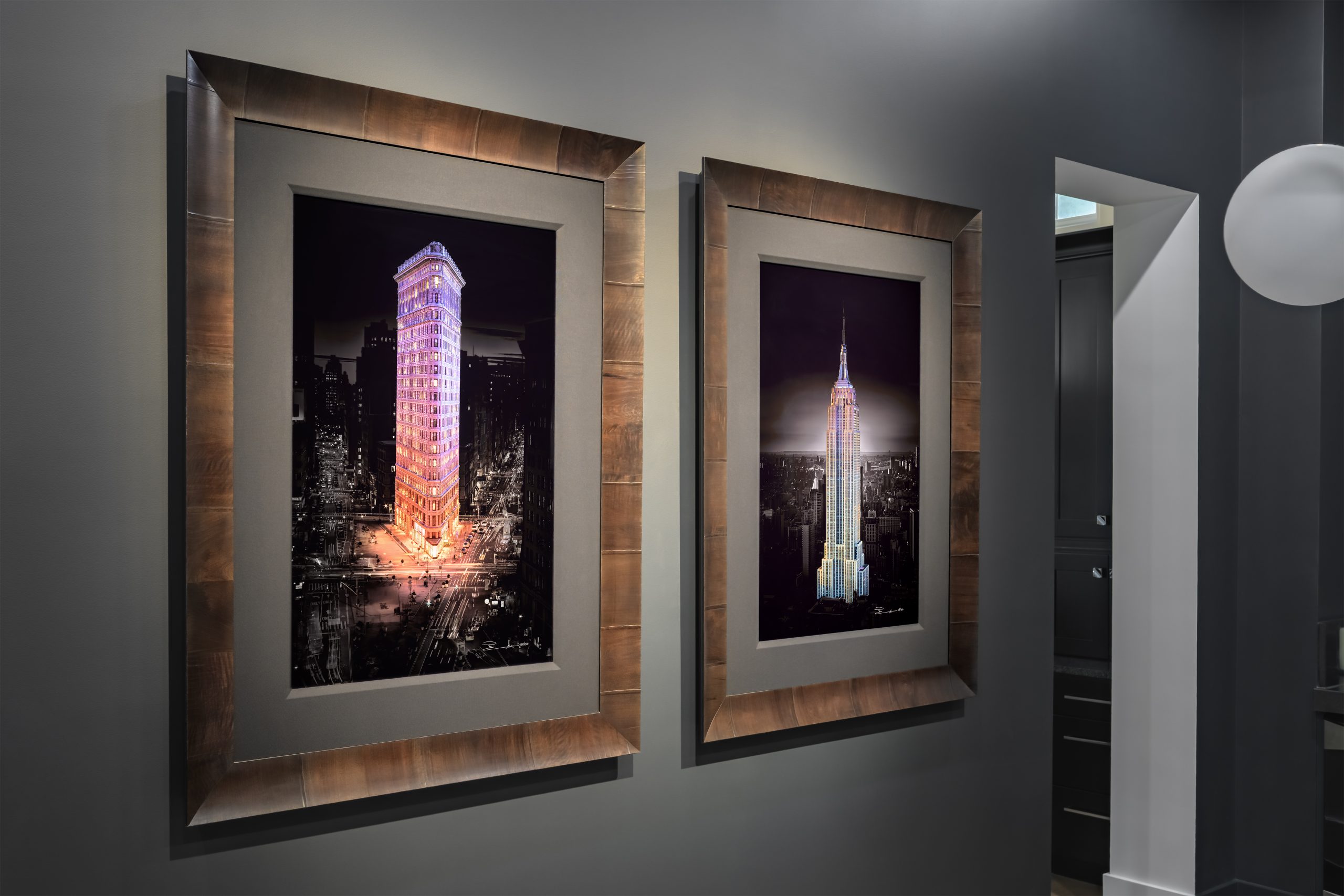
Track mounted spotlight system illuminating framed artwork on residential wall
Lighting for artwork at home often begins with aesthetic intentions but must follow professional principles to achieve gallery level results.
When installing a spot light for artwork in a residential environment:
- Avoid placing fixtures directly overhead at a 90 degree angle
- Maintain the recommended angled approach
- Ensure beam width matches frame dimensions
- Keep color temperature consistent throughout the space
Track systems offer flexibility for evolving collections. A battery operated spotlight for artwork may be suitable in heritage homes where wiring is limited, provided performance remains stable.
Lighting for wall artwork should elevate the collection without overpowering the room’s atmosphere.
Pin Spot Lighting for Art Objects
Pin spot lighting for art is used when extremely narrow focus is required.
This technique is often applied to:
- Small sculptures
- Detailed artifacts
- Jewelry displays
- Highlighted sections of mixed media work
Pin spot lighting must be carefully calibrated. Overly intense narrow beams can create harsh glare or distracting contrast.
When executed correctly, it isolates the object elegantly and enhances dimensionality.
Spotlight for Artwork Photography
Lighting for photographing artwork differs slightly from exhibition lighting, but the principles overlap.
When documenting artwork:
- Even distribution is critical
- Reflections must be minimized
- Color accuracy must be precise
- Shadow control must be balanced
A spotlight for artwork photography may be combined with fill lighting to eliminate unwanted reflections while preserving texture.
Professional documentation setups mimic gallery conditions but often require more controlled symmetry.
Managing Glare and Reflection

Angled spotlight reducing glare and reflections on framed artwork behind glass
Glare is one of the most common issues when using a spot light for artwork.
To reduce glare:
- Maintain approximately 30 degree angle
- Avoid positioning lights directly opposite viewer sight lines
- Use fixtures with integrated glare control
- Adjust intensity carefully
Framed works behind glass require particular attention. A small adjustment in angle can dramatically reduce reflection.
Proper glare management ensures viewer comfort and preserves visual clarity.
Floor Spotlight for Artwork and Sculptural Displays
While ceiling mounted systems are preferred in galleries, floor spotlight for artwork solutions are sometimes necessary.
These are often used for:
- Sculptural installations
- Temporary exhibitions
- Large scale vertical works
When using a floor spotlight for artwork, the light source must remain discreet and positioned outside common sight lines. Unshielded floor lights can easily cause discomfort if not carefully aimed.
Wireless and Cordless Spotlight Solutions
Wireless spotlight for artwork and cordless spotlight systems provide flexibility in locations where wiring is impractical.
These are often used in:
- Historic properties
- Temporary pop up exhibitions
- Rental environments
Battery operated spotlight for artwork units must offer consistent output and high color rendering to maintain professional standards.
While convenient, wireless solutions should never compromise optical quality.
The Psychological Impact of Spotlight on Artwork

Focused lighting guiding viewer attention toward central artwork in gallery
A spotlight on artwork shapes how viewers emotionally connect with the piece.
Subtle directional lighting:
- Enhances depth
- Reveals brushwork
- Encourages closer inspection
- Increases perceived value
Overly aggressive spotlighting can create visual tension and distract from the artwork itself.
The best spotlight for artwork feels natural and balanced, drawing attention to the piece without revealing the mechanism behind it.
Lighting for Artwork in Mixed Medium Exhibitions
In contemporary exhibitions, artworks may combine:
- Reflective surfaces
- Metallic finishes
- Textured layers
- Matte pigments
Each surface reacts differently to light.
An adjustable spotlight for artwork allows fine tuning for each piece. Slight changes in tilt or beam spread can dramatically improve presentation quality.
This adaptability is why dedicated art spotlights led fixtures outperform general architectural lighting.
Consistency Across the Exhibition Space

Coordinated ceiling spotlights preserving visual harmony across displayed artworks
When installing multiple artwork spot lights in a gallery, consistency is critical.
Ensure:
- Identical color temperature
- Uniform brightness levels
- Clean beam alignment
- Balanced contrast
Inconsistent lighting undermines curatorial integrity.
Professional gallery lighting systems are designed to maintain visual harmony across entire rooms.

Final Considerations

Gallery lighting fixtures positioned carefully to elevate artwork viewing experience
Selecting the right spot light for artwork requires attention to:
- Beam precision
- Color accuracy
- Glare control
- Placement geometry
- Flexibility for future adjustments
Precision fixtures such as Zoom provide tight beam control for smaller works. Flexible systems like Multi support dynamic exhibition layouts. Museum grade systems such as Deluxe prioritize stability and long term performance.
A well chosen spotlight for artwork transforms presentation quality. It protects the artwork, enhances perception, and shapes the viewer’s experience.
In galleries, museums, and refined homes, lighting is not decorative. It is curatorial infrastructure.
20 FAQs
1. What is a spot light for artwork
A directional fixture designed to illuminate art with a controlled beam and high color accuracy.
2. What is the best spotlight for artwork
One with an adjustable beam, high CRI LED, and glare control.
3. Can LED spotlights damage paintings
High-quality LED lighting produces minimal heat and no UV, making it safe for artwork.
4. What angle should a spotlight be positioned
Around 30 degrees from vertical.
5. Is ceiling spotlight for artwork better than wall mounted
Ceiling systems generally offer greater flexibility.
6. What beam angle is best for a painting
Typically 24 to 36 degrees for medium-sized works.
7. Can I use wireless spotlight for artwork
Yes, if color accuracy and brightness stability are maintained.
8. How do you light large artwork
Use wider beam angles or multiple overlapping fixtures.
9. What is pin spot lighting for art
Very narrow beam lighting used for small objects.
10. Are small spotlights suitable for art
Yes, for small or closely spaced works.
11. How do you avoid glare on framed artwork
Use the correct beam angle and glare shielding.
12. Should spotlights be dimmable
Yes, dimming helps with conservation and ambiance control.
13. What color temperature is best for art
Usually between 2700K and 3000K.
14. Can I use a floor spotlight for artwork
Yes, especially for temporary displays or sculptures.
15. What is adjustable spotlight for artwork
A fixture that allows tilt and rotation for precise aiming.
16. Is track lighting good for art galleries
Yes, it provides flexibility for changing exhibitions.
17. How bright should art spotlights be
Bright enough for clarity but within conservation limits.
18. What is lighting for artwork photography
Balanced lighting used to document art accurately.
19. Can I install spotlights at home for art
Yes, as long as professional positioning guidelines are followed.
20. Why is a proper spot light for artwork important
Because lighting shapes perception, reveals texture, and protects the artwork.
Client Experiences with Our Professional Lighting Solutions