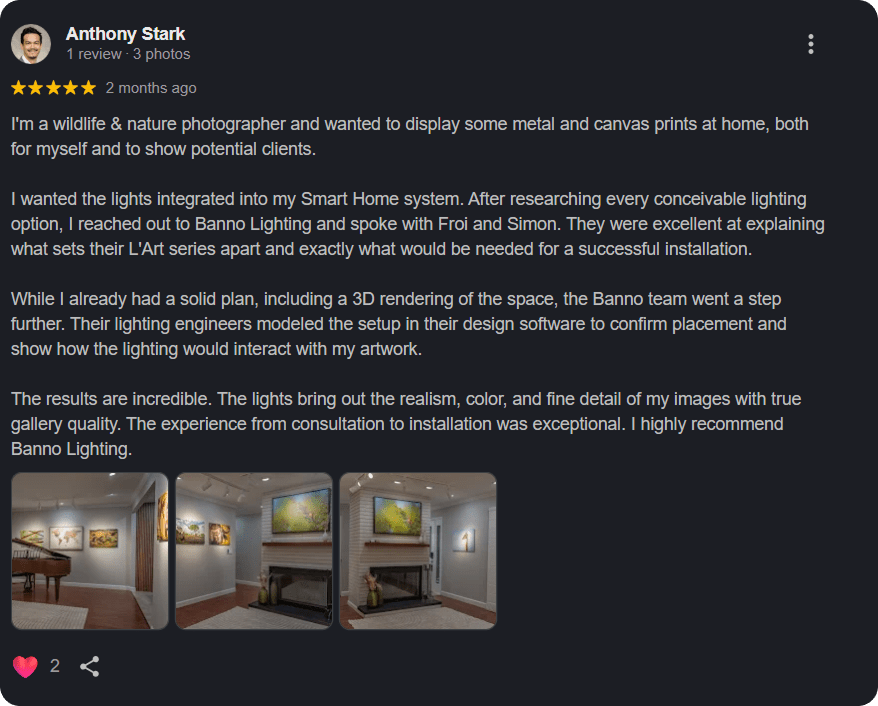
Contemporary gallery space with modular art lighting installation
Track lighting for art is one of the most widely used and effective lighting systems in galleries, museums, artist studios, and high-end residential collections. Unlike fixed lighting, track lighting provides flexibility, precision, and control, allowing artwork to be illuminated with accuracy as layouts, exhibitions, and collections evolve over time.
For galleries, collectors, and designers, the goal of track lighting for art is not simply to brighten a wall. It is to reveal texture, preserve color accuracy, control glare, and create a refined viewing experience that enhances the emotional and visual impact of each piece. When properly specified, art track lighting becomes a curatorial tool rather than just a lighting solution.
Client Testimonial: Real Feedback from a Gallery Owner
What Is Track Lighting for Art and Why It Is Preferred

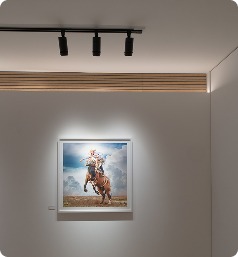
Adjustable track fixtures highlighting artwork inside modern gallery
Track lighting for art refers to adjustable lighting fixtures mounted on a linear track system, allowing individual luminaires to be repositioned and aimed directly at artwork, paintings, sculptures, and displays. This adaptability makes it ideal for professional environments where artwork placement may change frequently.
In art galleries and museums, track lighting systems are preferred because they offer:
- Adjustable beam direction
- Flexible fixture placement
- Consistent illumination across exhibitions
- Clean architectural integration
- Scalable lighting design for growing collections
Unlike traditional ceiling fixtures, track lighting allows precise control over how each artwork is perceived within a space.

4.9-star rated by art collectors and gallery professionals
Track Lighting for Artwork: Precision and Visual Accuracy

Focused spotlight enhancing texture and brushstroke clarity
When lighting artwork, precision is essential. Poor lighting can distort colors, create glare, and flatten textures, diminishing the visual integrity of the piece. Track lighting for artwork solves this issue by enabling controlled beam angles and high color rendering illumination.
Key considerations include:
- Beam angle selection
- Color rendering index (CRI)
- Glare reduction
- Fixture positioning
High-quality track lighting fixtures ensure that the artwork appears as the artist intended, with accurate tones and balanced contrast.
Track Lighting for Art Gallery Environments

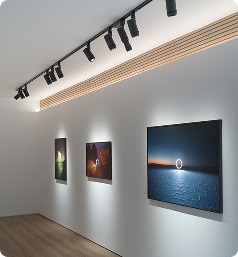
Exhibition space featuring evenly spaced ceiling track lights
Track lighting for art galleries must meet higher standards than residential lighting due to the professional nature of exhibitions. Galleries require lighting systems that can adapt to rotating exhibitions, varying artwork sizes, and different curatorial layouts.
Art Gallery Track Lighting Systems
Professional art gallery track lighting systems typically include modular tracks with adjustable spotlights that can be repositioned as exhibitions change. This flexibility is crucial for maintaining consistent visual presentation across different collections.
Benefits of gallery track lighting systems:
- Adaptability for new exhibitions
- Uniform lighting quality across walls
- Reduced need for rewiring
- Professional aesthetic consistency
LED Track Lighting for Art Gallery Spaces
LED track lighting for art gallery applications is now the industry standard due to its energy efficiency, low heat output, and superior color accuracy. Museums and galleries prioritise LED systems to protect sensitive artworks from excessive heat and UV exposure.
Best Track Lighting for Artwork and Paintings

Narrow beam track light accentuating fine art photography
Selecting the best track lighting for artwork involves more than choosing brightness levels. The fixture quality, optics, and beam precision all play critical roles in achieving museum-grade results.
Beam Angle and Painting Illumination
Narrow beam angles are ideal for:
- Paintings
- Photography
- Wall-mounted artwork
- Fine art displays
Medium beam angles are better suited for:
- Large canvases
- Multi-piece wall displays
- Exhibition walls
Correct beam selection prevents hotspots while ensuring even illumination across the artwork surface.
Ceiling Track Lighting for Art in Collector Homes

Residential gallery wall with discreet track spotlights
High-end residential collectors increasingly use ceiling track lighting for art to replicate gallery-quality presentation within private spaces. This approach allows homeowners to highlight valuable artwork while maintaining a minimalist interior design aesthetic.
Modern track lighting for art integrates seamlessly into ceilings and architectural layouts, offering discreet yet powerful illumination without visual clutter.
Wall Mounted Track Lighting for Artwork
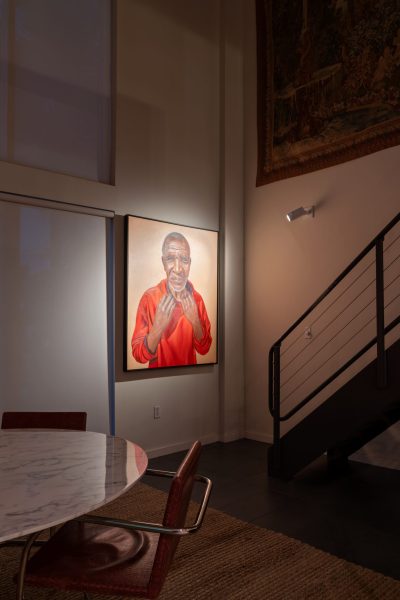
Wall mounted track illuminating corridor art display
Wall mounted track lighting for artwork is particularly effective in spaces where ceiling installation is limited or where directional emphasis is required. This method provides targeted illumination while maintaining flexibility in fixture positioning.
It is commonly used in:
- Private galleries
- Luxury apartments
- Museum corridors
- Exhibition hallways
Track Lighting for Art Studio and Artist Workspaces
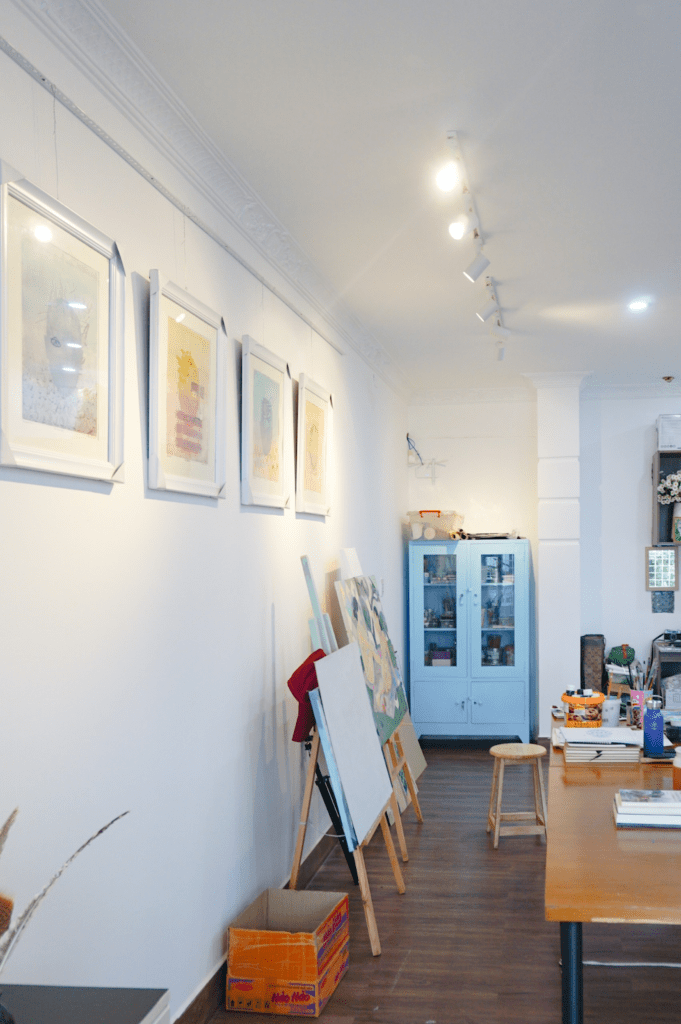
Artist studio workspace lit with high CRI tracks
Track lighting for art studio environments must balance functional illumination with accurate color rendering. Artists rely on consistent lighting conditions to evaluate colors, textures, and compositions accurately.
Lighting Design for Art Studio Settings
Proper lighting design for art studio spaces often includes:
- Neutral color temperature lighting
- High CRI track fixtures
- Adjustable spotlight positioning
- Even ambient support lighting
This setup ensures artists can work under lighting conditions that closely match gallery display environments.
Modern Track Lighting for Art Display and Exhibitions

Contemporary exhibition with dimmable precision spotlights
Modern track lighting for art display has evolved significantly with advancements in optical engineering and LED technology. Today’s systems offer precise beam shaping, dimming control, and glare reduction, making them suitable for both contemporary galleries and museum-grade installations.
Track lighting for art display is especially valuable in:
- Art fairs
- Temporary exhibitions
- Design showcases
- Curated installations
Professional Track Lighting Fixtures for Art Collections

Museum grade spotlight fixture with deep recessed optics
In high-end galleries and collector environments, specialised lighting fixtures are selected to achieve museum-level performance. Precision lighting solutions such as Zoom (precision art lighting), Deluxe (museum-grade lighting), and Multi (flexible gallery lighting) are designed to provide controlled beam angles, exceptional color rendering, and adaptability for different artwork sizes and display configurations.
These types of professional fixtures allow lighting designers to fine-tune illumination without overwhelming the artwork, ensuring the focus remains on the piece itself rather than the light source.
How to Use Track Lighting for Wall Art and Pictures

Track lights angled correctly above framed artwork
Effective track lighting for wall art involves careful placement and angle control. The general guideline is to position fixtures at approximately a 30-degree angle to reduce glare and evenly illuminate the artwork surface.
Best practices include:
- Avoiding direct overhead lighting
- Using adjustable spotlights for focus
- Maintaining consistent spacing between fixtures
- Dimming lights to match artwork sensitivity
This approach enhances visual clarity while protecting artwork integrity.
What Is Track Lighting Used for in Museums and Galleries

Exhibition wall illuminated to guide visitor attention
Track lighting is widely used in museums and galleries due to its flexibility and precision. Curators and lighting designers rely on track systems to adapt lighting as exhibitions evolve and collections rotate.
Primary uses include:
- Highlighting paintings and sculptures
- Illuminating exhibition walls
- Enhancing visual storytelling
- Creating focal points within galleries
Advanced Track Lighting Techniques for Museum and Gallery Spaces

Gallery ceiling with precision aimed luminaires
In professional environments, track lighting for art is not installed randomly. It is carefully engineered to enhance visual hierarchy, protect artwork integrity, and create a refined viewing experience. Museums and high-end galleries often treat lighting as an extension of curatorial design rather than a simple technical requirement.
Advanced track lighting systems allow lighting designers to adjust beam angles, intensity, and positioning depending on the artwork’s medium, size, and historical sensitivity. This level of control ensures that each piece is presented in its optimal visual condition without visual distortion or unnecessary brightness.
One of the key reasons track lighting for art gallery environments is considered the industry standard is its adaptability. As exhibitions rotate and collections evolve, the lighting system can be recalibrated without major structural changes, preserving both flexibility and aesthetic consistency.
Track Lighting for Paintings: Angle, Distance, and Precision

Balanced beam coverage across framed oil painting
Lighting paintings correctly requires more than installing fixtures above the artwork. Improper lighting angles can create glare, uneven brightness, and color distortion, all of which negatively impact the viewing experience.
The 30-Degree Lighting Rule
A widely accepted professional guideline is the 30-degree lighting angle. This technique involves positioning track lighting fixtures so the beam strikes the artwork at approximately 30 degrees from the vertical axis. This reduces glare while evenly illuminating the surface.
Benefits of the 30-degree method include:
- Reduced reflective glare on varnished paintings
- Even illumination across the canvas
- Enhanced visibility of brushwork and texture
- Improved color accuracy
This method is commonly used in galleries, auction houses, and museum exhibitions to achieve museum-grade lighting quality.
Distance and Beam Spread Considerations
The distance between track lighting fixtures and artwork directly affects beam spread and intensity. Fixtures placed too close can create hotspots, while those positioned too far away may produce flat, underwhelming illumination.
Professional lighting designers evaluate:
- Ceiling height
- Artwork dimensions
- Beam angle
- Lux requirements
This ensures the lighting remains balanced and visually comfortable for viewers.
LED Track Lighting for Artwork: Conservation and Performance

Long lifespan LED system installed in gallery
LED track lighting for artwork has become the preferred solution in museums and collector environments due to its low heat emission and stable performance. Traditional lighting systems often generated excessive heat and UV exposure, which could degrade sensitive artworks over time.
Modern LED track lighting for art provides:
- Low UV output for conservation safety
- Consistent color temperature
- Long operational lifespan
- Reduced maintenance requirements
- Energy efficiency for large gallery spaces
These characteristics make LED systems ideal for illuminating paintings, textiles, and historical artifacts that require controlled lighting conditions.
Track Lighting for Wall Art in Residential and Luxury Interiors

Luxury home interior highlighting statement artwork
Track lighting for wall art is increasingly used in luxury homes where collectors want gallery-level presentation within residential environments. Unlike decorative lighting, art-focused track systems provide directional illumination that enhances focal pieces without overwhelming interior aesthetics.
In high-end interiors, track lighting is often integrated into minimalist ceiling designs to maintain architectural elegance. This allows artwork to remain the visual centerpiece while lighting remains discreet and intentional.
Creating Focal Points with Track Lighting
Strategically placed track lighting fixtures can create visual focal points that guide the viewer’s attention. This technique is particularly effective in:
Private art collections
Designer interiors
Luxury penthouses
Architectural showcase homes
By isolating key artworks with controlled illumination, designers can create a curated atmosphere similar to professional galleries.
Track Lighting for Art Studios and Creative Workspaces
Track lighting for art studio environments serves a dual purpose: functional working light and accurate visual assessment. Artists require consistent, high-quality lighting to evaluate colors, textures, and fine details during the creative process.
Lighting Design for Art Studio Accuracy
Proper art studio track lighting typically includes:
- High CRI lighting for accurate color perception
- Adjustable track fixtures for flexibility
- Neutral color temperature lighting
- Balanced ambient and task lighting
This setup allows artists to work under lighting conditions that closely resemble gallery display environments, ensuring that artwork appears consistent from studio to exhibition.
Modern Track Lighting for Art Display and Exhibition Design

Dimmable track lighting controlling atmosphere and depth
Modern track lighting for art display has evolved significantly with advancements in optical precision and lighting technology. Contemporary systems now offer interchangeable lenses, beam shaping accessories, and advanced dimming controls that allow fine-tuning for different display scenarios.
In exhibition design, track lighting is used to:
- Highlight featured artworks
- Create spatial depth within galleries
- Support thematic storytelling
- Maintain consistent visual tone across exhibitions
This level of adaptability is essential for museums and institutions that host temporary and rotating exhibitions throughout the year.
Glare Control and Visual Comfort in Art Track Lighting
Glare is one of the most common issues in poorly designed track lighting for art. Excessive glare distracts viewers and reduces the clarity of the artwork, especially when lighting reflective surfaces such as framed paintings or glass-covered pieces.
Professional track lighting fixtures incorporate:
- Anti-glare optics
- Deep recessed light sources
- Precision beam control
- Adjustable shielding accessories
These features ensure that light enhances the artwork rather than competing with it.
Ceiling Track Lighting for Art in Large Gallery Spaces

Large exhibition hall with evenly spaced ceiling tracks
In large galleries and museum halls, ceiling track lighting for art provides scalable and uniform illumination across expansive wall surfaces. Ceiling-mounted tracks allow multiple fixtures to be spaced evenly, ensuring consistent lighting across entire exhibition walls.
Advantages of ceiling track lighting systems include:
- Clean and professional installation
- Flexible fixture positioning
- Uniform visual presentation
- Easy reconfiguration for new exhibitions
This makes them especially suitable for institutional environments where layout changes are frequent.
Integrating Track Lighting with Curatorial Strategy
Lighting is a fundamental component of curatorial storytelling. Track lighting for art can be used strategically to create mood, highlight narrative themes, and guide viewer movement throughout a space.
For example:
- Brighter accent lighting can emphasise key artworks
- Softer lighting can create contemplative viewing zones
- Directional lighting can lead visual flow through an exhibition
This integration between lighting and curatorial design enhances both engagement and educational impact.

Long-Term Maintenance and Optimisation of Track Lighting Systems

Cleaning track lighting lens for clarity
To maintain optimal performance, track lighting systems require periodic evaluation and adjustment. Over time, artwork placement, exhibition layouts, and environmental conditions may change, necessitating recalibration of lighting angles and intensity.
Routine optimisation includes:
- Re-aiming fixtures after artwork rotation
- Cleaning lenses to maintain beam clarity
- Checking dimming calibration
- Monitoring color consistency
Consistent maintenance ensures that track lighting continues to deliver museum-grade illumination standards over the long term.
The Role of Track Lighting in Elevating Artwork Perception
Ultimately, track lighting for art is not just a technical installation. It is a visual enhancement tool that shapes how artwork is perceived, interpreted, and valued. Proper lighting reveals texture, depth, and tonal richness that would otherwise remain unnoticed under generic illumination.
For galleries, collectors, and designers, investing in high-quality track lighting systems ensures that artwork is presented with the precision, respect, and visual clarity it deserves. When thoughtfully designed and professionally implemented, track lighting transforms both the viewing experience and the overall sophistication of the space, reinforcing the artistic significance of every displayed piece.
Conclusion

Refined gallery space unified by balanced track lighting design
Track lighting for art remains the gold standard for galleries, museums, collectors, and designers seeking precision, flexibility, and professional presentation. Its ability to adapt to changing displays, deliver accurate color rendering, and provide controlled illumination makes it an essential component of any serious art lighting strategy.
When properly designed and specified, track lighting transforms how artwork is perceived, elevating both the object and the surrounding space through refined, intentional illumination.
FAQs
- What is track lighting for art?
Track lighting for art is an adjustable lighting system used to illuminate artwork with precision and flexibility. - Is track lighting good for paintings?
Yes, it provides controlled beam angles and accurate color rendering ideal for paintings. - What beam angle is best for artwork lighting?
Narrow to medium beam angles are typically best for artwork. - Why do galleries use track lighting?
Because it allows flexible positioning and consistent professional illumination. - Can track lighting damage artwork?
High-quality LED track lighting with low heat output is safe for artwork. - What color temperature is best for art lighting?
Neutral white lighting between 3000K and 4000K is commonly preferred. - How far should track lights be from artwork?
Typically positioned to achieve a 30-degree lighting angle for optimal results. - Is LED track lighting better for art galleries?
Yes, due to energy efficiency, low heat, and high color accuracy. - Can track lighting be used in home art collections?
Yes, many collectors use gallery-style track lighting in residential spaces. - What CRI is best for track lighting for art?
CRI 95 or higher is recommended for accurate color representation. - How many track lights are needed per painting?
This depends on artwork size, beam angle, and wall spacing. - Can track lighting be dimmed for artwork?
Yes, dimmable systems are ideal for sensitive artwork. - Is ceiling track lighting suitable for galleries?
Yes, it is the most common installation method in galleries. - What is art gallery track lighting systems?
Modular track systems designed specifically for illuminating artwork. - Does track lighting cause glare on paintings?
Not when properly angled and equipped with anti-glare optics. - Can track lighting highlight large artworks?
Yes, with proper beam spread and fixture positioning. - Is modern track lighting suitable for museums?
Yes, advanced systems meet museum-grade lighting standards. - How do you light a gallery wall with track lighting?
Using evenly spaced adjustable spotlights aimed at each artwork. - What makes professional art track lighting different?
Higher precision optics, color accuracy, and glare control. - Can track lighting be adjusted after installation?
Yes, fixtures can be repositioned and re-aimed as displays change.
Highly Rated by Clients Across Residential and Commercial Projects