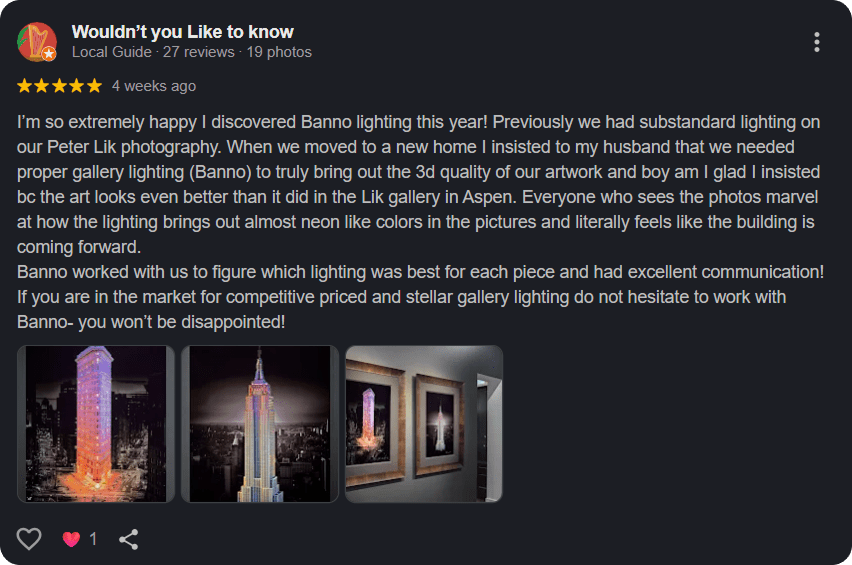
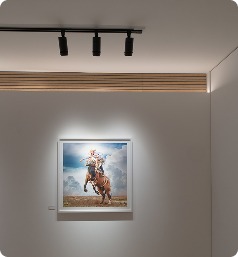
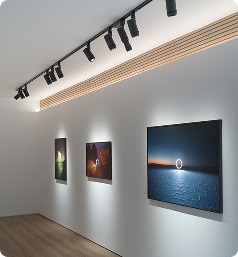
Contemporary gallery wall illuminated with precise LED lighting fixtures
Wall gallery lighting is one of the most influential elements in art presentation. Whether in a contemporary gallery, museum corridor, or curated residential space, the way a gallery wall is illuminated determines how artwork is perceived, valued, and experienced.
Lighting a gallery wall is not about decoration. It is about precision, contrast control, and architectural rhythm. Proper wall gallery lighting reveals texture, enhances color accuracy, and creates subtle visual hierarchy. Poor lighting flattens artwork, introduces glare, and weakens impact.
This guide explores professional strategies for wall gallery lighting in both institutional and private environments.
Client Testimonial: Real Feedback from a Gallery Owner
Lighting a Gallery Wall: Foundational Principles
When lighting a gallery wall, five core principles apply:
- Accurate color rendering
- Controlled beam spread
- Correct angle of incidence
- Glare management
- Consistent color temperature
Whether using wall mounted gallery lighting or ceiling mounted track systems, beam geometry must align with artwork placement.
The recommended angle for lighting above gallery wall installations is approximately 30 degrees from vertical. This minimizes reflections while revealing surface texture.
Wall Art Lighting and Visual Hierarchy
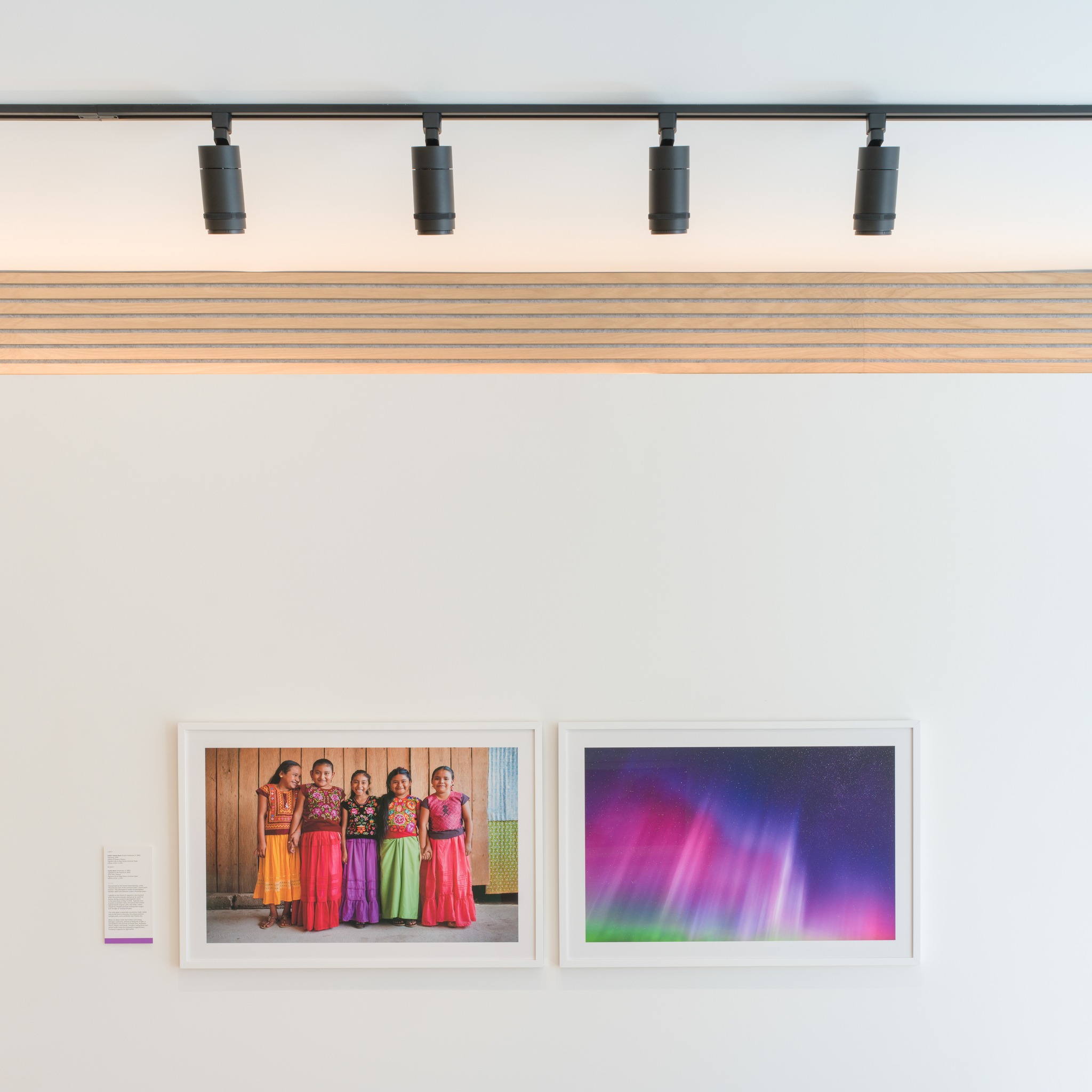
Evenly distributed gallery lighting maintaining comfortable visual hierarchy
Wall art lighting should establish hierarchy without overwhelming the space.
A properly illuminated gallery wall:
- Is slightly brighter than surrounding walls
- Maintains even distribution across artworks
- Avoids harsh hotspots
- Preserves visual comfort
Wall art accent lighting can subtly emphasize key works within a collection. However, contrast must remain refined. Dramatic spotlighting is rarely appropriate in gallery contexts unless aligned with curatorial intent.

4.9-star rated by art collectors and gallery professionals
Gallery Wall Lighting Ideas for Professional Spaces
Gallery wall lighting ideas in serious art environments often include:
- Ceiling mounted track systems aligned precisely with artwork centers
- Recessed adjustable fixtures for minimal visual intrusion
- Wall mounted picture lights for fixed installations
- Layered ambient and accent lighting systems
Gallery wall track lighting is particularly effective in rotating exhibition spaces. It allows repositioning without structural modification.
Flexible systems such as Multi provide adaptability as artwork changes. Precision fixtures like Zoom offer narrow beam control for smaller pieces within dense arrangements. Museum grade solutions such as Deluxe prioritize glare control and stability for permanent collections.
Each contributes differently to wall gallery lighting strategies.
Wall Mounted Gallery Lighting vs Ceiling Mounted Systems

Ceiling track lighting system providing flexible illumination across gallery wall
There are two primary approaches to wall gallery lighting.
Wall Mounted Gallery Lighting
This approach includes picture lights and wall integrated fixtures. It is best suited for:
- Fixed residential collections
- Narrow corridors
- Smaller installations
Ceiling Mounted Track Lighting
Gallery wall track lighting is preferred for:
- Rotating exhibitions
- Mixed artwork sizes
- Large gallery spaces
Ceiling systems offer greater flexibility and beam control.
Lighting Above Gallery Wall Installations
Lighting above gallery wall arrangements must consider:
- Frame dimensions
- Ceiling height
- Viewing distance
- Wall color
Lighting over gallery wall setups should avoid spill onto adjacent surfaces unless wall washing is intentional.
Even spacing across multiple artworks creates architectural rhythm and reinforces professional presentation.
Wall Art Lighting Fixtures and Beam Selection

Wide beam gallery fixture lighting large canvas evenly across surface
Wall art lighting fixtures must match artwork scale.
For smaller pieces:
- Narrow beam angles are recommended
- Compact fixtures prevent visual clutter
For larger works:
- Wider beams may be required
- Multiple fixtures may be necessary
- Overlapping beams must be calibrated carefully
Gallery wall picture lighting should never produce visible seams or uneven brightness across large canvases.
How to Light a Gallery Wall in Residential Spaces
In high end homes, gallery wall with lighting installations often transform hallways and living rooms into curated art experiences.
Lighting for gallery wall in residential settings should include:
- High CRI LED fixtures
- Consistent color temperature
- Adjustable aiming
- Subtle contrast above ambient light
Wall art lighting living room environments must balance comfort with clarity. The lighting should elevate artwork without overpowering the space.
Wall Art LED Lighting

High CRI LED spotlight illuminating colorful painting with accurate tones
Wall art LED lighting has become the modern standard.
Advantages include:
- Minimal heat
- No UV radiation
- Stable color temperature
- Energy efficiency
- Dimming compatibility
LED lighting for gallery wall installations provides precision control over intensity and beam angle.
Wall art LED lighting also ensures long term stability, maintaining consistent presentation over time.
Gallery Wall Picture Lighting for Photography and Prints
Photo gallery wall lighting requires careful glare management.
Framed works behind glass are especially sensitive to reflection.
When installing gallery wall art lighting:
- Maintain approximately 30 degree angle
- Avoid direct reflection at common viewing heights
- Adjust beam spread carefully
Photo wall lighting ideas must prioritize clarity and comfort.
Lighting On Gallery Wall in Museum Environments

Museum exhibition wall illuminated with precise conservation grade LED lighting
Lighting on gallery wall installations in museums follows strict conservation standards.
Considerations include:
- Lux limits for sensitive works
- Stable LED output
- Controlled dimming
- Precise beam alignment
Museum grade wall gallery lighting systems are designed to maintain consistent output and minimize color shift over extended periods.
Gallery Lighting Design and Architectural Integration
Wall gallery lighting is most successful when integrated into architectural design from the outset.
Art gallery lighting design should align:
- Ceiling grids with artwork spacing
- Track systems with wall axes
- Fixture finishes with interior palette
In minimalist white cube galleries, fixtures should appear discreet and orderly. In contemporary industrial spaces, visible black track systems may become part of the aesthetic.
Regardless of style, performance must remain uncompromised.
Battery Operated Gallery Lights and Wireless Solutions
Battery operated gallery lights and wall art lighting battery operated options are often used in:
- Historic properties
- Rental spaces
- Temporary installations
Gallery wall lighting battery operated systems provide flexibility where wiring is limited.
However, output stability and color accuracy must remain high. Professional installations ensure that wireless systems do not compromise presentation quality.
Wall Art Display Lighting for Mixed Collections

Diverse artwork collection lit with adjustable directional LED fixtures
Gallery walls often include:
- Paintings
- Photography
- Mixed media
- Sculptural wall pieces
Wall art display lighting must adapt to each medium.
Directional lighting enhances brushwork in paintings. Even distribution prevents glare on photography. Sculptural works may require multi directional accent lighting.
Gallery lighting ideas should always reflect the diversity of the collection.
Emotional Impact of Wall Gallery Lighting
Lighting shapes perception.
Balanced wall gallery lighting:
- Enhances depth
- Encourages longer viewing
- Reinforces curatorial integrity
- Elevates perceived value
Poorly positioned fixtures create glare, distortion, and distraction.
When lighting is correct, it feels natural and invisible. The artwork becomes the focus.
Precision and Proportion in Wall Gallery Lighting

Evenly spaced lighting fixtures aligned proportionally above artwork collection
In professional environments, wall gallery lighting is governed by proportion. The size of the fixture, the beam spread, and the distance from the artwork must all relate to the scale of the wall and the collection.
When fixtures are oversized relative to the artwork, the lighting feels heavy and intrusive. When undersized, the wall appears uneven and fragmented.
Gallery wall art lighting should feel intentional and aligned. The visual rhythm created by evenly spaced fixtures reinforces order and curatorial discipline.
Beam Overlap and Uniformity
When a gallery wall includes multiple artworks of varying sizes, achieving uniformity becomes more complex.
Lighting for gallery wall installations with mixed formats requires:
- Individual beam adjustment per piece
- Careful overlap where necessary
- Consistent brightness levels across the entire wall
Uneven illumination creates visual tension. Even subtle variations in brightness can make one artwork appear more important than intended.
Professional wall gallery lighting systems allow each fixture to be fine tuned independently.
Lighting a Gallery Wall With Multiple Rows

Multi row artwork arrangement with precise directional lighting beams
Salon style arrangements, where artworks are stacked vertically, present additional challenges.
In these cases:
- Upper fixtures must not create glare on lower frames
- Lower artworks may require narrower beam control
- Ceiling height becomes critical
Gallery wall lighting ideas for multi row displays often involve track systems that allow vertical aiming flexibility.
Adjustable fixtures such as precision beam models enable accurate targeting without excessive spill.
Wall Art Accent Lighting and Focal Points
Wall art accent lighting is sometimes used to subtly emphasize a central work within a larger gallery wall.
This can be achieved by:
- Slightly increasing intensity on the focal piece
- Narrowing beam width
- Maintaining consistent color temperature
However, the difference must remain subtle. Overemphasis disrupts cohesion.
Lighting on gallery wall installations should feel unified rather than segmented.
Wall Lighting Design and Architectural Integration

Integrated lighting system complementing contemporary gallery interior design
Wall lighting design is most effective when coordinated with architectural planning.
Consideratio
ns include:
- Ceiling joist alignment
- Electrical zoning
- Track placement parallel to walls
- Integration with HVAC and other ceiling elements
Poor coordination results in misaligned beams and compromised symmetry.
Wall gallery lighting must feel integrated, not retrofitted.
Lighting Above Gallery Wall in Narrow Corridors
Corridors are common locations for gallery walls in both residential and commercial spaces.
Lighting above gallery wall installations in narrow corridors requires:
- Controlled beam angles to prevent glare at close viewing distances
- Consistent fixture spacing
- Subtle ambient lighting to avoid harsh contrast
Because viewers stand closer to the artwork, glare control becomes especially important.
Photo Gallery Wall Lighting and Glazed Works

LED spotlights positioned carefully to reduce glare on photographs
Photography often includes glazing, increasing the risk of reflection.
Photo gallery wall lighting should prioritize:
- Correct 30 degree aiming angle
- Narrow beam selection for smaller prints
- Anti glare shielding within the fixture
Even minor adjustments can dramatically improve clarity.
Lighting over gallery wall arrangements with glass surfaces demands precise alignment.
Gallery Wall Track Lighting and Flexibility
Gallery wall track lighting offers the highest level of flexibility.
Advantages include:
- Easy repositioning
- Adjustable tilt and rotation
- Interchangeable optics
- Consistent visual alignment
Track systems allow future adaptation as collections evolve.
Flexible solutions such as Multi enable curators to reposition fixtures without disrupting ceiling structure. Precision models like Zoom provide tight beam focus for smaller pieces within dense arrangements. Museum grade fixtures such as Deluxe deliver stable output and visual comfort in permanent installations.
These systems collectively support refined wall gallery lighting strategies.
Wall Art LED Lighting and Color Stability

LED art spotlight revealing accurate pigment colors on canvas
Wall art LED lighting has become the preferred solution due to color stability and efficiency.
Key benefits include:
- Minimal heat
- Long lifespan
- Consistent output
- High color rendering
Consistency is essential across a gallery wall. Mixing different LED qualities can result in slight tonal shifts from one fixture to another.
Professional wall gallery lighting systems use calibrated fixtures to maintain uniform color temperature across the entire display.
Battery Operated Gallery Lights in Sensitive Spaces
Battery operated gallery lights and wall art lighting battery operated options are sometimes used in heritage or temporary spaces.
While convenient, they must still meet performance standards:
- Stable brightness
- High CRI
- Controlled beam spread
Wireless systems should be selected carefully to ensure they do not compromise visual quality.
Battery operated wall lights can be effective for fixed residential gallery walls when wiring access is limited.
Lighting for Gallery Wall and Wall Color Interaction

Neutral toned gallery wall enhancing artwork illumination balance
Wall color significantly influences perceived brightness.
Dark walls absorb more light, requiring slightly higher intensity.
Light walls reflect more light, increasing perceived brightness.
When lighting for gallery wall installations, designers must account for this interaction.
The same fixture may require different output levels depending on the surrounding wall color.
Wall Art With Lighting and Sculptural Elements
Some gallery walls incorporate three dimensional elements such as relief sculptures or textured installations.
Wall art with lighting in these cases may require:
- Multiple directional beams
- Slightly angled side lighting
- Careful shadow management
Proper lighting enhances dimensionality without creating distracting shadows.

Emotional Experience and Wall Gallery Lighting
Wall gallery lighting shapes emotional tone.
Balanced, even lighting creates calm contemplation.
Subtle contrast enhances focus.
Higher intensity introduces drama.
The lighting strategy should reflect the nature of the collection.
In residential settings, the tone may be intimate. In contemporary galleries, it may feel more dynamic.
Wall gallery lighting must align with the narrative of the space.
Long Term Stability and Maintenance

Professional gallery lighting fixtures designed for long term reliability
Professional wall gallery lighting systems are designed for long term reliability.
Considerations include:
- Easy fixture access for maintenance
- Replaceable optics
- Stable LED modules
- Reliable dimming systems
In institutional environments, periodic alignment checks ensure beams remain precisely aimed.
Lighting a gallery wall is not a one time task. It requires occasional recalibration to maintain presentation quality.
Final Perspective

Contemporary exhibition wall with refined balanced artwork illumination
Elegant gallery lighting enhancing clarity and depth of displayed art
Wall gallery lighting is both technical and curatorial.
It requires:
- Correct beam geometry
- High color accuracy
- Consistent fixture alignment
- Architectural integration
- Sensitivity to medium and surface
When executed properly, wall gallery lighting disappears. The artwork appears balanced, dimensional, and authentic.
Whether in a museum, commercial gallery, or refined residence, lighting for gallery wall installations defines how art is experienced.
Precision tools such as Zoom enable tight beam control for small works. Flexible track systems like Multi support evolving gallery walls. Museum oriented solutions such as Deluxe provide stability and visual comfort over extended periods.
Wall gallery lighting is not decorative detail. It is fundamental to the integrity of art presentation.
20 FAQs
1. What is wall gallery lighting
Lighting specifically designed to illuminate artwork arranged on a wall.
2. How do you light a gallery wall properly
Position fixtures at about 30 degrees and match beam width to artwork size.
3. Is LED best for gallery wall lighting
Yes, high CRI LED offers precision and safety.
4. Should gallery walls be brighter than surrounding walls
Slightly brighter to create subtle contrast.
5. What beam angle is best for wall art lighting
Typically 24 to 36 degrees for medium pieces.
6. Can track lighting be used for gallery walls
Yes, it provides flexibility for changing displays.
7. How do you avoid glare on framed artwork
Use correct angle and glare shielding.
8. Are wall mounted picture lights effective
Yes, for fixed installations.
9. What color temperature is best for gallery lighting
Usually between 2700K and 3000K.
10. Can battery operated gallery lights work professionally
Yes, if output and color quality are consistent.
11. How bright should gallery wall lighting be
Bright enough for clarity but within conservation limits.
12. What is wall art accent lighting
Directional lighting used to highlight specific artworks.
13. Is recessed lighting good for gallery walls
Yes, if adjustable and properly aligned.
14. How do museums light gallery walls
With adjustable LED fixtures and controlled dimming systems.
15. What is gallery lighting design
Strategic planning of light placement, beam control, and intensity for artwork display.
16. Can LED lighting damage art
High quality LED is safe when properly controlled.
17. What is lighting over gallery wall
Ceiling mounted directional lighting aimed at artwork.
18. How do you light large artworks on a wall
Use wider beams or multiple fixtures with careful overlap.
19. Should all fixtures match in a gallery wall
Yes, consistency maintains professional presentation.
20. Why is wall gallery lighting important
Because it enhances clarity, protects artwork, and shapes viewer experience.
What Our Clients Are Saying About Our Lighting Systems