How Professional Lighting Transforms Experience, Perception, and Sales?

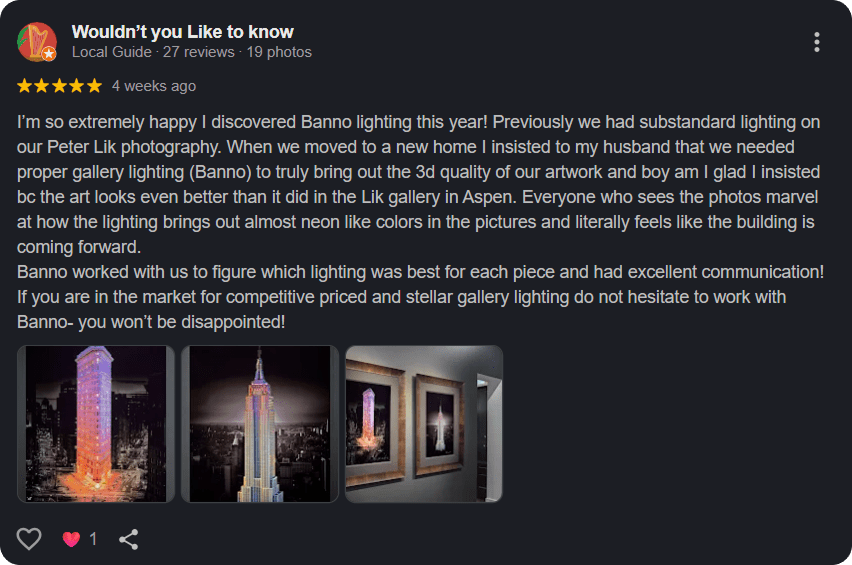
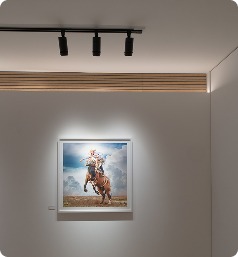
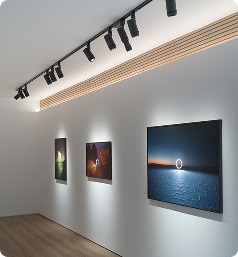
Professional track lighting enhancing artwork presence and spatial clarity
When people talk about the best art gallery lighting, they are often thinking about brightness, colour, or fixtures. But in a gallery, lighting is far more than illumination. It is architecture in action. It is curator’s support. It is emotional guidance. It is how people connect with art.
The best lighting does not call attention to itself. It makes artworks feel alive in the space. It shapes how visitors move. It supports sales with confidence. It builds reputation without being noticed.
At Banno Lighting, we design systems and select products so galleries work beautifully in practice, not just in theory. This complete art gallery lighting guide explains what “best” really means, why generic lighting is never enough, and how galleries achieve superior results with intentional lighting choices.
What “best” really means in art gallery lighting?

Balanced gallery illumination delivering accuracy, control, and consistency
The best art gallery lighting is not simply bright, warm, or trendy. True premium lighting for artworks and exhibitions must satisfy five criteria simultaneously:
- Accuracy – Colours and tones must appear true and confident
- Control – Beams must be shaped precisely, without spill or glare
- Flexibility – Systems must work across changing exhibitions
- Consistency – Lighting must feel cohesive throughout the gallery
- Experience – Visitors should feel calm, engaged, and intentional
When these come together, lighting stops being a tool and becomes part of the gallery’s identity.
4.9 stars & reviews from art collectors and galleries
Lighting affects sales, even if people do not realise it
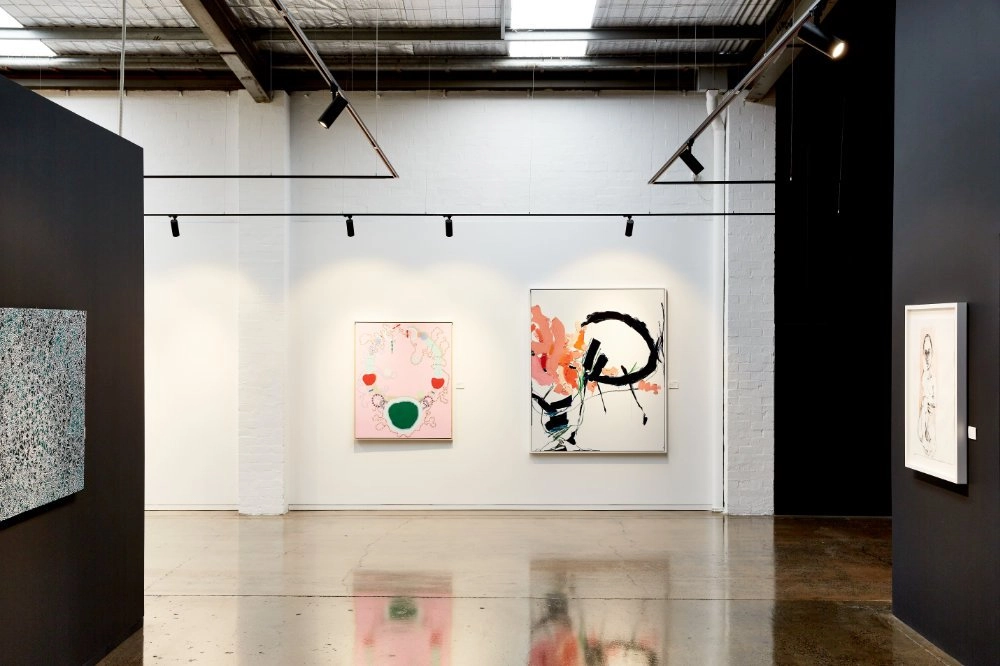
Focused lighting increasing dwell time at featured artworks
Art sales are emotional decisions. Lighting influences emotions, directly and subtly.
The best gallery lighting:
• Encourages longer dwell time at artworks
• Creates visual clarity that reduces hesitation
• Reveals materials, surfaces, and texture accurately
• Signals professionalism and care
• Eliminates glare and confusion
Buyers do not consciously evaluate lighting. But they feel when light is honest and considered, something professional lighting solutions for galleries are designed to achieve. Poor lighting, even when subtle, saps confidence and slows decision making.
Universal principles of the best gallery lighting

Professional guidance for museum lighting systems in Texas, San Antonio
1. Colour accuracy comes first
True colour rendering is non-negotiable. When reds, blues, greens, whites, and flesh tones are shown incorrectly, the work feels flat or misleading. Buyers unconsciously question what they see.
The best lighting maintains consistent colour temperature across fixtures and over time.
2. Beam control, not brightness, drives quality
Bright lighting is not great lighting.
Controlled lighting is.
Precision optics reduce stray spill and minimise glare. They allow contrast where needed and subtle ambience where desired. A tuned beam places light on the work, not on walls or floors unnecessarily.
Uncontrolled beams create hotspots, wash out textures, and distract the eye.
3. Lighting must support human comfort
Lighting should not fight human vision. Harsh contrast, visible glare, and awkward sightlines break immersion. The best lighting reduces visual noise so the artwork becomes the focus.
Comfortable lighting fosters:
• relaxed viewing
• emotional engagement
• slower visitor movement — which promotes deeper connection
• confidence rather than visual fatigue
4. Systems outperform fixtures
The best art gallery lighting is installed as a system, not a collection of random fixtures.
A lighting system:
• Is planned on the floor plan level
• Accounts for wall and ceiling geometry
• Includes track layout, power distribution, aiming consistency
• Integrates colour, beam shape, and flexibility
• Allows rehanging without rewiring
Generic fixtures, even when expensive, cannot compensate for a poorly designed system. Systems win.
Why track lighting leads in professional galleries?

Modular gallery lighting adapting to evolving artwork displays
Track lighting is the foundation of most best-in-class galleries for very good reasons:
- Adaptability — Fixtures move without rewiring
- Clean ceilings — Infrastructure remains visually minimal
- Control — Each head can be aimed and balanced
- Modularity — Fixtures can be added as needs grow
When properly specified, track lighting forms the backbone of effective art gallery lighting system setups and gives galleries long-term flexibility without compromise.
But not all track lighting is the same. Generic track heads lack precision optics, glare control, and consistent colour fidelity. The best gallery track lighting uses purpose-built fixtures designed for art, not retail or residential use.
The lighting products galleries choose for best results

Zoom lighting adapting beam angles for varied artworks
At Banno Lighting we guide galleries to the right system based on their needs. Three lighting approaches stand out:
Zoom lighting — optimal flexibility
Zoom systems let galleries adapt beam angles without swapping fixtures. A single head can tighten for small works or widen for large paintings. This is ideal for:
- Commercial galleries with frequent rehanging
- Spaces with varied artwork sizes
- Installations that change regularly
Zoom prioritises operational flexibility while maintaining visual control.
Multi lighting — nuanced control for layered exhibitions
Multi systems allow galleries to treat individual works differently without losing cohesion. They are especially effective when:
- Multiple mediums are shown together
- Some works require emphasis while others recede
- Curatorial narrative demands nuance
Multi systems turn lighting into a communication tool as much as a technical one.
Deluxe lighting — for flagship presentation and collections
When artwork value, presentation quality, and longevity are the highest priorities, Deluxe systems excel.
They feature:
• Exceptional colour stability
• Refined beam quality
• Visually minimal profiles
• Premium optics
Deluxe is chosen by galleries, museums, and private collections guided by museum-level gallery lighting guidelines that demand authority without compromise.
How the best track lighting systems are designed?
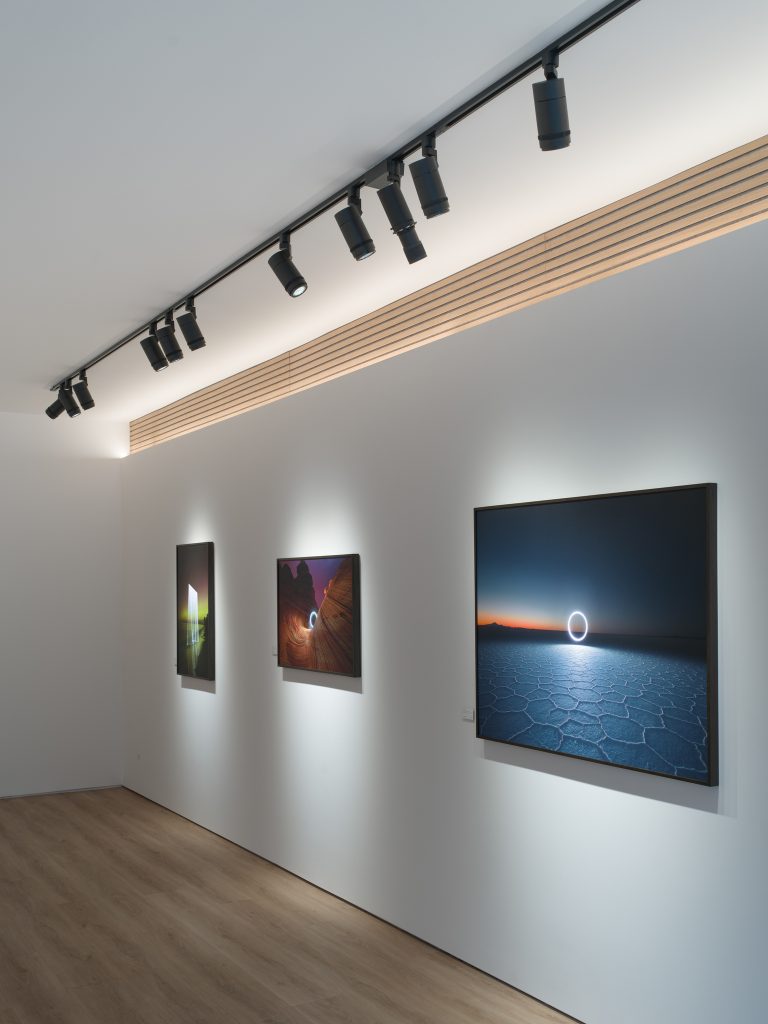
Optimised track placement preventing blind spots and glare
Step 1: Lighting plan based on how the gallery works
The best lighting begins with a plan aligned to exhibition flow, wall geometry, and visitor circulation. This plan ensures light is where it needs to be, not where it is convenient.
Step 2: Track layout optimised for flexibility
Track should be placed to anticipate rehanging and different artwork sizes. Poorly placed track creates blind spots and forces awkward aiming.
Step 3: Fixture selection calibrated to purpose
Fixtures must deliver:
• Accurate colour
• Minimal glare
• Controlled beams
• Clean visual presence
Best galleries reject generic fixtures and choose products designed for artwork.
Step 4: Aiming and balance
A lighting system is only as good as its aiming. Heads must be balanced across the space so walls feel harmonious and controlled, not spotty or inconsistent.
Step 5: Ongoing calibration
Best lighting systems allow re-aiming and adaptation as exhibitions change. This avoids constant replacement and ensures every show feels resolved.
Colour temperature and mood in the best gallery lighting

Consistent colour temperature maintaining exhibition coherence
Colour temperature affects mood, perception, and emotional engagement.
Most professional galleries use 3000K because it:
- Feels warm yet neutral
- Supports a wide range of artwork
- Reinforces consistency across exhibitions
- Balances mood with colour fidelity
Some galleries use 2700K selectively, particularly on master works where warmth adds richness. However, this is done only when the system supports it (e.g., Multi control) because inconsistent temperatures can confuse the eye if not carefully managed.
Cooler temperatures (3500K+) are rarely used because they feel clinical and can flatten tonal nuance.
Managing glare and sightlines

Carefully aimed fixtures minimising wall and floor spill
Glare destroys mood and interrupts engagement.
Controlled beams, proper aiming, and optics designed for galleries are non-negotiable.
The best lighting systems anticipate:
• Viewer sightlines at multiple heights
• Reflection on glass or varnished surfaces
• Reduced spill onto walls and floors
• Comfortable viewing from near and far
This is where generic lighting always fails galleries. Without controlled optics, glare becomes unavoidable.
Lighting as part of the curator’s toolkit

Strategic lighting establishing hierarchy among featured artworks
Curators do more than hang art. They shape experiences.
The best lighting systems enhance curatorial intent by:
• Supporting visual hierarchy
• Emphasising featured works
• Guiding flow through light
• Creating calm intervals between focal points
This makes lighting a tool for storytelling, not just illumination.
Flexibility for future exhibitions

Consistent infrastructure sustaining long term gallery evolution
A gallery must serve today’s show and tomorrow’s.
The best lighting systems:
• Allow rehanging without changing infrastructure
• Adapt to different artwork scales
• Respond to curatorial evolution
• Maintain consistency as exhibitions cycle
This long-term thinking saves money, reduces stress, and preserves quality.
Why generic lighting fails art galleries?

Consistent colour output elevating professional presentation
Generic lighting advice focuses on:
• Watts or lumens
• Warm or cool white
• Simple rules of thumb
None of this addresses how galleries actually operate. Generic lighting:
• Produces uncontrolled spill
• Lacks precision optics
• Uses inconsistent colour
• Relies on fixtures not systems
The result is a presentation that never feels resolved. Subtle doubts creep into how art is perceived and how buyers feel.
Best galleries avoid this trap by thinking systemically and intentionally.
A practical guide to specifying the best gallery lighting
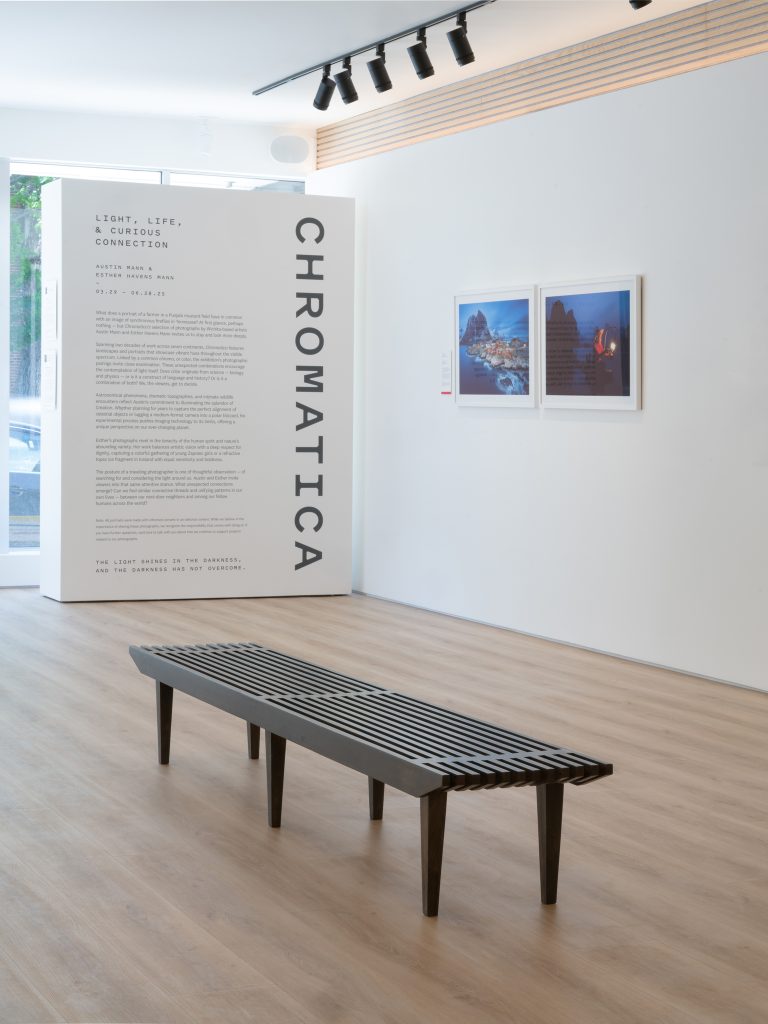
Precision beam control integrated with glare management
Start with the space.
Understand wall heights, ceiling structure, circulation and artwork sizes.
Plan the system.
Track layout, power distribution and aiming should be considered together, not ad hoc.
Choose fixtures designed for art.
Reject generic products. Choose from gallery lighting fixture options such as Zoom, Multi, or Deluxe based on your needs.
Calibrate colour.
3000K baseline with optional controlled warmth.
Control beam.
Precision optics, adjustable or fixed beams where appropriate.
Manage glare.
Aiming and optics designed to minimise stray light.
Support adaptability.
Lighting should flex as the gallery evolves.
Why galleries trust Banno Lighting for best results?

Integrated track systems tailored to exhibition needs
Galleries work with Banno Lighting because we understand that lighting is not decoration. Lighting is part of the art experience, the sales environment, and the gallery’s identity.
We provide:
• Expert lighting guidance
• Tailored lighting plans
• Track systems designed for galleries
• Zoom, Multi, and Deluxe products
• Long-term support as exhibitions change
Best art gallery lighting is not a formula. It is the result of intentional decisions, systems thinking, and respect for art.
If you want gallery lighting that enhances experience, supports sales, and elevates your space, professional guidance and purpose-built systems are essential.
Advanced Control Techniques in Art Gallery Lighting Systems
Once the foundation of an art gallery lighting system is in place, the next level of refinement comes from control. Control is what transforms a technically correct setup into a highly responsive, professional environment.
Dimming is the most obvious layer, but it is only the beginning. Professional galleries use zoned control, allowing different walls or sections of the gallery to operate independently. This is especially important in multi-room exhibitions or spaces with mixed mediums.
Scene setting is another key technique. Instead of manually adjusting each fixture, predefined lighting scenes allow galleries to shift instantly between exhibition mode, event mode, and private viewing conditions. This ensures consistency and saves time during operations.
Advanced systems also allow gradual transitions. Rather than abrupt changes in brightness, lighting can shift subtly to maintain visual comfort. This is particularly useful in galleries with natural light, where artificial lighting needs to compensate throughout the day.
Control is not just about convenience. It protects artwork, improves visitor comfort, and ensures the gallery always presents itself at its best.
Using Contrast to Guide Attention

High-intensity beams creating visual hierarchy among featured gallery artworks.
Lighting is one of the most powerful tools for directing attention within a gallery. Not every artwork should carry equal visual weight, and lighting helps establish hierarchy without the need for physical barriers or signage.
Higher intensity and tighter beams naturally draw the eye. Lower intensity and softer beams allow supporting works to sit quietly in the background. This balance creates a structured viewing experience.
Contrast should be used carefully. Too much contrast creates visual tension and fatigue. Too little contrast makes the gallery feel flat and uncurated. The goal is controlled variation.
Professional art gallery lighting systems make this possible by allowing precise adjustments in both intensity and beam shape. This ensures that key works stand out while the overall space remains cohesive.
Creating Visual Rhythm Across Walls
A well-lit gallery has rhythm. This rhythm is subtle but essential for maintaining engagement as visitors move through the space.
Rhythm is created by:
• Slight variation in light intensity
• Alternating beam widths
• Consistent spacing of focal points
Without rhythm, exhibitions can feel monotonous. Every wall appears the same, and visitors lose interest more quickly.
With rhythm, the space feels intentional. Visitors are guided naturally from one work to the next, creating a more immersive experience.
Track-based systems are particularly effective here because they allow fixtures to be repositioned easily, enabling designers to refine rhythm over time.
Lighting Transitions Between Spaces

Uniform color temperature maintaining continuity during visitor transit between zones.
Transitions are often overlooked, but they play a major role in how a gallery is experienced.
Moving from one room to another should feel seamless. Sudden changes in brightness or color temperature can disrupt immersion and make spaces feel disconnected.
Professional systems manage transitions by:
• Maintaining consistent baseline lighting
• Gradually adjusting intensity between zones
• Aligning beam quality across rooms
This creates continuity throughout the gallery while still allowing each space to have its own character.
Transitions are especially important in larger galleries where visitors move through multiple environments.
Managing Reflections in Glass and Glossy Surfaces
Reflections are one of the most challenging aspects of gallery lighting.
Glass-covered artworks, photographs, and glossy finishes can easily reflect light sources, creating distractions that interfere with viewing.
Managing reflections requires a combination of:
• Correct fixture positioning
• Controlled beam angles
• Reduced spill
• Careful intensity balancing
Track lighting is essential here because it allows fixtures to be repositioned until reflections are eliminated.
Even small adjustments can make a significant difference. This is why flexibility is critical in professional systems.
When reflections are controlled properly, viewers can engage with the artwork without distraction.
The Role of Shadow in Artwork Presentation
Layered shadows enhancing the three-dimensional structure of gallery installations.
Light does not work alone. Shadow is equally important.
In flat media such as paintings, shadow should be minimal and controlled. The goal is to reveal texture without creating harsh contrast.
In three-dimensional works such as sculpture, shadow becomes a design tool. It defines form, depth, and structure.
Using multiple light sources at different angles can enhance sculptural pieces by creating layered shadows. This adds dimensionality and makes the work feel more dynamic.
Professional lighting systems allow this level of control by supporting multiple fixtures and adjustable positioning.
Understanding how to use shadow effectively is what separates basic lighting from professional presentation.
Beam Edge Control and Emotional Impact
Beyond beam angle, the quality of the beam edge plays a major role in how artwork is perceived.
Hard edge beams create a sharp boundary between light and shadow. They are effective for isolating artworks, reinforcing minimal displays, and creating strong visual contrast.
Soft edge beams fade gradually into the surrounding space. They are better suited for blending multiple works together and creating a calmer, more atmospheric environment.
The choice between hard and soft edges affects the emotional tone of the exhibition. Hard edges feel precise and controlled. Soft edges feel relaxed and immersive.
Professional systems allow galleries to choose and adjust this quality rather than being locked into a single effect.
Precision Framing for Clean Presentation
Shaped light beams matching artwork dimensions perfectly without wall spill.
Framing with light is one of the clearest indicators of a high-end gallery.
It means shaping the beam so it matches the artwork’s dimensions as closely as possible.
When done correctly:
• Light stops just before the frame
• There is no spill onto the wall
• The artwork feels intentional and resolved
When done poorly:
• Halos appear around the piece
• The wall becomes uneven
• The presentation loses clarity
Precision framing requires both good optics and careful aiming. It is a small detail that has a significant impact on perceived quality.
Balancing Uniformity and Variation
Consistency is essential in galleries, but too much uniformity can make a space feel sterile.
A professional system balances:
• Consistent color temperature
• Stable light quality
• Controlled variation in intensity and focus
This balance ensures that the gallery feels cohesive while still allowing individual works to stand out.
Uniformity builds trust. Variation creates interest.
The challenge is achieving both at the same time, which requires a flexible and well-planned lighting system.
Adapting Lighting for Different Exhibition Styles

Quickly adjusted beam angles transforming the feel of gallery spaces.
Not all exhibitions require the same lighting approach.
Minimal exhibitions with fewer works often benefit from stronger contrast and more focused lighting. This creates emphasis and highlights individual pieces.
Dense exhibitions with many works require more balanced lighting to avoid overwhelming the viewer. In these cases, uniformity becomes more important.
The ability to adapt quickly between these styles is one of the main advantages of track lighting systems.
By adjusting fixture positions, beam angles, and intensity, galleries can transform the feel of a space without changing the infrastructure.
The Impact of Wall Finishes on Lighting Performance
Wall finish has a significant effect on how light behaves in a gallery.
Highly reflective surfaces can amplify light and increase the risk of glare. Matte finishes absorb more light and provide a softer, more controlled appearance.
White walls reflect light strongly, which can increase overall brightness but also amplify spill. Dark walls absorb light, increasing contrast but requiring higher intensity to maintain visibility.
Neutral tones often provide the most flexibility, allowing lighting to perform consistently across different exhibitions.
Understanding how surfaces interact with light helps ensure that the system performs as intended.
Integrating Natural Light Without Losing Control
Natural light can enhance a gallery, but it must be managed carefully.
Daylight changes throughout the day in both intensity and color temperature. Without control, this can create inconsistency across the exhibition.
Professional galleries integrate natural light by:
• Using it selectively
• Controlling it with blinds or filters
• Supporting it with stable artificial lighting
Artificial lighting should remain the primary source to maintain consistency.
When used correctly, natural light can add depth and variation without compromising presentation.
Supporting Photography and Media Capture

Professional setups enhancing the gallery's online presence through better photography.
Visitors increasingly photograph artworks and exhibitions. Lighting plays a major role in how these images turn out.
Even, well-controlled lighting produces better photos with accurate colors and minimal glare. This benefits both visitors and the gallery’s online presence.
Poor lighting, on the other hand, results in reflections, blown highlights, and distorted colors.
By designing lighting with photography in mind, galleries can extend their reach through visitor-generated content.
Energy Efficiency and Sustainability Considerations
Modern galleries are increasingly focused on sustainability.
LED track lighting systems support this by:
• Reducing energy consumption
• Minimizing heat output
• Extending fixture lifespan
Lower heat output also reduces the load on climate control systems, which is particularly important in spaces with sensitive artworks.
Sustainability is not just about environmental impact. It also reduces operating costs and supports long-term planning.
Training Staff to Use Lighting Systems Effectively
Even the best system requires proper use.
Gallery staff should understand:
• How to reposition fixtures
• How to adjust beam angles
• How to use control systems
• How to identify glare and inconsistencies
Simple training ensures that the system continues to perform at a high level as exhibitions change.
Without this knowledge, even advanced systems can be underutilized.
The Long-Term Value of a System Approach

Durable track infrastructure reducing the need for frequent lighting upgrades.
Investing in a professional art gallery lighting system is not just about immediate results.
Over time, a well-designed system:
• Reduces the need for upgrades
• Supports evolving exhibitions
• Maintains consistent quality
• Protects the gallery’s reputation
This long-term value is what separates system thinking from short-term solutions.
Galleries that invest in systems avoid years of incremental fixes and compromises.
Final Insight: Precision Creates Confidence
At the highest level, lighting is about confidence.
Confidence for visitors, who trust what they are seeing.
Confidence for artists, who know their work is presented accurately.
Confidence for collectors, who rely on visual clarity when making decisions.
Professional art gallery lighting systems create that confidence through precision, consistency, and flexibility.
When every element is controlled and intentional, the lighting disappears and the artwork takes full control of the space.
Art Gallery Lighting: Quick FAQs
1. What are the 5 pillars of premium gallery lighting?
Accuracy, Control, Flexibility, Consistency, and Experience.
2. How does lighting directly increase art sales?
It boosts buyer confidence by revealing true textures and increasing "dwell time" at the artwork.
3. Why is "Control" more important than "Brightness"?
Brightness creates glare; control uses precision optics to put light only on the art, not the floor.
4. What is the main benefit of a "Lighting System" over individual fixtures?
A system is planned into the architecture, ensuring harmony and easy rehanging without rewiring.
5. Why is track lighting the industry standard?
It offers maximum modularity, allowing fixtures to be moved or added as exhibitions change.
6. What is "Zoom" lighting?
Fixtures with adjustable beam angles that can be tightened for small works or widened for large ones.
7. When should a gallery use a "Multi" system?
When an exhibition features multiple mediums that require different levels of emphasis.
8. What defines "Deluxe" gallery lighting?
It is museum-grade lighting featuring maximum color stability and ultra-minimal visual profiles.
9. What is the best color temperature for most galleries?
3000K is the standard because it is warm yet neutral and fits almost all art styles.
10. Why is 2700K used only selectively?
It provides extra richness for master works but can look inconsistent if not managed by a professional system.
11. Why avoid cooler temperatures (3500K+)?
They feel clinical and "flatten" the colors and tones of the artwork.
12. How does professional lighting improve visitor comfort?
It reduces "visual noise" and eye fatigue, allowing for a more emotional connection to the art.
13. What causes most glare in a gallery?
Uncontrolled light "spill" hitting glass frames or varnished surfaces due to poor optics.
14. How do curators use light as a tool?
They use it to create a "visual hierarchy," guiding the visitor’s eye to specific focal points.
15. Where does professional lighting design begin?
With a floor plan that accounts for wall geometry and visitor circulation.
16. How do you avoid "blind spots" on gallery walls?
By optimizing the track layout during the design phase to anticipate different artwork scales.
17. Why does "generic" lighting fail?
It lacks the precision optics needed to prevent distracting light spill on walls and floors.
18. What is "ongoing calibration"?
The ability to re-aim and balance heads every time a new show is installed.
19. What should be the baseline for a lighting spec?
Start with the space's dimensions, choose art-specific fixtures, and lock in a 3000K color temperature.
20. What is Banno Lighting’s specialty?
Providing purpose-built systems (Zoom, Multi, Deluxe) that turn lighting into a sales and branding tool.
What art collectors and gallery clients say about us