How Expert Lighting Elevates Experience, Builds Trust, and Drives Art Sales?

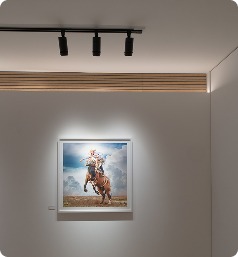
Focused beam control enhancing artwork presence and clarity
Professional art gallery lighting is not about fixtures, brightness, or trends. It is about control, intent, and respect for art.
In serious galleries, lighting is part of the exhibition. It shapes how visitors feel, how long they stay, and how confidently they buy. When lighting is professional, it disappears. The art feels calm, present, and resolved. When lighting is generic or poorly planned, even exceptional artwork feels unsettled.
This art gallery guide explains what professional art gallery lighting really means, how it differs from standard architectural lighting, and why galleries that invest in expert lighting systems consistently outperform those that do not.
At Banno Lighting, we guide galleries through lighting plans, systems, and product selection using Zoom, Multi, and Deluxe solutions designed specifically for art.
What makes art gallery lighting “professional”?

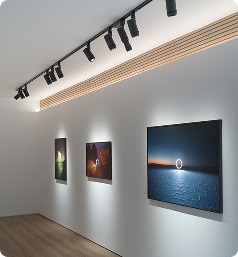
Controlled optics delivering consistent illumination across gallery walls
Professional gallery lighting is not defined by price or appearance. It is defined by performance over time.
Professional lighting must:
• Reveal artwork accurately
• Maintain consistency across exhibitions
• Adapt to changing wall layouts
• Control glare and visual noise
• Support the visitor experience
• Build buyer confidence
If lighting cannot do all of these reliably, it is not professional, regardless of how expensive it is.
4.9 stars from art collectors and galleries
The gallery as an experience, not just a display

Balanced illumination creating emotional calm for viewers
A gallery is not a warehouse for art. It is a carefully constructed experience.
Visitors respond emotionally to:
• Calm or tension
• Clarity or confusion
• Focus or distraction
Lighting is the primary tool that shapes these responses.
Professional lighting creates:
• A sense of intention
• Visual calm
• Comfortable viewing conditions
• A rhythm that guides movement
When lighting is right, visitors slow down. They engage more deeply. They feel that the gallery respects the artwork and respects them.
This experiential quality directly affects sales.
How professional lighting influences art sales?

Close view of textured artwork with precise lighting
Art buying is emotional, but it is supported by confidence.
Collectors want to feel sure that:
• Colours are accurate
• Materials are shown honestly
• The artwork will translate beyond the gallery
Professional lighting reduces doubt.
It does this by:
• Revealing true colour and texture
• Avoiding glare and harsh contrast
• Creating a sense of value and care
• Reinforcing professionalism and trust
Poor lighting introduces hesitation. Buyers may not articulate it, but they feel it. Decisions slow. Confidence erodes.
Professional lighting removes friction from the buying process.
The importance of lighting plans in professional galleries

Ceiling track layout mapped carefully to exhibition walls
One of the clearest markers of professional gallery lighting is the presence of a lighting plan.
Professional lighting always starts on paper.
A lighting plan considers:
• Wall lengths and heights
• Ceiling height and structure
• Track placement and spacing
• Viewing distances
• Circulation paths
• Future exhibition flexibility
Without a plan, galleries rely on trial and error. Lights are moved endlessly, glare is fought constantly, and consistency is never achieved.
At Banno Lighting, lighting plans are always developed alongside gallery floor plans to ensure lighting works now and in the future.
Track lighting as the foundation of professional galleries

Minimal track system integrated seamlessly into white ceiling
Track lighting dominates professional art galleries for a reason.
It provides:
• Flexibility without rewiring
• Clean architectural integration
• Precise control over each artwork
• Long term adaptability
However, professional track lighting is not the same as generic track lighting.
Generic track systems are designed for retail and architectural use. Professional gallery track systems are designed specifically for art.
The difference between generic and professional track lighting
Generic track lighting prioritises:
• Broad coverage
• Cost efficiency
• Visual presence
• Versatility across many environments
Professional gallery track lighting prioritises:
• Precision beam control
• Minimal glare
• High colour accuracy
• Consistency across walls
• Visual restraint
This difference is why many galleries feel dissatisfied with standard track fittings. The infrastructure may be correct, but the lighting language is wrong.
Beam control as the core of professional lighting

Controlled spotlight enhancing depth without distraction
Professional lighting is defined by control, not brightness.
Precision optics allow light to be placed exactly where it is needed, without spill onto adjacent works or walls.
Controlled beams:
• Create clarity and focus
• Enhance texture and depth
• Reduce glare
• Support visual hierarchy
Uncontrolled beams flatten artworks and create visual noise.
This is why professional gallery lighting systems are built around optics, not output.
Zoom lighting for professional flexibility

Zoom lighting fixture
Zoom lighting systems are widely used in professional galleries that change exhibitions frequently.
Zoom allows:
• Adjustable beam angles from a single fixture
• Precise framing of artworks
• Fast reconfiguration during rehanging
• Reduced need for multiple fixture types
Zoom lighting is ideal for commercial galleries, group exhibitions, and evolving programs where adaptability is essential.
It provides professional control without operational complexity.
Multi lighting for curatorial precision

Variable brightness guiding viewer attention intentionally
Multi lighting systems are used in galleries that curate layered or conceptually complex exhibitions.
They are particularly effective when:
• Multiple mediums are displayed together
• Certain works need emphasis
• Curatorial hierarchy matters
• The exhibition narrative is nuanced
Multi systems allow galleries to apply different lighting treatments while maintaining cohesion across the space.
This turns lighting into a curatorial tool rather than just infrastructure.
Deluxe lighting for flagship presentation

Minimal fixture presence within premium gallery environment
Deluxe lighting systems represent the highest level of professional gallery lighting.
They are chosen for:
• Flagship galleries
• Museums
• Private collections
• High value artworks
Deluxe systems focus on:
• Exceptional beam quality
• Superior colour stability
• Minimal visual presence
• Long term consistency
In these spaces, lighting should almost disappear while elevating the artwork completely.
Colour temperature in professional galleries
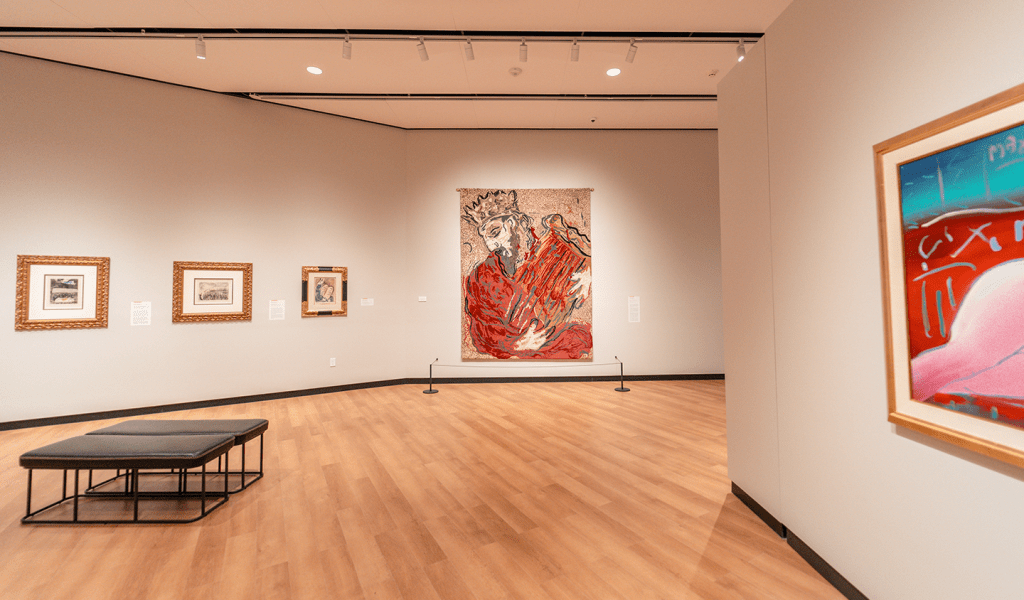
Warm balanced illumination supporting diverse art styles
Professional galleries overwhelmingly use 3000K as their baseline colour temperature.
This is because 3000K:
• Feels warm yet neutral
• Supports a wide range of artworks
• Maintains buyer confidence
• Creates a calm viewing environment
Some galleries use 2700K selectively on master works, particularly where warmth enhances emotional presence. This is done carefully and usually with Multi control to avoid inconsistency.
Cooler temperatures are rarely used, as they feel clinical and flatten tonal nuance.
Glare control and viewer comfort
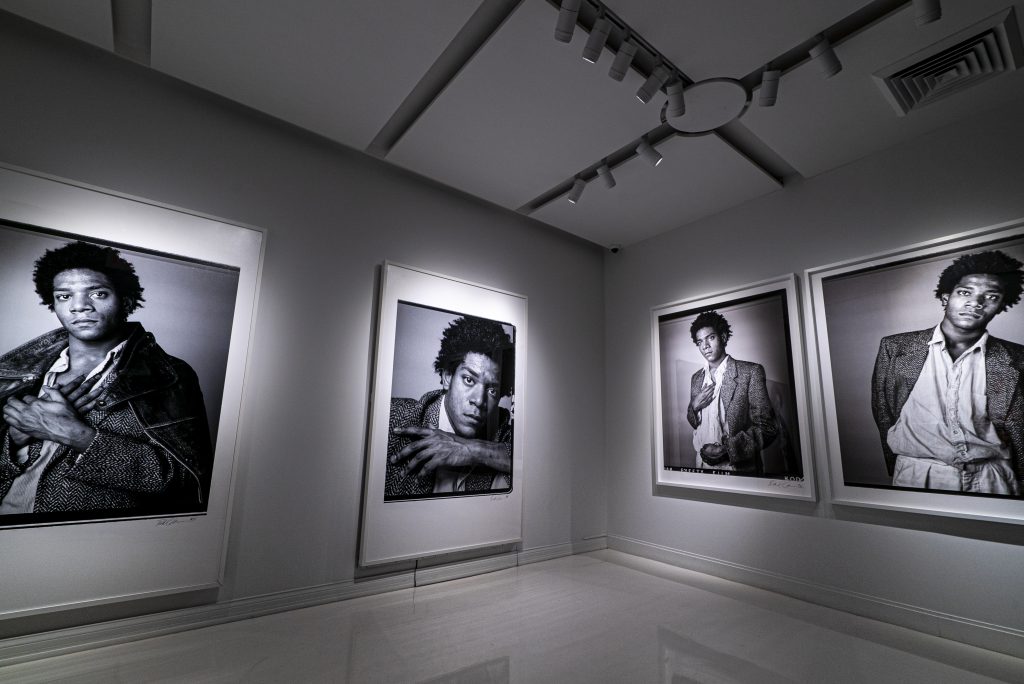
Comfortable viewing angle eliminating harsh visual hotspots
Glare is one of the most common failures in gallery lighting.
Professional lighting systems address glare through:
• Precision optics
• Correct track placement
• Proper aiming
• Consideration of viewing angles
When glare is controlled, visitors engage longer and more comfortably. This improves both experience and sales outcomes.
Consistency across exhibitions and time

Stable colour output ensuring exhibition continuity
Professional lighting must remain consistent.
This means:
• Fixtures match in colour and output
• Lighting feels cohesive wall to wall
• Quality does not degrade over time
Inconsistent lighting undermines trust and professionalism. Collectors notice when artworks look different under different lights.
Professional systems are engineered to avoid this.
Long term thinking in professional lighting

Durable track infrastructure supporting years of exhibitions
Professional galleries think in years, not exhibitions.
A proper lighting system should:
• Support many rehanging cycles
• Reduce replacement costs
• Maintain consistent quality
• Adapt as the gallery evolves
This long term approach saves money and protects the gallery’s reputation.
Why professional galleries need guidance, not just products?
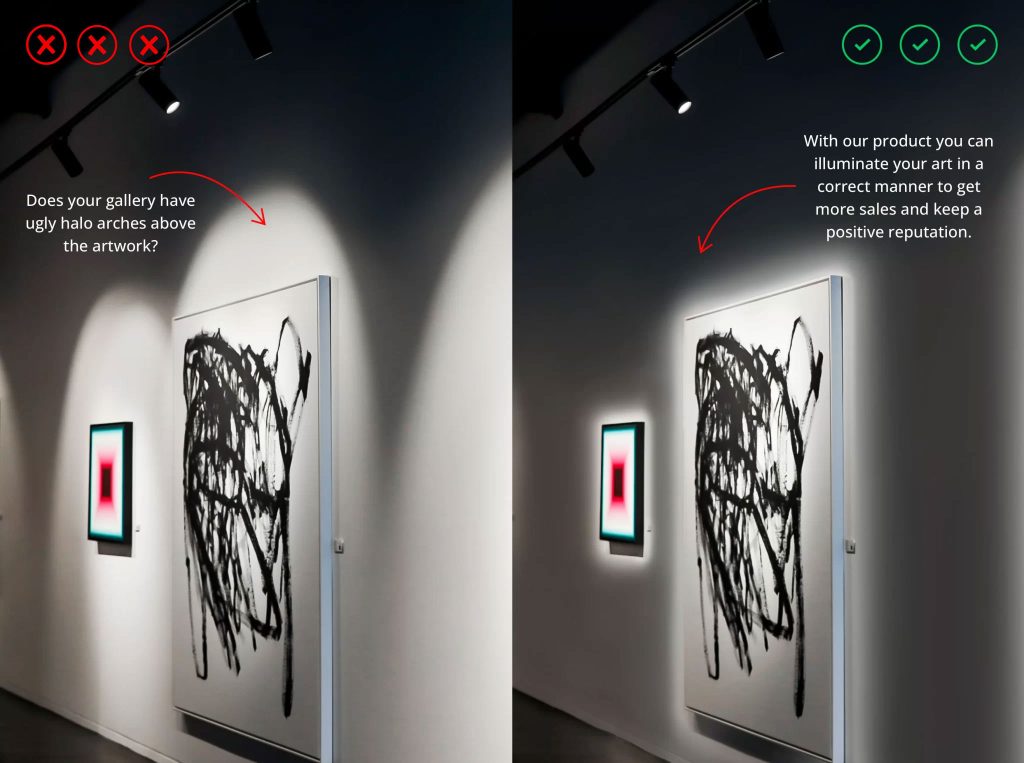
Comparison between halo glare effect and clean beam
Lighting decisions are complex. Galleries should not be expected to navigate them alone.
A specialist lighting partner provides:
• System level thinking
• Lighting plans tailored to the gallery
• Product selection based on use, not trend
• Ongoing support as exhibitions change
At Banno Lighting, our role is to guide galleries so lighting becomes a strength rather than a constant concern.
Professional lighting as a signal of credibility

Sophisticated gallery interior reflecting curatorial authority
Artists notice lighting.
Collectors notice lighting.
Institutions notice lighting.
Professional lighting signals:
• Curatorial seriousness
• Respect for artwork
• Attention to detail
• Confidence and authority
Poor lighting quietly undermines even strong programming.
Final perspective on professional art gallery lighting

Harmonious gallery environment shaped by intentional illumination
Professional art gallery lighting is not optional. It is foundational.
When lighting is done properly:
• The art feels present
• The space feels intentional
• Visitors slow down
• Buyers feel confident
• The gallery’s reputation strengthens
This is the role of professional lighting.
Why galleries choose Banno Lighting?
Galleries work with Banno Lighting because we understand lighting at a gallery level, not just a product level.
We provide:
• Expert guidance
• Professional lighting plans
• Track based gallery systems
• Zoom, Multi, and Deluxe solutions
• Long term support
If you want professional art gallery lighting that enhances experience, supports sales, and adapts over time, expert guidance and purpose built systems are essential.
The Subtle Role of Lighting in Perceived Artwork Value
Lighting does more than reveal artwork. It influences how valuable that artwork feels.
In a gallery setting, perception is everything. Two identical pieces can feel entirely different depending on how they are lit. Professional lighting enhances perceived value by creating clarity, focus, and intention.
When light is controlled and precise, it signals care. It tells the viewer that the artwork has been considered, positioned, and presented with purpose. This reinforces the idea that the work itself is important.
Uncontrolled lighting has the opposite effect. Spill, glare, and inconsistency create a sense of neglect, even if the artwork itself is exceptional. This disconnect subtly reduces perceived value.
Collectors may not consciously identify lighting as the issue, but they respond to it instinctively. Confidence drops when presentation feels unresolved.
Professional art gallery lighting systems support value perception by:
• Creating clean, focused presentation
• Maintaining consistency across all works
• Reinforcing curatorial intent
• Eliminating distractions
This is especially important in commercial galleries where buying decisions are influenced by both emotion and trust.
Lighting is not separate from value. It is part of it.
Why Precision Matters More Than Brightness
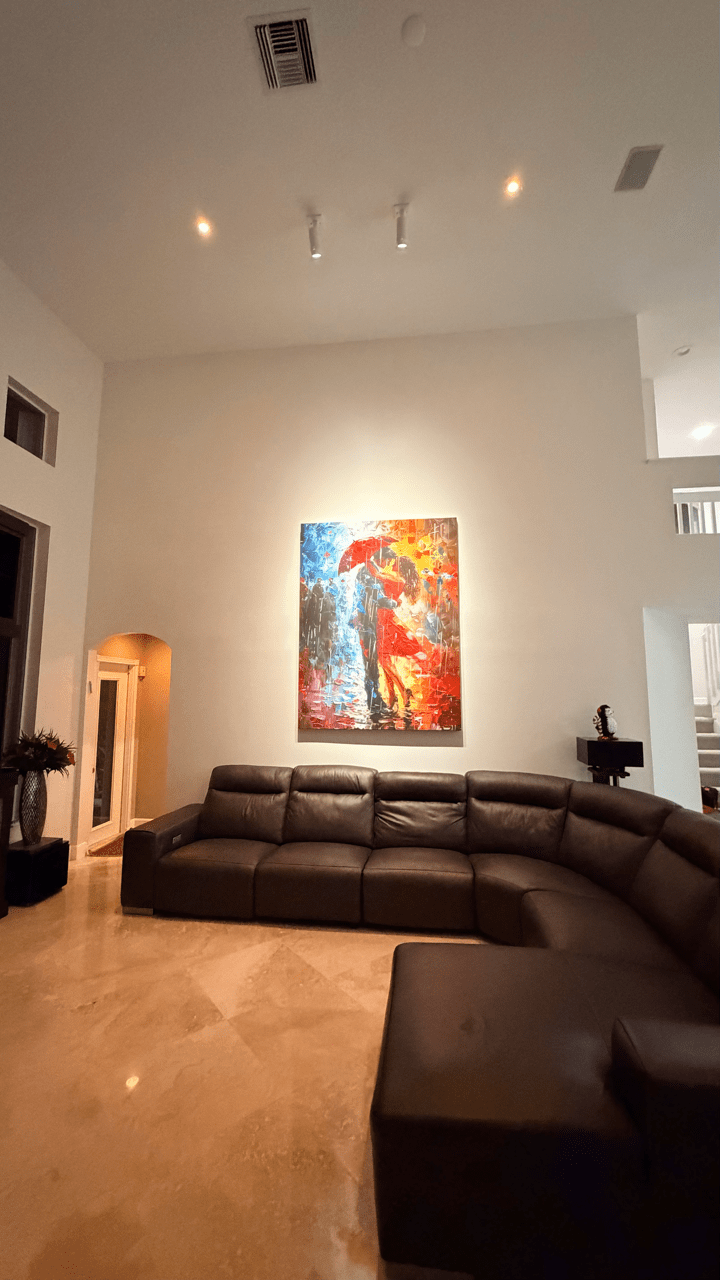
Balanced track lighting delivering exact intensity for a refined environment.
A common misconception in gallery lighting is that brighter is better.
In reality, excessive brightness can flatten artwork, wash out subtle details, and create unnecessary contrast. It can also increase glare, making viewing uncomfortable.
Professional lighting focuses on precision instead of intensity.
This means:
• Delivering the right amount of light, not the most light
• Controlling where light starts and stops
• Maintaining balance across the entire space
Precision allows each artwork to be seen clearly without overwhelming the viewer.
This approach creates a calmer, more refined environment where artworks can be appreciated fully.
Using Contrast to Guide Attention
Lighting is one of the most powerful tools for directing attention within a gallery. Not every artwork should carry equal visual weight, and lighting helps establish hierarchy without the need for physical barriers or signage.
Higher intensity and tighter beams naturally draw the eye. Lower intensity and softer beams allow supporting works to sit quietly in the background. This balance creates a structured viewing experience.
Contrast should be used carefully. Too much contrast creates visual tension and fatigue. Too little contrast makes the gallery feel flat and uncurated. The goal is controlled variation.
Professional art gallery lighting systems make this possible by allowing precise adjustments in both intensity and beam shape. This ensures that key works stand out while the overall space remains cohesive.
Creating Visual Rhythm Across Walls

Consistent focal point spacing maintaining visitor engagement across gallery walls.
A well-lit gallery has rhythm. This rhythm is subtle but essential for maintaining engagement as visitors move through the space.
Rhythm is created by slight variation in light intensity, alternating beam widths, and consistent spacing of focal points. Without rhythm, exhibitions can feel monotonous. Every wall appears the same, and visitors lose interest more quickly.
With rhythm, the space feels intentional. Visitors are guided naturally from one work to the next, creating a more immersive experience.
Track-based systems are particularly effective here because they allow fixtures to be repositioned easily, enabling designers to refine rhythm over time.
Lighting Transitions Between Spaces
Transitions are often overlooked, but they play a major role in how a gallery is experienced.
Moving from one room to another should feel seamless. Sudden changes in brightness or color temperature can disrupt immersion and make spaces feel disconnected.
Professional systems manage transitions by maintaining consistent baseline lighting, gradually adjusting intensity between zones, and aligning beam quality across rooms.
This creates continuity throughout the gallery while still allowing each space to have its own character.
Managing Reflections in Glass and Glossy Surfaces

Correct fixture positioning eliminating distracting reflections on glass-covered art.
Reflections are one of the most challenging aspects of gallery lighting.
Glass-covered artworks, photographs, and glossy finishes can easily reflect light sources, creating distractions that interfere with viewing.
Managing reflections requires correct fixture positioning, controlled beam angles, reduced spill, and careful intensity balancing.
Track lighting is essential here because it allows fixtures to be repositioned until reflections are eliminated. Even small adjustments can make a significant difference, which is why flexibility is critical in professional systems.
When reflections are controlled properly, viewers can engage with the artwork without distraction.
The Role of Shadow in Artwork Presentation
Light does not work alone. Shadow is equally important.
In flat media such as paintings, shadow should be minimal and controlled. The goal is to reveal texture without creating harsh contrast.
In three-dimensional works such as sculpture, shadow becomes a design tool. It defines form, depth, and structure.
Using multiple light sources at different angles can enhance sculptural pieces by creating layered shadows. This adds dimensionality and makes the work feel more dynamic.
Professional lighting systems allow this level of control by supporting multiple fixtures and adjustable positioning.
Beam Edge Control and Emotional Impact
Beyond beam angle, the quality of the beam edge plays a major role in how artwork is perceived.
Hard edge beams create a sharp boundary between light and shadow and are effective for isolating artworks and reinforcing minimal displays. Soft edge beams fade gradually into the surrounding space and are better suited for blending multiple works together.
The choice between hard and soft edges affects the emotional tone of the exhibition. Hard edges feel precise and controlled, while soft edges feel relaxed and immersive.
Professional systems allow galleries to adjust this quality rather than being limited to a fixed effect.
Precision Framing for Clean Presentation

Precision beam shaping preventing light spill on the surrounding walls.
Framing with light is one of the clearest indicators of a high-end gallery.
It means shaping the beam so it matches the artwork’s dimensions as closely as possible. When done correctly, light stops just before the frame, the wall remains clean, and the artwork feels intentional.
When done poorly, halos appear around the piece and the presentation loses clarity.
Precision framing requires both high-quality optics and careful aiming. It is a small detail that has a significant impact on perceived quality.
Balancing Uniformity and Variation
Consistency is essential in galleries, but too much uniformity can make a space feel sterile.
A professional system balances consistent color temperature and stable light quality with controlled variation in intensity and focus.
This ensures that the gallery feels cohesive while still allowing individual works to stand out. Uniformity builds trust, while variation creates interest.
Adapting Lighting for Different Exhibition Styles
Not all exhibitions require the same lighting approach.
Minimal exhibitions often benefit from stronger contrast and focused lighting to highlight individual pieces. Dense exhibitions require more balanced lighting to avoid overwhelming the viewer.
The ability to adapt quickly between these styles is one of the main advantages of track lighting systems. By adjusting fixture positions and beam settings, galleries can transform the space without structural changes.
The Impact of Wall Finishes on Lighting Performance
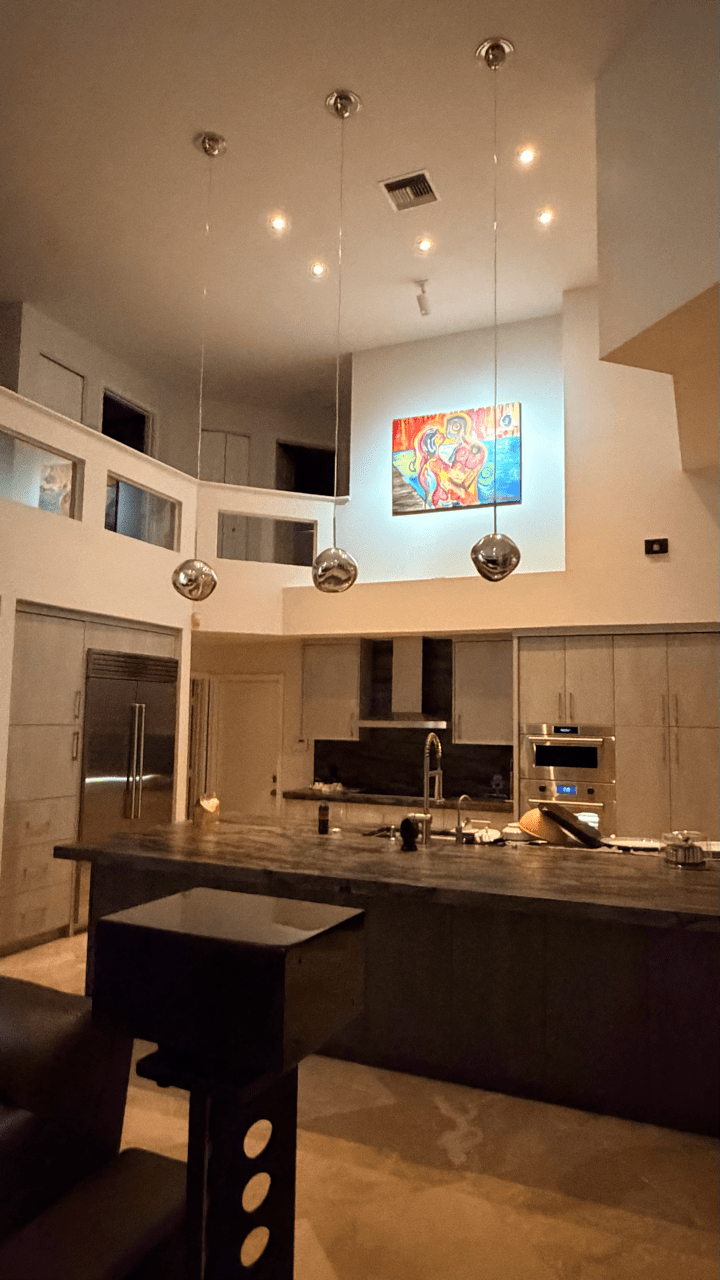
Lighting calibrated to perform on reflective white gallery wall surfaces.
Wall finish has a significant effect on how light behaves in a gallery.
Reflective surfaces can amplify light and increase glare, while matte finishes absorb light and provide a softer appearance.
White walls increase brightness but can amplify spill. Dark walls enhance contrast but require higher intensity. Neutral tones offer the most flexibility.
Understanding this interaction helps ensure that lighting performs as intended across different exhibitions.
Integrating Natural Light Without Losing Control
Natural light can enhance a gallery, but it must be carefully managed.
Daylight changes throughout the day in both intensity and color temperature. Without control, this leads to inconsistency.
Professional galleries use natural light selectively, control it with filters, and support it with stable artificial lighting. Artificial lighting remains the primary source to maintain consistency.
When balanced correctly, natural light adds depth without compromising presentation.
Supporting Photography and Media Capture
Visitors frequently photograph exhibitions, and lighting plays a key role in how these images appear.
Even, controlled lighting produces better photos with accurate colors and minimal glare. This benefits both visitors and the gallery’s online presence.
Poor lighting leads to reflections, harsh highlights, and distorted colors. Designing lighting with photography in mind extends the gallery’s reach through shared content.
Energy Efficiency and Sustainability Considerations

Sustainable LED track systems reducing energy consumption and heat output.
Modern galleries increasingly prioritize sustainability.
LED track lighting systems reduce energy consumption, minimize heat output, and extend fixture lifespan. Lower heat output also reduces the demand on climate control systems, which is important for preserving sensitive artworks.
Sustainability also reduces long-term operational costs and supports responsible gallery management.
Training Staff to Use Lighting Systems Effectively
Even the best lighting system requires proper use.
Gallery staff should understand how to reposition fixtures, adjust beam angles, and identify glare or inconsistencies. Basic training ensures that lighting continues to perform at a high level as exhibitions change.
Without this knowledge, even advanced systems can be underutilized.
The Subtle Role of Lighting in Perceived Artwork Value
Lighting does more than reveal artwork. It influences how valuable that artwork feels.
When light is controlled and precise, it signals care and intention. This reinforces the idea that the artwork is important.
Uncontrolled lighting creates a sense of neglect, reducing perceived value even if the artwork itself is strong. Collectors respond to this instinctively.
Professional lighting supports value perception by creating clean presentation, maintaining consistency, and eliminating distractions.
Why Precision Matters More Than Brightness

Balanced track illumination maintaining detail in complex art textures.
A common misconception is that brighter lighting is better.
In reality, excessive brightness can flatten artwork, wash out detail, and increase glare. Professional lighting focuses on precision instead.
This means delivering the right amount of light, controlling where it starts and stops, and maintaining balance across the space.
Precision creates a calm environment where artworks can be appreciated fully.
Final Insight: Control Defines Professional Lighting

Professional lighting environments reflecting intentional and precise art presentation.
At its core, professional art gallery lighting is about control.
Control over beam shape, intensity, color, and placement allows galleries to present artwork with precision and consistency.
When every element is intentional, lighting becomes invisible. The focus shifts entirely to the artwork.
This is what defines professional gallery lighting. It is not about brightness or fixtures, but about creating an environment where art can be experienced at its best.
Art Gallery Lighting: FAQs
1. What is the best lighting for an art gallery?
The best lighting for an art gallery is a professional LED track system with a high Color Rendering Index ($CRI > 95$). Systems like Banno’s Zoom or Deluxe provide the necessary beam control and color accuracy to ensure artworks look vibrant and true to the artist's intent.
2. How do you light a professional art gallery to increase sales?
Professional lighting increases sales by building collector confidence. Precise optics reveal true textures and colors, removing visual doubt. This creates an emotional connection, increases "dwell time" at the artwork, and reinforces the gallery’s professional authority.
3. What is the standard color temperature for art gallery lighting?
The industry standard is 3000K (Warm White). This Kelvin rating offers a neutral, inviting balance that suits most mediums—from oil paintings to photography—without the clinical feel of cooler temperatures (4000K+).
4. Why is LED track lighting better than fixed gallery lights?
LED track lighting provides the modularity required for changing exhibitions. It allows curators to move, add, or re-aim fixtures without rewiring. Modern LEDs also emit minimal heat, protecting sensitive artworks from long-term thermal damage.
5. How can I stop reflections on glass-framed art?
To stop reflections, use adjustable track heads to change the light's angle relative to the viewer. By "bouncing" the beam at a sharp angle away from the sightline and using controlled optics to reduce spill, you can eliminate distracting glares on glass.
6. What are the benefits of Zoom lighting for art exhibitions?
Zoom lighting allows for instant beam angle adjustment (e.g., $15^{\circ}$ to $60^{\circ}$) within a single fixture. This is ideal for galleries that frequently rehang, as it accommodates both small sketches and large-scale murals without needing to swap hardware.
7. How do you light a sculpture to show depth and form?
To light a sculpture, use multiple light sources at varying angles to create "layered shadows." This technique defines the three-dimensional form and adds a dynamic sense of depth that a single, flat light source cannot achieve.
8. What is precision framing in art gallery lighting?
Precision framing involves using specialized optics to shape a light beam so it matches the artwork’s dimensions exactly. This prevents light from "spilling" onto the wall, making the artwork appear self-illuminated and significantly increasing its perceived value.
9. How does gallery lighting affect social media photography?
High-quality, flicker-free lighting with high color accuracy ensures that visitor photos look professional online. Glare-free environments produce better digital content, which acts as free marketing and improves the gallery’s digital reputation.
10. Why should galleries choose a lighting system over individual fixtures?
A lighting system offers a holistic solution including a planned layout and consistent power distribution. Systems ensure that the visual language remains cohesive wall-to-wall, whereas mismatched fixtures often cause "spotty" or inconsistent illumination.
11. Does lighting influence how long visitors stay in a gallery?
Yes. Professional lighting reduces "visual noise" and eye fatigue, creating a calm environment. Comfortable viewing conditions encourage visitors to slow down and engage more deeply with the exhibition, which often leads to higher sales.
12. What is the impact of wall color on gallery lighting?
Wall finishes change how light behaves; matte surfaces absorb light for a soft look, while glossy walls can increase glare. White walls reflect light to increase overall brightness, but require more precise beam control to prevent "washout."
13. How do you integrate natural light with gallery lighting?
Professional galleries use natural light selectively, often filtering it with UV-protective blinds. Stable artificial lighting remains the primary source to ensure the artwork looks consistent regardless of the time of day or outdoor weather.
14. What is the advantage of zoned lighting control?
Zoned control allows different sections of a gallery to operate independently. This is essential for multi-room shows or mixed-media exhibitions where a delicate paper work might need lower intensity than a large bronze sculpture.
15. How can I create a visual hierarchy in a gallery show?
You can create hierarchy by using contrast. Higher intensity, tighter beams naturally draw the eye to "star" pieces, while softer, lower-intensity beams allow supporting works to sit quietly in the background.
16. Why is CRI (Color Rendering Index) important for art?
A high CRI ($95+$) is critical because it determines how accurately a light source reveals colors. Low CRI lighting can make reds look muddy or blues look flat, which misrepresents the artist's work and discourages buyers.
17. What are "predefined lighting scenes" in a gallery?
Lighting scenes allow staff to switch instantly between "Exhibition Mode," "Event Mode," or "Private Viewing" at the touch of a button. This ensures the lighting is always optimized for the specific activity taking place.
18. How do lighting transitions affect the visitor experience?
Smooth lighting transitions between rooms prevent "visual shock." Gradually adjusting brightness levels as visitors move between zones maintains their immersion and makes a large gallery feel like a single, cohesive journey.
19. Why is LED heat output a concern for art conservation?
High heat can cause pigments to fade and materials to crack. LED systems are preferred for conservation because they produce very little infrared heat, making them safe for long-term exposure to sensitive oil paintings and paper works.
20. Why should I consult a lighting specialist for my gallery?
A lighting specialist provides "system-level thinking," tailored floor plans, and products like Banno’s Multi and Deluxe series. Expert guidance ensures your lighting is a branding and sales tool, rather than a maintenance headache.
You’re in expert hands when it comes to art lighting