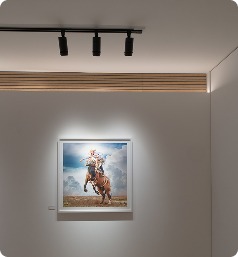
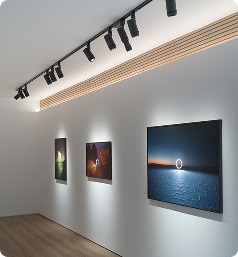
Gallery interior showcasing precision lighting on curated artworks
As part of a complete guide to lighting art in galleries and exhibitions, it is clear that lighting for art is not simply about visibility. It is about perception, preservation, and emotional impact. Whether an artwork is displayed in a private home, a commercial gallery, or a museum environment, the lighting determines how colour, texture, depth, and value are experienced by the viewer.
In professional art environments, lighting for art is treated as a precision discipline, not a decorative afterthought. The wrong lighting can flatten a masterpiece, create glare, distort colours, and even cause long-term damage. The right lighting can transform the exact same piece into a focal point that feels intentional, refined, and museum-grade.
From a consultant perspective, the goal is always the same: fewer, more controlled lights that focus attention on what truly matters — the artwork itself.
Why Lighting for Art Is Critical (Not Optional)

Focused spotlight revealing depth and colour vibrancy
Most artwork is unintentionally underlit, overlit, or lit by general ambient lighting. This is one of the biggest mistakes seen in both homes and galleries.
Professional lighting for artwork achieves three key outcomes:
- True colour rendering
- Controlled focus and contrast
- Long-term preservation of the artwork
When lighting is incorrect, even a high-value painting can appear dull, washed out, or lifeless. When lighting is correct, the same artwork gains presence, depth, and visual authority.
This is why museums and high-end galleries invest heavily in specialised art lighting systems rather than relying on standard ceiling lights or decorative fixtures.

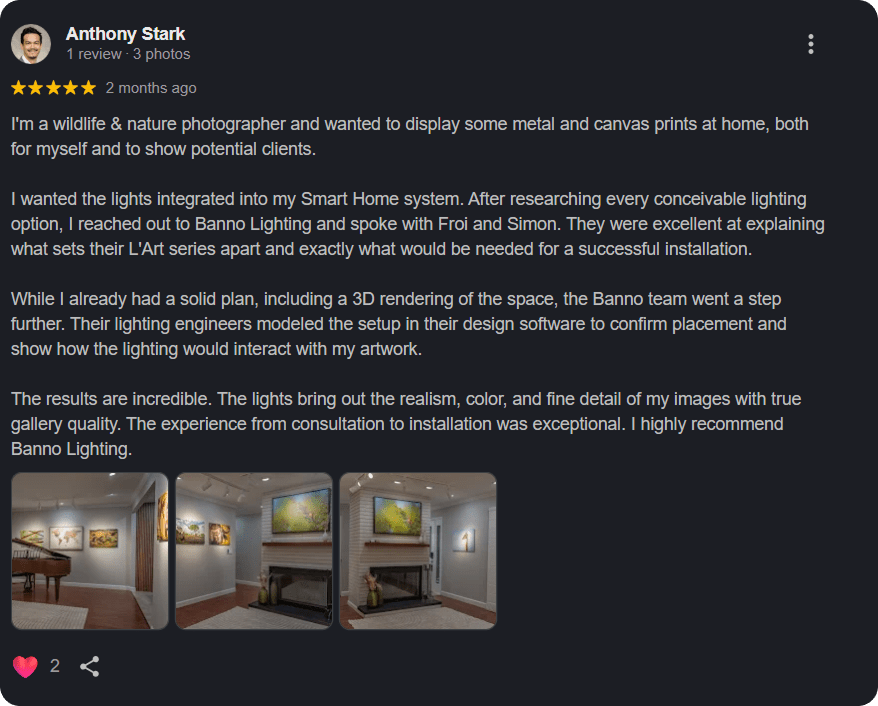
4.9-star rated by art collectors and gallery professionals
What “Good” Lighting for Art Actually Means
Glare-free illumination on varnished framed artwork
Good lighting for art is not about brightness. It is about control.
Key characteristics of professional lighting for artwork:
- The use of high-CRI lighting for artwork and displays to reveal true, vibrant colours
- Controlled beam angles to avoid spill light
- Minimal glare on glass and varnished surfaces
- Proper positioning to highlight texture and brushwork
- Stable, museum-safe LED technology
In contrast, bad art lighting often involves:
- Wide flood lighting
- Harsh downlights
- Uneven illumination
- Reflections on framed artwork
- Incorrect colour temperature
The difference is immediately visible to collectors and curators.
Types of Lighting for Art (Professional Breakdown)

Ceiling-mounted art fixtures in minimalist interior
Track Lighting for Artwork
Track lighting for artwork is widely considered the most flexible and professional solution for galleries, collectors, and exhibitions. It allows precise positioning, adjustable beam angles, and scalable lighting layouts as collections evolve.
Track lighting is especially effective for:
- Gallery walls
- Large paintings
- Rotating exhibitions
- Mixed artwork collections
Ceiling Mounted Art Lighting
Ceiling-mounted art lighting is ideal for clean, architectural environments where visible fixtures must remain minimal. This approach delivers a refined museum-style appearance while maintaining precise focus on the artwork.
Lighting for Wall Artwork
Lighting for wall artwork requires careful beam control and correct placement angles. One of the best lighting techniques for paintings and artwork is the "30-degree rule," which reduces glare and highlights surface detail while ensuring the light source remains unobtrusive to the viewer.
Lighting for Framed Artwork
Framed artwork often involves reflective surfaces such as glass or acrylic. Focused lighting systems with controlled optics are essential to prevent distracting reflections.
Museum and Gallery Lighting Philosophy (Less Is More)

Structured light hierarchy guiding viewer attention
One of the most misunderstood concepts in lighting for art is the idea that more lights produce better results. In reality, professional approaches to art lighting follow the opposite philosophy.
Less lights, placed strategically, create stronger visual hierarchy and focus.
Museums typically use:
- Narrow beam spotlights
- Precision track systems
- Micro-adjustable lighting heads
- Controlled lux levels for preservation
This approach ensures the viewer’s attention is directed toward the artwork rather than the lighting itself.
Lighting for Art in Private Collections and Homes

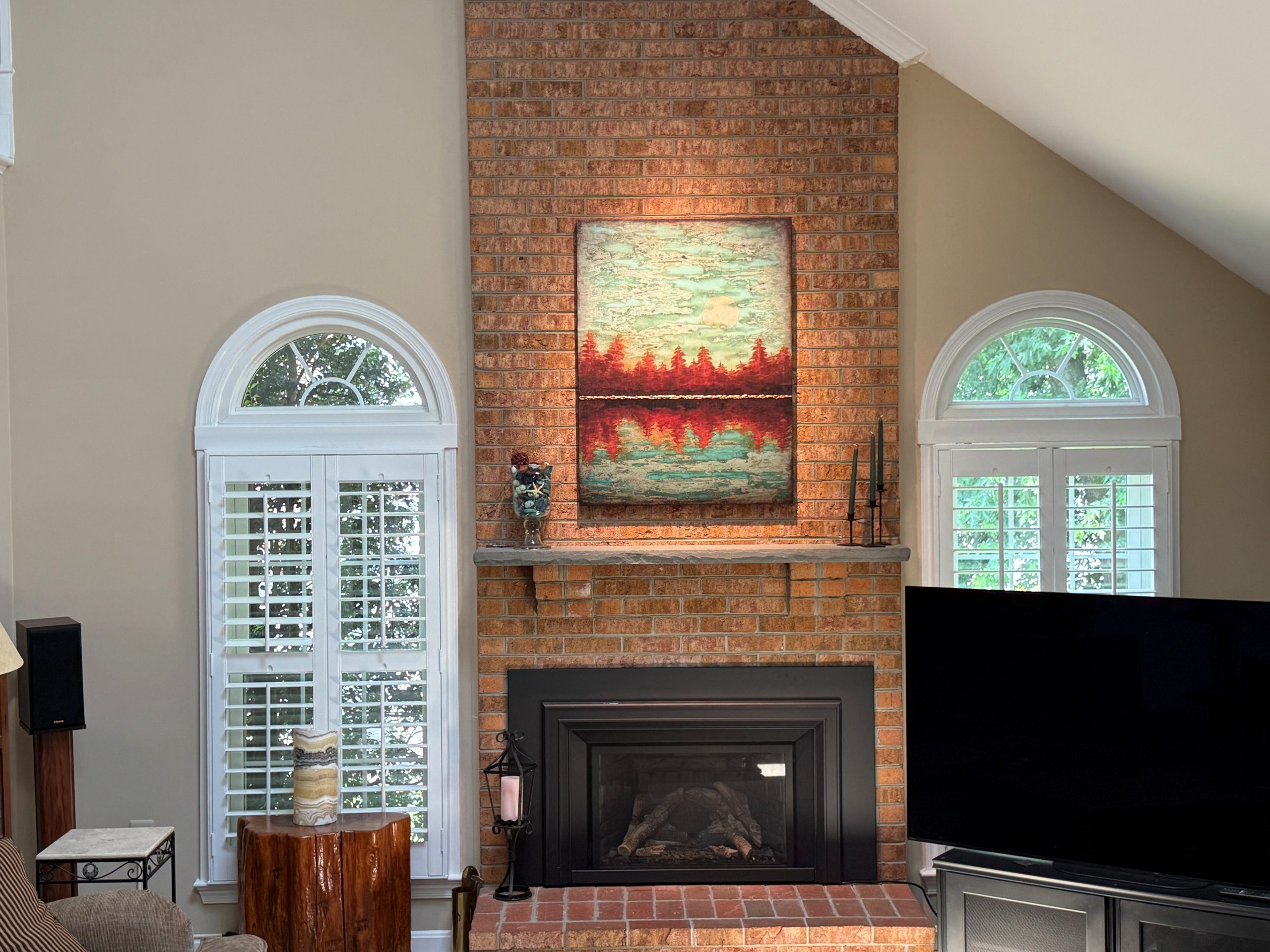
Residential gallery-style lighting highlighting focal artwork
Collectors often assume residential lighting should be softer or more decorative. However, high-end homes displaying original artwork benefit from the same principles used in galleries and museums.
Lighting for artwork at home should:
- Highlight focal pieces
- Maintain colour accuracy
- Integrate seamlessly with architecture
- Avoid overpowering the artwork with ambient light
For serious collectors, dedicated art lighting instantly elevates the perceived value of the collection and the overall interior space.
Professional Art Lighting Systems (Zoom, Multi, Deluxe, Mini Zoom)

Professional lighting range designed for artwork precision
From a consultant standpoint, not all art lighting systems are equal. Generic lighting fixtures lack the optical precision required for fine art display.
A professional range of professional lighting systems for fine art and collections includes specialised systems such as Zoom, Multi, Deluxe, and Mini Zoom. Each of these serves a distinct purpose in collector, gallery, and museum environments, ensuring that every piece is displayed with institutional-level precision
Zoom: Precision Beam Control for Artwork
Zoom lighting systems are engineered for adjustable beam angles, allowing exact control over how light falls on a painting or artwork. This is essential for:
- Highlighting texture
- Avoiding spill light
- Adjusting focus for different artwork sizes
For galleries and collectors, Zoom systems provide flexibility without needing to replace fixtures as collections change.
Multi: Flexible Track Lighting for Galleries
Multi systems are designed for scalable gallery track lighting installations. They allow multiple adjustable heads on a single track, making them ideal for:
- Gallery walls
- Art exhibitions
- Large art collections
- Museum-grade layouts
This system supports professional repositioning and curatorial lighting adjustments.
Deluxe: Museum-Grade Art Lighting
Deluxe lighting represents a premium, museum-quality solution focused on precision optics, high CRI performance, and architectural integration. It is commonly used in:
- High-end galleries
- Museums
- Luxury residential collections
- Architectural art spaces
The emphasis is on refined light control rather than excessive brightness.
Mini Zoom: Micro Lighting for Cabinets and Displays
Mini Zoom fixtures are extremely compact, often comparable in size to a small coin, yet capable of precise pinpoint illumination. These are ideal for:
- Display cabinets
- Sculptures
- Small artworks
- Museum vitrines
Their minimal size ensures the lighting remains invisible while the artwork becomes the focal point.
Track Lighting vs Picture Lights vs Ceiling Systems

Flexible lighting rail system for artwork
Track Lighting for Art Gallery Use
Track lighting for art galleries offers maximum flexibility and professional control. Curators can reposition lights as exhibitions rotate, ensuring consistent presentation quality.
Picture Lights
Picture lights can work for smaller residential applications but lack the optical control and scalability required for serious collections or gallery environments.
Ceiling-Mounted Systems
Ceiling-mounted systems provide a clean architectural finish and are preferred in museum-grade installations where visual minimalism is important.
Lighting for Different Types of Artwork

Photography print under colour-accurate LED lighting
Lighting for Oil Paintings
Oil paintings require high CRI lighting and careful beam control to reveal brushwork and pigment depth without causing glare.
Lighting for Canvas Art
Canvas artwork benefits from soft yet focused illumination that enhances texture while maintaining even light distribution.
Lighting for Photography and Prints
Photographic works require colour-accurate lighting to preserve tonal balance and detail integrity.
Lighting for Sculptures and 3D Art
Sculptural pieces benefit from directional lighting that creates shadows and depth rather than flat illumination.
Colour Temperature and CRI in Art Lighting

High CRI LED module close-up detail
Professional lighting for art typically falls within the 2700K–3500K range, depending on the artwork and environment.
Key technical factors:
- High CRI (95+) for true colour representation
- Stable LED output
- No UV or IR emissions
- Consistent beam quality
Low CRI lighting distorts artwork colours and is unsuitable for fine art display.

Lighting for Large Paintings and Statement Pieces

Track system spaced evenly across feature wall
Large artworks require wider beam coverage combined with precise focus. Instead of multiple random lights, professional installations use:
- Adjustable track systems
- Controlled beam optics
- Strategic spacing
This maintains visual balance without overwhelming the piece.
Common Mistakes in Lighting for Art
Even high-value collections often suffer from poor lighting decisions, including:
- Using general ceiling downlights
- Over-lighting artwork
- Incorrect beam angles
- Lighting positioned directly above the artwork
- Low CRI lighting fixtures
- Ignoring glare from glass frames
Correcting these issues by choosing the right fixtures for artwork lighting can dramatically transform the viewing experience without changing the artwork itself. By prioritizing hardware with precision optics and high color rendering, you ensure the art is seen with the depth and clarity it deserves.
Lighting for Art Exhibitions and Museums

Curated gallery wall under controlled lux levels
Museum lighting prioritises both visual impact and conservation. Professional systems are designed to:
- Protect sensitive materials
- Maintain consistent illumination
- Allow curatorial flexibility
- Adapt to changing exhibitions
This is why museum-grade track lighting and micro-focus systems are widely preferred over generic lighting fixtures.
FAQ: Lighting for Art (30 Questions)
1. What is the best lighting for art?
High CRI LED lighting with controlled beam angles is considered the best option for art.
2. Does LED lighting damage artwork?
Quality LED lighting with no UV and low heat output is safe for artwork.
3. How do museums light artwork?
Museums use precision track lighting, narrow beam optics, and controlled lux levels.
4. What colour temperature is best for artwork?
Typically 2700K to 3500K depending on the artwork and environment.
5. Is track lighting good for artwork?
Yes, it is one of the most flexible and professional solutions.
6. How many lights should be used per painting?
Usually one or two focused lights, depending on artwork size.
7. Can lighting change how art looks?
Yes, dramatically. Lighting affects colour, depth, and texture perception.
8. What CRI is best for art lighting?
CRI 90+ is recommended, with 95+ preferred for fine art.
9. Should artwork be lit from above?
Yes, typically at a 30-degree angle to reduce glare.
10. Is ceiling lighting enough for artwork?
General ceiling lighting is not sufficient for proper art display.
11. What is museum-grade lighting?
Lighting designed with precision optics, high CRI, and conservation safety.
12. Can lighting fade paintings?
Excessive light exposure over time can contribute to fading.
13. Are spotlights better than floodlights for art?
Yes, spotlights provide better focus and control.
14. What beam angle is best for artwork?
Narrow to medium beam angles depending on artwork size.
15. Should art lighting be bright?
Controlled and focused is more important than brightness.
16. Is track lighting better than picture lights?
For flexibility and professional results, yes.
17. How do galleries light art walls?
Using adjustable track lighting systems with precision optics.
18. Can lighting improve art value perception?
Yes, presentation significantly impacts perceived value.
19. What lighting is best for large paintings?
Adjustable track or ceiling-mounted precision lighting systems.
20. Should different artworks use different lighting?
Yes, materials and mediums require tailored lighting approaches.
21. Is warm or cool light better for art?
Warm to neutral light typically works best for most artwork.
22. What is accent lighting for art?
Focused lighting designed to highlight artwork specifically.
23. Can poor lighting ruin artwork presentation?
Yes, it can make even high-value art appear flat or dull.
24. How do collectors light their art collections?
With dedicated art lighting systems rather than general room lighting.
25. Is glare a major issue in art lighting?
Yes, especially with framed or glass-covered artwork.
26. What lighting do art galleries use?
Professional track lighting and museum-grade fixtures.
27. Can small lights be used in display cabinets?
Yes, micro lighting systems like Mini Zoom are ideal.
28. How far should lights be from artwork?
Distance depends on beam angle and artwork size.
29. Is dimmable lighting recommended for art?
Yes, it allows precise control over illumination levels.
30. What is the goal of professional art lighting?
To enhance visibility, preserve artwork, and create visual focus without distraction.
Lighting for art is ultimately about intentional presentation. Whether in a private collection, gallery, or museum setting, the correct lighting system elevates not just the artwork, but the entire space around it. When precision lighting systems such as Zoom, Multi, Deluxe, and Mini Zoom are applied thoughtfully, the result is a refined, museum-grade experience that allows the artwork to be seen exactly as it was meant to be seen.
Why Designers and Collectors Trust Our Gallery Lights