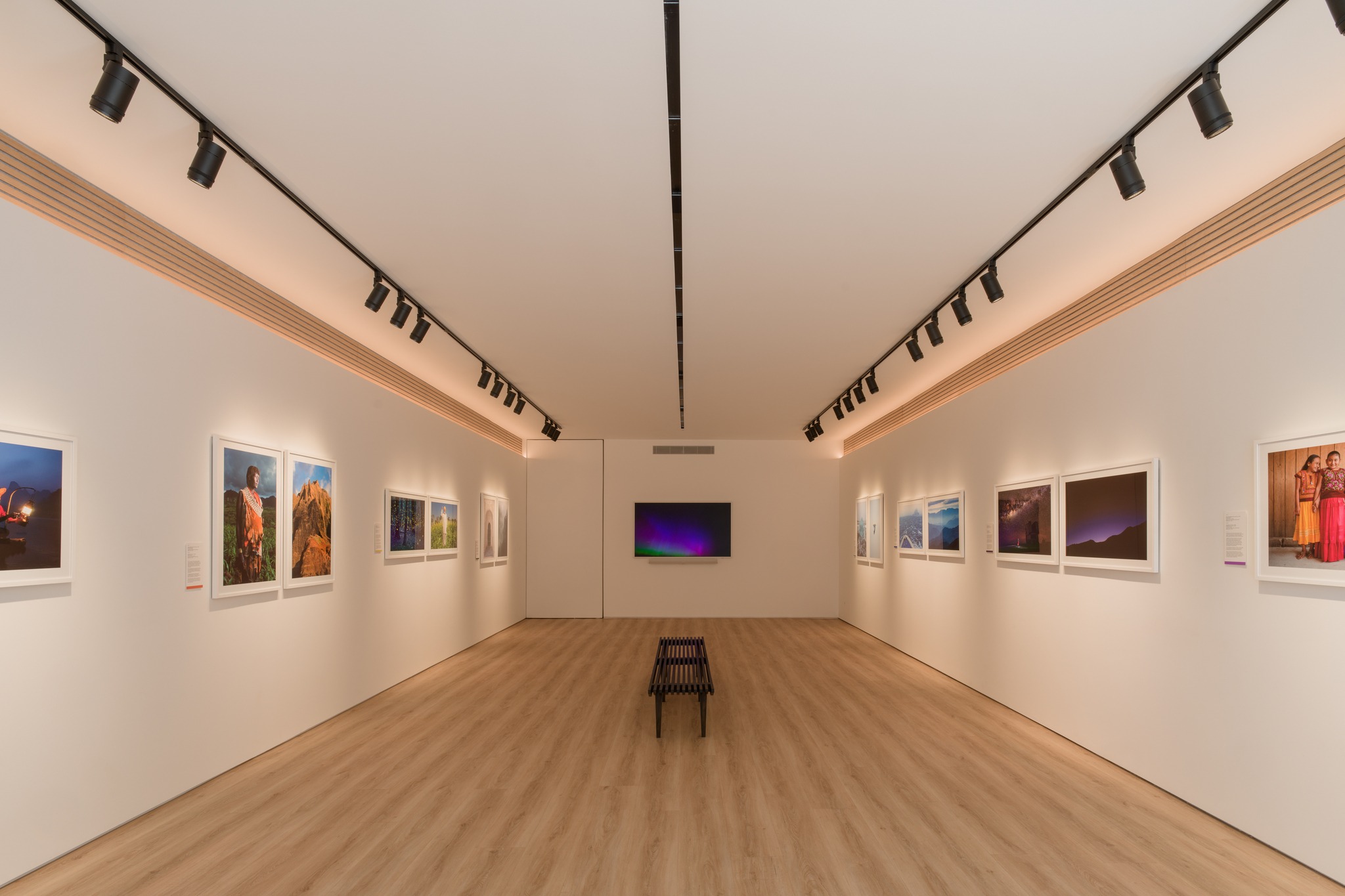
Professional exhibition space featuring controlled art lighting system
When we discuss museum lighting fixtures, we are really looking at a complete guide to museum and gallery lighting. We are not talking about decorative lights or general ceiling lighting, but rather precision systems engineered to illuminate artwork, artifacts, and exhibitions with control, accuracy, and preservation in mind.
As lighting consultants working with galleries, collectors, and exhibition spaces, we always begin by explaining the core principles of effective museum lighting. The most important is this: museum lighting is not about adding more light. It is about placing the right light, in the right position, with the right beam control.
This is why museum lighting fixtures differ significantly from standard residential or commercial lighting systems.
What Are Museum Lighting Fixtures?

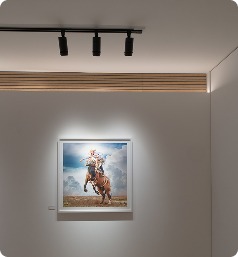
Adjustable museum track lighting in exhibition hall
Museum lighting fixtures are specialized lighting systems engineered to highlight artwork while protecting it from damage and visual distortion. Unlike general lighting, museum lighting focuses on precision, color accuracy, and controlled illumination.
Professional museum lighting fixtures typically include:
- Ceiling mounted art lights
- Museum track lighting systems
- Adjustable spotlight fixtures
- Cabinet and display lighting
- High CRI art lighting systems
These fixtures are designed to reveal the true colors, textures, and depth of artwork without causing glare, hotspots, or fading over time.
In museum environments, lighting is considered part of the curation process, not just an installation detail.

4.9-star rated by art collectors and gallery professionals
Why Museum Lighting Fixtures Are Different from Standard Lighting

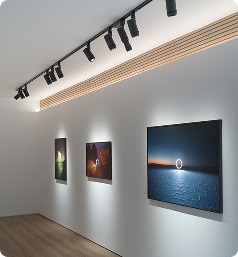
Artwork under high color rendering museum spotlight
Standard lighting is built to illuminate a room. Museum lighting fixtures are built to illuminate objects of value.
The difference comes down to four critical factors:
1. Precision Beam Control
Museum-grade lighting allows the beam to be narrowed and directed precisely onto the artwork, rather than spilling light across the wall or ceiling.
2. High Color Rendering (CRI)
Museums require lighting that accurately shows the true pigments of a painting. Low-quality lighting can make artwork appear dull, yellow, or washed out.
3. Conservation Awareness
Museum lighting guidelines focus heavily on protecting artworks from UV exposure and excessive lux levels that can degrade materials over time.
4. Visual Experience
Good museum lighting creates emotional focus. The viewer’s eye is drawn directly to the artwork, not the fixture.
Types of Museum Lighting Fixtures Used in Professional Spaces

Combination of track and ceiling mounted fixtures
There is no single fixture that suits every exhibition. Instead, museum lighting systems are carefully selected based on the artwork type, ceiling height, and display method.
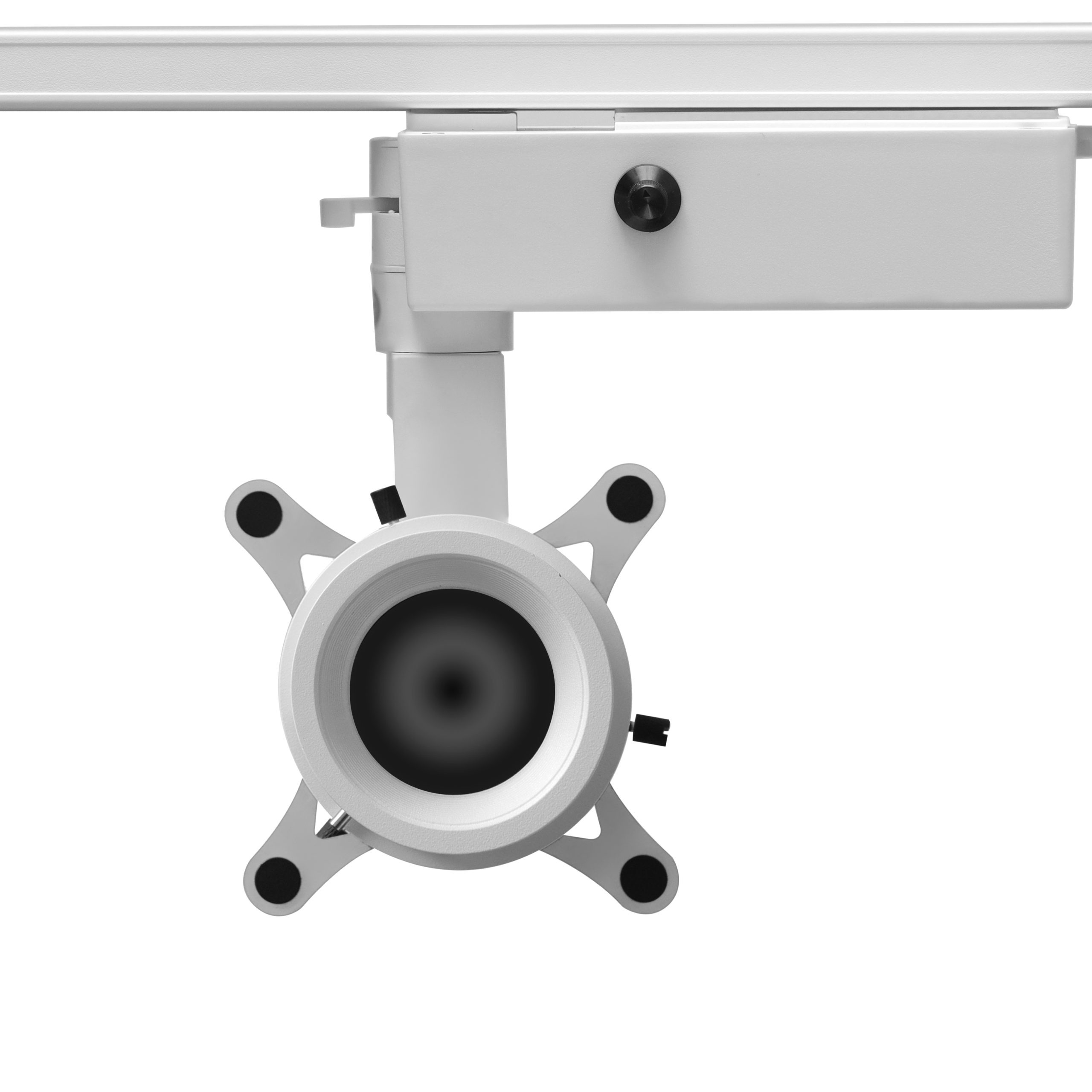
Museum Track Lighting Systems
Track lighting is a cornerstone of professional museum lighting systems for exhibits and artwork because of its flexibility and precision. Adjustable heads allow curators and lighting designers to reposition light instantly as exhibitions change, ensuring every piece is perfectly illuminated
Track lighting for museum environments typically features:
- Adjustable beam angles
- High CRI LED modules
- Glare control accessories
- Precision aiming capability
This makes it ideal for rotating exhibitions and gallery walls.
Ceiling Mounted Museum Lighting Fixtures
Ceiling mounted art lights are commonly used in both museums and high-end private collections. These fixtures provide clean, architectural illumination without distracting from the artwork.
They are especially effective when:
- Lighting large paintings
- Highlighting sculpture walls
- Creating consistent gallery illumination
When paired with zoom optics, ceiling mounted museum lighting can pinpoint even small details within a painting.
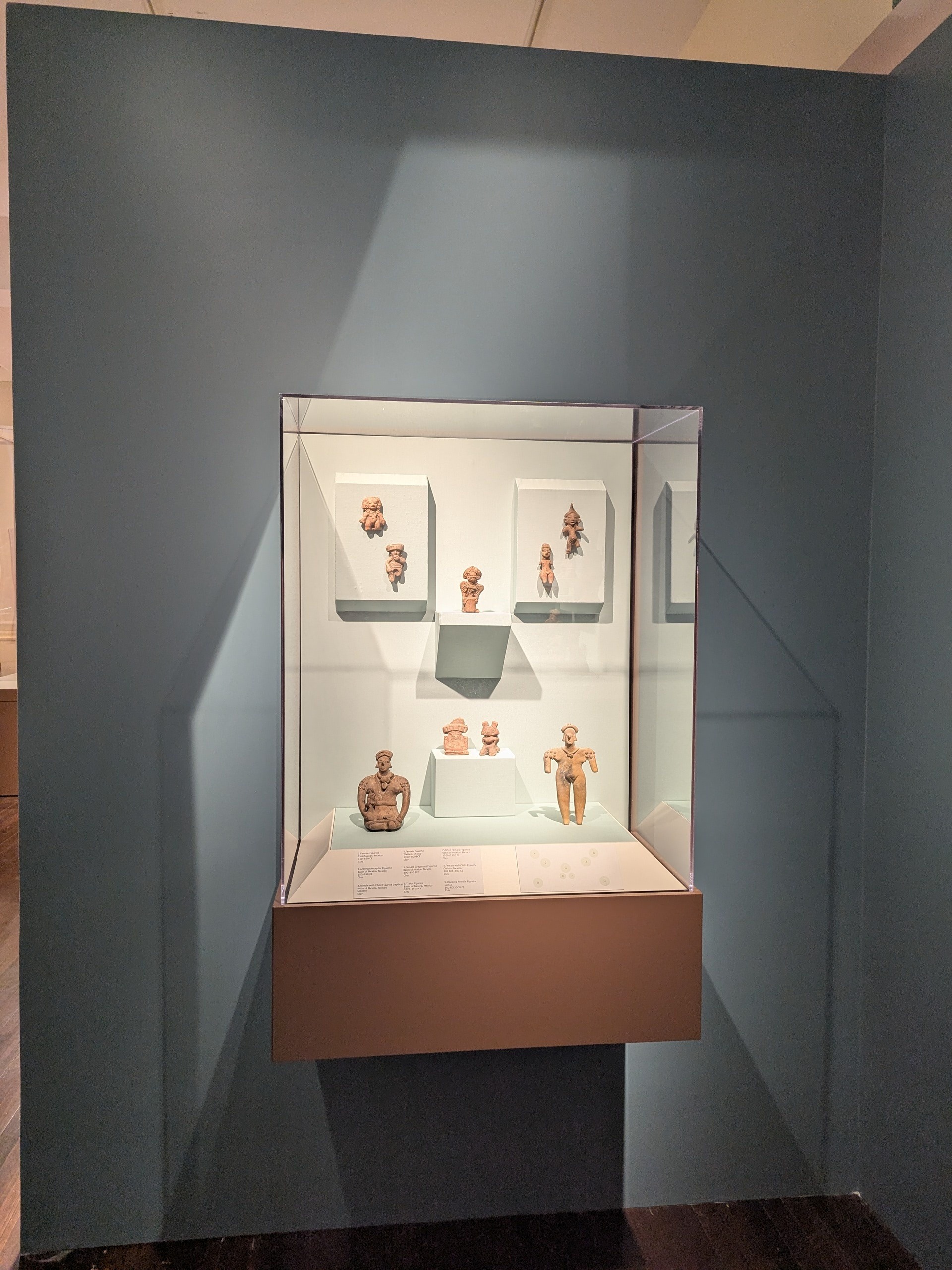
Cabinet and Display Case Lighting (Mini Precision Fixtures)
For artifacts, collectibles, and delicate pieces inside glass cases, miniature museum lighting fixtures are often used.
Ultra-compact zoom fixtures, sometimes as small as a coin, allow lighting designers to:
- Pinpoint small objects
- Avoid overheating display cases
- Maintain full visual focus on the exhibit
These are frequently used in museums displaying jewelry, historical artifacts, and rare collectibles.
Museum Lighting Fixtures for Paintings and Fine Art

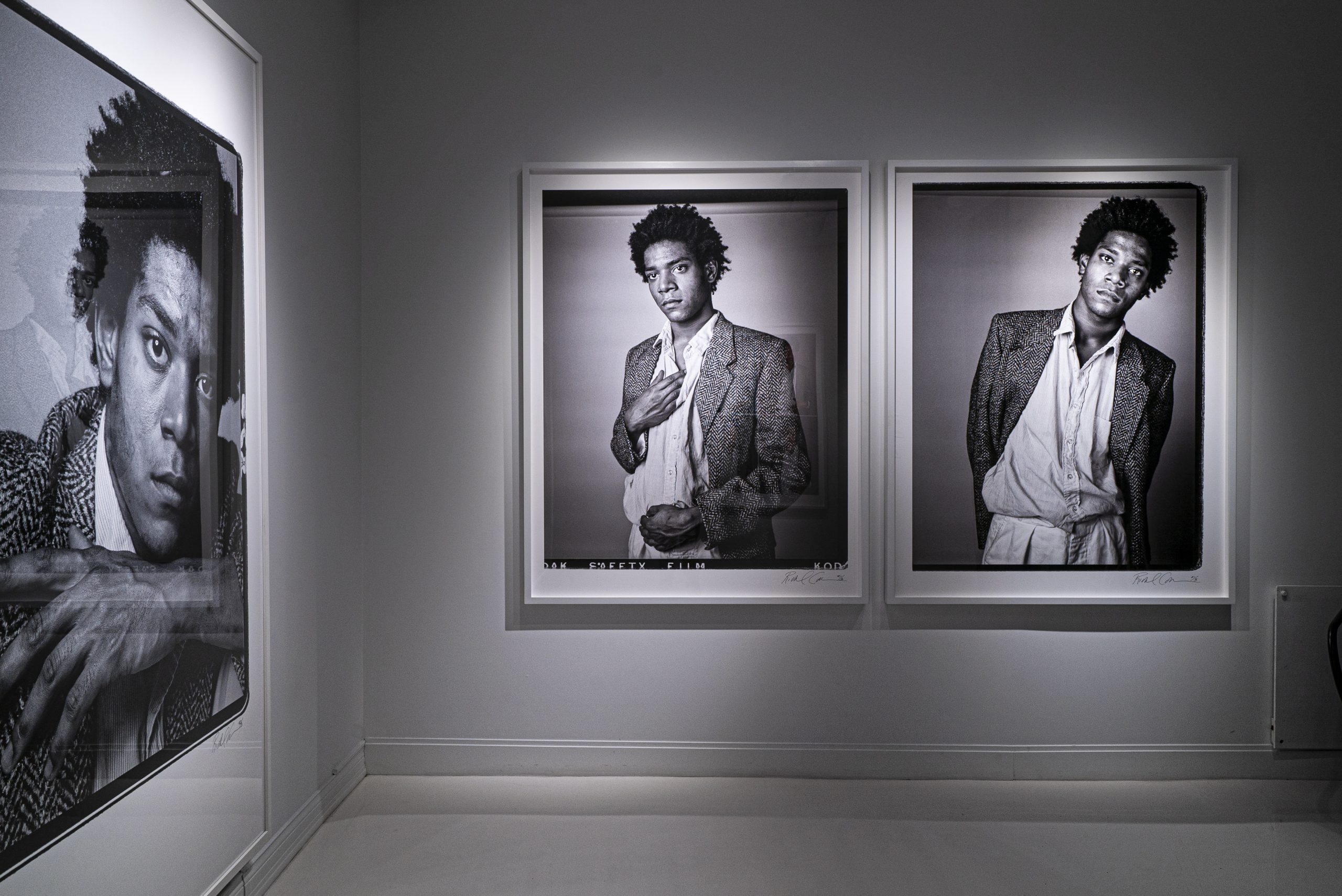
Controlled brightness across framed art display
Lighting paintings in a museum setting requires a completely different approach compared to standard wall lighting.
Museum art lighting fixtures must balance:
- Even illumination across the canvas
- No glare on varnished surfaces
- Accurate color rendering
- Controlled lux levels
For large paintings, fewer fixtures with controlled beam angles are often more effective than multiple wide flood lights. This aligns with a key museum lighting philosophy: less light, better focus.
The Role of Museum Lighting Design in Exhibitions

Structured lighting guiding visitor visual attention
Museum lighting design is a specialized discipline that blends technical lighting knowledge with curatorial intent.
A professional museum lighting consultant will assess:
- Artwork size and medium
- Wall color and reflectance
- Ceiling height and mounting positions
- Visitor viewing angles
- Conservation requirements
The goal is to create a hierarchy of light where the artwork becomes the visual centerpiece of the space.
Museum Lighting Fixtures vs Gallery Lighting Fixtures
Conservation-focused lighting installed in exhibition space
While museum and gallery lighting share similarities, museum lighting fixtures are typically more controlled and conservation-focused.
Gallery lighting fixtures often prioritize aesthetics and flexibility.
Museum lighting fixtures prioritize preservation, precision, and long-term performance.
Museums usually require:
- Lower UV emission
- Stable color temperature
- Higher consistency across exhibits
- Advanced beam control systems
This is why museum lighting systems are considered a higher standard than typical gallery lighting.
Key Features to Look for in Museum Lighting Fixtures
High CRI LED module close-up detail
When selecting museum lighting fixtures, we advise focusing on performance over appearance.
High CRI (95+)
This ensures artwork colors appear true to life.
Adjustable Beam Angles
Zoom lighting allows precise control from wide wall washing to pinpoint spotlighting.
Glare Control
Professional museum fixtures minimize reflection and visual discomfort for viewers.
Stable Color Temperature
Most museum lighting operates between 2700K and 3500K to maintain warmth without distorting pigments.
Minimal UV and Heat Output
LED museum lighting systems are preferred because they reduce heat and UV exposure that can damage artwork.
Museum Track Lighting Systems for Flexible Exhibitions

Precision spotlight repositioned along track rail
Museum track lighting systems are essential for institutions that regularly rotate exhibitions. Instead of reinstalling fixtures, curators can reposition lighting heads along the track to suit new artwork layouts.
Benefits include:
- Modular lighting design
- Scalable installations
- Precision spotlight positioning
- Easy future adjustments
This flexibility makes track lighting the backbone of many modern museum lighting systems.
How Museum Lighting Fixtures Influence Visitor Experience

Focused lighting creating immersive exhibition atmosphere
Lighting is one of the most powerful psychological tools in exhibition design. Proper museum lighting creates depth, focus, and emotional engagement.
When lighting is poorly designed:
- Artwork appears flat
- Details are lost
- Reflections distract viewers
When museum lighting fixtures are correctly implemented:
- Textures become visible
- Colors appear richer
- The artwork feels elevated and intentional
This is why museums invest heavily in professional lighting design rather than relying on standard lighting fixtures.
Museum Lighting Guidelines and Conservation Considerations

LED spotlight reducing UV exposure on artwork
Museums follow strict lighting guidelines to preserve artwork over decades or even centuries.
Common conservation principles include:
- Limiting lux exposure for sensitive materials
- Avoiding direct harsh lighting
- Using LED museum lighting fixtures with low UV output
- Maintaining consistent lighting levels across exhibits
Paper, textiles, and historic artifacts are especially sensitive to excessive light exposure, making controlled museum lighting essential.
Museum Lighting Fixtures for Modern Private Collections

Private collection wall illuminated with precision fixtures
Today, museum-grade lighting for paintings and collections is no longer limited to institutions. High-end collectors and luxury homes increasingly install museum lighting fixtures to display their private art collections.
In residential gallery spaces, museum lighting can:
- Elevate the perceived value of artwork
- Create a gallery-like atmosphere
- Improve visual clarity and depth
- Protect valuable pieces long-term
This approach is particularly popular among collectors with original paintings and limited-edition artworks.
Advanced Museum Lighting Fixtures: Precision, Optics, and Curatorial Control
When discussing museum lighting fixtures at a professional level, the conversation moves beyond basic illumination and into optics, conservation science, and visual storytelling. In museum environments, light is not simply functional. It is a curatorial tool that shapes how visitors perceive scale, texture, color, and historical importance.
Professional museum lighting systems are designed with the understanding that every artwork, artifact, and exhibit responds differently to light. A large oil painting, a fragile textile, and a metallic sculpture all require completely different lighting approaches, fixture placements, and intensity levels.
This is why museums do not rely on generic lighting solutions. They use purpose-built museum lighting fixtures engineered specifically for controlled art illumination.
Museum Lighting Fixtures and Optical Precision

Narrow beam spotlight revealing painting brush strokes
One of the defining characteristics of high-end museum lighting fixtures is optical precision. Unlike standard lighting that spreads light broadly, precision fixtures for museum lighting applications are designed to focus light exactly where it is needed.
Precision optics allow lighting designers to:
- Highlight brush strokes and texture in paintings
- Illuminate sculptures without casting harsh shadows
- Control spill light on surrounding walls
- Direct attention to focal exhibits
Zoom optics, narrow beam spotlights, and adjustable lenses are core components of professional museum lighting systems. These tools allow curators and consultants to fine-tune the visual experience after installation, which is essential for evolving exhibitions.
The Importance of Lux Levels in Museum Lighting Fixtures
Focused illumination without excessive exposure
A critical factor in museum lighting is lux control. Lux refers to the intensity of light that reaches the surface of an artwork.
Different materials have different light tolerance levels:
- Oil paintings: Moderate tolerance
- Paper and photographs: Low tolerance
- Textiles and historical documents: Very low tolerance
- Sculptures and metal objects: Higher tolerance
Museum lighting fixtures must be capable of delivering controlled lux levels that preserve artwork over time while still providing visual clarity. Excessive lighting can cause fading, discoloration, and material degradation.
This is why museum lighting guidelines often prioritize controlled, focused lighting rather than high brightness.
Museum Lighting Fixtures for Different Exhibition Types

Temporary display using adjustable track fixtures
Selecting the correct types of lights used in museum environments depends entirely on the exhibition's layout and duration.
Permanent Exhibitions
Permanent museum displays require highly stable lighting systems with consistent color temperature and minimal maintenance. Museum-grade LED lighting fixtures are ideal because they maintain output stability over many years.
Temporary Exhibitions
Temporary exhibitions benefit from flexible museum track lighting systems that can be adjusted, repositioned, and recalibrated for new layouts and artwork sizes.
Traveling Exhibitions
Portable museum lighting fixtures with modular track systems and adjustable heads are commonly used for traveling exhibits to ensure consistent lighting across different venues.
Beam Angle Strategy in Museum Lighting Fixtures
Beam angle selection is one of the most overlooked aspects of museum lighting design. The beam angle determines how concentrated or wide the light distribution will be.
Common beam angle uses:
- Narrow beam (10–20°): Pinpoint lighting for small artifacts
- Medium beam (24–36°): Standard painting illumination
- Wide beam (40°+): Large artworks and murals
Professional museum lighting fixtures often feature adjustable zoom beams, allowing one fixture to serve multiple roles within an exhibition space.
Museum Lighting Fixtures and Color Accuracy

High CRI lighting revealing true artwork pigments
Color accuracy is a non-negotiable factor in museum environments. Artwork must appear exactly as the artist intended, without color distortion.
High-quality museum lighting fixtures typically offer:
- CRI 95–98+
- Consistent color rendering across multiple fixtures
- Minimal color shift over time
Low-quality lighting can alter the perceived color palette of artwork, which compromises both artistic integrity and visitor experience.
Ceiling vs Track vs Display Case Museum Lighting Fixtures

Track lighting system with adjustable precision heads
Ceiling Mounted Museum Lighting Fixtures
Ceiling-mounted fixtures provide a clean architectural look and are ideal for spaces where visual minimalism is important. They are often used in high-end museums and galleries where the lighting must remain discreet.
Museum Track Lighting Fixtures
Track lighting is the most versatile museum lighting solution. It allows curators to reposition lights as exhibits change without modifying the ceiling structure.
Display Case Lighting Fixtures
Miniature museum lighting fixtures inside cabinets are used for sensitive artifacts. These fixtures must produce minimal heat and provide precise illumination without reflections on glass surfaces.
Museum Lighting Fixtures for Large Scale Art Installations
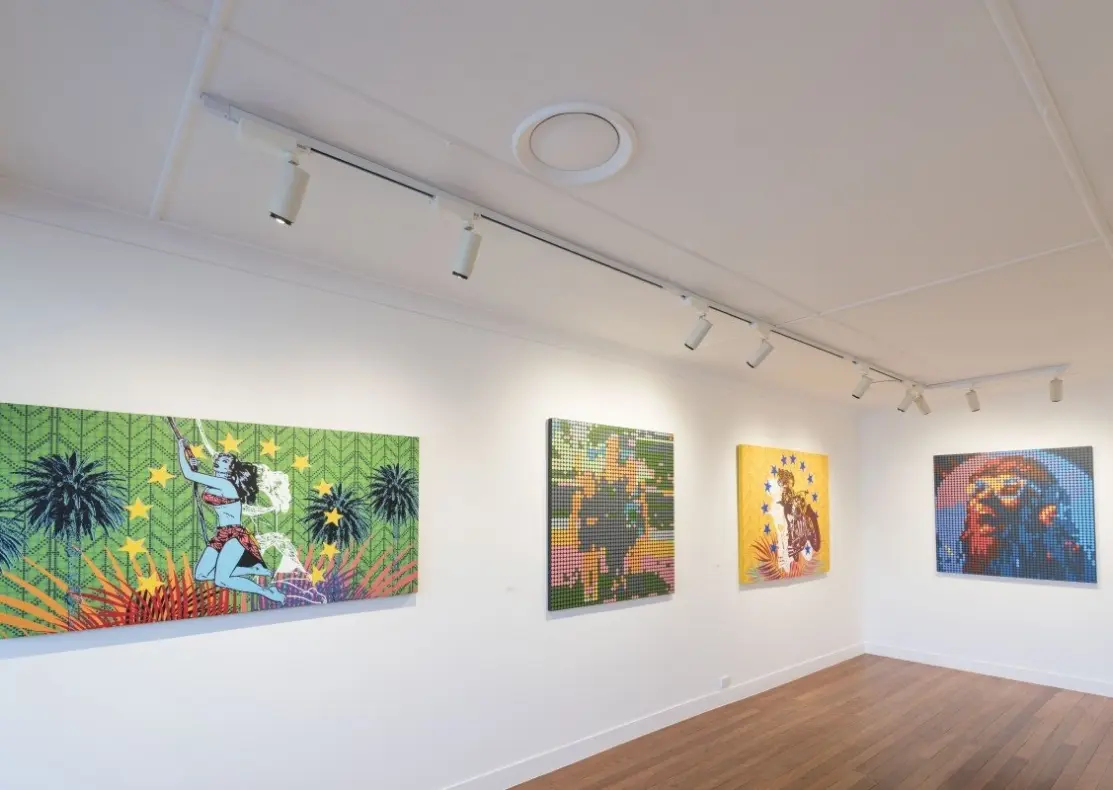
Even brightness maintaining cohesive viewing experience
Large artworks, murals, and installations require a different lighting approach compared to standard paintings. Instead of using multiple small lights, museum lighting consultants often recommend fewer high-quality fixtures with controlled beam spread.
This method:
- Reduces visual clutter
- Prevents uneven lighting patches
- Maintains a cohesive viewing experience
Strategic placement is far more effective than simply increasing the number of lights.
The Role of Dimming in Museum Lighting Fixtures

Smooth dimming preserving artwork visibility
Dimming capability is essential in museum lighting systems. It allows lighting designers to adjust intensity based on:
- Exhibition type
- Artwork sensitivity
- Ambient lighting conditions
- Visitor flow
Advanced museum lighting fixtures often include smooth dimming controls to maintain consistent illumination without flickering or color shift.
Museum Lighting Fixtures and Glare Reduction

Recessed light source minimizing reflections on glass
Glare is one of the most common issues in poorly lit exhibitions. It distracts visitors and reduces artwork visibility.
Professional museum lighting fixtures incorporate:
- Anti-glare lenses
- Honeycomb louver accessories
- Deep recessed light sources
- Precise beam control
These features ensure that visitors focus on the artwork rather than the light source.
Museum Lighting Fixtures in Contemporary Museums vs Traditional Museums

Sustainable lighting system installed in contemporary gallery
Traditional museums often relied on halogen or incandescent lighting, which produced heat and UV exposure. Modern museum lighting fixtures use LED technology that is safer for artwork and more energy-efficient.
Contemporary museum lighting systems now emphasize:
- Sustainability
- Low maintenance
- Consistent light output
- Advanced optical engineering
This transition has significantly improved artwork preservation standards worldwide.

Museum Lighting Fixtures and Architectural Integration

Minimalist lighting maintaining clean gallery lines
Museum lighting fixtures must integrate seamlessly into the architectural design of the space. Visible, bulky lighting can disrupt the aesthetic of exhibitions.
Professional lighting design focuses on:
- Minimalist fixture appearance
- Clean ceiling lines
- Discreet track systems
- Hidden wiring and mounting solutions
The best museum lighting is often the lighting visitors do not consciously notice.
Museum Lighting Fixtures for Cabinets and Micro Displays
In specialized museum displays, extremely small lighting fixtures are used inside cabinets. These miniature museum lighting fixtures can be the size of a coin yet still provide adjustable zoom and pinpoint illumination.
They are commonly used for:
- Jewelry exhibits
- Historical relics
- Scientific artifacts
- Rare collectibles
Their compact size allows lighting designers to maintain focus without overwhelming delicate exhibits.
Long-Term Reliability of Museum Lighting Fixtures

Consistent lumen output across exhibition hall
Museums operate for long hours daily, making durability a crucial factor in lighting selection. Museum-grade lighting fixtures are designed for:
- Long operational lifespans
- Stable lumen output
- Minimal maintenance requirements
- Consistent color performance
This reliability reduces operational costs and ensures exhibition consistency.
FAQ: Museum Lighting Fixtures
What are museum lighting fixtures used for?
Museum lighting fixtures are used to illuminate artwork, artifacts, and exhibitions with precision while protecting sensitive materials from light damage.
What makes museum lighting fixtures different from normal lighting?
They offer higher color accuracy, precise beam control, lower UV output, and conservation-focused illumination compared to standard lighting.
Do museums use LED lighting fixtures?
Yes, most modern museums use LED lighting fixtures due to their energy efficiency, low heat emission, and stable light output.
Can museum lighting fixtures be ceiling mounted?
Yes, ceiling mounted museum lighting fixtures are commonly used for paintings, gallery walls, and large exhibition areas.
What CRI should museum lighting fixtures have?
Professional museum lighting fixtures typically have a CRI of 95 or higher for accurate color representation.
Why do museums use track lighting fixtures?
Track lighting allows flexible positioning and adjustment as exhibitions change over time.
Are museum lighting fixtures safe for paintings?
Yes, when properly designed with low UV and controlled lux levels, they are safe for paintings and fine art.
What is museum lighting design?
Museum lighting design is the strategic planning of lighting placement, intensity, and beam control to enhance artwork visibility and preservation.
Do museum lighting fixtures produce heat?
High-quality LED museum lighting fixtures produce very low heat compared to traditional halogen lighting.
What color temperature do museums use?
Museums typically use 2700K to 3500K lighting to maintain natural and accurate artwork tones.
Can museum lighting be used in private homes?
Yes, many collectors install museum-grade lighting fixtures in private galleries and luxury homes.
What is museum-grade lighting?
Museum-grade lighting refers to high-performance lighting systems designed for art preservation and precise illumination.
How do museum lighting fixtures reduce glare?
They use anti-glare optics, beam control, and recessed light sources to minimize reflections.
What type of lighting is best for museum exhibits?
Adjustable LED spotlights and track lighting systems are considered the best options for museum exhibits.
Are museum lighting fixtures energy efficient?
Yes, modern LED museum lighting fixtures are highly energy efficient and long-lasting.
Why is beam control important in museum lighting?
Beam control ensures light is directed only onto the artwork, preventing unnecessary light exposure and visual distraction.
What lighting is used for museum display cases?
Miniature precision LED fixtures with low heat and focused beams are used for display cases.
Can museum lighting fixtures fade artwork?
Improper lighting can fade artwork, but professional museum lighting systems are designed to minimize this risk.
What is the lifespan of museum LED lighting fixtures?
High-quality museum LED fixtures can last 50,000 hours or more.
How many lights should be used in a museum gallery?
Fewer, strategically placed lights are usually more effective than many wide-spread lights.
Do museum lighting fixtures require professional installation?
Yes, professional installation ensures correct aiming, lux control, and conservation compliance.
What is the ideal lighting angle for artwork in museums?
Typically around 30 degrees from vertical to reduce glare and shadows.
Are museum lighting fixtures adjustable?
Most museum lighting fixtures feature adjustable heads and zoom optics for precision control.
What is museum lighting track?
Museum lighting track is a flexible rail system that allows repositioning of lighting fixtures along a ceiling-mounted track.
Can museum lighting fixtures be dimmed?
Yes, dimmable systems are commonly used to control light exposure and exhibition mood.
Why do museums use focused lighting instead of bright lighting?
Focused lighting highlights artwork effectively while minimizing unnecessary light exposure and visual distraction.
What is museum spotlight lighting?
Museum spotlight lighting uses narrow beam fixtures to precisely illuminate artwork and exhibits.
Are museum lighting fixtures suitable for sculptures?
Yes, they are often used to highlight sculpture textures and forms without creating harsh shadows.
Do museums use natural lighting?
Some museums incorporate controlled natural lighting, but artificial museum lighting fixtures remain essential for consistency and preservation.
What is the main goal of museum lighting fixtures?
The primary goal is to enhance visibility, preserve artwork, and create a focused, immersive viewing experience.
Extended FAQ: Museum Lighting Fixtures
What are museum lighting fixtures?
Museum lighting fixtures are specialized lighting systems designed to illuminate artwork and exhibits with precision, high color accuracy, and conservation-safe illumination.
What lighting do museums typically use?
Museums commonly use track lighting systems, ceiling mounted art lights, and precision spotlight fixtures with high CRI LED technology.
Why is museum lighting important for artwork?
Proper museum lighting enhances visibility, preserves artwork materials, and ensures accurate color representation without causing damage over time.
What is museum-grade lighting?
Museum-grade lighting refers to professional lighting fixtures that provide high CRI, low UV output, controlled beam angles, and conservation-focused illumination.
Do museum lighting fixtures damage artwork?
When designed correctly using LED technology and controlled lux levels, museum lighting fixtures are safe and do not damage artwork.
What color temperature is best for museum lighting?
Most museum lighting uses warm to neutral color temperatures between 2700K and 3500K to maintain natural color rendering.
Are LED lights suitable for museums?
Yes, LED museum lighting is preferred because it produces minimal heat, low UV emission, and stable illumination.
What is the difference between museum lighting and gallery lighting?
Museum lighting focuses more on conservation, precision, and long-term artwork preservation, while gallery lighting may prioritize flexibility and visual presentation.
How many lights should be used in a museum display?
Fewer, well-positioned lights are typically more effective than multiple broad lights, as they create focus and reduce glare.
Can museum lighting be used in homes?
Yes, museum lighting fixtures are increasingly used in luxury homes and private art collections to achieve gallery-quality illumination.
What beam angle is best for museum lighting?
Adjustable beam angles are ideal, allowing lighting designers to switch between wide illumination and precise spotlighting.
Do museums use track lighting systems?
Yes, museum track lighting systems are widely used due to their flexibility, adjustability, and professional-grade performance.
What CRI is recommended for museum lighting fixtures?
A CRI of 95 or higher is recommended to accurately display artwork colors and details.
How does museum lighting improve exhibitions?
It enhances depth, visibility, and emotional engagement while protecting artworks from excessive light exposure.
Are ceiling mounted art lights used in museums?
Yes, ceiling mounted museum lighting fixtures are commonly used for paintings, gallery walls, and large exhibition spaces.
What is the main goal of museum lighting design?
The main goal is to highlight artwork clearly while preserving it and creating a focused visual experience for viewers.
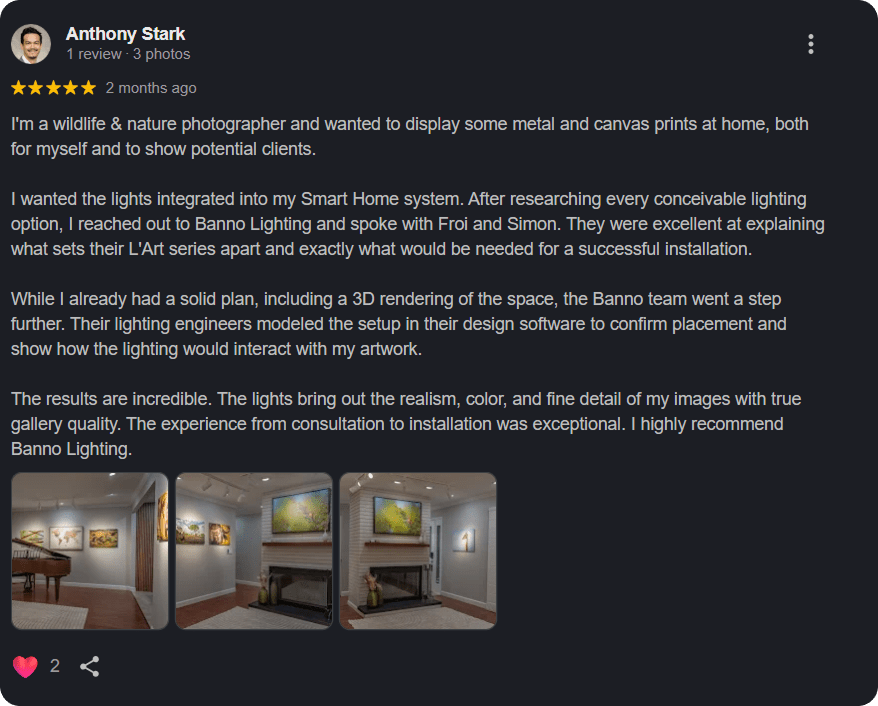
Client Experiences with Our Professional Lighting Solutions