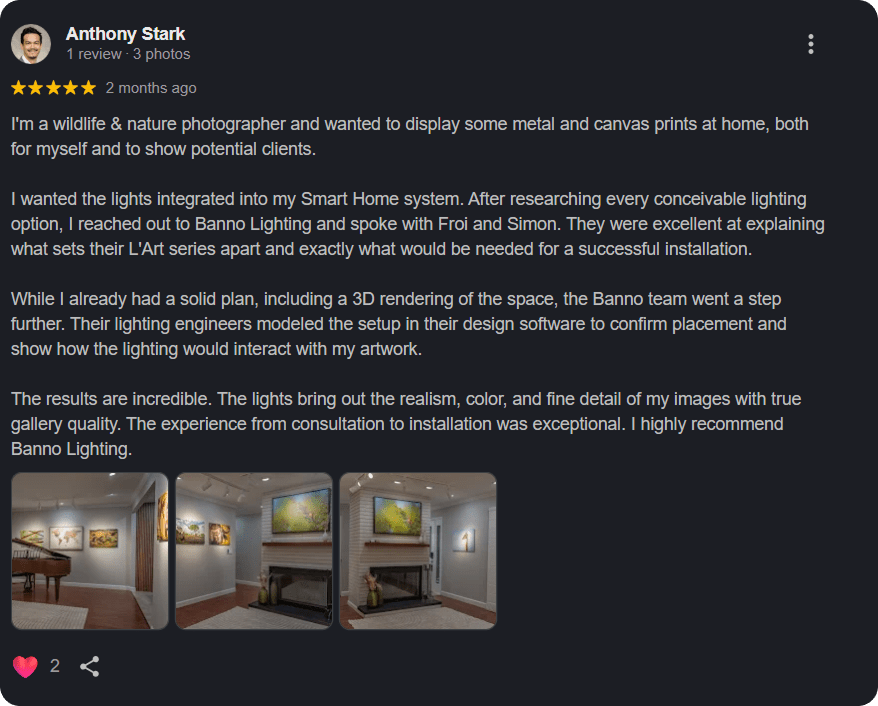
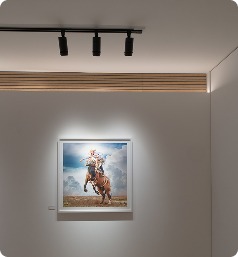
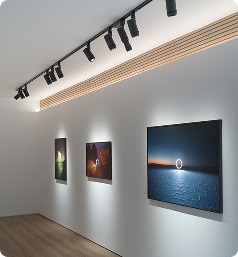
Professional gallery wall featuring focused conservation-safe lighting
Museum lights for paintings are specialised lighting systems designed to illuminate artwork with precision, clarity, and conservation safety. Unlike standard decorative lighting, museum lighting is engineered to enhance colour accuracy, minimise glare, and protect valuable paintings from long-term damage caused by heat, UV exposure, and excessive brightness.
Serving as a complete guide to lighting museum paintings and art collections, it is clear that whether in world-class museums, private collections, luxury homes, or galleries, museum lights are carefully selected to reveal the true depth, texture, and emotional impact of each artwork while maintaining strict lighting control. The goal is not to flood a painting with light. The goal is to focus attention, guide the viewer’s eye, and preserve the artwork for decades.
A core principle used in museums is simple: fewer lights, better focus. Instead of over-lighting walls, professional lighting designers use precise beams that highlight the artwork itself rather than the surrounding space.
What Are Museum Lights for Paintings?
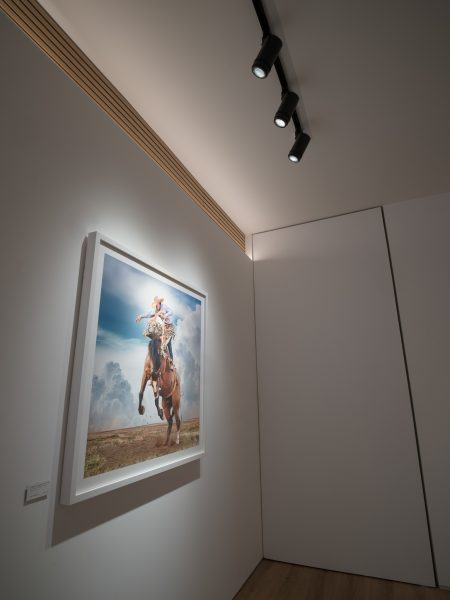
Adjustable museum luminaire designed for framed artwork display
Museum lights for paintings are high-precision luminaires specifically designed to illuminate framed artworks, canvases, and fine art pieces in controlled environments. These lights prioritise beam accuracy, high colour rendering, and conservation-friendly output.
Unlike general ceiling lights or decorative fixtures, museum art lights are built with:
- Ultra-high CRI (typically 95–97+)
- Controlled beam angles
- Minimal UV and heat emission
- Adjustable focus and positioning
- Dimmable output for conservation control
Museum picture lighting is not about brightness. It is about visual accuracy and preservation.
Why Museums Use Specialised Lighting for Paintings

Controlled exhibition lighting creating clear visual hierarchy
Lighting directly affects how a painting is perceived. The same artwork can appear vibrant, flat, or distorted depending on the lighting quality and positioning. Museum lighting for paintings is designed to present artwork exactly as the artist intended.
Key reasons museums utilize precision lighting for museum paintings and artworks:
- Accurate colour representation
- Reduced glare on glass and varnished surfaces
- Enhanced texture and brushstroke visibility
- Controlled lux levels for preservation
- Visual hierarchy within exhibitions
Poor lighting can make a masterpiece look lifeless. Museum-grade lighting restores depth, contrast, and emotional impact.
The Philosophy of Museum Lighting: Less Light, More Focus

Minimalist exhibition space with focused painting illumination
One of the core museum lighting principles for preserving artwork is the understanding that more light is not better. In fact, excessive lighting can damage artwork and reduce visual sophistication by washing out detail and creating unnecessary glare.
Professional museum lighting designers follow three core principles:
- Use fewer fixtures with precise beams
- Focus only on what is on display
- Avoid unnecessary ambient spill
This is why many museum lights for paintings are ceiling mounted or track mounted with adjustable optics rather than large general lighting systems.
Types of Museum Lights for Paintings

Track mounted art lighting systems
Identifying the best fixture options for museum lighting setups depends on the architectural constraints of the gallery and the nature of the collection.
Ceiling Mounted Museum Lights
Ceiling mounted museum lights provide clean, architectural illumination without visual clutter. These fixtures are ideal for galleries, collectors, and museums that want a refined and minimal aesthetic.
Ceiling mounted art lighting allows:
- Precise beam control
- Reduced visual distraction
- Consistent artwork highlighting
- Professional exhibition-level presentation
Museum Track Lighting for Paintings
Track lighting is one of the most widely used museum lighting systems. It offers flexibility, allowing curators and designers to reposition lights as exhibitions change.
Museum track lighting for paintings is ideal because:
- Beam angles can be adjusted
- Fixtures can be repositioned easily
- Different painting sizes can be accommodated
- Lighting hierarchy can be created across walls
Cabinet and Display Case Museum Lights (Mini Precision Lighting)
For display cabinets and enclosed artwork, miniature museum lights are often used. Ultra-small zoomable fixtures, sometimes as small as a coin, are installed inside cabinets to create pinpoint illumination without overwhelming the piece.
These micro museum lights for artwork are perfect for:
- Rare artefacts
- Small paintings
- Display cases
- Sculptural artworks
- Luxury collectors’ cabinets
Museum Lights for Paintings vs Regular Picture Lights
Many collectors assume any picture light can achieve museum-level results. This is not the case.
Standard lighting:
- Low CRI
- Wide uncontrolled beams
- Visible glare
- Higher heat output
- Inconsistent illumination
Museum lights for paintings:
- Precision optics
- High CRI colour accuracy
- Glare control
- Conservation-safe output
- Professional beam shaping
The difference in visual quality is immediately noticeable.
Our Museum Lighting Range for Paintings

Museum-grade fixtures designed for high-value paintings
As art lighting consultants, we design professional museum lighting systems for paintings and exhibits, galleries, and high-value collections. Our range is built around museum-grade performance rather than decorative lighting, ensuring that every piece is displayed with institutional-level precision.
Zoom Series – Precision Museum Lighting for Paintings
The Zoom series is designed for focused artwork illumination where pinpoint accuracy is essential. With adjustable beam angles, these museum lights for paintings allow exact control over light spread, ensuring the painting is evenly illuminated without light spill onto surrounding walls.
Ideal applications:
- Feature paintings
- High-value artworks
- Museum exhibitions
- Private collections
Multi Series – Uniform Museum Lighting for Gallery Walls
The Multi series provides broader beam distribution for multiple paintings displayed across a gallery wall. This ensures consistent illumination across artworks without visual imbalance.
Best suited for:
- Gallery walls
- Exhibition spaces
- Large collections
- Curated art displays
Deluxe Series – Museum-Grade Lighting for Premium Paintings
The Deluxe series represents a museum-grade lighting solution with ultra-high CRI and refined optical engineering. These museum art lights deliver exceptional colour fidelity and conservation-safe illumination for valuable paintings.
Recommended for:
- Museums
- Luxury homes
- Collectors
- Architectural galleries
Mini Zoom – Coin-Sized Cabinet Museum Lights
Our Mini Zoom fixtures are ultra-compact museum lights designed for cabinets and display cases. Despite their small size, they offer precise zoom functionality, allowing pinpoint illumination of delicate paintings and artefacts.
This makes them ideal for:
- Display cabinets
- Museum cases
- Rare artwork collections
- Focused accent lighting
Colour Temperature in Museum Lighting for Paintings

Balanced colour temperature preserving artwork authenticity
Colour temperature significantly affects how paintings appear. Museums typically use warm to neutral lighting ranges to preserve natural tones.
Recommended ranges:
- 2700K: Classical and traditional paintings
- 3000K: Balanced museum lighting environments
- 3500K: Contemporary and modern artworks
Incorrect colour temperature can distort colours and reduce artistic authenticity.
CRI and Its Importance in Museum Art Lights

High-CRI spotlight demonstrating accurate pigment rendering
CRI (Colour Rendering Index) is one of the most critical specifications in museum lighting for paintings. A high CRI ensures colours appear true to life.
CRI standards:
- 90+ Good for general art lighting
- 95+ Professional gallery lighting
- 97+ Museum-grade lighting for paintings
Lower CRI lighting can make artwork appear dull or colour-shifted.
How to Position Museum Lights for Paintings

Proper beam alignment reducing glare on glass
Proper positioning is just as important as the fixture itself. Museum lights are typically angled at around 30 degrees toward the artwork to reduce glare and ensure even illumination.
Best practices include:
- Avoid direct frontal lighting
- Match beam angle to painting size
- Maintain consistent spacing
- Use dimming for lux control
Museum Lighting for Large Paintings

Even edge-to-edge illumination on gallery wall
Large paintings require carefully distributed illumination to avoid bright hotspots or dark edges. Specialised museum lighting for paintings often utilizes adjustable zoom optics to achieve uniform coverage and perfect clarity across oversized artworks.
For large paintings:
- Use wider beam angles
- Position lights symmetrically
- Maintain even edge-to-edge illumination
- Avoid over-lighting the centre

Museum Lighting and Artwork Preservation

Low-heat lighting system installed above artwork
Museum lights for paintings are designed with conservation in mind. Excessive heat and UV exposure can cause gradual fading and material degradation.
High-quality museum lighting protects artwork by:
- Minimising UV radiation
- Reducing heat output
- Controlling brightness levels
- Maintaining stable illumination
LED museum lights are widely preferred due to their conservation-friendly properties.
Museum Lighting Design Strategy for Paintings
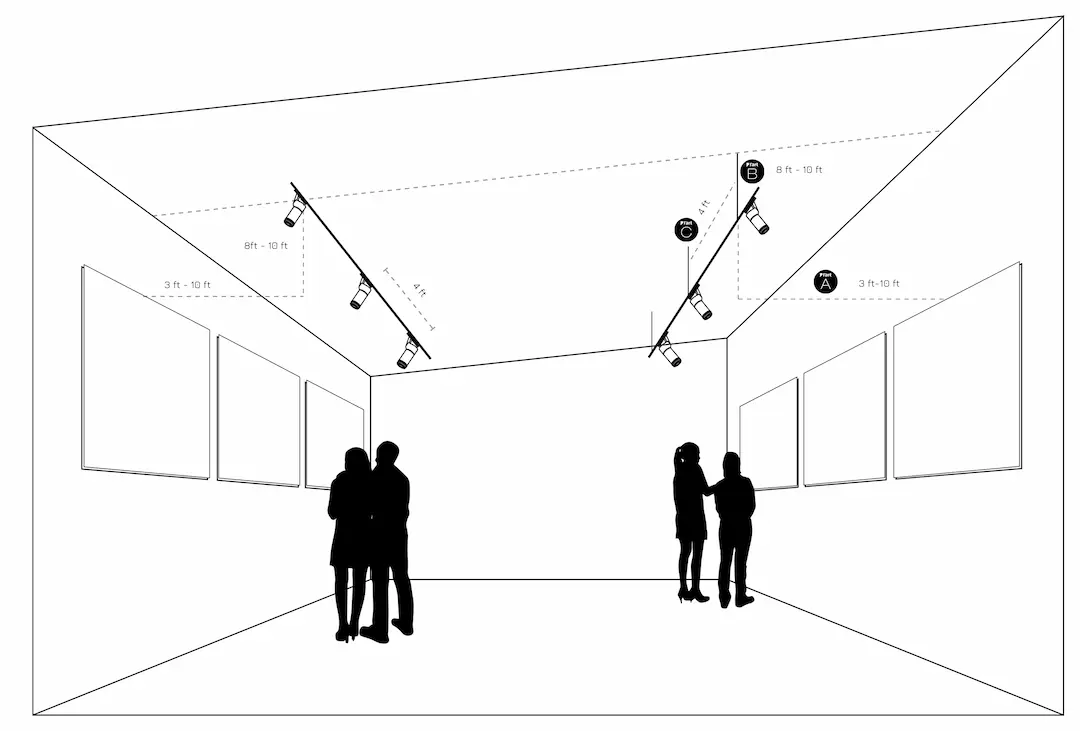
Professional lighting plan mapped across gallery layout
Professional museum lighting design considers:
- Ceiling height
- Viewing distance
- Artwork size
- Wall colour
- Exhibition layout
A strategic lighting plan ensures each painting receives the appropriate level of focus and visual prominence.
Common Mistakes When Lighting Paintings
Using general ceiling lights instead of museum lights for paintings
Over-lighting artworks with excessive brightness
Ignoring glare on glass frames
Using low-CRI lighting
Installing too many fixtures instead of focused lighting
These mistakes reduce visual quality and can damage artwork over time.
FAQ: Museum Lights for Paintings
What lights do museums use for paintings?
Museums typically use high-CRI LED track lights, ceiling-mounted spotlights, and precision zoom fixtures designed specifically for artwork illumination.
Are museum lights safe for paintings?
Yes, museum-grade LED lights emit minimal UV and heat, making them safe for long-term artwork preservation.
What is the best lighting for paintings in a museum?
High-CRI LED museum lights with adjustable beam angles and dimming control are considered the best lighting solution for paintings.
Do museum lights damage artwork?
Proper museum lighting does not damage artwork because it is engineered to control heat, UV exposure, and brightness levels.
How bright should museum lights for paintings be?
Brightness should be controlled based on artwork sensitivity, typically measured in lux, rather than using excessive illumination.
What colour temperature is best for museum lighting paintings?
Most museums use 2700K to 3000K for natural and accurate colour representation.
Can museum lights be used at home?
Yes, many collectors use museum lights for paintings in residential settings to achieve gallery-quality displays.
Why do museums use focused lighting instead of general lighting?
Focused lighting enhances the artwork while reducing visual distraction and protecting the piece from unnecessary exposure.
Are ceiling mounted museum lights better than wall lights?
Ceiling mounted museum lights often provide cleaner, more controlled illumination with better beam positioning.
What is museum-grade lighting?
Museum-grade lighting refers to high-precision lighting systems designed for conservation, colour accuracy, and professional artwork presentation.
How many lights should be used for one painting?
Often one or two precision lights are sufficient. Less lighting with accurate focus is preferred over multiple uncontrolled fixtures.
What CRI is best for museum lights for paintings?
A CRI of 95–97+ is ideal for museum-grade artwork illumination.
Can museum lights be dimmed?
Yes, dimmable controls are essential for adjusting brightness and protecting sensitive artwork.
Are LED museum lights better than halogen?
Yes, LED museum lights are more energy-efficient, emit less heat, and are safer for artwork preservation.
What beam angle is best for museum picture lighting?
Narrow to medium beam angles (20–40°) are typically used depending on painting size.
Do museums use track lighting for paintings?
Yes, museum track lighting is widely used because it offers flexibility and precise positioning.
Can small museum lights be used inside cabinets?
Yes, miniature zoom lights are commonly used inside display cases for focused illumination.
How do museum lights reduce glare?
Through angled positioning, anti-glare optics, and controlled beam spread.
Are museum lights suitable for galleries?
Absolutely. They are standard in professional galleries and exhibitions.
What makes museum lighting different from regular lighting?
Museum lighting prioritises conservation, colour accuracy, and precise beam control rather than general illumination.
Can museum lights highlight texture in paintings?
Yes, proper angled lighting enhances brushstrokes and surface texture.
Are museum lights energy efficient?
Modern LED museum lighting systems are highly energy efficient with long lifespans.
How long do museum LED lights last?
Typically 30,000 to 50,000+ hours depending on the fixture quality.
Do museum lights work for oil paintings?
Yes, museum lights are ideal for oil paintings due to their controlled output and colour accuracy.
What is museum spotlight lighting?
It is focused lighting designed to highlight specific artworks with precision.
Should museum lighting be adjustable?
Yes, adjustable lighting is essential for different painting sizes and exhibition layouts.
Can museum lighting be used for private collections?
Yes, collectors widely use museum lighting to elevate artwork presentation in homes.
What lux level is used in museums for paintings?
Lux levels are carefully controlled depending on artwork sensitivity, often lower than standard room lighting.
Are museum lights visible in exhibitions?
High-end museum lights are designed to be discreet and minimally visible.
What is the main goal of museum lighting for paintings?
To enhance visual clarity, protect the artwork, and create a refined viewing experience through precise, conservation-safe illumination.
Real Feedback from Art Collectors