Why Professional Track Lighting Is the Gold Standard for Displaying Paintings

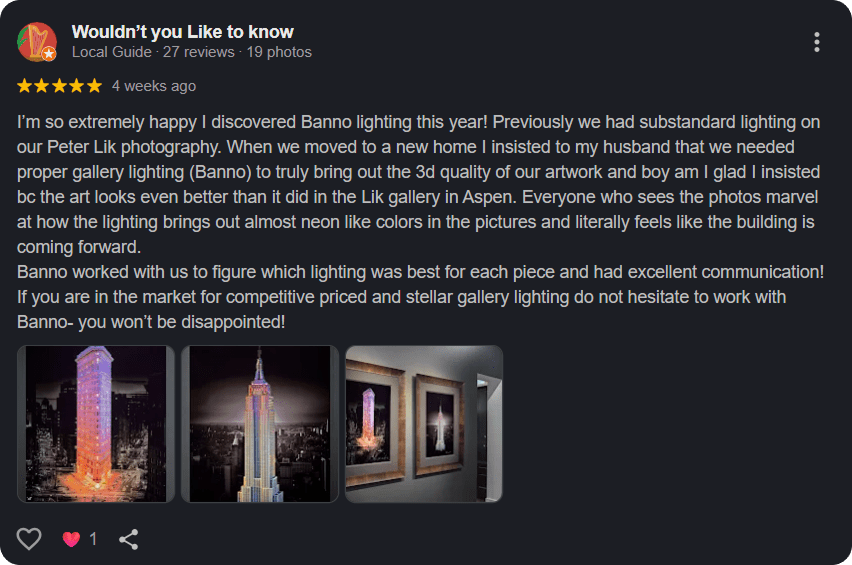
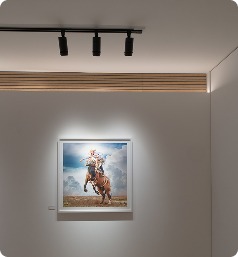
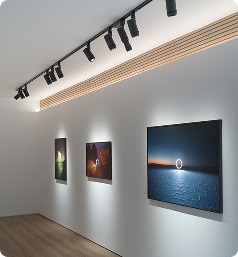
Gallery standard lighting delivering balanced colour accuracy
Track lighting for paintings is not a compromise solution.
It is the professional standard used by galleries, museums, and serious collectors worldwide.
When specified correctly, track lighting offers unmatched control, flexibility, and precision. When specified poorly, it creates glare, inconsistency, and a flat viewing experience that undermines the artwork.
The difference is not the track itself.
The difference is how the system is designed, specified, and controlled.
This complete art gallery lighting guide explains why track lighting is the preferred solution for lighting paintings, how professional gallery-grade systems differ from generic track lights, and how purpose-built solutions such as Zoom, Multi, and Deluxe deliver museum-level results.
Why paintings demand precise, adaptable lighting

Varnished surface protected from harsh reflections
Paintings are visually complex objects.
Light interacts with:
• Pigment density and layering
• Brushstroke relief
• Canvas or panel texture
• Varnish and glazing
• Frame depth and finish
A painting is never viewed from a single angle. Viewers move closer, step back, and shift side to side. Lighting must remain accurate and comfortable throughout this movement.
Track lighting excels here because it allows directional control without permanence. Paintings can be lit precisely, adjusted easily, and rebalanced as displays evolve.

4.9-star rated by art collectors and gallery professionals
Why track lighting became the gallery standard

Flexible ceiling track supporting evolving exhibition layouts
Track lighting dominates professional art spaces for one core reason: adaptability without compromise.
Paintings change. Exhibitions rotate. Walls evolve.
Track lighting allows:
• Individual fixtures to be repositioned
• Paintings of different sizes to be lit accurately
• Displays to change without rewiring
• Clean, minimal ceilings
• Long-term flexibility
Fixed lighting cannot survive in this environment. Track lighting can.
Track lighting and the painting viewing experience

Comfortable viewing supported by glare free optics
A gallery is an experience before it is a sales environment.
Gallery lighting for displaying paintings, especially track lighting systems, shapes that experience by:
• Guiding attention naturally
• Creating rhythm across walls
• Allowing negative space to breathe
• Avoiding visual clutter
When track lighting is designed well, visitors slow down. They engage more deeply with each painting. Lighting disappears, and the artwork becomes the focus.
Poorly designed track lighting does the opposite. It creates glare, hotspots, and inconsistency that distract from the work.
How track lighting affects painting sales

Accurate colour rendering reinforcing buyer confidence
Paintings are often the highest-value works in a gallery.
Buyers need confidence that:
• Colours are accurate
• Texture is honest
• The painting will translate into another space
Track lighting supports this confidence when specified professionally.
Professional track lighting for paintings:
• Reveals true colour and tonal depth
• Enhances surface texture naturally
• Avoids glare on varnished or glazed works
• Signals professionalism and care
Generic track lighting undermines trust. Buyers may not articulate why, but hesitation increases and decisions slow.
Why generic track lighting fails for paintings
Not all track lighting is suitable for art.
Most off-the-shelf track lights are designed for:
• Retail environments
• Offices and hospitality
• Broad illumination
• Cost efficiency
They prioritise brightness and coverage, not control.
Common problems with generic track lighting include:
• Wide, uncontrolled beams
• Hotspots and uneven illumination
• Glare on glass and varnish
• Inconsistent colour rendering
• Poor dimming performance
Paintings require precision, not floodlighting.
Gallery-grade track lighting vs standard track lighting

High CRI spotlight preserving subtle pigment relationships
Professional track lighting for paintings differs in several critical ways.
Gallery-grade systems prioritise:
• Precision beam optics
• Clean beam edges
• Minimal glare
• High colour accuracy
• Visual restraint
This difference is immediately visible. Paintings lit with gallery-grade track lighting feel intentional and resolved. Paintings lit with generic track lighting feel flat or visually uncomfortable.
Track lighting must start with a lighting plan

Structured layout aligned with wall dimensions
Track lighting is only as good as the plan behind it.
Professional track lighting for paintings always begins with a lighting plan that considers:
• Wall height and length
• Typical painting sizes
• Viewing distances
• Track placement relative to walls
• Hanging heights
• Future exhibition changes
Without a plan, track lighting becomes trial and error. Fixtures are constantly adjusted and still never feel resolved.
A proper plan ensures predictable, repeatable results across exhibitions.
Beam control is the core of track lighting for paintings

Focused illumination enhancing depth and definition
Track lighting lives or dies by beam control.
Paintings require:
• Clean framing of the artwork
• No spill onto adjacent works
• Preserved contrast and depth
• Reduced reflections
Wide beams wash out paintings and reduce impact. Tight, controlled beams give paintings presence and clarity.
This is why professional track lighting focuses on optics rather than raw output.
Why dimming is essential in track lighting for paintings

Stable low level output preserving colour accuracy
Dimming is not about mood. It is about control.
Paintings vary in:
• Size
• Medium
• Pigment density
• Surface reflectivity
• Sensitivity to light
Fixed-output track lights force compromise. Some paintings become overlit while others feel underwhelming.
Professional track lighting for paintings must allow smooth, precise dimming so light levels can be tuned to each artwork rather than dictated by the fixture.
Proper dimming allows:
• Balancing different paintings on the same wall
• Reducing glare on varnished or glazed works
• Adjusting emphasis without changing beam angle
• Protecting sensitive works
• Fine-tuning presentation during installation
Dimming must be flicker-free, stable at low levels, and free from colour shift.
Why CRI 97+ matters in track lighting for paintings

High CRI LED revealing subtle tonal transitions
CRI measures how accurately a light source renders colour.
Standard architectural lighting often sits around CRI 80–90. That is not sufficient for proper lighting for paintings.
Paintings rely on:
• Subtle colour transitions
• Layered pigments
• Warm and cool undertones
• Accurate whites and neutrals
Only CRI 97+ lighting can render these faithfully.
Lower CRI track lighting:
• Mutes colours
• Distorts tonal relationships
• Shifts whites yellow or grey
• Undermines buyer confidence
Professional track lighting for paintings must use CRI 97+ LEDs to ensure truthful presentation.
Zoom track lighting for paintings of varying sizes

Flexible zoom mechanism simplifying rehanging process
Zoom track lighting systems are ideal when painting sizes vary. As a form of adjustable track lighting for artwork, Zoom allows galleries to adapt lighting quickly without replacing fixtures.
Zoom allows:
• Adjustable beam angles from a single fixture
• Tight framing for small works
• Wider coverage for large paintings
• Fast adaptation during rehanging
Rather than swapping fixtures, the beam adjusts to the artwork. This flexibility makes Zoom systems a practical foundation for professional painting lighting.
Zoom systems pair especially well with dimming, allowing beam size and intensity to be balanced together.
Multi track lighting for curated painting displays

Cohesive lighting treatments across varied painting styles
Multi track lighting systems are used when painting displays require nuance.
They are particularly effective when:
• Paintings vary significantly in scale or importance
• Certain works require emphasis
• Curatorial hierarchy matters
• Sensitive and robust works are displayed together
Multi systems allow different lighting treatments within the same space while maintaining cohesion.
Deluxe track lighting for the highest standard of painting display

Museum grade spotlight delivering exceptional beam precision
Deluxe track lighting systems represent the highest level of performance.
They are used for:
• High-value paintings
• Museums and institutions
• Flagship galleries
• Serious private collections
Deluxe systems combine:
• Exceptional beam quality
• CRI 97+ colour accuracy
• Ultra-stable dimming
• Long-term consistency
In these environments, lighting should disappear entirely, allowing the painting to command full attention.
Colour temperature in track lighting for paintings
Most professional galleries and museums use 3000K track lighting to achieve museum-grade lighting for paintings.
3000K:
• Feels warm yet neutral
• Preserves colour accuracy
• Supports a wide range of painting styles
• Builds buyer confidence
Some master works are lit at 2700K selectively when warmth enhances emotional presence. This must be done carefully to avoid yellowing whites or distorting cooler tones.
Cooler temperatures are rarely used for paintings as they flatten tonal nuance.
Managing glare with track lighting

Correct aiming angle eliminating distracting highlights
Glare is one of the most common failures in track lighting.
Professional track lighting avoids glare through:
• Precision optics
• Correct aiming angles
• Proper track placement
• Careful dimming
When glare is controlled, viewers can approach paintings comfortably and engage fully with surface detail.
Consistency across walls and exhibitions
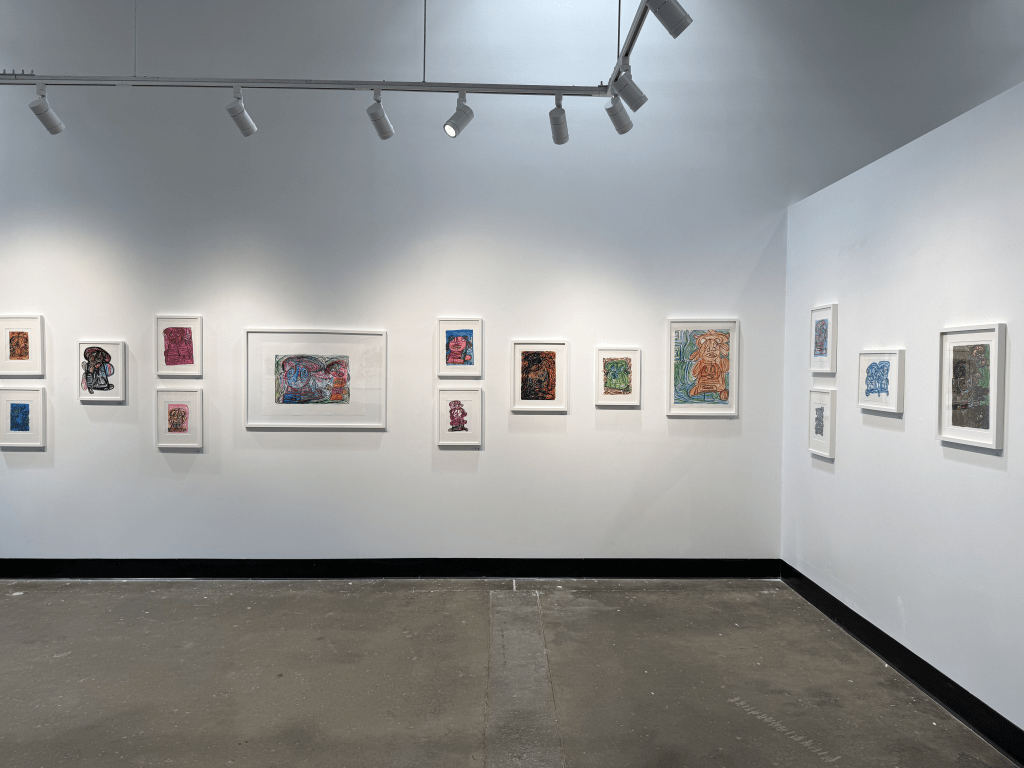
Uniform light levels maintained throughout gallery spaces
Track lighting must feel cohesive.
Professional systems ensure:
• Colour consistency across fixtures
• Balanced illumination wall to wall
• Stable performance over time
Inconsistent track lighting undermines trust. Collectors notice when paintings look different depending on where they hang.
Long-term thinking in track lighting for paintings
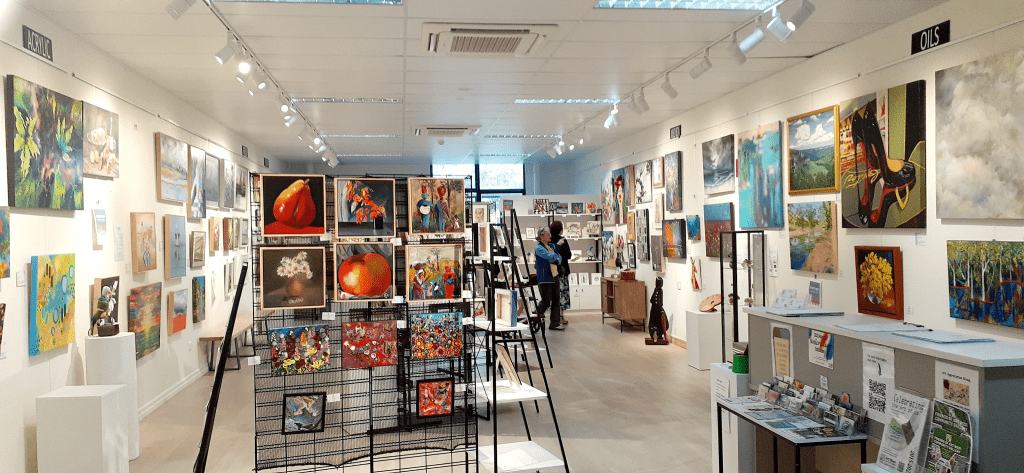
Flexible track infrastructure prepared for future changes
Track lighting for paintings should be designed once, properly.
A professional system allows:
• Years of exhibitions without replacement
• Easy rehanging and adaptation
• Reduced maintenance
• Long-term cost efficiency
Short-term fixes always lead to long-term compromise.
Advanced Techniques in Track Lighting for Paintings and Artwork
While the fundamentals of track lighting for paintings establish a strong foundation, truly professional results come from refinement. High-level gallery lighting is not defined by brightness or fixture quantity, but by precision, restraint, and the ability to control how light interacts with each individual artwork. These advanced techniques separate basic installations from museum-grade presentation.
One of the most important considerations is how beam angle interacts with viewing distance. Paintings are not viewed from a fixed point. As viewers move closer or step back, the perception of light changes. A beam that feels balanced from a distance may reveal uneven edges or glare up close. This is why professional track lighting for artwork is always evaluated from multiple viewing positions, ensuring consistency across the full experience.
Another critical factor is beam layering. Rather than relying on a single source of light, gallery-grade track lighting often uses subtle overlap between fixtures. This is not about increasing brightness, but about achieving evenness. When done correctly, the viewer cannot identify where one beam ends and another begins. The painting appears naturally illuminated, without visible lighting structure.
Controlling Contrast to Preserve Depth and Visual Integrity

Subtle wall lighting improving painting visibility and spatial separation
Contrast plays a defining role in how paintings are perceived. Too little contrast results in flat, lifeless presentation, while too much contrast creates harsh transitions that distract from the artwork.
Professional track lighting for art carefully balances contrast by controlling both intensity and beam edge. Clean beam edges allow paintings to stand out without abrupt transitions into darkness. This creates a sense of depth while maintaining visual comfort.
Importantly, contrast is not only about the artwork itself but also about its relationship to the surrounding wall. Slightly darker walls can enhance the presence of a painting, while overly bright surroundings can diminish its impact. Track lighting allows this balance to be fine-tuned without altering the architecture.
Fine Beam Adjustment for Different Painting Mediums
Not all paintings respond to light in the same way. Oil paintings, acrylic works, and mixed media pieces all interact differently with illumination.
For example:
• Oil paintings often have subtle surface texture that benefits from slightly angled light
• Acrylic works may appear more uniform and require balanced frontal illumination
• Mixed media pieces can contain reflective elements that demand precise glare control
Track lighting for paintings allows each of these characteristics to be addressed individually. Fixtures can be adjusted in angle, intensity, and beam width to suit the specific needs of the artwork.
This level of flexibility is what makes track lighting for artwork superior to fixed lighting systems.
The Importance of Beam Edge Softness
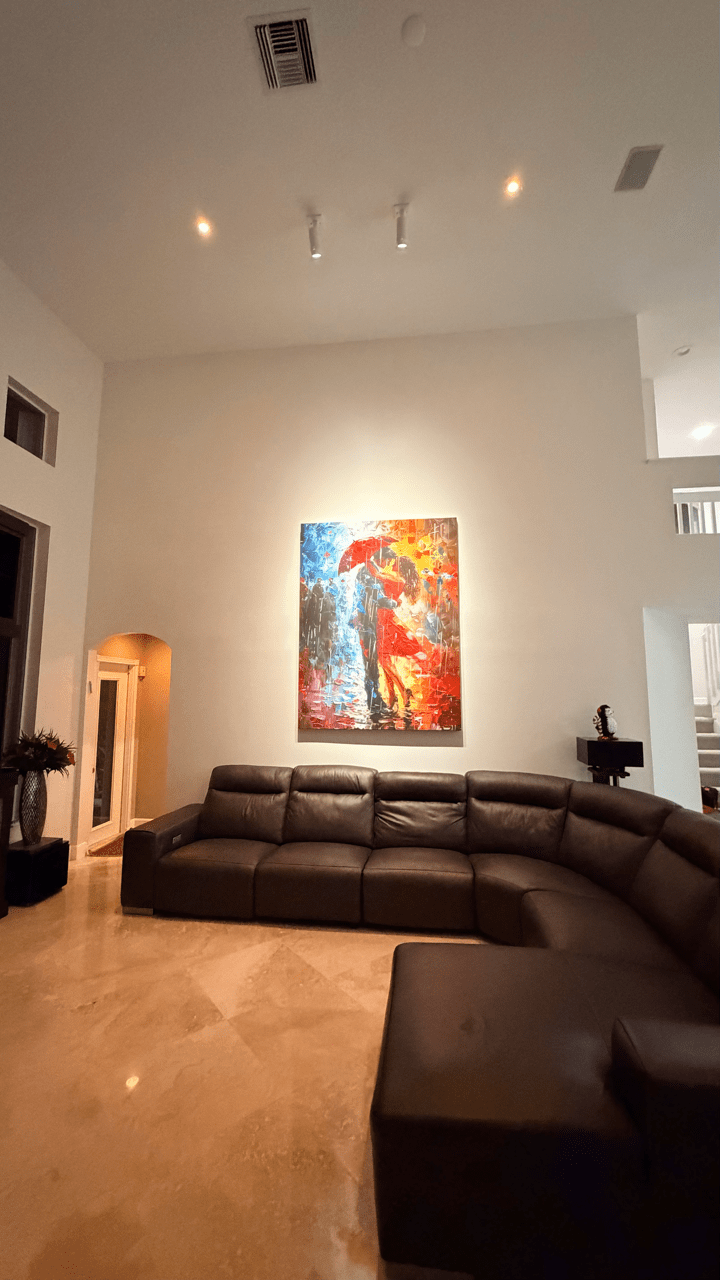
Gallery lighting avoiding harsh outlines around framed painting edges
A commonly overlooked aspect of track lighting is beam edge quality. Harsh beam edges can create visible outlines around a painting, making the lighting feel artificial and distracting.
Gallery-grade track lighting uses optics designed to produce soft, controlled transitions at the edge of the beam. This allows the painting to emerge naturally from the wall rather than appearing spotlighted.
Soft edges are particularly important when multiple artworks are displayed side by side. They prevent overlapping beams from creating uneven brightness or visual clutter.
Adjusting Light for Different Wall Finishes
Walls play a significant role in how paintings are perceived. Matte, textured, and glossy surfaces all interact differently with light.
Track lighting for art must account for:
• Reflection levels of the wall surface
• Colour of the wall
• Texture that may catch light unevenly
For example, a dark matte wall can absorb light and increase perceived contrast, while a glossy wall may reflect light and introduce unwanted brightness. Adjusting beam intensity and angle ensures that the painting remains the focal point regardless of wall conditions.
Balancing Multiple Paintings Within a Single Field of View

Even lighting distribution across multiple artworks on gallery wall
In many gallery environments, viewers see several paintings at once. Lighting must account for this broader perspective rather than treating each artwork in isolation.
Track lighting for paintings allows:
• Individual control of each fixture
• Subtle balancing between neighbouring works
• Consistent visual rhythm across the wall
This prevents one painting from overpowering another unintentionally. The entire display feels cohesive, with each piece contributing to the overall composition.
Precision Dimming for Curatorial Control
Dimming is one of the most powerful tools in professional track lighting for artwork. It allows curators to refine how each painting is presented without physically repositioning fixtures.
Advanced dimming systems provide:
• Smooth, flicker-free adjustment
• Stable colour output at low levels
• Fine control over intensity differences
This enables subtle hierarchy within a display. Key works can be given slightly more presence, while supporting pieces remain balanced but less dominant.
Importantly, dimming also protects sensitive artworks by reducing unnecessary light exposure.
Managing Light Direction to Reduce Glare

Controlled beam direction improving clarity for close artwork inspection
Glare remains one of the most critical challenges in lighting for paintings. Even high-quality fixtures can produce glare if they are not positioned correctly.
Professional track lighting addresses this through:
• Controlled beam angles
• Careful fixture placement relative to the wall
• Incremental adjustment during installation
The goal is to ensure that light reflects away from the viewer’s line of sight. This allows close inspection of the painting without visual interference.
Enhancing Viewer Engagement Through Lighting Rhythm
Lighting is not only technical but also experiential. The way light is distributed across a gallery influences how visitors move and engage with the space.
Track lighting for art can create rhythm by:
• Alternating emphasis between works
• Allowing visual pauses through lower light levels
• Guiding the eye naturally along a wall
This rhythm encourages exploration and prevents visual fatigue. The gallery feels intentional rather than monotonous.
Long-Term Stability and Performance in Track Lighting Systems
Professional track lighting for paintings must maintain performance over time. This includes:
- Consistent colour temperature across all fixtures
- Reliable dimming without flicker or degradation
- Stable beam quality without distortion
Lower-quality systems may shift in colour or intensity as they age, leading to inconsistency across the display. This undermines the professionalism of the space.
High-quality systems are engineered for long-term use, ensuring that lighting remains consistent across exhibitions and over years of operation.
Integrating Track Lighting Into Architectural Design

Seamless integration of lighting system within gallery interior design
Track lighting should feel integrated rather than added on. Clean installation enhances the overall perception of the space.
This includes:
• Aligning track placement with architectural lines
• Minimising visual clutter on ceilings
• Maintaining consistent spacing between fixtures
When done correctly, the lighting system becomes almost invisible. The focus remains entirely on the artwork.
Final Calibration for a Fully Resolved Presentation
Even the best-designed lighting systems require final calibration once paintings are installed.
This stage involves:
• Reviewing each painting individually
• Adjusting beam angles to eliminate minor glare
• Balancing intensity across the full display
• Refining beam edges for clean framing
These adjustments are subtle but essential. They transform a technically correct installation into a visually refined presentation.

Elevating the Standard of Track Lighting for Paintings
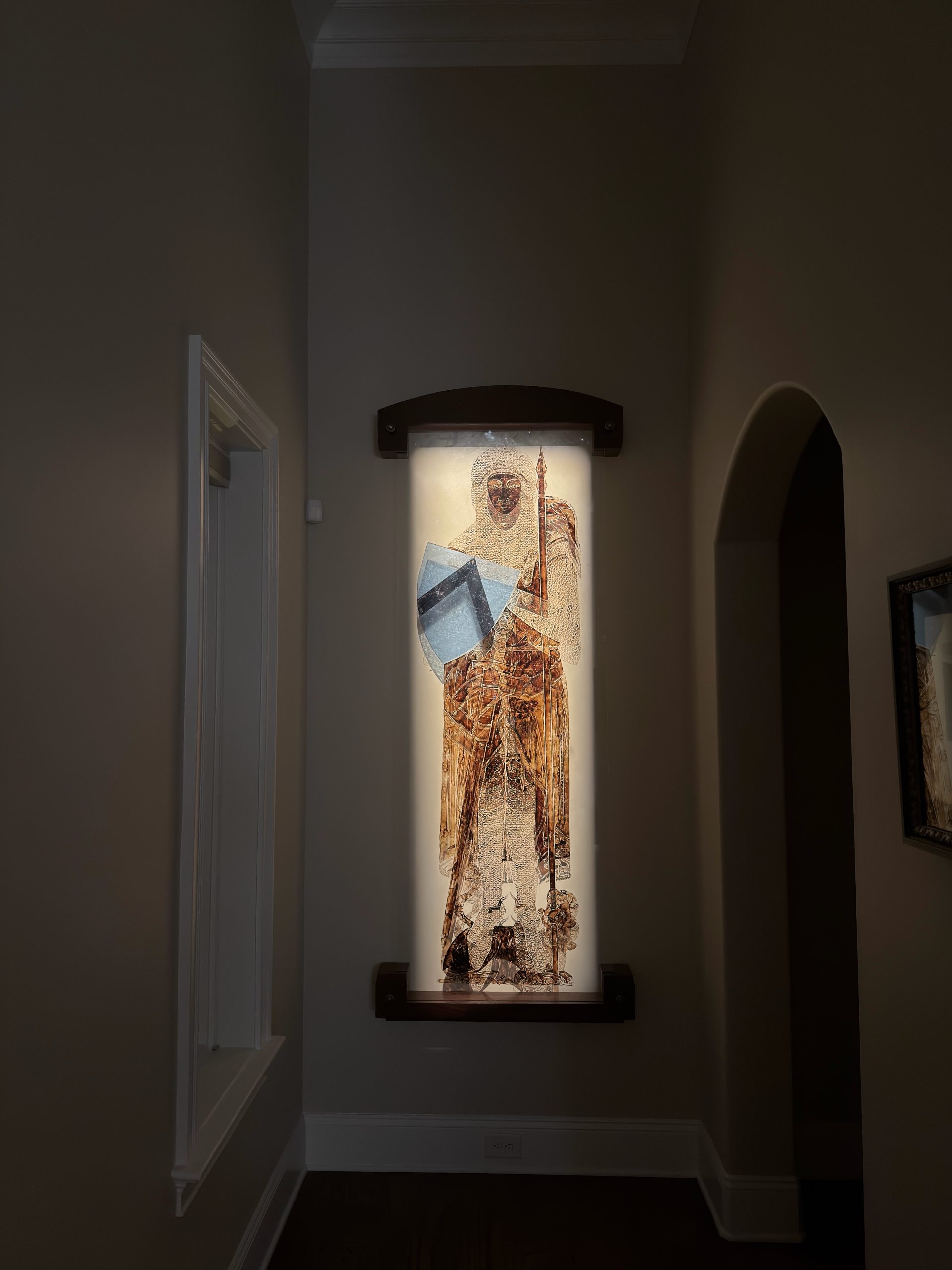
High-end lighting system creating seamless and distraction-free presentation
The difference between average and exceptional track lighting for paintings lies in attention to detail.
Professional systems:
• Control light with precision
• Adapt to changing displays
• Maintain consistency across all artworks
• Enhance both visual quality and viewer experience
When these elements come together, lighting disappears. The viewer is left with a clear, comfortable, and engaging view of the artwork.
This is the true goal of track lighting for artwork. It is not about the fixtures themselves, but about how effectively they support the painting.
Frequently Asked Questions
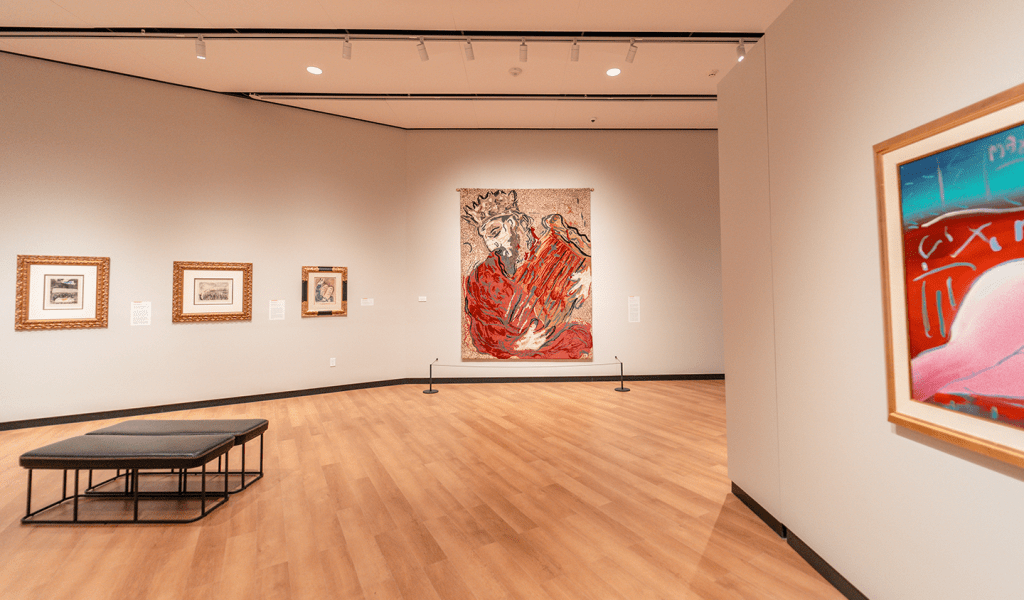
Smooth dimming enabling controlled exposure adjustment
Is track lighting good for paintings?
Yes. Track lighting is the preferred solution for paintings because it allows precise aiming, flexibility as displays change, and clean architectural integration when specified correctly.
What makes track lighting suitable for paintings?
Gallery-grade track lighting offers precision optics, CRI 97+ colour accuracy, smooth dimming, and controlled beam angles designed specifically for artwork.
Should track lights for paintings be dimmable?
Yes. Dimming is essential to balance different paintings, reduce glare, protect sensitive works, and fine-tune presentation without changing fixtures.
What CRI rating should track lighting for paintings have?
Track lighting for paintings should be CRI 97+ to ensure accurate colour rendering and maintain trust with artists and collectors.
Is LED track lighting suitable for paintings?
Yes. Professional-grade LED track lighting is now the standard in galleries and museums due to low heat output, CRI 97+ capability, long life, and excellent dimming performance.
What colour temperature is best for track lighting paintings?
Most professionals use 3000K. 2700K may be used selectively for master works when appropriate.
How do you avoid glare with track lighting?
Glare is avoided through controlled optics, correct aiming, appropriate track placement, and careful dimming.
Final thoughts on track lighting for paintings

Professional lighting elevating overall space reputation
Track lighting for paintings is not a shortcut. It is the professional solution.
When done properly:
• Paintings feel present
• Colour and texture are revealed honestly
• Visitors engage longer
• Buyers feel confident
• The reputation of the space is elevated
This is why track lighting remains the foundation of professional painting display worldwide.
Why galleries choose Banno Lighting
Galleries and collectors choose Banno Lighting because we understand track lighting and art lighting techniques for paintings at a professional level.
We provide:
• Expert guidance
• Professional lighting plans
• Track-based painting lighting systems
• Zoom, Multi, and Deluxe solutions
• CRI 97+ colour accuracy
• Smooth, stable dimming
• Long-term support
If you want track lighting for paintings that respects the artwork, supports sales, and adapts over time, professional systems and guidance are essential.
Trusted by art collectors, galleries, and curators worldwide