By Simon Mundine, Founder of Banno Lighting
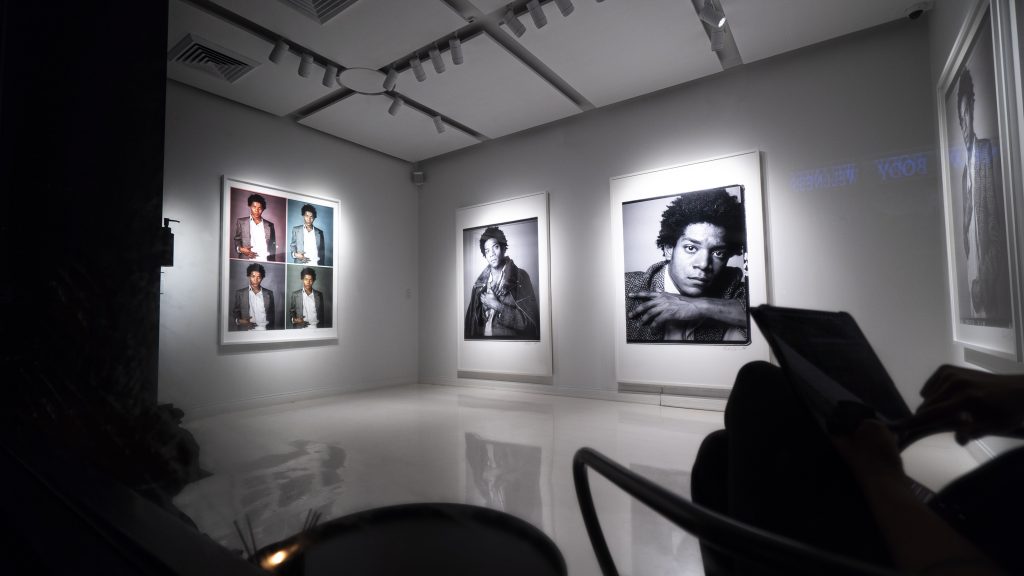
Modern gallery interior illuminated with precision track lighting.
When someone walks into your gallery, they instantly form an impression about the space, the art, and the professionalism behind everything you do. What shapes that impression more than anything is your gallery lighting.
Great art can look muted, flat, or lifeless under the wrong lighting. Average art can look extraordinary under the right lighting. This is not a small difference. It influences buyer confidence, artist trust, sales performance, and the reputation of your gallery.
Lighting is not just a technical layer. It is the emotional foundation of how your exhibitions feel. When lighting is wrong everything appears a little off, even if visitors cannot explain why. When lighting is right artwork feels alive, colours pop, and people stay longer.
At Banno Lighting we design clean, modern, flexible art gallery lighting systems for new galleries, established spaces, and full renovations. If you are planning, building, or revamping a gallery, we guide you through the entire lighting process to ensure you get a world class result from the start. Here is ultimate art gallery lighting guide.
I wrote a deeper version of this story here
Why Gallery Lighting Must Be Done Correctly
Poor Lighting Can Hurt Sales And Reputation

Evenly lit artworks enhancing colour, depth, and professionalism.
This is the part many first time gallery owners do not realise. Poor lighting does not just make the artwork look wrong. It actively damages your credibility.
Visitors expect a professional experience. If your lighting causes glare, uneven shadows, hot spots, or colour distortion, people feel less emotionally connected to the artwork. They feel less comfortable buying. They feel less trust in the space.
Artists notice immediately. If their work looks worse in your gallery than it does online or in their studio, they hesitate to exhibit again.
Your lighting tells people whether you take art seriously.
On the other hand, correct lighting elevates everything. Texture becomes richer. Colours become accurate. The space feels curated and intentional. Your brand feels premium. Buyers relax. Artists respect your presentation. Sales increase because the work looks powerful.
Lighting is not cosmetic. It is a strategic advantage.
The l’art Gallery Lighting System
Track Lighting Designed For Real Galleries
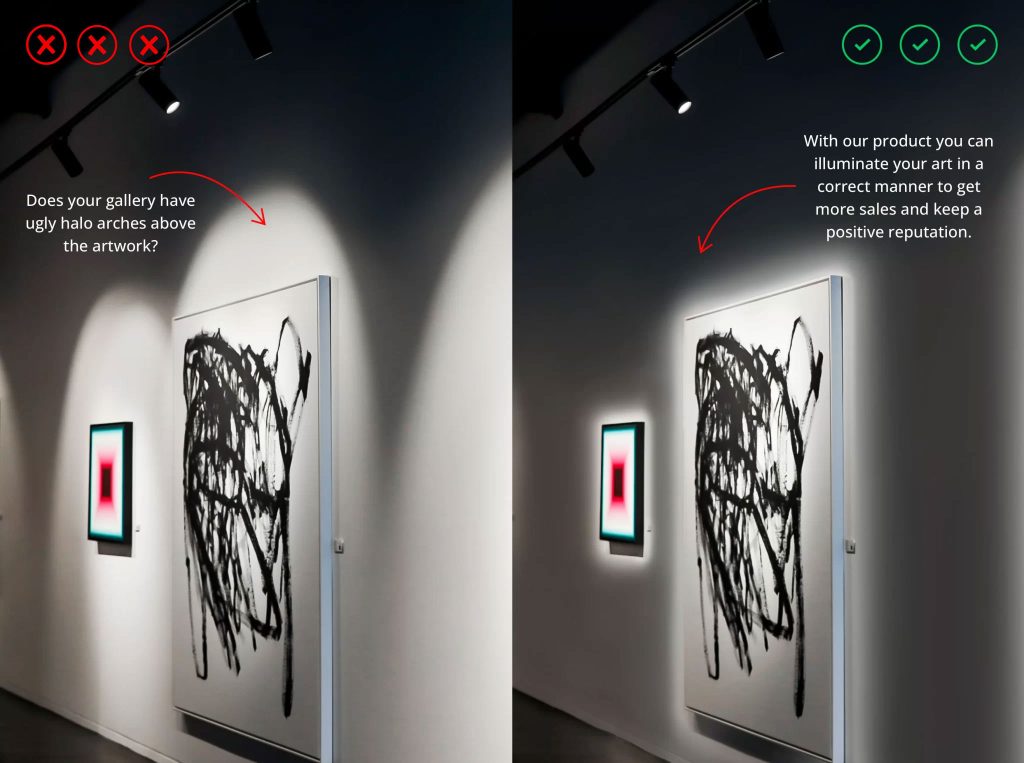
Comparison showing halo effect versus precise artwork illumination.
Every professional gallery and museum in the world uses track lighting because it offers what no other lighting system can. Total flexibility.
You can change exhibitions, move walls, hang new shows, and reconfigure your layout without calling an electrician. The track stays. The fittings move. Your space remains fluid, professional, and easy to manage.
Our solution is the l’art track lighting system, engineered for clean design, consistent colour accuracy, precision light control, and complete adjustability. Museum and gallery lighting guidelines.
The system includes three core fittings. Together they handle everything a gallery needs.
4.9 stars from art collectors and galleries
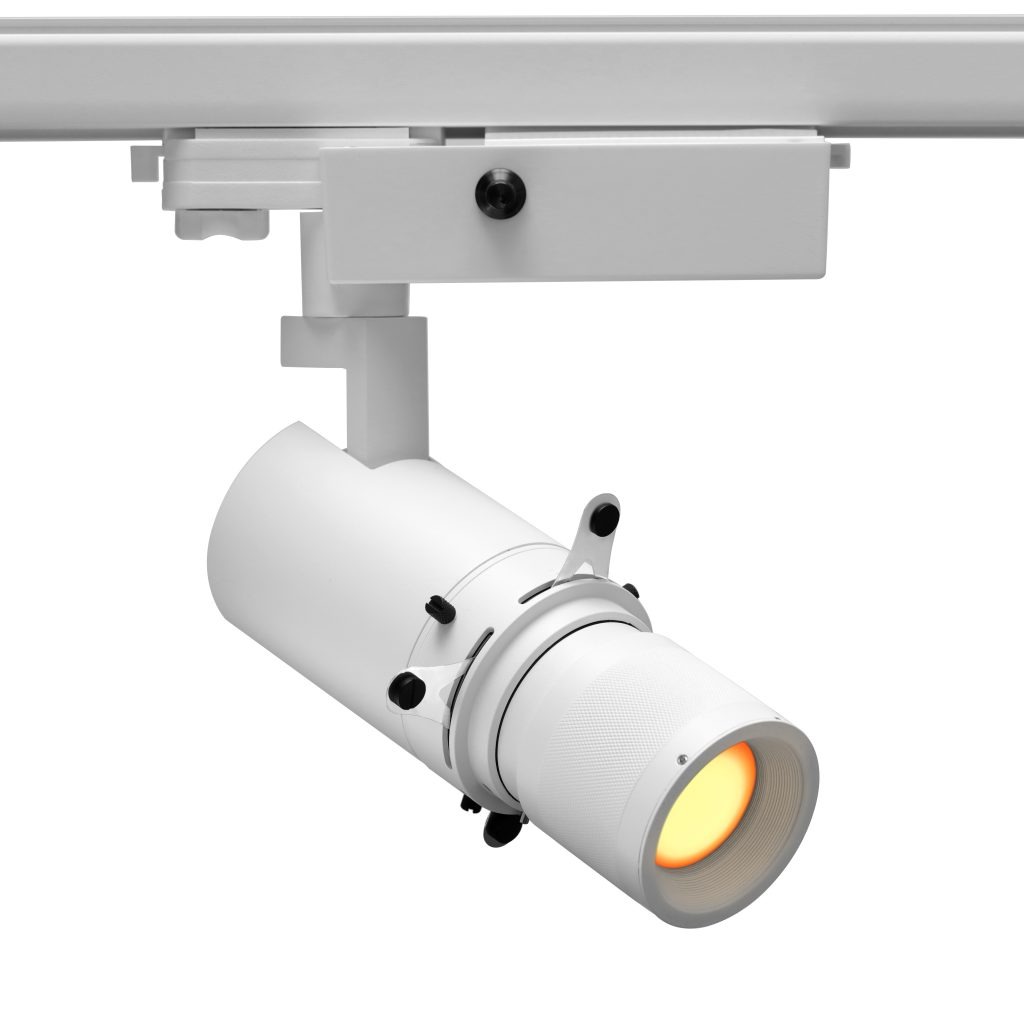
l’art Zoom
Precision control for all artwork sizes

Adjustable spotlight precisely illuminating small framed artwork.
The l’art Zoom is the most adaptable fitting in the entire system. You can tighten or widen the beam easily, which makes it perfect for small pieces, feature highlights, mixed mediums, sculpture, and photography.
The Zoom allows precise shaping so you avoid spill and avoid haloing around the artwork.
Key benefits
• Adjustable beam range
• Clean light shaping with no halo effects
• High CRI LED source for true colour
• Ideal for detailed and small to medium works
• Full tilt and rotation on the track lighting system
If you want the most control, Zoom is your hero fitting.
l’art Multi
Smooth, even illumination for medium and large works
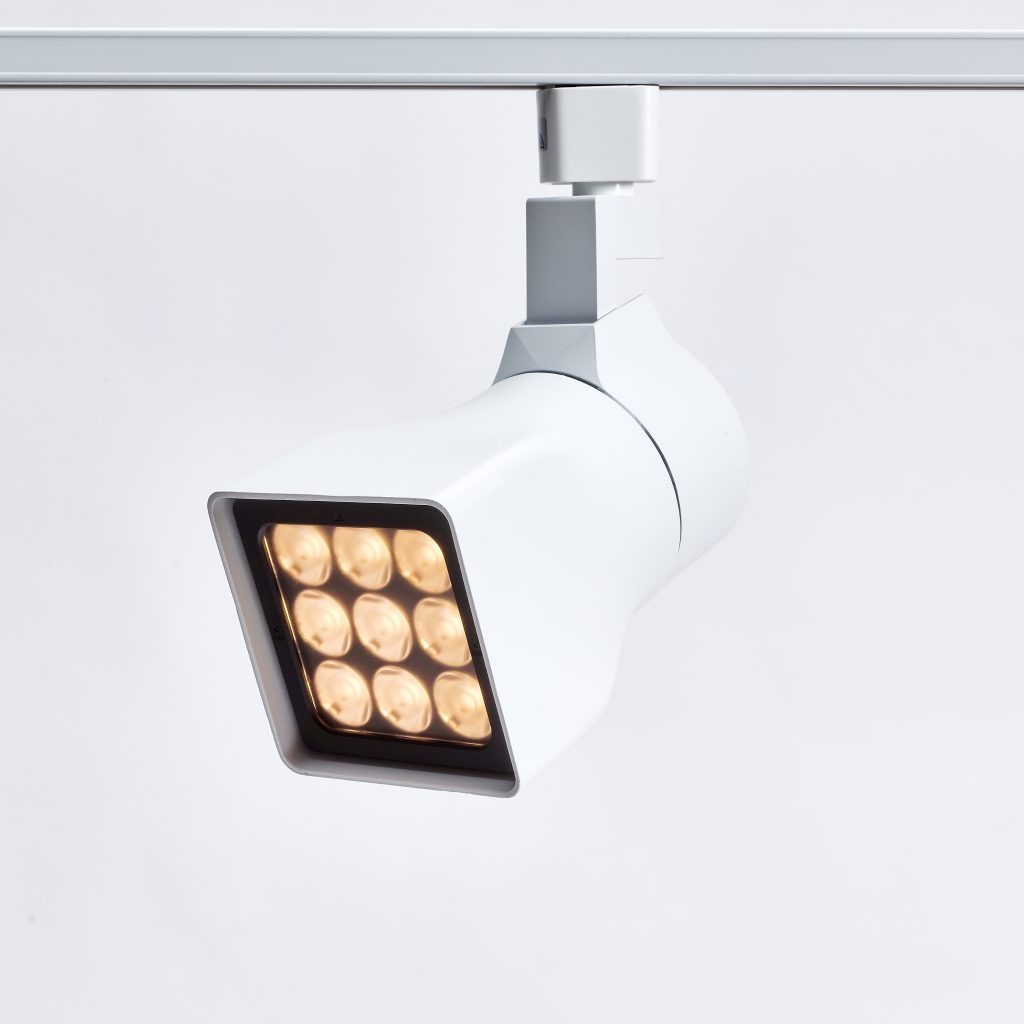
Wide beam lighting evenly covering large canvas artwork.
The l’art Multi provides broad, even coverage across the artwork without harsh hot spots. It creates a natural soft wash effect that suits most galleries with open walls and larger pieces.
Key benefits
• Wide, even beam distribution
• No harsh edges
• Perfect for medium and large artworks
• Natural falloff that enhances texture
• Fully adjustable on the track
If your gallery displays larger canvases or series walls, the Multi is essential.
l’art Deluxe
High output for feature pieces and high ceilings
High-output spotlight illuminating tall gallery feature wall.
The l’art Deluxe delivers strong, clean illumination designed for tall ceilings, long throw distances, and feature walls. It gives maximum brightness without glare or colour distortion.
Key benefits
• High lumen output
• Perfect for architectural rooms
• Ideal for feature works and tall walls
• Maintains high CRI colour accuracy
• Minimal design that blends into the track
If your space has height or power requirements, the Deluxe is your anchor fitting.
The Three Principles Of Professional Gallery Lighting Solutions
Every world class gallery follows three non negotiable principles. These principles protect artwork quality and create a premium viewing experience.
No Halo Effects
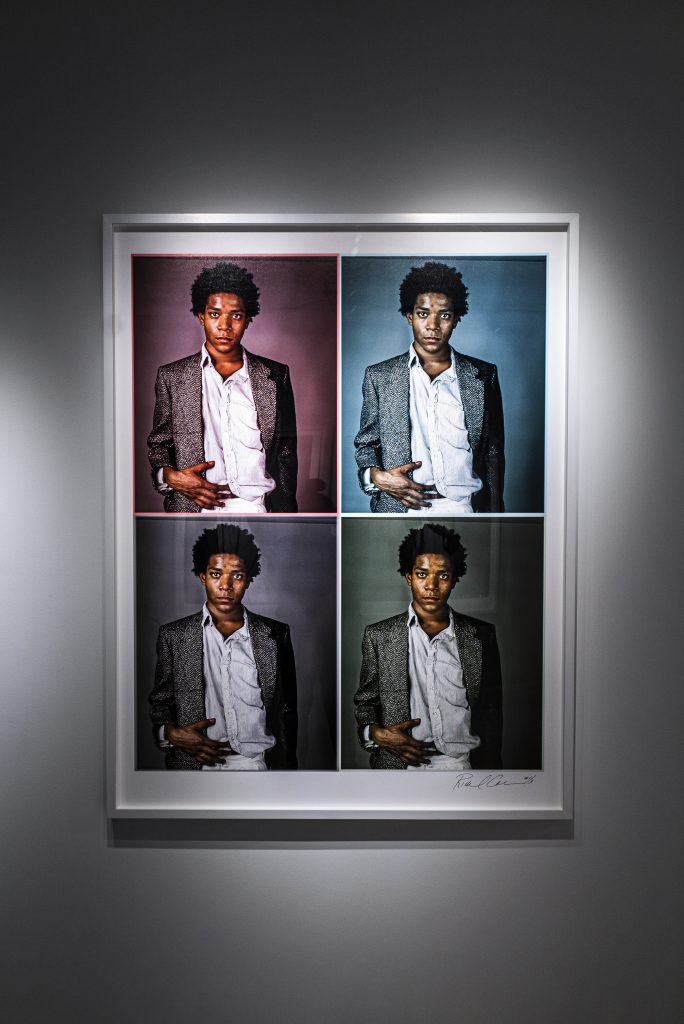
Clean beam lighting without glowing halo around artwork.
Haloing happens when the beam is not shaped correctly. You see a glowing ring around the artwork or uneven bright spots. This distracts the viewer and makes the presentation look amateur.
The l’art system avoids haloing through precision optics, correct positioning, and controlled beam spreads.
Reducing Glare
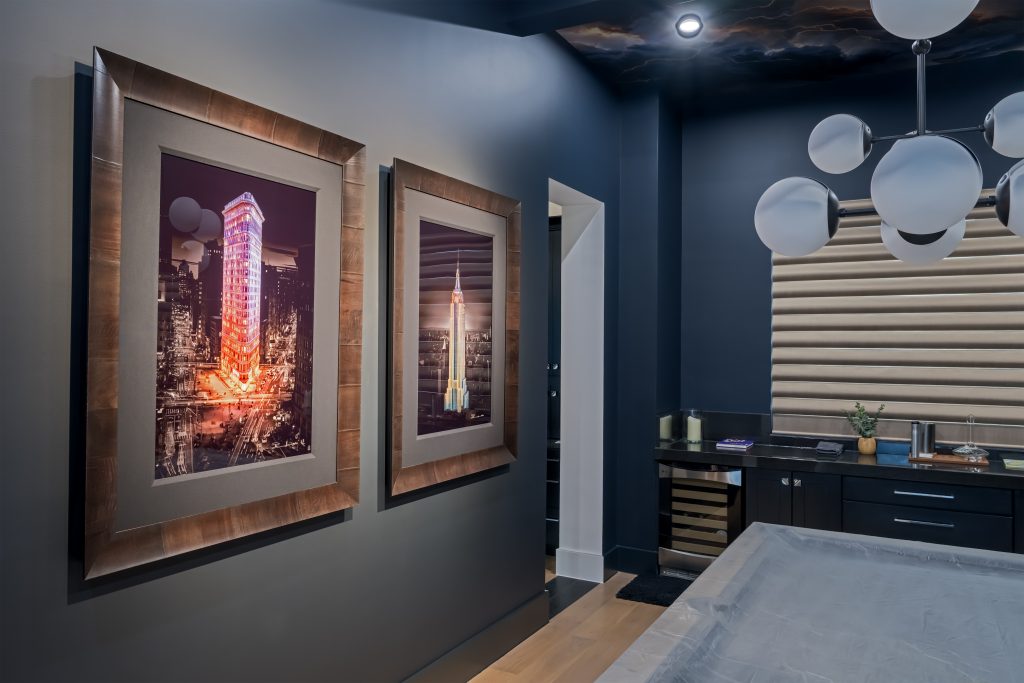
Soft anti-glare lighting creating comfortable viewing experience.
Glare kills emotional engagement because it forces the viewer to move around searching for a good angle. This interrupts the connection with the artwork.
Our fittings use anti glare optics and proper beam control to eliminate harsh reflections and create calm, soft, unobtrusive light.
CRI And Colour Accuracy
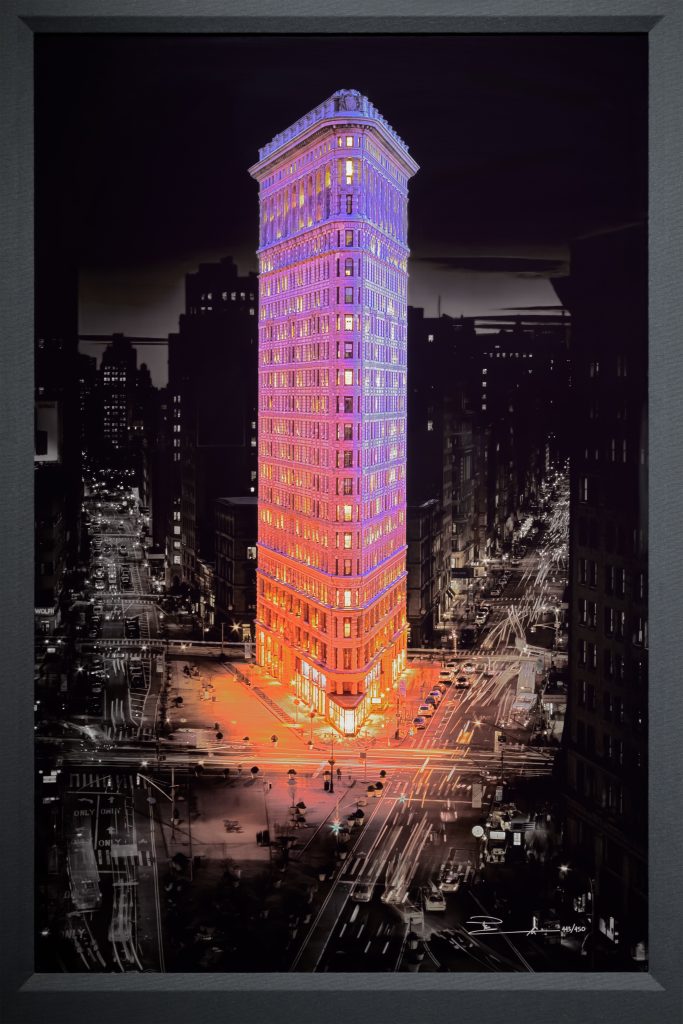
High-CRI lighting revealing true artwork colours vibrantly.
High CRI LED lighting ensures the artwork appears exactly as the artist intended. Low CRI lighting makes pieces look washed out, muted, or slightly off tone.
Every fitting in the l’art system uses high CRI LED sources for rich, accurate colour.
Advanced Gallery Lighting Design Strategies
Once the fundamentals of gallery lighting are in place, the next step is refinement.
This is where professional galleries separate themselves from average spaces. It is not just about lighting artwork correctly—it is about shaping the entire visual experience of the gallery.
Advanced lighting design considers how people move through a space, where their attention is drawn, and how different artworks interact with each other under light.
Layering Light Within the Gallery
Most galleries focus only on spotlighting artwork. While this is essential, it is only one layer.
Professional gallery lighting uses three distinct layers:
- Accent Lighting (Primary Layer)
This is the direct illumination on artwork. It creates focus, contrast, and visual hierarchy. - Ambient Lighting (Secondary Layer)
This is the general light level in the space. It ensures the gallery feels open and comfortable without competing with the artwork. - Transitional Lighting (Subtle Layer)
This helps guide movement between spaces, rooms, or exhibition zones. It softens transitions and prevents visual fatigue.
Balancing these layers correctly ensures that artwork stands out without the space feeling dark or overly dramatic.
Creating Visual Hierarchy
Not every artwork in a gallery should receive the same intensity of light.
If everything is equally bright, nothing stands out.
Lighting allows you to guide the viewer’s eye by creating contrast between pieces. Feature works can be slightly brighter or more tightly lit, while supporting works can sit within softer illumination.
This creates a natural flow through the exhibition.
Viewers are subtly guided from one piece to another without conscious effort.
Lighting Different Art Mediums
Different types of artwork require different lighting approaches. Treating them all the same is a common mistake.
Paintings on Canvas
Paintings benefit from even, consistent lighting that reveals colour and brushwork without creating glare.
A wider beam angle is typically preferred, with careful positioning to avoid reflections—especially on varnished surfaces.
Photography and Glass-Framed Works
These are the most sensitive to glare.
Even a small reflection can completely obscure the image. For these works, precise beam control and correct angle placement are critical.
Anti-glare optics and a consistent 30-degree lighting angle help minimise reflections.
Sculptures and Three-Dimensional Works
Sculpture requires a completely different approach.
Instead of even lighting, you want controlled contrast. Shadows help define shape, depth, and texture.
Often, multiple light sources are used to create a balanced yet dynamic effect.
Mixed Media and Textured Works
These pieces benefit from directional lighting that enhances surface detail.
Slightly angled light can bring out texture, making the work feel more tactile and dimensional.
Understanding Beam Angles in Practice
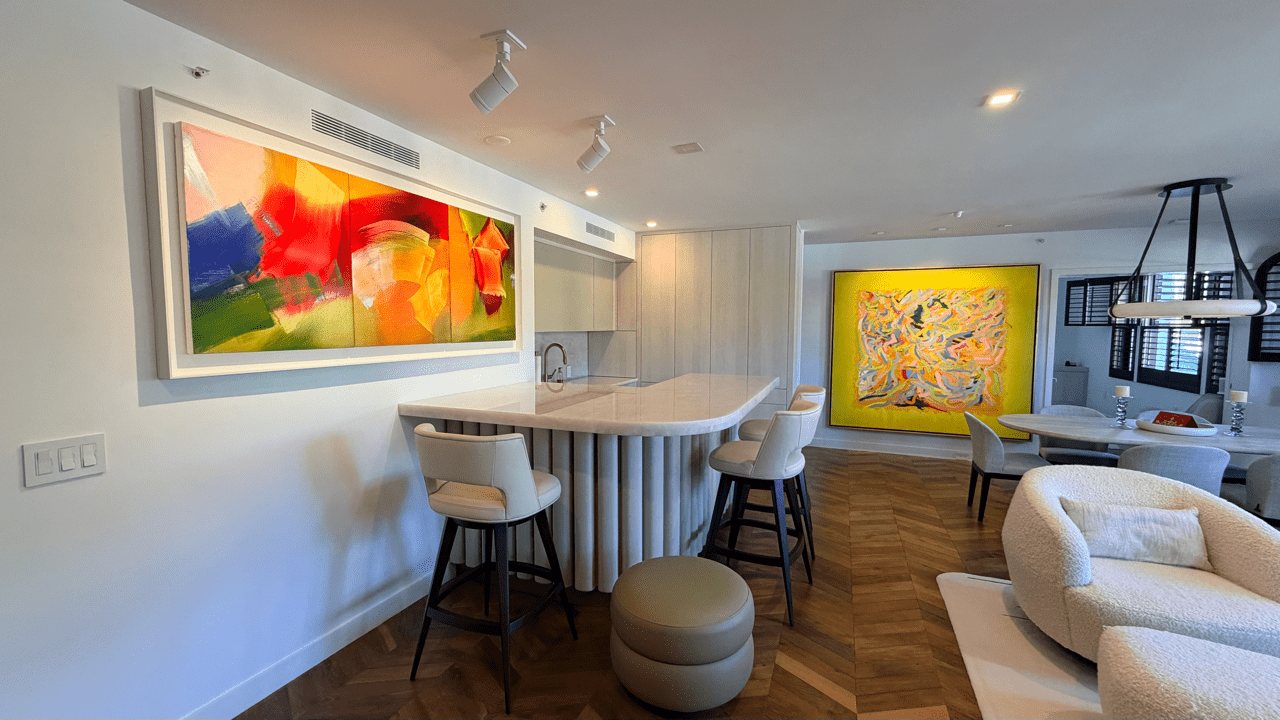
Wide beam washing large artwork surface with soft even light
Beam angle selection is one of the most important—and most misunderstood—parts of gallery lighting.
Choosing the wrong beam can ruin the presentation, even with high-quality fittings.
Narrow Beam (10°–20°)
Used for:
- Small artworks
- Feature highlights
- Sculptural details
This creates a tight, focused pool of light with strong emphasis.
Medium Beam (20°–40°)
Used for:
- Standard-sized artworks
- Most gallery applications
This provides a balance between focus and coverage.
Wide Beam (40°+)
Used for:
- Large canvases
- Grouped works
- Wall washing
This creates smooth, even illumination across a larger area.
The key is matching the beam to the size of the artwork—not the wall.
Colour Temperature Strategy in Galleries
While many galleries default to 3000K, the choice of colour temperature should be intentional.
3000K — Warm Neutral
- Most commonly used
- Enhances warmth in paintings
- Creates a welcoming atmosphere
Ideal for traditional galleries and mixed collections.
3500K — Neutral White
- Slightly cooler and crisper
- Works well for contemporary art
- Enhances contrast and clarity
Often used in modern gallery spaces.
Consistency Matters More Than Choice
Switching between different colour temperatures within the same space creates visual inconsistency.
Whatever you choose, maintain it across the entire gallery.
The Role of Contrast in Gallery Lighting

Artwork highlighted against darker wall creating strong visual contrast
Contrast is what gives artwork presence.
Without contrast, everything blends together. With too much contrast, the space becomes harsh and uncomfortable.
The goal is controlled contrast.
This means:
- Artwork is brighter than the surrounding space
- Background walls remain subtly lit
- Shadows are soft but present
A good rule is to keep artwork lighting approximately 2–3 times brighter than ambient light.
This ensures focus without overwhelming the viewer.
Planning for Exhibition Changes
One of the biggest advantages of track lighting is adaptability—but only if it is planned correctly from the start.
Think Beyond the Current Exhibition
Many galleries design lighting around their first show.
This is a mistake.
Your lighting system should be able to handle:
- Different artwork sizes
- Changing wall layouts
- Rotating exhibitions
- New mediums
Flexibility is not just about moving lights—it is about having the right mix of fittings and beam options available.
Zoning Your Lighting
Dividing your gallery into lighting zones allows you to control different areas independently.
This is especially useful for:
- Featured exhibitions
- Separate rooms or sections
- Events or private viewings
Zoning adds another layer of control and professionalism.
The Psychology of Lighting in Art Spaces

Lighting enhancing emotional connection between viewer and artwork
Lighting does more than illuminate—it influences behaviour.
Encouraging Dwell Time
Soft, comfortable lighting encourages people to stay longer.
Harsh or uneven lighting creates subtle discomfort, causing visitors to move through the space more quickly.
The longer someone stays, the more likely they are to connect with the artwork.
Building Emotional Connection
Art is an emotional experience.
Lighting enhances this by:
- Creating mood
- Highlighting detail
- Directing focus
When lighting supports the artwork, the emotional impact is stronger.
Reinforcing Perceived Value
Presentation affects perceived value.
Artwork displayed under poor lighting feels less important. The same piece under precise, controlled lighting feels elevated.
This perception directly influences pricing confidence and purchasing decisions.
Integrating Lighting with Architecture
Lighting should never feel like an afterthought.
It should integrate seamlessly with the architecture of the gallery.
Clean Ceiling Design
Minimal, well-aligned track systems maintain a clean visual aesthetic.
Cluttered or inconsistent installations distract from the artwork.
Alignment and Symmetry
Track placement should align with walls, walkways, and architectural lines.
This creates a sense of order and intentionality within the space.
Hidden Complexity
The best gallery lighting systems appear simple—but are carefully engineered behind the scenes.
Visitors should notice the artwork, not the lighting equipment.
Energy Efficiency and Longevity

LED gallery lighting system operating efficiently across large exhibition space
Modern gallery lighting systems are not only more precise—they are also more efficient.
High-quality LED systems offer:
- Long lifespan
- Consistent performance
- Reduced maintenance
- Lower energy consumption
This is particularly important for galleries operating long hours or across multiple spaces.
Future-Proofing Your Lighting System
A well-designed lighting system should last for years without requiring major changes.
Modular Design
Systems that allow fittings to be added, removed, or upgraded ensure long-term flexibility.
Consistent Technology Platform
Using a unified system avoids compatibility issues and maintains consistent light quality across the space.
Scalable Solutions
As your gallery grows, your lighting should scale with it.
This is only possible with a system designed for expansion.
Final Thoughts on Professional Gallery Lighting

High-end gallery presentation achieved through precise lighting execution
At a surface level, gallery lighting may seem simple.
But in reality, it is one of the most technical and influential aspects of your space.
It affects:
- How artwork is perceived
- How long visitors stay
- How your gallery is judged
- Whether people feel confident buying
The difference between average lighting and professional lighting is not subtle—it is immediately visible and deeply felt.
When done correctly, lighting becomes invisible.
It does not draw attention to itself. It simply allows the artwork to exist at its highest potential.
That is the goal of every great gallery.
Frequently Asked Questions
What is the best art gallery lighting system setups
A professional track lighting system with high CRI LED fittings is the global standard because it provides the flexibility and precision galleries require.
Why is CRI important in gallery lighting
CRI determines how accurately colours appear. High CRI lighting preserves the artwork’s true tone and texture.
What is the difference between the l’art Zoom, l’art Multi, and l’art Deluxe
The l’art Zoom offers precise beam control, the l’art Multi provides broad even coverage, and the l’art Deluxe delivers high output for tall ceilings and feature walls.
How high should gallery track lighting be installed
Most galleries install track between two point seven and three point five metres depending on ceiling height and throw distance.
What angle should lights hit the artwork
A thirty degree angle usually provides the best balance between even illumination and reduced glare.
Can poor lighting affect art sales
Yes. Poor lighting reduces the perceived value of artwork and weakens emotional engagement which can directly impact sales.
Can I rehang exhibitions without changing the lighting
Yes. Track lighting allows you to reposition fittings at any time without rewiring.
What is ideal color temperature for artwork lighting galleries
Most galleries use three thousand Kelvin for warmth and accuracy, although some prefer thirty five hundred Kelvin for a more neutral tone.
Is track lighting easy to install
Yes. It mounts directly to the ceiling with a single power feed and provides long term flexibility.
Is the l’art system suitable for all mediums
Yes. The adjustable beam angles and high CRI outputs make it ideal for painting, photography, sculpture, and mixed media.
How does Banno Lighting help me plan my gallery
We provide full lighting plans, technical advice, photometric mapping, and product selection tailored to your space and artworks.
How We Help You Plan Your Gallery
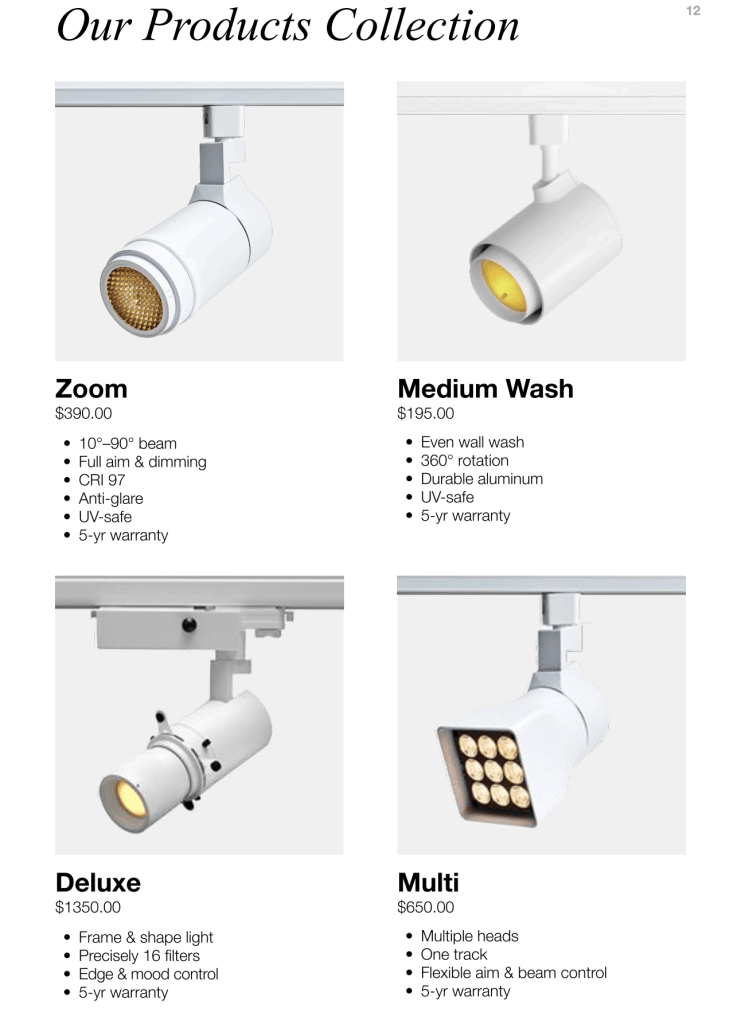
Four gallery lighting products with features and pricing overview.
Lighting a gallery is not guesswork. It requires photometrics, beam angle selection, ceiling placement, and a full layout strategy.
When you work with Banno Lighting you receive
• A full gallery lighting design strategies plan
• Photometrics
• Track layout guidance
• Beam angle recommendations
• Colour temperature strategy
• Technical support
• Product selection tailored to your architecture and art
We remove the complexity completely.
The Mistakes Galleries Make When They Attempt Lighting Alone
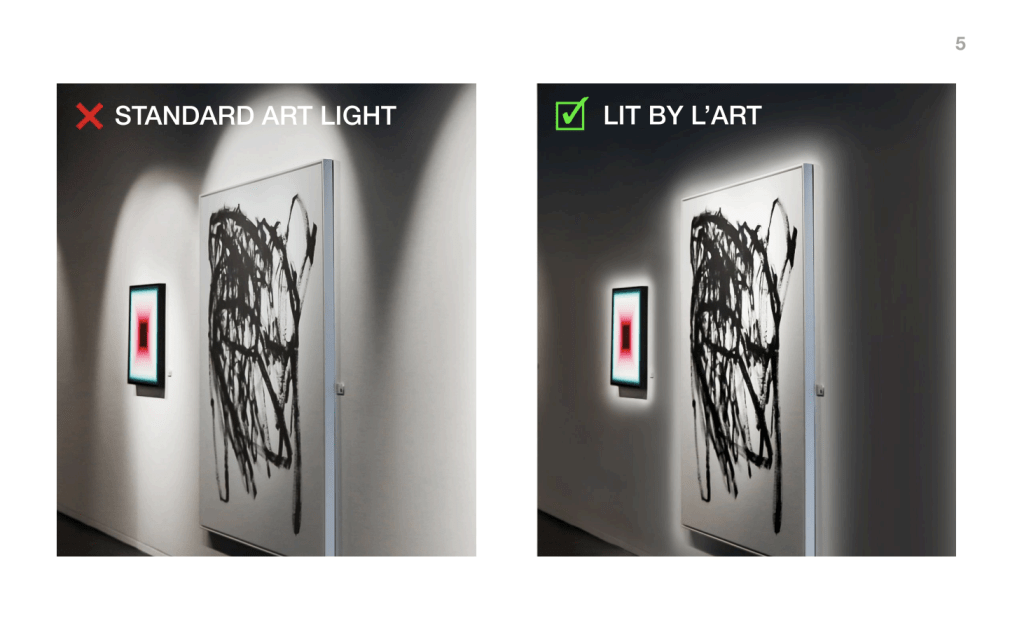
Standard art lighting compared with precision L’art illumination.
• Using decorative lights that cause glare
• Installing track too close or too far from walls
• Using low quality LEDs that distort colour
• Not shaping beams correctly
• Precision lighting for artworks from poor angles
• Using under powered or over powered fittings
• Not planning for future exhibitions
Every one of these mistakes is avoidable with proper guidance.
Why Galleries Choose Banno Lighting
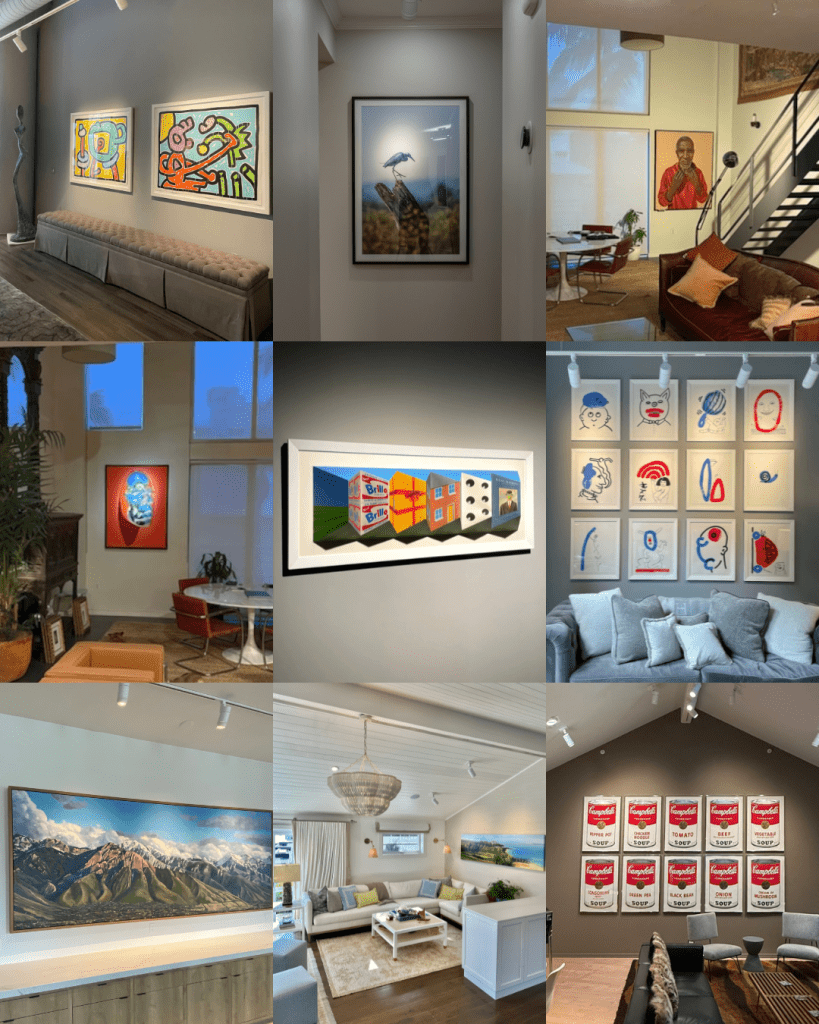
Premium gallery space illuminated with professional track lighting system.
Because we understand art. We understand the psychology of how people see art. And we understand how to use light to elevate an entire space.
Lighting is your brand. It shapes how people feel inside your gallery. It influences whether they buy. It influences whether artists choose to show with you. When lighting is done well your gallery feels premium, curated, and professional.
This is why galleries trust us.
Ready To Plan Your Gallery Lighting

Hear from art collectors and clients who trust us
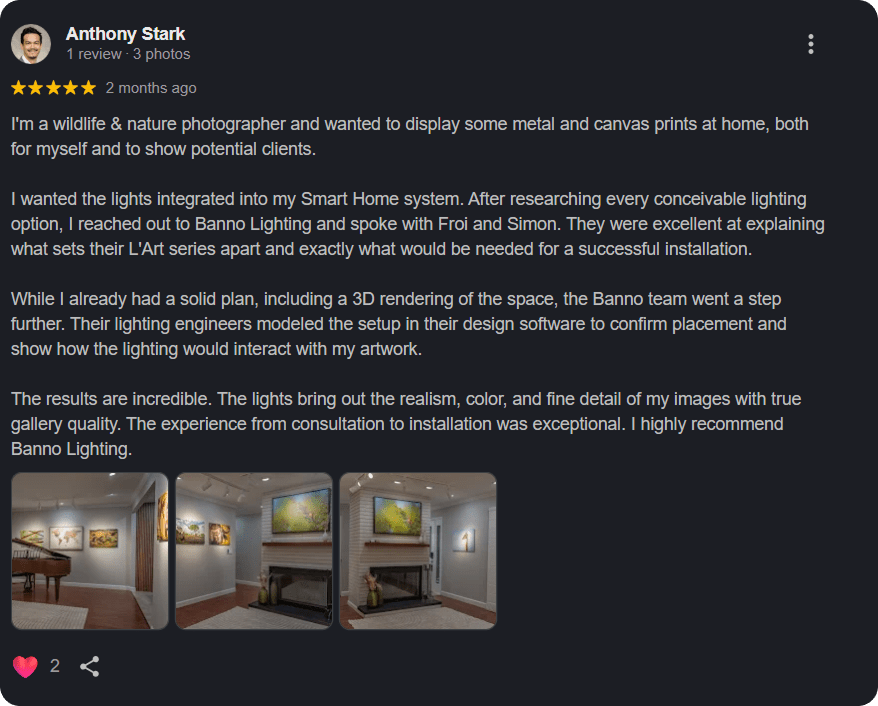
If you are opening, renovating, or planning a gallery, we can help you design a world class art gallery lighting system from the ground up.
Book a consultation with our lighting team and let us help you create a gallery that feels intentional, elegant, and professionally lit.
Book your gallery consultation
Speak with the design team
Plan your gallery lighting with Banno
I recently discussed this on LinkedIn