A Professional Guide for Galleries That Care About Artwork, Sales, and Reputation

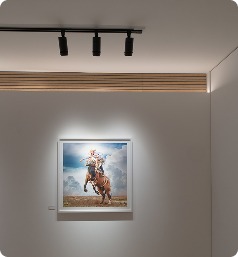
Contemporary gallery interior featuring precisely illuminated artworks.
Art gallery lighting design is not about brightness, mood, or aesthetics alone. It is a strategic system that directly affects how artwork is perceived, how long visitors engage, and how confidently collectors make purchasing decisions.
At Banno Lighting, we work with galleries, museums, and private collections that understand lighting is part of the exhibition itself. This art gallery guide explains what professional art gallery lighting design really involves, why generic advice and fittings consistently fail galleries, and how specialist lighting systems such as Zoom, Multi, and Deluxe support long term success.
Why art gallery lighting design is different from all other lighting

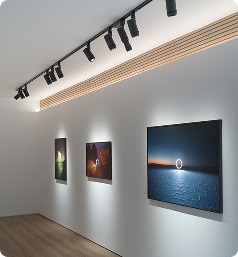
Minimal gallery wall with focused artwork illumination.
A gallery is neither retail nor residential. It sits in its own category.
Unlike retail lighting, gallery lighting is not designed to push brightness or visual noise. Unlike residential lighting, it is not about comfort or ambience. Professional gallery lighting solutions must do something far more demanding.
It must:
• Reveal the artist’s intent accurately
• Preserve the integrity of the artwork
• Create depth and hierarchy across the exhibition
• Adapt to constantly changing wall layouts
• Support curatorial storytelling
• Encourage emotional engagement and confidence in buying
Generic lighting solutions are not designed to handle this level of responsibility.
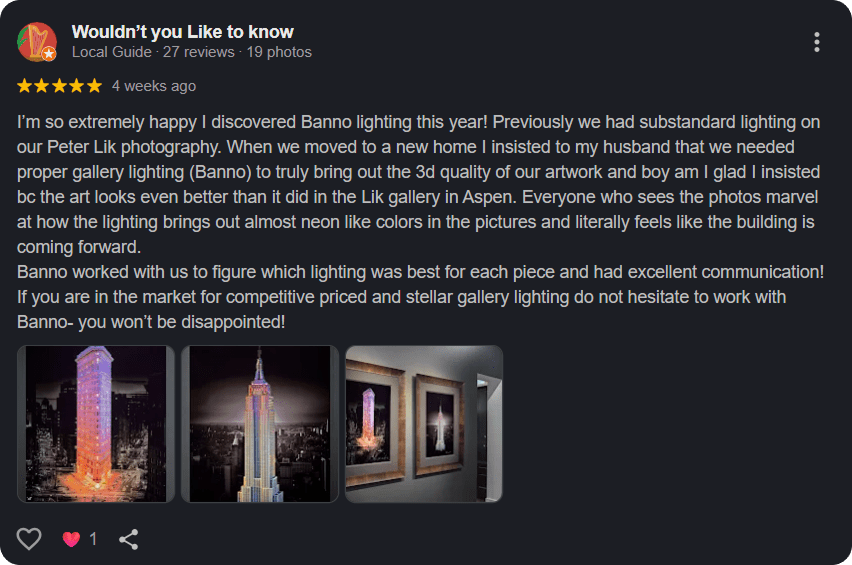
4.9-star rated by art collectors and gallery professionals
The problem with generic gallery lighting advice

Controlled ceiling fixtures preserve depth and artwork detail.
Most galleries begin with advice that sounds logical but is fundamentally incomplete. Rules like “light art from 30 degrees” or “use warm white LEDs” are oversimplifications that ignore how galleries actually operate.
Generic advice fails because it does not consider:
• Mixed artwork sizes on the same wall
• Different mediums within a single exhibition
• Viewing distances and sightlines
• Ceiling height and track positioning
• Glare on glass, varnish, or textured surfaces
• Exhibition turnover and future flexibility
As a result, galleries using generic fittings often experience uneven illumination, glare, flat presentation, and constant adjustment. The lighting never quite feels resolved.
What professional art gallery lighting actually delivers

Professional lighting revealing true colour, texture, and depth.
Professional gallery lighting design performs multiple functions at once.
Accurate colour and texture
High colour rendering is essential. Paintings, photographs, sculptures, and mixed media require lighting that reveals true colour without distortion, which is why the ideal color temperature for gallery lighting matters. Subtle tonal shifts, surface textures, and material finishes must appear exactly as the artist intended.
Depth and dimensionality
Directional control creates shadows and highlights that give artwork physical presence. Flat lighting strips art of depth and makes even strong work feel lifeless.
Visual hierarchy
Not every artwork should receive equal emphasis. Professional lighting design supports curatorial intent by guiding the viewer’s eye and creating rhythm across the space.
Consistency across exhibitions
Lighting should remain consistent even as exhibitions change. Visitors and collectors should feel continuity in presentation regardless of which artist is showing.
Why lighting plans and floor plans are essential

Strategic fixture placement aligned with exhibition circulation paths.
One of the most common mistakes galleries make is skipping a lighting plan.
Professional art gallery lighting design, as detailed in this complete art gallery lighting guide, starts with a lighting plan layered over the gallery floor plan. This is not decorative. It is technical and strategic.
A proper art gallery lighting system planning considers:
• Wall dimensions and ceiling height
• Track placement and spacing
• Beam angles relative to artwork size
• Viewing distances
• Circulation paths
• Future rehang flexibility
At Banno Lighting, we design lighting plans that allow galleries to adapt without compromise. The plan ensures that every wall can be lit properly now and in the future, without improvisation or visual inconsistency.
Without a plan, galleries are forced into constant manual adjustment, uneven results, and long term frustration.
Why specialist gallery lighting systems matter
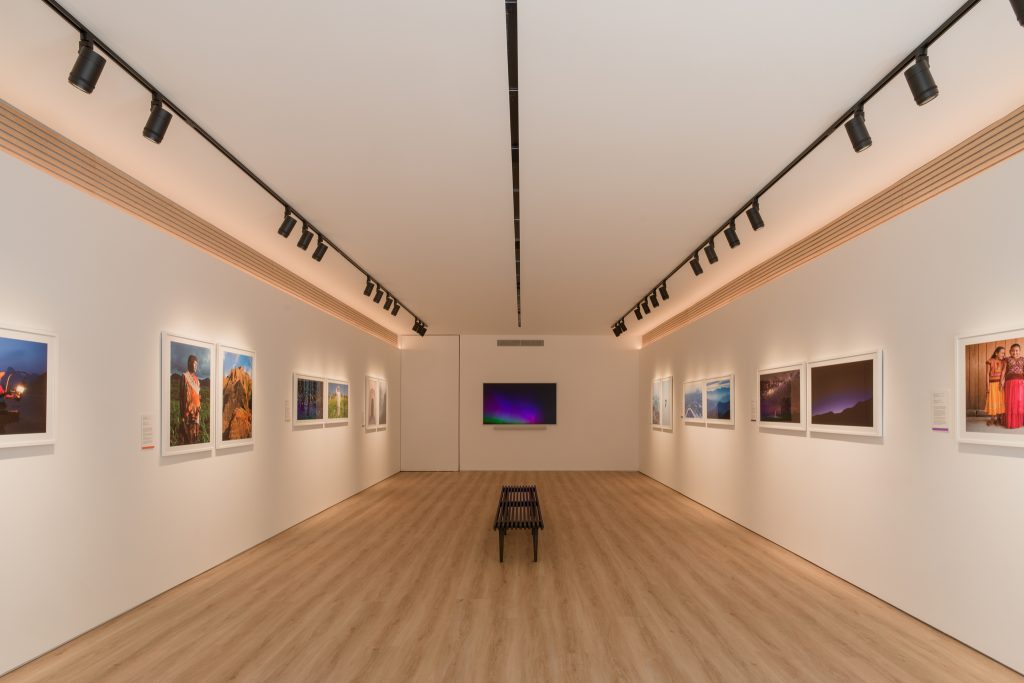
Precision gallery spotlight mounted on professional track system.
Track lighting itself is not the issue. The issue is using track heads designed for retail or architectural spaces instead of precision track lighting for artwork.
Generic fittings lack:
• Precision optics
• Controlled beam shaping
• Reliable glare control
• Consistent colour stability
• Flexibility across different artwork formats
This is where specialist gallery lighting systems become essential.
Zoom lighting for adaptable exhibitions
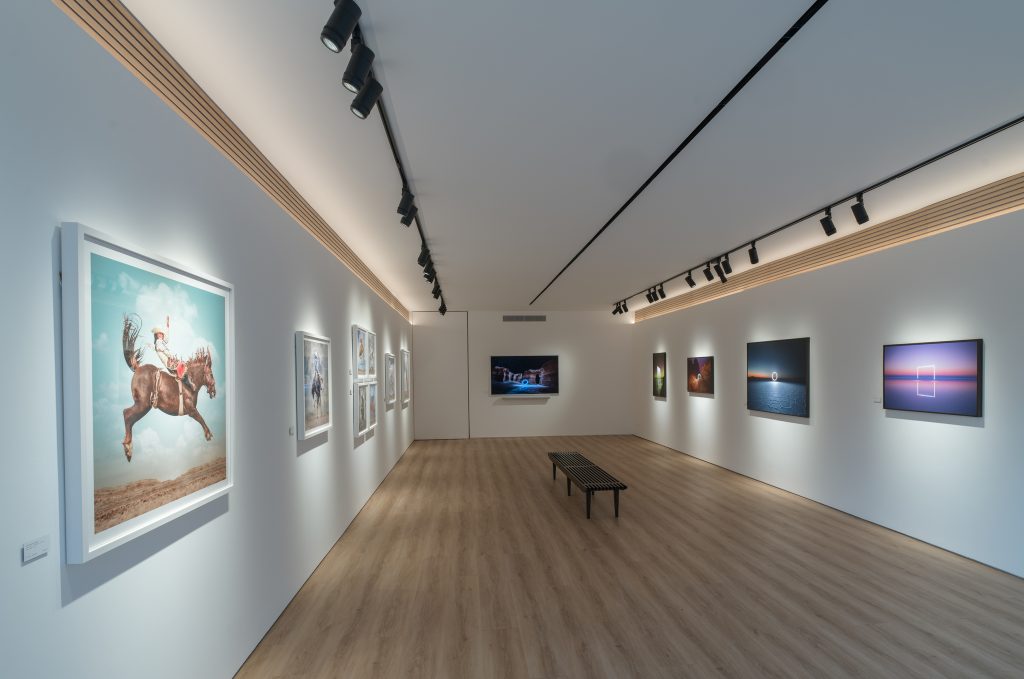
Adjustable Zoom spotlight framing medium sized artwork.
Zoom lighting is designed for galleries that change exhibitions frequently or display artworks of varying sizes.
With adjustable beam control, Zoom allows:
• One fixture to suit multiple artwork dimensions
• Precise framing of artworks without light spill
• Quick reconfiguration during rehanging
• Consistent presentation without replacing fittings
Zoom lighting gives galleries flexibility without sacrificing control. It is ideal for commercial galleries, group shows, and evolving exhibitions where adaptability is critical.
Multi lighting for layered and complex displays
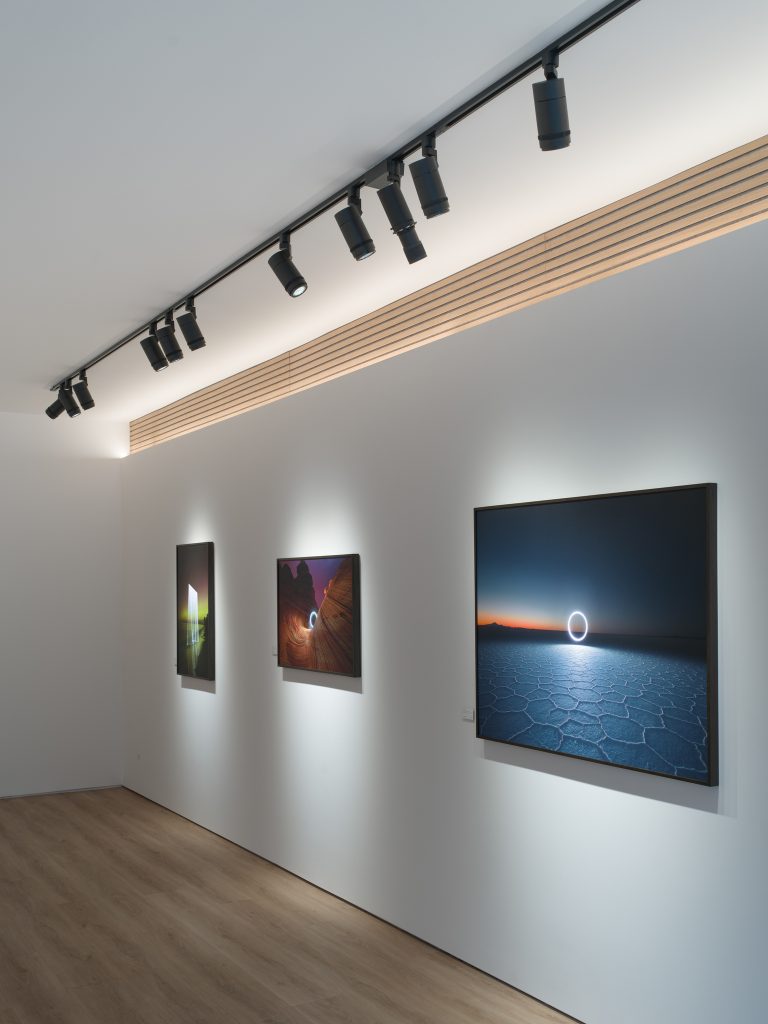
Multi fixture illuminating mixed media exhibition wall.
Multi lighting is designed for galleries that require greater control across varied mediums or layered installations.
Multi systems allow:
• Multiple beam options within the same lighting language
• Balanced illumination across mixed media exhibitions
• Strong control over contrast and hierarchy
• Precision where different artworks demand different treatments
Multi lighting is often used where galleries want consistency across the space while still responding to individual artworks.
Deluxe lighting for flagship presentation

Flagship gallery installation using refined projector lighting.
Deluxe lighting is chosen by galleries that demand the highest level of refinement and visual presence.
It is used where:
• Artwork value is extremely high
• Presentation must signal authority and prestige
• Colour accuracy and beam quality are critical
• The lighting itself must visually disappear
Deluxe systems are typically used in flagship galleries, museum environments, and private collections operating under museum-level lighting guidelines for galleries, where compromise is not acceptable.
Lighting as a commercial advantage
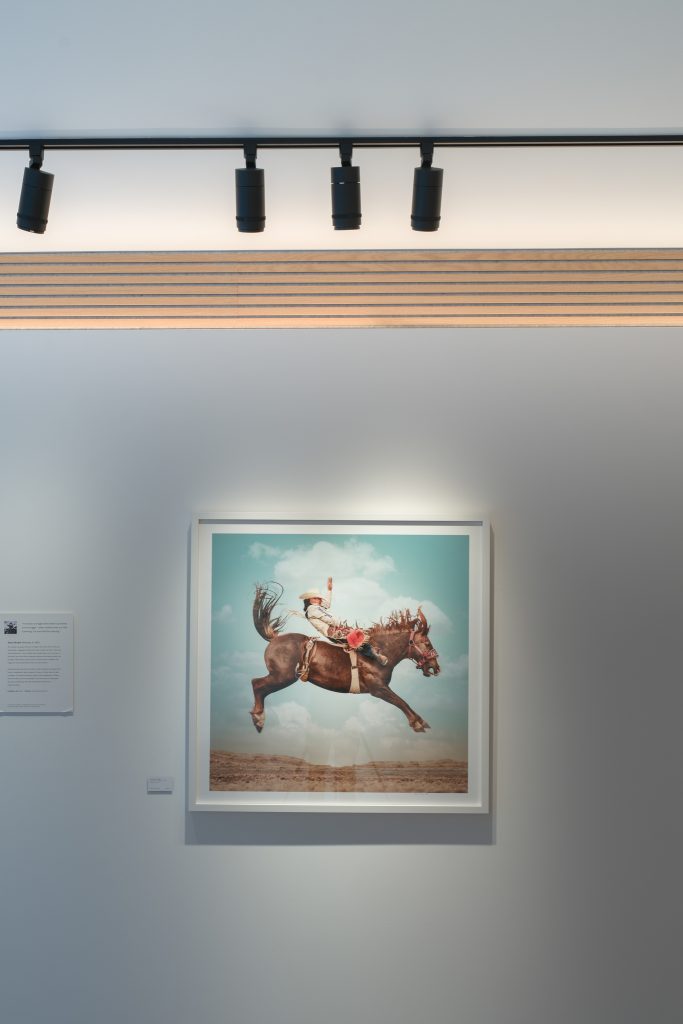
Professional presentation reinforcing perceived artwork value.
Art sales are emotional decisions supported by confidence. Lighting directly affects both.
When artwork is lit professionally:
• Visitors spend longer engaging
• Emotional connection deepens
• Perceived value increases
• Buyers feel reassured about colour and texture
• Objections reduce and confidence rises
Poor lighting creates hesitation. Collectors worry the artwork will not look the same outside the gallery. Professional lighting removes that doubt.
Many galleries find that improved lighting leads to faster sales, stronger pricing confidence, and better artist relationships.
Why galleries should not rely on generic fittings
Controlled beam shaping enhancing clarity across exhibition space.
Generic fittings are designed to be average in many environments rather than excellent in one.
They prioritise:
• Cost efficiency over performance
• Broad application over precision
• Simplicity over adaptability
For galleries, this leads to compromised presentation and long term dissatisfaction. Lighting becomes something you tolerate rather than trust.
Professional lighting systems like Zoom, Multi, and Deluxe are designed specifically to support art, not general illumination.
Our role as your lighting guide

L'Art lighting system presented in refined branded packaging.
At Banno Lighting, we do not simply supply products. We guide galleries through the entire lighting process, helping them develop the best lighting setups for art galleries.
This includes:
• Understanding your gallery’s positioning and audience
• Reviewing floor plans and exhibition layouts
• Designing lighting plans around your walls and works
• Recommending Zoom, Multi, or Deluxe systems based on need
• Supporting installation and aiming
• Ensuring flexibility for future exhibitions
Our role is to remove uncertainty and deliver lighting that works consistently over time.
Lighting as part of your gallery’s reputation

Deluxe lighting reinforcing gallery professionalism and credibility.
Lighting communicates professionalism. It tells artists and collectors whether a gallery understands presentation at a serious level.
Well designed lighting:
• Elevates perceived gallery calibre
• Supports curatorial credibility
• Builds trust with collectors
• Aligns physical space with brand positioning
Poor lighting quietly undermines even strong programming.
Designing for the future, not just today

Premium Deluxe fixture aligning space with brand authority.
A gallery’s lighting should support growth, not limit it.
Professional lighting design allows:
• Rehanging without replacing fixtures
• Flexible emphasis for different artists
• Adaptation to new wall layouts
• Consistent presentation across years
• Long term cost efficiency
This is why lighting should be designed once, properly, rather than patched repeatedly.
Why galleries choose Banno Lighting

Minimalist L’art packaging reflecting professional gallery standards.
Galleries choose Banno Lighting because we understand art first and lighting second.
We provide guidance, lighting plans, and specialist systems designed specifically for galleries. Our Zoom, Multi, and Deluxe ranges exist to give galleries control, flexibility, and confidence without compromise.
If you want lighting that:
• Respects the artwork
• Supports sales
• Enhances reputation
• Adapts as exhibitions change
Then professional art gallery lighting design is not optional. It is essential.
Advanced Beam Shaping Techniques Used In Professional Galleries
Beyond positioning and angle, professional galleries rely on beam shaping to control exactly how light interacts with each artwork. This is where standard lighting ends and true gallery lighting begins.
Hard Edge vs Soft Edge Lighting
Different artworks respond differently to beam edge quality.
Hard edge beams are useful for:
Isolating a single artwork on a large wall
Creating strong contrast
Reinforcing minimal or contemporary displays
Soft edge beams are preferred for:
Blending multiple artworks together
Reducing visual tension
Creating a more atmospheric space
Having control over beam edge allows galleries to shape the emotional tone of an exhibition, not just its visibility.
Framing Light To The Artwork
Framing means matching the beam precisely to the artwork’s dimensions.
When done correctly:
The light stops just before the frame
There is no spill onto the wall
The presentation feels clean and intentional
Poor framing creates halos and distractions that immediately reduce perceived quality.
Using Contrast To Guide Viewer Attention

Spotlight intensity variation guiding viewer eye across curated exhibition wall
Lighting is a tool for direction, not just illumination.
Creating Focus Within An Exhibition
Not every artwork should compete equally.
By adjusting intensity and beam sharpness, galleries can:
Draw attention to key works
Support curatorial narratives
Guide visitor movement naturally
This creates a structured viewing experience rather than a random one.
Building Visual Rhythm
A well-lit gallery has rhythm across its walls.
This is achieved by:
Varying light intensity slightly
Alternating beam widths
Spacing focal points deliberately
Without rhythm, exhibitions feel flat. With it, they feel curated and engaging.
Lighting Different Mediums Within One Space
Most exhibitions include a mix of mediums, and each requires a different lighting approach.
Paintings
Directional light
Accurate colour rendering
Controlled glare
Photography
Tighter beam control
Precise angles
Slightly reduced intensity
Sculpture
Create shadow and highlight
Avoid flattening
Sometimes use multiple angles
Mixed Media
Flexible beam control
Balanced intensity
Careful adjustment to avoid uneven reflection
Managing Glare Across The Entire Gallery

Anti-glare lighting setup reducing reflections across polished gallery surfaces
Glare is not just an isolated issue. It can affect the entire space.
Common Sources Of Glare
Incorrect fixture angles
Excessive beam spill
Reflective floors
Uncontrolled daylight
A Layered Approach To Glare Control
Precise positioning
Controlled beam shaping
Optical filters
Coordination with ambient light
The goal is consistency across all viewing positions.
Maintaining Colour Consistency Across Fixtures
Colour inconsistency is subtle but highly damaging.
Even small variations can:
Distort artwork appearance
Break visual cohesion
Reduce trust
Ensuring Stable Colour Output
Consistent colour temperature
Stable output over time
Minimal variation between fixtures
This is essential when artworks are displayed side by side.
Why Colour Accuracy Matters Commercially
Collectors rely on what they see.
If lighting is inconsistent:
Confidence drops
Hesitation increases
Sales become harder
Accurate lighting reinforces trust and supports decision-making.
Adapting Lighting For Changing Exhibitions

Flexible spotlight system adapting to different artwork sizes and placements
Gallery lighting must support constant change.
Flexible Track Systems
Repositioning fixtures easily
Adjusting angles quickly
Adapting to new layouts
Reducing Setup Complexity
Reduced installation time
Fewer manual adjustments
Lower technical challenges
This allows gallery teams to focus on the exhibition itself.
Balancing Natural And Artificial Light
Natural light can enhance a gallery, but it must be controlled.
Challenges Of Daylight
Changing intensity
Shifting colour temperature
Unpredictable reflections
Using Daylight Strategically
Enhance spatial depth
Highlight architecture
Create variation
Artificial lighting must remain dominant for consistency.
Lighting For Different Gallery Layouts

Open plan gallery using focused lighting zones for visual structure
Each gallery layout requires a different strategy.
Linear Spaces
Consistent fixture spacing
Aligned beams
Controlled pacing
Open Plan Spaces
Defined lighting zones
Strong focal points
Coordination across walls
Multi-Room Galleries
Consistency between spaces
Smooth visual transitions
Adaptable lighting for different exhibitions
The Impact Of Wall Colour On Lighting
Wall colour changes how light behaves.
White Walls
Increase brightness
Amplify spill
Reduce contrast if uncontrolled
Dark Walls
Increase contrast
Enhance focus
Require slightly higher intensity
Neutral Walls
Provide balance
Work well across varied exhibitions
How Lighting Influences Visitor Behaviour

Well-lit artworks encouraging closer observation and emotional interaction
Lighting directly affects how people experience a gallery.
Encouraging Engagement
Visitors stop
Observe more closely
Engage emotionally
Reducing Fatigue
Balanced lighting reduces strain
Creates a comfortable, immersive environment
Technical Precision Behind Professional Systems
Professional lighting depends on engineering precision.
Optical Control
Clean beam edges
Even distribution
Minimal distortion
Mechanical Stability
Prevents misalignment
Reduces need for constant readjustment
Thermal Performance
Maintains colour stability
Ensures consistent output
Extends lifespan
Future-Proofing Gallery Lighting
Lighting should support long-term growth.
Scalable Systems
Expansion without replacement
Integration of new fixtures
Adaptation to new layouts
Consistency Over Time
Maintains visual quality
Ensures reliability
Supports consistent exhibitions
Final Insight: Precision Defines Professional Galleries
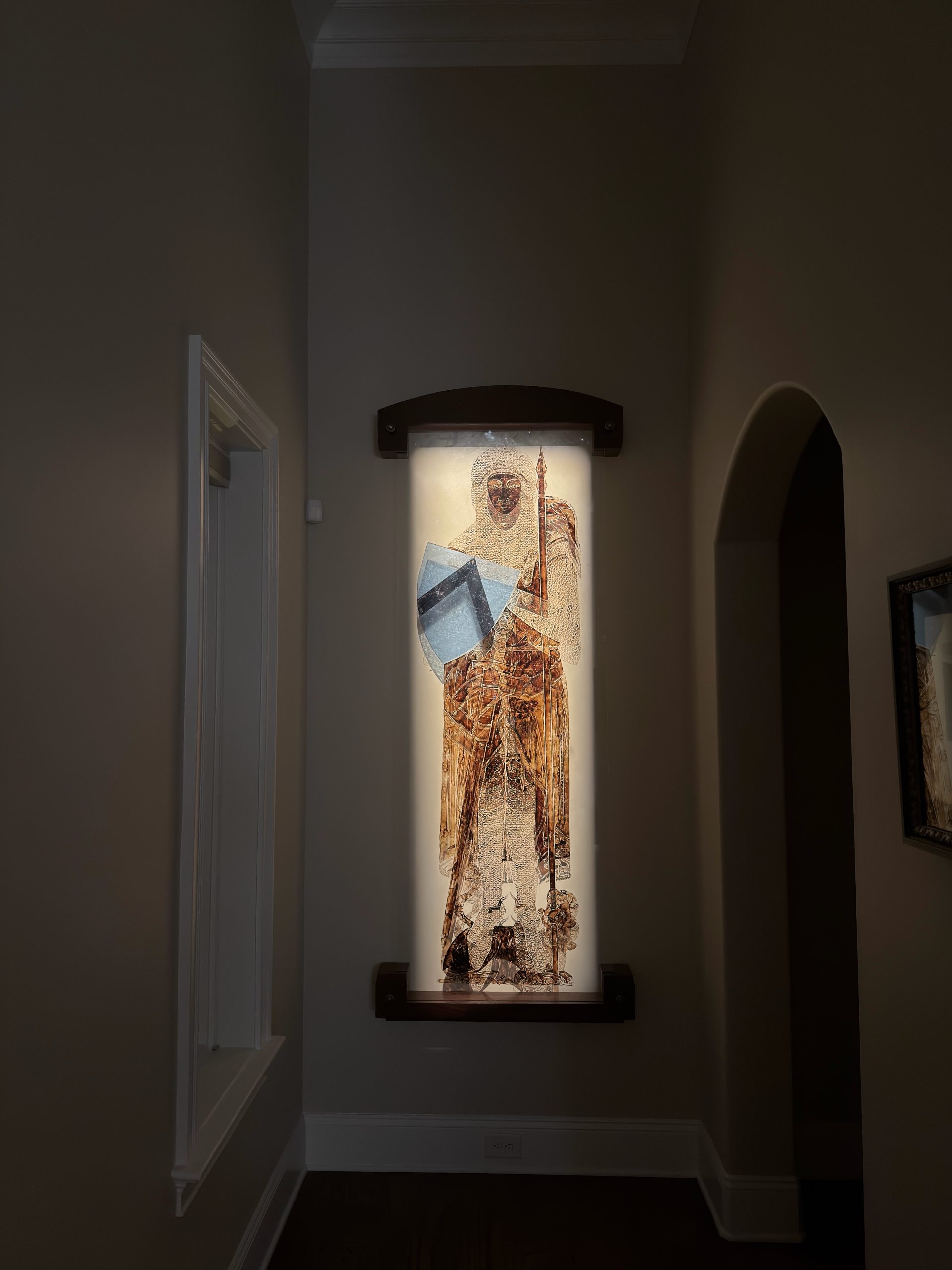
Precision lighting enhancing depth, clarity, and overall exhibition presentation
Lighting is one of the most technically demanding aspects of gallery design.
Every decision influences:
Perception of the artwork
Visitor engagement
Collector confidence
When done correctly, lighting becomes invisible. And when it disappears, the artwork takes full control of the space.
Art Gallery Lighting FAQs
1. What is art gallery lighting design?
Art gallery lighting design is a specialised system that controls how artwork is illuminated to ensure accurate colour, depth, and visual focus while supporting the overall exhibition experience.
2. Why is gallery lighting different from residential or retail lighting?
Gallery lighting is designed for precision and artwork presentation, not general visibility or ambience. It must reveal detail, control contrast, and support curatorial intent rather than simply lighting a space.
3. What does professional art gallery lighting need to achieve?
It must accurately reveal the artist’s intent, preserve artwork integrity, create visual hierarchy, adapt to changing exhibitions, and enhance visitor engagement and buying confidence.
4. Why does generic lighting advice fail in galleries?
Generic advice oversimplifies lighting and ignores variables like artwork size, medium, glare, ceiling height, and exhibition changes, leading to inconsistent and ineffective results.
5. What are the most common mistakes in gallery lighting setups?
Common mistakes include using standard fixtures, poor beam control, incorrect angles, uneven illumination, glare issues, and lack of flexibility for changing exhibitions.
6. How does lighting affect how artwork is perceived?
Lighting influences colour accuracy, depth, texture, and contrast. Poor lighting flattens artwork, while professional lighting enhances detail and visual impact.
7. Why is colour accuracy important in gallery lighting?
Accurate colour ensures artworks appear as the artist intended. Inconsistent or poor lighting can distort tones, reducing trust and affecting collector confidence.
8. What is the ideal colour temperature for art gallery lighting?
A neutral to slightly warm colour temperature is typically used to maintain accurate colour rendering while creating a comfortable viewing environment.
9. How does lighting create depth and dimensionality in artwork?
Directional lighting creates highlights and shadows, which add dimension and make artwork appear more dynamic and visually engaging.
10. Why is visual hierarchy important in exhibitions?
Visual hierarchy guides the viewer’s eye, helping them navigate the exhibition and focus on key artworks without feeling overwhelmed.
11. What is a gallery lighting plan and why is it necessary?
A gallery lighting plan is a technical layout that defines fixture placement, beam angles, and coverage to ensure consistent, adaptable, and professional lighting across all exhibitions.
12. What factors should be included in a gallery lighting plan?
It should include wall dimensions, ceiling height, track positioning, viewing distances, beam angles, circulation paths, and flexibility for future rehangs.
13. Why is track lighting preferred in art galleries?
Track lighting allows flexible positioning, easy adjustments, and precise control, making it ideal for galleries that frequently change exhibitions.
14. What is the difference between Zoom, Multi, and Deluxe lighting systems?
Zoom offers adjustable beam angles for flexibility, Multi provides varied beam options for complex displays, and Deluxe delivers the highest level of precision and refinement for premium environments.
15. When should a gallery use Zoom lighting?
Zoom lighting is ideal for galleries with frequently changing exhibitions or varying artwork sizes, as it allows quick adjustment without replacing fixtures.
16. When is Multi lighting the best choice for exhibitions?
Multi lighting is best for mixed media or layered displays where different artworks require different lighting treatments within a consistent system.
17. What makes Deluxe lighting suitable for high-end galleries?
Deluxe lighting offers superior colour accuracy, refined beam control, and minimal visual presence, making it ideal for high-value artworks and prestigious spaces.
18. How does professional lighting improve art sales?
It enhances perceived value, increases engagement time, builds buyer confidence, and reduces hesitation by presenting artwork clearly and accurately.
19. Why should galleries avoid using generic lighting fixtures?
Generic fixtures lack precision, flexibility, and consistency, leading to poor presentation and long-term dissatisfaction.
20. How does lighting impact a gallery’s reputation and credibility?
Well-designed lighting signals professionalism, builds trust with collectors and artists, and reinforces the gallery’s brand and curatorial standards.
Trusted by art collectors, galleries, and curators worldwide