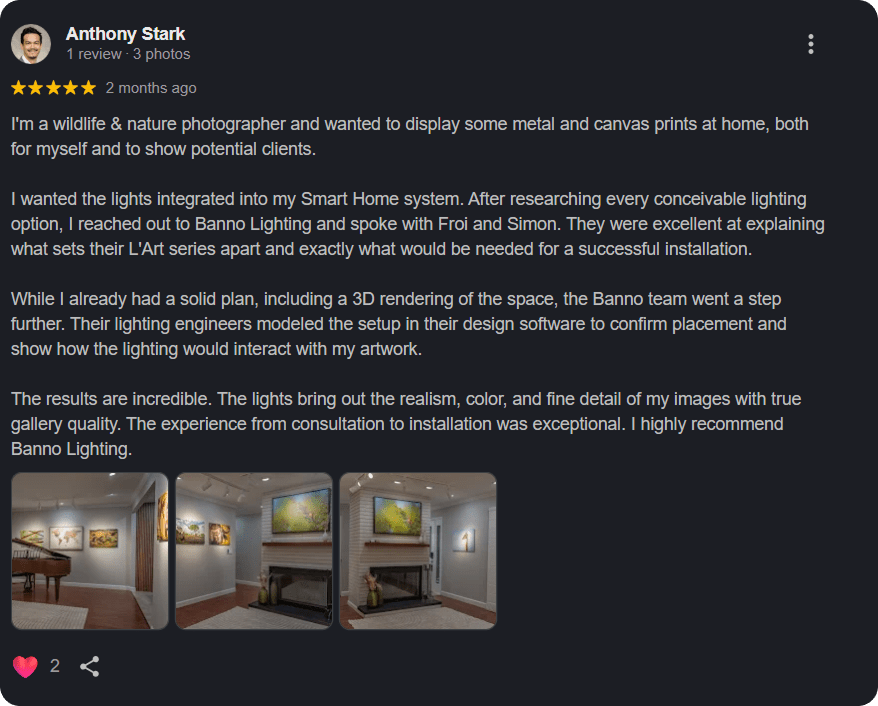
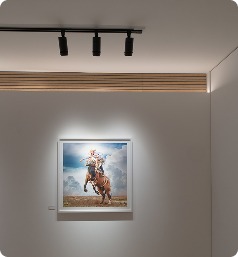
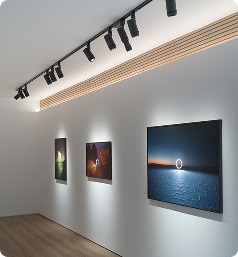
Precision museum lighting illuminating curated gallery exhibition space
A museum light is a precision-engineered lighting solution designed to illuminate artwork, artefacts, and curated displays with absolute control, clarity, and conservation in mind. Unlike decorative lighting or general room illumination, museum lighting is specifically developed to enhance visibility while protecting sensitive materials such as paintings, textiles, paper, and historical objects.
In professional museums, lighting is never random. Every museum light is carefully selected, positioned, and calibrated to ensure the artwork remains the focal point. The goal is not to flood a space with brightness, but to use controlled, refined illumination that reveals texture, colour, and depth without causing long-term damage.
This same museum-grade approach is now widely used in galleries, luxury homes, and private collections where presentation and preservation are equally important. Together, the principles outlined in this complete guide to museum and gallery lighting explain how professional lighting design elevates artwork presentation while protecting valuable collections.
What Is a Museum Light?

Museum-grade track lighting focused on gallery wall display
A museum light refers to a specialised lighting fixture used in museums, galleries, and high-end art environments to illuminate artwork and displays with precision optics, high colour accuracy, and conservation-safe performance. These lights are engineered to deliver controlled beam angles, stable light output, and minimal UV and heat exposure.
Professional museum lighting typically includes several types of lights used in museum environments, such as:
- Museum track lights
- Museum ceiling lights
- Museum spotlight lighting
- Museum display case lighting
- Museum cabinet lights
- Museum picture lights
Unlike standard lighting fixtures, museum lights are designed to enhance artwork rather than compete with it visually.

4.9-star rated by art collectors and gallery professionals
Why Museums Use Fewer Lights (The Core Principle of Museum Lighting)

Controlled beam lighting reducing glare on framed art
One of the most misunderstood concepts in museum lighting design is brightness. In reality, the best museums use fewer lights, not more. Strategic lighting is about focus, not intensity. This philosophy reflects one of the core principles of museum lighting design, where controlled illumination is preferred over excessive brightness.
When too many lights are used, several problems occur:
- Visual distraction from the artwork
- Glare on framed pieces and glass
- Uneven illumination across displays
- Increased light exposure and potential fading
A well-designed museum light system uses minimal fixtures with precise beam control to direct attention exactly where it belongs. This creates a calm visual hierarchy where the object on display becomes the clear focal point.
Less light, when properly controlled, produces a far more refined and museum-grade presentation than excessive general lighting.
Museum Lighting for Paintings and Artwork

Dimmable gallery lighting protecting sensitive canvas surface
Museum lighting for paintings requires a balance between visibility and conservation. Paintings, especially oil, acrylic, and works on paper, are sensitive to excessive heat, UV exposure, and uncontrolled brightness.
A professional museum light for artwork should provide:
- High CRI (95–97+) for accurate colour rendering
- Low UV and heat output
- Adjustable beam angles
- Even edge-to-edge illumination
- Dimmable brightness control
Museums typically position lights at a 30-degree angle above the artwork. This reduces glare while ensuring the entire surface is illuminated evenly without hotspots or shadowing.
Types of Museum Lighting Fixtures Used in Professional Installations

Ceiling-mounted spotlight integrated into minimalist architecture
Museum Track Lighting
Museum track lighting is one of the most widely used museum lighting systems due to its flexibility and precision. Curators and lighting designers can reposition fixtures as exhibitions change, allowing adaptable and controlled illumination across gallery walls.
Track lighting for art galleries enables:
- Adjustable spotlight positioning
- Consistent lighting across multiple artworks
- Flexible exhibition layouts
- Precise beam targeting
Museum Ceiling Lights
Ceiling-mounted museum lights are used for permanent installations where clean architectural integration is required. These fixtures deliver focused illumination from above without visual clutter.
They are ideal for:
- High-end galleries
- Museums
- Luxury residential collections
- Permanent exhibitions
Museum Display Case and Cabinet Lights
Museum cabinet lighting is essential for illuminating artefacts, sculptures, and delicate objects inside display cases. These environments require extremely controlled lighting with minimal heat and glare.
Advanced museum cabinet lights, such as miniature zoom fixtures, are designed to be extremely small (sometimes coin-sized) while still offering pinpoint beam control. This allows curators to highlight specific artefacts without flooding the entire cabinet with light.
Museum Lighting Design and Professional Strategy
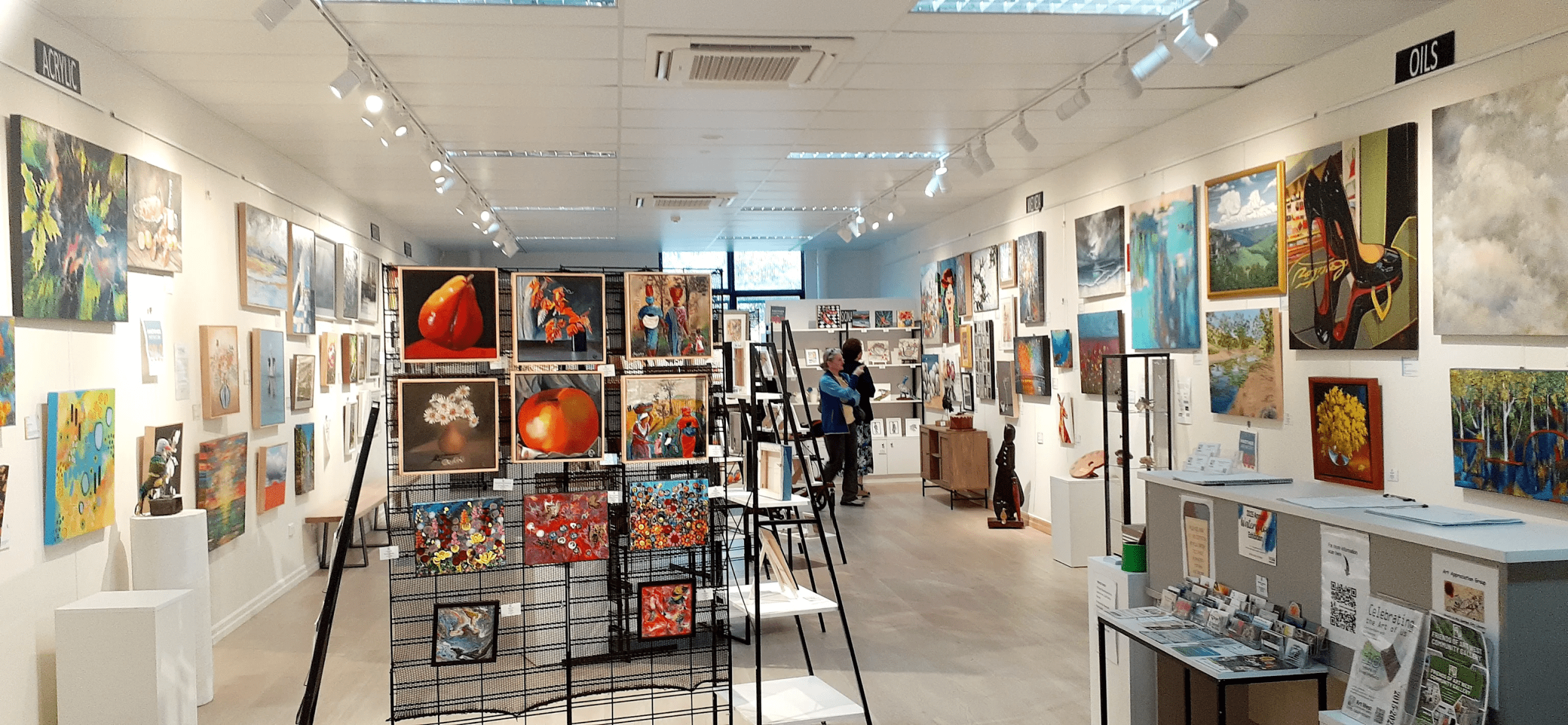
Layered lighting system balancing ambient and accent illumination
Museum lighting design is a discipline that combines optics, conservation science, and visual psychology. The objective is to guide the viewer’s attention while maintaining long-term artwork protection, using a precision museum light for illuminating artworks with controlled beam angles and balanced brightness.
A professional museum lighting plan considers:
- Artwork size and material
- Viewing distance
- Ceiling height
- Beam angle selection
- Lux level control
- Ambient vs accent lighting balance
Rather than relying on general lighting, museums use layered systems that combine ambient lighting with precision museum spotlight lighting for key pieces.
Museum Lighting Color Temperature and Visual Accuracy
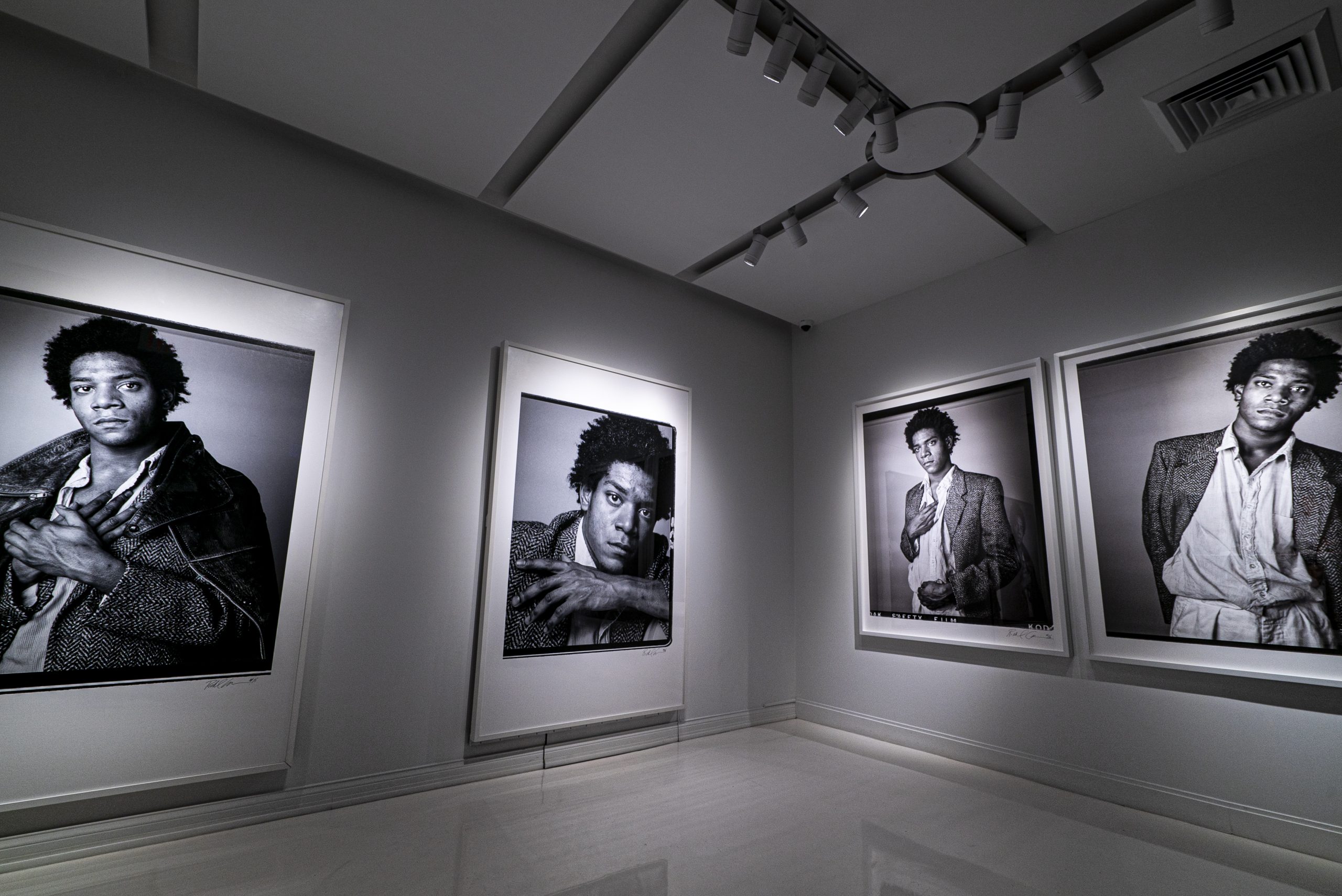
Consistent colour temperature maintaining visual harmony
Colour temperature plays a crucial role in how artwork appears under a museum light. Incorrect temperature can distort colours, making artwork appear too warm, too cool, or visually flat.
Common museum lighting colour temperature standards:
- 2700K: Classical paintings and warm-toned artwork
- 3000K: Balanced gallery and museum displays
- 3500K: Contemporary art and photography
Maintaining consistent colour temperature across all museum lighting fixtures ensures visual harmony throughout the exhibition space.
Museum-Grade Lighting Solutions: Zoom, Multi, Deluxe, and Mini Zoom

Zoom spotlight precisely illuminating feature artwork
Zoom Series Museum Light (Precision Spotlighting)
The Zoom series museum light is engineered for precise artwork illumination where control is essential. With adjustable beam optics, it allows curators, designers, and collectors to focus light exactly on a painting, sculpture, or artefact without spill onto surrounding walls. This makes it ideal for feature artworks, high-value pieces, and curated displays that require sharp visual emphasis.
Multi Series Museum Lighting (Gallery Wall Coverage)
The Multi series is designed for broader beam distribution across multiple artworks or large exhibition walls. In museum and gallery environments, this type of museum lighting ensures consistent illumination across collections without uneven brightness or visual imbalance. It is particularly effective for gallery walls, exhibitions, and long display corridors.
Deluxe Series Museum-Grade Lighting (Premium Installations)
The Deluxe series represents a museum-grade lighting solution built for high-end galleries, museums, and luxury collections. Featuring ultra-high CRI, refined optical engineering, and elegant fixture design, Deluxe museum lights deliver exceptional clarity, depth, and colour accuracy. These fixtures are ideal where both preservation and presentation must meet the highest professional standards.
Mini Zoom Museum Cabinet Light (Pinpoint Display Lighting)
Mini Zoom museum lights are extremely compact fixtures, often comparable in size to a coin, designed for display cases and enclosed exhibits. Despite their small size, they feature adjustable zoom optics that allow precise pinpoint illumination on artefacts, jewellery, and sensitive objects. This makes them a preferred solution for museum cabinet lighting where subtle, focused light is required without overwhelming the display.
Museum Lighting Lux Levels and Conservation Standards

LED museum light with controlled low heat output
Museums follow strict lighting guidelines to protect artwork from long-term damage. Excessive exposure to light can cause fading, discolouration, and material degradation over time.
Typical museum lighting lux recommendations:
- 50 lux: Highly sensitive works (paper, textiles)
- 150–200 lux: Oil paintings and durable artworks
- Controlled spotlighting for artefacts and sculptures
High-quality LED museum lights allow precise lux control while maintaining consistent illumination and conservation-safe performance.
Museum Lighting for Galleries, Homes, and Private Collections

Gallery-style lighting elevating residential interior artwork
Museum lighting is no longer limited to public institutions. oday, professional museum lighting systems for artwork and exhibits are widely used in private collections, galleries, and luxury residential interiors.
Collectors and designers now use museum-style lights in:
- Private art collections
- Luxury residences
- Showrooms
- Hospitality environments
- Architectural interiors
Using museum-grade lighting in residential spaces elevates artwork presentation and creates a gallery-style atmosphere without overwhelming the room.
Common Mistakes in Museum Lighting Design
Many installations fail because they rely on general lighting instead of dedicated museum lighting systems. This reduces visual impact and can even damage artwork over time.
Key mistakes include:
- Over-lighting artwork with ceiling lights
- Using low CRI fixtures
- Incorrect beam angle selection
- Ignoring glare control
- Using too many light sources
Professional museum lighting focuses on precision, restraint, and optical control rather than excessive brightness.
The Role of Museum Lighting in Perceived Artwork Value

Refined gallery atmosphere increasing perceived artwork value
Lighting has a direct psychological impact on how artwork is perceived. Museum-grade lighting for paintings and collections enhances colour richness, reveals subtle textures, and creates a more immersive viewing experience, allowing each piece to be appreciated with greater clarity and depth.
In professional environments, museum lighting can:
- Enhance viewer engagement
- Increase perceived artwork value
- Improve exhibition storytelling
- Create a refined and premium atmosphere
For collectors and galleries, museum-grade lighting is not just functional. It is a strategic presentation tool.
Advanced Museum Light Strategy: Professional Lighting Depth, Optics, and Curatorial Control

Layered museum lighting creating focused curatorial visual hierarchy
In professional museum environments, a museum light is not simply installed for visibility. It is used as a curatorial tool. The way a piece is illuminated can influence how it is emotionally perceived, how long viewers engage with it, and how accurately its colours and textures are experienced.
From a museum lighting consultant perspective, the goal is always intentional restraint. The artwork must feel elevated, not overlit. This is why the best museums do not aim for brightness. They aim for precision, contrast, and controlled focus.
Museum Light Placement and Viewing Angles

Beam positioned above artwork avoiding frontal glare
Correct placement is one of the most critical factors in museum lighting design. Even the highest quality museum light can produce poor results if it is positioned incorrectly.
Professional placement guidelines include:
- Mounting the museum light above the artwork
- Angling the beam at approximately 25 to 35 degrees
- Avoiding direct frontal lighting
- Ensuring full edge-to-edge illumination
- Preventing light spill onto surrounding walls
This positioning minimises glare while enhancing surface detail, brushstrokes, and depth perception. In museum installations, lighting designers carefully test multiple angles before finalising the placement to achieve optimal visual balance.
Museum Ceiling Mount Lights vs Track Lighting Systems

Combined layered lighting in modern museum interior
Museum ceiling mount lights are commonly used in permanent exhibitions and architectural spaces where a clean, integrated lighting design is required. These fixtures are discreet and provide controlled illumination from above without drawing attention to the hardware itself.
Museum track lighting, on the other hand, offers greater flexibility. Track systems allow curators to reposition fixtures as exhibitions rotate or collections change. This makes track lighting one of the most practical museum lighting systems for galleries and evolving displays.
Ceiling-mounted museum lights are ideal for:
- Permanent museum exhibitions
- Minimalist gallery architecture
- High-end residential collections
- Architectural lighting integration
Track-based museum lighting is ideal for:
- Rotating exhibitions
- Gallery walls with multiple artworks
- Flexible display layouts
- Curated art collections that evolve over time
Both systems are often combined in layered museum lighting designs.
Museum Light Beam Control and Optical Precision

Smooth beam edges preventing light spill
Optical engineering is what separates a true museum light from standard lighting fixtures. Museum-grade optics are designed to shape light precisely, ensuring the artwork is illuminated evenly without hotspots or uneven falloff.
Key optical characteristics of museum lighting include:
- Narrow, medium, and wide beam adjustability
- Smooth light distribution
- Anti-glare optics
- Controlled beam edges
- Minimal light spill
For example, a narrow beam museum spotlight is ideal for small artefacts or individual paintings, while a wider beam museum light is better suited for large canvases or exhibition walls.
Precision beam control allows fewer fixtures to achieve superior visual results, reinforcing the museum principle that less lighting often creates a more refined display.
Museum Light for Large Paintings and Oversized Artwork

Wide beam museum light covering oversized canvas evenly
Lighting large-scale artwork requires a different strategy compared to small framed pieces. A single museum light with a narrow beam will create a bright centre and dark edges, which disrupts visual balance.
For large paintings, museums typically use:
- Wider beam museum lights
- Multi-fixture spacing with overlap
- Even lux distribution across the surface
- Adjustable optics for edge coverage
In high-end installations, lighting designers may combine Zoom and Multi series museum lights to achieve consistent illumination across oversized artworks while maintaining depth and texture visibility.
Museum Lighting for Sculptures and Three-Dimensional Displays
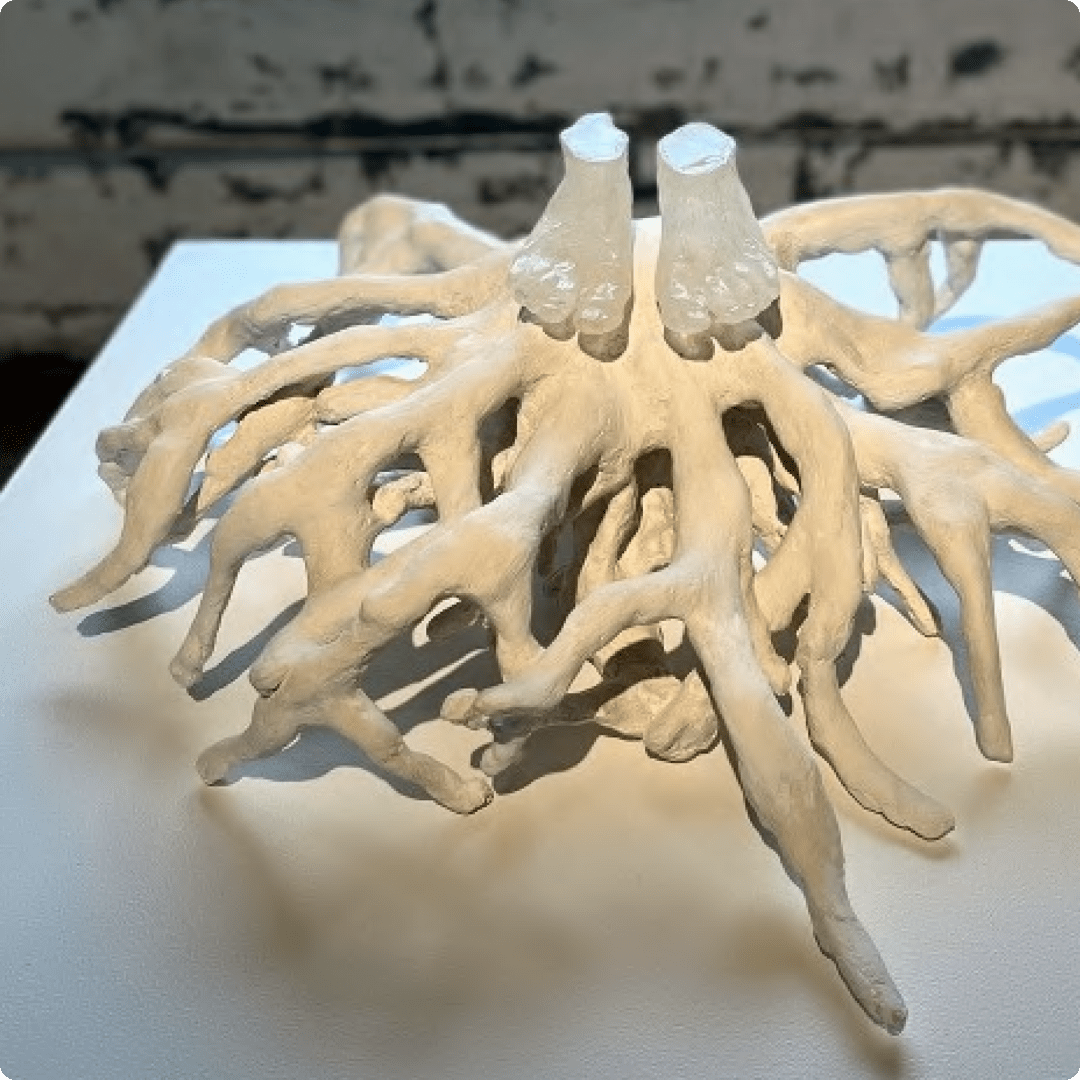
Layered lighting enhancing three-dimensional artwork depth
Museum lighting for sculptures involves a more dynamic approach compared to flat artwork. Sculptures require directional lighting that enhances form, shadow, and material texture.
Best practices for sculpture lighting include:
- Multiple directional museum lights
- Soft shadow control
- Layered lighting angles
- Focused spotlighting on key surfaces
A carefully positioned museum light can reveal intricate details in bronze, marble, or mixed-media sculptures without flattening their dimensional presence.
Museum Display Case Lighting and Micro Precision Illumination

Low heat LED protecting sensitive display objects
Museum display case lighting is one of the most specialised applications of museum lighting. Artefacts inside cabinets often include delicate materials such as textiles, manuscripts, jewellery, or historical objects that require extremely controlled light exposure.
Miniature museum lights, including ultra-compact zoom fixtures, are commonly used inside display cabinets because they:
- Produce minimal heat
- Allow pinpoint beam control
- Reduce internal glare
- Protect sensitive materials
- Maintain visual focus on the object
Because these lights can be as small as a coin yet still offer zoom precision, they are ideal for curators who want subtle, refined illumination without visible fixture dominance.
Museum Light and Colour Rendering (CRI 95–97+)

High CRI lighting showing accurate red pigment tones
Colour Rendering Index (CRI) is one of the most critical technical specifications in museum lighting. A high CRI museum light ensures that artwork colours appear natural and true to the artist’s original intent.
Recommended CRI standards:
- CRI 90+: Acceptable for general gallery lighting
- CRI 95+: Professional museum lighting standard
- CRI 97+: Premium museum-grade installations
Low-CRI lighting can distort reds, blues, and subtle tonal gradients, which is unacceptable in professional museum environments where colour accuracy is essential.
Museum Lighting and Artwork Material Sensitivity

Adjustable beam lighting mixed-media artwork safely
Different materials respond differently to light exposure, which is why museum lighting design must be tailored to the specific artwork type.
Material-specific considerations:
- Oil paintings tolerate moderate lux levels with controlled heat
- Watercolours require lower light exposure due to sensitivity
- Textiles and paper need strict lux limitations
- Photography prints require glare-controlled lighting
- Mixed media benefits from adjustable beam angles
A museum light system must be calibrated not only for visual presentation but also for long-term conservation.
Museum Lighting Systems and Layered Illumination Approach

Structured lighting hierarchy guiding viewer experience
Professional museum lighting rarely relies on a single type of fixture. Instead, it uses a layered lighting strategy that combines ambient, accent, and display lighting to create a cohesive visual experience.
A layered museum lighting system typically includes:
- Ambient lighting for spatial balance
- Accent museum lights for key artworks
- Cabinet lighting for enclosed displays
- Track lighting for flexibility
- Ceiling lights for architectural integration
This structured approach ensures the space feels immersive without overwhelming the artwork with excessive brightness.
Museum Light and Glare Reduction Techniques

Anti-glare lens reducing reflections on framed artwork
Glare is one of the biggest issues in poorly designed museum lighting. Reflections from glass frames, varnished paintings, and polished surfaces can significantly reduce viewing comfort.
Professional museum lights use advanced glare reduction features such as:
- Honeycomb louvre accessories
- Anti-glare lenses
- Precise beam angles
- Indirect lighting techniques
These features allow viewers to experience artwork clearly without visual discomfort or distracting reflections.

Museum Lighting for Modern Galleries and Contemporary Spaces

Sleek minimalist spotlight in contemporary gallery space
Contemporary museums and galleries are increasingly integrating architectural museum lighting into their overall design language. Rather than visible fixtures dominating the ceiling, modern museum lights are sleek, minimal, and performance-driven.
Modern museum lighting trends include:
- Ultra-discreet ceiling-mounted fixtures
- Precision track lighting systems
- Minimalist spotlight designs
- High-CRI LED technology
- Smart dimming controls
This evolution reflects the growing emphasis on presentation quality, conservation safety, and architectural aesthetics.
Future Innovations in Museum Light Technology

Adaptive beam shaping spotlight adjusting artwork illumination dynamically
Museum lighting technology continues to advance with innovations in optics, LED engineering, and smart control systems. These developments are allowing museums and collectors to achieve even greater precision and conservation performance.
Emerging trends in museum lighting include:
- Programmable dimming scenes
- Tunable white colour temperature systems
- Smart lux monitoring
- Adaptive beam shaping optics
- Remote lighting calibration
As exhibitions become more immersive and visually curated, museum lights will continue to evolve as a core tool for storytelling, conservation, and high-end artwork presentation.
Ultimately, a true museum light is not about brightness or decoration. It is about control, precision, and respect for the object on display. When properly specified and positioned, fewer, higher-quality museum lights will always outperform excessive general lighting, creating a refined environment where the artwork remains the undisputed focal point.
FAQ: Museum Light and Museum Lighting
What is a museum light?
A museum light is a specialised lighting fixture designed to illuminate artwork and artefacts with precision, high colour accuracy, and conservation-safe illumination.
What lighting do museums use for paintings?
Museums typically use high-CRI LED museum lights, including track lighting, spotlights, and precision ceiling-mounted fixtures with controlled beam angles.
Are museum lights safe for artwork?
Yes. Professional museum lighting uses low UV, low heat LED technology to minimise fading and long-term damage to sensitive artworks.
Why do museums use dim lighting?
Museums use controlled, lower light levels to protect artwork from excessive exposure while maintaining visual clarity and focus.
What is museum-grade lighting?
Museum-grade lighting refers to high-precision lighting systems with ultra-high CRI, optical beam control, stable output, and conservation-focused design.
How do museums light display cabinets?
Museums use compact cabinet lights with pinpoint beam control, often miniature zoom fixtures, to highlight specific artefacts without flooding the entire display with light.
What colour temperature is best for museum lighting?
Most museum lighting systems use 2700K to 3000K to ensure accurate colour representation and natural visual warmth.
What CRI should a museum light have?
A CRI of 95+ is recommended for museum lighting to ensure true colour rendering and accurate artwork presentation.
Do museum lights damage paintings over time?
High-quality LED museum lights significantly reduce the risk of damage because they emit minimal UV radiation and low heat compared to traditional lighting.
Where can museum lighting be used outside museums?
Museum lighting is widely used in galleries, luxury homes, showrooms, and private collections to achieve professional, gallery-quality artwork illumination.
Highly Rated by Clients Across Residential and Commercial Projects