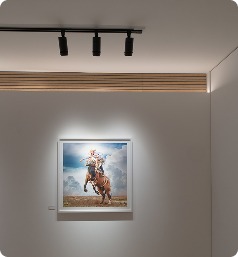
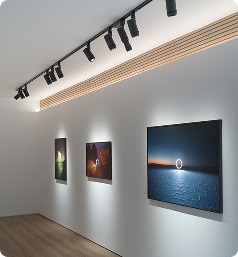
Contemporary gallery interior with precision track spotlights
When professionals search for art gallery lighting fixtures, they are not looking for decorative lights. They are looking for precision tools that reveal artwork properly, protect the collection, and elevate the viewing experience to a museum standard.
In a true gallery environment, lighting is not background design. It is a curatorial decision. The right fixture can enhance color accuracy, texture, and depth. The wrong fixture can flatten a masterpiece, create glare, or even contribute to long-term damage.
This is why serious galleries, museums, and collectors invest in specialised art gallery lighting systems rather than generic lighting fixtures.
What Are Art Gallery Lighting Fixtures?

Adjustable spotlight mounted along sleek ceiling track
Art gallery lighting fixtures are purpose-built luminaires designed specifically to illuminate artwork with controlled beam angles, high color accuracy, and minimal glare. Unlike standard ceiling lights, these fixtures focus light exactly where it is needed: on the artwork itself.
Professional lighting systems for art gallery installations typically include:
- Track-mounted spotlights
- Ceiling mounted art lights
- Adjustable precision fixtures
- Museum-grade micro lighting for cabinets
The goal is simple: highlight the art, not the light source.

4.9-Star Google Review for Our Art Lighting Solutions
Why Standard Lighting Fails in Art Galleries
Many galleries make the mistake of using general architectural lighting instead of high-performance fixtures for gallery lighting. While this may brighten the room, it rarely enhances the artwork.
Common issues with non-specialised lighting:
- Uneven illumination across artworks
- Harsh glare on framed pieces
- Color distortion from low CRI lights
- Excess light spill on walls and floors
- Over-lighting instead of focused lighting
Professional gallery lighting design focuses on control, not brightness. Less light, precisely placed, almost always delivers a more premium visual result.
Types of Art Gallery Lighting Fixtures Used in Professional Spaces

Lighting fixture delivering precise cabinet artwork illumination
1. Track Lighting Systems for Galleries
Art gallery track lighting systems are the most widely used solution in modern galleries because they offer flexibility, scalability, and precise aiming.
With a gallery lighting track, curators can:
- Adjust beam direction for each artwork
- Reposition fixtures as exhibitions change
- Control light intensity and focus
- Maintain clean ceiling aesthetics
This makes track-based gallery lighting fixtures ideal for rotating exhibitions and high-end residential collectors.
2. Ceiling Mounted Art Lighting Fixtures
Ceiling mounted art lighting fixtures are commonly used in minimalist galleries where visual clutter must be reduced. These fixtures integrate seamlessly into the architecture while still delivering focused illumination.
They are especially effective for:
- Large paintings
- Museum halls
- Contemporary galleries
- Luxury private collections
When paired with adjustable optics, ceiling-mounted fixtures can achieve museum-grade precision without visible track systems.
3. Museum Art Lighting Fixtures for Paintings
Museum lighting fixtures are designed to meet strict conservation and visual standards. These systems prioritise:
- High CRI (typically 95+)
- Controlled lux levels
- Minimal UV and IR output
- Precise beam shaping
Museum-grade art lighting ensures that paintings, photographs, and mixed media artworks are displayed safely while maintaining their true colors and textures.
4. Micro Fixtures for Cabinets and Display Cases
In museums and high-end galleries, smaller artworks or sculptures are often displayed in cabinets. This requires ultra-compact museum lighting fixtures such as miniature zoom lights that can pinpoint illumination without overwhelming the display.
These micro fixtures are often:
- Coin-sized
- Zoom adjustable
- Hidden within cabinetry
- Extremely low glare
They allow curators to highlight objects without visible light sources distracting from the piece.
Art Gallery Lighting Systems vs Standard Lighting Fixtures

Gallery wall lit intentionally with controlled spacing
As outlined in our complete guide to lighting art galleries and exhibitions, a professional system is not just about fixtures. It involves a coordinated approach to beam control, color temperature selection, and lighting hierarchy to ensure the art is the primary focus.
Standard lighting:
- Lights the room
Gallery lighting systems:
- Light the artwork intentionally
Professional art gallery lighting systems are designed around the collection, not the ceiling layout.
The Role of Color Temperature in Art Gallery Lighting Fixtures

Neutral gallery lighting across contemporary artworks
Color temperature is one of the most critical elements in gallery lighting design. Most professional galleries use lighting in the 2700K to 3500K range depending on the artwork.
Warm light (2700K–3000K):
- Ideal for oil paintings and classical art
- Enhances warmth and richness
Neutral light (3000K–3500K):
- Best for contemporary art
- Balanced and natural presentation
Museum lighting guidelines often prioritise consistent color temperature across exhibitions to maintain visual harmony.
Beam Angle and Focus: The Hidden Power of Professional Fixtures

Wide beam washing gallery wall surface
One of the biggest differences between generic lighting fixtures and true art gallery lighting fixtures is beam control.
Wide beam angles flood the wall with light but reduce impact.
Narrow adjustable beams create focus and drama.
Professional gallery fixtures often feature:
- Zoom optics
- Interchangeable lenses
- Adjustable beam spreads
- Anti-glare shielding
This allows curators to adapt lighting based on artwork size and placement.
Our Product Range for Art Gallery Lighting Fixtures (Zoom, Multi, Deluxe, Mini Zoom)

Museum-grade spotlights installed in modern exhibition
As art lighting specialists, our product range is designed specifically for galleries, museums, and serious collectors who require precision lighting rather than decorative solutions.
Zoom Fixtures
Zoom fixtures allow curators to adjust the beam angle from wide to pinpoint. This makes them ideal for galleries displaying artworks of varying sizes. Instead of installing multiple fixture types, one adjustable solution can adapt to different pieces.
Multi Fixtures
Multi fixtures are engineered for larger gallery spaces and exhibition walls. They provide powerful, controlled illumination while maintaining excellent color rendering and low glare. These are commonly used in professional gallery lighting systems where consistency is essential.
Deluxe Fixtures
Deluxe fixtures represent a premium tier of art gallery lighting fixtures, offering superior optics, refined beam control, and museum-grade light quality. They are ideal for flagship galleries, high-value collections, and architectural art spaces.
Mini Zoom (Cabinet and Display Use)
For museum cabinets and display cases, ultra-compact Mini Zoom fixtures provide pinpoint lighting while remaining visually discreet. Their small size and zoom functionality allow curators to highlight specific artworks without excessive lighting spill.
Gallery Lighting Design Principles Used by Professionals

Strategic fixture spacing across gallery ceiling
Understanding how to design effective gallery lighting layouts starts with a "less is more" philosophy
Less Light, Better Focus
Contrary to common belief, professional galleries do not use excessive lighting. Instead, they use fewer fixtures with higher precision.
Layered Lighting Hierarchy
A well-designed gallery lighting system includes:
- Ambient lighting (subtle)
- Accent lighting (art-focused)
- Feature lighting (hero pieces)
Consistent Fixture Spacing
Even spacing ensures visual balance across gallery walls and prevents uneven illumination.
Art Gallery Lighting Fixtures for Different Artwork Types

Directional lighting revealing sculpture texture depth
Paintings
Require focused, glare-free lighting with high color accuracy.
Photography
Needs even illumination to avoid reflections and color distortion.
Sculptures
Benefit from directional lighting that reveals texture and form.
Mixed Media Art
Often requires adjustable gallery lighting fixtures due to varied surfaces and finishes.
Common Mistakes When Choosing Gallery Light Fixtures
One of the most frequent errors is selecting fixtures based on aesthetics rather than performance.
Major mistakes include:
- Using residential lighting fixtures in galleries
- Choosing low CRI LED lights
- Over-lighting walls instead of artworks
- Ignoring beam angle control
- Installing fixed lights instead of adjustable systems
These mistakes reduce the perceived value of the artwork and the professionalism of the space.
Museum Lighting Guidelines That Galleries Should Follow

Precision beam angled to reduce glare
Even private galleries benefit from museum lighting standards. Key guidelines include:
- Controlled lux levels for sensitive artworks
- High CRI lighting (90+ minimum, ideally 95+)
- Minimal UV emission
- Stable color temperature
- Precise directional lighting
Following museum lighting principles ensures both preservation and presentation quality.
FAQ: Art Gallery Lighting Fixtures
1. What are art gallery lighting fixtures?
They are specialised lighting fixtures designed to illuminate artwork with precision, high color accuracy, and minimal glare.
2. What is the best lighting for an art gallery?
Adjustable track lighting and museum-grade spotlights with high CRI and controlled beam angles are considered best.
3. Are LED fixtures suitable for gallery lighting?
Yes, high-quality LED art lighting fixtures are now the industry standard due to efficiency and color stability.
4. What CRI should gallery lighting fixtures have?
Ideally 95+ CRI to accurately reveal colors in artwork.
5. Do museums use track lighting?
Yes, museum track lighting systems are widely used for flexibility and precise artwork illumination.
6. How many lighting fixtures does a gallery need?
Fewer high-quality fixtures with precise focus are better than many generic lights.
7. What color temperature is best for art galleries?
Typically between 2700K and 3500K depending on the artwork style.
8. Can gallery lighting damage artwork?
Improper lighting with UV exposure and excessive lux levels can contribute to long-term damage.
9. What is museum-grade lighting?
Lighting designed to meet conservation standards while optimally presenting artwork.
10. Should gallery lighting be adjustable?
Yes, adjustable fixtures allow precise focus for different artworks.
11. Are ceiling mounted art lighting fixtures effective?
Yes, especially in minimalist galleries where track systems are not preferred.
12. What beam angle is best for artwork?
Narrow to adjustable beam angles are ideal for highlighting art.
13. What is a gallery lighting system?
A coordinated setup of fixtures designed specifically to illuminate artworks rather than general spaces.
14. Do professional galleries use decorative lighting?
Rarely. Functional, precision lighting is prioritised over decorative aesthetics.
15. Is warm or neutral light better for art?
It depends on the artwork, but warm to neutral tones are most commonly used.
16. Can lighting improve art perception?
Yes, proper lighting dramatically enhances depth, color, and texture.
17. What lighting fixtures do museums use for paintings?
Museum-grade track lights, spotlights, and micro cabinet lighting.
18. Are micro lights used in galleries?
Yes, especially for cabinets and small display pieces.
19. Why is glare control important in gallery lighting?
Glare reduces visibility and distracts from the artwork.
20. How high should gallery light fixtures be installed?
Typically aligned with ceiling height and artwork scale for optimal beam focus.
21. Is recessed lighting good for galleries?
Only when combined with adjustable optics and art-focused beam control.
22. Do galleries use different lighting for different artworks?
Yes, lighting is often tailored to the medium and size of each piece.
23. What makes a lighting fixture museum quality?
High CRI, precise optics, low glare, and conservation-safe output.
24. Can gallery lighting fixtures be used at home?
Yes, many collectors use professional art lighting in residential spaces.
25. What is the difference between gallery lighting and regular lighting?
Gallery lighting is precise and artwork-focused, while regular lighting is general and ambient.
26. Should gallery lighting be dimmable?
Yes, dimming allows fine-tuning of illumination levels.
27. What fixtures are best for large gallery walls?
Adjustable track lighting systems with zoom functionality.
28. Is natural light good for art galleries?
Controlled natural light can work, but artificial precision lighting is more reliable.
29. How do curators choose lighting fixtures?
Based on artwork type, conservation needs, and exhibition layout.
30. Why do high-end galleries invest in specialised lighting fixtures?
Because lighting directly affects artwork presentation, perceived value, and viewer experience.
Advanced Considerations When Specifying Art Gallery Lighting Fixtures for High-End Spaces

Gallery environment with minimalist lighting concept
For serious galleries, collectors, and museums, choosing art gallery lighting fixtures is not just a technical decision. It is a curatorial one. Lighting defines how art is perceived, how long it lasts, and how professionally the space is experienced by visitors and buyers.
In premium gallery environments, lighting is treated as part of the exhibition design rather than a background utility. This is why leading galleries invest in specialised gallery lighting systems instead of generic architectural lighting.
The Relationship Between Fixture Quality and Artwork Value

Dramatic lighting enhancing depth of painting
One of the most overlooked truths in gallery design is that lighting directly influences the perceived value of artwork. A poorly lit painting can appear flat, dull, and lifeless even if it is worth tens of thousands of dollars. Conversely, a properly illuminated artwork gains depth, richness, and presence.
High-quality art gallery light fixtures:
- Enhance color saturation
- Reveal brush texture and detail
- Reduce unwanted reflections
- Create visual hierarchy on the wall
For galleries selling high-value works, this visual impact can influence buyer perception and purchasing decisions.
Gallery Lighting Fixtures for Large-Scale Art Walls

Consistent beam angles illuminating multiple canvases
Large gallery walls require a different approach than single artwork installations. Instead of using multiple scattered light sources, professional gallery lighting design focuses on controlled, evenly spaced fixtures that create consistency across the entire display.
Best practices include:
- Using adjustable gallery track lighting fixtures
- Maintaining consistent beam angles
- Avoiding hot spots and dark patches
- Aligning fixtures with artwork centerlines
This approach ensures the entire gallery wall feels cohesive and professionally curated.
Lighting Fixtures for Rotating Exhibitions and Flexible Galleries

Flexible track system supporting evolving displays
Modern galleries frequently rotate exhibitions, which means fixed lighting solutions often become inefficient. This is where flexible art gallery lighting systems, especially track-based fixtures, become essential.
Adjustable gallery lighting fixtures allow curators to:
- Reposition lights without rewiring
- Adapt to different artwork sizes
- Reconfigure exhibition layouts quickly
- Maintain consistent lighting quality across changing displays
This flexibility is one of the main reasons why art gallery track lighting systems dominate professional gallery environments worldwide.
Precision Optics and Why They Matter in Gallery Lighting Fixtures

Close-up of precision lens inside spotlight
Not all lighting fixtures are equal. In professional art lighting, optics determine how clean, focused, and controlled the light appears on the artwork.
Premium art gallery lighting fixtures feature:
- Precision lenses
- Anti-glare shielding
- Adjustable zoom optics
- Controlled light spill
This level of optical control ensures that light highlights the artwork instead of bleeding onto surrounding walls or ceilings.
Using Fewer, Higher-Quality Fixtures: A Professional Philosophy

Minimal ceiling fixtures creating strong focal points
A common misconception is that more lighting equals better presentation. In reality, experienced lighting consultants often recommend fewer fixtures with higher precision.
Why fewer fixtures work better:
- Reduces visual clutter on ceilings
- Creates stronger focal points on artwork
- Improves energy efficiency
- Enhances gallery atmosphere
In museum lighting and high-end gallery lighting design, restraint is often the key to achieving a refined visual outcome.
Integrating Art Gallery Lighting Fixtures into Architectural Design

Architectural track blending into ceiling lines
Architects and interior designers increasingly integrate art gallery lighting fixtures directly into the architectural concept of the space. Instead of treating lighting as an afterthought, it becomes part of the gallery’s visual identity.
This can include:
- Recessed art lighting fixtures
- Ceiling-mounted precision spotlights
- Minimalist track systems
- Hidden cabinet lighting
When executed properly, the lighting disappears visually while the artwork becomes the sole focal point.
Lighting Fixtures for Different Gallery Environments

Commercial gallery with adjustable track lighting
Commercial Art Galleries
Require flexible gallery lighting systems that support frequent exhibition changes and varied artwork styles.
Private Collector Galleries
Often prioritise museum-grade lighting fixtures with extremely high color accuracy and refined beam control.
Museums
Use highly specialised museum art lighting fixtures that comply with conservation standards and strict lux level guidelines.
Hybrid Residential Galleries
Luxury homes displaying fine art often adopt professional gallery lighting fixtures to achieve a museum-like presentation.
Glare Reduction in Art Gallery Lighting Fixtures

Angled spotlight preventing glass reflection
Glare is one of the biggest enemies of artwork presentation. Even the most expensive artwork can lose impact if glare reflections distract the viewer.
Professional art gallery lighting fixtures minimise glare through:
- Deep-set light sources
- Anti-glare optics
- Precise beam aiming
- Correct mounting angles
This is particularly important for artworks behind glass, photography, and glossy mixed media pieces.
The Importance of Fixture Placement and Spacing

Evenly aligned fixtures across exhibition wall
Correct placement of gallery light fixtures is just as important as the fixture itself. Poor positioning can create uneven illumination, harsh shadows, or washed-out artworks.
General placement principles include:
- Aligning fixtures with artwork center
- Maintaining consistent spacing across walls
- Adjusting beam angles based on artwork size
- Avoiding direct overhead glare angles
Proper spacing ensures that each artwork receives balanced and intentional illumination.
Energy Efficiency and Longevity of Modern Gallery Lighting Fixtures

Energy-efficient gallery lighting installation
Modern LED art gallery lighting fixtures are designed to be both energy-efficient and long-lasting. This makes them ideal for galleries that require extended operating hours without excessive maintenance.
Benefits of high-quality LED gallery lighting:
- Lower energy consumption
- Reduced heat output near artworks
- Long operational lifespan
- Stable color consistency over time
This is especially important for museums and galleries displaying sensitive or valuable collections.
Museum-Grade Lighting vs Standard Gallery Fixtures

Conservation-focused spotlight illuminating painting
While all museum lighting fixtures can be used in galleries, not all gallery fixtures meet museum standards. Museum-grade lighting prioritises conservation, precision, and long-term stability.
Key differences include:
- Higher CRI ratings
- Stricter lux level control
- Superior optical precision
- Advanced glare management
For galleries showcasing high-value or delicate artworks, museum-quality lighting fixtures are often the preferred choice.
Lighting Hierarchy in Professional Gallery Spaces

Feature artwork highlighted brighter than others
Professional galleries use a layered lighting hierarchy rather than a single lighting type. This creates depth and visual sophistication throughout the space.
Typical hierarchy:
- Ambient lighting for overall space balance
- Accent lighting for artworks
- Feature lighting for hero pieces
Art gallery lighting fixtures primarily function as accent lighting, ensuring the artwork remains the focal point of the environment.
How Art Gallery Lighting Fixtures Influence Visitor Experience

Exhibition flow shaped by directional lighting
Lighting directly shapes how visitors engage with artwork. Poor lighting can cause viewers to walk past pieces quickly, while refined lighting encourages longer engagement and deeper appreciation.
Well-designed gallery lighting:
- Guides the viewer’s eye
- Creates emotional atmosphere
- Enhances visual storytelling
- Improves exhibition flow
This is why leading galleries treat lighting as an essential part of the curatorial experience.

Maintenance and Long-Term Performance of Gallery Lighting Systems

Stable color output across exhibition space
High-quality art gallery lighting fixtures require minimal maintenance when properly installed and specified. However, regular checks are still recommended to maintain optimal performance.
Maintenance considerations:
- Cleaning lenses and optics
- Checking beam alignment
- Monitoring dimming controls
- Ensuring consistent color output
Reliable gallery lighting systems are designed for stability and long-term use without frequent replacement.
Choosing the Right Art Gallery Lighting Fixtures for Your Collection
Selecting the right fixture options used in gallery lighting depends on multiple factors including artwork size, wall layout, ceiling height, and exhibition goals.
Key selection factors:
- Artwork medium (painting, photography, sculpture)
- Ceiling type and mounting options
- Desired beam control
- Color temperature requirements
- Overall gallery lighting design concept
Consulting with an art lighting specialist simplifies the process of choosing the right fixtures for illuminating artwork, ensuring the final system is tailored to your specific collection rather than relying on a generic solution.
Future Trends in Art Gallery Lighting Fixtures

Modular track lighting system in modern space
The evolution of art gallery lighting fixtures is moving toward greater precision, minimalism, and smart control integration. Modern galleries are adopting lighting systems that offer enhanced flexibility without compromising aesthetics.
Emerging trends include:
- Ultra-compact precision fixtures
- Advanced dimming and control systems
- Modular gallery lighting systems
- Higher CRI LED technology
- Minimalist architectural integration
These innovations allow galleries to maintain a clean visual environment while achieving superior artwork illumination.
Extended FAQ: Art Gallery Lighting Fixtures
31. What lighting fixtures do professional galleries use?
Most professional galleries use adjustable track lighting fixtures and museum-grade spotlights with high CRI.
32. Are gallery lighting fixtures different from home lighting?
Yes, they are designed specifically for artwork illumination rather than general room lighting.
33. How long do LED gallery lighting fixtures last?
High-quality fixtures can last 30,000 to 50,000 hours or more.
34. Can gallery lighting be customised for each artwork?
Yes, adjustable fixtures allow precise lighting control for individual pieces.
35. Do gallery lighting fixtures need dimming capability?
Dimming is highly recommended for fine-tuning light levels across exhibitions.
36. What makes a gallery lighting system professional?
Precision optics, high CRI, glare control, and flexible adjustability.
37. Are track lighting fixtures suitable for art galleries?
Yes, they are one of the most widely used solutions in gallery environments.
38. Should gallery lighting fixtures be visible or discreet?
Ideally discreet, so the focus remains on the artwork.
39. How do galleries avoid shadows on artwork?
By carefully positioning fixtures and adjusting beam angles.
40. Is uniform lighting important in galleries?
Yes, consistent illumination improves visual balance across displays.
41. Can poor lighting reduce artwork impact?
Absolutely, poor lighting can make even valuable art appear flat and dull.
42. What is the best mounting option for gallery lighting fixtures?
Track-mounted and ceiling-mounted options are most common.
43. Do museums use different fixtures than galleries?
Museums often use more conservation-focused lighting fixtures with stricter standards.
44. Are specialised optics necessary for gallery lighting?
Yes, precision optics ensure clean and controlled illumination.
45. How does lighting affect art preservation?
Excessive light exposure can degrade pigments and materials over time.
46. What lux levels are recommended for gallery lighting?
Typically controlled based on artwork sensitivity and conservation needs.
47. Can lighting fixtures be repositioned easily in galleries?
Yes, especially with track lighting systems designed for flexibility.
48. Are gallery lighting fixtures suitable for sculptures?
Yes, directional fixtures are ideal for highlighting form and texture.
49. Should lighting temperature vary across exhibitions?
Consistency is generally preferred unless specific artworks require variation.
50. What is accent lighting in galleries?
Accent lighting focuses directly on artworks to highlight them visually.
51. How do curators decide fixture placement?
Based on artwork scale, wall layout, and viewing angles.
52. Do gallery lighting fixtures produce heat?
High-quality LED fixtures produce minimal heat compared to traditional lighting.
53. Is recessed lighting good for galleries?
It can be effective when combined with adjustable art-focused optics.
54. What role does beam angle play in gallery lighting?
It determines how focused or wide the illumination appears on the artwork.
55. Are premium lighting fixtures worth the investment?
Yes, especially for high-value collections and professional gallery environments.
56. Can lighting enhance texture in paintings?
Yes, directional lighting can reveal brush strokes and surface depth.
57. How often should gallery lighting systems be reviewed?
Periodic reviews ensure optimal alignment and consistent performance.
58. What type of lighting is best for gallery exhibitions?
Adjustable, high-CRI LED gallery lighting fixtures designed for artwork.
59. Do galleries use different lighting for different exhibitions?
Yes, lighting setups are often adapted based on the exhibition theme and artwork type.
60. Why is lighting considered a curatorial tool in galleries?
Because it directly influences how artwork is perceived, experienced, and valued by viewers.
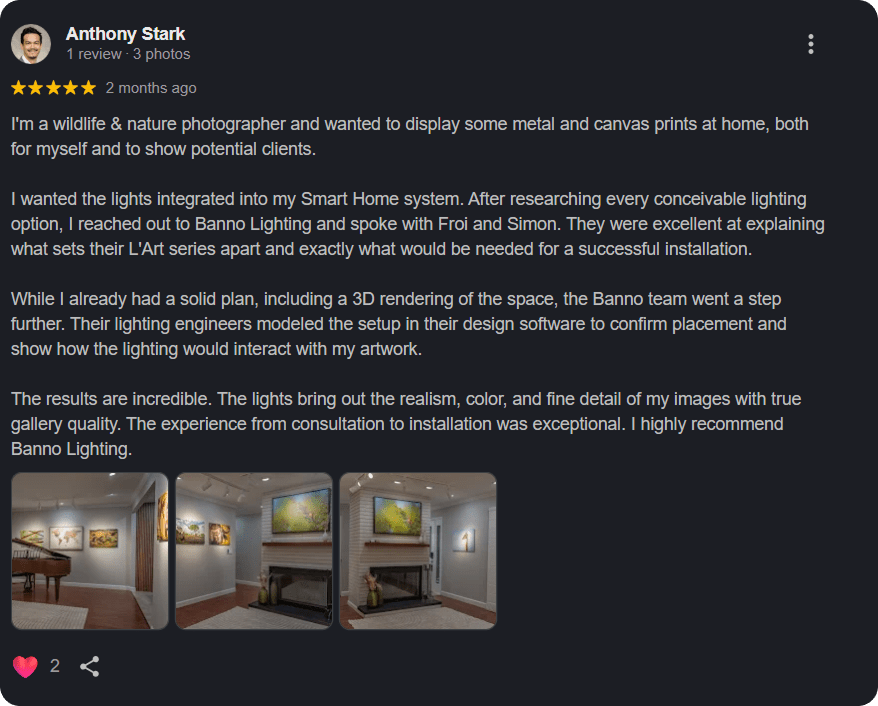
Real Feedback from Art Collectors