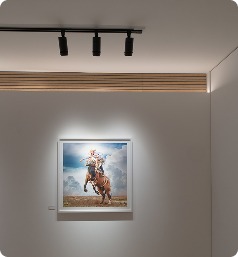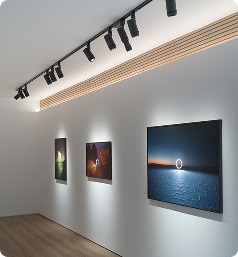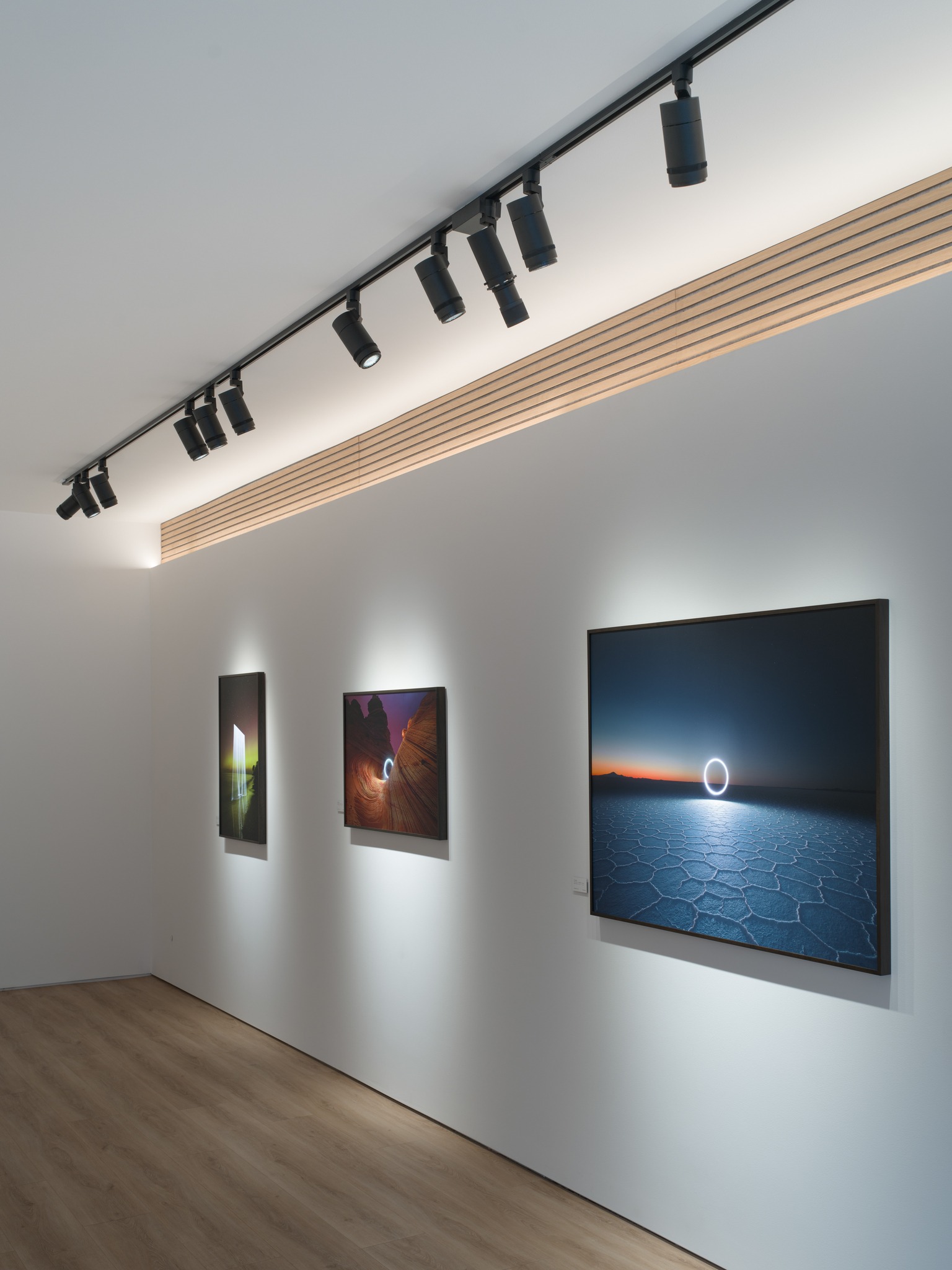
Professional track lighting system highlighting artwork.
Lighting is one of the most powerful forces in any space that displays artwork. It decides how color is perceived, how texture is revealed, how depth is experienced, and how valuable a piece feels to a viewer. Professional art track lighting is not about making a room bright. Instead, it is about delivering professional art gallery lighting systems for artwork that provide control, consistency, and flexibility, delivered in a way that feels calm and invisible so the art stays the hero.
Art is different from furniture or general interior design. People stand closer to it. They look longer. They compare pieces side by side. Many works sit behind glass. Some surfaces are glossy, some matte, some textured, some metallic. The lighting must therefore be accurate and controlled. If it is not, the artwork can look flat, reflections can block detail, and the gallery can feel unintentionally cheap even if the work is world class.
That is why art track lighting is the preferred approach for professional presentation. It gives you the ability to aim light precisely, adjust beam spread, control glare, and reconfigure the layout as exhibitions change. It is also the best long term infrastructure choice because the track remains as a backbone while the fixture heads and optics can be adapted over time.
This guide is a definitive guide to lighting art and gallery spaces, offering a system level explanation of art track lighting. It covers how track systems work, why led track lighting for art gallery environments is now the standard, how art gallery track lighting supports changing exhibitions, how to think about beam angles and optics, and how to integrate lighting into different aesthetics including art deco track lighting environments. It also explains our fixture platforms, Zoom, Multi, and Deluxe, and the way we guide clients through the process from planning to final setup. At the end, you will find a publish ready FAQ section.
What Art Track Lighting Is
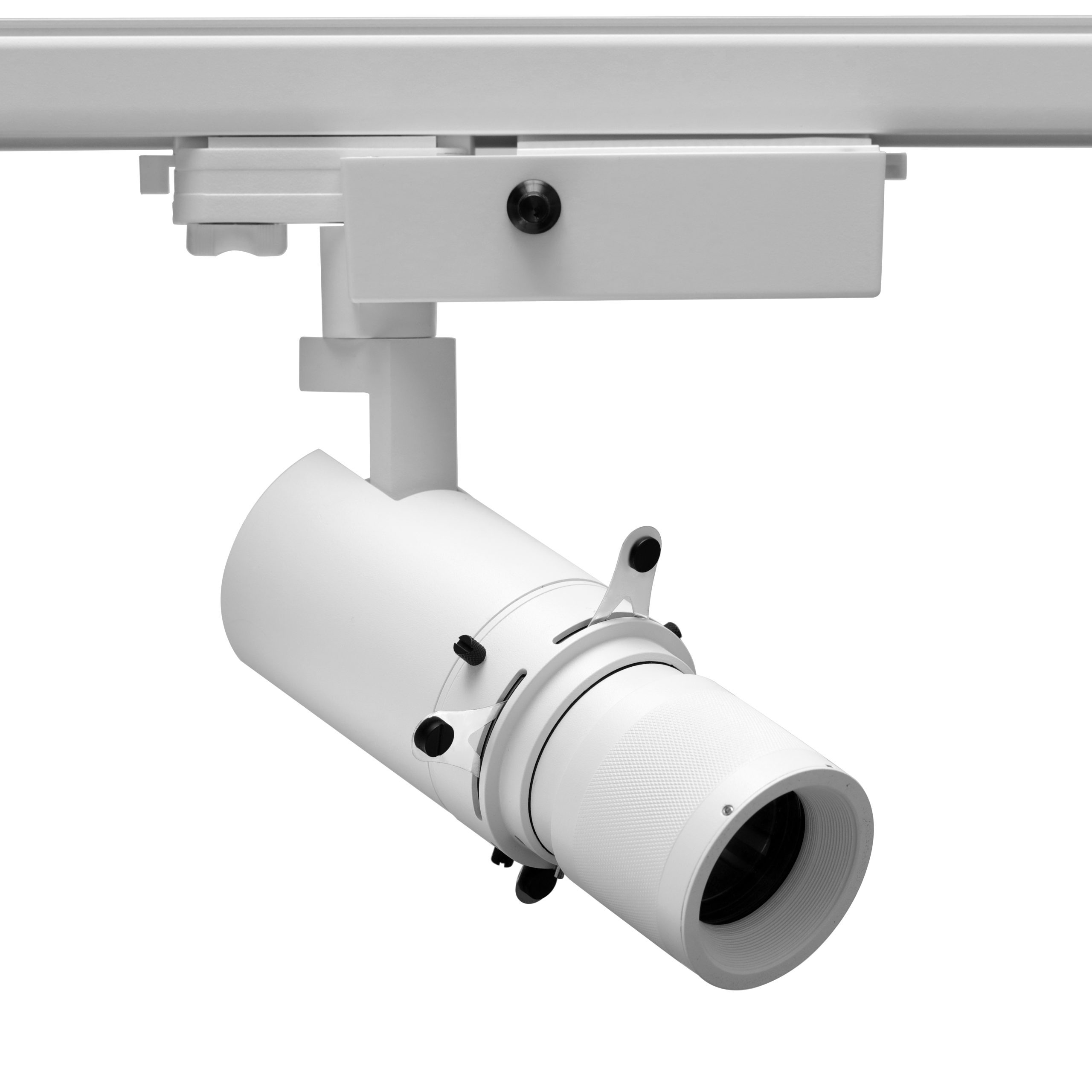
Track lighting heads mounted on a sleek rail for adjustable gallery illumination.
Art track lighting is an adjustable lighting system where fixtures connect to an electrified track mounted on the ceiling or structural elements. The track supplies power along its length, allowing fixtures to be placed anywhere on the rail, moved as needed, and aimed precisely onto artwork.
The word track matters because it changes how you work. With track you are not locked into fixed points on the ceiling. You are free to position light where it is needed based on the artwork, not based on where an electrician happened to install a downlight. That means the lighting can follow the exhibition rather than forcing the exhibition to follow the lighting.
Track also creates a clean ceiling language. Instead of a cluttered grid of fittings, you can plan track lines intentionally, parallel to walls, aligned with the architecture, or configured as a flexible grid across the space. The result feels professional and deliberate.

4.9-star rated by art collectors and gallery professionals
Why Art Track Lighting Beats Fixed Lighting
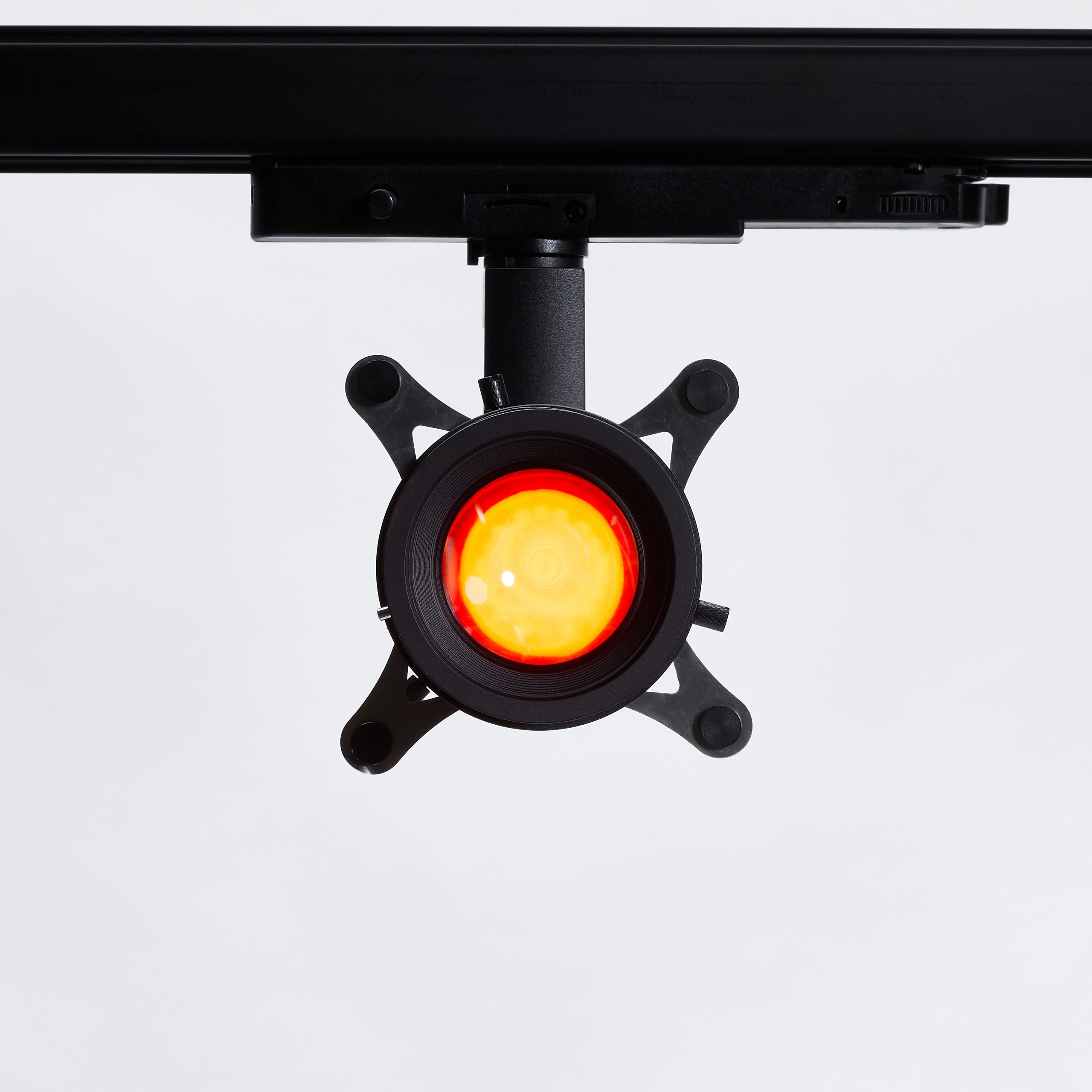
Adjustable track heads repositioned to accommodate changing artwork and gallery floor plans.
Fixed ceiling lighting is static. Art is not. Even in a gallery that does not rotate exhibitions quickly, there are still changes. A new work arrives. A collector asks to see pieces in different groupings. A featured wall becomes a seasonal show. A sculpture plinth moves. Fixed lighting can only do one thing well, and only for one layout.
Art track lighting is designed for change, which is why flexible track lighting setups for art gallery environments are preferred over fixed ceiling lighting. You can slide a fixture down the track, rotate it, adjust its angle, and tune its beam. You can add extra heads when you have a dense hang. You can remove heads when you want a minimal, high end feel. You can keep the track infrastructure in place for years while upgrading fixture heads as technology advances.
This is why people searching for the best track lighting for art gallery projects almost always end up with a track based system. It is the most flexible and most future ready option for professional art presentation.
Why Led Track Lighting for Art Gallery Spaces Is Now the Standard
Energy-efficient LED fixtures providing high-quality light with minimal heat and UV.
Most modern professional installations use led track lighting for art gallery spaces because LED technology has evolved into the best tool for the job.
LED benefits that matter specifically for art include:
- Lower heat output which improves comfort and reduces stress on artwork
- Minimal UV output compared to older sources
- High efficiency and long life which reduces maintenance interruptions
- Advanced optical control allowing clean beam shapes and reduced spill
- Consistency over time with stable output when using quality components
The big point is not only efficiency. The bigger point is control. Modern LED optics allow you to place light precisely on the artwork plane without blasting the surrounding walls and floor. That precision is what makes a space look premium.
A well specified LED system also reduces the constant maintenance cycle that older halogen systems create. In a gallery, changing lamps is not just a cost. It is disruption. It changes the look of the room, creates inconsistency, and often leads to uneven color as lamps age differently. A high quality LED platform helps keep presentation stable.
Art Gallery Track Lighting and the Reality of Changing Exhibitions
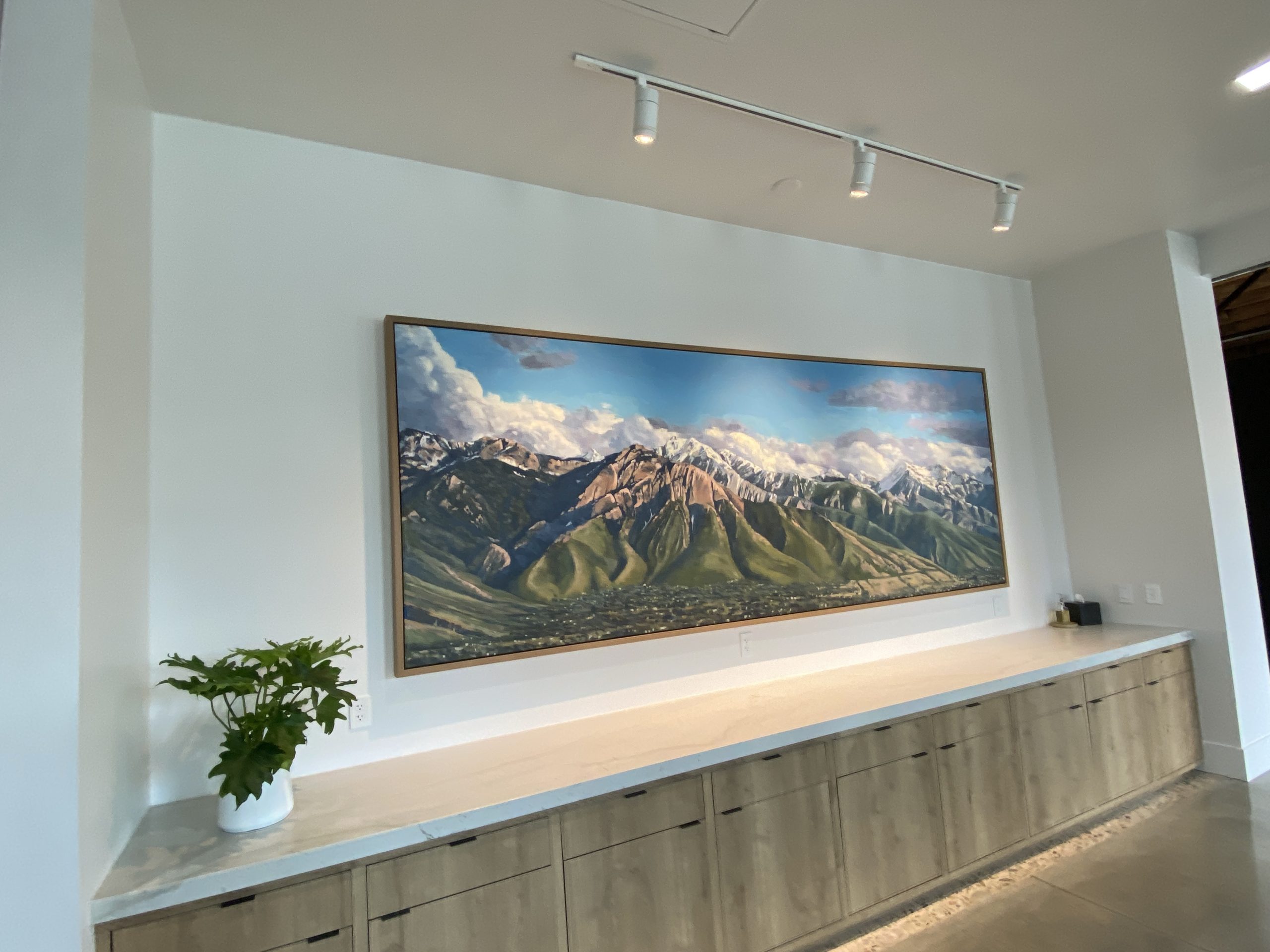
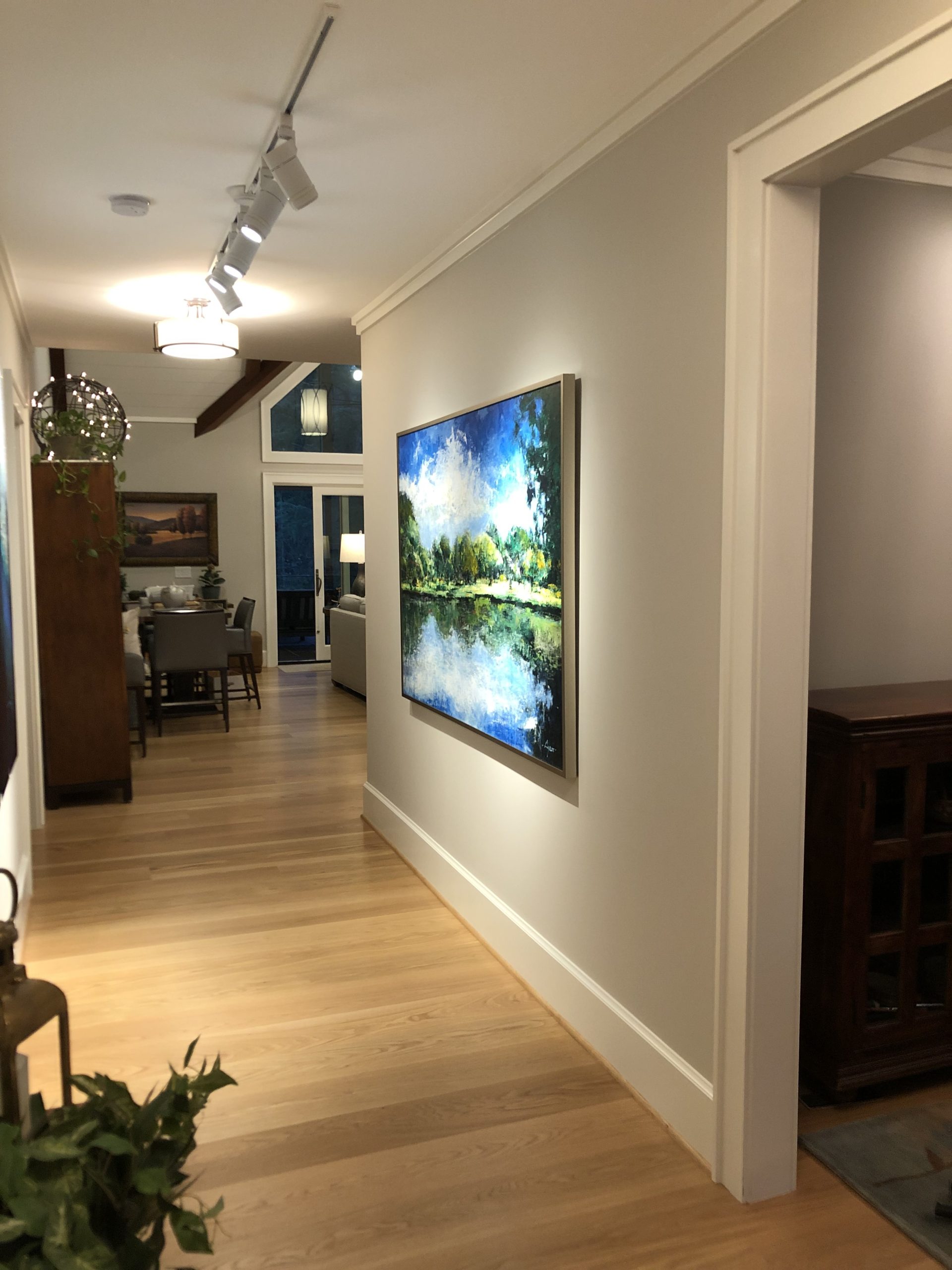
Easily adjusting track light positions to highlight a new home art display.
If you run a gallery, you already know that layout changes are constant, and this is a clear example of how track lighting is used for artwork displays in real spaces. Even if you are not changing the show weekly, adjustments still happen regularly. New pieces arrive, works sell, and exhibitions evolve over time. The lighting must keep up.
This is where art gallery track lighting becomes an operational advantage, not just a design choice. Galleries rely on adjustable track lighting for illuminating artwork, allowing staff to reposition lights without bringing in contractors. They can aim and tune the display the same day an exhibition is installed. They can respond to reflections, viewer angles, and wall textures in real time.
The same track backbone can support different lighting styles across the year. A dramatic exhibition might use tighter beams and stronger contrast. A calm museum style hang might use broader distribution and a softer base layer. Track lets you do both.
The Core Goals of Professional Art Track Lighting
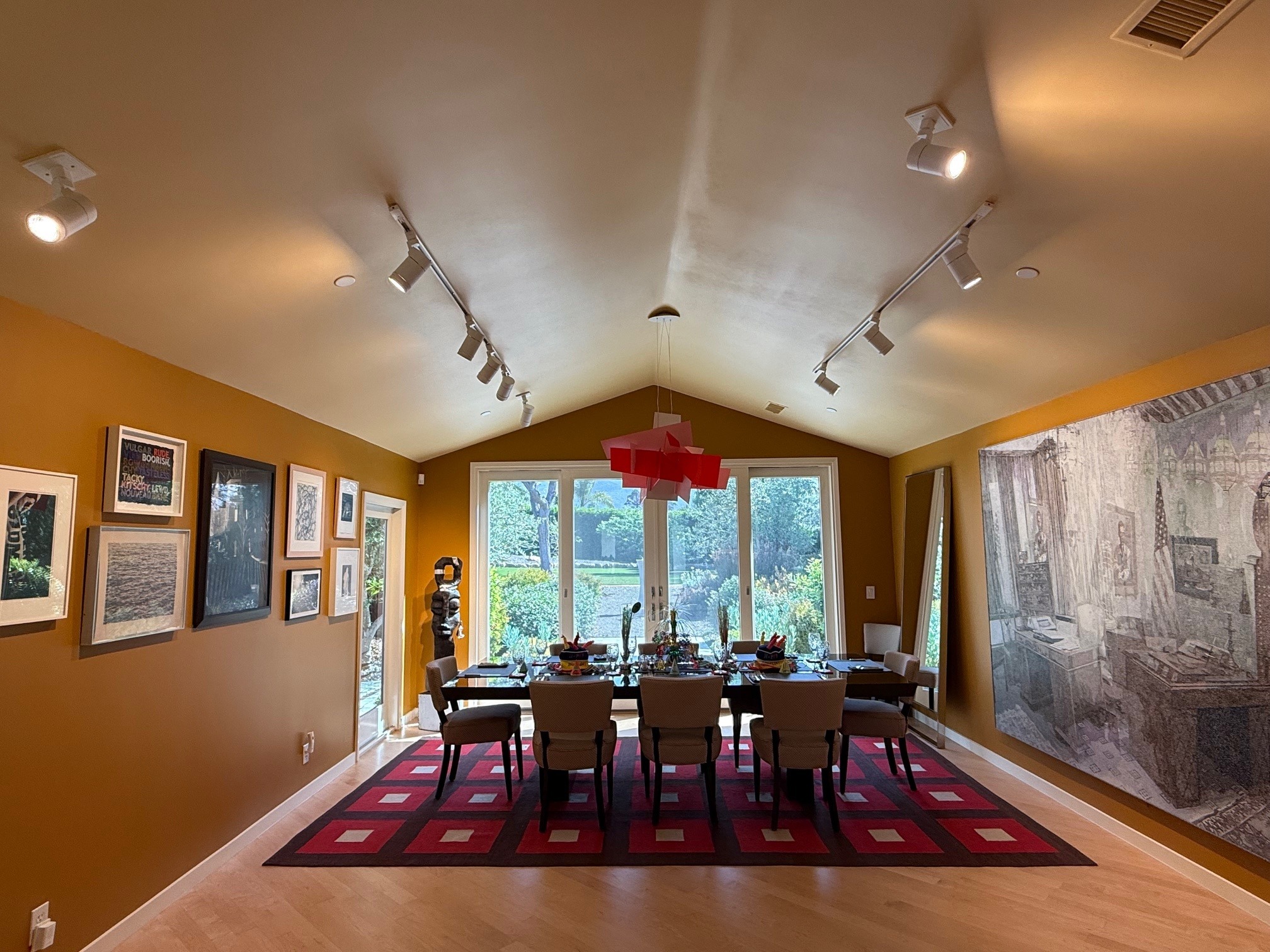
Balanced lighting levels creating a comfortable and focused environment for art viewers.
There are four goals that matter most in real world projects, and they form the foundation of effective lighting techniques for art displays used in professional galleries and collector spaces.
Accuracy
The art must appear true to the artist’s intent. Color must be correct. Detail must be visible.
Hierarchy
Lighting should guide attention. Feature pieces should feel special without the room becoming theatrical, using targeted lighting for paintings and fine art to draw the viewer’s eye naturally.
Comfort
Visitors should not squint or step sideways to avoid reflections. Glare should be controlled.
Adaptability
The system must change as the exhibition changes. This is the track advantage.
When these four goals are met, the lighting disappears and the art takes over, which is the outcome of the best lighting techniques for displaying art. That is the difference between basic lighting and professional art track lighting.
Beam Angle and Why It Changes Everything
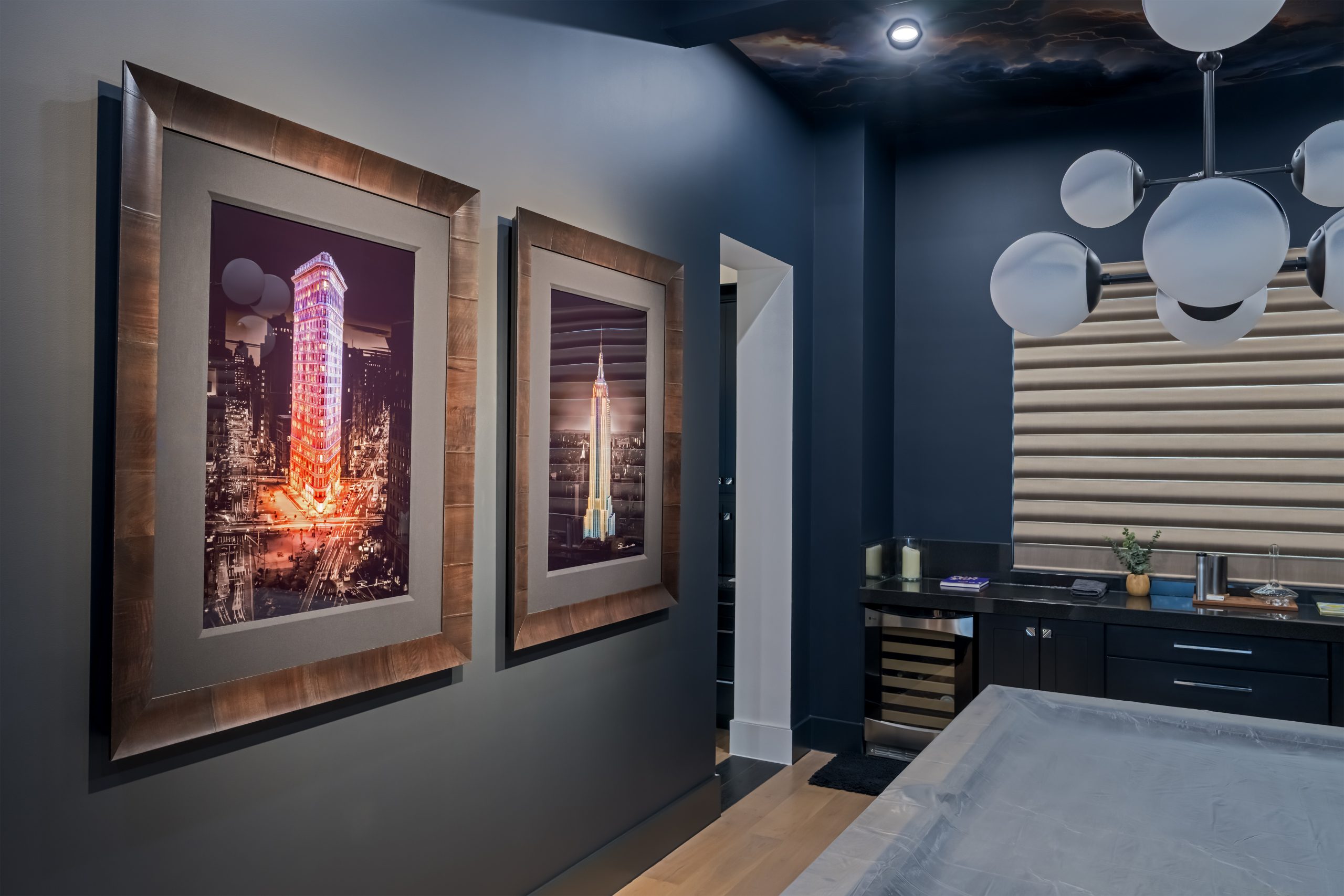
A tight spotlight beam creating dramatic emphasis on a specific art piece.
Beam angle is one of the most misunderstood parts of gallery lighting, yet it is fundamental to precision lighting designed for artwork.
Beam angle is the width of the light beam as it hits the artwork plane. A narrow beam concentrates light and creates emphasis. A wider beam spreads light across a larger area.
In simple terms:
- Narrow beams create drama and separation
- Medium beams create balanced focus for most framed works
- Wide beams create soft coverage and wall washing
The right beam angle depends on artwork size, mounting height, and viewing distance. If you use a beam that is too narrow for a large work, you get hot spots and unevenness. If you use a beam that is too wide for a small work, you get spill that reduces contrast and makes the room feel messy.
This is why professional systems prioritize optical flexibility. You need to be able to adapt beam shape to the art, not force the art to fit the beam.
Our Fixture Platforms Zoom Multi Deluxe
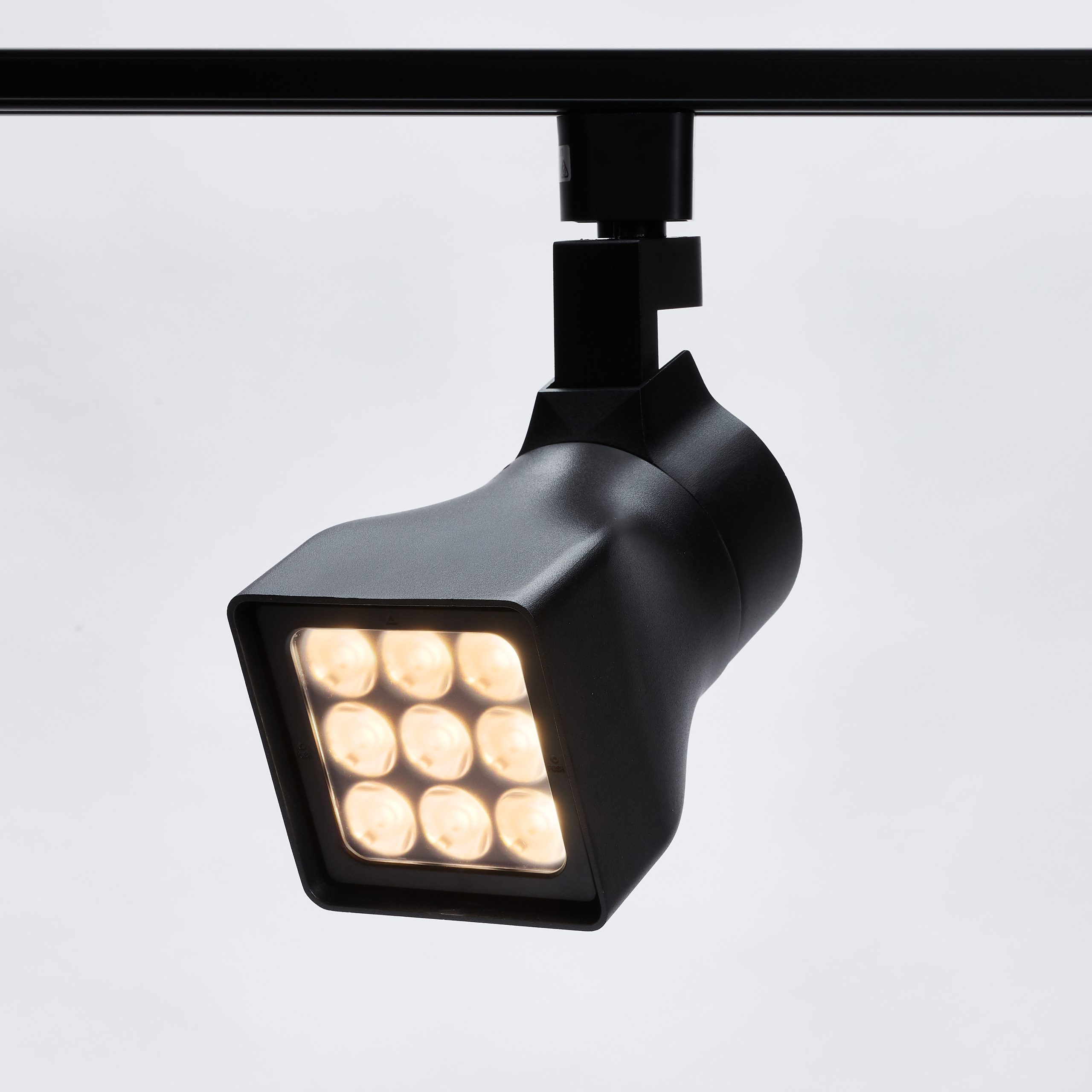
Versatile Multi track head with interchangeable optics for custom light distributions.
A high performing art track lighting system is not just about the track. It is about the fixtures and optics within the system. This is where Zoom, Multi, and Deluxe come in.
Zoom is designed for adjustable beam control. It allows you to tighten or widen the beam on site, which is ideal for rotating exhibitions where artwork sizes vary. Instead of swapping a fixture or adding extra heads, you adjust the beam and move on.
Multi is designed as a versatile platform with interchangeable optics. It gives galleries a practical toolkit of distributions so you can tailor lighting across walls, feature zones, and general areas while keeping a consistent look and performance across the space.
Deluxe is designed for premium optical refinement and strong projection performance. It is especially effective in higher ceiling spaces or where you need to project light over a longer distance while maintaining beam definition and a polished result. Deluxe is often the choice for hero walls, signature rooms, and architectural spaces where performance must be flawless.
Together, Zoom, Multi, and Deluxe cover the full range of needs in art gallery track lighting systems. You can build a coherent system rather than mixing random fixture types.
High Ceilings and Long Throw Lighting

Lighting layout designed for large-scale architectural spaces with significant mounting heights.
Many galleries are in loft spaces, heritage buildings, or modern architectural environments with tall ceilings. High ceilings change everything because the light must travel farther. When distance increases, poor optics become obvious. Beams lose definition, light spills everywhere, and the artwork looks underlit while the room looks overlit.
This is where Deluxe shines. Deluxe is very good for high ceilings and projecting light because it maintains clarity and beam definition at longer distances. It allows the fixture to be mounted higher while still delivering a controlled result on the artwork plane.
Zoom and Multi are also great for ceilings, especially where you want flexibility across multiple zones. Zoom can adapt beam width depending on mounting height, and Multi can swap optics for different distances and distributions. In practice, a professional system often uses Deluxe in the highest zones and feature walls, then uses Zoom and Multi across the rest of the gallery for adaptability.
Color Rendering and Why It Protects Your Reputation

Full-spectrum LED illumination revealing the true pigments intended by the artist.
People often talk about brightness as if it is the main factor. In art spaces, color quality is often more important than raw brightness. If the light source distorts color, the viewer is not seeing the work truthfully.
Collectors notice when whites shift toward green. Artists notice when subtle tones disappear. Photographers notice when prints look wrong. Even casual visitors feel the difference between a room that feels natural and a room that feels artificial.
Professional art track lighting should deliver high color fidelity and consistency across fixtures. Consistency matters because a gallery is experienced as a whole. If one wall feels warm and another feels cool without intention, the space feels unprofessional. A system approach using a consistent fixture platform helps avoid this.
Deluxe is commonly positioned where premium color and premium optics must be flawless. Zoom and Multi provide consistent color across the broader system while offering the flexibility that rotating exhibitions require.
Glare Control and Reflections

Strategic fixture positioning preventing distracting reflections on framed glass artwork.
Glare is the enemy of art viewing. It creates discomfort and reduces the ability to see detail. Reflections are especially common when artwork is framed behind glass or when photography is displayed.
Glare control comes from three factors:
Optics that hide the light source and shape the beam cleanly
Accessories that reduce visible brightness from common viewing angles
Aiming angles that prevent reflections from bouncing into the viewer’s line of sight
Track systems make glare control easier because fixtures can be moved and re aimed until reflections are minimized. Zoom helps by adjusting beam spread to reduce spill on glass. Deluxe helps with refined cut off and controlled projection. Multi helps by offering different optical distributions to suit different wall and frame conditions.
When glare is controlled, the gallery feels calm. People naturally step closer and stay longer.
Wall Washing Versus Accent Lighting
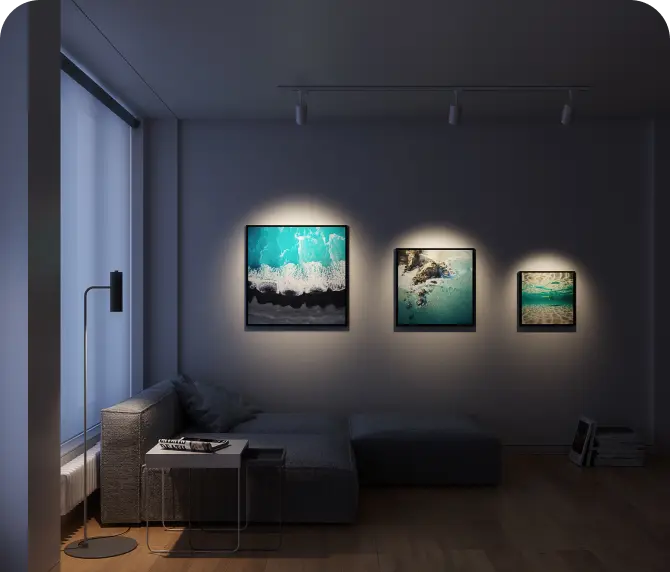
Even wall wash lighting paired with focused accents for a layered effect.
Most professional gallery lighting uses a layered approach.
Wall washing provides even illumination across the wall plane. It creates a calm background and helps the space feel open and refined.
Accent lighting provides focused emphasis on individual works. It creates hierarchy and makes feature pieces stand out.
A gallery that uses only accents often feels spotty and harsh. A gallery that uses only wall wash often feels flat and generic. The right balance depends on curatorial intent.
Art track lighting systems allow you to change this balance quickly. For a dramatic show, you can tighten beams and increase contrast. For a softer museum feel, you can broaden beams and create more even wall illumination. Track gives you that operational control.
Lighting Different Types of Art

Soft lighting for sensitive photography and high-contrast lighting for sculpture.
Different mediums require different lighting behavior.
Paintings often benefit from controlled directional lighting that reveals texture without creating harsh shadows. Slightly angled light can bring out brushwork and surface detail.
Photography often needs the most careful glare control. Reflections can ruin the viewing experience. Tight beam control and careful aiming are essential.
Sculpture needs modeling, meaning light from more than one direction. One spotlight can flatten form. Two or three controlled angles can reveal depth and create intentional shadow patterns.
Mixed media can combine reflective and matte surfaces, which means you need flexibility. You may need to tighten beam spread to reduce spill on reflective elements while maintaining enough coverage on matte areas.
This is why a system that includes Zoom and Multi is so practical. You can adapt optics and beam behavior without rebuilding the ceiling.
Art Deco Track Lighting and Style Integration

Elegant fixture finishes complementing a high-end, architecturally significant gallery space.
Performance is critical, but style matters too. Art deco track lighting refers to track lighting that is used in spaces with Art Deco influences, symmetry, geometry, rich materials, and strong visual lines. In these environments, lighting must feel integrated rather than industrial.
Art Deco interiors often rely on strong composition. Track lines can be aligned with the architecture to support that symmetry. Fixture finishes can be chosen to complement metals, stone, or timber. The key is to keep the ceiling language intentional. When done well, art track lighting can sit inside an Art Deco context without looking modern and out of place.
Art Deco spaces also tend to use contrast and drama in a refined way. Controlled beam shapes and clean cut off help the lighting feel crisp and elegant rather than messy.
So yes, art deco track lighting can look exceptional when the system is designed with both optics and architecture in mind.
Planning the Track Layout
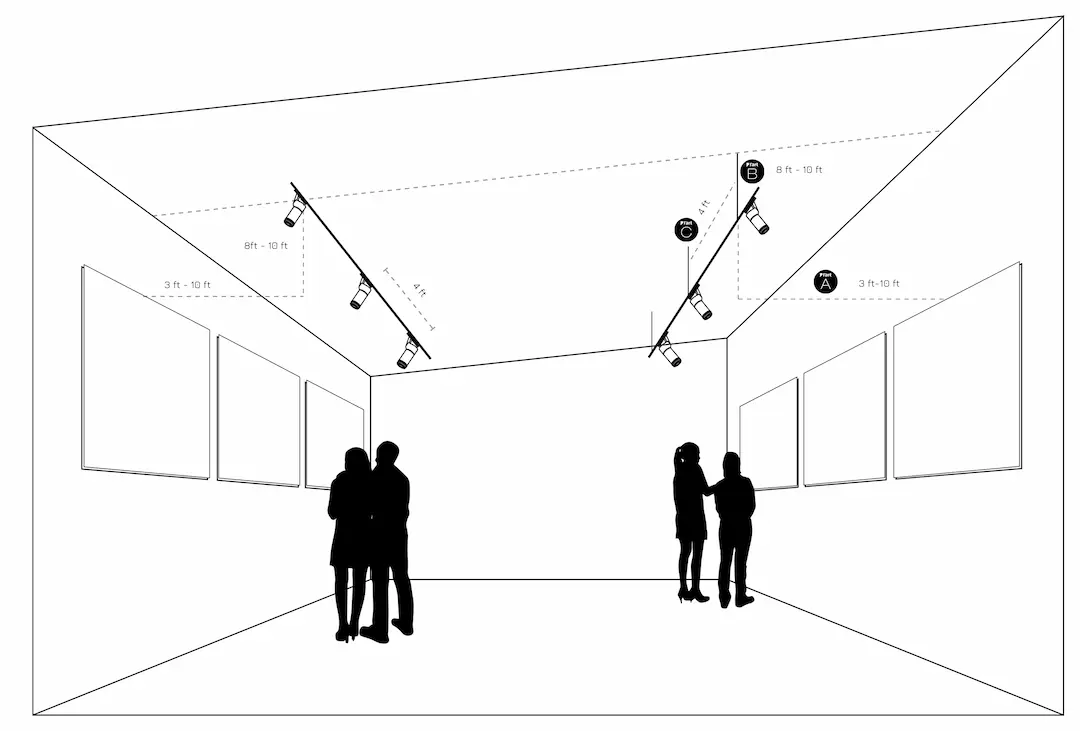
Ceiling plan showing a professional track grid layout for maximum flexibility.
Track layout determines whether the system is easy to operate or constantly frustrating. A good layout gives flexibility. A poor layout forces awkward aiming and creates dead zones.
Common approaches include:
Linear runs parallel to walls, providing strong coverage for wall hung art
Grids that cover the room, providing flexibility for sculptures, islands, and central displays
Feature lines that highlight specific architectural axes or hero walls
The principles are straightforward. Track should allow fixtures to aim at artwork from effective angles. There should be enough capacity to add fixtures for dense hangs. Track should align with architecture so the ceiling reads clean.
Once the backbone is correct, exhibitions become easier to install and re light.
Controls Dimming and Scenes

Dimmable track lighting transitioning from bright exhibition to moody evening event.
Controls transform lighting from static to professional. Dimming allows light levels to be tuned for different exhibitions and different times of day. Zoning allows different areas to be controlled independently. Scenes allow quick changes for openings, private viewings, and content creation.
Controls also support conservation practices where needed. Some works require lower light levels. Dimming makes that possible without changing the fixture. In many galleries, the ability to quickly set different moods is also a commercial advantage. The gallery can feel calm during daytime browsing, and more dramatic during an evening opening.
If you want the best track lighting for art gallery outcomes, you should treat controls as part of the system, not an optional extra.
Mini Track Lights Inside Cabinets and Display Cases

Small-scale mini track lights illuminating delicate objects inside a glass cabinet.
Many galleries display small works, collectibles, or fragile objects inside cabinets. Standard track heads can be too large or visually intrusive for these spaces. Cabinets also create unique reflection challenges, and the object is often very close to the light source.
Mini track lights can go inside cabinets as well. They provide compact, precise illumination for small objects like jewelry, ceramics, small sculptures, and documents. They help create a premium presentation because the cabinet becomes a controlled environment rather than a dark box with random reflections.
Cabinet lighting should be approached with the same care as wall lighting. You want controlled beams, minimal glare, and the ability to dim appropriately. Mini track lights make that possible while keeping the installation clean.
How We Guide You Through the Art Track Lighting Process

Expert guidance on choosing the right system for your specific space.
Choosing fixtures is only part of the job. The real result is created by planning, layout, optics, and aiming. That is why we do not simply supply lighting. We guide clients through the entire art track lighting process.
We help you determine the right track layout for flexibility and clean architecture. We advise on which optics suit your artwork types and hanging style. We map where to use Zoom, Multi, and Deluxe fixtures for the best balance of adaptability and premium presentation. We also help reduce glare and reflections through aiming strategy and optical selection.
We guide you through:
- Track layout planning to maximize flexibility
- Fixture selection using Zoom Multi Deluxe to match ceiling height and exhibition change frequency
- Beam angle strategy for small works, large works, and feature pieces
- Glare reduction strategies for glass frames and reflective art
- Balancing wall washing and accents to match curatorial intent
- Cabinet lighting options including mini track lights for protected displays
This guidance is what turns a set of fixtures into a professional system that works day after day.
What Makes the Best Track Lighting for Art Gallery Projects

A flawlessly lit gallery space representing the best in professional lighting.
People often ask what defines the best track lighting for art gallery environments. The answer is not one feature. It is the combination of performance, flexibility, and consistency.
The best systems have precise optics so light stays on the artwork. They have high color fidelity so art looks natural. They have glare control so visitors can view comfortably. They have flexible beam options so the system adapts to changing shows. They have a coherent fixture family so the space looks consistent and premium.
That is exactly why a platform approach using Zoom, Multi, and Deluxe works well. Each fixture has a role, but together they maintain consistent visual language and performance.
The Long Term Value of Art Track Lighting

High-quality gallery lighting increasing the perceived value of the displayed art.
Art track lighting reduces renovation cycles because the system is designed for change. It improves operational speed because staff can re light exhibitions quickly. It improves visitor experience because glare is controlled and the art looks more dimensional. It improves perceived value because consistent, refined lighting makes a gallery feel high end.
It is also future ready. The track backbone can remain while fixture heads and optics are upgraded. This protects capital investment and keeps the space modern without major construction.
Conclusion

Cohesive lighting system creating a seamless and immersive viewer experience.
Professional art track lighting combines precision optics, flexible infrastructure, and high color accuracy to create environments where art is presented truthfully and beautifully. Art gallery track lighting systems allow exhibitions to evolve without renovation. Led track lighting for art gallery spaces provides efficiency, low heat, and long life while enabling advanced optical control that makes art look its best.
From contemporary galleries to art deco track lighting interiors, track based solutions adapt to both technical and aesthetic needs. A system built around Zoom, Multi, and Deluxe gives you adjustable beam control, versatile optics, and premium projection performance where it matters most. Add mini track lights in cabinets where needed, and you have a complete professional toolkit.
Most importantly, we guide you through the process so the final result looks exceptional in the real space, on the real walls, with your real collection.
Art Track Lighting Systems for Galleries, Studios, and Collectors
Art track lighting systems are used across many different environments, from commercial galleries and museums to private collections and creative studios. While the principles remain the same, each space uses track lighting slightly differently depending on how artwork is displayed and experienced.
In professional galleries, art gallery track lighting systems are designed for flexibility and precision. Exhibitions rotate frequently, artwork sizes vary, and curators need to adjust lighting quickly without rewiring the building. Track systems allow fixtures to be repositioned and aimed precisely so that each piece receives the correct beam shape and intensity.
Collectors and home galleries also benefit from art track lighting because it allows artwork to be highlighted without committing to permanent lighting positions. Track lighting fixtures for art can be adjusted whenever new pieces are added or walls are rearranged. Instead of installing individual picture lights above each piece, a track system creates a flexible lighting platform that can adapt over time.
Studios also rely on track lighting for art display and creative workspaces. In an art studio track lighting setup, artists need strong, accurate lighting that can be repositioned as the workspace evolves. Track lighting for art studios allows painters, sculptors, and designers to adjust lighting conditions while working, helping them evaluate color, texture, and surface detail under controlled illumination.
Track Lighting for Art Display and Wall Art

Wall mounted paintings illuminated by carefully angled track lighting fixtures
Track lighting for art display is particularly effective when artwork is mounted on walls. Art wall track lighting systems allow fixtures to be aimed at individual pieces so the beam falls directly on the artwork plane rather than flooding the entire room.
Track lighting for wall art is typically installed parallel to the display wall so that fixtures can aim toward the artwork at the correct angle. This positioning helps reveal texture, maintain even coverage, and reduce glare from frames or glass.
In many galleries, track lighting for artwork is combined with subtle wall washing. Wall washing creates a calm, even base layer of illumination while accent lighting focuses attention on specific pieces. When balanced correctly, this layered approach makes the gallery feel open and intentional while still highlighting key works.
Track lighting for art rooms in homes works in a similar way. A collector might install art track lighting along the ceiling near the wall so fixtures can highlight paintings or photographs while maintaining a clean architectural appearance.
Because track systems allow fixtures to slide along the rail, lighting can be adjusted as new artwork is added. This adaptability is one reason art track lighting remains the preferred method for presenting wall mounted art.
LED Track Lighting for Art Galleries and Studios
LED track lighting for art gallery environments has become the industry standard because it combines efficiency, longevity, and optical precision.
LED track lighting for art studios also offers significant advantages for artists. Accurate color rendering helps artists evaluate their work under lighting conditions that closely resemble gallery environments. This is especially important for painters and photographers who rely on subtle tonal variations.
Another advantage of LED track lighting for art is reduced heat output. Traditional lighting technologies such as halogen lamps produce significant heat, which can affect both artwork and visitor comfort. LED lighting remains cooler while still delivering strong illumination where needed.
LED track lighting for art gallery installations also reduces maintenance. Unlike traditional lamps that require frequent replacement, LED fixtures typically last many years with stable performance. This helps maintain consistency in presentation and reduces operational disruptions.
Art Deco Track Lighting and Interior Style

Gallery interior combining decorative architecture with subtle track lighting
Art deco track lighting refers to track lighting integrated into spaces that feature Art Deco architectural influences. Art Deco interiors often emphasize geometry, symmetry, and luxurious materials such as brass, marble, and polished wood.
When designing art deco track lighting systems, the goal is to maintain the architectural character of the space while delivering professional lighting performance.
Track lines can be aligned with architectural features such as columns, ceiling panels, or decorative moldings. Fixture finishes can complement metallic or stone surfaces used throughout the space.
Because Art Deco environments often rely on strong visual symmetry, track placement should be deliberate and balanced. Fixtures should create crisp beams with controlled cut off so the lighting feels refined rather than cluttered.
With the right planning, art track lighting can integrate seamlessly into Art Deco environments while maintaining the performance required for professional art presentation.
Plug In Art Track Lighting for Smaller Spaces
Not every art display requires a permanent installation. Plug in art track lighting systems offer a practical solution for smaller galleries, home collections, or temporary exhibition environments.
Plug in art track lighting connects to a standard power outlet rather than requiring hardwired installation. This makes it easier to install track lighting in apartments, studios, or rental spaces where electrical modifications may not be possible.
While plug in systems are typically smaller than commercial installations, they still provide many of the same advantages as full art gallery track lighting systems. Fixtures can be repositioned along the track, aimed toward artwork, and adjusted as the display evolves.
Collectors who frequently rearrange artwork often appreciate plug in art track lighting because it allows them to maintain professional presentation without permanent construction.
Track Lighting Fixtures for Art and Glass Displays

Framed photography display lit by deep optic track lighting fixture
Track lighting fixtures for art are available in many configurations depending on the application. Some fixtures are designed for narrow accent lighting while others provide wider coverage for larger artworks.
Art glass track lighting fixtures are specifically designed to reduce glare when illuminating glass surfaces. Glass sculptures, glass framed photography, and reflective artworks require careful beam control to prevent distracting reflections.
These fixtures often include deep set optics, glare control accessories, and refined beam shaping to ensure the light remains focused on the artwork rather than reflecting toward viewers.
Track lighting for art glass installations must be aimed carefully. Even small adjustments can significantly reduce reflections and improve visibility.
Examples of Track Lighting in Art Spaces
Examples of track lighting can be found in nearly every professional art environment.
Commercial galleries often use art gallery track lighting systems installed in linear runs parallel to exhibition walls. This layout allows fixtures to aim toward artwork at consistent angles while maintaining a clean ceiling appearance.
Museums often combine track lighting with architectural lighting systems to balance artifact illumination with visitor comfort.
Art studios frequently use track lighting for art studio environments where fixtures can be repositioned as artists rearrange workspaces or adjust display areas.
Private collectors also use track lighting for art rooms within their homes, creating gallery style environments that highlight paintings, sculptures, and photography.
These examples of track lighting demonstrate the flexibility of track systems across different art environments.

Painting Track Lighting and Customizing the System

Ceiling track lighting painted white blending seamlessly into gallery architecture
Some designers and collectors ask whether track lighting can be painted to match the ceiling or surrounding architecture.
The answer is yes. In many installations, track and fixtures are painted to blend into the ceiling. This technique can make the lighting infrastructure visually disappear, allowing the artwork to remain the primary focus.
If you plan to paint track lighting, there are a few practical guidelines.
First, remove or protect electrical components before painting.
Second, use finishes that match the ceiling color and texture.
Third, avoid painting optical elements or ventilation areas on the fixtures.
Learning how to paint track lighting properly allows designers to integrate lighting into architectural environments without distracting visual elements.
Safety and Types of Track Lighting
A common question from clients is whether track lighting is safe. When installed correctly using certified components, track lighting is considered a safe and reliable lighting method.
Professional art track lighting systems are designed to meet electrical safety standards and operate within defined power limits. LED fixtures generate less heat than traditional lighting technologies, which further improves safety in art environments.
There are also several types of track lighting systems used in galleries and studios.
Single circuit track
Provides power to all fixtures simultaneously and is common in smaller installations.
Multi circuit track
Allows different groups of fixtures to be controlled independently, useful for larger galleries.
Magnetic track systems
Use magnetic mounting for quick fixture changes and flexible positioning.
Low voltage track
Often used for specialized lighting applications requiring precise control.
Understanding the types of track lighting helps designers choose the right system for each project.
Choosing the Best Track Lighting for Art

Private art collection wall illuminated with professional track lighting
The best track lighting for art gallery or studio environments depends on several factors including ceiling height, artwork size, and how frequently the display changes.
In galleries with rotating exhibitions, adjustable beam fixtures are often preferred because they allow lighting to adapt quickly to new artwork sizes.
In studios, the best track lighting for art studios often prioritizes accurate color rendering so artists can evaluate their work under realistic lighting conditions.
For collectors displaying artwork at home, track lighting for art rooms provides flexibility while maintaining a clean architectural look.
Ultimately, the best track lighting for art combines precise optics, flexible positioning, consistent color performance, and strong glare control.
When these elements work together, art track lighting becomes more than illumination. It becomes part of how artwork is experienced.
FAQs About Art Track Lighting
What is art track lighting?
Art track lighting is a system of adjustable fixtures mounted on an electrified track. The fixtures can be moved and aimed to highlight artwork precisely, making it ideal for galleries, exhibitions, and collector spaces where layouts change.
Why is led track lighting for art gallery spaces preferred?
Led track lighting for art gallery spaces is preferred because LEDs produce low heat, minimal UV, long life, and support precise optical control. This improves presentation quality and reduces maintenance.
Is art gallery track lighting suitable for rotating exhibitions?
Yes. Art gallery track lighting is ideal for rotating exhibitions because fixtures can be repositioned quickly along the track and aimed differently as artwork changes.
What beam angle is best for art track lighting?
It depends on the artwork. Narrow beams are best for small pieces and sculptures, medium beams suit most framed works, and wider beams are used for large canvases or wall washing. Adjustable beam fixtures make this easier.
Can art deco track lighting look premium?
Yes. Art deco track lighting can look premium when track lines are planned intentionally and finishes complement the architecture. Controlled optics and clean beam cut off help maintain an elegant Art Deco feel.
What makes the best track lighting for art gallery environments?
The best track lighting for art gallery environments combines strong optics, high color fidelity, glare control, flexible beam options, and a consistent fixture family so the entire space feels cohesive.
How do Zoom Multi and Deluxe fit into an art track lighting system?
Zoom is used for adjustable beam control, ideal for changing exhibitions. Multi is used for versatility with interchangeable optics across walls and zones. Deluxe is used for premium presentation and high ceiling projection where refined optics and reach matter.
Do I need dimming with art track lighting?
Yes. Dimming allows you to tune the space for different exhibitions and events, and it supports conservation needs for sensitive works. Zoning and scenes also make operation easier.
Can mini track lights be used inside cabinets?
Yes. Mini track lights can be installed inside cabinets to illuminate small objects precisely without bulky fixtures. They are great for display cases, collectibles, and fragile items where detail visibility matters.
Do you help with design or only supply products?
We guide clients through the entire art track lighting process. This includes track layout planning, fixture selection, optics strategy, glare reduction, beam angle choices, and balancing wall washing with accents so the system performs beautifully in the real space.
If you want, I can also produce the SEO publish pack next: meta title, meta description, internal link suggestions, and a short product comparison block that positions Zoom vs Multi vs Deluxe more directly while still sounding professional.
Hear from art collectors and clients who trust us