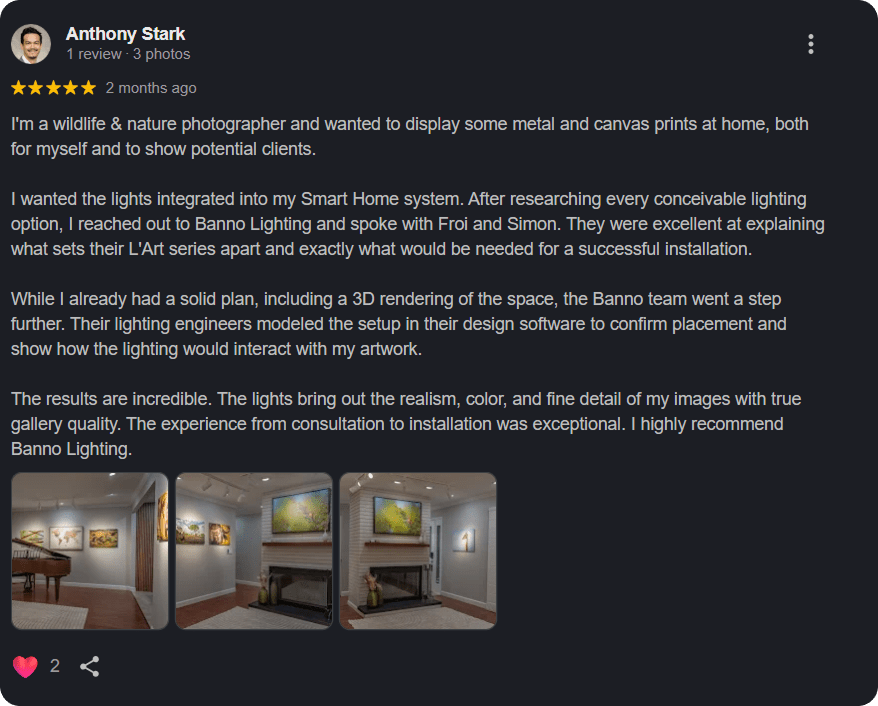
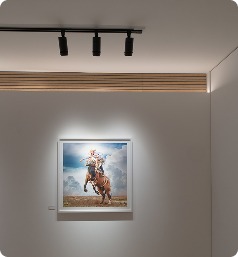
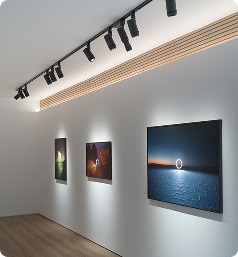
Focused spotlights creating depth and visual hierarchy
Track lighting for artwork is one of the most effective and professional ways to illuminate paintings, photography, and wall art with precision, control, and visual impact. Unlike general ceiling lights, track lighting allows you to direct focused light exactly where it is needed, which is why it is widely used in art galleries, museums, and high-end residential interiors.
When artwork is lit correctly, colours appear richer, textures become visible, and the piece naturally becomes a focal point in the space. This complete guide to lighting artwork in galleries and exhibitions explains why artwork track lighting is not just a decorative choice, but a vital presentation tool. When it is lit poorly, even expensive artwork can look flat, dull, or washed out.
Why Track Lighting for Artwork Is Superior to Standard Lighting
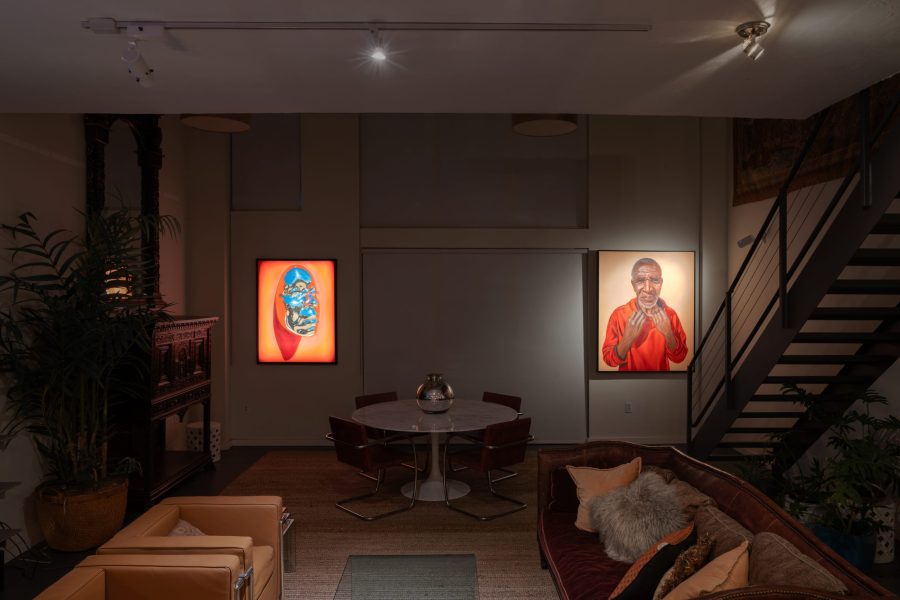
Directional ceiling track light precisely aimed at canvas
Most homes and commercial spaces rely on ambient ceiling lighting. While this is fine for general visibility, it is rarely suitable for art. Track lighting for art provides directional, adjustable illumination that can be angled, focused, and refined to suit each individual piece.
With art track lighting, you are not flooding the room with light. You are highlighting the artwork intentionally. Utilizing adjustable track lighting for illuminating artwork allows you to tailor the presentation to the specific needs of each piece.
Key advantages include:
- Adjustable beam direction
- Controlled brightness on each artwork
- Reduced glare on glass and canvas
- Flexibility for rotating collections
- Professional gallery-style presentation
This is why ceiling track lighting for art is commonly specified by lighting designers, curators, and architects when artwork is a central feature of the space.
Track Lighting for Paintings, Wall Art, and Pictures

Even light distribution across large framed artwork
Different types of artwork require slightly different lighting approaches. Track lighting for paintings allows for controlled beam angles that reveal brush strokes, colour depth, and surface texture without creating harsh shadows.
Track lighting for wall art and framed pictures is particularly effective because the fixtures can be angled precisely from the ceiling track, ensuring even illumination across the entire piece. This prevents hotspots and uneven lighting, which are common with generic ceiling lights.
Track lighting for pictures is also ideal for gallery walls, where multiple artworks are displayed together. Instead of relying on one central light source, individual track heads can be positioned to highlight each piece independently.
Track Lighting for Art Galleries and Professional Spaces

Precision spotlights emphasising key artworks dramatically
Track lighting for art gallery environments is designed around flexibility and accuracy. Galleries frequently rotate exhibitions, change artwork layouts, and adjust focal points within the space. A fixed lighting system simply cannot offer this level of adaptability.
Track lighting systems for art galleries allow curators and designers to:
- Reposition light heads as exhibitions change
- Adjust beam angles for different artwork sizes
- Maintain consistent lighting quality across the gallery
- Create dramatic visual focus on key pieces
LED track lighting for art gallery use is especially preferred due to its colour accuracy, energy efficiency, and low heat output. This is critical for preserving valuable artwork while still achieving a strong visual presentation.
Best Track Lighting for Artwork: What Actually Matters

Narrow beam control focusing attention intentionally
When determining the best track lighting approaches for art galleries, many people focus only on brightness. However, true professional lighting involves several technical factors—such as CRI, beam control, and placement—that dramatically affect how artwork is perceived by the viewer.
The most important factors include:
- High CRI (Colour Rendering Index)
- Adjustable beam angle
- Glare control
- Smooth light distribution
- Precise aiming capability
LED track lighting for artwork with a high CRI ensures that colours appear true to life rather than distorted or dull. This is especially important for collectors, galleries, and artists who want accurate visual representation.
Modern track lighting for art also prioritises beam precision. Narrow beam angles can highlight a single painting, while wider beams can softly illuminate larger artworks or gallery walls.
Track Lighting Fixtures for Art: Zoom, Multi, and Deluxe Systems

Zoom fixture delivering adjustable precision beam focus
Our professional track lighting systems for artwork and galleries often use specialised track fixtures rather than generic retail track heads. These are designed specifically for illuminating art rather than general spaces.
Zoom Lighting (Precision Focus for Individual Artworks)
Zoom track lighting allows the beam angle to be adjusted and refined directly onto the artwork. This is ideal for paintings, photography, and detailed pieces where precision is essential. It enables pinpoint lighting without spilling light onto surrounding walls.
Multi Lighting (Flexible Coverage for Collections)
Multi track lighting is used when multiple artworks are displayed within one space. It allows several adjustable heads on a single track, each aimed at different artworks. This is commonly used in gallery walls, exhibitions, and collector homes.
Deluxe Lighting (Museum-Grade Track Lighting)
Deluxe systems are designed for high-end applications such as galleries, museums, and luxury interiors. These provide superior beam control, minimal glare, and extremely accurate colour rendering, making them suitable for valuable or large-scale artwork displays.
LED Track Lighting for Artwork: Is It the Best Choice?

Energy-efficient track lighting with stable colour temperature
LED track lighting for art has become the preferred standard in both residential and commercial environments. Compared to older lighting technologies, LED offers consistent brightness, lower heat emission, and excellent colour performance.
One of the most important benefits of LED track lighting for artwork is preservation. Excess heat and UV exposure can damage paintings, prints, and delicate materials over time. High-quality LED lighting significantly reduces this risk while still delivering strong illumination.
Additionally, LED track lighting for art provides:
- Long lifespan
- Stable colour temperature
- Energy efficiency
- Minimal maintenance
This makes it ideal for galleries, studios, and serious collectors.
Track Lighting for Art Studios and Artists
Track lighting for art studio environments is often overlooked but extremely valuable. Artists require accurate lighting conditions to evaluate colour, contrast, and detail while working.
Track lighting for artists allows flexible positioning across different work zones, canvases, and studio setups. Instead of relying on a single overhead light, track systems provide layered illumination that can be adjusted as projects change.
For painting studios, the ideal setup often includes:
- Overhead track lighting for general illumination
- Adjustable track heads for focused canvas lighting
- Neutral colour temperature for colour accuracy
This approach ensures the artwork is seen clearly both during creation and final presentation.
How to Use Track Lighting for Artwork Properly

Ceiling-mounted track installed slightly forward from wall
Simply installing track lighting is not enough; understanding how track lighting is used for art displays at a professional level is key to a successful installation. The placement, angle, and spacing of fixtures determine the final visual result.
Track lighting for artwork should typically be mounted on the ceiling and positioned slightly in front of the artwork wall. This allows light to fall naturally onto the surface rather than casting downward shadows.
Best practices include:
- Angling lights at approximately 30 degrees
- Avoiding direct glare on glass frames
- Spacing track heads based on artwork size
- Using fewer, more precise lights instead of excessive fixtures
In professional gallery lighting, less light is often more effective when it is accurately focused.
Track Lighting for Gallery Walls and Large Art Displays

Distributed track heads highlighting each framed piece
Gallery walls containing multiple artworks benefit greatly from track lighting systems. Instead of using one large light source, track heads can be distributed across the track to highlight each piece individually.
Track lighting for gallery wall setups creates depth and visual hierarchy within the display. Larger artworks can receive stronger focus lighting, while smaller pieces can be softly illuminated to maintain balance.
Track lighting for art display in larger spaces also allows curators and homeowners to easily reposition lighting as collections evolve over time.
Advanced Track Lighting for Artwork: Professional-Level Precision and Control

Controlled contrast enhancing artwork emotional impact
When discussing track lighting for artwork at a professional level, the conversation moves beyond basic illumination and into optical control, beam shaping, and visual hierarchy. In galleries, museums, and serious collector homes, lighting is carefully engineered to support the artwork rather than compete with it.
Artwork track lighting is not about brightness alone. It is about directing clean, controlled light exactly onto the surface of the piece while keeping surrounding areas visually calm. This creates contrast, focus, and emotional engagement with the artwork.
Track lighting for art achieves this through adjustable heads, refined optics, and flexible positioning along the track. This level of control is simply not possible with fixed ceiling fixtures or general ambient lighting.
The Difference Between Track Lighting for Art and General Track Lighting

Reduced glare lens protecting framed artwork
Many people assume all track lighting is the same. In reality, track lighting for artwork is very different from standard retail or residential track lighting.
General track lighting is designed to light rooms.
Track lighting for art is designed to light specific visual objects.
Key differences include:
- Higher colour rendering for accurate artwork tones
- Narrower beam angles for precision focus
- Reduced glare optics for framed pieces
- Smoother light falloff across the artwork surface
- Professional aiming flexibility
Track lighting fixtures for art are engineered to reveal detail, texture, and depth rather than just increase brightness in a space.
Gallery Style Track Lighting for Artwork in Homes
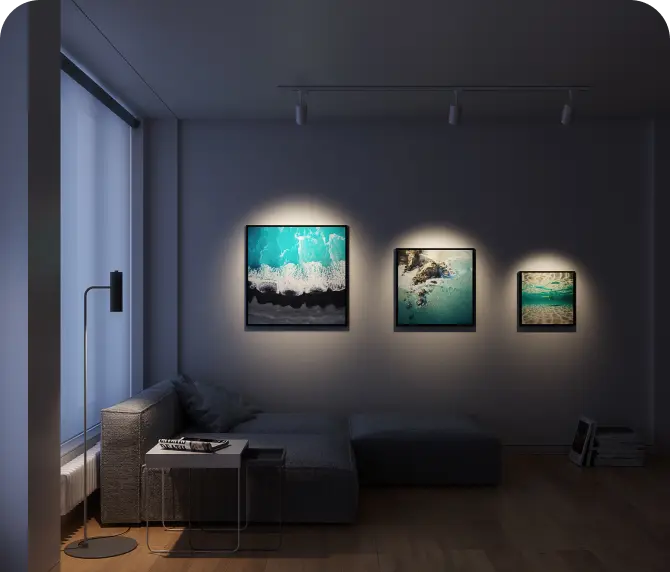
Clean ceiling integration enhancing luxury interior
Gallery style track lighting is increasingly being used in residential interiors, especially in living rooms, hallways, and dedicated art walls. Collectors and designers are moving away from decorative lighting and toward intentional artwork lighting.
Track lighting for wall art allows homeowners to:
- Highlight statement pieces above sofas
- Illuminate large paintings in dining areas
- Create museum-style corridors
- Enhance gallery walls with multiple artworks
Track lighting for pictures and paintings in residential settings instantly elevates the perceived value of the artwork and the sophistication of the interior.
This is particularly effective in luxury homes where artwork is a focal design feature rather than background decor.
Track Lighting for Large Paintings and Oversized Artwork

Uniform brightness across entire artwork surface
Lighting large-scale artwork requires a different strategy than small framed pieces. A single wide floodlight often creates uneven illumination, leaving edges dim and the centre overexposed.
Track lighting for paintings solves this by allowing multiple adjustable heads to be positioned across the artwork. Each head can be angled and refined to ensure even light distribution.
For large artwork, professionals often use:
- Multiple track lighting heads
- Medium beam angles
- Balanced spacing along the track
- Consistent colour temperature
This creates uniform illumination across the entire canvas without hotspots or shadow distortion.
Ceiling Track Lighting for Art: Placement and Positioning Strategy

Angled fixture improving surface illumination balance
Ceiling track lighting for art must be carefully positioned to achieve professional results. Poor placement can cause glare, shadows, or uneven lighting, even if high-quality fixtures are used.
The most effective placement strategy involves installing the track slightly in front of the artwork wall rather than directly above it. This allows the light to wash naturally across the surface.
Ideal positioning guidelines:
- Mount track 0.5–1 metre from the artwork wall
- Angle fixtures toward artwork at approximately 30 degrees
- Adjust beam spread based on artwork size
- Avoid placing lights directly overhead
This method is standard in art gallery track lighting systems and museum lighting designs.
Track Lighting Systems for Art Galleries and Exhibitions

Dimmable gallery lighting tailored for exhibitions
Track lighting systems for art galleries are built around flexibility and long-term adaptability. Exhibitions change, artwork sizes vary, and layouts evolve over time. A rigid lighting system would require constant rewiring and redesign.
Modern track lighting setups for gallery environments are built around modularity and long-term adaptability. This flexibility allows curators to reposition lighting heads instantly as exhibitions rotate, which is one of the main reasons track lighting is considered the industry standard for professional galleries.
Professional gallery track lighting systems typically include:
- Modular track rails
- Adjustable spotlight heads
- Dimming controls
- High CRI LED modules
- Precision beam options
This ensures that every artwork, regardless of size or medium, receives tailored illumination.
LED Track Lighting for Artwork and Colour Accuracy

Stable temperature preventing visual imbalance
One of the most critical factors in art lighting is colour rendering. Poor lighting can shift colours, dull vibrancy, and distort the artist’s intended visual impact.
LED track lighting for artwork with a CRI of 95+ or higher ensures that colours appear true to life. This is especially important for:
- Oil paintings
- Contemporary art
- Photography prints
- Mixed media artworks
High-quality LED track lighting for art gallery environments also maintains consistent colour temperature across all fixtures, preventing visual imbalance between artworks.
Additionally, LED track lighting produces minimal heat, making it safer for delicate and valuable artwork.
Track Lighting for Art Studios and Creative Workspaces
Track lighting for art studio environments supports both artwork creation and display. Artists require accurate lighting to properly evaluate colour mixing, shading, and detail during the creative process.
Track lighting for artists provides flexible illumination across workstations, easels, and display areas. Unlike fixed ceiling lights, track heads can be repositioned depending on the project being worked on.
Track lighting for art studios is especially beneficial because it:
- Reduces shadow interference
- Improves visibility on large canvases
- Provides adjustable directional lighting
- Supports different artistic mediums
For professional studios, combining ambient lighting with dedicated track lighting for art creates the most balanced and functional environment.
How Many Track Lights Do You Need for Artwork?

Multiple fixtures spaced across large art display
This is one of the most common questions in artwork lighting design. The answer depends on artwork size, wall width, ceiling height, and desired visual impact.
As a general guideline:
- Small artwork: 1 focused track light
- Medium artwork: 1–2 adjustable track lights
- Large artwork: 2–4 evenly spaced track lights
- Gallery wall: Multiple lights, each aimed at individual pieces
Contrary to popular belief, more lights do not always produce better results. In professional lighting design, fewer high-quality lights with precise focus often create a more refined presentation.
Track Lighting for Wall Art and Gallery Walls

Balanced brightness maintaining cohesive wall composition
Gallery walls containing multiple artworks require strategic lighting rather than uniform overhead illumination. Track lighting for gallery setups allows each piece to be individually highlighted while maintaining overall visual harmony.
Track lighting for wall pictures works best when:
- Each artwork has its own dedicated light
- Beam angles are adjusted based on frame size
- Brightness levels are balanced across the wall
- Light spill onto surrounding walls is minimised
This creates a curated, gallery-style effect rather than a flat and evenly lit wall.
Modern Track Lighting for Art in Architectural Interiors

Minimalist black track system integrated into ceiling
Modern interiors increasingly incorporate artwork track lighting as part of the architectural lighting plan rather than as an afterthought. Designers now integrate art lighting track systems into ceiling layouts during the early design stage.
This approach allows for:
- Clean ceiling aesthetics
- Hidden wiring and seamless installation
- Consistent lighting alignment with artwork walls
- Long-term flexibility for future art additions
Modern track lighting for art also features sleek fixture designs in black, white, or architectural finishes to complement contemporary interiors.
Maintenance and Longevity of Track Lighting for Artwork

Durable LED track head with extended lifespan
One of the major advantages of LED track lighting for artwork is long-term durability and minimal maintenance. High-quality track lighting systems can operate for tens of thousands of hours without significant performance degradation.
Maintenance considerations include:
- Occasional fixture repositioning
- Cleaning lenses to maintain clarity
- Checking dimming calibration
- Replacing LED modules after extended lifespan
Compared to traditional lighting systems, track lighting for art offers significantly lower maintenance requirements and operational costs.

When to Use Track Lighting for Artwork Instead of Other Lighting Types

Flexible system ideal for evolving art collections
Track lighting is the ideal choice when:
- Artwork is a focal feature of the space
- Lighting flexibility is required
- Multiple artworks are displayed
- Professional presentation is desired
- Collections may change over time
While picture lights and recessed lighting can be effective in certain scenarios, track lighting for artwork provides the highest level of control, adaptability, and visual precision.
Future Trends in Track Lighting for Artwork

Ultra-high CRI modules improving realism
The future of track lighting for art is moving toward smarter, more refined systems that integrate advanced optics, dimming technology, and adaptive lighting controls. Lighting designers are increasingly using programmable scenes that adjust brightness and focus depending on time of day or exhibition layout.
Emerging innovations include:
- Smart dimmable track lighting systems
- Precision optical lenses
- Ultra-high CRI LED modules
- Minimalist architectural track profiles
- Customisable beam shaping technology
As artwork continues to play a central role in both residential and commercial design, track lighting for artwork will remain one of the most important tools for achieving museum-quality presentation, visual clarity, and long-term artwork preservation.
Frequently Asked Questions (FAQ)
What is the best track lighting for artwork?
The best track lighting for artwork uses high CRI LED fixtures, adjustable beam angles, and glare control. Professional systems designed specifically for art lighting provide the most accurate and visually appealing results.
Is LED track lighting good for paintings?
Yes, LED track lighting is ideal for paintings because it produces low heat, stable colour output, and minimal UV exposure, helping preserve artwork while enhancing visual clarity.
How do galleries light artwork?
Art galleries use specialised track lighting systems with adjustable spotlights that are precisely aimed at each artwork. This creates focused illumination and ensures consistent presentation across the exhibition space.
Can track lighting damage artwork?
High-quality LED track lighting is safe for artwork when properly specified. Low heat output and controlled light levels reduce the risk of fading or material damage.
How far should track lights be from artwork?
Track lights are typically installed on the ceiling and positioned slightly in front of the artwork wall, with lights angled toward the artwork at around 30 degrees for optimal illumination.
Is track lighting suitable for residential art collections?
Yes, track lighting for artwork is widely used in luxury homes and private collections because it offers gallery-level lighting flexibility while maintaining a clean architectural aesthetic.
How many track lights do I need for artwork?
The number of track lights depends on artwork size, spacing, and desired visual impact. In most professional installations, fewer high-quality lights with precise focus produce better results than many generic fixtures.
Real Feedback from Art Collectors