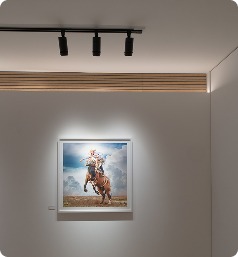
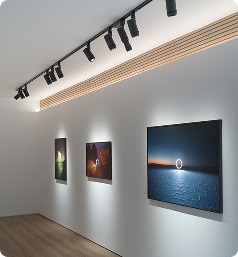
Clean ceiling installation highlighting artwork without visual clutter
When clients ask us what the most refined way to illuminate artwork is, the answer is almost always the same: ceiling mounted art lights. Not because they are trendy, but because they offer the cleanest, most controlled, and most professional method of lighting paintings, sculptures, and wall-mounted art.
In museums, galleries, and high-end homes, ceiling mounted art lighting is used to create focus, depth, and emotional impact without visually cluttering the space. Instead of relying on bulky wall fixtures, ceiling-mounted solutions allow the artwork to remain the hero while the light does its job quietly and precisely. This article serves as a complete guide to ceiling-mounted lighting for art and galleries, explaining how professional lighting design enhances both presentation and preservation.
This approach is especially important when dealing with valuable paintings, large canvases, or curated gallery walls where consistency and beam control matter more than decorative lighting.
Why Ceiling Mounted Art Lights Are Preferred in Museums and High-End Homes

Directional ceiling spotlight focusing precisely on statement artwork
In a museum environment, lighting is never random. Every beam is intentional. Every angle is calculated. The goal is not just to “light” the artwork, but to reveal texture, color accuracy, and dimensionality.
Ceiling mounted art spotlights allow lighting designers to:
- Aim light precisely at the artwork
- Control glare and reflections
- Adjust beam spread depending on artwork size
- Maintain a clean architectural ceiling aesthetic
Unlike wall-mounted picture lights, ceiling artwork lights provide flexibility. If a collector rotates their collection or a gallery updates exhibitions, the lighting can be repositioned without reinstalling new fixtures on the wall.
This is why art galleries, museums, and serious collectors consistently choose ceiling spotlight for artwork instead of decorative wall lamps.

4.9-star rated by art collectors and gallery professionals
The Difference Between Ceiling Mounted Art Lighting and Standard Ceiling Lights
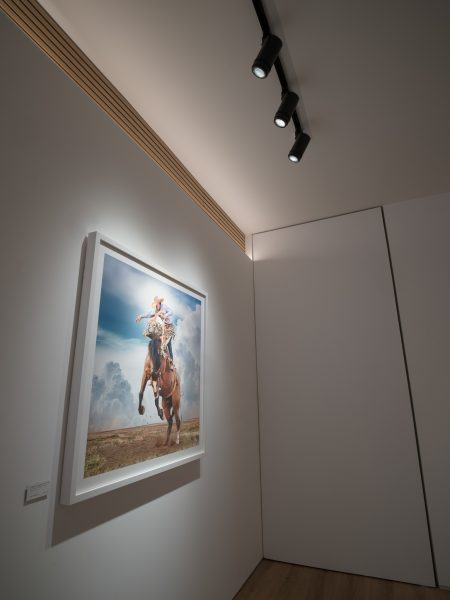
Narrow beam enhancing artwork texture and contrast
One of the biggest misconceptions we see is clients assuming any ceiling light can function as art lighting. In reality, general ceiling lighting floods a room, while ceiling mounted art lights are designed for targeted illumination.
Standard ceiling lights:
- Spread light broadly
- Create flat lighting on artwork
- Cause glare on glass frames
- Reduce visual contrast
Professional ceiling mounted art lighting:
- Uses narrow beam angles
- Creates controlled focus on the artwork
- Enhances texture and brushwork
- Preserves the artwork’s true color
This distinction is critical in both museum lighting and luxury residential spaces where artwork is a central design feature.
Types of Ceiling Mounted Art Lights We Recommend as Consultants

Adjustable ceiling mounted art spotlight highlighting large canvas
From a professional lighting perspective, there are several ceiling lighting options for illuminating art, with three primary categories of art lights ceiling systems commonly used in serious installations.
1. Ceiling Mounted Art Spotlights
These are directional fixtures designed specifically to highlight artwork with precision. In many installations, ceiling-mounted adjustable lights for artwork are used in art galleries and collector homes because they allow flexible aiming, adjustable angles, and precise beam control.
Ceiling mounted art spotlights are ideal for:
- Large paintings
- Statement artwork
- Gallery walls
- Museum exhibitions
They provide a focused beam that draws the viewer’s eye directly to the artwork without lighting the entire wall excessively.
2. Adjustable LED Ceiling Spotlight Systems
Modern led ceiling spotlight systems are the industry standard for artwork illumination. High-quality LED fixtures offer stable color temperature, high CRI, and minimal heat output, which is essential for preserving artwork over time.
In museum-grade environments, LEDs are preferred because they:
- Do not emit damaging UV light
- Maintain consistent color rendering
- Reduce heat exposure to paintings
- Offer long-term reliability
This makes them one of the best ceiling mounted art lights for both conservation and visual impact.
3. Mini Precision Ceiling Lights for Display and Cabinets
For collectors and museums displaying smaller pieces or objects in cabinets, ultra-compact ceiling mounted art lighting solutions are often used. Some of these fixtures are extremely small yet capable of zooming into a precise beam, allowing curators to highlight specific details of a piece without overwhelming the display.
Less light, when focused correctly, is often more effective than flooding an artwork with excessive illumination.
How to Position Ceiling Artwork Lights Correctly (Consultant Guidelines)

Proper fixture spacing preventing harsh artwork hotspots
Lighting placement is where most installations go wrong. Even premium fixtures will perform poorly if installed incorrectly.
As a rule of thumb, ceiling spotlight for artwork should be positioned at approximately a 30-degree angle from the artwork. This angle minimizes glare while enhancing texture and depth.
Key placement principles:
- Avoid placing lights directly above the frame edge
- Use angled beams to reduce reflections
- Match beam width to artwork size
- Ensure even coverage across large paintings
For large-scale artwork, multiple ceiling mounted art lights may be used strategically rather than relying on a single wide beam.
Ceiling Mounted Art Lights for Large Paintings and Statement Pieces

High CRI lighting enhancing depth on statement painting
Large paintings require a different lighting strategy than small framed works. A single narrow beam may create hotspots, while overly wide beams can flatten the artwork visually.
In these cases, professional ceiling-mounted lighting systems for artwork with adjustable zoom and beam control are essential. This allows lighting consultants to sculpt the light across the artwork instead of simply illuminating it.
For oversized canvases, we often recommend:
- Multiple ceiling mounted art spotlights
- Narrow-to-medium beam layering
- High CRI LED fixtures
- Controlled lux levels for preservation
This approach is commonly used in museums and luxury residences displaying investment-grade artwork.
When to Use Ceiling Mounted Art Lights Instead of Track Lighting

Precision art lighting prioritising focused beam control
From a professional lighting perspective, there are several fixture types for ceiling-mounted art lighting, with three primary categories of art lights ceiling systems commonly used in serious installations.
Clients often ask whether they should choose gallery track lighting or fixed ceiling artwork lights. Both are excellent solutions, and using track systems to light artwork from the ceiling can provide additional flexibility when collections change or artworks need to be repositioned.
Choose ceiling mounted art lights when:
- Artwork positions are fixed
- Clean ceiling aesthetics are preferred
- Minimal visual hardware is desired
- Precision spotlighting is the priority
Choose track lighting when:
- Artwork rotates frequently
- Flexible repositioning is needed
- Multiple artworks need dynamic lighting
In museum settings, a combination of both is often used to achieve maximum flexibility and precision.
The Role of Beam Angle in Ceiling Mounted Art Lighting (A Detail Most People Overlook)

Medium beam evenly illuminating standard painting size
One of the first things we explain during consultations is that ceiling mounted art lights are not just about brightness. They are about beam control. Two fixtures can have the same lumen output yet produce completely different results depending on beam angle.
For example:
- Narrow beam (10°–24°): Ideal for small paintings and precise highlighting
- Medium beam (25°–40°): Best for standard framed artwork
- Wide beam (40°+): Suitable for large paintings or grouped displays
In museum lighting, we often use narrower ceiling mounted art spotlights to create a refined focal point without washing out the surrounding wall. This technique naturally guides the viewer’s attention to the artwork rather than the room lighting.
If the beam is too wide, the artwork loses contrast. If it is too narrow, you get harsh hotspots. The balance is where true professional art lighting exists.
Why Less Light Is Often Better for Artwork Display

Soft gallery lighting avoiding overexposed artwork surface
This may sound counterintuitive, but in museum environments we frequently use fewer lights, not more. The goal of ceiling mounted art lighting is not to flood the artwork with excessive brightness but to reveal it with precision and intention.
Too many ceiling artwork lights can:
- Flatten texture and brush strokes
- Increase glare on varnished paintings
- Create visual fatigue for viewers
- Distract from the artwork itself
A single well-positioned ceiling spotlight for artwork with the correct beam angle can outperform multiple poorly placed fixtures. This is why high-end galleries often appear softly lit yet visually striking.
Precision always beats intensity.
Ceiling Mounted Art Lights for Different Types of Artwork
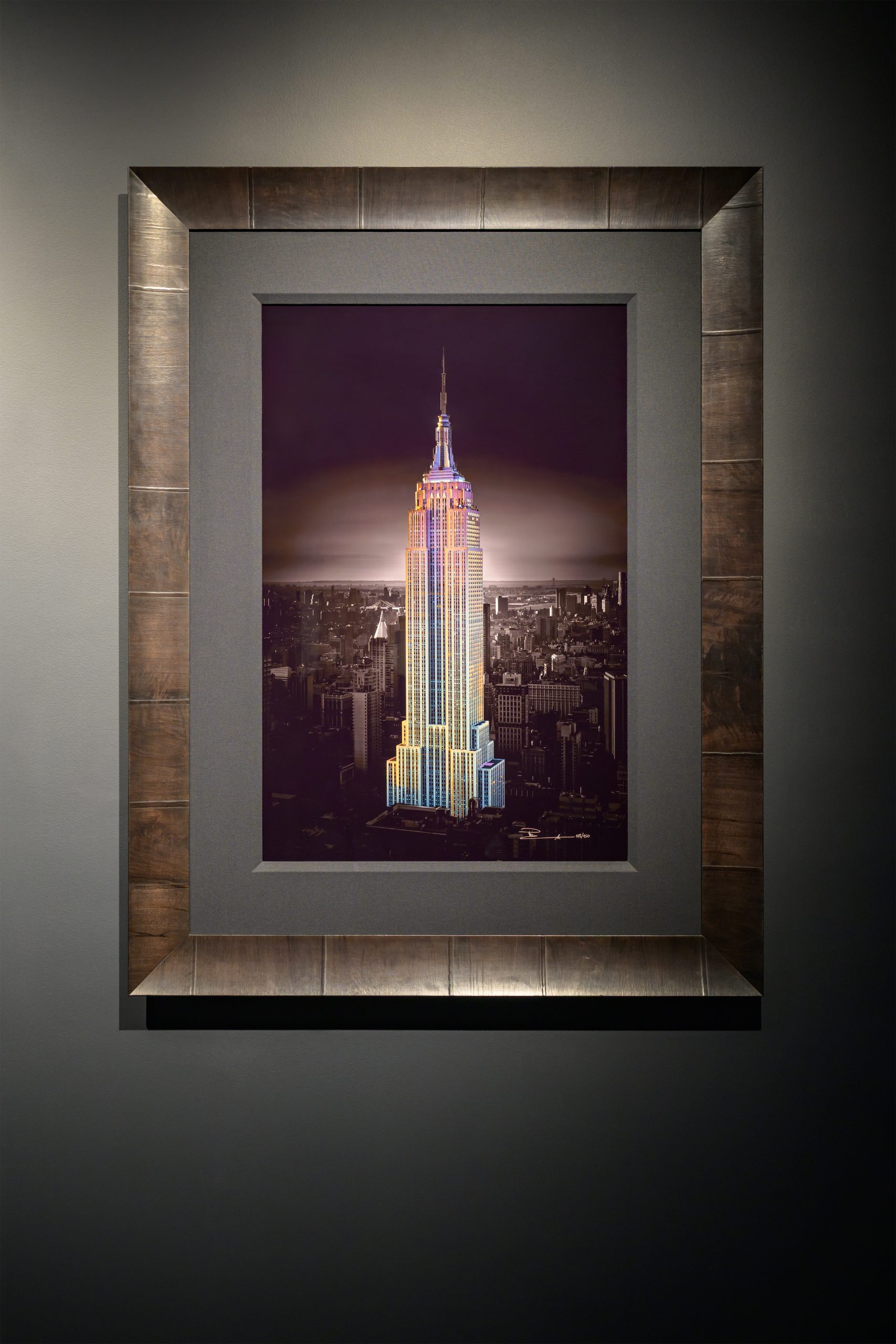
Angled ceiling light preventing glare on framed photograph
Not all artwork should be lit the same way. As consultants, we always adjust ceiling mounted art lighting strategies based on the medium, scale, and finish of the piece.
Oil Paintings
Oil paintings benefit from controlled directional lighting that enhances texture and depth. Ceiling mounted art spotlights angled correctly will reveal brushwork and layering without causing glare on varnish.
Canvas Artwork
Canvas pieces typically absorb light more softly, meaning ceiling artwork lights with a slightly wider beam can produce a more even and natural illumination.
Photographs and Glass-Framed Art
These require careful positioning. Ceiling mounted art lights should be angled to prevent reflections, especially in gallery and collector settings where glass glazing is common.
Sculptures and Mixed Media
For three-dimensional works, ceiling mounted art lighting is often layered. One light provides the primary focus while a secondary softer beam enhances form and shadow.
Ceiling Height and Its Impact on Art Lighting Performance

Medium beam spotlight in standard ceiling gallery
Another factor that significantly affects ceiling mounted art lights is ceiling height. This is something rarely discussed in generic lighting guides but is critical in professional installations.
For standard ceiling heights (2.4m–2.7m):
- Medium beam ceiling spotlights work best
- Moderate lux levels are sufficient
For high ceilings (3m+):
- Higher output led ceiling spotlight fixtures are required
- Narrow beam control becomes more important
- Precise aiming is essential to avoid light spill
In gallery spaces with high ceilings, ceiling mounted art lighting must be engineered rather than simply installed. Otherwise, the artwork may appear dim despite using powerful fixtures.
The Importance of High CRI in Ceiling Mounted Art Lights
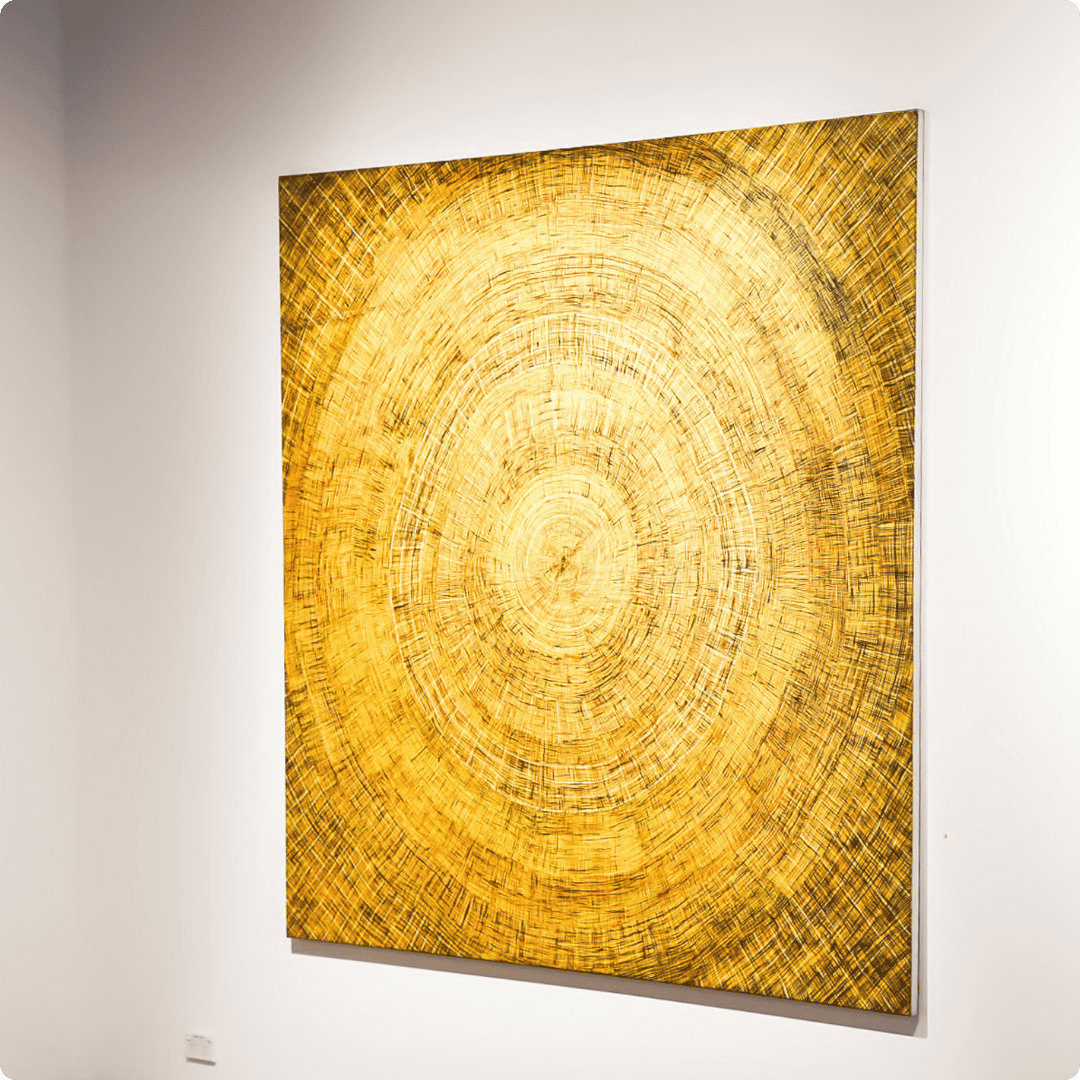
High CRI spotlight revealing accurate pigment colours
CRI, or Colour Rendering Index, is one of the most important specifications in art lighting. Standard lighting might have a CRI of 80, but museum-grade ceiling mounted art lights typically operate at CRI 90–97+.
Higher CRI means:
- True colour accuracy
- Enhanced pigment visibility
- More natural visual perception
- Better representation of artist intent
For collectors and galleries, this is non-negotiable. Poor CRI lighting can distort colours and reduce the perceived value of the artwork.
Ceiling Mounted Art Lighting for Residential Gallery Walls
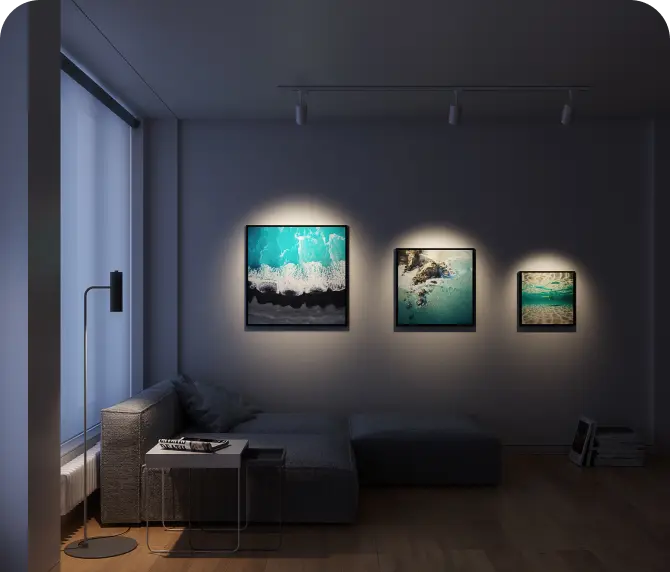
Luxury home gallery wall with ceiling spotlights
Luxury homes are increasingly adopting gallery-style lighting layouts. Instead of relying on ambient lighting, homeowners are installing ceiling mounted art lights to create a curated, museum-like atmosphere.
In residential gallery walls, ceiling mounted art lighting allows:
- Even illumination across multiple frames
- Flexible spotlight positioning
- Clean architectural aesthetics
- Enhanced interior design cohesion
This approach is especially effective in living rooms, hallways, and private art corridors where artwork is a focal design element rather than a secondary decoration.

Integrating Ceiling Mounted Art Lights with Track Systems

Layered ceiling and track lighting enhancing artwork
In advanced lighting projects, we often combine ceiling mounted art lights with gallery track lighting systems. This hybrid approach provides both permanence and flexibility.
Fixed ceiling mounted art spotlights can be used for:
- Signature artworks
- Permanent installations
- Architectural focal pieces
While track lighting handles:
- Rotating exhibitions
- Seasonal artwork changes
- Expanding collections
This layered lighting strategy is commonly used in museums and high-end galleries to maintain adaptability without compromising precision.
Common Mistakes We See in Ceiling Mounted Art Lighting Installations
Even with premium fixtures, poor planning can reduce the effectiveness of art lighting. Some of the most frequent mistakes include installing lights too close to the wall, using beams that are too wide, and relying on general ceiling lights instead of dedicated ceiling mounted art lighting.
Other common errors include:
- Incorrect colour temperature (too cool or too warm)
- Uneven spacing between ceiling artwork lights
- Ignoring glare angles
- Over-lighting delicate artwork
Professional lighting design avoids these issues by treating artwork lighting as a specialised discipline rather than general interior lighting.
Colour Temperature Recommendations for Artwork Illumination

Consistent colour temperature maintaining visual harmony
Colour temperature plays a psychological and visual role in how artwork is perceived. As consultants, we rarely recommend overly cool lighting for art unless specifically required for a contemporary exhibition style.
Typical recommendations:
- 2700K: Warm, ideal for classic and traditional art
- 3000K: Balanced and widely used in galleries
- 3500K: Slightly cooler, suitable for modern artworks
The key is consistency. Mixing colour temperatures across ceiling mounted art lights can create visual imbalance on a gallery wall.
FAQ: Ceiling Mounted Art Lights
Are ceiling mounted art lights suitable for museums?
Yes, ceiling mounted art lighting is widely used in museums because it provides controlled, conservation-safe illumination with precise beam direction and minimal visual intrusion.
What lux level is recommended for artwork lighting?
For sensitive artwork such as paintings and paper-based works, museums often use lower lux levels to preserve the artwork while still ensuring clear visibility. Precision placement matters more than high brightness.
Can ceiling mounted art lights be dimmed?
High-quality ceiling mounted art lights are typically dimmable, allowing lighting levels to be adjusted depending on the artwork, environment, and time of day.
Do ceiling mounted art spotlights damage paintings?
When using museum-grade LED fixtures with proper beam control and low UV output, ceiling mounted art spotlights are safe for artwork and widely used in conservation-focused environments.
How far should ceiling mounted art lights be from the wall?
A common guideline is to position ceiling mounted art lighting approximately one-third of the ceiling height away from the wall, then adjust the angle to around 30 degrees for optimal illumination.
Are ceiling mounted art lights better for large paintings?
Yes. Large paintings benefit significantly from ceiling mounted art lights because they allow layered and even illumination across the full surface without relying on a single central light source.
What is the difference between ceiling mounted art lighting and recessed art lighting?
Ceiling mounted art lighting is surface-mounted and adjustable, while recessed lighting is built into the ceiling. Surface-mounted fixtures typically offer greater aiming flexibility and beam precision.
Can ceiling mounted art lights be used in galleries and homes?
Absolutely. The same ceiling mounted art lighting principles used in museums are increasingly applied in luxury homes, private collections, and designer interiors.
Do professionals use ceiling mounted art lights or wall lights?
In most professional environments, ceiling mounted art lights or track-mounted spotlights are preferred because they offer superior control, cleaner aesthetics, and better adaptability compared to wall-mounted picture lights.
Is LED the best option for ceiling mounted art lighting?
Yes. LED ceiling spotlight technology is now the standard for art lighting due to its longevity, colour accuracy, low heat output, and conservation-friendly performance.
From a consultant’s perspective, ceiling mounted art lights represent one of the most refined and versatile methods of illuminating artwork. When specified correctly, they elevate presentation, protect the artwork, and create a viewing experience that feels intentional, balanced, and museum-grade rather than simply decorative.
FAQ: Ceiling Mounted Art Lights (Extended)
What are ceiling mounted art lights called?
They are typically referred to as ceiling mounted art spotlights, artwork spotlights, or museum-grade ceiling art lighting fixtures designed specifically to illuminate paintings and displays.
Are LED ceiling spotlights safe for artwork?
Yes, high-quality LED ceiling spotlight systems are considered safe for artwork because they emit minimal UV and heat, reducing the risk of fading or damage compared to traditional lighting sources.
What is the best ceiling spotlight for artwork?
The best ceiling spotlight for artwork is one that offers adjustable beam angles, high CRI (90+), stable color temperature, and precise aiming capabilities. Museum-grade fixtures are always preferred over generic ceiling lights.
How many ceiling mounted art lights do I need for one painting?
This depends on the artwork size. Small paintings may require one focused ceiling mounted art spotlight, while large paintings often need two or more fixtures to achieve even illumination without hotspots.
Do ceiling artwork lights cause glare on framed art?
They can if installed incorrectly. Proper angling and beam control are essential to prevent glare, especially on glass-covered artwork.
Are ceiling mounted art lights better than wall picture lights?
From a professional perspective, ceiling mounted art lighting provides greater flexibility, cleaner aesthetics, and more precise control compared to wall-mounted picture lights, particularly in gallery and museum environments.
Can ceiling mounted art lights be used in homes?
Absolutely. Many luxury homes and collectors use ceiling artwork lights to replicate a gallery-style presentation for their private collections.
What color temperature is best for ceiling mounted art lighting?
Typically, 2700K to 3000K is recommended for most artwork, as it enhances warmth and color accuracy without making the piece appear overly cool or clinical.
Do I need professional consultation for art lighting?
For valuable artwork, yes. Proper ceiling mounted art lighting involves beam angles, lux levels, and artwork preservation considerations that go beyond standard interior lighting design.
See Why Clients Trust Our Lighting Systems for Every Project