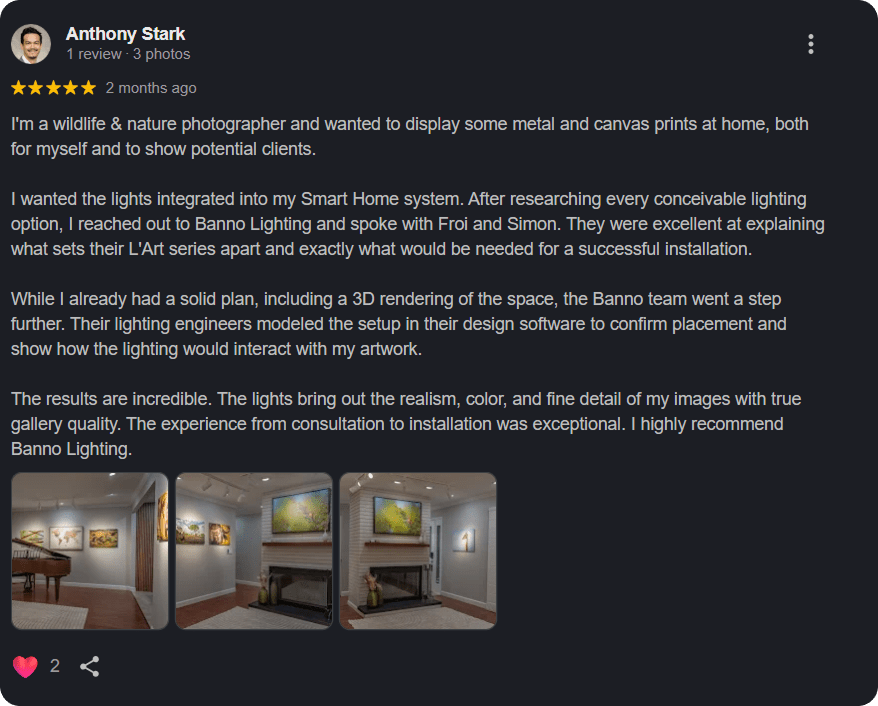
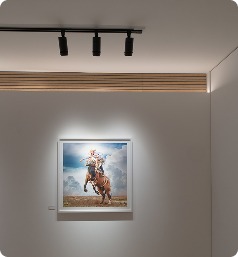
Colour temperature for lighting paintings

Warm 2700K spotlight enhancing master painting presence
Most professional galleries light paintings at 3000K.
3000K:
• Feels warm yet neutral
• Preserves colour accuracy
• Supports a wide range of painting styles
• Builds buyer confidence
Some galleries use 2700K selectively on master paintings where warmth enhances emotional presence. This must be done intentionally and usually with Multi control to avoid yellowing whites or distorting cooler tones.
Cooler temperatures are rarely used for paintings as they flatten tonal nuance and feel clinical.
Glare control on varnished and glazed paintings

Precision optics reducing reflections across glossy surfaces
Glare is one of the biggest challenges when lighting paintings.
Professional art lighting addresses glare through:
• Precision optics
• Correct beam angles
• Proper track placement
• Thoughtful aiming
When glare is controlled, viewers can approach paintings comfortably and engage fully with surface detail.

4.9 stars & reviews from art collectors and galleries
Consistency across painting displays

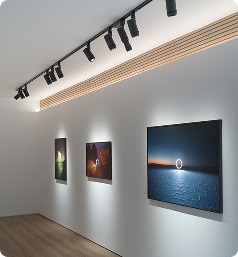
Uniform brightness maintained evenly across gallery walls
Consistency is critical in painting galleries.
Lighting should:
• Match in colour and intensity across fixtures
• Feel balanced wall to wall
• Remain stable over time
Inconsistent lighting undermines trust. Collectors notice when paintings look different depending on where they hang.
Professional systems are designed to maintain consistency exhibition after exhibition.
Long-term thinking in painting lighting

Reliable performance reducing maintenance and disruption
Art lighting for paintings should be designed once, properly.
A professional system allows:
• Years of exhibitions without replacement
• Easy rehanging
• Reduced maintenance
• Long-term cost efficiency
Short-term fixes always lead to long-term compromise.
The Impact of Beam Angle Selection on Painting Presentation
Beam angle selection is one of the most overlooked yet critical aspects of lighting paintings. While brightness and colour accuracy often receive attention, the shape and spread of light determine how a painting is framed visually within the space.
A narrow beam angle creates a focused pool of light that isolates the painting from its surroundings. This works particularly well for smaller or high-value works where emphasis is essential. A wider beam angle, on the other hand, is better suited for larger paintings, ensuring even coverage without creating hotspots or falloff at the edges.
Incorrect beam selection leads to common issues such as uneven illumination, excessive spill onto walls, or a lack of visual definition. Professional gallery lighting systems allow for precise beam control or adjustable optics, ensuring that each painting is lit according to its size, scale, and importance within the exhibition.
Balancing Light Intensity Across Different Paintings
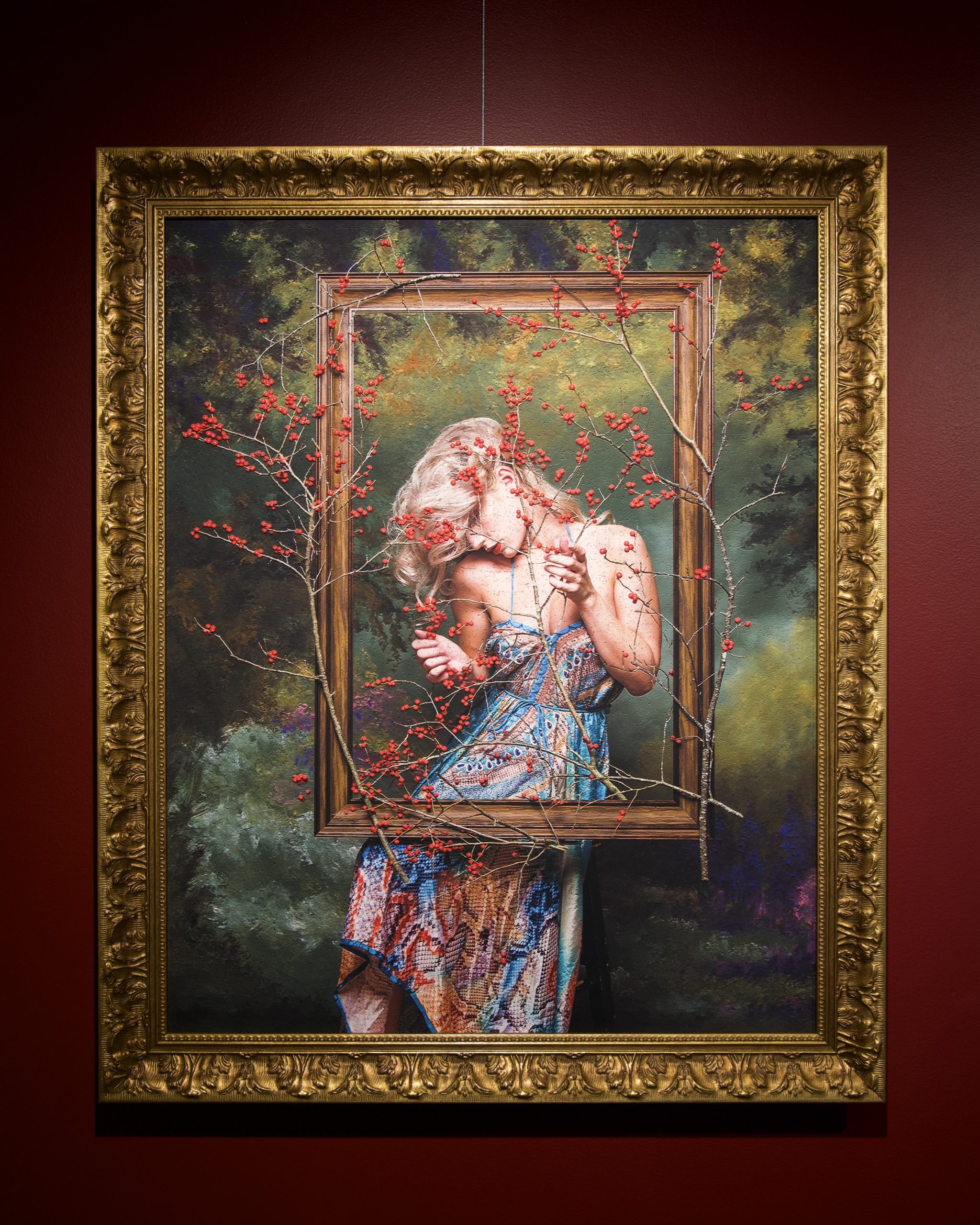
Controlled dimming preventing overexposure on light-toned contemporary artworks.
Not all paintings should be lit at the same intensity. Variations in size, colour palette, and medium require thoughtful adjustment of brightness levels to achieve a cohesive display.
For example:
• Dark-toned paintings may require slightly higher intensity to reveal detail
• Light-toned works need careful control to avoid overexposure
• Highly textured surfaces benefit from moderate intensity with angled light
• Delicate works require softer illumination to maintain subtlety
Balancing intensity ensures that no single painting overpowers another unless intentionally curated to do so. It also helps maintain a comfortable viewing environment where the eye can move naturally across the space without strain.
Professional lighting systems with smooth dimming capabilities make this level of control possible, allowing galleries to fine-tune presentation with precision.
The Role of Distance Between Light and Painting
The distance between the lighting fixture and the painting directly affects both the quality and distribution of light. This relationship is often underestimated but plays a crucial role in achieving professional results.
When fixtures are positioned too close:
• Hotspots become more pronounced
• Beam edges may appear harsh
• Glare risk increases
When fixtures are too far:
• Light spreads excessively
• Intensity drops
• Paintings lose definition
Optimal positioning ensures that the beam covers the painting evenly while maintaining controlled edges and sufficient intensity. This balance is typically achieved through careful planning of track placement relative to wall height and viewing distance.
Understanding this relationship allows galleries to achieve consistent results across different wall configurations.
Lighting Vertical Surfaces Versus Angled Displays
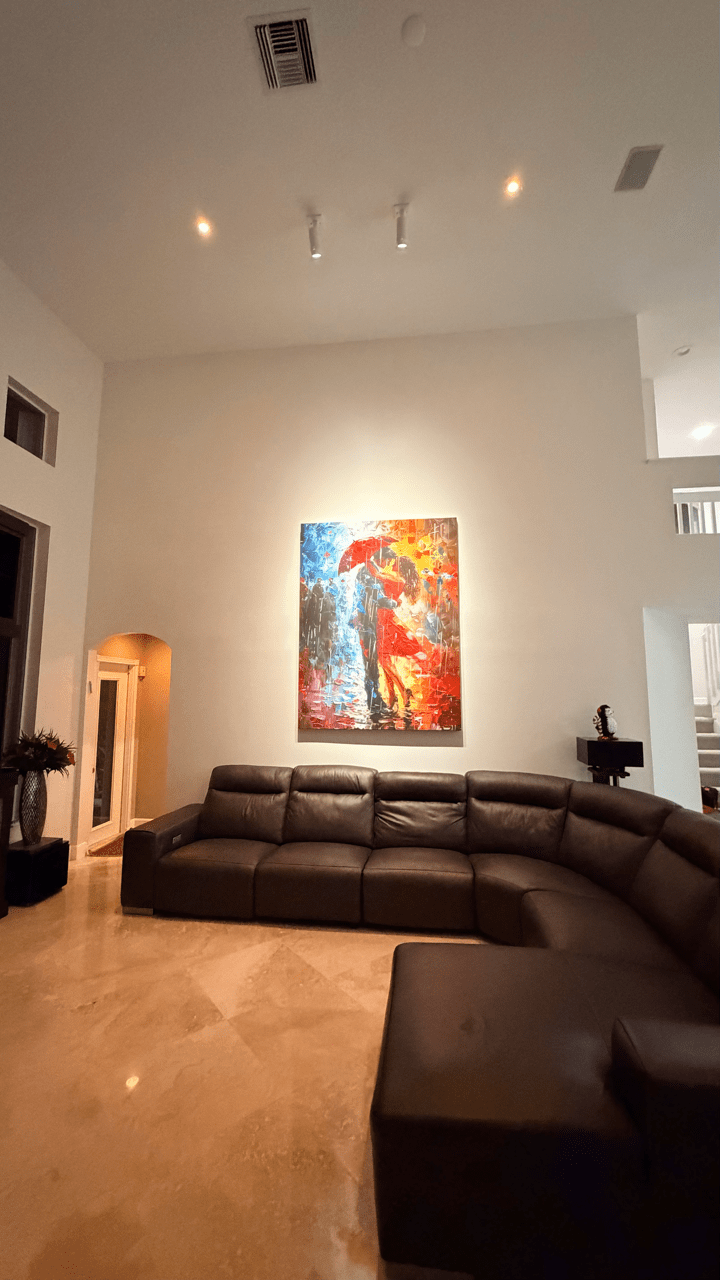
Consistent top-to-bottom illumination for standard vertical wall-mounted paintings.
Most paintings are displayed vertically, but some exhibitions incorporate angled or freestanding displays. Each scenario requires a different lighting approach.
Vertical wall-mounted paintings benefit from:
• Consistent beam angles
• Even top-to-bottom illumination
• Minimal shadow distortion
Angled or freestanding displays may require:
• Adjusted aiming angles
• Multiple light sources for even coverage
• Careful glare management
Adapting lighting techniques to suit the display method ensures that paintings are presented optimally regardless of how they are installed within the space.
Minimising Light Spill and Visual Distraction
Light spill occurs when illumination extends beyond the intended area, affecting surrounding walls or adjacent artworks. In painting galleries, this can create visual clutter and reduce the clarity of individual works.
Controlling light spill helps:
• Maintain clean visual boundaries around each painting
• Prevent interference between neighbouring artworks
• Enhance overall gallery cohesion
Professional lighting fixtures are designed with precise optics that minimise spill and maintain sharp beam edges. This level of control is essential for creating a refined and distraction-free viewing environment.
The Relationship Between Lighting and Framing

Careful aiming reducing reflections on glossy or metallic frames.
Frames play an important role in how paintings are perceived, and lighting must take them into account. Different frame finishes interact with light in unique ways.
Considerations include:
• Glossy frames that reflect light and require careful aiming
• Deep frames that create shadow lines
• Metallic finishes that can produce highlights or glare
Lighting should enhance both the painting and its frame without drawing unnecessary attention to reflective elements. Achieving this balance requires precise positioning and adjustment of the light source.
Supporting Visual Flow Across the Gallery
A successful gallery experience depends on how smoothly visitors move from one painting to another. Lighting plays a key role in guiding this flow.
Consistent spacing, intensity, and beam alignment help:
• Create a rhythm along the walls
• Encourage natural movement through the space
• Prevent visual fatigue
When lighting is inconsistent, the viewing experience becomes fragmented. Visitors may skip works or feel disoriented.
By maintaining a coherent lighting strategy, galleries can ensure that each painting contributes to a seamless and engaging journey.
Adjusting Lighting for Changing Natural Light Conditions

Artificial lighting maintaining consistent color perception throughout the day.
Some galleries receive natural daylight, which can change throughout the day and affect how paintings are perceived.
Artificial lighting must be designed to:
• Compensate for fluctuations in daylight
• Maintain consistent colour perception
• Prevent shadows or glare caused by external light sources
In spaces with significant daylight, dimmable systems and careful positioning become even more important. This allows galleries to maintain control over the viewing environment regardless of external conditions.
Enhancing Texture Through Directional Lighting
Texture is a defining characteristic of many paintings, particularly those with heavy brushwork or layered materials. Directional lighting can enhance this texture by creating subtle shadows that reveal surface variation.
Key techniques include:
• Angling light slightly off-axis to create shadow definition
• Avoiding flat, front-facing illumination
• Balancing texture enhancement with glare control
When done correctly, directional lighting brings paintings to life, allowing viewers to appreciate the physical qualities of the artwork in addition to its visual composition.
Avoiding Overlighting and Preserving Subtlety

Soft illumination levels preserving the emotional impact of paintings.
Overlighting is a common mistake in galleries. While it may seem that brighter is better, excessive light can wash out detail and reduce the emotional impact of a painting.
Overlighting can:
• Flatten tonal variation
• Increase glare and reflections
• Create visual discomfort
Professional lighting design focuses on achieving the right level of illumination rather than maximum brightness. Subtlety is key, allowing paintings to retain their depth and character.
The Importance of Uniform Beam Quality
Beyond intensity and colour, the quality of the beam itself affects how paintings are perceived. High-quality beams are smooth, consistent, and free from irregularities.
Poor beam quality can result in:
• Uneven light distribution
• Visible artefacts or rings within the beam
• Distracting patterns on the painting surface
Professional fixtures are engineered to deliver clean, uniform beams that enhance clarity without introducing visual noise.
Coordinating Lighting with Exhibition Themes

Minimalist lighting design emphasizing clean lines for modern displays.
Different exhibitions may have distinct themes or moods, and lighting can be adapted to support these concepts.
For example:
• Contemporary exhibitions may benefit from slightly higher contrast
• Traditional works may require softer, more even lighting
• Minimalist displays may emphasise clean, controlled illumination
Aligning lighting with the curatorial vision enhances the overall impact of the exhibition and creates a more immersive experience for visitors.
Simplifying Installation and Adjustment Processes
Efficient installation and adjustment are important for galleries that change exhibitions frequently. Lighting systems should be intuitive and easy to work with.
Features that support this include:
• Tool-free adjustment mechanisms
• Clear aiming controls
• Flexible positioning within track systems
Simplified processes reduce setup time and minimise disruption during exhibition changes, allowing galleries to focus on presentation rather than technical challenges.
Building Confidence Through Professional Presentation

Accurate art presentation minimizing distractions for a professional feel.
Ultimately, the goal of lighting paintings is to create an environment where viewers feel confident in what they see. Every aspect of lighting contributes to this perception.
Professional presentation ensures that:
• Paintings are shown accurately
• Visual distractions are minimised
• The gallery environment feels intentional and refined
This confidence is essential for both collectors and artists, reinforcing trust in the gallery and its ability to present artwork at a high standard.
Extending the Value of Lighting Investment
Investing in high-quality lighting systems provides long-term benefits beyond individual exhibitions. A well-designed system continues to deliver value over time through reliability, flexibility, and consistent performance.
Long-term advantages include:
• Reduced need for upgrades
• Lower maintenance requirements
• Adaptability to different exhibition formats
By prioritising quality and thoughtful design from the outset, galleries can ensure that their lighting remains effective and relevant for years to come.
Closing Addition to Painting Lighting Strategy

Precise and consistent environments where paintings are valued correctly.
Lighting paintings at a professional level requires attention to detail at every stage, from initial planning to final adjustment. Each decision influences how the artwork is perceived, experienced, and valued.
By focusing on precision, balance, and consistency, galleries can create an environment where paintings are presented with clarity and confidence. This not only enhances the viewing experience but also supports the long-term success of the gallery as a whole.
Frequently Asked Questions

High CRI spotlight revealing subtle pigment transitions
What is the best lighting for paintings?
The best lighting for paintings is track-based gallery lighting with CRI 97+ colour accuracy, smooth dimming, and precise beam control. This allows paintings to be lit accurately, comfortably, and consistently across different sizes and mediums.
Why is CRI 97+ important for lighting paintings?
CRI 97+ ensures colours are rendered truthfully. Paintings rely on subtle pigment relationships that are lost under lower CRI lighting. High CRI lighting builds trust with artists and collectors by showing the artwork honestly.
Should painting lights be dimmable?
Yes. Dimming is essential. Paintings vary in sensitivity, surface reflectivity, and scale. Dimmable lighting allows galleries to fine-tune presentation, reduce glare, balance walls, and protect artwork without changing fixtures.
Is LED lighting suitable for paintings?
Yes. Professional-grade LED lighting is the preferred choice for galleries and museums. When specified correctly, LED provides CRI 97+ colour accuracy, low heat, long-term stability, and excellent dimming performance.
Is track lighting best for lighting paintings?
Track lighting is the preferred solution because it allows precise aiming, easy repositioning, and flexibility as exhibitions change. However, the fixtures must be designed specifically for art, not retail or residential use.
What colour temperature should be used for lighting paintings?
Most professional galleries use 3000K. It provides a neutral yet warm appearance and supports accurate colour perception. 2700K is used selectively for master works when additional warmth is appropriate.
How do you avoid glare when lighting paintings?
Glare is avoided through controlled beam optics, correct aiming angles, appropriate track placement, and careful dimming. Proper lighting design is essential.
Final perspective on art lighting for paintings

Intentional illumination revealing honest colour and texture
Art lighting for paintings is not decorative. It is part of the artwork’s presentation.
When lighting is done properly:
• Paintings feel present
• Colour and texture are revealed honestly
• Visitors engage longer
• Buyers feel confident
• The gallery’s reputation strengthens
This is the role of professional art lighting.
Why galleries choose Banno Lighting
Galleries work with Banno Lighting because we understand paintings and lighting at a professional gallery level.
We provide:
• Expert guidance
• Professional lighting plans
• Track-based gallery lighting systems
• Zoom, Multi, and Deluxe solutions
• CRI 97+ colour accuracy
• Smooth, stable dimming
• Long-term support
If you want art lighting for paintings that respects the artwork, supports sales, and adapts over time, professional systems and guidance are essential.
What art collectors and gallery clients say about us?