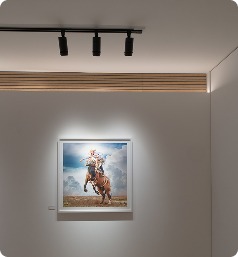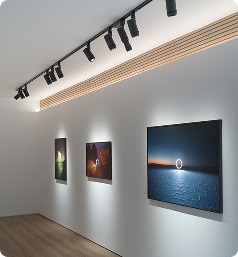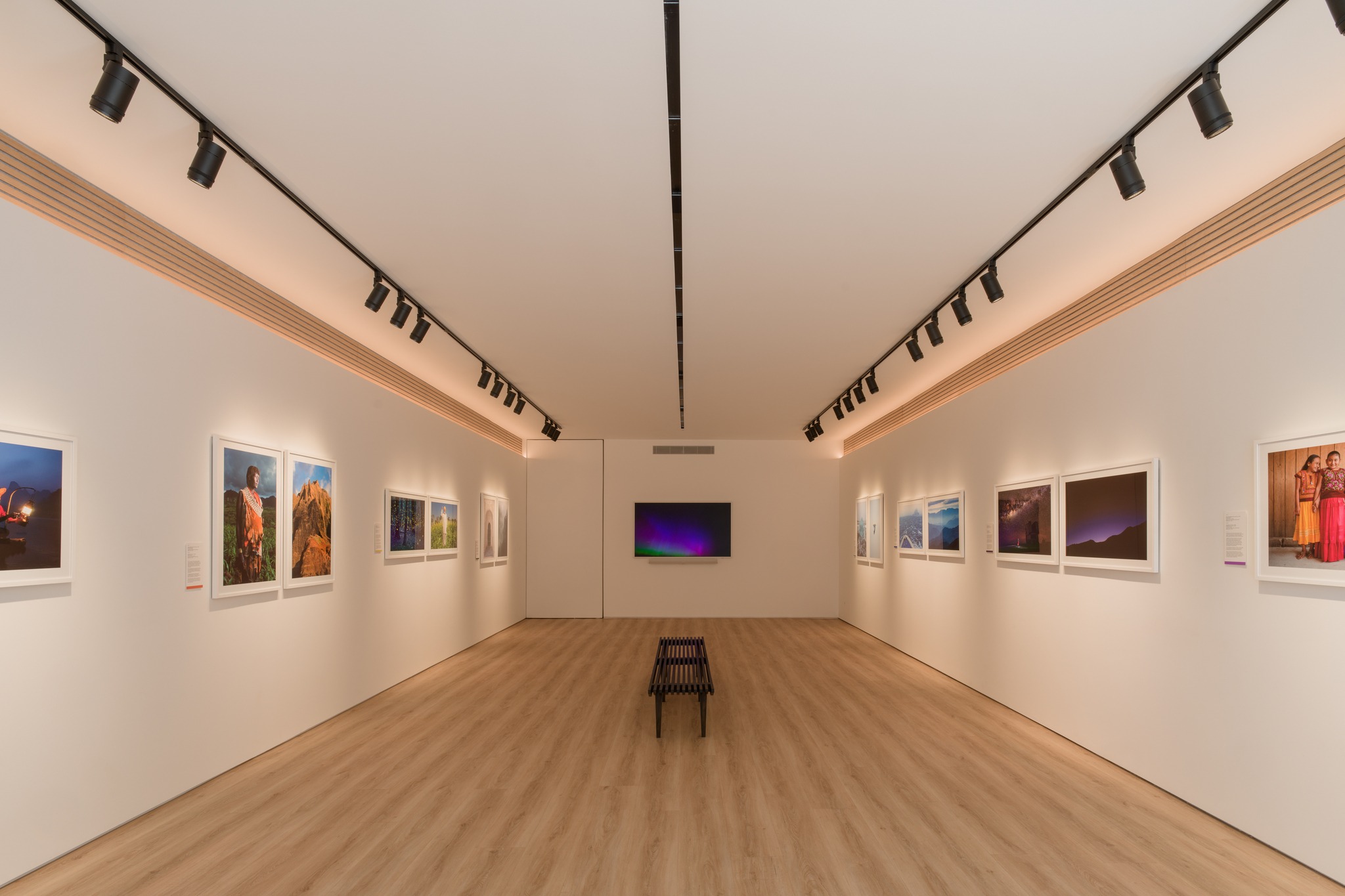
Minimalist ceiling track lighting reduces visual clutter in modern gallery spaces.
LED track lighting for art gallery environments is not just about illumination. It is about control, precision, preservation, and presentation. As art lighting consultants, we have developed this complete guide to LED lighting for art galleries to explain one simple truth to collectors, curators, and designers: the lighting determines how the artwork is perceived, valued, and emotionally experienced.
In professional settings, using track lighting in art gallery environments is the preferred standard because it allows flexible positioning, accurate beam control, and museum-level focus. Unlike generic ceiling lights, these dedicated systems are engineered specifically to highlight fine art without visual distraction.
When done correctly, LED track lighting for art gallery walls can transform flat artwork into dimensional, vibrant pieces that feel alive. When done poorly, even a masterpiece can look dull, washed out, or poorly presented.
Why LED Track Lighting for Art Gallery Spaces Is the Professional Standard

Professional LED track lighting provides adjustable positioning for rotating art displays.
In galleries and museums, lighting must adapt to changing exhibitions, different artwork sizes, and varied wall layouts. This is why gallery lighting track systems are widely used in professional spaces instead of fixed lights.
Track lighting for art gallery applications allows:
- Adjustable positioning for changing exhibitions
- Precise beam direction
- Even wall washing or focused spotlighting
- Minimal visual clutter on ceilings
- Scalable lighting across large gallery walls
Unlike traditional lighting, gallery track lighting LED systems provide consistent output, low heat, and stable color rendering, which is essential for preserving artwork over time.
From a consultant perspective, flexibility is everything. A gallery may rotate exhibitions every few months, and a fixed lighting system cannot adapt. Track lighting for galleries allows curators to reposition lights instantly without rewiring the ceiling.

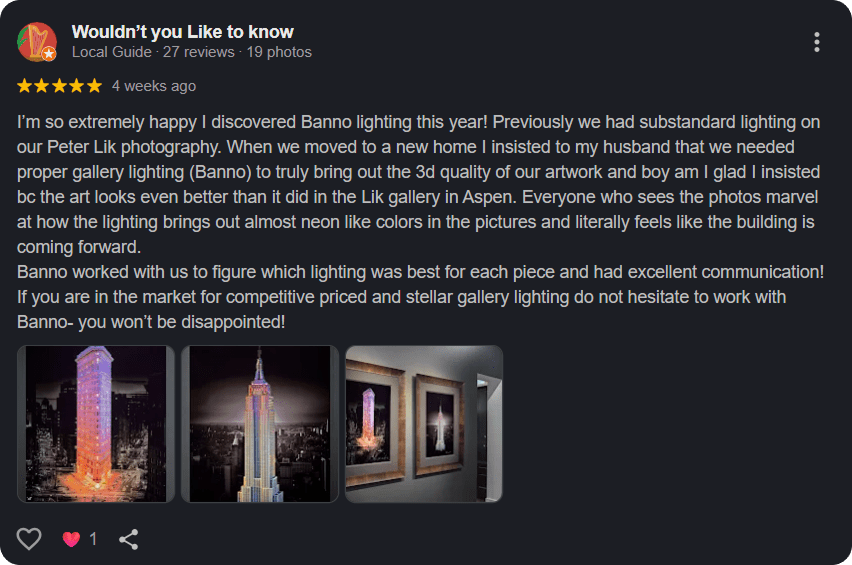
4.9-Star Google Review for Our Art Lighting Solutions
What Is the Best LED Track Lighting for Art Gallery Displays?

Precision track lighting with anti-glare optics enhances fine art textures.
The best professional LED track lighting systems for art galleries are defined by three key factors: beam control, color accuracy, and adjustability.
High-quality systems used in professional gallery track lighting setups typically include:
- High CRI (90–97+) for true color rendering
- Adjustable beam angles
- Anti-glare optics
- Smooth dimming capability
- Stable color temperature (typically 3000K–3500K)
Best track lighting for art gallery spaces is not about brightness alone. It is about controlled illumination that enhances texture, brush strokes, and tonal depth without creating harsh reflections.
When selecting LED track lighting for art gallery installations, we always prioritize optics over raw lumen output. A controlled beam will outperform a bright but uncontrolled light every time.
Gallery Track Lighting LED vs Standard Lighting Fixtures

Directional track lighting reduces light spill and unwanted wall glare.
Many people assume any ceiling light can be used for artwork. This is a major misconception.
Standard lighting:
- Spreads light too widely
- Creates glare on framed pieces
- Lacks directional precision
- Often distorts artwork colors
Gallery track lighting LED systems, on the other hand:
- Focus light exactly where needed
- Reduce spill light on surrounding walls
- Highlight artwork intentionally
- Maintain visual hierarchy in the space
In gallery lighting track design, less light is often more effective. Strategic placement of fewer, higher-quality fixtures produces a more refined and professional result.
Museum-Quality Lighting and LED Track Systems

Focused museum spotlights highlight objects while maintaining stable color rendering.
LED track lighting museum standards are significantly higher than residential lighting. Museums use museum quality lighting that minimizes UV, reduces heat exposure, and maintains consistent color rendering.
Museum-grade track lighting for art display is designed to:
- Protect sensitive artworks
- Prevent pigment fading
- Provide stable illumination over long hours
- Deliver precise spotlighting on display pieces
LED track lighting museum systems also allow curators to use focused beams rather than flooding entire walls with light. This aligns with a key museum philosophy: highlight the object, not the ceiling.
Track Lighting for Art Display and Large Paintings

Zoomable track fixtures adjusting beam width for oversized paintings.
Large artworks require specialized lighting strategy. Using a single wide beam often creates uneven illumination and shadow zones.
For large-scale pieces, professional track lighting for art display typically uses:
- Multiple adjustable heads
- Narrow to medium beam control
- Layered lighting angles
- Even vertical illumination
Lights for large paintings should be positioned to eliminate hotspots while preserving depth and texture. This is where precision gallery spotlight track lighting becomes essential.
In many high-end galleries, ceiling mounted track lighting is combined with zoomable fixtures that can adjust beam width depending on the artwork size.
How to Use Track Lighting for Art Gallery Walls

Consistent color temperature lighting creating a cohesive exhibition viewing experience.
Using track lighting for gallery wall layouts requires intentional placement and spacing. The goal is to guide the viewer’s eye naturally across the artwork.
Best practices include:
- Position lights at a 30-degree angle to reduce glare
- Avoid direct overhead placement
- Space fixtures evenly along the track
- Use consistent color temperature across the gallery
Track lighting for wall art should never feel random. Each fixture should serve a purpose in the visual narrative of the exhibition.
LED Track Lighting for Art Studio and Private Collections

Home art collection illuminated by professional museum-style track lighting systems.
Beyond public galleries, LED track lighting for art studio environments is becoming increasingly popular among artists and collectors. Studio lighting for artists requires accuracy so colors appear true during the creation process.
Best lighting for art studio spaces includes:
- High CRI LED track lighting
- Adjustable beam fixtures
- Neutral white color temperature
- Minimal flicker output
By utilizing high-CRI LED track lighting for gallery artwork, collectors installing track lighting in private homes benefit from the same professional principles used in galleries. This level of color accuracy ensures that proper artwork track lighting elevates the entire interior environment.
Gallery Style Track Lighting vs Decorative Lighting
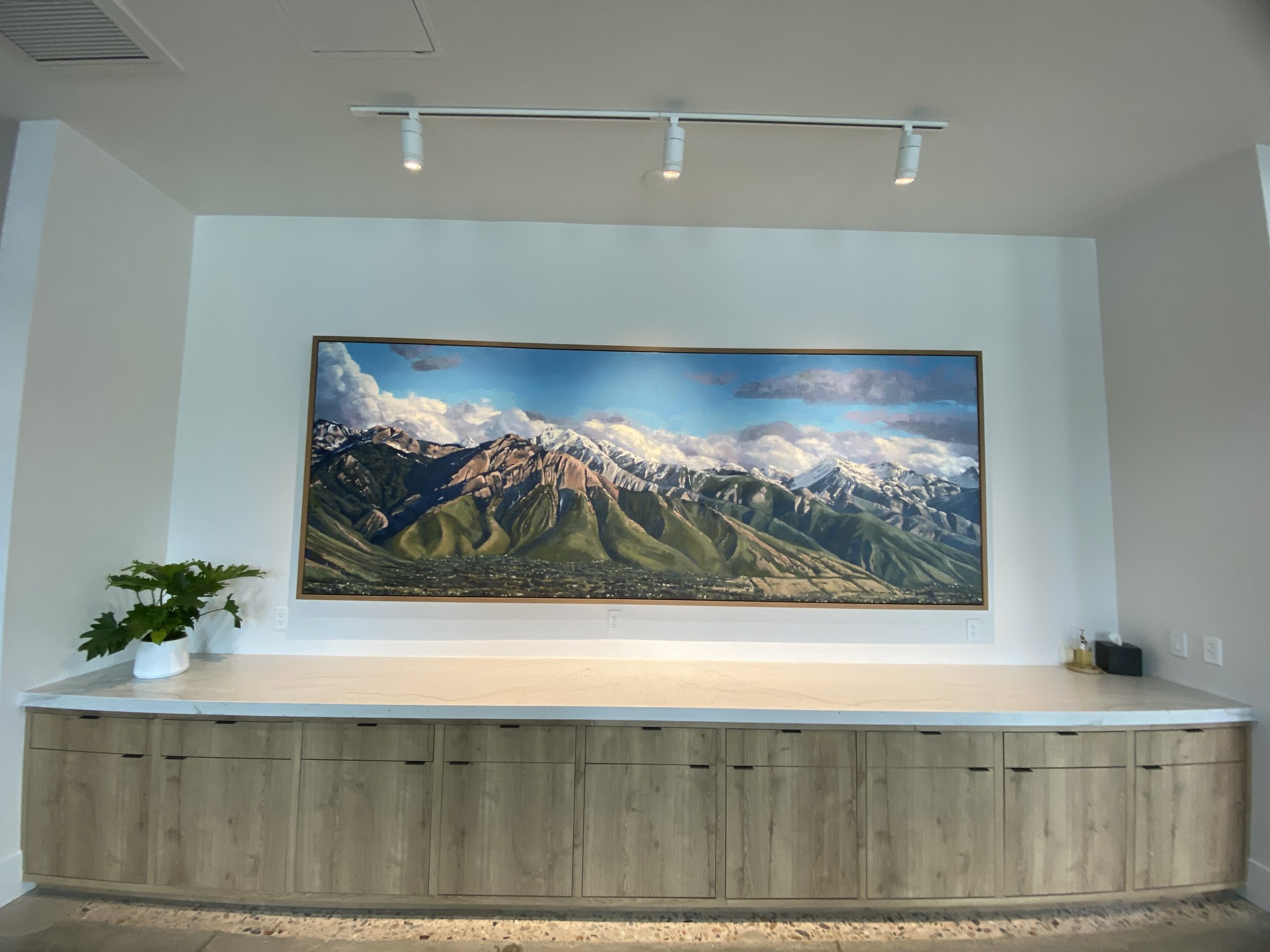
Discreet professional lighting heads integrated seamlessly into a clean ceiling.
Gallery style track lighting is intentionally minimal and functional. Decorative lighting may look stylish but often compromises the presentation of the artwork.
Professional gallery track lighting systems are designed to:
- Disappear visually into the ceiling
- Keep attention on the artwork
- Provide adjustable focus lighting
- Maintain consistent illumination across walls
This approach is widely used in art galleries, museums, luxury residences, and exhibition spaces.
How Many Track Lights Are Needed in an Art Gallery?

Balanced gallery wall illumination achieved through precise light head spacing.
One of the most common mistakes is over-lighting. More fixtures do not always mean better results.
In professional track lighting art gallery design:
- Fewer high-quality lights are preferred
- Each artwork receives dedicated focus
- Beam precision replaces excessive brightness
A carefully designed gallery lighting track layout can illuminate an entire wall using fewer fixtures than standard lighting systems, while achieving superior visual impact.
Color Temperature and LED Track Lighting for Artwork

Consistent color temperature across multiple fixtures for a cohesive exhibition.
Color temperature plays a critical role in art presentation. Most galleries prefer 3000K to 3500K for warm, natural illumination that enhances artwork tones without yellowing or washing out colors.
LED track lighting for art gallery environments should always maintain consistent color temperature across all fixtures to ensure a cohesive viewing experience.
Advantages of LED Track Lighting for Art Galleries

Flexible LED track heads reducing maintenance costs in professional spaces.
When evaluating the long-term benefits of LED lighting in art galleries, it becomes clear why this technology has replaced traditional halogen. Key advantages include:
- Energy efficiency
- Long lifespan
- Low heat emission
- High color accuracy
- Flexible repositioning
LED gallery lighting track systems also reduce maintenance compared to traditional halogen gallery lights.
Advanced Lighting Angles for LED Track Lighting in Art Gallery Settings

Angled track lighting revealing fine brushwork and canvas surface textures.
When specifying LED track lighting for art gallery environments, one of the most overlooked factors is lighting angle. Many galleries install track lighting for art gallery walls but position the fixtures incorrectly, which results in glare, hotspots, and uneven illumination.
Professional artwork track lighting is typically installed at a 30-degree angle from the vertical plane of the artwork. This angle:
- Minimises reflective glare on glass
- Enhances texture and brushwork visibility
- Prevents harsh shadowing
- Creates a balanced visual presentation
Gallery spotlight track lighting should never be placed directly overhead unless it is carefully controlled with optics. Direct downward lighting often flattens the artwork and reduces depth perception.
The Role of Beam Control in LED Track Lighting for Art Gallery Displays
Beam control is one of the defining features that separates basic lighting from true gallery lighting track systems. In art gallery lighting design, different beam angles are used depending on the size and type of artwork.
Common beam strategies include:
- Narrow beam (10–20°) for small paintings and sculptures
- Medium beam (24–36°) for standard artworks
- Wide beam (40°+) for large gallery walls
Best LED track lighting for art gallery installations often includes zoomable optics, allowing curators and designers to fine-tune the beam spread without replacing fixtures. This flexibility is critical in galleries where exhibitions change frequently.
Track lighting for art display should never rely on a single generic beam. Precision optics ensure the artwork is the focal point, not the lighting hardware.
Ceiling Track Lighting for Art and Architectural Integration

Recessed gallery track lighting for a seamless, minimalist architectural look.
Ceiling track lighting for art galleries must be both functional and discreet. In high-end gallery environments, lighting should visually disappear while still delivering museum-quality illumination.
Architectural integration of gallery track lighting LED systems includes:
- Recessed track lighting for minimalist ceilings
- Surface-mounted tracks for flexibility
- Black, white, or custom finishes to match ceiling design
- Linear track layouts aligned with gallery walls
Ceiling-mounted art lighting tracks are especially effective in contemporary gallery spaces where clean aesthetics are essential. The lighting system becomes part of the architectural language rather than a visual distraction.
Track Lighting for Paintings vs Sculptures

Adjustable track heads shaping shadows to reveal sculpture material depth.
Lighting two-dimensional and three-dimensional artworks requires different strategies, even within the same gallery track lighting system.
Track lighting for paintings:
- Focused, even vertical illumination
- Glare control for framed works
- Consistent lux levels across the canvas
Track lighting for sculptures:
- Multi-directional lighting
- Accent lighting from multiple angles
- Shadow shaping to enhance depth
LED track lighting for art gallery spaces often combines multiple adjustable heads to accommodate both paintings and sculptural installations within a single exhibition layout.
Best LED Track Lighting for Art Gallery Walls

Consistent beam angles creating visual rhythm for a photography exhibition.
Gallery wall track lighting is one of the most common applications in both museums and private collections. A well-lit gallery wall creates rhythm, hierarchy, and visual flow between artworks.
Best practices for track lighting for wall art include:
- Even spacing between fixtures
- Matching beam angles across artworks
- Consistent color temperature
- Strategic dimming levels
Track lighting for wall pictures should highlight each piece individually while maintaining overall wall cohesion. Poor lighting distribution can make some artworks appear more important than others unintentionally.
LED Track Lighting for Art Gallery vs Residential Gallery Spaces
There is a significant difference between professional art gallery track lighting systems and residential gallery lighting setups. However, the core principles remain the same.
Professional gallery lighting:
- Higher CRI requirements
- Museum-grade optics
- Lux level control for conservation
- Exhibition flexibility
Residential gallery lighting for art:
- Softer intensity
- Design integration with interiors
- Focus on visual ambiance
- Simplified track configurations
Many collectors now install LED track lighting for artwork in their homes to replicate museum-style presentation, particularly in dedicated art rooms and hallways.
Energy Efficiency and Long-Term Value of LED Track Lighting for Art Galleries

LED track systems reducing power consumption in large-scale art galleries.
Energy efficiency is a major advantage of LED gallery lighting track systems. Traditional halogen gallery lights consume more power and generate excess heat, which can be harmful to artwork over time.
LED track lighting for art gallery environments offers:
- Lower electricity consumption
- Reduced maintenance costs
- Longer fixture lifespan
- Stable performance over thousands of hours
For large galleries and exhibition spaces, this translates into significant operational savings while maintaining superior lighting quality.
How Track Lighting Systems Support Rotating Exhibitions
One of the primary reasons galleries choose track lighting systems for art galleries is adaptability. Exhibition layouts change regularly, and lighting must evolve with them.
Track lighting systems for art galleries allow:
- Repositioning of fixtures along the track
- Easy beam angle adjustments
- Flexible spotlight configurations
- Expansion of lighting zones
This makes track lighting for galleries an investment in long-term operational flexibility rather than a fixed lighting solution.
Modern Track Lighting for Art and Contemporary Galleries

Sleek minimalist track designs for high-end contemporary art spaces.
Modern track lighting for art gallery spaces has evolved significantly with advancements in LED technology. Today’s systems are designed to be more compact, more precise, and visually refined.
Modern LED track lighting features:
- Sleek minimalist designs
- High CRI LED modules
- Integrated dimming controls
- Advanced anti-glare technology
- Silent thermal management
These features make modern gallery track lighting LED systems suitable for luxury galleries, museums, and architectural art spaces.
Track Lighting Fixtures for Art: What Actually Matters

Close-up of high-CRI LED module showing superior optical lens.
When evaluating track lighting fixtures for art, the focus should not be on price or generic specifications. Instead, professional art lighting consultants prioritise performance metrics.
Key factors include:
- CRI (Colour Rendering Index)
- Beam precision
- Glare control
- Build quality
- Optical lens design
- Dimming compatibility
Best track lights for art are designed specifically for artwork illumination, not general room lighting.
LED Track Lighting for Art Studio Environments
Artists and studios require lighting that accurately represents colours during the creative process. LED track lighting for art studio spaces provides directional lighting that reduces shadows on canvases and work surfaces.
Best track lighting for art studio setups includes:
- Neutral white lighting (3500K–4000K)
- Adjustable track heads
- Flicker-free LED output
- Consistent illumination across easels
Track lighting for artists also allows repositioning as studio layouts change, making it highly practical for evolving creative environments.
How to Use Track Lighting in a Gallery Layout Strategically

Balanced ambient and accent lighting for a professional gallery atmosphere.
Using track lighting in a gallery requires a comprehensive plan rather than random fixture placement. Effective track lighting strategies for gallery spaces ensure that the lighting guides the viewer’s journey through the space, creating a narrative that respects the art and the architecture.
Strategic gallery lighting track placement includes:
- Highlighting focal artworks first
- Creating visual rhythm along gallery walls
- Using accent lighting for featured pieces
- Maintaining balanced brightness levels
Track lighting in gallery spaces is not just technical. It is curatorial. Lighting shapes how viewers emotionally engage with the artwork.
Track Lighting Systems for Art Galleries and Scalability
Large galleries and museums often require scalable lighting systems. Track lighting systems for art galleries can be extended, reconfigured, and upgraded over time without major renovations.
Scalable benefits include:
- Modular track extensions
- Interchangeable lighting heads
- Smart lighting integration
- Zone-based dimming systems
This makes artwork track lighting systems ideal for institutions that anticipate long-term growth or evolving exhibition programs.
Glare Reduction in LED Track Lighting for Artwork

Anti-glare baffles on track heads preventing reflections on glass.
Glare is one of the biggest issues in poorly designed gallery lighting. It distracts viewers and diminishes the perceived quality of the artwork.
Professional LED track lighting for artwork uses:
- Anti-glare baffles
- Precision lens optics
- Proper fixture angles
- Controlled beam spread
Reducing glare is essential when lighting framed paintings, glass-protected artworks, and glossy surfaces.
The Psychological Impact of Proper Gallery Lighting

Deep contrast lighting enhancing emotional resonance for exhibition visitors.
Lighting does more than illuminate artwork. It influences perception, emotional response, and perceived value. Studies in museum lighting design show that well-lit artwork is perceived as more important and more visually engaging.
Gallery track lighting enhances:
- Depth perception
- Colour richness
- Texture visibility
- Emotional resonance
This is why professional galleries invest heavily in high-quality LED track lighting for art gallery environments rather than relying on generic lighting solutions.
Future Trends in LED Track Lighting for Art Galleries

Tunable white LED systems for adaptive gallery color temperatures.
The future of gallery lighting track systems is focused on precision, sustainability, and smart control. Emerging trends include:
- Smart dimming systems
- Tunable white LED lighting
- Wireless control integration
- Micro-adjustable optical zoom fixtures
- Ultra-compact museum-grade track heads
These innovations allow galleries to fine-tune lighting conditions based on specific exhibitions, artwork sensitivity, and curatorial intent.
Final Consultant Perspective on LED Track Lighting for Art Gallery Projects

Versatile track lighting solutions for private, commercial, and public art.
From a professional art lighting consultant’s perspective, LED track lighting for art gallery spaces remains the most versatile and effective lighting solution available. It offers unmatched flexibility, museum-grade presentation, and long-term scalability.
Whether the project involves a private collection, commercial gallery, museum, or luxury residence, track lighting for art gallery applications consistently delivers superior results compared to fixed lighting systems.
The key is not just installing track lighting, but designing a gallery lighting strategy that respects the artwork, controls the visual hierarchy, and enhances the overall viewing experience. In high-end art environments, lighting is never an afterthought. It is an essential part of how the art is seen, understood, and valued.
Frequently Asked Questions (FAQ)
1. What is LED track lighting for art gallery use?
LED track lighting for art gallery spaces is an adjustable ceiling-mounted lighting system designed to highlight artwork with precision and flexibility.
2. Is track lighting good for art galleries?
Yes. Track lighting is the industry standard for galleries due to its adjustability, focus control, and professional presentation quality.
3. What is the best LED track lighting for art gallery displays?
The best systems feature high CRI, adjustable beam angles, anti-glare optics, and consistent color temperature.
4. Does LED lighting damage artwork?
High-quality LED art lighting produces minimal UV and heat, making it safer for artwork compared to traditional lighting.
5. What color temperature is best for art galleries?
Typically 3000K to 3500K for natural color rendering and comfortable viewing.
6. How many track lights should be used in a gallery?
It depends on artwork size and spacing, but fewer precision lights are usually more effective than many generic fixtures.
7. Can track lighting be used for large paintings?
Yes, and it is one of the best lighting solutions for large artworks due to adjustable beam control.
8. What is museum quality track lighting?
Museum quality lighting refers to high-precision, low-heat, high-CRI lighting designed to preserve and enhance artworks.
9. Is LED track lighting better than picture lights?
For galleries and exhibitions, track lighting offers far more flexibility and professional control.
10. Where should track lights be positioned for artwork?
Ideally at a 30-degree angle to reduce glare and enhance texture visibility.
11. Can track lighting be adjusted after installation?
Yes, this is one of its biggest advantages for galleries and rotating exhibitions.
12. What CRI is recommended for art gallery lighting?
CRI 90+ is recommended, with 95+ being ideal for fine art.
13. Is track lighting suitable for home art collections?
Yes, many collectors use gallery track lighting in residential spaces.
14. What beam angle is best for artwork?
Narrow to medium beam angles provide focused illumination without spill light.
15. Do galleries use LED track lighting or spotlights?
Most modern galleries use LED track lighting with adjustable spotlight heads.
16. Can track lighting be ceiling mounted in galleries?
Yes, ceiling mounted track lighting is the most common installation method.
17. Is dimming important for art gallery lighting?
Yes, dimming allows curators to adjust lighting intensity based on artwork and ambiance.
18. What lighting is best for oil paintings?
High CRI LED track lighting with controlled beam angles is ideal.
19. How do museums light their artwork?
Museums use precision track lighting systems with focused beams and controlled lux levels.
20. Can LED track lighting be used for sculptures?
Yes, adjustable track heads allow directional lighting for three-dimensional artworks.
21. Is gallery track lighting energy efficient?
Yes, LED systems are highly efficient and long-lasting.
22. What is gallery spotlight track lighting?
It refers to track-mounted fixtures designed to focus light directly on artworks.
23. Can track lighting reduce glare on framed art?
Yes, proper angle positioning significantly reduces glare and reflections.
24. How flexible is track lighting for exhibitions?
Extremely flexible, allowing repositioning without structural changes.
25. Is track lighting suitable for art studios?
Yes, especially for accurate color rendering during the creative process.
26. What type of track lighting do museums use?
Museums typically use high-end LED track lighting with museum-grade optics.
27. Can track lighting highlight gallery walls evenly?
Yes, with proper spacing and beam selection.
28. Does track lighting work for gallery wall layouts?
It is one of the best solutions for gallery wall lighting and multi-art displays.
29. How long does LED track lighting last?
Most high-quality LED systems last 30,000 to 50,000+ hours.
30. Why do professional galleries prefer track lighting over ceiling lights?
Because it offers precision, adaptability, and superior artwork presentation compared to fixed ceiling lighting.
Why Designers and Collectors Trust Our Gallery Lights