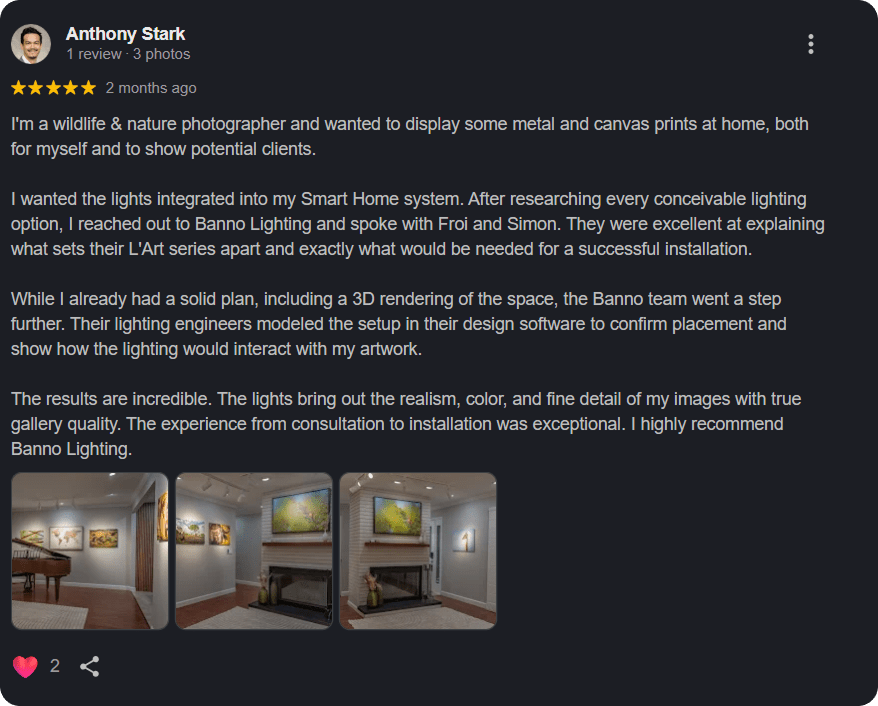
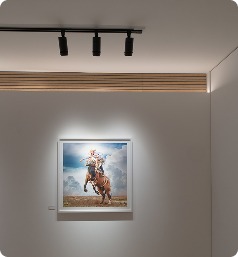
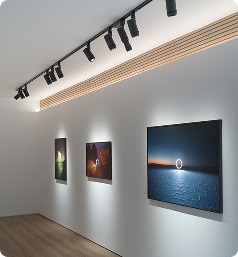
Gallery wall with precision LED art lighting
Wall art lighting is a specialised lighting approach designed to illuminate artwork displayed on walls with precision, balance, and visual clarity. Unlike general room lighting, wall art lighting focuses directly on paintings, framed prints, canvas pieces, and decorative artworks to enhance colour accuracy, texture, and overall presentation without causing glare or damage.
As a complete guide to lighting wall art and gallery pieces, this article explains how the right wall art lighting transforms how artwork is perceived in living rooms, galleries, luxury homes, and commercial spaces. Proper lighting reveals depth, brushwork, and true colour tones while creating a refined focal point within the space.
What Is Wall Art Lighting?

Adjustable picture light mounted above framed artwork
Wall art lighting refers to dedicated lighting fixtures installed specifically to illuminate artwork mounted on walls. These fixtures are designed to deliver precision lighting for wall art and framed pieces, providing controlled, directional illumination that enhances the artwork without overpowering it with harsh ambient light.
Professional wall art lighting typically includes:
- Picture lights mounted above artwork
- Adjustable spotlights
- Track lighting for art walls
- Battery operated wall art lights
- Wireless and rechargeable art lights
Unlike decorative wall lights, true wall art lighting prioritises beam control, colour accuracy, and glare reduction.

4.9-star rated by art collectors and gallery professionals
Why Wall Art Lighting Is Essential for Artwork Presentation

Close-up showing enhanced brushstroke detail
Lighting directly influences how artwork is experienced. Even a high-quality painting or framed artwork can appear flat, dull, or lifeless under poor lighting conditions. Proper wall art lighting enhances visual depth, highlights texture, and creates a gallery-style presentation in both residential and professional environments.
Key benefits of professional wall art lighting include:
- Accurate colour representation
- Reduced glare on framed artwork
- Enhanced texture and detail visibility
- Clear visual focus on the artwork
- Elevated perceived value of art pieces
For collectors, designers, and homeowners, lighting is not just functional. Professional lighting systems for wall-mounted artwork have become a strategic design element that defines how artwork is showcased and experienced within a space.
Types of Wall Art Lighting Fixtures
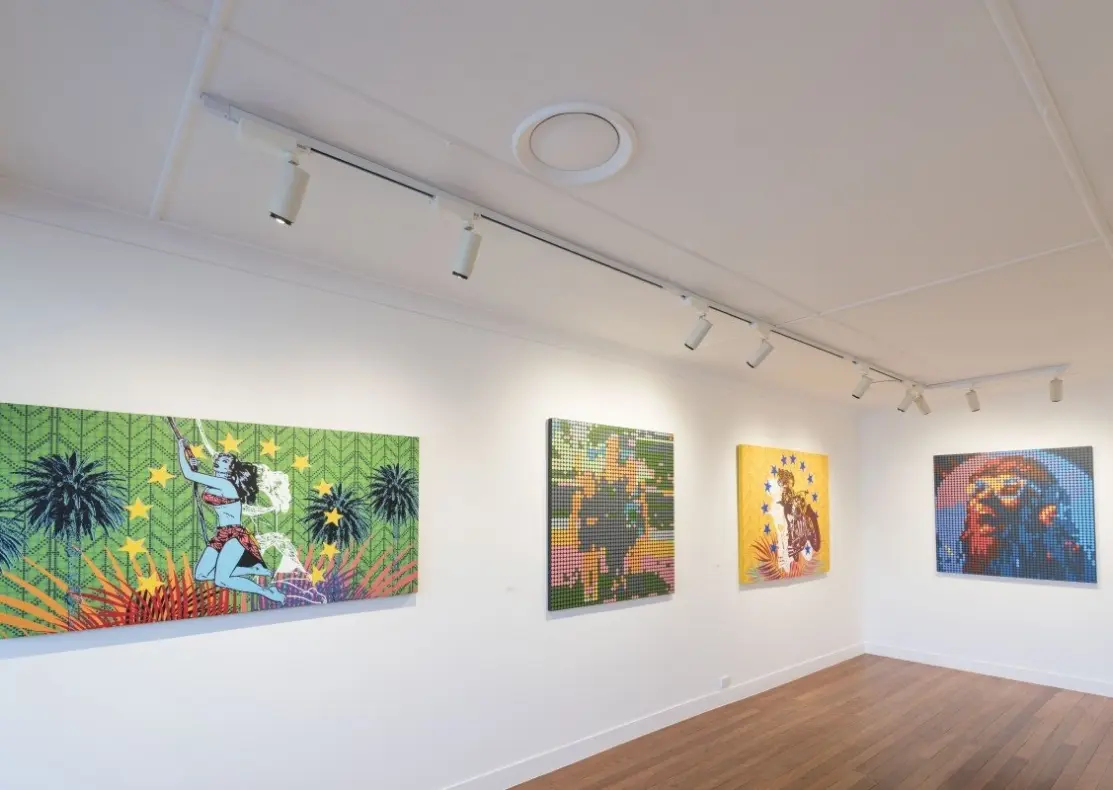
Modern LED art light installation example
Picture Lights for Wall Art
Picture lights are one of the most popular wall art lighting fixtures. Mounted directly above the artwork, they provide even illumination across the surface, making them ideal for framed paintings and permanent art displays.
Track Lighting for Art Walls
Track lighting systems offer flexibility and precision, allowing multiple artworks on a wall to be illuminated with adjustable fixtures. This is commonly used in gallery-style living rooms and professional art spaces.
Battery Operated Wall Art Lighting
Battery operated wall art lighting is ideal for spaces where wiring is not practical. These fixtures provide clean installation and are widely used in residential interiors, rental properties, and heritage buildings.
Wireless and Rechargeable Wall Art Lights
Wireless wall art lighting solutions eliminate visible cables while still delivering professional illumination. Rechargeable options are particularly popular for modern interiors and minimalist art displays.
LED Wall Art Lighting
LED wall art lighting is the modern standard due to its low heat emission, energy efficiency, and conservation-friendly performance. High-quality LED fixtures minimise UV exposure, making them safe for delicate artworks.
How to Light Artwork on a Wall Correctly

Proper fixture placement above frame
Proper installation is critical for achieving professional wall art lighting results. Incorrect placement can create glare, shadows, or uneven brightness that reduces the visual impact of the artwork.
Best practices for wall art lighting:
- Position lights at a 25–35 degree angle
- Mount fixtures slightly above the artwork
- Match beam width to artwork size
- Avoid direct frontal lighting
- Use dimmable fixtures for brightness control
This ensures even illumination from edge to edge while maintaining visual comfort.
Wall Art Lighting for Living Rooms and Luxury Interiors
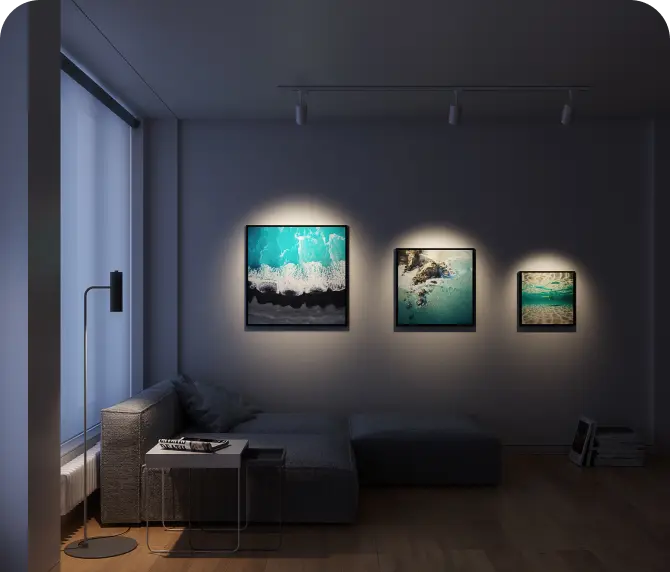
Luxury interior with highlighted feature wall
Wall art lighting is increasingly used in living rooms and luxury interiors to create a gallery-style atmosphere. Instead of relying solely on ceiling lights, dedicated wall art lighting highlights feature pieces and transforms them into focal design elements.
Common residential applications include:
- Feature artwork above sofas
- Large canvas art walls
- Hallway gallery displays
- Staircase art installations
- Bedroom statement artwork
Given that many art lighting buyers are residential collectors, wall art lighting plays a major role in high-end interior design.
Battery Operated and Wireless Wall Art Lighting Solutions

Clean wall installation without visible wiring
Modern wall art lighting fixtures are frequently available in battery operated and wireless formats, offering flexibility without compromising visual performance. These solutions are ideal for artwork installations where hardwiring is not desirable.
Benefits of battery operated wall art lighting:
- Easy installation with no drilling or wiring
- Clean and minimalist appearance
- Flexible repositioning
- Rechargeable and remote-controlled options
High-quality wireless wall art lighting can still deliver gallery-level illumination when designed with premium LED optics and high CRI output.
LED Wall Art Lighting and Artwork Protection

LED light protecting delicate painting
LED technology has become one of the most effective lighting solutions for paintings, largely due to its conservation benefits. Unlike traditional halogen lights, which produce excessive heat and UV radiation that can gradually fade pigments and damage artwork over time, LED lighting provides safer and more stable illumination.
Advantages of LED wall art lighting:
- Minimal heat emission
- Reduced UV exposure
- Long lifespan (30,000–50,000+ hours)
- Stable colour consistency
- Energy efficiency
This makes LED lighting ideal for valuable paintings, prints, and mixed media artworks.
Wall Art Lighting Beam Angle and Coverage

Wide beam lighting large canvas evenly
Beam angle plays a critical role in wall art lighting performance. Narrow beams work best for smaller artworks, while wider beams are required for large canvases or oversized wall pieces.
Typical beam recommendations:
- Narrow beam: Small framed artwork
- Medium beam: Standard paintings and prints
- Wide beam: Large wall art and gallery walls
Incorrect beam angles can cause bright hotspots in the centre or dark edges along the artwork.
Wall Art Lighting Color Temperature and Visual Accuracy

Neutral white lighting on modern artwork
Colour temperature significantly affects how artwork appears on a wall. Most professionals recommend warm white lighting between 2700K and 3000K to achieve natural and accurate colour representation.
Recommended colour temperature usage:
- 2700K: Classical and warm-toned artwork
- 3000K: Contemporary wall art and mixed collections
- 3500K: Modern interiors and photography displays
Maintaining consistent colour temperature across all wall art lighting fixtures ensures visual harmony in the space.
Wall Art Lighting Solutions: Zoom vs Multi vs Deluxe

Precision spotlight on single artwork
Zoom Series Wall Art Lighting
The Zoom series is designed for precision wall art lighting where focused illumination is required. With adjustable beam control and refined optics, it allows homeowners, designers, and galleries to direct light exactly onto a single artwork. This makes it ideal for feature paintings, framed art, and high-value wall pieces that require sharp, controlled lighting without spill onto surrounding walls.
Multi Series Wall Art Lighting
The Multi series provides wider beam distribution and uniform illumination across multiple artworks displayed on the same wall. This makes it especially suitable for gallery walls, large art arrangements, and living room art displays where consistent brightness and balance are essential. The even light spread ensures that each artwork is illuminated cohesively without visual imbalance.
Deluxe Series Wall Art Lighting
The Deluxe series represents a premium, museum-grade wall art lighting solution designed for luxury interiors and valuable art collections. Featuring ultra-high CRI, precision optical engineering, and elegant architectural design, the Deluxe series delivers exceptional colour accuracy, depth, and conservation-friendly illumination. It is ideal for collectors and designers seeking gallery-quality presentation in residential or professional spaces.
Wall Art Lighting for Different Artwork Types

Glare-free lighting on framed photography
Different art mediums require different lighting strategies to achieve optimal results.
Paintings benefit from soft, angled wall art lighting that highlights texture and brushwork.
Canvas artwork requires even illumination to avoid shadows along stretched edges.
Framed prints and photography need glare-controlled lighting to prevent reflections from glass surfaces.
Metal and textured wall art often benefit from angled accent lighting to enhance dimensional depth.
Selecting the correct wall art lighting based on artwork type significantly improves presentation quality.
Common Mistakes in Wall Art Lighting
Many homeowners and designers make the mistake of using general room lighting instead of dedicated wall art lighting fixtures. This often leads to poor visual results and diminished artwork impact.
Mistakes to avoid:
- Using ceiling lights as the only light source
- Installing lights directly facing the artwork
- Choosing low-CRI lighting
- Using overly bright lights that wash out colours
- Ignoring beam angle and placement
Professional wall art lighting eliminates these issues through precision design and targeted illumination.
Wall Art Lighting Height and Placement Guidelines
Downward angled art light installation
One of the best ways to light pictures on the wall is to ensure correct mounting height. Wall art lighting fixtures should typically be installed slightly above the artwork and angled downward to achieve balanced illumination and even light distribution across the entire piece.
General placement guidelines:
- Mount 15–30 cm above the artwork frame
- Angle light at approximately 30 degrees
- Ensure full coverage across the artwork width
- Avoid placing lights too close to prevent hotspots
These principles are widely used in galleries and museum-style installations.
Wall Art Lighting and Perceived Artwork Value

Close-up of vibrant colours under LED
Lighting has a direct psychological impact on how artwork is perceived. Properly illuminated wall art appears more vibrant, detailed, and visually engaging, which significantly enhances its perceived value within a space.
In luxury homes, galleries, and showrooms, professional wall art lighting can:
- Create a premium interior aesthetic
- Increase viewer engagement
- Strengthen focal points in room design
- Enhance the emotional impact of artwork
For collectors and designers, investing in high-quality wall art lighting is both an aesthetic and strategic decision.
Wall Art Lighting for Large Artwork and Oversized Pieces

Multi-light setup on large art wall
Large-scale artwork requires a more advanced wall art lighting approach compared to small framed pieces. Oversized canvases, statement artworks, and gallery walls demand wider beam coverage and higher optical precision to ensure consistent illumination from edge to edge.
When lighting large wall art, using a single narrow light source often creates hotspots in the centre while leaving the edges dim. Professional wall art lighting solutions use wider beam optics or multiple fixtures to achieve uniform brightness across the entire artwork surface.
For oversized pieces, ideal solutions include:
- Wide beam wall art lighting fixtures
- Multi-light configurations
- Track-mounted art lighting systems
- Adjustable optics for beam shaping
This ensures visual balance and a premium presentation, especially in luxury interiors and gallery-style living spaces.
Wall Art Lighting for Gallery Walls and Multiple Frames

Balanced illumination on art arrangement
Gallery walls featuring multiple artworks require cohesive and evenly distributed wall art lighting. Instead of spotlighting a single piece, the goal is to create consistent illumination across an entire arrangement without overpowering individual artworks.
Effective gallery wall art lighting strategies include:
- Even fixture spacing across the wall
- Medium to wide beam angles
- Balanced brightness levels
- Adjustable directional lighting
This approach prevents visual imbalance and ensures that every artwork receives appropriate attention within the display.
Wall Art Lighting and Interior Design Integration

Minimalist interior with integrated art lighting
Wall art lighting is not only functional but also a key component of interior design. Properly illuminated artwork enhances spatial depth, mood, and architectural aesthetics within a room.
In modern interiors, wall art lighting is commonly integrated with:
- Minimalist lighting schemes
- Architectural lighting layouts
- Accent lighting layers
- Ambient room lighting
When combined correctly, wall art lighting elevates the entire interior environment, transforming artwork into a focal design feature rather than a background element.
Wall Art Lighting for Bedrooms, Hallways, and Feature Walls
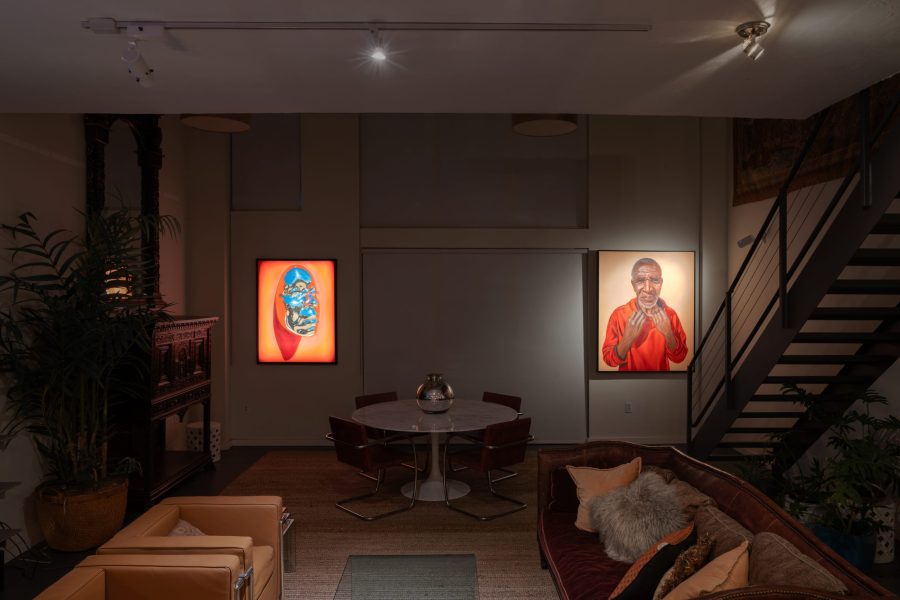
Living room feature wall with angled art spotlight
Different rooms require slightly different wall art lighting strategies to achieve optimal visual results.
In living rooms, wall art lighting is typically used to highlight statement artwork above sofas or feature walls.
In hallways, softer and more diffused lighting creates a curated gallery-like experience.
In bedrooms, warm and dimmable wall art lighting helps maintain a relaxing atmosphere while still enhancing artwork visibility.
Feature walls with multiple artworks benefit from layered lighting, combining ambient and accent illumination for depth and sophistication.
Dimmable Wall Art Lighting and Brightness Control

Adjusting brightness on framed painting
Dimming capability is one of the most important features in professional wall art lighting. Different artworks and environments require different brightness levels to maintain visual balance and conservation safety.
Advantages of dimmable wall art lighting include:
- Precise lux level control
- Reduced glare on reflective surfaces
- Adaptability to changing daylight conditions
- Enhanced mood and atmosphere
Dimmable lighting is especially important for collectors and designers who want flexibility in presentation throughout the day and evening.
Wall Art Lighting and Glare Reduction Techniques

Angled lighting preventing glass reflection
Achieving optimal lighting for framed artwork requires careful glare control. Reflections from glass frames, glossy finishes, and varnished paintings can reduce visibility and disrupt the viewing experience if lighting is not properly positioned.
Professional glare reduction techniques include:
- Angled lighting installation (25–35 degrees)
- Anti-glare optical lenses
- Honeycomb louvre accessories
- Indirect lighting positioning
These methods ensure comfortable viewing while maintaining strong visual clarity.
Wall Art Lighting for Different Wall Colours and Finishes

Dark wall with brighter art lighting
Wall colour and surface finish significantly affect how wall art lighting performs. Dark walls absorb more light, requiring slightly stronger illumination, while white or reflective walls bounce light and can create unwanted glare.
Best practices based on wall surfaces:
- Dark walls: Use higher lumen output and wider beam coverage
- Light walls: Use softer lighting to avoid washout
- Textured walls: Use angled lighting to enhance depth
- Glossy finishes: Use glare-controlled fixtures
Matching wall art lighting to wall colour improves both artwork visibility and overall aesthetic harmony.
Wall Art Lighting and Lux Levels for Artwork Safety

Controlled brightness on paper artwork
Lux levels refer to the intensity of light exposure on artwork. Excessive brightness can cause gradual fading, especially for sensitive materials such as watercolours, prints, and photographs.
Recommended lux guidelines for wall art lighting:
- Oil paintings: Moderate lux levels
- Works on paper: Lower lux exposure
- Photography prints: Controlled, glare-free lighting
- Mixed media artwork: Adjustable dimmable lighting
Using dimmable, high-quality LED wall art lighting ensures both presentation excellence and long-term artwork protection.
Smart and Remote-Controlled Wall Art Lighting
Modern wall art lighting systems increasingly feature smart technology and remote control functionality. These innovations allow users to adjust brightness, colour temperature, and lighting schedules without manual fixture adjustments.
Smart wall art lighting benefits:
- Remote dimming and control
- Scene-based lighting presets
- Automated lighting schedules
- Integration with smart home systems
This is particularly valuable in luxury homes and professional art environments where precision control is essential.
Wall Art Lighting for High-End Residential Collections

Collector home with museum-style lighting
Private collectors often invest in professional wall art lighting to achieve museum-quality presentation within residential interiors. Unlike standard decorative lighting, specialised art lighting enhances the perceived value of the artwork and the sophistication of the space.
In high-end homes, wall art lighting is used for:
- Original paintings
- Limited edition prints
- Sculptural wall pieces
- Designer art installations
This level of lighting detail reflects a curated and intentional approach to art display.
Wall Art Lighting and Conservation Considerations

Low UV LED protecting artwork
Long-term exposure to improper lighting can gradually damage artwork. Heat, UV radiation, and excessive brightness are the primary risk factors in poorly designed lighting setups.
Conservation-focused wall art lighting prioritises:
- Low UV emission LEDs
- Stable light output
- Controlled brightness levels
- Minimal heat generation
These factors are essential for preserving valuable and irreplaceable artworks over time.
Choosing the Right Wall Art Lighting Fixture

Wireless wall art lighting installed above framed artwork
Selecting the correct wall art lighting fixture depends on several key factors, including artwork size, mounting height, wall layout, and lighting goals.
Key considerations when choosing wall art lighting:
- Artwork dimensions
- Mounting method (wireless or hardwired)
- Beam angle adjustability
- CRI rating (90+ recommended, 95+ ideal)
- Dimming capability
- Battery vs plug-in preference
A well-selected fixture enhances both visual presentation and long-term usability.
Wall Art Lighting vs General Wall Lighting
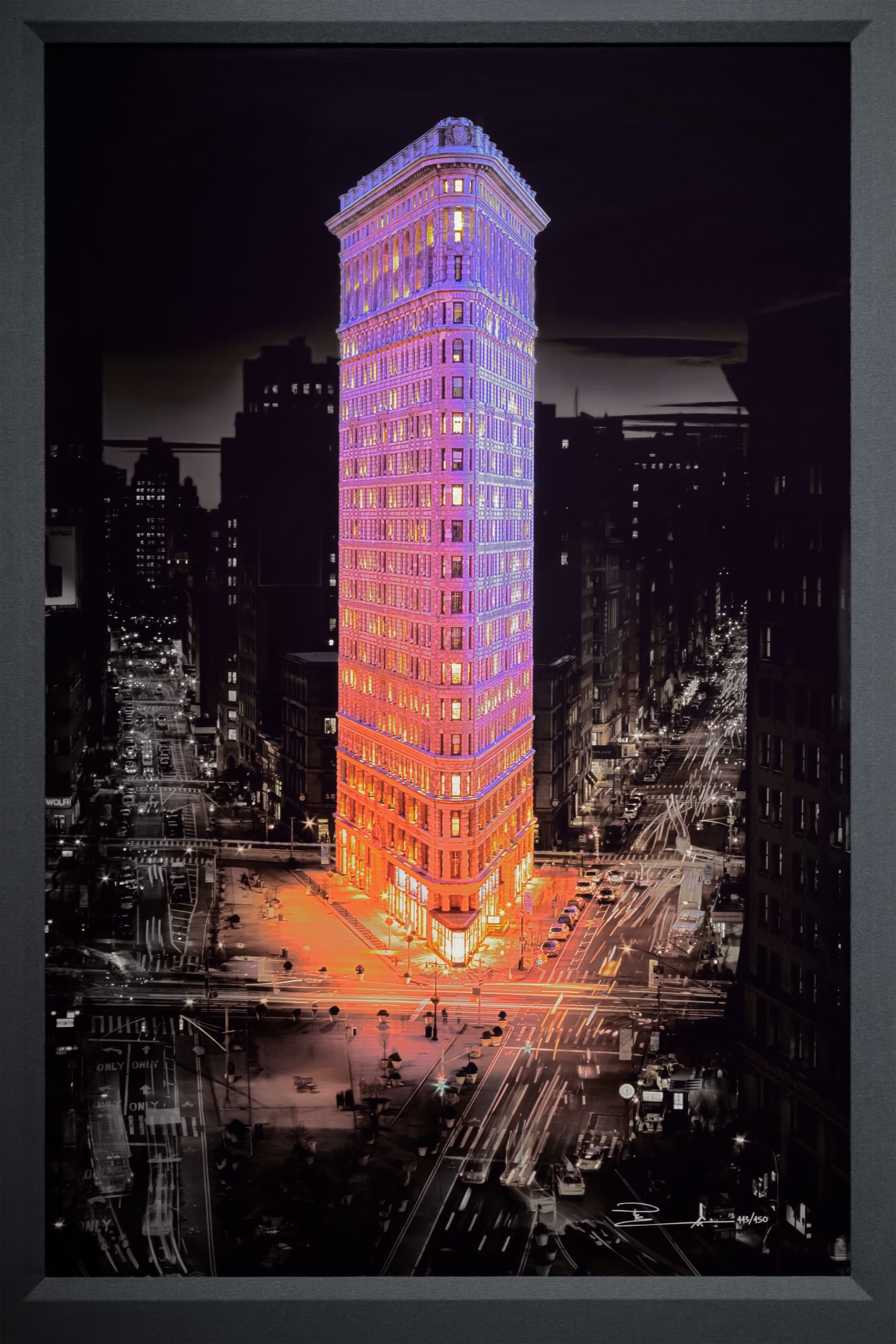
High CRI wall art lighting revealing true artwork colours
It is important to distinguish between wall art lighting and general wall lighting. Decorative wall sconces and ambient wall lights are designed for atmosphere, not artwork illumination.
Wall art lighting focuses on:
- Precision beam control
- Artwork-specific positioning
- High colour accuracy
- Glare reduction
General wall lighting, on the other hand, provides broad illumination and often lacks the optical precision required for artwork display.

Wall Art Lighting Trends in Modern Design

Slim profile modern picture light
Wall art lighting trends are evolving toward minimal, architectural, and museum-inspired solutions. Designers increasingly prefer clean, discreet fixtures that highlight artwork without drawing attention to the lighting hardware itself.
Current trends include:
- Slim profile picture lights
- Wireless rechargeable art lights
- High CRI LED lighting systems
- Adjustable beam optics
- Gallery-style residential lighting
These trends reflect the growing importance of artwork presentation in both residential and commercial design.
FAQ: Wall Art Lighting
How high should wall art lighting be installed?
Wall art lighting should typically be installed 15–30 cm above the artwork frame and angled downward at approximately 30 degrees for even illumination.
Is wireless wall art lighting reliable?
Yes, high-quality wireless and rechargeable wall art lighting fixtures can deliver professional illumination and are ideal for clean, cable-free installations.
Can wall art lighting be used for large canvas art?
Yes, large canvas artworks benefit from wide beam wall art lighting or multiple fixtures to ensure even edge-to-edge illumination.
Does wall art lighting increase the value of artwork presentation?
Proper wall art lighting significantly enhances perceived value by improving colour clarity, texture visibility, and overall visual impact.
What CRI is best for wall art lighting?
A CRI of 90+ is recommended, while CRI 95–97+ is ideal for accurate colour rendering and professional artwork presentation.
Should wall art lighting be warm or cool?
Warm white lighting between 2700K and 3000K is generally preferred as it provides natural colour representation and a gallery-style atmosphere.
Can wall art lighting damage paintings?
Low-quality lighting with high heat or UV output can damage artwork over time. High-quality LED wall art lighting minimises these risks.
Is track lighting good for wall art lighting?
Yes, track lighting is excellent for wall art lighting, especially for gallery walls and multiple artworks, because it allows flexible positioning and beam adjustment.
How do you avoid shadows in wall art lighting?
Shadows can be avoided by using correct beam angles, proper fixture placement above the artwork, and evenly distributed lighting coverage.
What type of wall art lighting is best for luxury homes?
Premium LED picture lights, adjustable spotlights, and museum-grade wall art lighting systems with high CRI and dimming control are best suited for luxury interiors and curated art collections.
The Future of Wall Art Lighting

Contemporary gallery with advanced LED system
Advancements in LED optics, smart dimming systems, and wireless technology are shaping the future of wall art lighting. Modern fixtures now offer remote control, adjustable brightness, and precision beam shaping tailored specifically for artwork illumination.
As residential collectors, galleries, and interior designers increasingly prioritise presentation quality and conservation, specialised wall art lighting solutions such as Zoom, Multi, and Deluxe will continue to define the standard for professional artwork illumination on walls.
Additional FAQ: Wall Art Lighting
What is the best lighting for wall art?
The best lighting for wall art is high-CRI LED picture lighting or adjustable spotlights that provide even, glare-free illumination with accurate colour rendering.
How do you light artwork on a wall?
Artwork should be lit from above at a 25–35 degree angle using dedicated wall art lighting fixtures to ensure balanced coverage and reduced glare.
Are LED lights safe for wall art?
Yes, high-quality LED wall art lighting emits minimal heat and UV radiation, making it safe for paintings, prints, and delicate artworks.
Can you use battery operated lights for wall art?
Yes, battery operated and rechargeable wall art lighting fixtures are effective and ideal for installations where wiring is not practical.
What colour temperature is best for wall art lighting?
A colour temperature between 2700K and 3000K is generally recommended for natural and accurate artwork presentation.
How bright should wall art lighting be?
Wall art lighting should be bright enough to highlight detail without washing out colours. Dimmable lighting is recommended for precise control.
Should wall art lighting be placed above or below artwork?
Wall art lighting is typically placed above the artwork and angled downward to provide even illumination and minimise glare.
What type of fixtures are used for wall art lighting?
Common fixtures include picture lights, track lighting, adjustable spotlights, and wireless rechargeable art lights designed specifically for artwork illumination.
Why Designers and Collectors Trust Our Gallery Lights