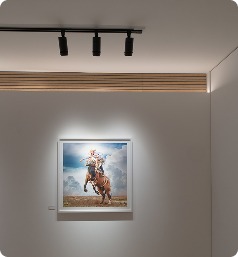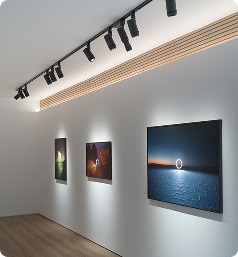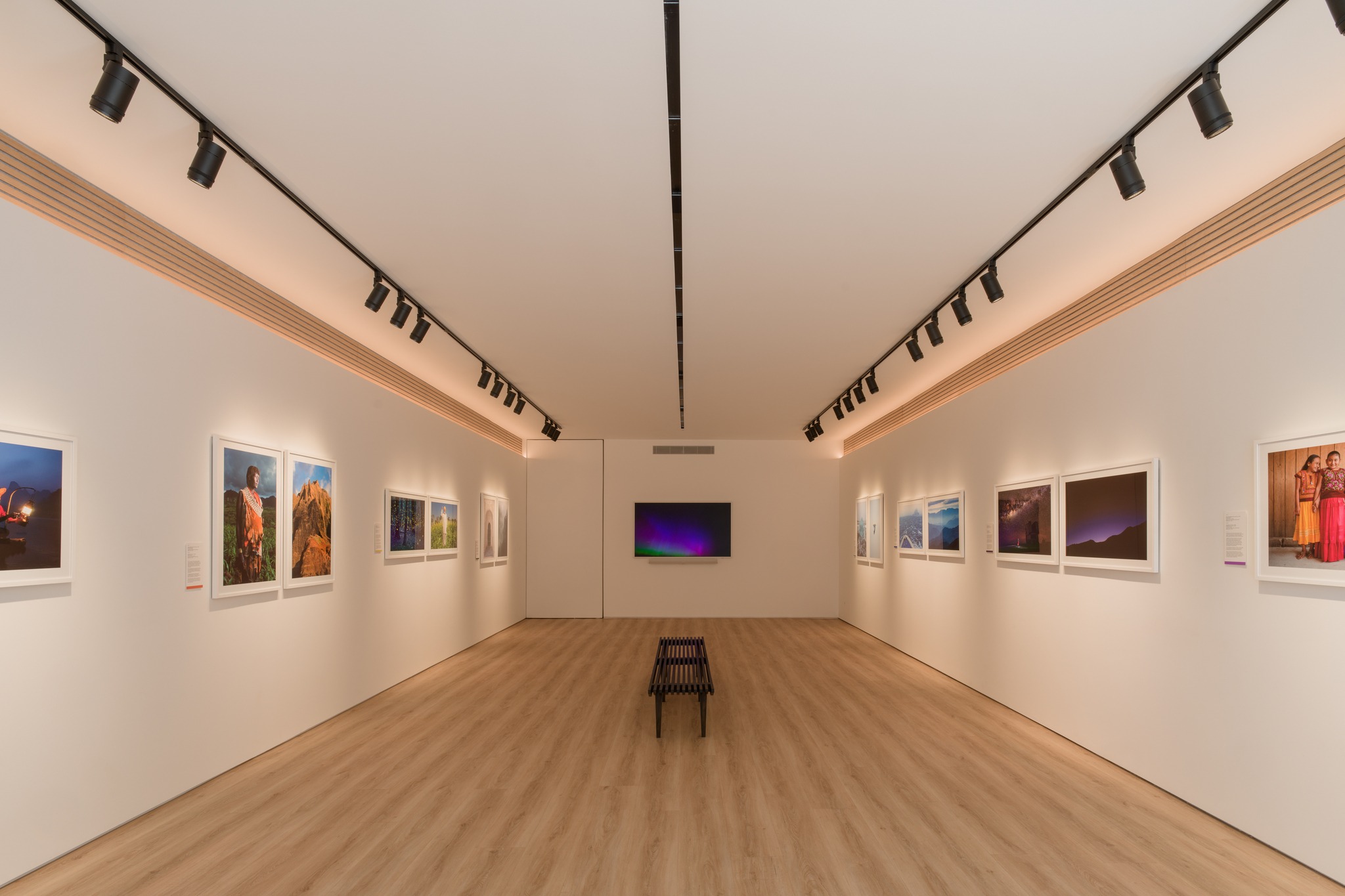
Gallery wall lighting with professional LED track system
Gallery wall lighting is a specialised lighting approach designed to illuminate multiple artworks displayed together on a single wall with precision, balance, and visual clarity. In luxury homes, art galleries, museums, and curated interiors, gallery wall lighting is not decorative alone. It is a strategic system used to enhance colour accuracy, reduce glare, and ensure every artwork on the wall is presented with consistent, museum-grade illumination.
A well-lit gallery wall transforms how artwork is perceived. Instead of appearing flat or unevenly lit, each piece gains depth, texture, and visual presence. This is why professional designers, collectors, and galleries prioritise dedicated gallery wall lighting fixtures rather than relying on general ceiling lights or ambient room lighting.
What Is Gallery Wall Lighting?

High CRI gallery wall lighting for accurate colours
Gallery wall lighting refers to a structured lighting system used to illuminate a collection of artworks arranged together on a wall. This can include paintings, photography, framed prints, mixed media, and curated art displays commonly seen in residential gallery walls, exhibition spaces, and commercial interiors.
Unlike standard lighting, gallery wall lighting is engineered to deliver:
- High colour rendering (CRI 90–97+)
- Controlled beam angles
- Even light distribution across multiple frames
- Low glare illumination
- Conservation-friendly LED output
This ensures that each artwork on the gallery wall receives balanced, accurate lighting without visual hotspots or dark zones.

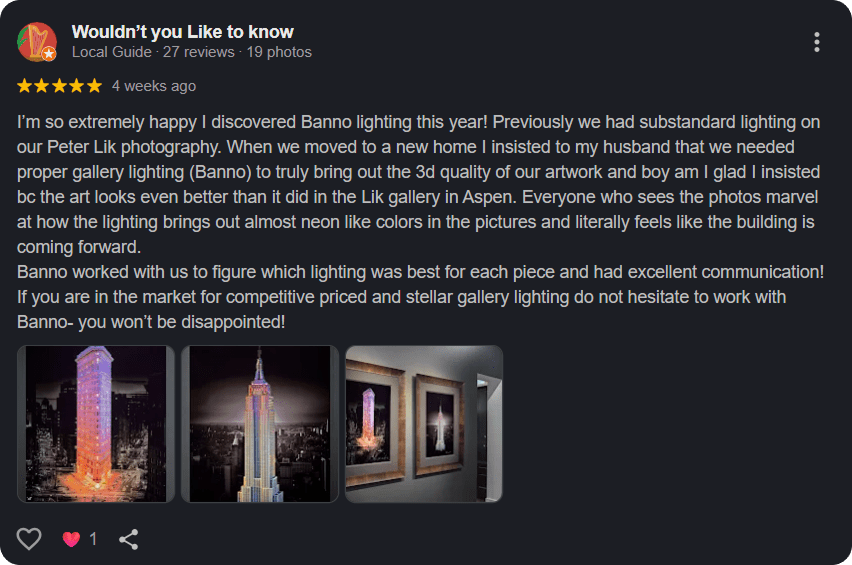
4.9-Star Google Review for Our Art Lighting Solutions
Why Gallery Wall Lighting Matters for Artwork Presentation

Professional gallery wall lighting reducing glare on artwork
Lighting is one of the most influential factors in how a gallery wall is experienced, which is why understanding a complete guide to gallery wall lighting and artwork display can make a significant difference in presentation quality. Even high-value artwork can appear dull, shadowed, or visually inconsistent when lighting is poorly planned. Professional gallery wall lighting enhances both the artistic impact and the perceived value of the entire collection.
Key benefits of proper gallery wall lighting include:
- Consistent illumination across all artworks
- Enhanced colour accuracy and detail visibility
- Reduced reflections on framed pieces
- Strong visual focal points within the space
- A refined, gallery-style interior aesthetic
For collectors and designers, lighting is not just functional. It is a core component of the display strategy.
Types of Gallery Wall Lighting Fixtures

Recessed gallery wall lighting supporting layered illumination
Track Lighting for Gallery Walls
Track lighting is widely considered one of the most effective solutions because it provides adjustable lighting for gallery walls and art displays, combining flexibility with precise illumination control. Track-mounted fixtures can be repositioned, angled, and adjusted as artwork layouts evolve, making them ideal for dynamic gallery walls in both residential and professional environments.
Track lighting allows for:
- Precise spotlighting of individual artworks
- Adjustable beam angles
- Scalable lighting layouts
- Consistent visual hierarchy across the wall
This makes it the preferred system in galleries, museums, and high-end homes with curated art collections.
Picture Lights for Gallery Walls
Picture lights are mounted above individual artworks to provide direct, even illumination. When used across a gallery wall, they create a refined and symmetrical presentation, especially in classic interiors and luxury residential settings.
Recessed and Accent Lighting
Recessed ceiling lighting combined with accent fixtures can support gallery wall lighting by providing ambient balance while focused fixtures highlight the artworks themselves. This layered approach enhances depth and spatial atmosphere.
How to Light a Gallery Wall Correctly
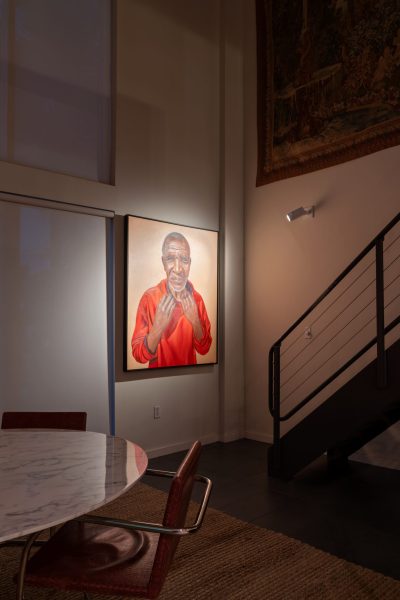
Professional gallery wall lighting placement above framed artwork
Achieving effective lighting for wall-mounted artwork requires precise planning rather than random fixture placement when designing a gallery wall. Poor lighting angles or incorrect brightness levels can create glare, uneven illumination, and visual imbalance between artworks.
Professional gallery wall lighting best practices include:
- Positioning lights at a 25–35 degree angle
- Ensuring full edge-to-edge illumination of each frame
- Matching beam angle to artwork size
- Avoiding direct frontal glare
- Maintaining consistent colour temperature across all fixtures
This structured approach ensures a cohesive and museum-quality visual experience.
Gallery Wall Lighting Beam Angle and Coverage

Adjustable gallery wall lighting beam for grouped artworks
Beam angle plays a critical role in gallery wall lighting performance. Since a gallery wall contains multiple artworks of varying sizes, the lighting system must be adaptable.
Recommended beam strategies:
- Narrow beams (10–24°) for small feature artworks
- Medium beams (24–40°) for standard framed pieces
- Wide beams (40°+) for large gallery walls and grouped displays
Adjustable optical control is essential to prevent bright centres and dark edges across the gallery wall.
Gallery Wall Lighting Color Temperature and Visual Accuracy

High CRI gallery wall lighting ensuring visual accuracy
Colour temperature significantly affects how artwork appears on a gallery wall. Incorrect lighting can distort tones, making artwork look overly warm, cool, or washed out.
Professional recommendations:
- 2700K: Warm, classical artwork and traditional interiors
- 3000K: Balanced gallery wall lighting for mixed collections
- 3500K: Contemporary art and modern interiors
Maintaining a consistent colour temperature across the gallery wall ensures visual harmony and accurate artistic representation.
Gallery Wall Lighting Systems: Zoom, Multi, and Deluxe Series
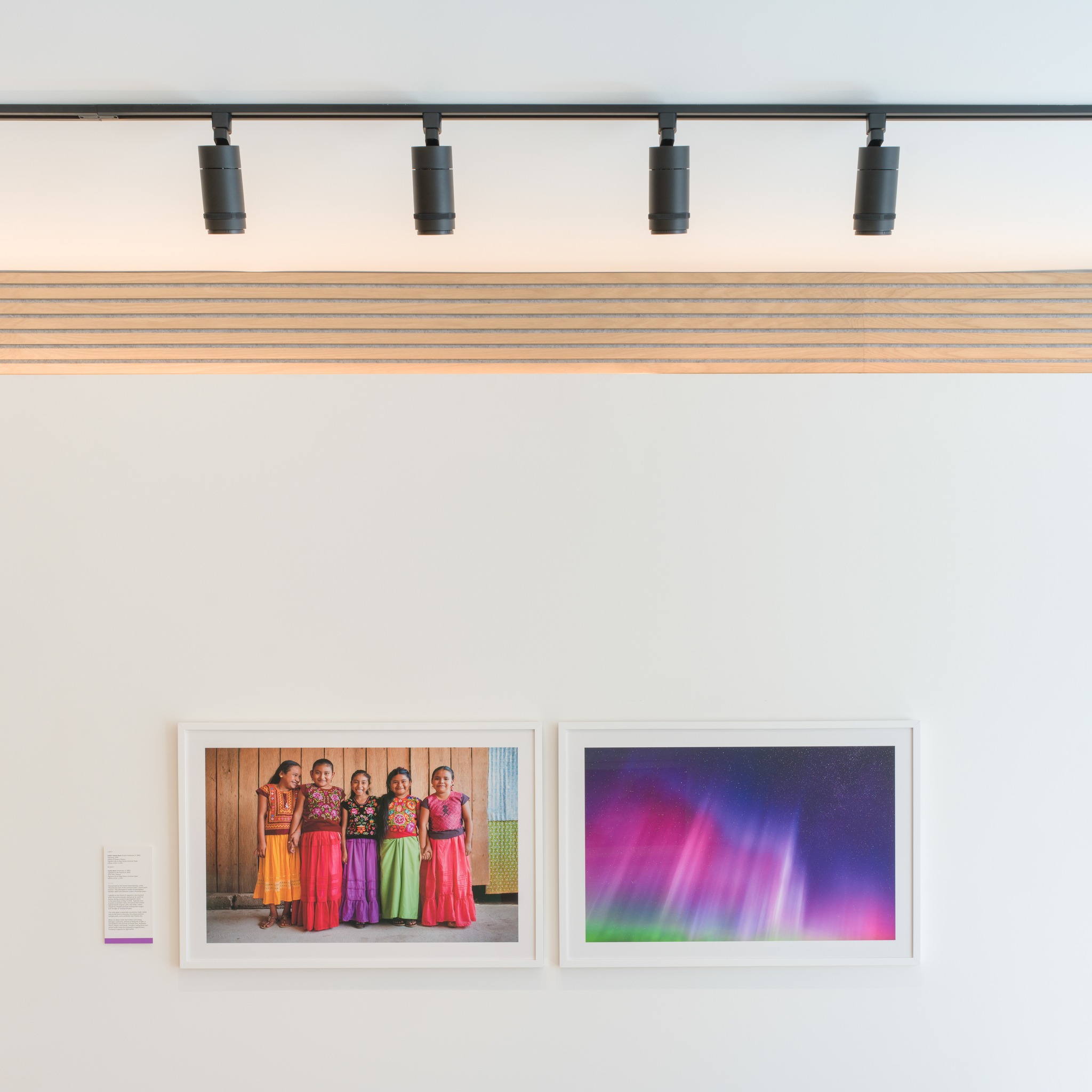
Zoom series gallery wall lighting for precision focus
Zoom Series for Precision Gallery Wall Lighting
The Zoom series is designed for precise gallery wall lighting where individual artworks require focused illumination. With adjustable beam optics and refined glare control, Zoom fixtures allow designers and collectors to highlight specific pieces within a gallery wall without excessive light spill. This makes them ideal for curated art walls featuring statement paintings, photography, or valuable artworks that demand controlled visual emphasis and depth.
Multi Series for Uniform Gallery Wall Lighting
The Multi series is engineered for broader and more even illumination across entire gallery walls. When multiple artworks are displayed together, consistent lighting becomes essential to maintain visual balance. Multi fixtures provide uniform beam distribution that ensures each artwork receives equal brightness, preventing visual dominance or shadowing between frames. This makes them highly suitable for residential gallery walls, exhibition corridors, and commercial art displays.
Deluxe Series for Museum-Grade Gallery Wall Lighting
The Deluxe series represents a premium architectural solution for gallery wall lighting in luxury homes, galleries, and museums. Featuring ultra-high CRI, advanced optical engineering, and conservation-friendly LED technology, Deluxe fixtures deliver exceptional colour accuracy and refined illumination. These systems are ideal for high-value art collections where both presentation quality and long-term preservation are critical.
Gallery Wall Lighting for Residential Interiors
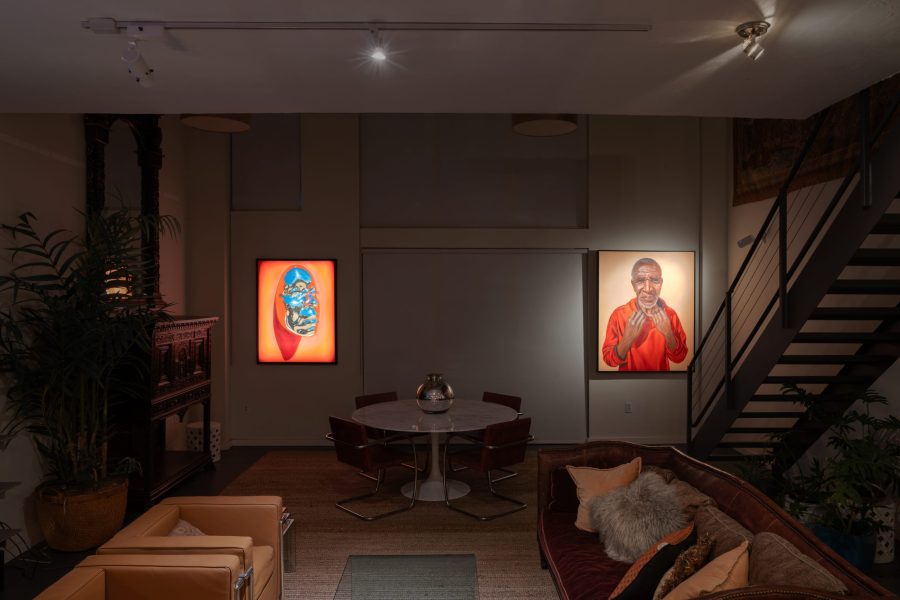
Gallery wall lighting system for residential interiors
Gallery wall lighting is increasingly used in luxury residential spaces to create a museum-style atmosphere within the home. Instead of relying on general room lighting, dedicated art lighting transforms a simple wall of frames into a cohesive visual feature.
Common residential applications include:
- Living room gallery walls
- Hallway photo walls
- Staircase art displays
- Home office art collections
- Feature walls in luxury interiors
This approach enhances both interior design sophistication and the emotional impact of the artwork.
Gallery Wall Lighting and Glare Reduction

Gallery wall lighting with advanced glare reduction technology
Glare is one of the most common issues in poorly lit gallery walls, especially when artworks are framed with glass or glossy finishes. Reflections can obscure details and reduce viewer engagement.
Professional gallery wall lighting solutions minimise glare through:
- Precision beam angles
- Anti-glare optics
- Indirect light positioning
- Controlled brightness levels
This ensures clear visibility without distracting reflections.
Gallery Wall Lighting for Different Artwork Types

LED gallery wall lighting for framed photography displays
Different mediums require different lighting approaches to achieve optimal results, which is why selecting the best lighting options for gallery walls depends on the type of artwork being displayed.
Paintings benefit from soft, even illumination that reveals brush texture and colour depth.
Photography requires glare-controlled lighting to preserve contrast and detail.
Mixed media artworks often benefit from angled accent lighting to enhance dimensional elements.
Large statement pieces require wider beam coverage for balanced presentation.
Selecting the correct gallery wall lighting system ensures each artwork type is displayed in its best visual form.
Gallery Wall Lighting and Artwork Preservation

Low heat gallery wall lighting for art preservation
Beyond aesthetics, gallery wall lighting plays a vital role in artwork preservation. Excessive heat, UV exposure, and unstable light output can gradually cause fading and material degradation.
High-quality LED gallery wall lighting helps:
- Reduce UV exposure
- Minimise heat emission
- Maintain stable illumination levels
- Protect sensitive materials like canvas and paper
This makes professional lighting essential for collectors and galleries displaying valuable or irreplaceable works.
Common Mistakes When Lighting a Gallery Wall
Many homeowners and designers make critical errors when installing gallery wall lighting, often using general lighting instead of specialised fixtures.
Mistakes to avoid:
- Using ceiling lights as the primary art lighting
- Inconsistent brightness across artworks
- Incorrect fixture spacing
- Poor beam angle selection
- Mixing colour temperatures
- Overlighting the wall, causing washout
Avoiding these mistakes ensures a refined and professional gallery wall presentation.
Gallery Wall Lighting Layout and Spacing Strategy
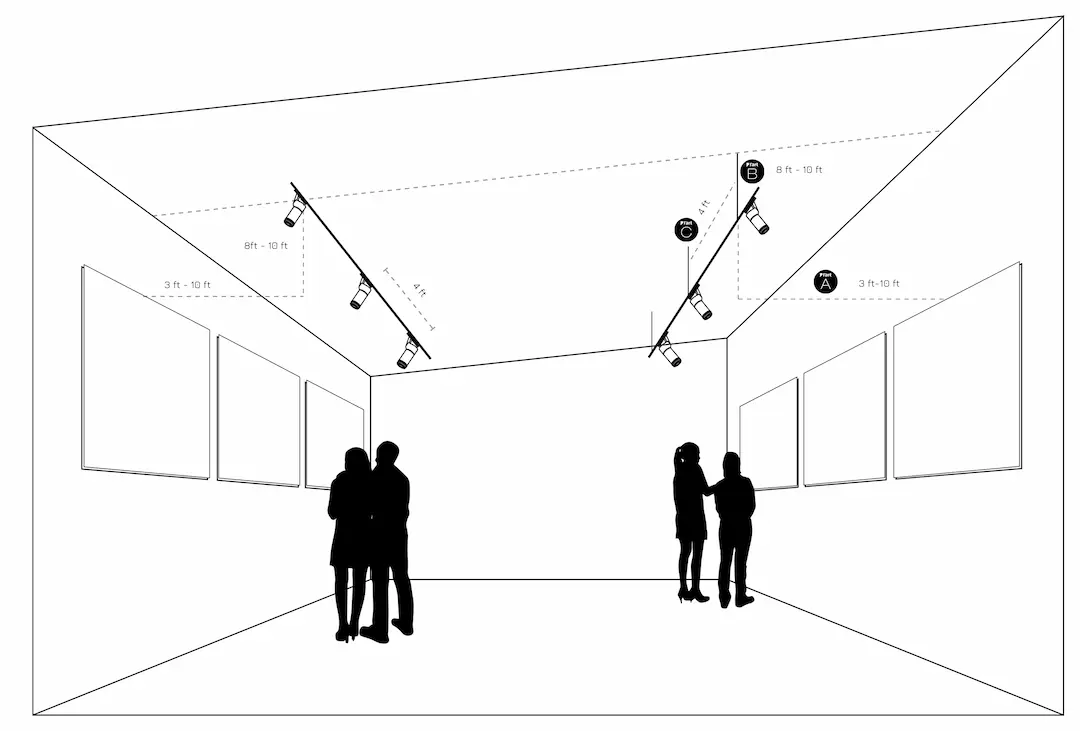
Gallery wall lighting layout ensuring balanced illumination
A successful gallery wall lighting layout requires careful planning based on wall width, artwork spacing, and ceiling height. Fixtures should be positioned to create overlapping beams that provide seamless illumination across the entire wall.
Key layout considerations:
- Equal spacing between fixtures
- Alignment with artwork centre points
- Consistent mounting height
- Balanced light layering with ambient lighting
This creates a cohesive and visually immersive art display environment.
The Psychological Impact of Gallery Wall Lighting

Gallery wall lighting enhancing emotional artwork perception
Lighting directly influences how viewers emotionally respond to artwork. Proper gallery wall lighting increases engagement, enhances visual clarity, and elevates the perceived value of the collection.
In professional and residential settings, well-executed gallery wall lighting can:
- Increase visual focus on artwork
- Create a luxury interior atmosphere
- Strengthen storytelling through curated displays
- Enhance the overall viewing experience
This is why high-end galleries and collectors treat lighting as an investment rather than an afterthought.
Future Trends in Gallery Wall Lighting

Sustainable LED gallery wall lighting innovations
Advancements in LED optics, precision beam shaping, and architectural lighting design are shaping the future of gallery wall lighting. Modern systems now prioritise adjustable optics, dimming control, and ultra-high colour rendering to meet museum-grade standards.
As art collecting and gallery-style interiors continue to grow globally, professional gallery wall lighting systems will play an increasingly central role in both residential and commercial design environments.
Advanced Gallery Wall Lighting Design for Professional Spaces

Professional gallery wall lighting with advanced optics
In high-end environments, gallery wall lighting is treated as a core architectural element rather than a decorative afterthought. Professional lighting designers plan gallery wall lighting in conjunction with ceiling height, wall colour, artwork scale, and viewing distance to ensure a cohesive and immersive visual experience. This level of planning is especially important in galleries, museums, showrooms, and luxury residential interiors where artwork presentation directly influences perception and engagement.
A professionally lit gallery wall should feel effortless and balanced. The lighting should enhance the artwork without drawing attention to the fixtures themselves. This is achieved through precise beam control, consistent colour temperature, and strategic fixture placement that supports the visual flow of the wall.
Gallery Wall Lighting and Visual Hierarchy

Gallery wall lighting emphasizing focal artwork pieces
Visual hierarchy is a key concept in gallery wall lighting. Not all artworks on a gallery wall hold the same visual importance, and lighting can be used strategically to guide the viewer’s eye across the display.
For example, feature artworks can be illuminated with slightly higher intensity or tighter beam focus, while surrounding pieces receive softer, even illumination. This creates depth and storytelling within the gallery wall rather than a flat, uniformly lit surface.
Professional gallery wall lighting helps establish:
- A clear focal point on hero artworks
- Balanced illumination across secondary pieces
- Smooth visual transitions between frames
- Enhanced spatial depth within the interior
This technique is commonly used in galleries and luxury homes with curated collections.
Gallery Wall Lighting and Wall Color Interaction

Dark walls require stronger contrast and focused illumination
Wall colour significantly affects how gallery wall lighting performs. Dark walls absorb more light, requiring slightly higher lumen output, while lighter walls reflect illumination and can enhance brightness across the artwork surface.
Recommended lighting considerations based on wall colour:
- Dark walls: Higher output and tighter beam control
- White or light walls: Softer output with glare control
- Textured walls: Diffused lighting to reduce harsh shadows
A well-designed gallery wall lighting system adapts to the wall finish to maintain consistent visual clarity and artwork prominence.
Lighting Large Gallery Walls and Multi-Frame Displays

Multiple fixtures ensure consistent brightness across displays
Understanding how to light art on gallery walls becomes especially important when dealing with large displays that feature multiple artworks rather than a single piece. Instead of relying on one central fixture, professionals typically use multiple adjustable fixtures spaced evenly along the wall to achieve balanced and consistent illumination across the entire display.
Key principles for large gallery wall lighting:
- Overlapping beam coverage for uniform illumination
- Consistent fixture spacing across the wall
- Adjustable optics for different frame sizes
- Layered lighting to avoid dark zones
This approach ensures that each artwork receives equal attention without creating uneven brightness across the display.
Gallery Wall Lighting for Hallways and Transitional Spaces

Narrow corridors need compact directional fixtures
Hallways are one of the most popular locations for gallery walls in residential and hospitality environments. However, they often have narrow dimensions and limited ambient lighting, making dedicated gallery wall lighting essential.
Effective hallway gallery wall lighting should:
- Use focused beam angles to prevent wall spill
- Maintain consistent brightness along the corridor
- Avoid overly bright fixtures that cause visual fatigue
- Create a guided visual path through the space
When executed correctly, gallery wall lighting in hallways transforms a transitional area into a curated visual experience.
Gallery Wall Lighting in Luxury Interior Design

Architectural lighting enhances curated art collections
Luxury interior designers increasingly incorporate gallery wall lighting to elevate the sophistication of a space. Instead of treating artwork as decoration, it becomes a central design feature supported by architectural lighting.
In premium interiors, gallery wall lighting enhances:
- Interior depth and ambience
- Perceived artwork value
- Spatial focal points
- Overall design cohesion
This is particularly effective in living rooms, private libraries, offices, and staircases where curated art collections are displayed as part of the interior narrative.
Dimming Control in Gallery Wall Lighting

Adjustable brightness preserves artwork and ambience
Dimming capability is a crucial feature in professional gallery wall lighting systems. Different artworks and environments require different lux levels depending on sensitivity, material, and desired visual impact.
Benefits of dimmable gallery wall lighting include:
- Fine-tuned brightness control
- Reduced risk of overexposure
- Adaptability for day and night viewing
- Enhanced conservation for delicate artworks
Dimming also allows collectors and designers to create different moods within the same space without altering the artwork arrangement.
Gallery Wall Lighting for Photography and Prints

Precision optics reveal sharp photographic detail
Photography and framed prints require specialised gallery wall lighting due to their reflective surfaces. Glass glazing can easily produce glare if lighting angles are incorrect.
Best practices for lighting photo gallery walls:
- Use angled lighting rather than direct frontal beams
- Select fixtures with anti-glare optics
- Maintain consistent colour temperature
- Avoid excessive brightness that causes reflections
This ensures that fine details, contrast, and tonal depth remain visible without visual distortion.
The Role of CRI in Gallery Wall Lighting Quality
Colour Rendering Index (CRI) is one of the most important technical specifications in gallery wall lighting. A high CRI ensures that artwork colours appear true to the artist’s original intent.
Recommended CRI levels:
- CRI 90+: Professional residential gallery walls
- CRI 95+: Galleries and curated collections
- CRI 97+: Museum-grade gallery wall lighting
Low-CRI lighting can distort colours, flatten tonal variation, and reduce the visual authenticity of the artwork, which is unacceptable in professional art environments.
Gallery Wall Lighting and Ceiling Height Considerations
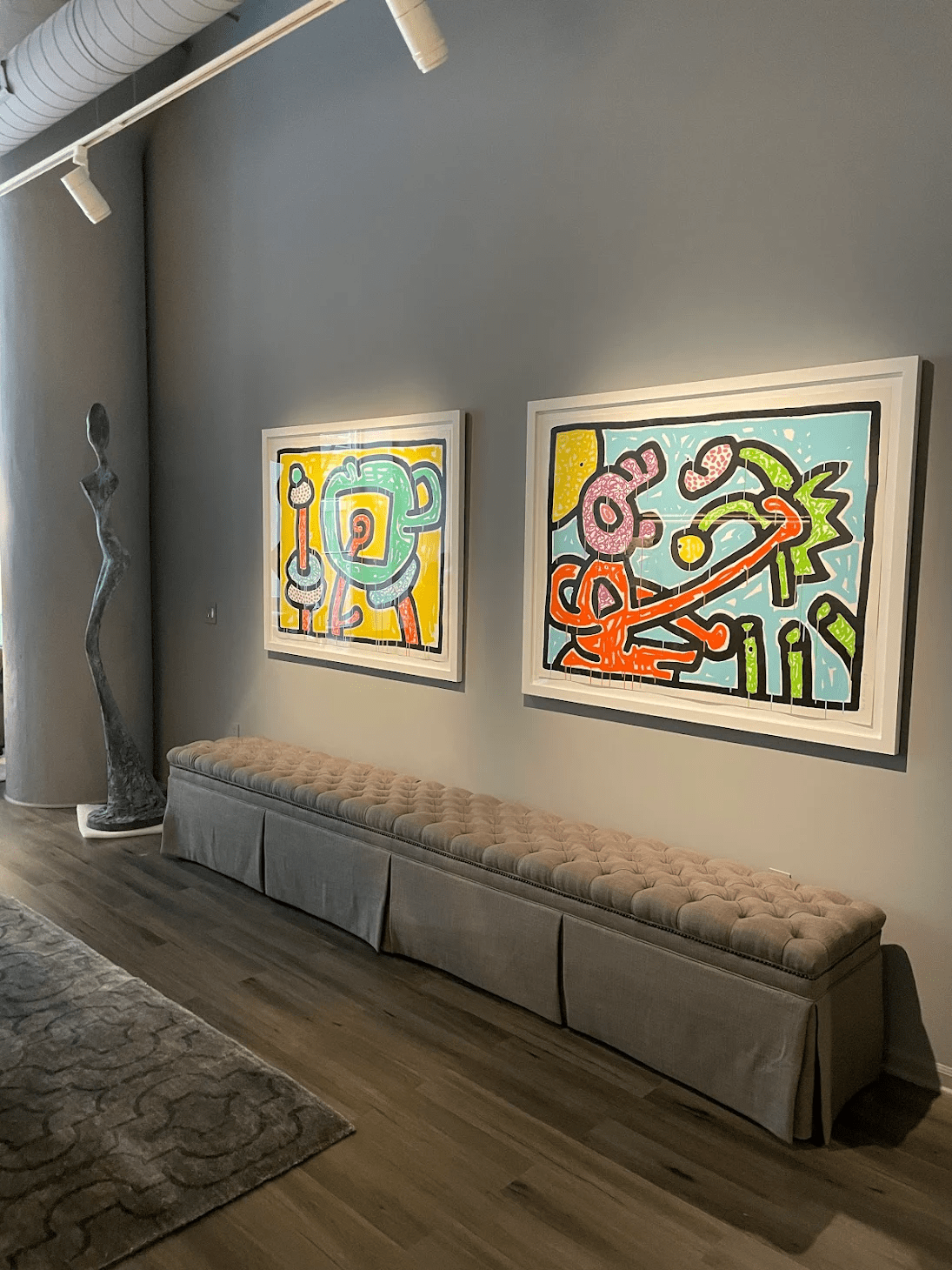
Low ceilings benefit from wider light distribution
Ceiling height directly influences fixture selection and beam angle planning. Higher ceilings require stronger output and narrower beam angles to maintain focused illumination on the gallery wall.
Lighting strategies based on ceiling height:
- Low ceilings: Wider beams with softer intensity
- Standard ceilings: Adjustable track lighting systems
- High ceilings: Precision spotlights with controlled optics
Proper alignment between ceiling height and gallery wall lighting ensures optimal coverage and visual balance.
Gallery Wall Lighting and Energy Efficiency
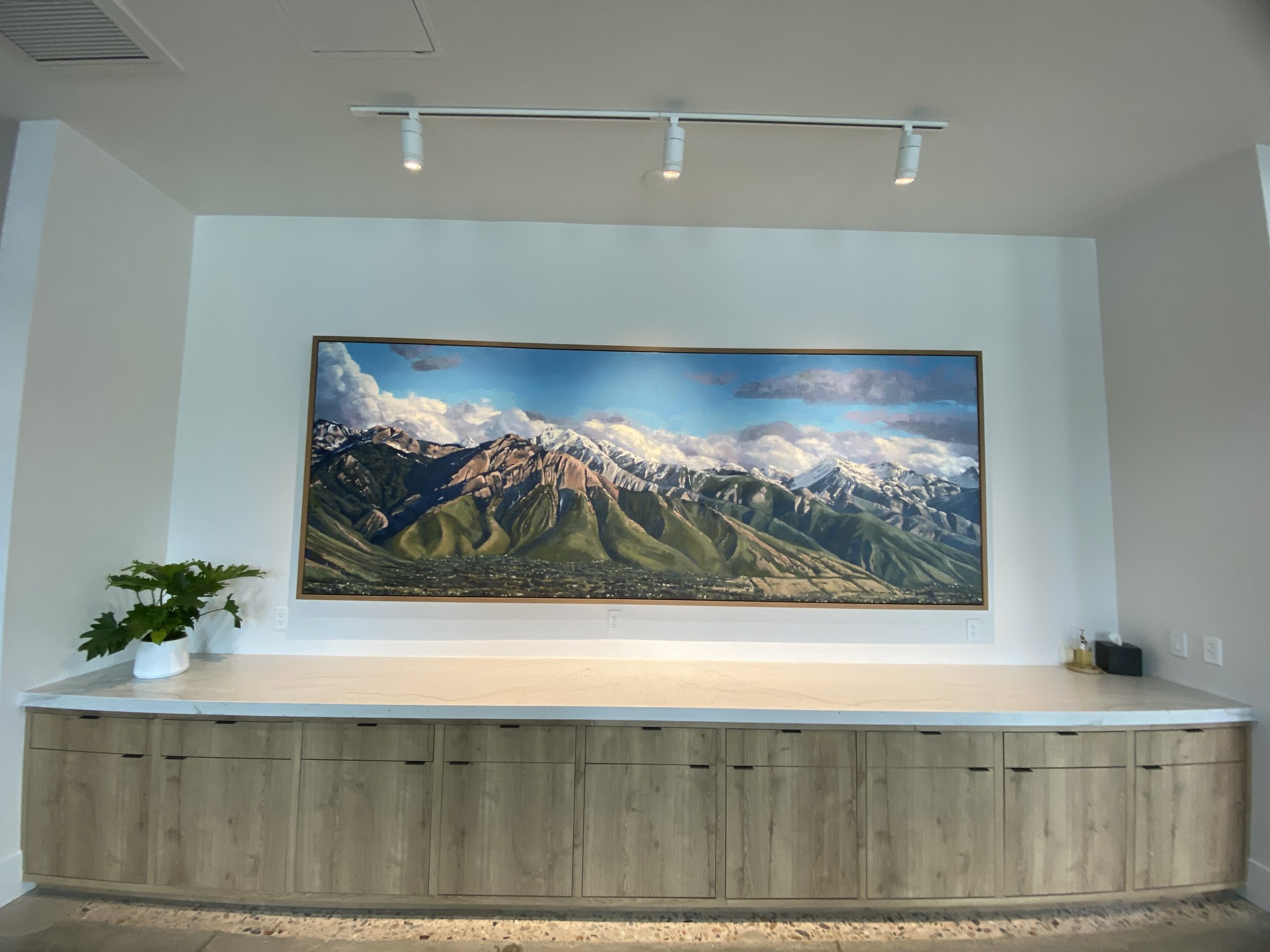
Sustainable lighting solutions support modern interiors
Modern LED gallery wall lighting systems are designed for long-term efficiency without compromising performance. Compared to traditional halogen lighting, LED fixtures provide superior illumination while consuming significantly less energy.
Energy-efficient gallery wall lighting offers:
- Lower operational costs
- Extended lifespan (30,000–50,000+ hours)
- Reduced maintenance requirements
- Consistent brightness over time
This makes LED-based systems ideal for both residential gallery walls and commercial installations.

Professional Installation vs Decorative Lighting Approaches

Precision alignment ensures even artwork illumination
There is a significant difference between professional gallery wall lighting and decorative wall lighting commonly used in residential décor. Decorative lighting often prioritises aesthetics over performance, while professional art lighting focuses on precision, clarity, and conservation.
Professional gallery wall lighting systems provide:
- Controlled beam optics
- High colour accuracy
- Adjustable positioning
- Museum-grade illumination standards
This distinction is especially important for collectors, designers, and galleries displaying valuable artwork.
Gallery Wall Lighting for Commercial and Hospitality Spaces
Hotels, restaurants, showrooms, and offices increasingly use professional lighting systems for gallery walls and artworks to create engaging visual environments. In commercial spaces, art walls often serve both aesthetic and branding purposes, making carefully designed lighting essential for highlighting the artwork while enhancing the overall interior atmosphere.
In commercial applications, gallery wall lighting helps:
- Enhance brand perception
- Improve customer experience
- Create visual focal points
- Elevate interior ambience
Well-lit gallery walls can significantly influence how visitors perceive the quality and sophistication of a space.
Long-Term Maintenance of Gallery Wall Lighting Systems

Clean optics ensure optimal light performance
High-quality gallery wall lighting systems require minimal maintenance when properly specified. LED fixtures are particularly reliable due to their long lifespan and stable light output.
Maintenance considerations include:
- Periodic fixture alignment checks
- Cleaning optics to maintain clarity
- Ensuring consistent dimming calibration
- Monitoring light levels for sensitive artworks
A well-maintained lighting system ensures consistent performance and long-term artwork protection.
Additional FAQ: Gallery Wall Lighting
What type of fixtures are best for gallery wall lighting?
Adjustable LED track lights and professional art lighting fixtures with high CRI and controlled beam angles are considered the best options for gallery wall lighting.
How far should lights be spaced on a gallery wall?
Fixture spacing depends on artwork size and beam angle, but generally lights should be evenly spaced to create overlapping illumination and prevent dark zones.
Can gallery wall lighting increase artwork value perception?
Yes, proper gallery wall lighting enhances colour, texture, and visual depth, which can significantly increase the perceived value and impact of artwork.
Is warm or cool light better for gallery walls?
Warm to neutral light (2700K–3000K) is typically preferred because it maintains natural colour tones and creates a refined viewing atmosphere.
Do galleries use special lighting for art walls?
Yes, professional galleries use specialised art lighting systems with high CRI, precision optics, and conservation-friendly LED technology specifically designed for artwork display.
How bright should gallery wall lighting be?
Brightness should be balanced and controlled rather than overly intense. The goal is even illumination that highlights artwork details without causing glare or washout.
Can gallery wall lighting be integrated into architectural design?
Yes, gallery wall lighting is often integrated into track systems, recessed lighting layouts, and architectural lighting plans for seamless and professional results.
Why is even lighting important on a gallery wall?
Even lighting prevents visual imbalance between artworks and ensures that every piece is presented clearly and consistently within the overall display.
What is the biggest mistake in gallery wall lighting?
The biggest mistake is relying on general room lighting instead of dedicated art lighting, which results in uneven illumination, glare, and reduced artwork impact.
What is gallery wall lighting?
Gallery wall lighting is a specialised lighting system designed to illuminate multiple artworks displayed on a single wall with balanced, high-quality light that enhances colour accuracy and visual clarity.
What is the best lighting for a gallery wall?
The best gallery wall lighting is adjustable LED art lighting with high CRI (95+), controlled beam angles, and even light distribution to ensure consistent illumination across all artworks.
How do you light a gallery wall without glare?
To reduce glare, lights should be positioned at a 25–35 degree angle above the artwork, use anti-glare optics, and avoid direct frontal lighting.
Should gallery wall lighting be warm or neutral?
Most professionals recommend 2700K to 3000K for gallery wall lighting because it provides natural colour rendering and enhances artwork depth.
How high should gallery wall lights be installed?
Gallery wall lights are typically installed slightly above the artwork line and angled downward to achieve even coverage without harsh shadows.
Is track lighting good for gallery walls?
Yes, track lighting is one of the best solutions for gallery wall lighting because it offers flexibility, adjustable positioning, and precise spotlight control for multiple artworks.
What CRI is best for gallery wall lighting?
A CRI of 90+ is recommended, while 95–97+ is ideal for professional gallery walls, museums, and collectors who require accurate colour representation.
Can gallery wall lighting be used in homes?
Yes, gallery wall lighting is widely used in luxury homes to create museum-style art displays and elevate interior design aesthetics.
Does LED gallery wall lighting damage artwork?
High-quality LED gallery wall lighting emits minimal UV and heat, making it safe for paintings, prints, and delicate artworks when properly installed.
What is the difference between picture lights and gallery wall lighting systems?
Picture lights illuminate individual artworks, while gallery wall lighting systems are designed to provide cohesive illumination across multiple artworks displayed together on a single wall.
Why Designers and Collectors Trust Our Gallery Lights