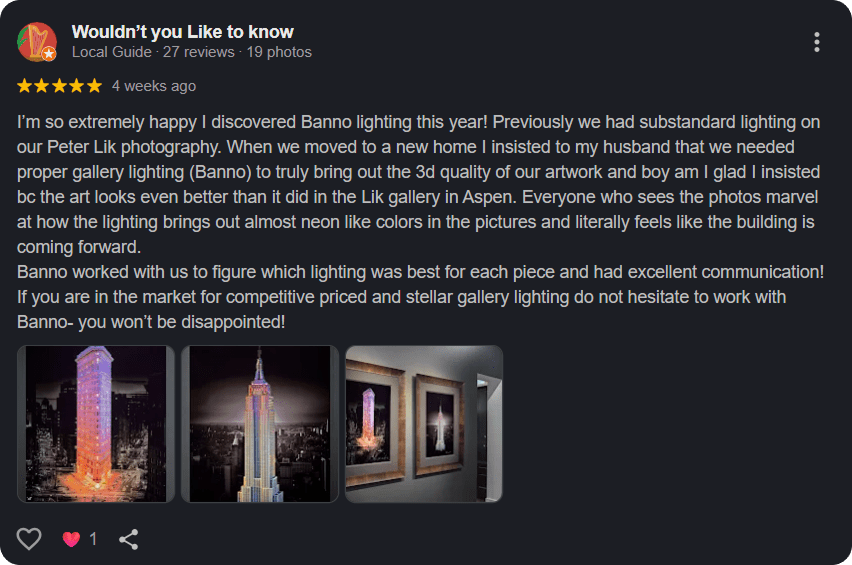
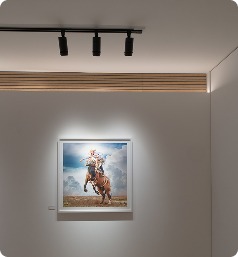
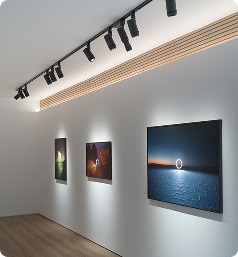
Museum-style lighting enhancing multi-frame gallery wall arrangement
Gallery wall lights are specialised lighting fixtures designed to illuminate multiple artworks arranged on a single wall with precision, balance, and visual hierarchy. This complete guide to lighting gallery walls and artwork explains how, whether in a private residence, luxury interior, or professional exhibition space, the way a gallery wall is lit determines how the artwork is perceived, valued, and experienced.
For collectors, designers, and homeowners, gallery wall lighting is not simply about brightness. It is about control, accuracy, and focus. When executed correctly, gallery wall lights transform a flat arrangement of frames into a curated visual statement that feels intentional, refined, and museum-quality.
In both high-end homes and professional galleries, less lighting is often more. Strategic placement of fewer, high-quality gallery wall lights creates depth, focus, and elegance without visual clutter.
What Are Gallery Wall Lights?

Ceiling-mounted art lights providing focused wall illumination
Gallery wall lights are directional art lighting fixtures used to illuminate a collection of artworks, photographs, or framed pieces displayed together on a feature wall. Unlike general ceiling lighting, these fixtures are designed to highlight artwork surfaces evenly while minimising glare and colour distortion.
Professional gallery wall lights typically include:
- Ceiling-mounted art lights
- Track lighting systems
- Adjustable spotlights
- Picture lights mounted above artwork
- Focused gallery wall art lights
These fixtures provide controlled illumination rather than ambient wash lighting, ensuring each piece remains visually distinct while still feeling part of a cohesive display.

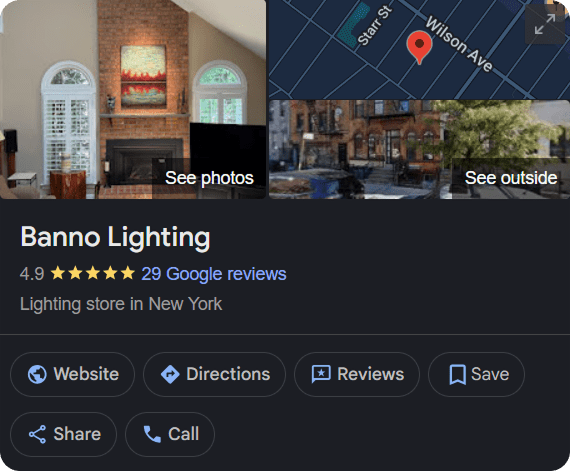
4.9-Star Google Review for Our Art Lighting Solutions
Why Gallery Wall Lighting Matters More Than Most People Realise

Professional lighting reducing glare across framed artworks
Many gallery walls are installed beautifully but lit poorly. Standard ceiling lights often create shadows, glare, or uneven brightness across frames, causing some artworks to disappear visually while others become overexposed.
Proper gallery wall lights provide effective lighting for wall-mounted art by:
- Creating visual hierarchy across multiple artworks
- Enhancing colour accuracy and texture
- Reducing glare on glass and frames
- Improving perceived artwork value
- Guiding the viewer’s eye across the wall
For collectors and design-conscious homeowners, lighting is what turns a decorative wall into a curated gallery experience.
How to Light a Gallery Wall (Professional Method)
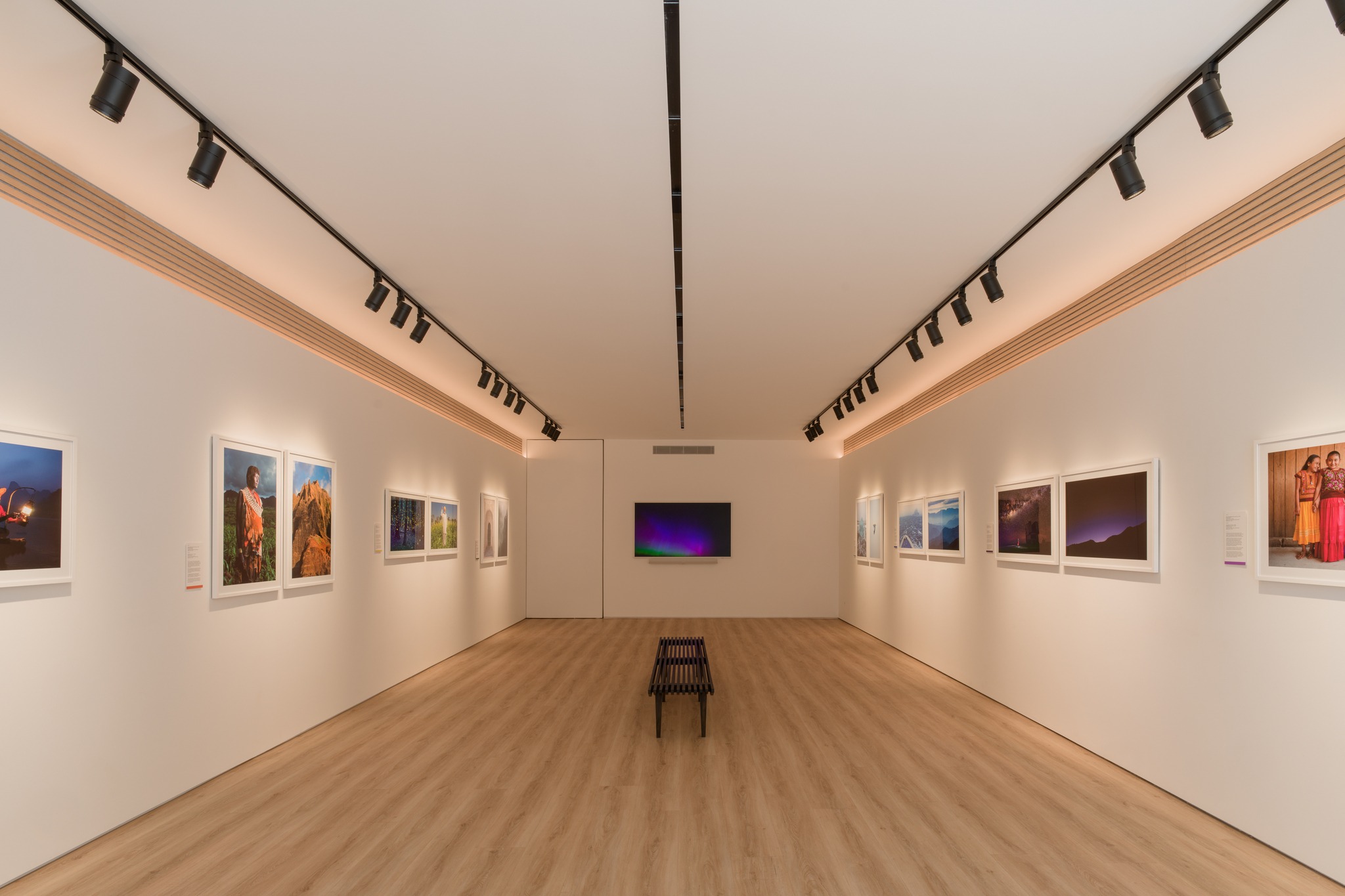
Consistent beam spacing across symmetrical gallery layout
Understanding the best practices for lighting gallery walls requires a structured approach rather than random fixture placement. In professional gallery environments, lighting designers focus on beam control, spacing, and angle rather than raw brightness to ensure a museum-quality result.
Key principles include:
- Position lights at approximately a 30-degree angle to the artwork
- Use focused beams rather than wide flood lighting
- Maintain consistent spacing between fixtures
- Match beam width to artwork size
- Avoid direct frontal lighting to reduce glare
This method ensures that every frame on the gallery wall receives balanced illumination without creating hotspots or dark zones.
Gallery Wall Lights for Collectors and Art Galleries (Audience A)

Dimmable spotlights preserving artwork with controlled illumination
For collectors, curators, and designers, gallery wall lights must perform at a museum-grade level. The goal is not decoration but preservation and accurate presentation of artwork.
In professional environments, gallery wall lighting prioritises:
- High CRI (95–97+) for true colour rendering
- Precision beam control for different artwork sizes
- Minimal UV and heat exposure
- Dimmable control for conservation
Museum-style gallery wall lights are often ceiling mounted or track based, allowing precise alignment with each artwork. This ensures the collection appears cohesive while still giving each piece individual visual importance.
Gallery Wall Lights for Residential Homes (Audience B)
Living room gallery wall illuminated with warm lighting
Gallery wall lighting is increasingly popular in luxury homes where collectors display original art, photography, or curated print collections. Residential gallery walls are commonly installed in:
- Living rooms
- Hallways
- Staircases
- Home offices
- Feature walls above sofas
Unlike decorative lighting, professional gallery wall lights elevate the interior by making artwork the focal point rather than the surrounding décor.
When properly installed, gallery wall art lights create a sophisticated atmosphere that mirrors high-end galleries while remaining suitable for everyday living spaces.
Gallery Wall Lighting Ideas That Actually Work

Linear ceiling lights aligned above framed artworks
The most effective gallery wall lighting ideas focus on simplicity, consistency, and precision rather than excessive fixtures.
Proven lighting approaches for paintings on gallery walls include:
- Linear ceiling-mounted lights aligned with the wall
- Gallery track lighting for adjustable flexibility
- Picture lights for feature centrepieces
- Focused spotlights for large artworks
- Layered lighting combining ambient and accent sources
Avoid overly decorative lighting that distracts from the artwork itself. In professional gallery design, the lighting should enhance the art, not compete with it.
Picture Lights for Gallery Wall Displays

Even illumination across multi-frame gallery wall arrangement
Picture lights for gallery wall installations provide direct illumination above framed artworks. These fixtures are particularly effective for symmetrical gallery walls where consistent lighting across frames is required.
Benefits of picture wall lights include:
- Even surface illumination
- Reduced shadowing
- Elegant visual framing effect
- Clean architectural integration
For larger gallery walls, picture lights are often combined with ceiling-mounted gallery wall lights to achieve layered and balanced illumination.
Gallery Wall Lights: Zoom, Multi, and Deluxe (Professional Systems)
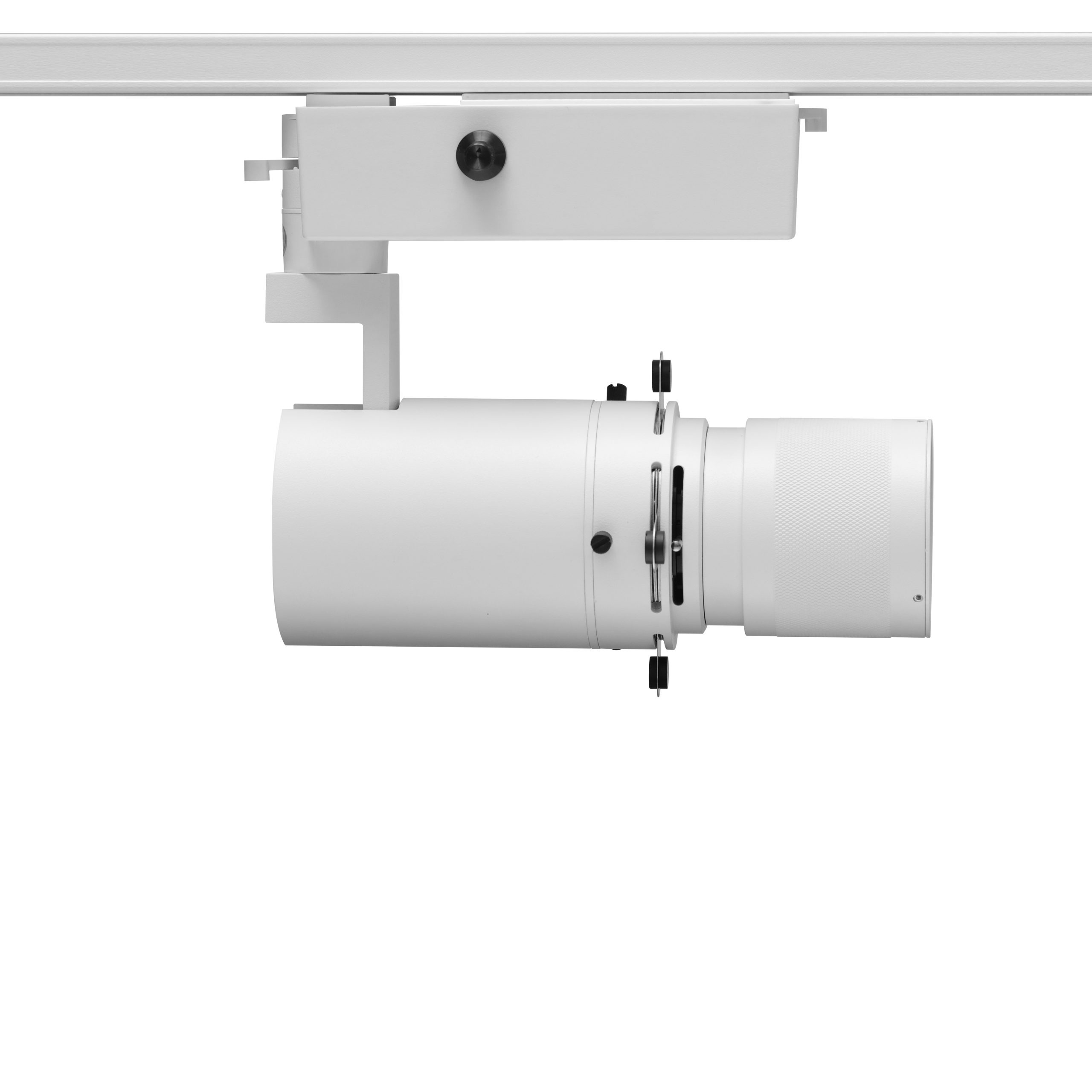
Deluxe high CRI lighting for premium collections
Zoom Series Gallery Wall Lights
The Zoom series is designed for precision-focused gallery wall lighting where individual artworks require pinpoint illumination. With adjustable beam angles, Zoom fixtures allow lighting designers and collectors to highlight specific pieces within a gallery wall without overspill onto surrounding frames. This is ideal for curated collections where certain artworks hold higher visual importance.
Multi Series Gallery Wall Lights
The Multi series provides broader and more uniform illumination across an entire gallery wall. These gallery wall lights are commonly used when multiple artworks are displayed in a structured grid or linear arrangement. The wider beam distribution ensures cohesive lighting while maintaining professional colour accuracy across the full display.
Deluxe Series Gallery Wall Lights
The Deluxe series represents a museum-grade solution for high-end gallery walls in both residential and professional settings. Featuring ultra-high CRI, refined optics, and conservation-friendly output, Deluxe fixtures deliver exceptional clarity and depth. They are particularly suited for valuable artwork collections where presentation and preservation must meet the highest standards.
Gallery Wall Lights vs Regular Wall Lighting

Controlled beam lighting improving artwork presentation
A common mistake is using standard wall lights instead of specialised gallery wall lights. Unlike basic home fixtures, professional lighting systems for gallery walls and art displays provide the focus and color accuracy required for high-end artwork presentation.
Key differences:
- Gallery wall lights: focused, high-CRI, adjustable
- Regular wall lighting: diffuse, decorative, non-directional
Using general wall lighting often results in glare, colour distortion, and uneven visual balance across the gallery wall.
Ceiling Mounted Gallery Wall Lights for Clean Installations

Minimalist installation enhancing gallery wall aesthetics
Ceiling-mounted gallery wall lights are one of the most professional solutions for both collectors and homeowners. These fixtures remain discreet while delivering precise illumination across the artwork display.
Advantages include:
- Clean architectural appearance
- Adjustable aiming angles
- Consistent lighting coverage
- Minimal visual distraction
For modern interiors and gallery-style homes, ceiling-mounted fixtures offer a refined alternative to visible wall-mounted lights.
Colour Temperature for Gallery Wall Lighting

Neutral lighting maintaining cohesive wall presentation
Colour temperature significantly affects how artwork appears on a gallery wall. Incorrect lighting can make colours look dull, overly warm, or artificially cool.
Recommended colour temperatures:
- 2700K: Classical artwork and warm-toned interiors
- 3000K: Balanced gallery wall lighting (most common)
- 3500K: Contemporary and photographic displays
Maintaining a consistent colour temperature across all gallery wall lights ensures visual harmony and accurate artwork representation.
Advanced Gallery Wall Lights Planning for Large Art Collections
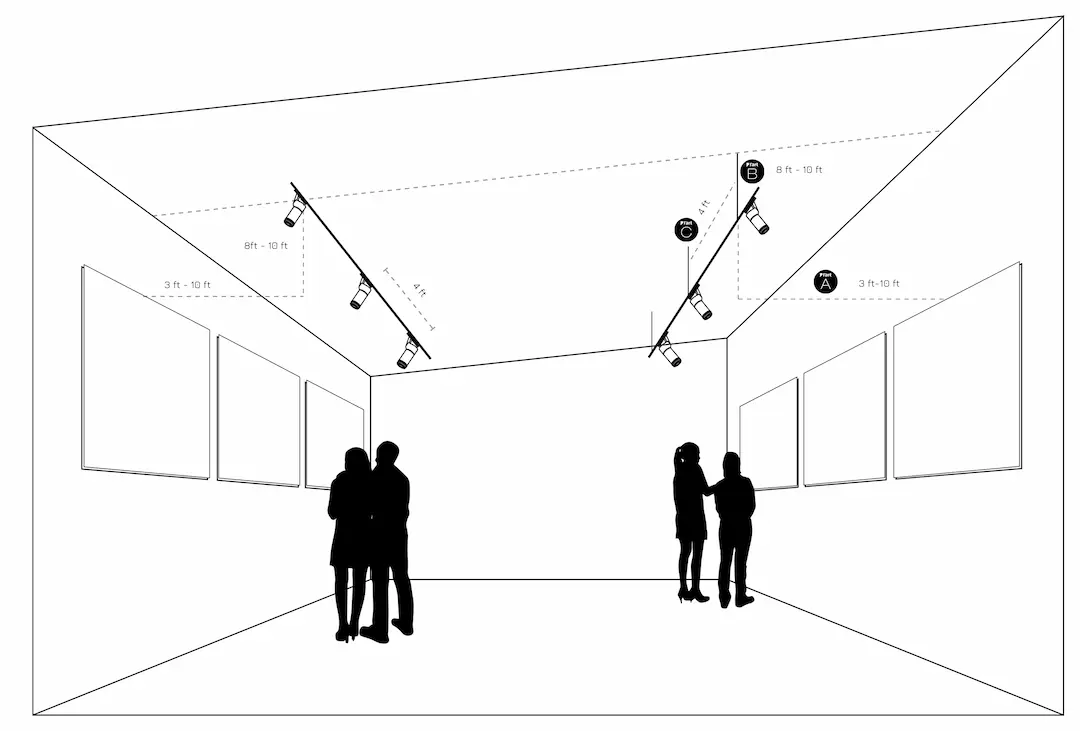
Professional layout ensuring cohesive visual hierarchy
When a gallery wall expands beyond three to five pieces, lighting strategy becomes significantly more important. At this scale, gallery wall lights are no longer just accent fixtures. They become a structured lighting system that must deliver consistency, balance, and visual flow across the entire display.
Professional art lighting consultants approach large gallery walls by mapping:
- Artwork sizes
- Frame spacing
- Viewing distance
- Wall height
- Ambient light sources
This planning ensures that gallery wall lights do not create uneven brightness where one artwork appears dominant simply because it is better lit. Instead, the lighting enhances the collection as a unified visual story.
Gallery Wall Lights for Different Wall Layout Styles

Symmetrical grid gallery wall with uniform lighting
Not all gallery walls are arranged the same way, which means the lighting approach must adapt to the layout style rather than forcing a one-size-fits-all solution.
Grid Layout Gallery Walls
Grid layouts require highly uniform gallery wall lighting. Since the artworks are aligned symmetrically, inconsistent lighting becomes immediately noticeable. Linear ceiling-mounted gallery wall lights or track lighting systems are often the best solution because they distribute light evenly across the full display.
Organic or Asymmetrical Gallery Walls
Asymmetrical gallery walls benefit from adjustable wall lighting for gallery artwork. These allow selective focusing on larger or more visually significant artworks while still maintaining cohesion across smaller pieces.
Statement Gallery Walls
For large centrepiece walls in luxury homes or galleries, gallery wall lights should be layered. This typically includes a combination of track lighting and focused spotlights to create depth and dimensionality.
Gallery Wall Lights and Beam Angle Selection

Medium beam evenly lighting standard gallery wall
Beam angle is one of the most overlooked aspects of gallery wall lighting. Many installations fail because the beam is either too wide (causing spill light) or too narrow (creating harsh hotspots).
General beam angle guidelines:
- Narrow beam (10–24°): Small artworks or feature pieces
- Medium beam (24–40°): Standard gallery wall displays
- Wide beam (40°+): Large gallery walls or grouped artworks
Precision beam control is especially critical when using gallery wall lights in professional settings where artwork clarity and texture must remain visible.
Lighting Hierarchy: The Secret Behind Premium Gallery Walls
Dimmable lights creating visual hierarchy across collection
High-end galleries and collectors rarely light every artwork equally. Instead, they use a lighting hierarchy to guide the viewer’s attention across the gallery wall.
This involves:
- Slightly brighter lighting on key artworks
- Softer lighting on supporting pieces
- Controlled contrast between sections
- Subtle dimming adjustments
Gallery wall lights with dimming capability allow this level of fine control, creating a curated experience rather than a flat, evenly lit wall.
Gallery Wall Lights in Living Rooms and Feature Spaces

Living room art display enhanced with focused spotlights
In residential interiors, gallery wall lights are commonly installed in living rooms where artwork becomes the focal design element. Unlike overhead room lighting, dedicated picture wall lights or gallery wall art lights ensure that artwork remains visually prominent even during evening hours.
In living rooms, the most effective approach is:
- Ceiling-mounted gallery wall lights aligned with the wall
- Warm colour temperature (2700K–3000K)
- Minimal glare angles
- Dimmable output for evening ambience
This setup creates a refined atmosphere where the artwork feels intentional rather than decorative.
Gallery Wall Lights for Hallways and Transitional Spaces

Hallway gallery wall evenly illuminated with spotlights
Hallways are one of the best locations for gallery wall lighting because they naturally encourage sequential viewing. Properly installed gallery wall lights can transform a simple corridor into a curated exhibition-style experience.
Key hallway lighting considerations:
- Consistent spacing between light fixtures
- Even beam coverage across frames
- Avoiding shadow casting from nearby walls
- Using directional gallery wall lights rather than general ceiling lights
This approach enhances both the artwork and the architectural flow of the space.
Professional Spacing Guidelines for Gallery Wall Lights
Incorrect spacing is one of the most common installation mistakes. Even high-quality gallery wall lights can underperform if spacing is poorly calculated.
Recommended spacing principles:
- Lights spaced based on artwork width, not wall width
- Fixtures aligned with artwork centres where possible
- Equal distance between lighting beams
- Slight overlap of light beams for seamless coverage
For larger gallery walls, spacing must also account for ceiling height and viewing angle to ensure the lighting remains visually comfortable.
Gallery Wall Lights and Glare Control

Anti-glare optics enhancing artwork clarity
Glare is the primary enemy of artwork visibility. Frames with glass or glossy finishes are especially sensitive to incorrect lighting placement.
Professional glare control methods include:
- Angling gallery wall lights downward at 25–35 degrees
- Using anti-glare optics
- Avoiding direct frontal lighting
- Selecting high-quality lens systems
When glare is eliminated, colours appear richer, textures become more visible, and the artwork feels more dimensional.
Gallery Wall Lights vs Track Lighting: Which Is Better?
Both solutions are widely used in professional and residential installations, but they serve slightly different purposes.
Gallery wall lights:
- Clean aesthetic
- Focused illumination
- Ideal for permanent artwork displays
Track lighting for gallery walls:
- Maximum flexibility
- Adjustable spotlight positioning
- Suitable for rotating art collections
Collectors and galleries that frequently change artwork often prefer track-based gallery lighting systems due to their adaptability.
Gallery Wall Lighting for Large Paintings and Mixed Media

Balanced illumination across mixed media gallery wall
Large artworks within a gallery wall require stronger and more controlled lighting compared to smaller frames. Standard wall lighting often fails to provide adequate coverage for oversized pieces.
For large paintings:
- Use wider beam gallery wall lights
- Increase fixture output slightly
- Maintain even light distribution across the canvas
- Avoid multiple overlapping hotspots
This ensures the artwork is fully illuminated without washing out detail or creating visual imbalance.
The Role of CRI in Gallery Wall Lights

Museum-grade LED lights enhancing fine details
CRI (Colour Rendering Index) determines how accurately colours appear under artificial lighting. For artwork, this metric is critical.
Recommended CRI levels:
- 90+ CRI: Acceptable for residential gallery walls
- 95–97+ CRI: Museum and collector-grade gallery wall lighting
High CRI gallery wall lights reveal true pigments, brushwork, and fine details that lower-quality lighting simply cannot replicate.
Gallery Wall Lights and Artwork Preservation

Low heat LED lighting protecting framed artwork
Many collectors worry about whether lighting can damage artwork. Modern LED gallery wall lights are designed specifically to minimise risk while maintaining optimal presentation.
Safe lighting characteristics include:
- Low UV emission
- Low heat output
- Stable light intensity
- Controlled beam focus
This makes professional gallery wall lights suitable even for delicate artworks, prints, and photographs.

Gallery Wall Lighting Design for Interior Designers and Architects

Integrated ceiling lighting aligned with gallery wall
Interior designers increasingly integrate gallery wall lights into early design planning rather than treating them as an afterthought. This results in cleaner installations and superior visual impact.
Architectural planning considerations:
- Ceiling mount positioning during construction
- Wiring alignment with artwork layout
- Integration with dimming systems
- Matching fixture finishes to interior aesthetics
When gallery wall lighting is planned from the start, the final result feels seamless and premium.
Common Mistakes When Installing Gallery Wall Lights
Even beautifully curated gallery walls can be undermined by poor lighting decisions. Avoiding these mistakes significantly improves the final visual result.
Most common errors:
- Using overly bright flood lighting
- Placing lights too close to the artwork
- Ignoring beam angle alignment
- Mixing different colour temperatures
- Over-lighting the wall instead of focusing on the art
Professional gallery wall lights are designed to eliminate these issues through precision optics and controlled output.
Future Trends in Gallery Wall Lighting

Museum-inspired residential art lighting systems
Gallery wall lighting is evolving rapidly as collectors and designers demand higher precision and cleaner aesthetics. Modern trends include:
- Minimalist ceiling-mounted gallery wall lights
- High-CRI LED technology
- Integrated smart dimming systems
- Architectural lighting integration
- Museum-inspired residential installations
These trends reflect a broader shift toward treating home art displays with the same care and sophistication as professional galleries.
FAQ: Gallery Wall Lights
What are gallery wall lights used for?
Gallery wall lights are used to illuminate multiple artworks on a single wall with focused, even lighting that enhances visibility, colour accuracy, and overall presentation.
How high should gallery wall lights be installed?
Typically, gallery wall lights are installed on the ceiling or above artwork at an angle of around 30 degrees to minimise glare and ensure balanced illumination.
Are gallery wall lights better than regular ceiling lights?
Yes. Regular ceiling lights provide general illumination, while gallery wall lights are specifically designed to highlight artwork with precision and controlled beam angles.
Can gallery wall lights be used for photography walls?
Absolutely. Photo walls benefit significantly from dedicated gallery wall lighting because it reduces shadows and enhances visual clarity across multiple frames.
Do gallery wall lights work with different frame sizes?
Yes. Adjustable gallery wall lights can be calibrated to suit small, medium, or large artworks within the same display.
What finish is best for gallery wall light fixtures?
Neutral finishes such as black, white, or brass are most commonly used because they remain discreet and do not distract from the artwork.
Should gallery wall lights be dimmable?
Dimmable gallery wall lights are highly recommended as they allow fine-tuning of brightness depending on time of day, ambience, and artwork sensitivity.
How many gallery wall lights do I need?
The number depends on wall size, artwork spacing, and beam angle. A professional approach focuses on fewer high-quality lights rather than many low-output fixtures.
Are LED gallery wall lights suitable for valuable art?
Yes. High-quality LED gallery wall lights with low UV and low heat output are widely used in galleries and museums due to their safety and precision.
Can gallery wall lights increase the perceived value of artwork?
Proper lighting significantly enhances texture, depth, and colour accuracy, which can elevate how artwork is perceived in both residential and gallery environments.
What is the difference between gallery wall lights and gallery lighting systems?
Gallery wall lights typically refer to fixtures focused on a single wall display, while full gallery lighting systems may include track lighting, ceiling lights, and layered illumination across an entire space.
Is warm or neutral lighting better for gallery walls?
Neutral warm lighting around 3000K is generally considered ideal because it balances colour accuracy with a natural viewing experience.
Can gallery wall lights be used in staircases?
Yes. Staircase gallery walls benefit greatly from directional gallery wall lighting, creating a guided visual journey through the space.
Do gallery wall lights require professional installation?
For high-end results, professional installation is recommended to ensure correct angles, spacing, and wiring alignment with the artwork layout.
Extended FAQ: Gallery Wall Lights
What are the best gallery wall lights for artwork?
The best gallery wall lights are high-CRI LED fixtures with adjustable beam angles, such as ceiling-mounted art lights, track lighting, or professional picture lights designed specifically for artwork illumination.
How do you light a gallery wall properly?
A gallery wall should be lit using directional lighting positioned at a 30-degree angle, with evenly spaced fixtures and controlled beam spreads to ensure balanced illumination across all artworks.
Are gallery wall art lights suitable for homes?
Yes. Professional gallery wall lights are widely used in luxury homes to create museum-style artwork displays in living rooms, hallways, and feature walls.
Should gallery wall lights be mounted on the wall or ceiling?
Both options work, but ceiling-mounted gallery wall lights often provide cleaner visuals and better beam control for multi-artwork displays.
What colour temperature is best for gallery wall lighting?
Most designers recommend 2700K to 3000K for gallery wall lights, as this range produces natural, accurate colour rendering without harsh brightness.
How many lights do you need for a gallery wall?
Fewer, well-positioned gallery wall lights are typically more effective than many low-quality fixtures. The goal is focused illumination rather than excessive brightness.
Do gallery wall lights damage artwork?
High-quality LED gallery wall lights with minimal UV and low heat output are safe for artwork and are widely used in museums and galleries.
Can gallery wall lights work for large art collections?
Yes. Professional systems like track lighting or adjustable gallery wall lights are specifically designed to illuminate multiple artworks across large gallery walls.
What is the difference between picture lights and gallery wall lights?
Picture lights are mounted above individual frames, while gallery wall lights are broader lighting systems designed to illuminate multiple artworks cohesively.
Are dimmable gallery wall lights recommended?
Yes. Dimmable gallery wall lights allow precise brightness control, which is essential for both artwork preservation and optimal visual presentation.
Why Designers and Collectors Trust Our Gallery Lights