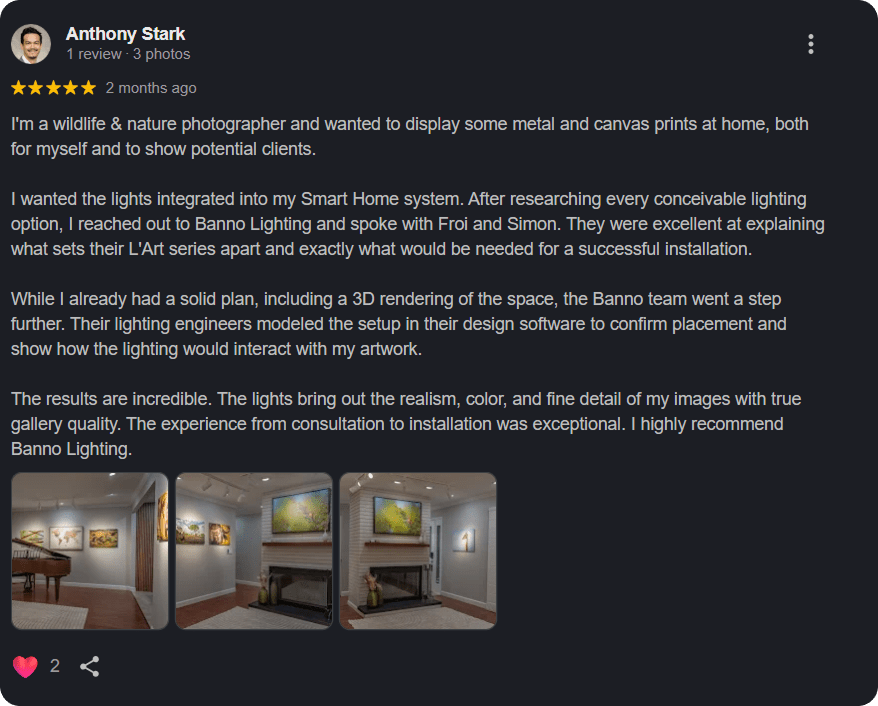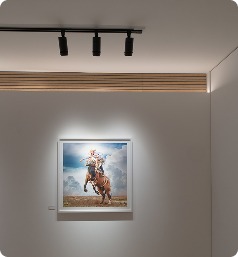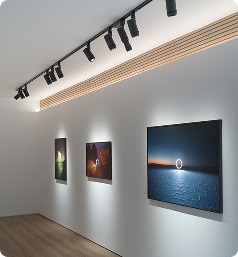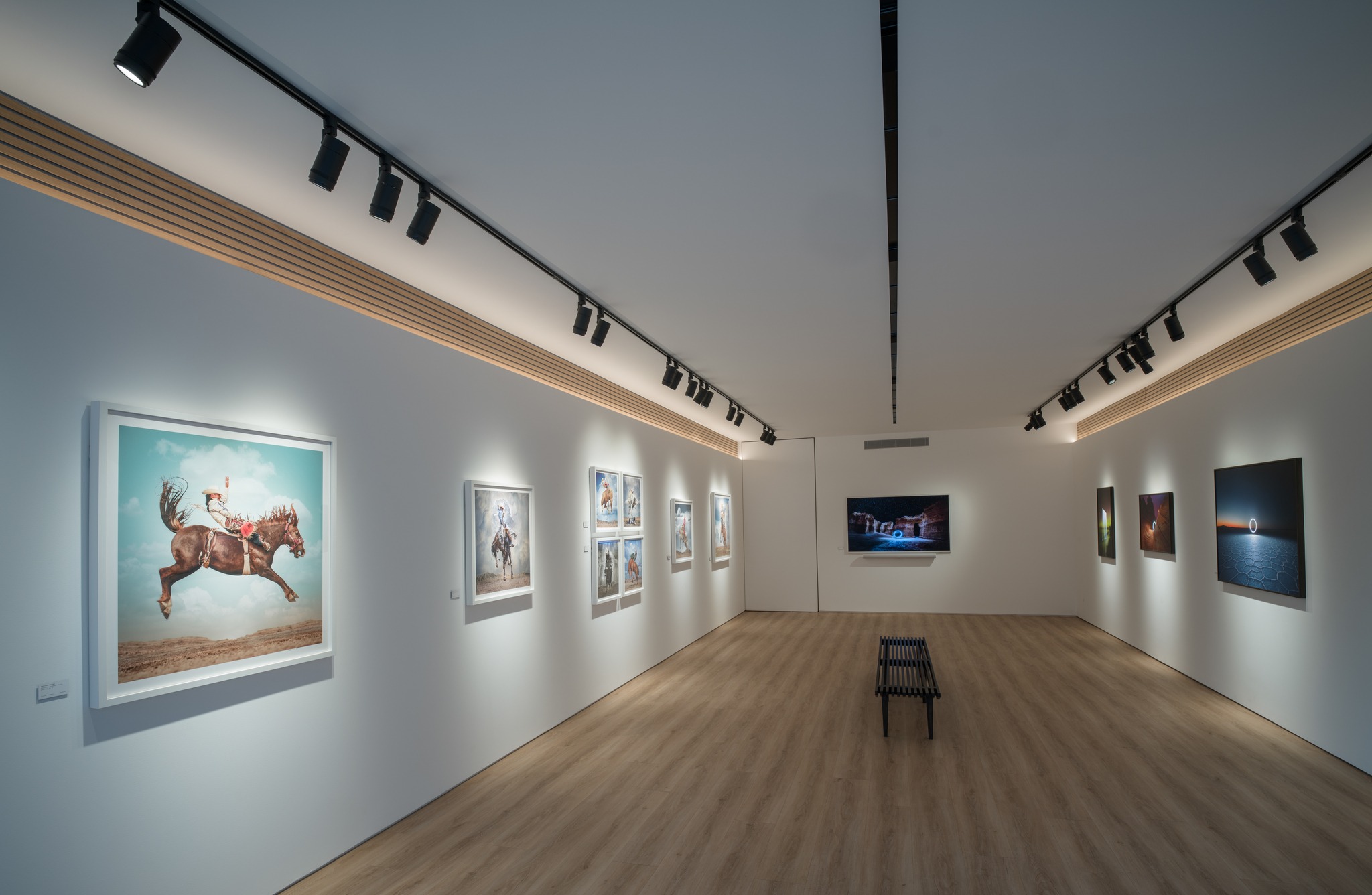
Precision track lighting shaping light tightly to framed artwork
Lighting artwork is not about making walls bright. It is about controlling light so precisely that the artwork becomes the focus and everything else disappears. That is why professional galleries, museums, and collectors rely on track lighting for art display rather than general ceiling lighting.
At Banno Lighting, we design lighting specifically to remove halos, control spill, and concentrate light only where it is needed — on the artwork.
Art lighting is about control, not brightness
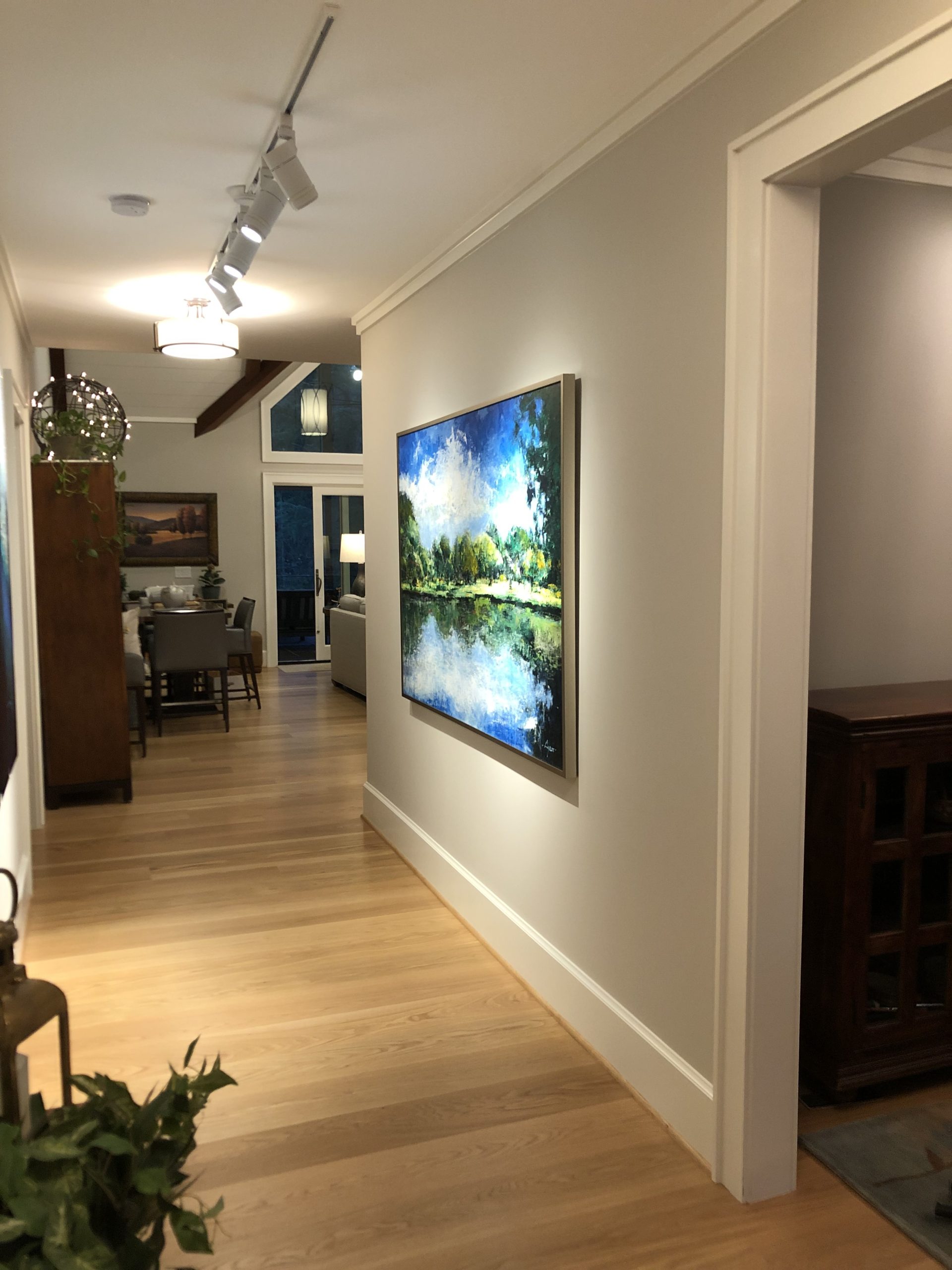
Museum-grade track lighting with controlled optics and clean beam edges
The biggest misconception is that art needs more light. It does not. It needs better controlled ligh — a principle central to professional gallery lighting design strategies.
Poor lighting creates:
- Halo arches around artworks
- Spill onto surrounding walls
- Loss of contrast
- Flat appearance
- Reduced visual focus
Professional track lighting for art displays eliminates these problems by shaping light precisely to the artwork’s size and position.
Why track lighting is the professional standard

Adjustable beam track fixtures eliminating halo spill around paintings
This is why galleries rely on adjustable track lighting for artwork displays rather than fixed ceiling fixtures.
Track systems allow each fixture to be:
- Moved
- Aimed
- Focused
- Adjusted
Artwork changes. Exhibitions rotate. Layouts evolve. Track lighting for art galleries must adapt instantly without rewiring.
But flexibility alone is not enough. The real difference is optical control.

4.9-star rated by art collectors and gallery professionals
Removing halo arches is the key to premium art lighting
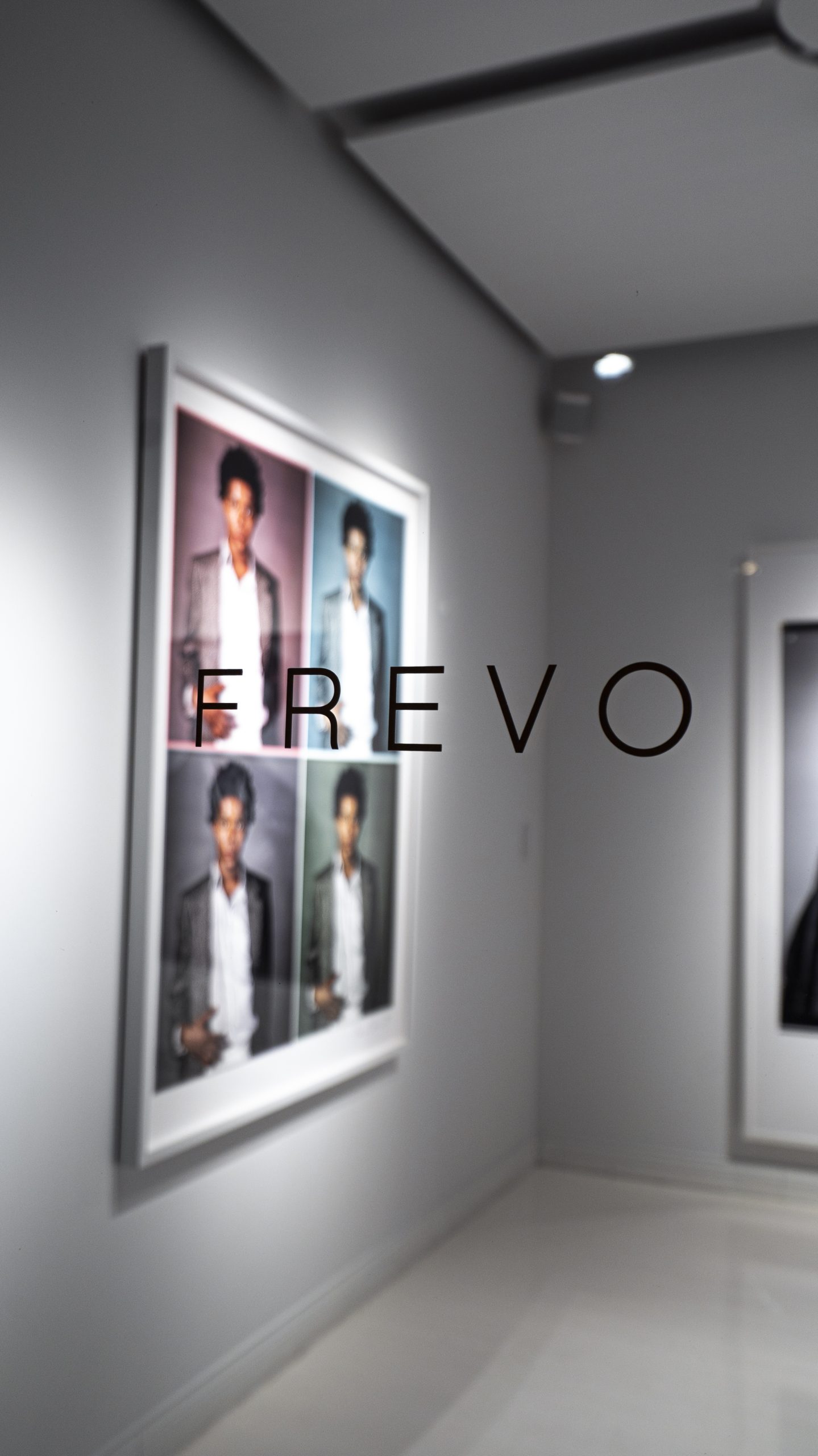
Focused art lighting maintaining contrast and visual hierarchy
When beam edges are too soft or too wide, light spills beyond the artwork creating bright arcs around the frame. This reduces contrast and makes the wall compete with the art.
Professional art lighting removes this “halo” effect by:
- Focusing light tightly to the artwork
- Using precision optics
- Matching beam size exactly to artwork size
- Controlling spill
This is the difference between decorative lighting and true track lighting for art display.
Why adjustable beam control is essential

Clean beam definition enhancing artwork presence and depth
Every artwork is different. Fixed beam angles are limiting. Professional art lighting must adapt.
As the complete art gallery lighting guide shows, adjustable beam control allows professional systems to adapt to different artworks and exhibition layouts.
Our systems are built around this principle.
Zoom
The Zoom fixture allows full beam adjustment from approximately 10° to 70°. This means one fitting can:
- Highlight a small piece with tight focus
- Open up for larger works
- Adapt when exhibitions change
No lens swapping required.
Multi
The Multi system uses interchangeable click-in lenses, giving curators and designers the ability to tailor the beam exactly to the artwork size and wall conditions.
Deluxe
The Deluxe range delivers the highest level of optical refinement and beam control for museum-grade environments where precision and visual quality are critical.
All systems are designed specifically for track lighting for art display, not general commercial lighting.
Why 3000K is the professional standard

Controlled accent lighting isolating artwork from surrounding walls
Color temperature influences how art feels.
3000K provides:
- Natural warmth
- True color balance
- Comfortable viewing
- Consistency across collections
It avoids the coldness of 4000K and the yellowing effect of lower temperatures.
Why 97 CRI is critical
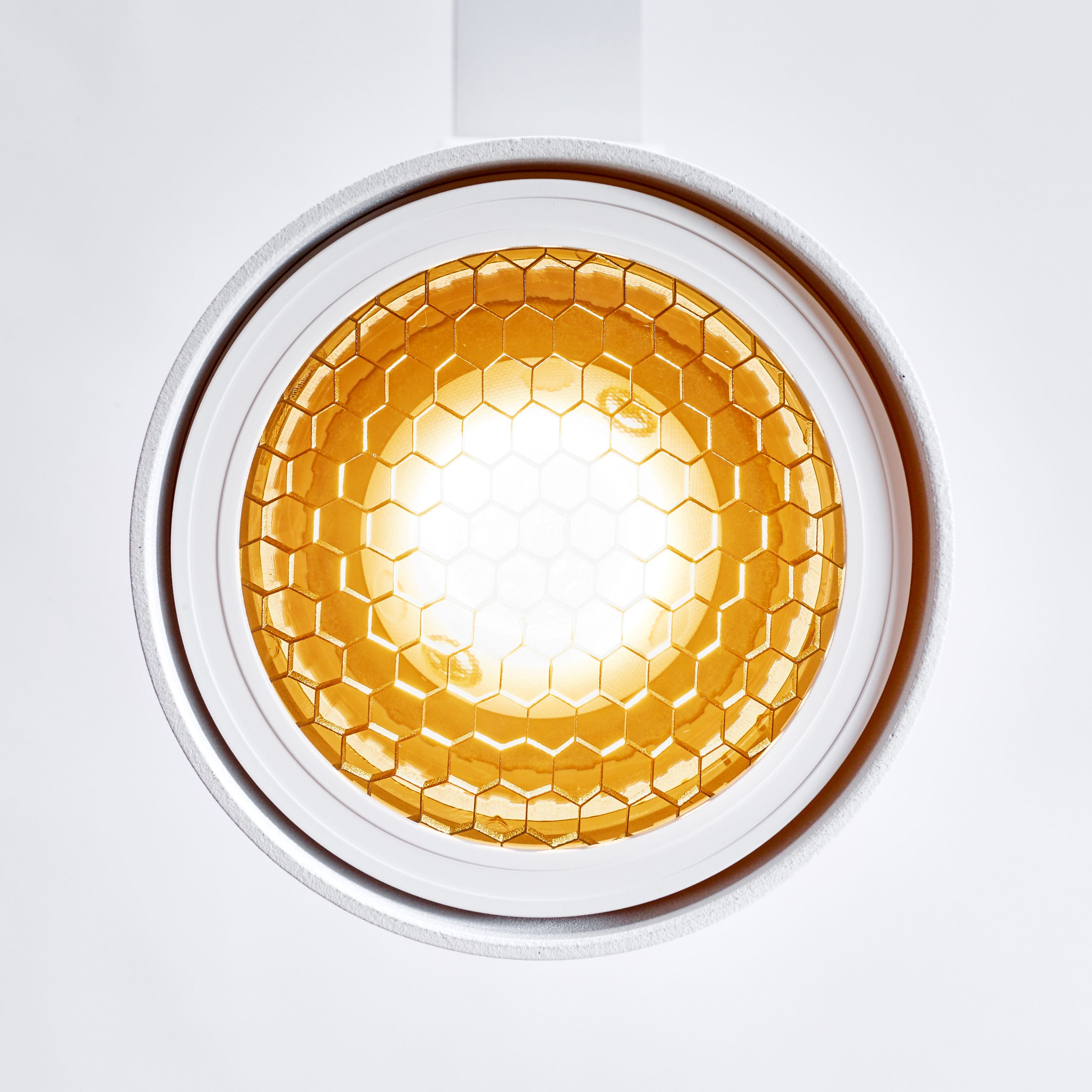
High-CRI track lighting revealing accurate colour and fine detail
CRI determines how accurately colors are rendered. Art must be seen as the artist intended.
All Banno Lighting LED track lighting for art displays operate at 97 CRI, ensuring:
- Accurate reds
- True blues
- Correct skin tones
- Preserved detail
Low CRI lighting is one of the fastest ways to degrade artwork presentation.
Light should be shaped, not sprayed
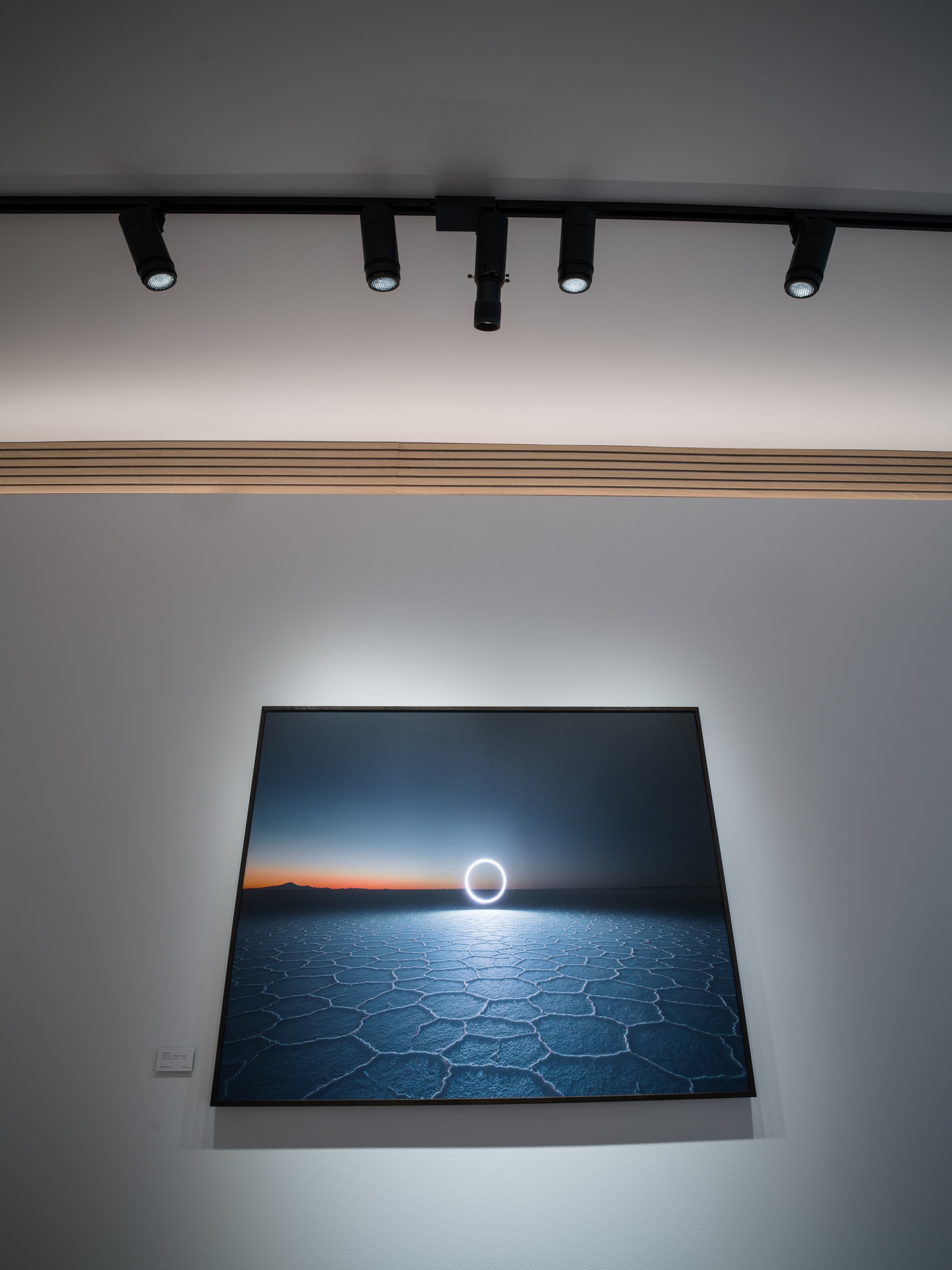
Gallery lighting designed for visual focus and hierarchy
General lighting spreads light everywhere. Art lighting shapes it.
With proper track lighting for art display, light is:
- Focused on the artwork
- Controlled at the edges
- Kept off surrounding walls
- Balanced for visual hierarchy
Unless a space intentionally uses full wall washing, controlled accent lighting is what gives art presence.
Lighting creates visual hierarchy
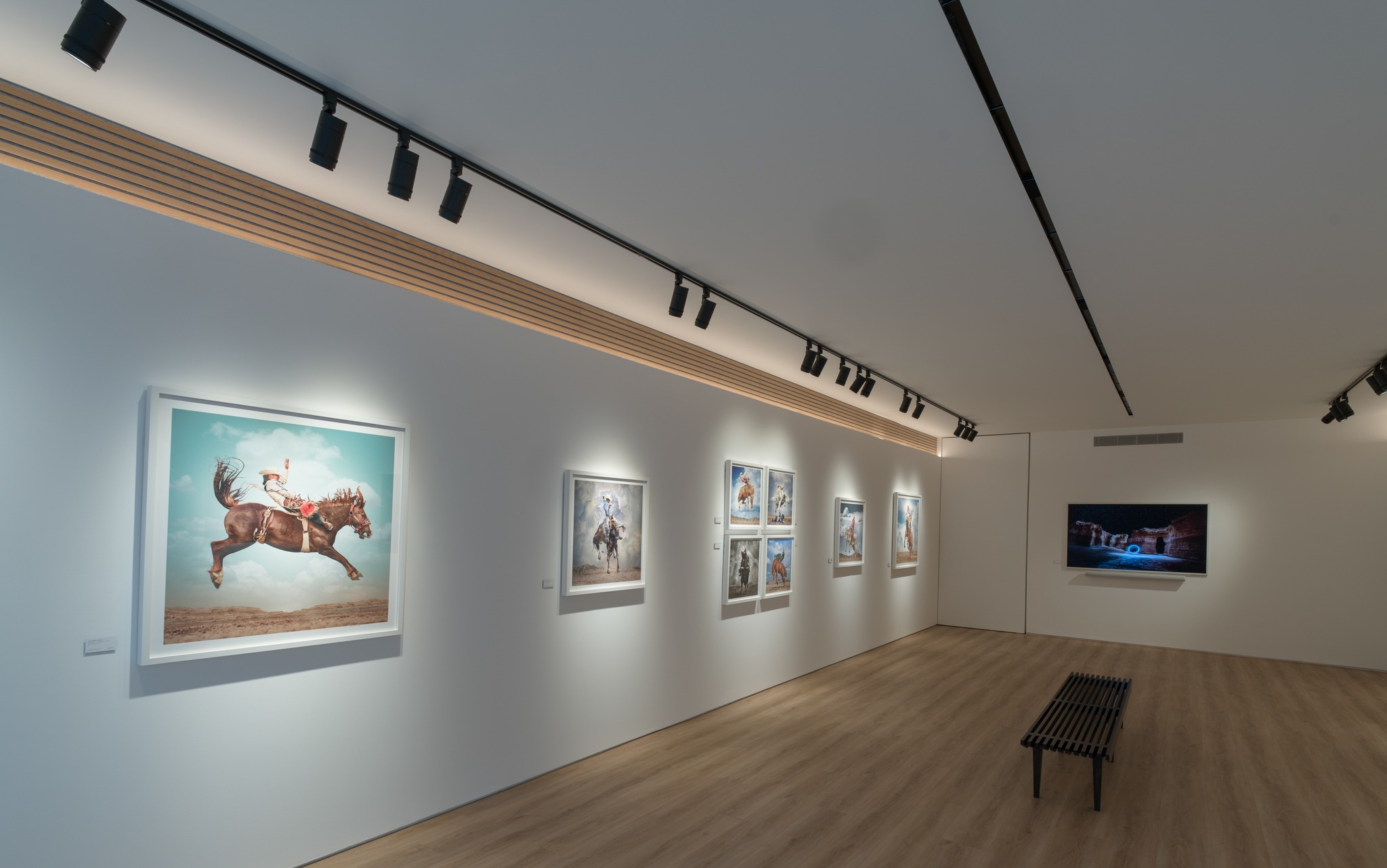
Art-focused lighting separating artwork from architectural surfaces
Not every piece should compete equally. Lighting helps guide the viewer journey.
Feature pieces receive tighter focus and slightly higher intensity
Supporting works remain softer
Track systems allow this balance to be adjusted at any time.
Glare control is essential
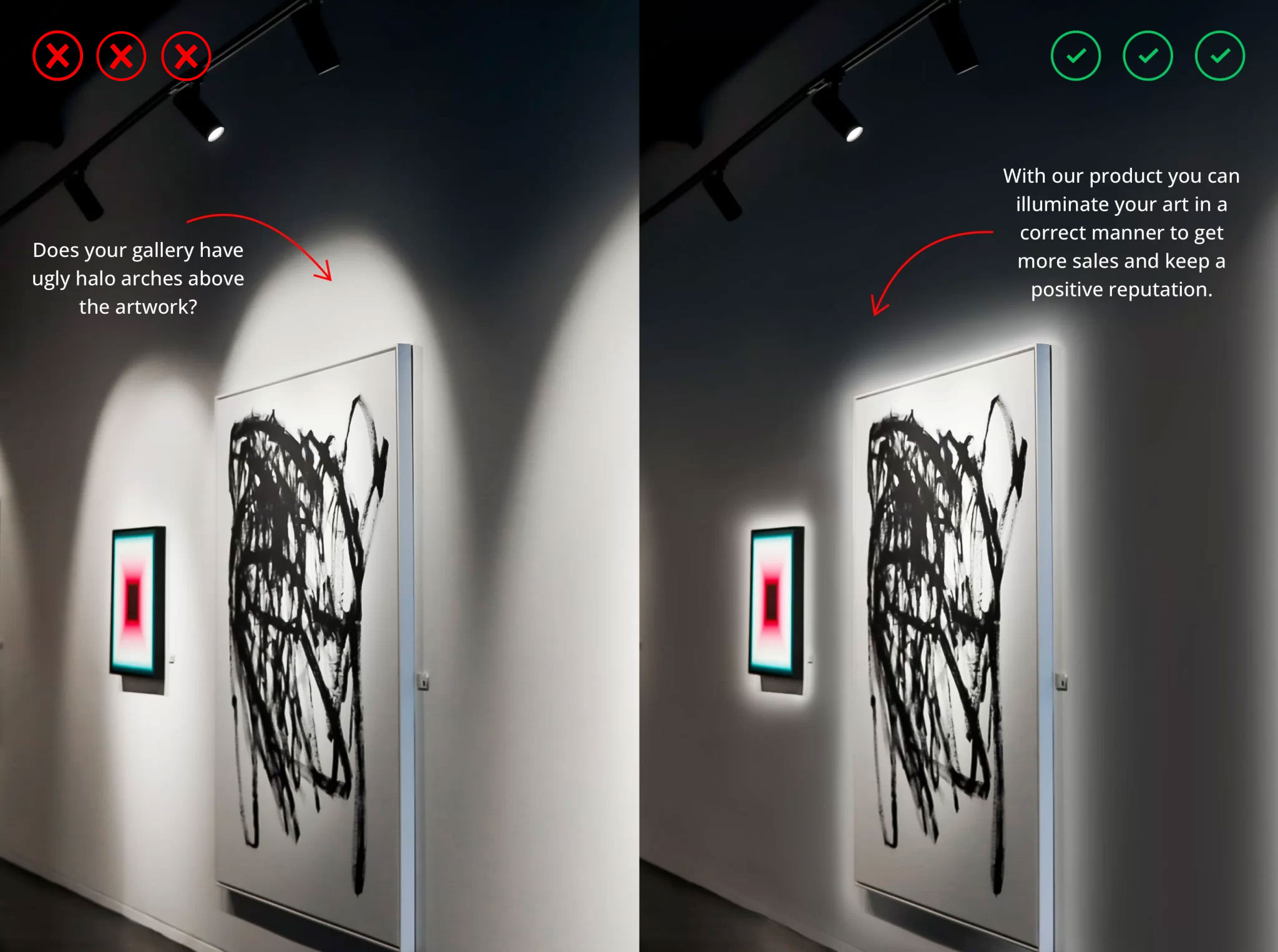
Professional art display lighting removing halos and glare
To prevent reflections:
- Aim lights at roughly 30°
- Position fixtures slightly forward of the artwork
- Avoid placing lights directly above viewer sightlines
Correct angles combined with controlled beams eliminate distraction.
Adaptability for evolving collections
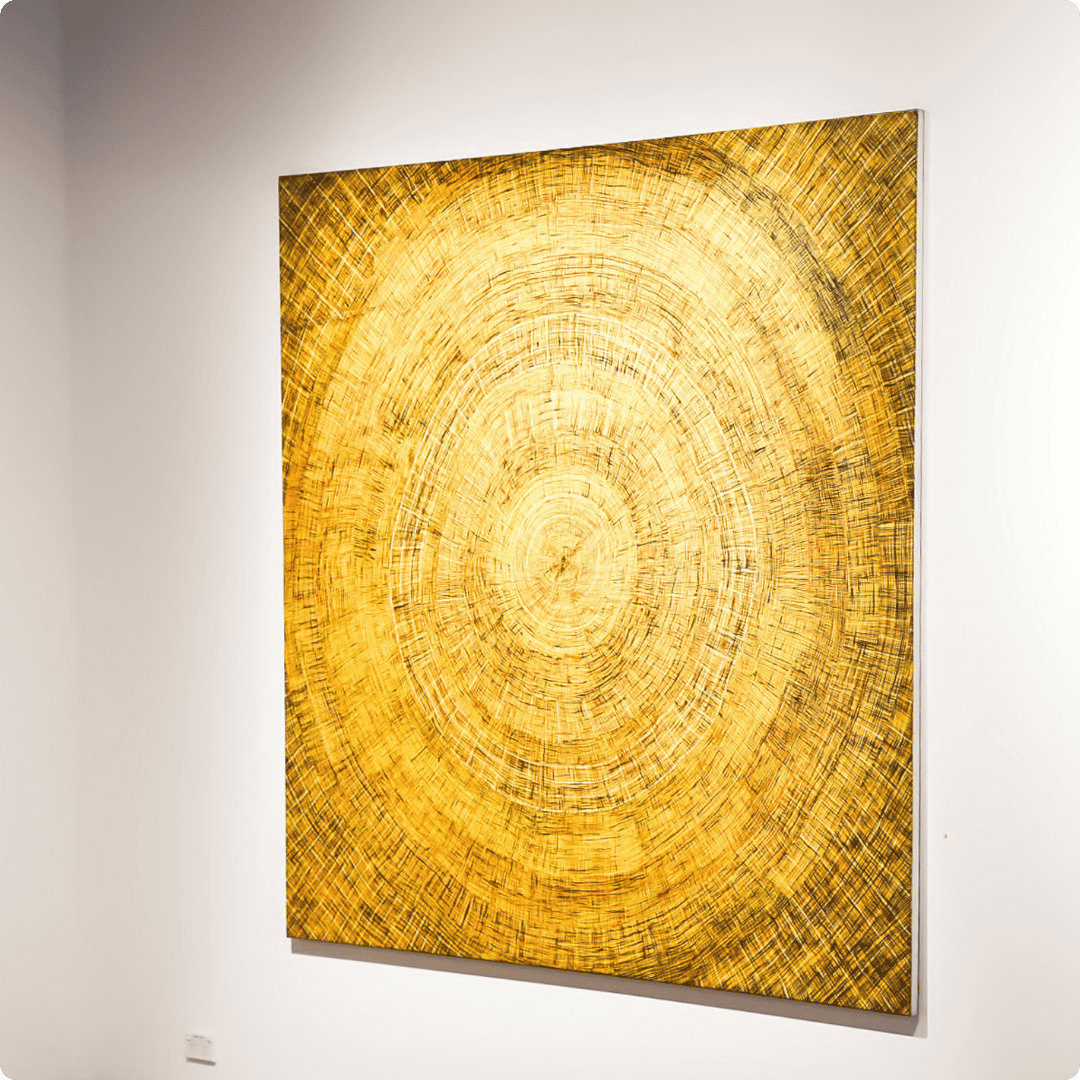
Precision track fixtures delivering refined, non-invasive illumination
Collections change. Walls are re-hung. Exhibitions rotate. Well-designed art gallery lighting system setups must adapt easily to these changes.
Fixed downlights quickly become misaligned. Track lighting for art display allows instant re-aiming, refocusing, and repositioning.
Professional optics make the difference

Professional gallery lighting shaping light, not spraying walls
Cheap fittings create:
- Uneven beams
- Hot spots
- Spill
- Harsh edges
Professional art lighting produces:
- Clean beam definition
- Controlled falloff
- Even illumination
- Visual contrast
This is why dedicated art lighting systems are used in serious environments.
We guide the lighting, not just supply fixtures
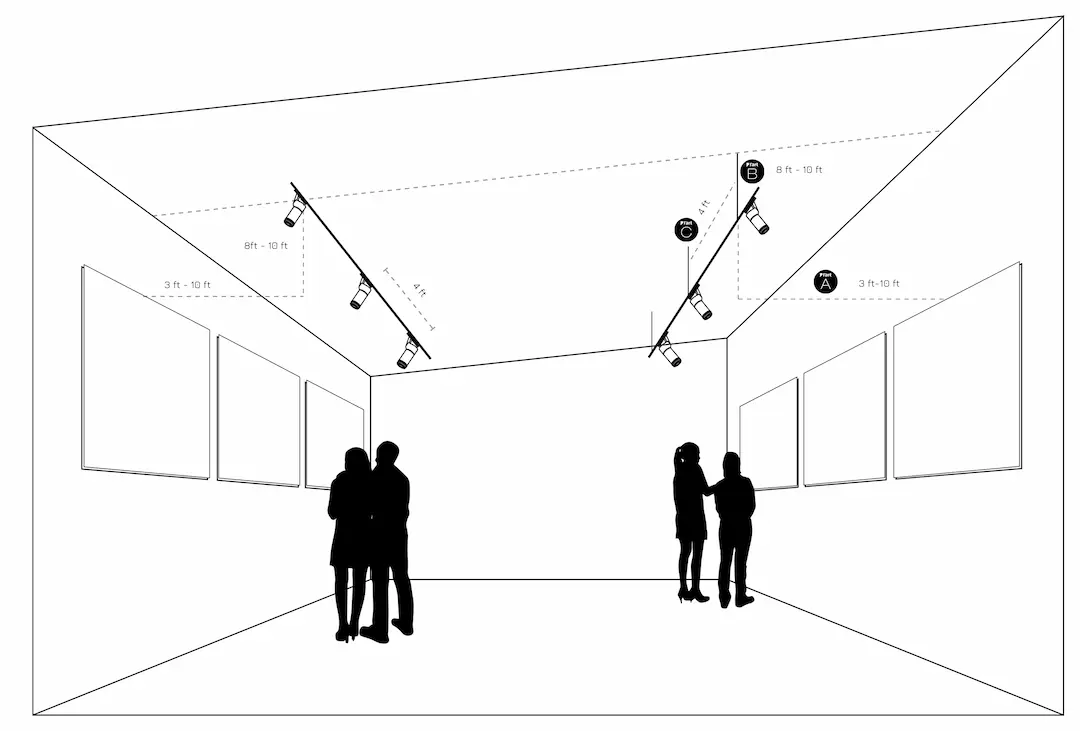
Track lighting setup allowing precise aiming, spacing, and beam control for artwork
Lighting art properly involves beam selection, mounting position, spacing, and aiming. It is not guesswork.
At Banno Lighting, we help galleries, designers, architects, and collectors plan track lighting for art display so each artwork receives the right focus and balance.
Track lighting for art gallery environments

Adjustable track lighting illuminating paintings across flexible gallery exhibition wall layout
Professional galleries depend on track lighting for art gallery spaces because exhibitions constantly change. Paintings move between walls, sculptures are added or removed, and entire collections can be reconfigured several times a year. Fixed ceiling lights cannot adapt to these changes.
Art gallery track lighting systems solve this problem by allowing fixtures to be moved, aimed, and refocused without modifying the electrical installation.
Each fixture on the track can slide along the rail to align with artwork positions. The head of the light can then be aimed toward the artwork at the correct viewing angle. Beam angles can also be adjusted to match the dimensions of each piece.
This adaptability is why track lighting for galleries has become the professional standard in museums, commercial galleries, and serious private collections.
Rather than designing the ceiling around a fixed lighting layout, curators can design exhibitions freely and adjust lighting afterward.
The lighting follows the art.
LED track lighting for art gallery spaces

Adjustable beam LED fixtures precisely illuminating framed artworks in gallery
Modern galleries increasingly use LED track lighting for art gallery installations because LEDs offer stability, efficiency, and consistent color rendering.
The best LED track lighting for art gallery environments typically includes several important characteristics.
High color rendering
Artwork lighting must reproduce colors accurately. A high CRI rating ensures that pigments, brushwork, and subtle tonal variations appear as the artist intended.
Stable color temperature
3000K has become the preferred color temperature for art lighting because it provides natural warmth without shifting colors toward yellow or blue.
Adjustable optics
Professional art lighting requires adjustable beam control. Fixed beam fixtures often create spill around artworks or fail to illuminate larger pieces evenly.
Low glare performance
Controlled optics reduce reflections on glass framed artworks and prevent light from shining into the viewer’s eyes.
Because of these characteristics, the best track lighting for art gallery installations is specifically engineered for artwork display rather than general commercial lighting.
Track lighting for artwork and collectors
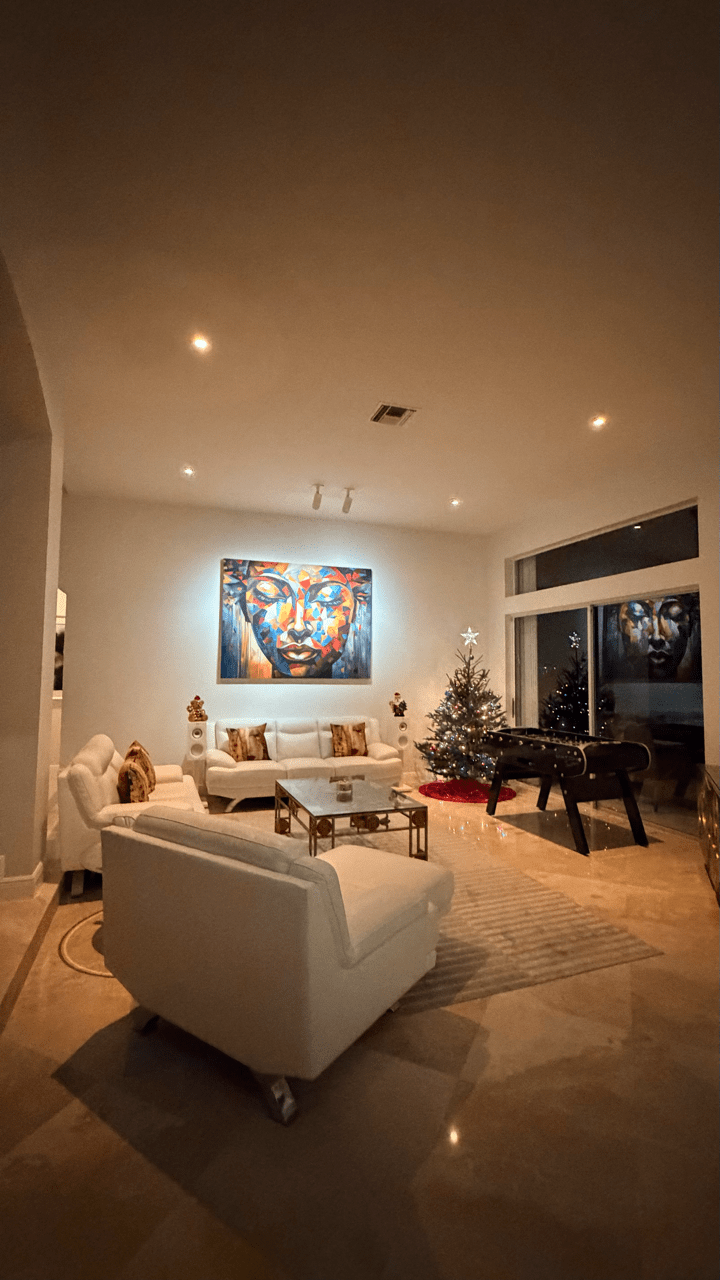
Collector highlighting framed photographs with adjustable home gallery lighting system
Track lighting for artwork is not limited to galleries. Collectors increasingly use professional art lighting track systems in homes, private collections, and corporate spaces.
In these environments the goal remains the same.
Light should enhance the artwork without becoming visually distracting.
Track lighting for art display allows collectors to highlight paintings, photographs, and sculptures with the same level of precision used in gallery settings.
Because fixtures can be repositioned easily, collectors can rearrange artworks without redesigning the entire lighting system.
When lighting paintings in residential settings, it is important to match the beam size to the artwork. Narrow beams can highlight small pieces while wider beams illuminate larger canvases evenly.
This flexibility is one of the key advantages of art lighting track systems.
Track lighting for art studios

Flexible track lights illuminating sculpting workspace inside creative art studio
Track lighting for art studios serves a slightly different purpose than gallery lighting but still relies on the same principles of accuracy and control.
Artists working in studios need lighting that reveals color accurately and avoids shadows that distort perception. Adjustable track lighting allows artists to direct light toward easels, work surfaces, or sculpture stands.
A typical studio lighting setup might combine focused lights aimed at the artwork being created with softer ambient lighting for the rest of the room.
Track lighting for art studios also allows artists to simulate how a finished piece will appear in a gallery environment. By adjusting beam angles and intensity levels, artists can preview how lighting affects the visual impact of their work.
This helps ensure that colors and textures appear correct once the artwork is displayed publicly.
How to layout track lighting for artwork

Gallery lighting angle demonstration showing ideal thirty degree illumination direction
One of the most common questions when designing an art lighting system is how to layout track lighting effectively.
A successful lighting layout begins with the relationship between the track and the artwork wall.
Tracks are typically installed slightly forward of the artwork so fixtures can aim toward the pieces at an angle of approximately thirty degrees. This angle helps minimize glare and reflections on framed artworks.
Fixture spacing depends on the beam angle of the lights being used. Narrow beams require closer spacing between fixtures, while wider beams allow greater distances between lights.
When planning a gallery lighting track layout it is also useful to extend the track slightly beyond the first and last artwork positions. This allows additional lights to be added later if the collection grows.
A well planned layout provides both visual balance and long term flexibility.
How to use track lighting for art display

Carefully aimed spotlight stopping beam inside artwork frame edge
Knowing how to use track lighting effectively is just as important as selecting the right fixtures.
Each light should be aimed so the center of the beam falls near the middle of the artwork. The edges of the beam should stop just inside the frame to avoid creating halos on the surrounding wall.
Intensity can also be adjusted to create visual hierarchy within a collection.
Feature artworks may receive slightly higher illumination levels while secondary pieces remain softer. This subtle variation guides the viewer’s eye through the space.
Track lighting for art display is most effective when the light itself is barely noticeable. The goal is not to highlight the lighting equipment but to reveal the artwork clearly and naturally.
How many lights can go on a track light

Multiple LED track lights mounted along rail illuminating gallery wall
Elegant gallery lighting enhancing clarity and depth of displayed art
Another common question is how many lights can go on a track light system.
The answer depends primarily on the electrical capacity of the track and the wattage of each fixture.
Traditional halogen systems consumed significant power and limited the number of fixtures that could be installed on a single track. Modern LED fixtures use far less energy, allowing more lights to operate on the same circuit.
Because of this, many LED systems can support numerous fixtures without exceeding electrical limits.
However, the number of lights should not be determined purely by electrical capacity. Lighting design principles still apply.
Too many fixtures can create excessive brightness and reduce the contrast that makes artwork stand out.
Proper spacing and beam control remain more important than simply filling the track with lights.
How to connect a track light system
Installing a track lighting system typically begins with connecting the track to a ceiling junction box where electrical power enters the system.
The track is mounted securely to the ceiling and connected to the power feed. Once installed, fixtures can be inserted into the rail and rotated to lock into place.
Each fixture can then be moved along the track and aimed individually toward the artwork.
This modular design allows lighting adjustments to be made quickly without tools or rewiring.
For professional gallery installations, lighting designers often plan track layouts in advance to ensure the system supports future exhibition changes.

What size light bulb for track lighting

Modern integrated LED gallery track light with precision optical lens
Older track lighting systems relied on replaceable bulbs such as GU10 or MR16 lamps. These bulbs could be swapped to change brightness or beam angle.
Modern art lighting systems increasingly use integrated LED modules instead of traditional bulbs.
Integrated LED fixtures offer several advantages.
They maintain consistent color temperature across all fixtures.
They allow optics to be engineered specifically for precise beam control.
They reduce maintenance because there are no bulbs to replace frequently.
Because of these benefits, most professional LED track lighting for art gallery installations now uses dedicated LED fixtures rather than separate bulbs.
Can track lighting be painted
During renovations or interior redesigns, some people ask whether track lighting can be painted to match a ceiling color.
Technically it is possible to paint track lighting rails or fixtures. However, it is usually not recommended.
Paint can interfere with heat dissipation in lighting fixtures, which may shorten their lifespan. It can also block ventilation openings or optical components that are important for proper performance.
In addition, painted fixtures often produce uneven finishes that look less professional than factory finished equipment.
If a different color is required, it is generally better to choose track lighting systems manufactured in that finish. Most professional systems are available in white, black, or architectural finishes designed to blend with gallery interiors.
Why track lighting remains the best solution for art display

Museum exhibition space using professional track lights to highlight artworks
Track lighting for art display remains the preferred solution for galleries and collectors because it combines flexibility with optical precision.
Artwork lighting must adapt to changing exhibitions, different artwork sizes, and evolving collections. Track systems allow lighting designers and curators to respond to these changes instantly.
When combined with high color rendering, controlled beam shaping, and proper aiming angles, track lighting for artwork ensures that every piece receives the attention it deserves.
Rather than simply brightening a room, professional art lighting shapes the visual experience and allows artwork to remain the central focus.
FAQs about track lighting for art display
What makes lighting suitable for art display?
Lighting must be high CRI, controlled, adjustable, and focused to remove halos and highlight only the artwork.
Why are adjustable beams important for art lighting?
Artwork sizes vary. Adjustable beams like 10°–70° allow precise matching to the piece without spill.
What color temperature is best for art?
3000K is the professional standard for natural color and comfortable viewing.
Why is CRI important?
97 CRI ensures artwork colors appear accurate and not distorted.
How do you remove halo effects around artwork?
Use controlled optics, correct beam sizing, and precise aiming to keep light off surrounding walls.
Why use track lighting instead of fixed downlights?
Track systems allow repositioning, refocusing, and adapting to changing exhibitions.
Do galleries use special lighting?
Yes. Professional galleries use precision optical track systems designed specifically for art.
Final thoughts
Art lighting is about precision, control, and visual focus. It is about removing halos, shaping light, and letting artwork stand alone.
With adjustable systems like Zoom, Multi, and Deluxe, engineered at 3000K, 97 CRI, Banno Lighting provides professional track lighting for art display designed specifically for artwork, not just spaces.
What art collectors and gallery clients say about us