How Contemporary Lighting Design Shapes Experience, Meaning, and Value?

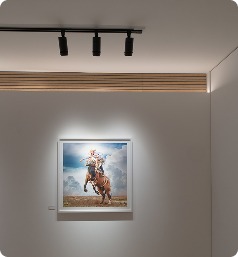
Minimal interior transformed through intentional light placement
Modern art gallery lighting is not about decoration or atmosphere alone. It is about precision, restraint, and intent — the principles behind professional lighting for modern art galleries.
In contemporary galleries, lighting must do more with less. It must support bold concepts, minimal architecture, and diverse mediums while remaining visually quiet. The best modern gallery lighting disappears almost completely, allowing the artwork, space, and visitor experience to take centre stage.
This complete art gallery lighting guide explains what modern art gallery lighting really means today, how it differs from traditional approaches, why track based systems dominate contemporary spaces, and how professional solutions such as Zoom, Multi, and Deluxe enable galleries to operate at a high level without compromise.
What defines modern art gallery lighting?

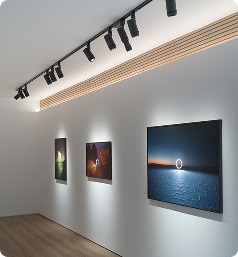
Balanced atmosphere encouraging slower thoughtful viewing
Modern gallery lighting is characterised by clarity, control, and flexibility.
Unlike older gallery lighting styles that relied on uniform washes or decorative fixtures, modern lighting is intentionally restrained. It is designed to be precise, adaptable, and architecturally integrated.
Modern art gallery lighting prioritises:
• Clean visual lines
• Minimal ceiling clutter
• High colour accuracy
• Precise beam control
• Flexibility for changing exhibitions
• Consistency across the space
The lighting should never compete with the artwork or architecture. It should support both quietly.
4.9 stars from art collectors and galleries
The modern gallery as an experience

Balanced atmosphere encouraging slower thoughtful viewing
Modern galleries are not passive display spaces. They are immersive environments designed to provoke thought, emotion, and engagement.
Lighting plays a central role in shaping this experience by:
• Creating visual calm
• Guiding attention without force
• Supporting conceptual narratives
• Allowing negative space to breathe
In modern galleries, restraint is power. Lighting that is too dramatic or expressive undermines the artwork. Lighting that is too flat removes presence. The balance is subtle and intentional.
How modern lighting influences perception and sales?

Flexible track infrastructure supporting rotating exhibitions
Modern art often relies on nuance, materiality, and concept rather than overt visual richness. Lighting must reveal these subtleties without imposing its own character.
Professional modern lighting:
• Reveals texture and surface detail accurately
• Maintains colour integrity
• Avoids glare and distraction
• Creates confidence in what is being seen
From a sales perspective, modern lighting builds trust. Collectors need to feel that the work is being presented honestly, without theatrical enhancement or distortion.
When lighting is calm and controlled, buyers feel reassured. This directly supports decision making.
Track lighting as the foundation of modern galleries
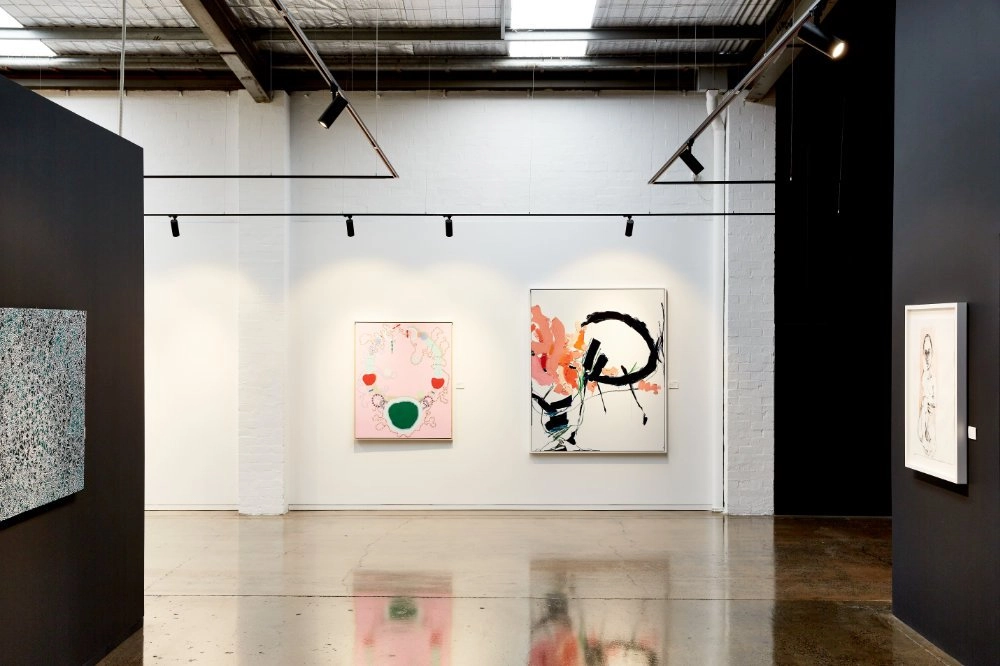
Flexible track infrastructure supporting rotating exhibitions
Track lighting is the dominant infrastructure in modern art galleries worldwide.
This is not because it is generic, but because it aligns perfectly with modern principles.
Track lighting allows:
• Minimal visual impact
• Flexible repositioning
• Clean architectural integration
• Adaptability without rewiring
Modern galleries change exhibitions frequently. Fixed lighting is incompatible with this reality. Track systems provide the flexibility required to create the best lighting setups for art galleries.
However, modern gallery track lighting must be specified carefully. Generic track heads designed for retail or hospitality environments do not meet the needs of contemporary art spaces.
Modern track lighting versus generic track lighting

Refined art lighting contrasting commercial ceiling fittings
Generic track lighting prioritises versatility across many applications.
Modern gallery track lighting prioritises:
• Precision optics
• Controlled beam edges
• High colour fidelity
• Visual restraint
• Consistency across fixtures
The difference is immediately visible. Generic track lighting often creates glare, uneven illumination, and visual noise. Modern gallery systems create clarity and calm.
Beam control as a core modern principle

Controlled light distribution maintaining visual balance across artworks
Modern gallery lighting is defined by control.
Precision beam control allows:
• Clean framing of artworks
• Minimal spill into negative space
• Strong visual separation between works
• Reduced ceiling and wall clutter
In modern spaces, negative space is intentional. Light spill destroys that intention. Controlled beams preserve it.
This is why optics matter more than output in modern gallery lighting.
Zoom lighting in modern galleries

Flexible spotlight maintaining clean architectural consistency
Zoom lighting is particularly suited to modern galleries because it supports flexibility without visual complexity.
Zoom systems allow:
• Adjustable beam angles from a single fixture
• Clean presentation across varied artwork sizes
• Fast adaptation between exhibitions
• Reduced need for multiple fixture types
In modern spaces where walls may shift and works vary dramatically in scale, Zoom lighting keeps the system simple and elegant.
It aligns perfectly with modern values of efficiency and restraint.
Multi lighting for conceptual and layered exhibitions

L'art Multi lighting fixture
Many modern galleries present conceptually layered exhibitions where different works require different lighting treatments, making adjustable museum-grade art lighting essential.
Multi lighting systems allow galleries to:
• Apply varied emphasis within a unified system
• Support curatorial hierarchy
• Feature key works without overpowering others
• Maintain overall visual consistency
In modern galleries, this nuanced control allows lighting to participate in the exhibition narrative without becoming visible itself.
Multi systems are often used where modern art demands subtle differentiation rather than uniform treatment.
Deluxe lighting for high end modern spaces

Minimal fixture presence within premium architectural interior
Deluxe lighting systems are used in modern galleries where refinement and authority are paramount.
They are chosen for:
• Flagship contemporary galleries
• Museums
• Private modern art collections
Deluxe systems focus on:
• Exceptional beam quality
• Superior colour stability
• Minimal visual presence
• Long term consistency
In modern spaces, Deluxe lighting supports architecture and artwork equally, without drawing attention to itself.
Colour temperature in modern art galleries

Neutral 3000K lighting maintaining tonal authenticity
Modern galleries overwhelmingly use 3000K lighting, widely regarded as the ideal color temperature for modern artwork.
3000K provides:
• A neutral yet warm baseline
• Accurate colour representation
• Calm, contemporary ambience
• Consistency across exhibitions
Some modern galleries use 2700K selectively on master works or material driven pieces where warmth enhances presence. This is done carefully, often with Multi control, to avoid visual inconsistency.
Cooler temperatures are rarely used in modern art galleries because they feel clinical and undermine emotional engagement.
Glare control and visual comfort

Scalable lighting system prepared for evolving collections
Modern galleries demand visual comfort.
Harsh glare, visible light sources, or uneven illumination break immersion and distract from conceptual work.
Professional modern lighting systems address glare through:
• Precision optics
• Correct track placement
• Thoughtful aiming
• Consideration of multiple sightlines
When glare is eliminated, visitors engage more deeply and remain longer in the space.
Lighting plans as a modern necessity
Modern gallery lighting always begins with a lighting plan.
A professional plan considers:
• Architecture and ceiling structure
• Wall layouts and future changes
• Track placement and spacing
• Viewing distances
• Exhibition flexibility
Without a plan, modern spaces quickly lose their clarity. Improvised lighting leads to clutter and inconsistency.
Lighting plans ensure the system remains invisible and effective.
Long term thinking in modern gallery lighting

Scalable lighting system prepared for evolving collections
Modern galleries evolve constantly, and modern gallery lighting design strategies must support that evolution.
A well designed modern lighting system:
• Adapts to new exhibitions
• Maintains consistency over time
• Avoids repeated replacement
• Protects long term presentation quality
This long term approach aligns with modern gallery operations and sustainability goals.
Why modern galleries need specialist guidance?
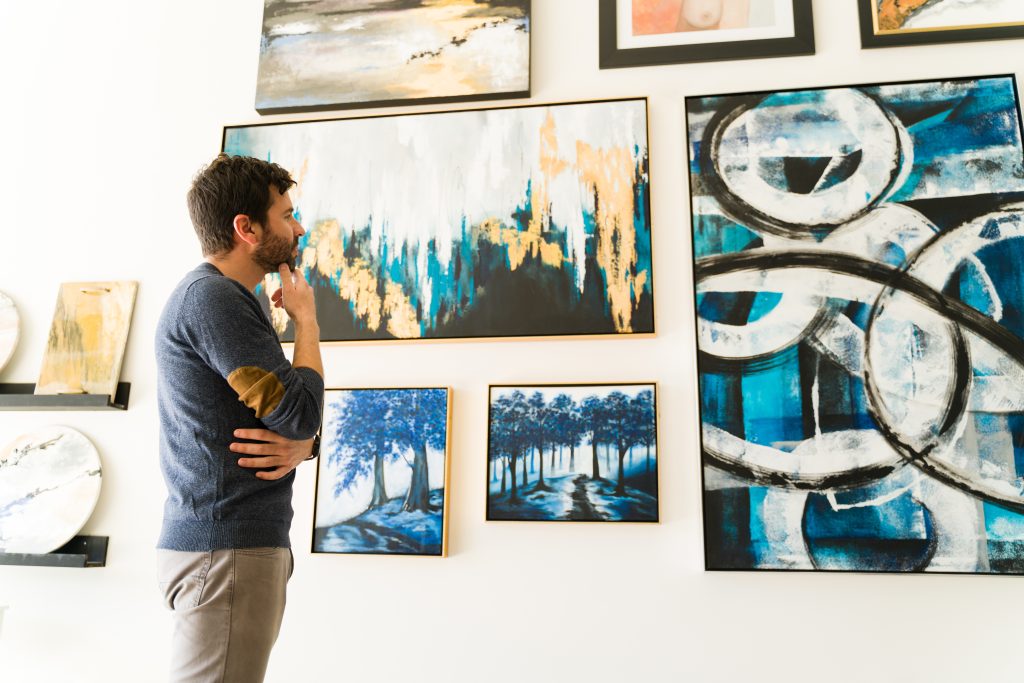
Lighting consultant reviewing exhibition layout carefully
Modern lighting appears simple, but simplicity requires expertise.
Without specialist guidance, galleries often:
• Overlight minimal spaces
• Introduce visual noise
• Struggle with glare
• Compromise flexibility
A specialist partner provides:
• System level thinking
• Lighting plans aligned to modern architecture
• Product selection based on exhibition needs
• Ongoing support
At Banno Lighting, our role is to guide modern galleries so lighting supports concept, not competes with it.
Modern lighting as a signal of credibility

Sophisticated gallery interior reflecting curatorial seriousness
In contemporary art, presentation matters deeply.
Artists notice lighting.
Collectors notice lighting.
Institutions notice lighting.
Modern, professional lighting signals:
• Curatorial confidence
• Respect for the artwork
• Architectural sensitivity
• Authority and credibility
Poor lighting undermines even the strongest contemporary programs, which is why well-planned track lighting for contemporary galleries matters.
Final perspective on modern art gallery lighting

Intentional lighting reinforcing contemporary artistic identity
Modern art gallery lighting is about restraint, precision, and intent.
When done well:
• The space feels calm
• The art feels present
• The lighting disappears
• Visitors engage deeply
• Buyers feel confident
This is the hallmark of truly modern gallery lighting.
Why modern galleries choose Banno Lighting?
Modern galleries work with Banno Lighting because we understand lighting at a system and experiential level.
We provide:
• Expert guidance
• Professional lighting plans
• Modern track based gallery systems
• Zoom, Multi, and Deluxe solutions
• Long term support
If you want modern art gallery lighting that respects architecture, elevates artwork, and supports sales, professional systems and guidance are essential.
Advanced Strategies in Modern Art Gallery Lighting Design
While foundational principles such as precision, restraint, and flexibility define contemporary gallery lighting, high-performing galleries go further. They treat lighting not simply as infrastructure, but as a dynamic curatorial tool that evolves alongside exhibitions, artists, and audience expectations. The following advanced considerations separate competent lighting from truly exceptional gallery environments.
Layering Light Without Adding Noise
Modern gallery lighting is often described as minimal, but minimal does not mean simplistic. Behind visually quiet spaces is a carefully layered lighting strategy.
Professional lighting design typically operates across three subtle layers:
Primary artwork illumination
The most controlled layer, focused entirely on presenting the artwork with accuracy and clarity. Beam angles, intensity, and positioning are calibrated to each piece
Spatial ambient balance
A soft background layer that maintains orientation and comfort without competing with artwork lighting
Transitional and circulation lighting
Subtle guidance between zones, achieved through gentle intensity shifts rather than visible fixtures
The key is that these layers are felt, not seen. When executed correctly, visitors perceive a cohesive environment rather than individual lighting decisions.
The Role of Contrast in Contemporary Galleries

Controlled contrast directing visitor attention without using aggressive spotlights.
One of the most misunderstood aspects of gallery lighting is contrast.
In traditional spaces, uniform lighting was often used to create consistency. In modern galleries, controlled contrast is essential.
Contrast helps to:
- Separate artwork from background surfaces
- Direct attention without signage
- Reinforce curatorial hierarchy
- Create rhythm within an exhibition
However, contrast must be handled with restraint. Excessive contrast creates theatricality, which is rarely appropriate for contemporary art.
A refined approach typically involves:
- Slightly brighter illumination on artworks compared to walls
- Avoiding harsh fall-off
- Maintaining smooth transitions between lit and unlit areas
This creates visual focus without visual aggression.
Adapting Lighting to Different Mediums
Contemporary galleries present a wide range of artistic mediums, each requiring a tailored lighting approach.
Paintings
Require even illumination and high colour fidelity, with beam angles matched to artwork scale
Sculptures
Need carefully positioned light to reveal depth, form, and material without harsh shadows
Mixed media
Demand balance across reflective, matte, and textured surfaces
Digital and video art
Require reduced ambient light and isolated illumination to maintain screen clarity
A flexible system—especially track-based with adjustable optics—is essential to support these variations.
Sightlines and Viewer Movement
Lighting must respond to how visitors move through a space.
A common mistake is designing for a single viewing position, when in reality visitors experience artworks from multiple angles.
Key considerations include:
- Approach angles when entering a space
- Close viewing positions where glare must be avoided
- Peripheral views where consistency must be maintained
Professional lighting plans account for these dynamics to ensure visual comfort and clarity from every perspective.
Managing Reflection and Surface Sensitivity

Strategically adjusted light angles improving visibility for glass-covered artworks.
Many contemporary artworks incorporate sensitive materials such as:
- Glass
- Resin
- Metal
- High-gloss finishes
These surfaces can easily create unwanted reflections if lighting is not controlled precisely.
Effective strategies include:
- Adjusting beam angles to avoid direct reflection
- Using narrower beams to minimise spill
- Positioning fixtures off-axis from key sightlines
Even small adjustments can significantly improve visibility and perception.
Consistency Across Exhibitions
Modern galleries frequently change exhibitions, but lighting quality must remain consistent.
This is achieved through:
- Uniform fixture specifications
- Predictable beam characteristics
- Stable colour output over time
- Repeatable positioning strategies
Consistency ensures every exhibition is presented professionally, regardless of content.
The Importance of Dimming and Control Systems

Smart dimming systems balancing light intensity between different art materials.
Light intensity is as important as beam shape.
Dimming enables:
- Subtle balancing between artworks
- Adjustment for different materials
- Compensation for natural light variation
- Creation of visual hierarchy
Modern control systems also support:
- Scene setting for exhibitions
- Fast reconfiguration
- Long-term energy management
The focus is precision, not complexity.
Integrating Natural and Artificial Light
Natural light can enhance a gallery but introduces variability.
It is:
- Variable
- Directional
- Difficult to control
To manage it effectively:
- Artificial lighting must compensate for changes
- Sensitive works must be protected from UV exposure
- Contrast must remain stable throughout the day
In most modern galleries, natural light is carefully controlled or used selectively.
Ceiling Design and Lighting Integration

Low-profile track systems aligning cleanly with modern architectural ceiling lines.
Ceiling design plays a critical role in maintaining visual clarity.
Lighting systems should:
- Use recessed or low-profile track systems
- Align cleanly with architectural lines
- Minimise visual interruption
Poor integration leads to clutter and distraction, while well-integrated systems feel like part of the architecture.
Maintenance and Long-Term Performance
Lighting must perform consistently over time.
Professional systems ensure:
- Stable colour output
- Durable optical components
- Easy maintenance and adjustment
This reduces:
- Replacement frequency
- Fixture inconsistency
- Operational disruption
Long-term reliability is essential for professional gallery environments.
Energy Efficiency Without Compromise

High-efficiency LED technology maintaining color accuracy at lower wattages.
Sustainability is increasingly important, but must not reduce quality.
Modern systems achieve both by:
- Using high-efficiency LED technology
- Maintaining colour accuracy at lower energy use
- Delivering targeted illumination instead of broad washes
Lower heat output also supports artwork preservation.
Supporting Curatorial Intent Through Lighting
Lighting is an extension of curatorial strategy.
It helps to:
- Emphasise key works
- Build visual narratives
- Guide visitor flow
- Establish exhibition pacing
A well-designed system gives curators flexibility without adding technical complexity.
Material Sensitivity and Conservation Considerations

LED sources with minimal UV output protecting sensitive paper works.
Lighting must also protect artworks over time.
Sensitive materials such as paper, textiles, and pigments require careful handling.
Key strategies include:
- Limiting light exposure levels
- Using LED sources with minimal UV and infrared output
- Applying precise beam control
- Adjusting lighting duration based on exhibition schedules
This ensures artworks are preserved while still presented effectively.
Avoiding Common Advanced Mistakes
Even well-designed galleries can encounter issues.
Common mistakes include:
- Overuse of wide beam angles
- Excessive brightness that flattens space
- Inconsistent colour temperature
- Poor fixture alignment
- Lack of future planning
These issues often result from treating lighting as secondary rather than essential.
Evolving Expectations in Contemporary Spaces

Cohesive viewing experiences provided for institutional level gallery environments.
Expectations for gallery environments continue to rise.
Visitors expect:
- Visual clarity
- Comfort without distraction
- Authentic presentation
- Cohesive experience
Collectors expect:
- Accurate representation
- Confidence in lighting
- Consistency across environments
Institutions expect:
- Long-term flexibility
- System reliability
- Architectural alignment
Lighting must meet all of these expectations simultaneously.
The Future of Modern Art Gallery Lighting
Modern gallery lighting will continue evolving through:
- Greater architectural integration
- More refined optical control
- Simplified, high-performance systems
- Stronger sustainability focus
- Increased flexibility for experimental exhibitions
Despite these changes, one principle remains constant:
The best lighting is the lighting you do not notice.
Closing Insight

Professional gallery environments where the artwork takes full control.
In contemporary galleries, lighting is not about adding something—it is about removing distractions.
When executed correctly:
- The artwork becomes clearer
- The space becomes calmer
- The experience becomes more intentional
This is what defines truly exceptional gallery lighting.
Modern Art Gallery Lighting: FAQs
1. What defines modern art gallery lighting design?
Modern gallery lighting is defined by clarity, restraint, and architectural integration.
Unlike traditional styles, it avoids decorative fixtures in favor of minimal track systems that disappear into the ceiling, prioritizing high color accuracy and precise beam control to let the artwork take center stage.
2. Why is 3000K the preferred color temperature for contemporary art?
3000K is the industry standard for modern galleries because it provides a neutral yet warm baseline. It ensures tonal authenticity across diverse mediums—from oil paintings to digital prints—without the clinical feel of cooler temperatures.
3. How does modern lighting influence art sales and collector trust?
Professional lighting builds trust by revealing textures and materials honestly. When lighting is calm and controlled, it removes visual "friction" and glare, allowing collectors to feel confident in the artwork's integrity and value before making a purchase.
4. Why is track lighting the foundation of contemporary galleries?
Track systems are the dominant choice because they offer maximum flexibility without rewiring. Modern galleries rotate exhibitions frequently; track lighting allows for rapid repositioning and beam adjustment to suit varying artwork scales and layouts.
5. What is the difference between professional gallery tracks and generic retail lighting?
Generic retail lighting prioritizes broad coverage and cost. Professional gallery lighting, such as Banno’s Zoom or Deluxe series, focuses on precision optics, controlled beam edges, and superior color fidelity to eliminate visual noise and glare.
6. How do "Zoom" lighting systems benefit modern art spaces?
Zoom lighting allows a single fixture to adjust its beam angle (e.g., from a tight spot to a wide wash). This supports modern efficiency by adapting to different artwork sizes instantly, reducing the need for multiple fixture types on the ceiling.
7. When should a gallery use "Multi" lighting systems?
Multi lighting is essential for conceptually layered exhibitions. It allows curators to apply different light intensities to individual works within a unified system, supporting a visual hierarchy without breaking the space's cohesion.
8. What are "Deluxe" lighting systems used for?
Deluxe systems are specified for flagship galleries and museums where authority is paramount. They offer the highest level of color stability and the most minimal visual profile, ensuring the hardware remains invisible while the light quality is exceptional.
9. Why is beam control more important than light output?
In modern galleries, negative space is intentional. Uncontrolled light "spill" destroys the architectural lines of a room. Precision beam control ensures light stays strictly on the artwork, preserving the clean aesthetic of the space.
10. How can galleries manage reflections on glass or glossy art?
Managing reflections requires off-axis fixture positioning and narrowed beam angles. By using flexible track systems, lighting can be adjusted to "bounce" glare away from the primary visitor sightlines.
11. What is the role of contrast in a contemporary gallery?
Controlled contrast separates the artwork from the background and directs the visitor's eye. Modern design uses subtle contrast—slightly brighter light on the art than the walls—to create focus without the harshness of theatrical spotlights.
12. How do lighting transitions improve the visitor experience?
Professional systems manage intensity shifts between different rooms or zones. Seamless transitions prevent "visual shock," maintaining a sense of calm and immersion as a visitor moves through a large or multi-room exhibition.
13. How does lighting support different art mediums like sculpture?
Sculptures require light from multiple angles to reveal depth and form. Unlike flat paintings, three-dimensional works need "layered shadows" to define their structure, which is achieved through precise fixture positioning on a track system.
14. Why is a professional lighting plan necessary for modern galleries?
A plan accounts for ceiling geometry, wall layouts, and viewing distances. Without it, modern spaces often become cluttered with misplaced fixtures, leading to inconsistent light and distracting "hot spots" on the walls.
15. Does modern gallery lighting support social media photography?
Yes. High-quality, flicker-free LED lighting with high color accuracy ensures that visitor photos look professional. Glare-free environments produce better digital content, which serves as a marketing tool for the gallery’s online presence.
16. What are the sustainability benefits of LED gallery lighting?
Modern LED systems reduce energy consumption and heat output. This not only lowers operational costs but also protects sensitive artworks from infrared and UV damage, supporting long-term conservation goals.
17. How do control systems like dimming enhance curation?
Dimming allows curators to balance intensity between different materials (e.g., delicate paper vs. robust metal). Advanced control systems enable "scene setting," allowing the gallery to shift between exhibition, event, and cleaning modes instantly.
18. Why should galleries avoid cooler color temperatures (4000K+)?
Cooler light often feels clinical and "washes out" the emotional depth of an artwork. Contemporary galleries stick to 3000K or 2700K to ensure the environment remains inviting and respectful to the artist's color palette.
19. What is "visual noise" in gallery lighting?
Visual noise refers to cluttered ceilings, uneven light patterns, and distracting glare. Modern lighting design aims to remove these distractions, creating a quiet environment where the viewer can focus entirely on the art.
20. Why is specialist guidance essential for a "simple" gallery look?
Simplicity in lighting requires deep technical expertise. A specialist like Banno Lighting provides system-level thinking, ensuring that the lighting supports the gallery's curatorial narrative, architecture, and sales goals simultaneously.
You’re in expert hands when it comes to art lighting